Best portable fish finder for kayak fishing
For kayak anglers in New Hampshire, the struggle is real: you're out on a beautiful lake or river, paddling along, and you just know there are fish below, but you can't see them. Without the luxury of a large boat's electronics, it can feel like you're fishing blind, casting into the unknown. This guide will walk you through everything you need to know about choosing, using, and getting the most out of the best portable fish finder for your kayak, helping you pinpoint those elusive fish in the Granite State's diverse waters.
Why a Portable Fish Finder is a Game Changer for Kayak Anglers in New Hampshire
Kayak fishing offers an incredible sense of freedom and access to waters larger boats can't reach, but it comes with its own set of challenges. One of the biggest hurdles is understanding what's happening beneath your hull. Are you paddling over a barren flat, a submerged rock pile teeming with smallmouth bass, or a deep channel holding lake trout? A portable fish finder acts as your underwater eyes, transforming guesswork into informed decisions.
Overcoming Visibility and Mobility Limitations
When you're perched low in a kayak, your visual range into the water is extremely limited, especially in deeper lakes or stained rivers common across New Hampshire. You can't just stand up and peer over the side like you might in a larger craft. This makes it incredibly difficult to identify crucial underwater structure, changes in depth, or schools of baitfish that often indicate predator activity. Imagine trying to target bass on Lake Winnipesaukee Smallmouth Bass Fishing without knowing if you're over a sandy bottom or a rocky point. A portable fish finder cuts through that visual limitation, giving you a real-time display of the bottom contour, water depth, and any fish swimming by.
Furthermore, kayaks are all about mobility and stealth. You can quietly glide into coves, navigate narrow channels, and access tucked-away spots that are impossible for motorboats. However, this mobility can also mean you're constantly exploring new water, and without a way to scan beneath the surface, you might be paddling right over productive areas without ever knowing it. A portable unit, easy to mount and remove, allows you to scout effectively, whether you're exploring a new trout pond or searching for New Hampshire Lake Trout Ice Fishing Season Dates in winter. It eliminates the need for permanent installations, preserving the minimalist essence of kayak fishing while adding a powerful technological edge.
Unlocking More Productive Fishing in Varied NH Waters
New Hampshire boasts an incredible variety of fishing environments, from the vast depths of Lake Winnipesaukee to the winding currents of the Connecticut River. Each body of water presents unique challenges and opportunities. For instance, targeting landlocked salmon often means understanding thermoclines and deep baitfish schools, while chasing largemouth bass might require finding submerged weed lines or brush piles in shallower ponds. A fish finder is invaluable for adapting your strategy to these different scenarios.
It allows you to quickly identify depth changes, humps, ledges, and drop-offs where fish often congregate. You can see how fish are relating to structure, whether they're hugging the bottom, suspended mid-water, or lurking in cover. This kind of information is gold for patterning fish, helping you understand How to Catch Smallmouth Bass in New Hampshire Lakes or How to Catch Lake Trout in New Hampshire. Instead of blindly casting, you can precisely place your lure where the fish are, drastically increasing your chances of success. It's not just about finding fish; it's about understanding their habitat and behavior, which is the ultimate key to more consistent catches, no matter where you launch your kayak in New Hampshire.
Key Features to Look For in a Kayak-Friendly Fish Finder
When you're outfitting your kayak, space and power are always at a premium. This means selecting a fish finder that's not only effective at finding fish but also practical for the unique demands of a small, paddled craft. The market is flooded with options, so knowing what features truly matter for kayak fishing can save you a lot of frustration and make your time on the water much more productive.
Display and Portability Considerations
The display is your window to the underwater world, so its characteristics are paramount. For kayak fishing, a balance between screen size and overall unit footprint is key. You want a screen large enough to clearly interpret sonar returns, distinguish fish from structure, and read depth and temperature, but not so big that it obstructs your paddling or takes up too much valuable deck space. Screens ranging from 3.5 to 7 inches are generally ideal, offering a good compromise. Consider the resolution as well; a higher pixel count will provide a sharper, more detailed image, making it easier to discern subtle features on the bottom.
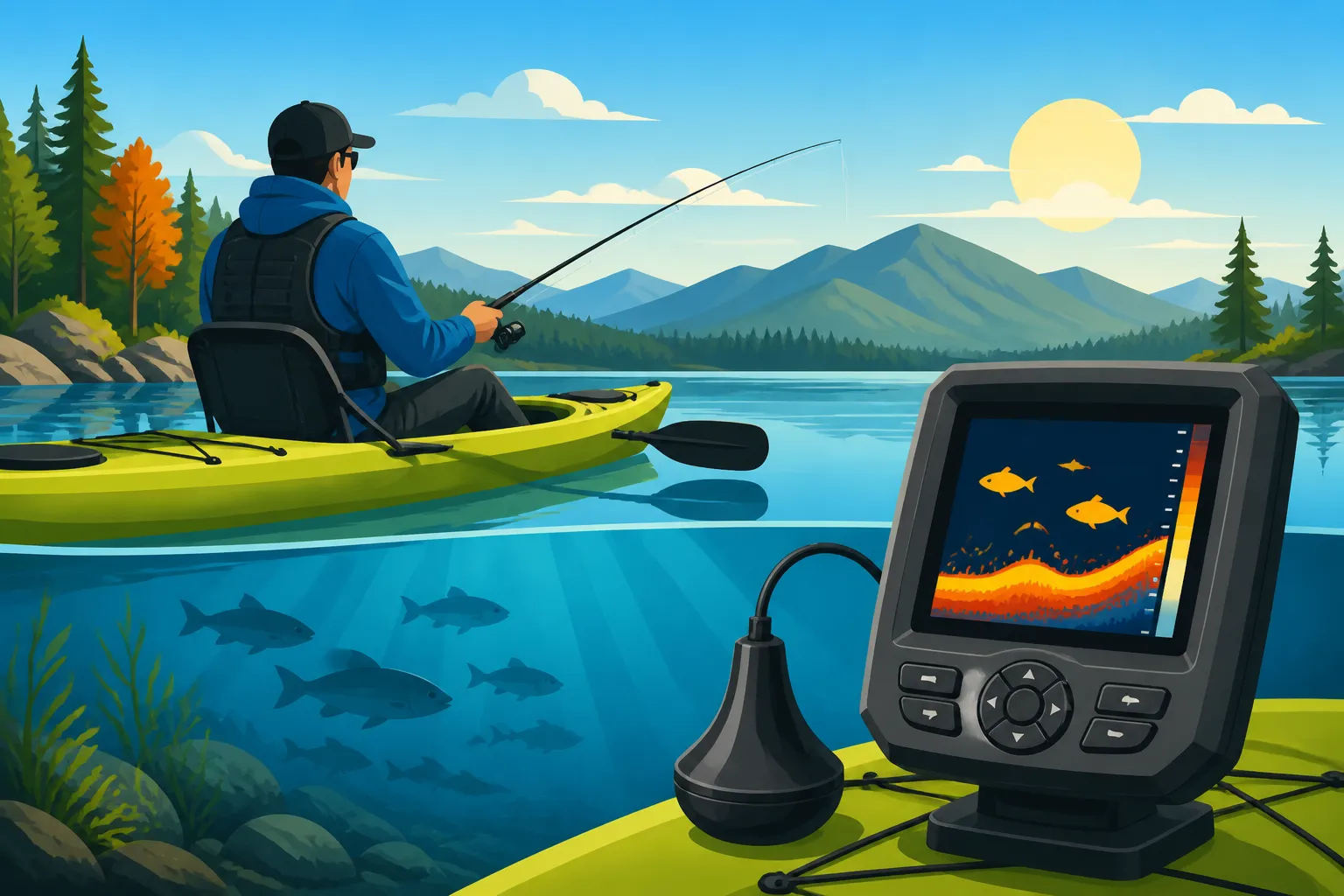
Portability, naturally, is non-negotiable. Look for units that are lightweight, compact, and designed for easy mounting and removal. Some come with suction cup mounts for quick attachment to the kayak hull or RAM mounts that allow for flexible positioning. Others might integrate directly into a kayak's track system. The ideal portable fish finder should be able to withstand the splashes and occasional dunks that come with kayak fishing, so a high waterproof rating (IPX7 or IPX8 is excellent) is a must. Think about how easily you can take it off the kayak for transport or storage, especially if you're cartopping your kayak or need to store gear securely between trips. Many kayak anglers appreciate devices that can be quickly disconnected and stored in a Best dry bag for kayak fishing to protect them from the elements when not in use.
Transducer Technology and Mounting Options
The transducer is the heart of your fish finder, sending and receiving sonar waves. For portable kayak use, you'll primarily encounter two types of transducers: traditional 2D sonar and more advanced imaging sonars like Down Imaging or Side Imaging. Traditional 2D sonar is excellent for general fish finding and depth readings, showing you fish arches and bottom contours. Down Imaging offers a picture-like view directly below your kayak, providing incredible detail of submerged trees, rocks, and baitfish schools. Side Imaging, while less common on entry-level portable units, extends your view out to the sides, which can be fantastic for scouting large areas on wide-open lakes.
Mounting the transducer effectively is critical for accurate readings. The most common methods for kayaks include:
- Scupper Hole Mounts: If your kayak has scupper holes, specific kits allow you to mount the transducer flush with the hull through one of these holes, offering excellent water contact and protection.
- Arm Mounts: These typically clamp onto the side of your kayak and extend the transducer into the water. They're versatile and easy to deploy or retract, but can be prone to snagging on weeds or being knocked out of alignment in rough water.
- In-Hull Shooting-Through Mounts: For kayaks with a flat spot inside the hull, often near the scupper holes, you can mount the transducer with a special putty or silicone. This allows the sonar to "shoot through" the plastic hull, protecting the transducer entirely. While slightly less sensitive than direct water contact, modern transducers work surprisingly well this way and offer maximum protection from snags and damage.
- Suction Cup Mounts: Simple and effective for temporary setups, these stick the transducer directly to the outside of the hull. They're quick to install and remove but can lose suction in rough conditions or with hull irregularities.
When considering mounting, also think about how easy it is to manage the transducer cable. You'll want a neat, secure routing that keeps the cable out of your way while paddling and prevents it from getting tangled or damaged.
Power Source and Battery Life
Unlike larger boats with onboard battery systems, kayaks rely on compact, external power sources. This makes battery life a critical feature for any portable fish finder. Most portable units are powered by small, rechargeable 12V lithium-ion or sealed lead-acid (SLA) batteries. A battery that can provide 8-10 hours of continuous use on a single charge is generally sufficient for a full day of fishing. If you plan multi-day trips or very long sessions, you might consider carrying a spare battery or a larger capacity unit.
The charger type and charging time are also worth investigating. You'll want a reliable charger that can quickly juice up your battery, ideally overnight. Some advanced units, often found at retailers like Bass Pro Shops or on Amazon, might even offer USB charging capabilities, adding to their versatility. Look for units that clearly state their estimated battery life under typical usage conditions. For those long days exploring the hidden coves of Squam Lake or drifting the Merrimack River, knowing your fish finder won't die on you is a huge peace of mind. Efficient power consumption is also important, so a unit with a power-saving mode can extend your time on the water.
GPS and Mapping Capabilities
While not strictly essential for every angler, integrated GPS and mapping capabilities can significantly elevate your kayak fishing experience, especially on larger, unfamiliar bodies of water. A built-in GPS allows you to mark waypoints for productive fishing spots, submerged structure, or even your launch point, making it easy to return to them later. This is particularly useful when you find a productive Best deep water structure spots on Winnipesaukee or a unique feeding lane in a river.
Mapping features, whether pre-loaded with charts or allowing you to create your own contours (like Humminbird's AutoChart Live or Garmin's Quickdraw Contours), provide a detailed visual representation of the lake or river bottom. This not only helps with navigation but also allows you to identify potential fishing areas even before you've scanned them with sonar. Imagine having a detailed map showing underwater humps and drop-offs on Lake Sunapee—it makes planning your attack so much more effective. For navigating complex waterways or returning to specific spots, Best Fish Finders for New Hampshire Lakes with GPS can be invaluable. However, these features typically add to the cost and power consumption, so weigh their utility against your budget and fishing style. If you primarily fish smaller, familiar ponds, a basic fish finder without GPS might suffice, but for exploring new territory or large lakes, it's a game-changer.
Top Picks for Portable Kayak Fish Finders
The market for portable fish finders is quite diverse, with options ranging from simple, compact units to more advanced systems. While I can't recommend specific models due to constantly changing product lines and prices, I can describe the types of solutions that are popular and effective for kayak anglers in New Hampshire, often available from major outdoor retailers like Bass Pro Shops or online platforms such as Amazon.
Compact, Entry-Level Units
For many kayak anglers, especially those just starting out or primarily fishing smaller, shallower waters, a compact, entry-level fish finder is often the perfect choice. These units prioritize simplicity, ease of use, and a smaller footprint, which is crucial on a kayak. They typically feature a smaller color display, often in the 3.5 to 5-inch range, providing clear 2D sonar readings of depth, bottom contour, and basic fish arches. They're designed to be highly portable, often coming with transom-mount style transducers that can be easily adapted to a kayak arm mount or an in-hull installation.
Their power consumption is usually quite low, meaning their small 12V batteries can last for a full day or two of fishing. While they might lack advanced features like GPS or detailed mapping, they excel at their core function: telling you what's beneath your kayak. These are fantastic for probing new areas, identifying drop-offs in ponds, or locating weed lines where panfish and smaller bass might hide. They're also usually the most budget-friendly option, making them an accessible entry point into the world of sonar for kayak fishing. Think of them as your reliable, no-frills underwater spotter, perfect for navigating Best Trout Ponds in New Hampshire or exploring quiet coves.
Feature-Rich Mid-Range Models
Stepping up from the entry-level, mid-range portable fish finders offer a significant boost in features and performance without jumping into the pro-level price tags. These units often feature larger, higher-resolution color displays, typically 5 to 7 inches, providing more screen real estate and detail. The biggest upgrade often comes in transducer technology, with many mid-range models incorporating Down Imaging or CHIRP sonar. CHIRP (Compressed High-Intensity Radiated Pulse) technology provides much clearer target separation and more detailed images than traditional 2D sonar, allowing you to distinguish individual fish from bait balls and see bottom structure with remarkable clarity. Down Imaging gives you a photographic view directly beneath your kayak, making it easier to identify specific submerged objects like trees or rock piles.
Many mid-range units also include basic GPS navigation, allowing you to mark waypoints and navigate back to productive areas. Some might even offer basic mapping capabilities, either pre-loaded or allowing you to create your own. These are ideal for anglers who frequent larger lakes like Winnisquam Lake or Newfound Lake, where understanding complex underwater topography is key to success. They strike a great balance between advanced functionality and portability, giving you powerful tools to How to pattern bass on an unfamiliar New Hampshire lake or target specific species in deeper waters. Power demands will be slightly higher, so ensure you have a robust battery solution.
Advanced Wireless and Castable Options
For ultimate portability and versatility, advanced wireless and castable fish finders have revolutionized the game for kayak and even shore anglers. These devices forgo the traditional mounted transducer and instead use a small, buoyant ball or pod that you cast out on your fishing line or attach to a tether. The transducer inside transmits sonar data wirelessly via Bluetooth or Wi-Fi to an app on your smartphone or tablet, which acts as the display. This means no cables, no mounting hardware, and maximum flexibility.
Some models offer advanced features like dual-beam sonar, GPS for mapping, and even ice fishing flasher modes, making them incredibly versatile. Brands like Deeper and Lowrance offer excellent castable options, often available at popular sporting goods stores or online. Their primary advantages are their minimal footprint and ease of deployment—you can literally toss them anywhere you want to scan. This is fantastic for scouting new areas quickly, fishing from shore before launching your kayak, or even for Ice Fishing in New Hampshire if the unit has a flasher mode. The main considerations are your phone's battery life (as it's the display) and ensuring a strong, stable wireless connection. For those who want powerful sonar in the most compact, flexible package, these wireless wonders are tough to beat and can greatly enhance your ability to How to locate perch in New Hampshire lakes or find schools of baitfish in new spots.
Setting Up and Maintaining Your Portable Fish Finder on a Kayak
Getting your portable fish finder isn't just about picking out the right one; it's about properly integrating it into your kayak setup and taking care of it so it lasts for countless fishing adventures across New Hampshire. A well-installed and maintained unit will give you reliable performance, season after season.
Installation Tips and Tricks
Proper installation is paramount for optimal performance and safety. First, decide on your mounting location. Consider accessibility – you want to be able to see the screen clearly and operate controls without excessive reaching or compromising your balance. Many kayak anglers prefer a mount directly in front of their seat, on a track system, or a designated gear track. Ensure the mount is secure and robust enough to handle the unit's weight and the vibrations of paddling, especially on choppy water. You don't want your precious electronics taking an unexpected swim!
Next, focus on the transducer. As discussed earlier, choose the mounting method that best suits your kayak and fishing style. If using an arm mount, ensure the transducer is submerged and pointed straight down, away from any obstructions like your paddle or rudder. For in-hull setups, take your time to create a solid bond between the transducer and the hull using a marine-grade silicone or transducer putty, ensuring there are no air bubbles that can interfere with the sonar signal. Route all cables neatly and securely, using cable clips or zip ties to keep them out of your way. Loose cables are a snag hazard and can lead to accidental damage. It's often a good idea to practice a dry run at home, installing everything and checking cable lengths before your first outing to avoid fumbling at the boat ramp. You might find a Best tackle organizer for a small boat also helps keep small parts and tools handy for setup.
Power Management and Care
Your fish finder's battery is its lifeline, so proper power management and care are essential. Always fully charge your battery before each trip, especially if you plan a long day of fishing or are heading to a remote location. Carry a fully charged spare battery if you have one, or a portable power bank for smaller devices. Lithium batteries generally offer better performance and lighter weight, but sealed lead-acid (SLA) batteries are often more budget-friendly. Regardless of type, store batteries in a cool, dry place and avoid deep discharging, which can shorten their lifespan.
After each trip, wipe down your fish finder unit with a damp cloth to remove any salt spray, lake water, or dirt. Pay attention to the electrical contacts and ensure they are dry before storing. If you've been in saltwater, a thorough rinse with fresh water is even more crucial to prevent corrosion. Disconnect the battery and store the unit indoors, away from extreme temperatures. Many fish finders, even those available through Amazon, come with protective covers; use them! This shields the screen from scratches and the casing from UV damage. Over time, inspect cables for wear and tear, and replace them if you see any fraying or damage. A little preventive maintenance goes a long way in extending the life of your investment.
Interpreting Your Sonar Display
Understanding what your fish finder is telling you is the key to turning data into fish. Modern fish finders are incredibly sophisticated, but they still require a bit of interpretation. Here’s a basic breakdown:
- Bottom Line: This represents the lake or river bottom. A thin, hard line usually indicates a hard bottom (rock, gravel), while a thicker, softer line suggests a soft bottom (mud, silt). Changes in the bottom line's depth or texture can indicate structure.
- Fish Arches: Classic 2D sonar displays fish as arches. A full, strong arch often means a larger fish passing directly through the sonar cone, while partial arches or lines might be smaller fish or fish on the edge of the cone. The position of the arch tells you the fish's depth.
- Structure: Look for distinct shapes and anomalies rising from the bottom. These could be submerged trees, rock piles, ledges, or weed beds. Often, fish will be associated with these structures. Down Imaging excels at showing these in photo-like detail.
- Thermocline: In deeper lakes, you might see a distinct, hazy layer appear on your screen. This is the thermocline, a temperature barrier that often holds baitfish and predator species like Landlocked Salmon Fishing in New Hampshire or lake trout.
- Baitfish Schools: These appear as dense clouds or clumps on your screen. When you see bait, you can bet there are larger predatory fish nearby, often lurking just below or around the edges of the school.
Practice makes perfect. Spend time on the water not just fishing, but actively observing your fish finder's display and correlating what you see with what you know about the water body. Many units also have a simulator mode that allows you to practice interpreting the screen at home. By mastering how to read your sonar, you'll be well on your way to more successful outings, whether you're targeting New Hampshire Smallmouth Bass Minimum Length Limit or trying to figure out How to fish deep structure for summer lake trout.
Portable Fish Finder Comparison Chart
To help you visualize the different types of portable fish finders suitable for kayak fishing, here's a general comparison of their key characteristics. Remember that specific models from brands available at Bass Pro Shops or Amazon will vary in their exact specifications and features.
| Feature Category | Basic Portable Units | Mid-Range Portable Units | Advanced Wireless/Castable Units |
|---|---|---|---|
| Display Size | 3.5 – 5 inches (Color/Mono) | 5 – 7 inches (Color) | Smartphone/Tablet Screen |
| Sonar Technology | Basic 2D Sonar | CHIRP 2D, Down Imaging | CHIRP 2D, Detailed Sonar |
| Transducer Mounting | Arm mount, Suction, In-Hull | Arm mount, Scupper, In-Hull | Castable/Tethered |
| GPS/Mapping | Rarely (Basic Waypoint Marking) | Basic GPS, Limited Mapping | Full GPS, Mapping via App |
| Power Source | Small 12V SLA/Lithium | 12V Lithium, Higher Capacity | Internal Rechargeable (USB) |
| Battery Life (Est.) | 8-15 hours | 6-12 hours | 4-10 hours (device), Phone reliant |
| Connectivity | Wired | Wired, sometimes Bluetooth | Bluetooth/Wi-Fi to Smart Device |
| Ease of Use | Very high | High | High (App-dependent) |
| Target Angler | Beginners, casual kayakers | Enthusiast, diverse water anglers | Ultra-portable, multi-sport anglers |
This table provides a general overview, and many models will blur these lines or offer unique combinations of features. The most important thing is to match the fish finder's capabilities to your personal fishing style, the type of water you fish most often, and your budget.
Disclaimer
This article is for general informational purposes only and does not constitute professional advice. Laws, prices and regulations vary by location and change over time. Consult a qualified professional for guidance on your specific situation.