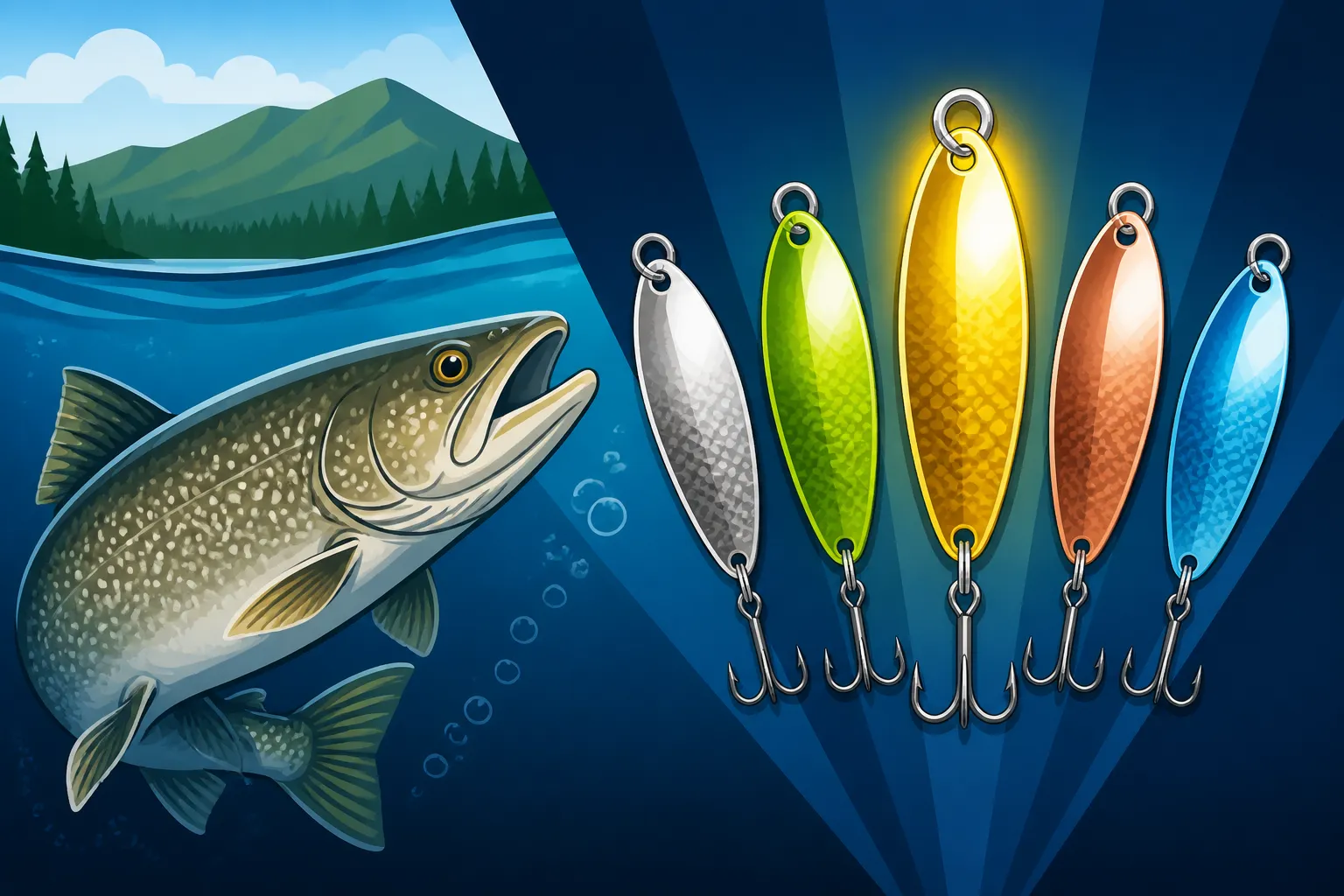
Best spoon color for lake trout trolling
It’s a common scenario: you’re out on a New Hampshire lake, trolling for those elusive lake trout, and you’ve got a tackle box overflowing with spoons. The sun is glinting off the water, or maybe it’s an overcast day, and you’re staring at all those shiny, colorful pieces of metal, wondering, "Which one do I even start with?" It can feel overwhelming, like you're playing a guessing game against a fish that knows all the answers. Well, you're not alone in that frustration! This guide is here to unravel the mystery behind choosing the best spoon colors for lake trout trolling, helping you make more informed choices and hopefully, land more fish on your next outing.
Understanding Lake Trout Vision and Prey
Before we even dive into specific colors, it’s really helpful to understand the world through a lake trout’s eyes. These fish are often found in deeper, cooler waters, and that environment dramatically changes how colors appear. What looks vibrant and appealing to us at the surface can look completely different a few dozen feet down.
How Lake Trout See Color in Deep Water
Imagine shining a flashlight into a dark room – certain colors just pop, while others fade into the background. Water, especially deeper water, acts like a giant filter for light. Red is the first color to be absorbed by water, meaning that bright red spoon you love will quickly turn to a dull gray or black just a few feet below the surface. After red, orange and yellow start to disappear, followed by green, and finally, blue. This means that at the depths where lake trout often reside, especially during the warmer months, the visible spectrum is heavily shifted towards blues and greens.
Think about fishing on a clear, sunny day on a lake like Winnipesaukee. While the sun penetrates well, the deeper you go, the less distinct the colors become. A chartreuse spoon that looks neon on the deck of your boat might appear as a muted green-yellow at 40 feet, and even further down, it could just be a darker shade of grey. Understanding this optical phenomenon is crucial. It’s not about what we see, but what the fish perceives. This is why some anglers lean heavily on specific colors for deep water, knowing they'll retain some visibility, even if altered.
Mimicking Native Forage
Lake trout in New Hampshire's deep, cold lakes are predators, and their diet primarily consists of smaller baitfish. The most common and important forage species in many of our best lake trout waters are rainbow smelt and cusk. So, a significant part of choosing the right spoon color is trying to imitate these natural food sources.
Rainbow smelt are sleek, silver-sided fish with iridescent blue-green backs. They're built for speed and flash. When a smelt darts through the water, it reflects light in a way that’s very distinct. Therefore, spoons that mimic this silver, blue, and green flash can be incredibly effective. Consider how a spoon shimmers and flashes underwater; that’s what really grabs a lake trout’s attention. Many of the most popular lake trout spoons are designed with this in mind, incorporating scales, iridescence, and a strong side-to-side wobble that imitates a fleeing smelt. In lakes where smelt are abundant, such as Lake Winnipesaukee or Newfound Lake, matching this forage is often key to success. For deeper insights into what these fish prefer to eat, you might want to read What lake trout eat in New Hampshire lakes.
Cusk, on the other hand, are bottom-dwelling fish with mottled brown, olive, and gray patterns. While less "flashy" than smelt, they are a substantial food source for larger lake trout, especially in very deep water. When lake trout are primarily feeding on cusk, a more subdued, natural-colored spoon with browns, olives, or even dark grays might be more effective. This isn't about flash as much as it is about subtle presence, mimicking a slower-moving, bottom-hugging meal.
Top Spoon Colors for New Hampshire Lake Trout
Now that we've covered the basics of how lake trout see and what they eat, let's get into the nitty-gritty of specific spoon colors that consistently produce results in New Hampshire.
Silver and Chrome for Clear Water
You’ll hear it time and time again from seasoned lake trout anglers: silver and chrome are absolute staples. And for good reason! These colors are highly reflective, mimicking the flash of schooling baitfish like rainbow smelt. In New Hampshire's clear water lakes, especially on bright, sunny days, a silver or chrome spoon can be incredibly effective.
When the sun is high and the water is gin-clear, the intense reflection off a silver spoon can be seen from a surprising distance, drawing in curious lake trout. Many popular spoons come in plain silver or chrome, but you'll also find variations with a silver base and a splash of blue or green on one side, or perhaps a hint of iridescent tape. These combinations add a touch of realism to the flash, making the spoon even more enticing. Consider the classic "Doctor Spoon" or a simple "Swedish Pimple" in silver for a good starting point. You can find a huge selection of these at places like Bass Pro Shops, or even browse options online through Amazon. This classic choice is a must-have in any lake trout angler's tackle box. For general lure advice, take a look at Best Lures for Lake Trout Trolling.
Blue and Green Hues for Deeper Runs
As we discussed, blue and green light penetrates deeper into the water column than other colors. This makes spoons with prominent blue and green hues excellent choices when you're targeting lake trout holding in deeper water, say 50 feet or more, or when conditions are overcast.
Many effective lake trout spoons feature a silver or white base with blue or green patterns, dots, or stripes. A spoon with a blue back and silver belly is a fantastic imitation of a smelt in deeper water, as the blue will maintain its color longer than other shades. Similarly, a spoon with a green back and silver side can imitate other forage or simply present a color that remains visible and appealing at depth. These colors tend to be more subtle than the brighter chartreuses or oranges, which often makes them more effective for finicky lake trout in low light or deep conditions. Experiment with different shades of blue, from a light sky blue to a deeper royal blue, and various greens, from olive to emerald. The exact shade can sometimes make all the difference on a given day.
Chartreuse and Orange for Stained Water or Low Light
While natural colors are often key, sometimes you need something that really screams "Eat Me!" That's where chartreuse and orange come in. These are considered "hot" or "attractor" colors because of their high visibility, even in less-than-ideal conditions.
Chartreuse is a bright, fluorescent yellow-green, and it’s a killer color in stained or murky water where other colors might fade away. It’s also incredibly effective during low light conditions, like early mornings, late evenings, or heavily overcast days. The same goes for orange; its vibrant hue stands out when visibility is poor. Lake trout are opportunistic feeders, and sometimes a highly visible, aggressive color like chartreuse or orange can trigger a reaction strike, even if it doesn't perfectly mimic a natural baitfish. These colors are particularly useful when you're covering a lot of water and want your spoon to get noticed quickly. Some anglers even use them as "search baits" to locate active fish before switching to more natural presentations. Don't be afraid to try a chartreuse spoon with a silver back, or an orange spoon with a gold base when the bite is slow or the weather is dark.
Factors Influencing Spoon Color Choice Beyond Depth
Choosing a spoon color isn't just about how deep you're fishing. There are several other critical factors that seasoned New Hampshire anglers consider when deciding what to tie on. Ignoring these can mean the difference between a productive day and a frustrating one.
Water Clarity and Light Conditions
The ambient light and water clarity dramatically impact how a spoon is perceived. On a bright, bluebird sky day with crystal-clear water, a highly reflective, plain silver or chrome spoon can often be too much. The intense flash can actually spook wary lake trout, especially if they're holding relatively shallow. In these conditions, a more subtle silver with a blue or green tint, or even a muted gold, might be more effective. The goal is to provide enough flash to attract attention without being overly aggressive.
Conversely, on a heavily overcast day, during a drizzle, or when the water has a slight stain from runoff, those highly reflective or bright attractor colors become essential. A chartreuse, orange, or even a bold blue can stand out better in these muted conditions, helping the lake trout locate your presentation. The lack of direct sunlight means less natural flash, so your spoon needs to generate its own visual appeal. For more on how light affects fishing, check out Best Time of Day to Catch Landlocked Salmon. It’s a similar principle for lake trout.
Fish Behavior and Aggression
Lake trout aren't always in the same mood. Their behavior can shift from aggressively feeding to being lethargic and finicky, often influenced by factors like water temperature, pressure changes, or recent feeding patterns. Your spoon color choice should reflect this.
When lake trout are actively feeding and aggressive, they might hit almost anything that moves. In these situations, you can often get away with bolder, flashier colors like bright silver, gold, or even those chartreuse and orange spoons. The fish are looking to chase and strike. However, when fish are sluggish or pressured, they become much more selective. This is when subtle, natural colors that perfectly mimic their primary forage become paramount. Think dull silvers, blues, and greens, perhaps with a subtle shimmer rather than an aggressive flash. You might even consider smaller spoons. Observing the fish's mood, perhaps through your fish finder or by how they're reacting to other presentations, can help you fine-tune your color selection.
Trial and Error: The Angler's Best Friend
If there's one golden rule in fishing, it's that there are no absolute rules. What worked yesterday might not work today, and what works on Lake Winnipesaukee might not be effective on Lake Sunapee. The most successful lake trout anglers are those who are willing to experiment constantly.
Always start with a few tried-and-true favorites, but be prepared to switch things up if you're not getting bites. Carry a diverse range of spoon colors and patterns in your tackle box. Don't be afraid to try a color you wouldn't normally consider. Sometimes, the most unexpected combination is what unlocks the bite. Keep notes, if you're serious! What color worked, at what depth, under what conditions? Over time, you'll start to build a personal knowledge base for specific lakes and situations. Having a well-stocked tackle box, perhaps one you've put together from a great selection on Amazon, allows you the flexibility to adapt. Remember, fishing is about continuous learning and adaptation. To get your trolling game on point, check out Trolling Techniques for New Hampshire Lake Trout.
Spoon Designs and Other Considerations
Beyond color, the overall design and how you rig your spoon play a huge role in its effectiveness. A great color won't compensate for a poor presentation or an improperly rigged lure.
Spoon Action and Size
The way a spoon moves through the water – its "action" – is arguably as important as its color. Different spoons have different actions: some have a wide, slow wobble, while others have a tighter, more erratic flutter. This action is what truly mimics a struggling or fleeing baitfish. A narrow-bodied spoon typically has a tighter, faster wobble, while a wider spoon will have a broader, slower swing.
Consider the size of the spoon as well. If the lake trout are feeding on small smelt, a massive spoon might seem unnatural. Conversely, if they're targeting larger cusk or holdover rainbow trout, a larger profile might be more appealing. Matching the size of your spoon to the dominant forage size in the lake is a smart move. Pay attention to how the spoon behaves at different trolling speeds. A spoon might have fantastic action at 2.0 mph but wash out and lose its appeal at 3.5 mph.
UV and Glow-in-the-Dark Options
In certain situations, especially when fishing very deep water or during night fishing for lake trout (which is less common in New Hampshire but can occur), spoons with UV (ultraviolet) or glow-in-the-dark properties can provide a distinct advantage.
UV coatings absorb UV light, which penetrates deeper into the water than visible light, and then re-emit it as a visible glow. This means a UV spoon can actually be more visible at extreme depths where traditional colors have long since faded. Glow-in-the-dark spoons work by being "charged" with a light source (like a flashlight) and then emitting a luminescent glow for a period of time. This can be fantastic for triggering strikes in total darkness or extremely low light, such as during deep ice fishing or when fishing after dusk. While not always necessary, having a few UV or glow spoons in your arsenal can be a game-changer when targeting those truly deep-dwelling lake trout. These are especially useful for conditions you might encounter during Ice Fishing in New Hampshire.
Terminal Tackle and Presentation
Even the perfect spoon in the perfect color won't perform if your terminal tackle isn't up to snuff. The choice of leader, swivels, and even how you tie your knot can impact the spoon's action.
- Leader Material: Many anglers use a fluorocarbon leader for lake trout. Fluorocarbon is nearly invisible underwater, which can be crucial for line-shy fish in clear New Hampshire lakes. It also has good abrasion resistance for fighting fish around structure. For leader and line considerations, see Best Line Weight for Lake Trout Trolling.
- Swivels: Always use a high-quality ball-bearing swivel between your main line and leader, especially when trolling spoons. Spoons can twist your line significantly, and a good swivel will prevent line twist, which can lead to tangles and even break-offs. A snap swivel can make changing spoons quicker and easier, allowing for more efficient trial and error.
- Knots: Learn a strong, reliable knot for tying your leader to your spoon. A poorly tied knot can weaken your line and cause your lure to run improperly. Ensure the spoon has a full range of motion; sometimes, a small split ring can enhance the action.
Here's a quick overview of spoon color considerations:
| Water Conditions | Light Conditions | Recommended Spoon Colors | Rationale |
|---|---|---|---|
| Clear Water | Bright Sun | Silver, Chrome, Muted Silver/Blue, Gold | Mimics natural baitfish flash, less aggressive than bright colors under intense light. |
| Clear Water | Overcast/Low Light | Silver/Blue, Silver/Green, Glow, UV | Maintains visibility in deeper water, subtle flash for wary fish. |
| Stained/Murky Water | Any | Chartreuse, Orange, Bright Green, Gold | High visibility to cut through poor clarity, aggressive attractor colors. |
| Deep Water (>50ft) | Any | Blue/Silver, Green/Silver, Glow, UV | Blue/Green penetrate best, glow/UV provide visibility in very low light. |
| Shallow Water (<30ft) | Any | Silver, Gold, Smelt Patterns (Blue/Silver) | Natural forage imitation, can handle more flash in less depth. |
| Aggressive Fish | Any | Bright Silver, Gold, Chartreuse, Orange | High visibility and flash to trigger reaction strikes. |
| Finicky Fish | Any | Muted Silver/Blue, Brown/Olive, Natural Smelt | Subtle presentation, matches natural forage. |
Ultimately, becoming proficient at choosing the best spoon color for lake trout trolling in New Hampshire comes down to experience and a willingness to adapt. Start with the basics, observe the conditions, pay attention to what the fish are telling you (or not telling you!), and don't be afraid to try something new. The biggest lake trout often fall to anglers who are willing to break from tradition and experiment.
Disclaimer
This article is for general informational purposes only and does not constitute professional advice. Laws, prices and regulations vary by location and change over time. Consult a qualified professional for guidance on your specific situation.