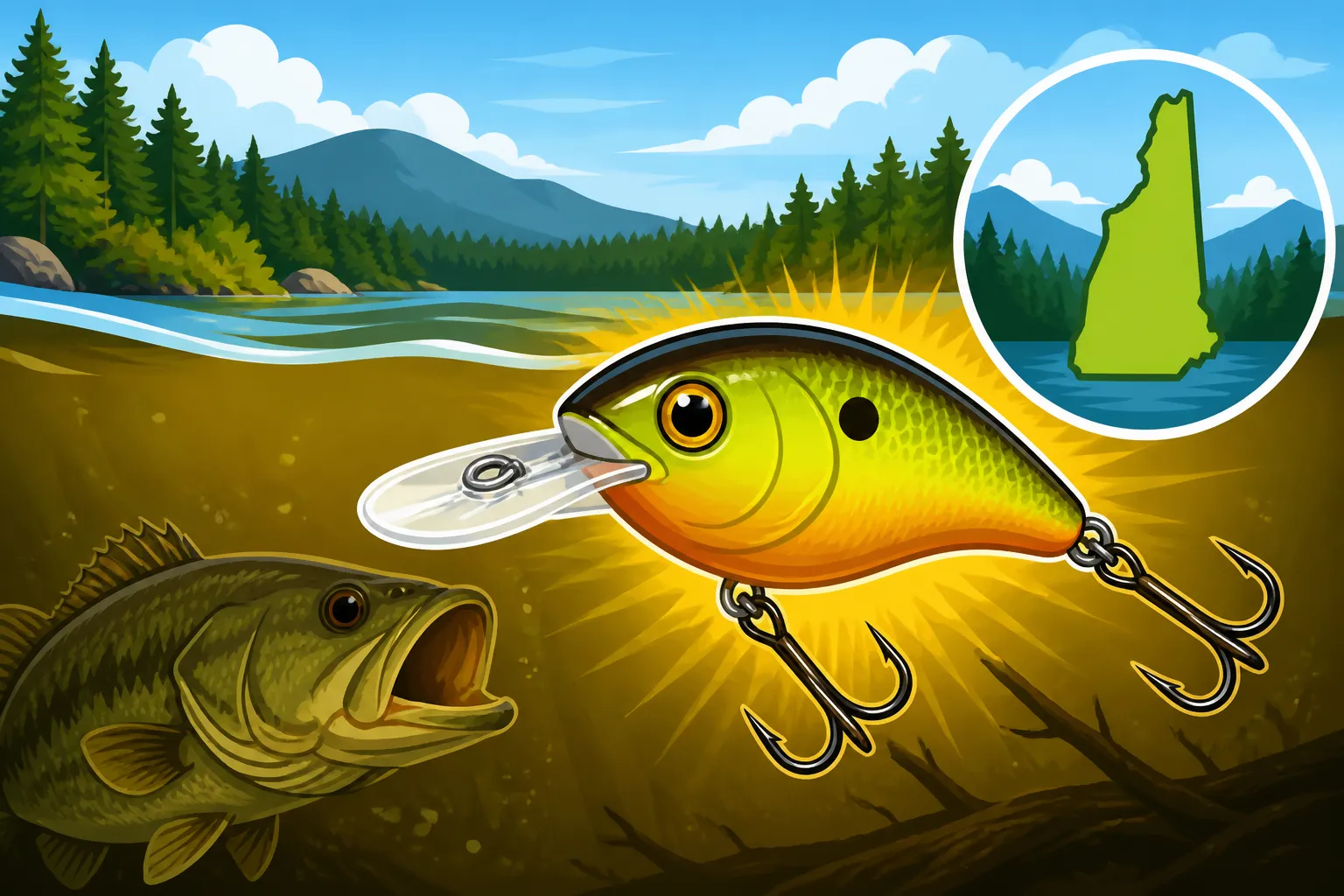
Best crankbait for stained lake water
There's nothing quite as frustrating as showing up to your favorite New Hampshire fishing spot only to find the water isn't its usual clear self. Instead, it's murky, stained a brownish-green, and suddenly all your go-to lures feel useless. You start wondering if you should even bother, or if you're just wasting your time. This comprehensive guide is going to walk you through exactly how to pick the best crankbait to cut through that stained water and get those fish biting.
Understanding Stained Water and Its Impact on Fishing
Before we can pick the perfect crankbait, it's essential to understand what "stained water" truly means and how it changes the game for both anglers and the fish they're pursuing. It's not just "muddy"; it's a specific type of water clarity that demands a different approach.
What is "Stained Water"?
When we talk about stained water in New Hampshire, we're generally referring to water that has a reduced level of clarity, often taking on a tea-like, brownish, or greenish tint. This isn't necessarily due to heavy sediment from recent rains, though that can contribute. More often, it's caused by tannins leaching from decaying organic matter like leaves and vegetation in the water, or by a high concentration of algae and plankton. Think of many of our northern New Hampshire lakes and ponds, especially those with boggy edges or heavy vegetation, and you'll picture stained water.
This differs from truly "muddy" water, which is typically opaque and brown from suspended soil particles after a heavy storm. While both reduce visibility, stained water often still allows for some light penetration, just not enough for fish to rely solely on their eyesight as they would in crystal clear conditions. Understanding this distinction is key to selecting the right lures and techniques.
Why Stained Water is Tricky for Anglers
For us anglers, stained water throws a wrench into our usual strategies. In clear water, fish can spot a lure from a distance, giving you a wider strike zone and making lure color and realism paramount. In stained conditions, that visual advantage is significantly diminished. Your perfectly detailed, natural-colored crankbait might look fantastic to you, but to a fish a few feet away, it's a blurry blob, if it's seen at all.
This reduced visibility means fish have less time to react to your presentation. They might not see the lure until it's right on top of them, requiring a faster, more aggressive retrieve or a lure that simply screams "eat me" through other senses. It forces us to think beyond just what the lure looks like and consider what it sounds like and feels like in the water.
How Fish React to Stained Water
Fish are incredibly adaptable, and in stained water, they compensate for poor visibility by relying more heavily on their other senses. Their lateral line, a sensory organ running along their sides, is particularly sensitive to vibrations in the water. This allows them to detect movement, pressure changes, and the subtle "thump" of a passing baitfish or, hopefully, your crankbait.
Their sense of smell and taste also become more important. While crankbaits aren't typically scent-driven, the disturbance they create can trigger a predatory response. Ultimately, in stained water, fish become more ambush predators, holding tighter to cover or structure and reacting to movement and vibration rather than actively chasing down a visually appealing meal from a distance. This is why a crankbait that can make itself known is so effective.
Key Crankbait Characteristics for Stained Water
When the water clarity drops in your favorite New Hampshire lake, it's time to adjust your crankbait selection. Certain features become absolutely critical to getting a fish's attention and triggering a strike.
Color: The Unsung Hero
In stained water, your color choices shift dramatically from the natural, translucent patterns you might favor in clear conditions. The goal isn't realism; it's visibility and contrast.
- Bright and Fluorescent Colors: These are your go-to. Chartreuse, fire tiger, bright orange, and even stark white can be incredibly effective. These colors absorb light differently and appear more vibrant in low-light, stained conditions, making your lure stand out. Imagine a fluorescent safety vest on a foggy day – it's designed to be seen. Your crankbait needs to do the same. Many anglers swear by a chartreuse-colored crankbait when fishing on places like Newfound Lake Fishing Guide after a good rain has muddied things up a bit.
- Dark and Opaque Colors: Don't overlook solid dark colors like black or dark blue. While counter-intuitive, these can create a strong silhouette against the slightly lighter surface light that still penetrates the stained water. This high contrast can make the lure more easily detected by a fish's lateral line, providing a clear "target" outline.
- Contrast Patterns: Lures with strong contrast, like a black back with a chartreuse belly, or orange and black stripes (fire tiger), also perform well. The sharp demarcation between colors helps the lure maintain a distinct profile even in poor visibility. Sometimes, a subtle flash of chrome or gold can also catch the limited available light, acting as a beacon.
Sound and Vibration: Calling Them In
Since sight is limited, fish in stained water rely heavily on their lateral line to detect prey. This makes sound and vibration paramount for your crankbait.
- Loud Rattles: Crankbaits designed with internal rattles that produce a lot of noise are fantastic for stained water. The sound waves travel through the water, alerting fish to the lure's presence long before they can see it. Think of a hungry bass tucked under a log on the Merrimack River; that rattle is like a dinner bell ringing.
- Aggressive Wobble: Beyond rattles, the physical displacement of water caused by an aggressive wobble is also a huge draw. A wide, erratic swimming action sends strong vibrations through the water, which fish can feel with their lateral line. Some crankbaits are specifically designed with a wider bill or a more exaggerated body shape to maximize this water displacement. You want a lure that pushes a lot of water as it moves.
- Thumping Action: Some crankbaits, particularly lipless varieties, have a distinct "thumping" action that creates a powerful low-frequency vibration. These deep, resonant vibrations can travel further in murky water, attracting fish from a greater distance. When you're fishing a broad expanse of stained water, these loud, thumping lures are essential for covering ground and announcing your presence.
Profile and Size: Making an Impression
The physical presence of your crankbait also plays a role in how fish perceive it in stained conditions.
- Larger Profile: Generally, a slightly larger crankbait can be more effective in stained water simply because it creates a bigger target and displaces more water. While you don't necessarily need a monster lure, opting for the larger end of your typical size range can increase its detectability. This doesn't mean always going for the biggest available, but don't shy away from lures that have a more substantial presence.
- Distinct Shape: While a realistic baitfish profile is great in clear water, in stained conditions, a more distinct or exaggerated shape can be beneficial. Fish aren't scrutinizing details; they're reacting to a general form. A bait with a strong, definitive silhouette, like a wide-bodied squarebill or a tall lipless crankbait, can stand out better against the murky backdrop.
- Subtle Realism (for close range): While sound and vibration draw them in, a degree of realism can still be important once a fish is close. The outline and general shape should still suggest a prey item, even if the fine details are lost. Many effective stained-water crankbaits still mimic common baitfish or crawfish profiles, just in more vibrant or contrasting colors.
Top Crankbait Styles and When to Use Them
Different crankbait styles offer unique advantages in stained water, largely due to their retrieve depth, wobble, and how much noise they create. Knowing which to tie on can make all the difference, whether you're working shallow weed lines or deeper rock piles in New Hampshire.
Lipless Crankbaits
Lipless crankbaits are absolute workhorses in stained water, and for good reason. They are renowned for their aggressive vibration and loud rattling sound.
- Versatility: These baits can be fished at almost any depth by adjusting your retrieve speed and letting them fall. You can rip them through submerged grass, yo-yo them along a drop-off, or simply retrieve them steadily over flats. Their ability to cover water quickly and effectively makes them a prime choice for locating active fish in stained conditions. You can cast them a mile, allowing you to search large areas of a lake like Winnipesaukee where the clarity might vary.
- Vibration and Sound: The entire body of a lipless crankbait vibrates intensely on the retrieve, sending out strong sonic signals that draw fish in. Many models are also packed with multiple rattles, creating a noisy commotion that's hard for fish to ignore. This combination of strong vibration and loud acoustics is precisely what you need when fish can't see your lure well.
- Applications: Use lipless crankbaits when you need to cover a lot of water, fish over or through submerged vegetation, or when bass are holding in open water but are reacting more to sound and vibration. Their fast sink rate also makes them excellent for probing deeper sections if you let them fall before starting your retrieve. For colors, consider bright chartreuse or fire tiger patterns, especially after heavy rains have muddied up a section of the lake.
Squarebill Crankbaits
Squarebill crankbaits shine in specific stained water scenarios, particularly around heavy cover in shallower areas.
- Shallow Water Mastery: Their unique square bill allows them to deflect off wood, rocks, and stumps without snagging, making them perfect for fishing extremely shallow, brushy areas or rocky shorelines. This deflection creates erratic, sudden changes in direction, mimicking a panicked baitfish – an irresistible trigger for bass in stained water who are often ambushing prey.
- Aggressive Wobble: Squarebills typically have a wide, aggressive wobble that displaces a significant amount of water. This strong vibration, combined with the deflection off cover, provides a sensory overload that helps fish locate and strike the lure even in low visibility. The erratic action after hitting an obstacle can be a major strike trigger.
- Applications: Reach for a squarebill when you're targeting bass around visible structure like laydowns, docks, rock piles, or rip-rap in stained ponds or river sections. Their ability to "crash and deflect" off cover is key. You'll often find these working well in the backwaters or feeder creeks of larger systems like the Connecticut River where water flow can bring in more sediment and tannins. Look for vibrant, high-contrast colors like crawfish patterns (red/orange) or fire tiger. Best Tackle for New Hampshire Smallmouth Bass will often include a few good squarebill options for river fishing.
Medium to Deep Diving Crankbaits
Just because the water is stained doesn't mean the fish are always shallow. Medium to deep diving crankbaits are crucial for targeting fish holding on deeper structure.
- Reaching Deeper Fish: These crankbaits are designed with longer bills to reach specific depth ranges, from 8-10 feet to 20 feet or more. In stained lakes, fish might still congregate on offshore humps, ledges, or points. A deep diver allows you to present your lure directly in their strike zone. Knowing how deep your chosen lure runs is important, as you want it bumping the bottom or deflecting off structure, rather than just swimming over it.
- Distinct Wobble at Depth: While many deep divers have a tighter wobble than squarebills, the best ones for stained water will still produce a strong, consistent vibration at their running depth. The larger bill also aids in displacing water, sending out those crucial lateral line signals.
- Applications: Use these crankbaits when your sonar shows fish relating to deeper structure in a stained lake. Examples might include the deep holes of Squam Lake or Winnipesaukee after turnover, or ledges on a smaller impoundment. Target areas like submerged roadbeds, creek channels, or rock transitions. Again, don't be afraid of bright, attention-grabbing colors like chartreuse, bluegill patterns with bright accents, or even solid white to maximize visibility at depth.
Practical Tips for Crankbait Fishing in Stained New Hampshire Waters
Having the right crankbait is only half the battle. How you present it, and the gear you use, can significantly impact your success when the water is murky.
Retrieve Speed and Action
Fishing stained water often requires a different approach to your retrieve than clear water. Fish have less time to see and react, so you need to make every presentation count.
- Slow it Down (Often): While lipless crankbaits can be burned, for most bill-style crankbaits in stained water, a slower to medium retrieve is often more effective. This gives the fish more time to home in on the vibrations and scent trail your lure is creating. A slower retrieve also often allows the crankbait to achieve its maximum wobble and water displacement, making it easier for fish to detect with their lateral line.
- Vary Your Speed: Don't be afraid to experiment. Sometimes a sudden burst of speed, followed by a pause or slow retrieve, can trigger a reaction strike. This mimics a fleeing or injured baitfish, which can be irresistible. A popular technique is to "rip" a lipless crankbait a few feet, then let it fall on slack line before ripping it again. This darting and falling action is highly effective.
- Use Deflection: If you're using a squarebill, actively seek out cover to deflect your bait off of. When the lure bounces off a log or rock, it creates a sudden, erratic movement that often triggers an immediate strike from an ambush predator. This "contact" with structure makes the lure seem more alive and vulnerable.
Line Selection and Sensitivity
Your fishing line choice impacts both the action of your crankbait and your ability to detect subtle bites in stained water.
- Fluorocarbon Advantage: Many experienced anglers prefer fluorocarbon line for crankbait fishing, especially in stained water. Its low stretch provides excellent sensitivity, allowing you to feel every bump, deflection, and subtle bite. While it's nearly invisible in clear water (which isn't as critical in stained), its sinking properties also help your crankbait reach its maximum diving depth more efficiently. You can find excellent fluorocarbon lines at Bass Pro Shops or easily order them through Amazon.
- Braided Line (with a leader): Braided line offers extreme sensitivity and strength, which can be beneficial for feeling subtle pick-ups. However, its zero-stretch can sometimes tear hooks out if fish make sudden movements close to the boat. If using braid, consider adding a fluorocarbon leader (12-24 inches) to provide a bit of shock absorption and to prevent fish from seeing the main line in slightly clearer stained water. This combination gives you the best of both worlds: sensitivity and stealth.
- Line Size: Generally, stick to lines in the 10-17lb test range for most freshwater crankbait applications. Lighter lines will allow your crankbait to dive deeper, while heavier lines offer more abrasion resistance around heavy cover. Match your line size to the lure and the cover you're fishing.
Experimentation is Key
No two stained water situations are exactly alike. What worked yesterday might not work today, and what works in one New Hampshire pond might not work in another.
- Change Colors and Lure Styles: Always have a variety of crankbaits in different colors and styles on hand. If your chartreuse squarebill isn't getting bites, try a fire tiger lipless or a dark blue deep diver. Sometimes a subtle shift in color or action is all it takes to unlock the bite. Don't be afraid to try combinations you might not use in clear water.
- Vary Retrieval Patterns: Play with your retrieve speed, add pauses, incorporate rips, or try a steady grind. Fish can be particular, and figuring out their preferred retrieve is a constant puzzle. Think about what kind of baitfish might be in that particular lake or river, and how they would move.
- Location, Location, Location: Even in stained water, fish will relate to structure. Target weed lines, rock piles, submerged timber, depth changes, and current breaks. Focus your casts on these high-percentage areas, and pay attention to where you get bites. Are they right on the edge of the weeds, or a few feet away? This feedback helps you refine your approach. If you're on a new body of water, perhaps check out resources like Best Fishing Lakes in New Hampshire for ideas on productive areas.
Here's a quick reference table for crankbait selection in stained water:
| Water Clarity Type | Ideal Crankbait Color | Preferred Sound/Vibration | Best Crankbait Style Examples | Retrieve Tips |
|---|---|---|---|---|
| Lightly Stained | Chartreuse, Fire Tiger, Gold/Orange, Natural patterns with flash | Moderate rattle, strong wobble | Medium divers, Squarebills | Medium retrieve, slight variations |
| Moderately Stained | Bright Chartreuse, Fire Tiger, Red Craw, Black/Blue | Loud rattles, aggressive wobble | Lipless, Squarebills, Deep divers | Medium to slow, incorporate pauses/jerks |
| Heavily Stained/Murky | Fluorescent Chartreuse, Solid White, Black, Dark Blue, Orange | Extra loud rattles, wide thumping action | Lipless, Large Squarebills, Deep diving with strong vibration | Slower retrieve, distinct pauses, deflection if possible |
This guide should give you a solid foundation for tackling stained water conditions in New Hampshire. Remember, confidence in your lure choice and a willingness to adapt are your greatest assets.
Disclaimer
This article is for general informational purposes only and does not constitute professional advice. Laws, prices and regulations vary by location and change over time. Consult a qualified professional for guidance on your specific situation.