Best jon boat size for shallow rivers
There's nothing quite like the allure of fishing New Hampshire's winding rivers – the quiet bends, the hidden pools, the feeling of getting away from it all. But for many anglers, the dream quickly hits a snag: how do you even get a boat into those skinny waters without running aground, bending a prop, or getting completely stuck? Choosing the right vessel for these challenging environments is paramount, and this guide is here to help you navigate the often-confusing world of jon boat sizes to ensure your next river adventure is smooth sailing, not frustrating dragging.
Understanding Shallow River Challenges in New Hampshire
New Hampshire is a paradise of diverse waterways, from the massive expanse of Lake Winnipesaukee to the tiniest, most intimate trout streams. But when it comes to rivers, especially those that meander through the less-traveled parts of the state, they often present a unique set of obstacles that can quickly turn a fishing trip into a headache if you're not properly equipped. The frustrations are real – that feeling of your propeller churning mud, or the sickening scrape of your hull on unseen rocks, is enough to make anyone second-guess their choice of boat.
The Nature of New Hampshire's Rivers
Our rivers here in New Hampshire aren't always wide, deep, and slow-moving. Many are dynamic, ever-changing waterways with significant variations in depth, particularly during different seasons or after heavy rains. You might encounter stretches that are only a few inches deep, followed by surprisingly deep pools. Then there are the currents – some sections can be swift, requiring good maneuverability, while others are sluggish.
Beyond depth and current, the riverbeds themselves are often a minefield of natural obstacles. We're talking about rocky bottoms, submerged logs and branches, gravel bars that seem to appear out of nowhere, and plenty of other natural debris. These aren't pristine, dredged channels; they're wild, untamed environments. Successfully navigating these waters means you need a boat designed to handle these specific challenges, allowing you to access those prime fishing spots without constantly worrying about your vessel. Whether you're targeting smallmouth bass in the Merrimack or trying your luck with trout in a smaller tributary, the river's character dictates your boat choice. For a general overview of great river fishing, check out Best Fishing Rivers in New Hampshire.
Why Standard Boats Just Don't Cut It
Many popular fishing boats, like deep-V hulled bass boats or larger recreational vessels, are simply not built for the kind of abuse and shallow draft required for river fishing in New Hampshire. Their deep keels and V-shaped bottoms are fantastic for cutting through chop on large lakes, offering a smooth ride and stability in open water. However, these features become a major liability in shallow rivers.
A deep V-hull might draw a foot or more of water even when static, meaning you're going to scrape bottom in countless spots where a shallower boat would glide right over. The heavier weight of many larger boats also exacerbates this issue, causing them to sit lower in the water. Furthermore, larger boats can be incredibly difficult to launch and retrieve from undeveloped riverbanks, which are often the only access points for many of our prime river fishing locations. Trying to maneuver a heavy boat and trailer down a steep, gravelly bank is not only hard work but can be outright dangerous. The last thing you want is to spend more time wrestling your boat than actually fishing.
Key Factors in Jon Boat Sizing for Shallow Waters
When it comes to picking a jon boat for New Hampshire's shallow rivers, it's not just about getting the biggest boat you can afford. In fact, for river fishing, bigger often means more headaches. You're looking for a delicate balance of features that prioritize shallow draft, maneuverability, and durability. This means digging into the specifics of length, beam, transom height, and construction materials. It's about finding that sweet spot that allows you to confidently explore those hard-to-reach honey holes.
Length and Beam: Finding the Right Balance
The length and beam (width) of your jon boat are perhaps the most critical dimensions to consider.
- Length: Shorter boats, generally 10 to 12 feet, are incredibly nimble and can navigate tighter bends and narrower channels that longer boats simply can't. They're also much easier to car-top or transport in the back of a pickup truck, which is a huge advantage when accessing remote river put-ins that lack proper boat ramps. However, shorter boats offer less stability, especially if you plan to stand and cast, and they provide limited space for gear or multiple anglers. If it's just you and a tackle box, a shorter boat could be perfect.
- Beam: The width of the boat affects both stability and draft. A wider beam offers more stability, which is great if you like to move around, stand up to cast, or bring a bit more gear. It also provides more deck space. However, a wider boat might also struggle in very narrow sections of a river, and depending on the hull design, it could potentially increase the draft slightly. For truly shallow conditions, a narrower beam can sometimes be advantageous for "skinny water" gliding, though you'll sacrifice some stability. The trick is finding a beam that gives you enough stability without making the boat feel clumsy or overly wide for the river you intend to fish.
It's a constant trade-off. Do you prioritize maximum portability and access to the absolute skinnniest water with a shorter, narrower boat, or do you opt for a bit more comfort and stability in slightly wider, though still shallow, river sections? Most river anglers lean towards the former, understanding that the best fishing is often found where other boats can't go.
Transom Height and Engine Compatibility
This is a detail that often gets overlooked by newcomers, but it's absolutely crucial for river fishing. The transom is the flat part at the back of your boat where the outboard motor attaches.
- Transom Height: Jon boats designed for shallow water typically have a low transom (often 15 inches) to accommodate short-shaft outboard motors. Using a long-shaft motor (usually 20 inches) on a low-transom boat will cause the propeller to be too deep in the water, increasing your draft and making it far more likely to hit bottom. Conversely, a short-shaft motor on a high-transom boat will sit too high, causing the prop to ventilate (suck air) and lose thrust. Always match your motor shaft length to your boat's transom height.
- Engine Compatibility: For shallow rivers, you'll generally be looking at smaller horsepower outboard motors, often under 25 HP. Lighter engines are easier to handle, fuel-efficient, and less likely to cause deep drafts. Many experienced river anglers opt for specialized jet drives instead of propeller drives. A jet drive sucks water in and expels it, allowing you to run in incredibly shallow water (often just a few inches) without fear of damaging a propeller. While jet drives are more expensive and less fuel-efficient than prop drives, their ability to navigate extremely shallow and rocky rivers without prop damage is a game-changer. Bass Pro Shops offers a range of smaller outboards and even some jet-drive options suitable for jon boats. Even if you don't go with a jet, a small prop motor can be fitted with a "skeg guard" or "prop guard" as added protection.
Weight, Materials, and Draft
The overall weight and construction material of your jon boat directly impact its draft – how much water it needs to float.
- Lightweight Construction: For shallow rivers, lighter is always better. A lighter boat floats higher in the water, reducing its draft and allowing you to glide over obstacles that would ground a heavier vessel. Aluminum is the material of choice for almost all jon boats for this very reason. It's incredibly durable, relatively lightweight, and can withstand the bumps and scrapes that are inevitable when navigating rocky riverbeds. Fiberglass or heavier-gauge aluminum boats might be great for lakes, but they're generally too heavy for serious shallow river work.
- Draft: This is the measurement of how deep the lowest part of your boat sits in the water. A good river jon boat should have a very shallow draft, ideally only a few inches. Flat-bottomed jon boats excel here, as their weight is distributed over a wider surface area. When shopping, always look for the manufacturer's stated draft, and remember that this number increases with the weight of passengers, gear, and fuel. When you add yourself, a friend, a cooler, and fishing tackle, your actual draft will be more than the dry hull's stated draft.
Consider that a 12-foot aluminum jon boat designed for rivers might weigh only 150-200 pounds, making it easy for two people to lift and launch. This lightweight nature is a significant advantage for accessing those more primitive launch sites along New Hampshire's smaller rivers, where heavy trailers and concrete ramps are just a distant dream.
Recommended Jon Boat Sizes for New Hampshire's Shallow Rivers
Let's get down to the brass tacks: what size jon boat is actually going to work for you out there on the water? The answer often depends on how many people you typically fish with and how much gear you tend to haul. There's a perfect balance to strike between being nimble enough for the skinny stuff and having enough room to be comfortable.
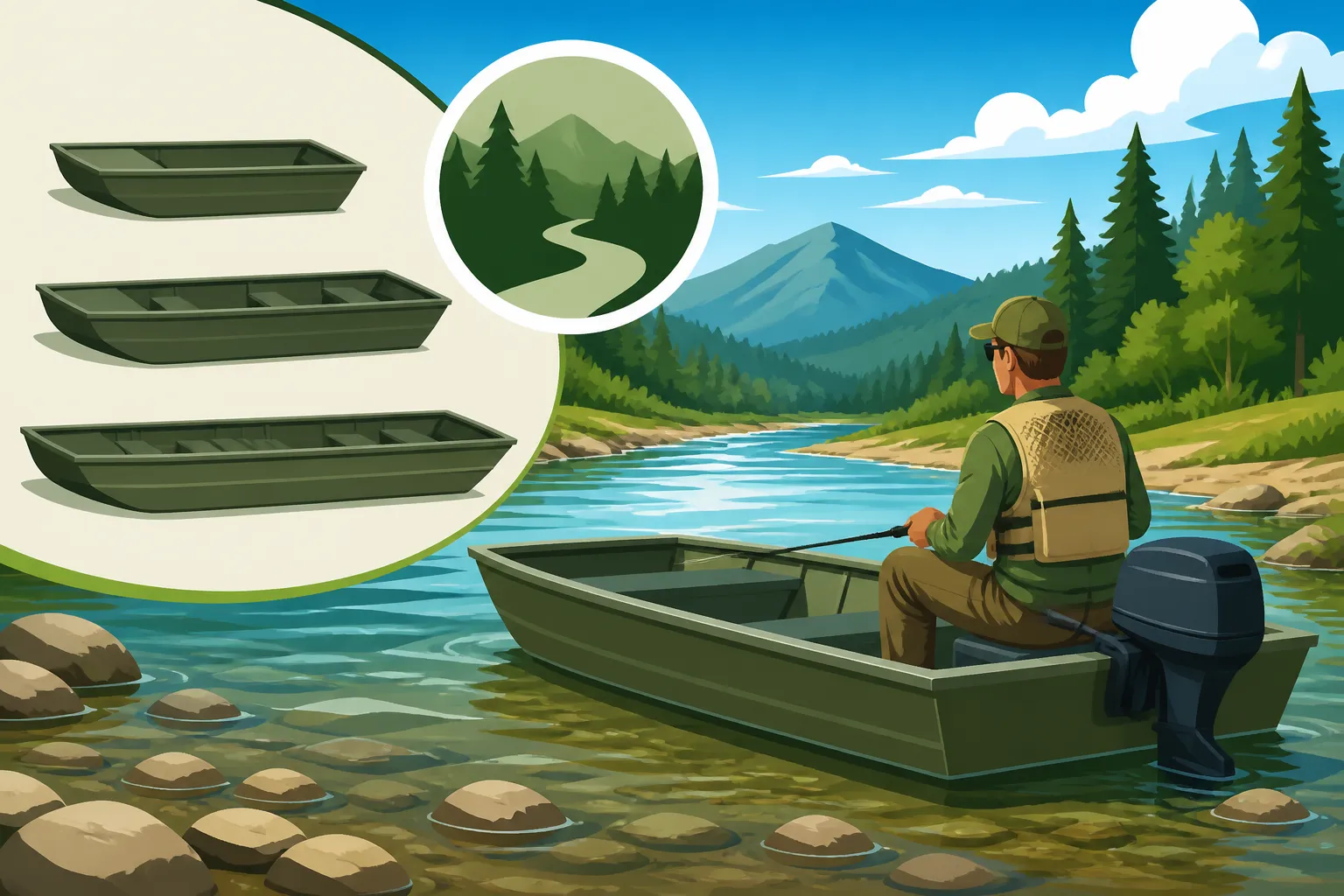
The Solo Angler's Sweet Spot (10-12 ft)
If you're primarily a solo angler, or occasionally bring just one small child, a 10 to 12-foot jon boat is often the absolute sweet spot for New Hampshire's shallow rivers.
- Portability is King: These smaller boats are incredibly easy to manage. Many can be car-topped on a roof rack, saving you the hassle of a trailer, or simply slid into the back of a pickup truck. This means you can access remote and unimproved launch sites that are completely off-limits to larger boats. Imagine pulling your boat right up to a narrow dirt path along the Pemigewasset River, sliding it in, and being fishing in minutes.
- Maximum Shallow Water Access: With a minimal amount of gear and just one person, a 10 or 12-foot jon boat can float in truly astonishingly shallow water, often just 3-4 inches with a small motor or paddles. This opens up sections of rivers that are totally unfishable from the bank or with a larger boat. You can glide over those gravel bars and navigate tight bends with confidence, reaching those untouched pools where the fish are less pressured.
- Maneuverability: Their shorter length makes them incredibly nimble. You can pivot quickly to avoid submerged obstacles, navigate tight turns, and hold your position in current with relative ease, especially if you're using oars or a small electric trolling motor. While space is limited, for a dedicated solo angler who prioritizes access and stealth, these boats are unrivaled. You can usually find a decent selection of these smaller jon boats on platforms like Amazon or at larger outdoor retailers like Bass Pro Shops.
The Versatile Two-Person Setup (12-14 ft)
For those who frequently fish with a buddy, a spouse, or an older child, and want a bit more room for gear without sacrificing too much shallow-water capability, a 12 to 14-foot jon boat hits a fantastic balance.
- Increased Stability and Space: The extra length and beam of a 12 to 14-foot boat provide noticeably more stability. This is a huge plus if you or your fishing partner like to stand and cast, or if you're navigating choppier sections of river (though river chop is rarely significant). You'll also have more deck space for tackle boxes, a cooler, anchor, and perhaps a small battery for an electric motor.
- Still Great for Shallow Water: While slightly heavier and with a marginally deeper draft than a 10-footer, a well-designed 12 or 14-foot jon boat with a flat bottom and a short-shaft motor or jet drive will still handle very shallow water admirably. It might take a bit more careful navigation in the absolute skinniest spots, but you'll still be able to explore most river sections that are inaccessible to larger craft. Many anglers find this size to be the best compromise for versatility. You can comfortably fish two people, bring lunch, and have enough room for extra rods without feeling overly cramped.
- Transport Considerations: While some 12-footers can still be car-topped with effort, a 14-footer will almost certainly require a small trailer. However, these trailers are typically very light and easy to maneuver, even at unimproved launch points. For more on safe boating practices, check out New Hampshire Boating Laws for Anglers.
Considerations for Larger Crews or Gear (14-16 ft)
Pushing into the 14 to 16-foot range for a jon boat specifically for shallow river fishing starts to introduce some compromises, but it can be viable for certain situations.
- More Capacity: If you absolutely need to fish three people, or if you bring an extraordinary amount of gear (multiple coolers, extensive electronics, large livewell, etc.), a 14 to 16-foot jon boat will give you the necessary space and weight capacity. It will be more stable and offer a dryer ride in larger, more open river sections or on connecting lakes.
- The Shallow Water Trade-Off: The primary downside is that a longer, heavier boat will inherently have a deeper draft. While still far shallower than a V-hull, a 16-foot jon boat with three people and gear will struggle in the absolute skinniest sections of many New Hampshire rivers. You'll find yourself needing to trim your motor up more often, or even getting out and wading to push the boat through certain spots. This size is generally better suited for wider, slightly deeper rivers like parts of the Merrimack or Connecticut, rather than the smaller, rockier tributaries.
- Reduced Portability: Expect to always need a trailer for a boat of this size. Launching and retrieving will require more effort, and you'll be limited to more established ramps or very gradual, stable shorelines. If river fishing is your primary goal, carefully consider if the added capacity is worth the reduced shallow-water capability and increased logistical effort. For safety always make sure you have the proper gear, as detailed in New Hampshire required boat safety equipment checklist.
Here's a quick comparison of typical jon boat sizes for shallow river fishing:
| Feature/Size | 10-12 ft Jon Boat (Solo/Minimal Gear) | 12-14 ft Jon Boat (Two Anglers/Moderate Gear) | 14-16 ft Jon Boat (Larger Crew/More Gear) |
|---|---|---|---|
| Draft (loaded) | Very shallow (3-5 inches) | Shallow (4-7 inches) | Moderate-shallow (6-10 inches) |
| Portability | Excellent (car-top, truck bed) | Good (small trailer, some truck bed) | Fair (requires trailer) |
| Maneuverability | Excellent (tight turns, quick pivots) | Very Good (responsive in current) | Good (can feel a bit long in tight spots) |
| Stability | Fair to Good (can feel tippy when standing) | Good to Very Good (stable for standing/casting) | Very Good (very stable platform) |
| Capacity | 1-2 people, minimal gear | 2 people, moderate gear | 2-3 people, substantial gear |
| Ideal Rivers | Small, tight, very shallow tributaries | Medium-sized rivers, varied depths | Wider, slightly deeper rivers, larger connecting ponds |
| Engine | Small outboard (jet or prop), electric, oars | Small to mid-size outboard (jet or prop), electric | Mid-size outboard (jet or prop) |
Essential Features and Accessories for River Jon Boats
Once you've settled on the right size, thinking about the specific features of the boat itself and the accessories you'll add can make a world of difference in your river fishing experience. It's not just about getting afloat; it's about optimizing your setup for the unique demands of New Hampshire's waterways. This is where clever design and smart additions truly shine, transforming a basic hull into a highly effective fishing machine.
Hull Design for Obstacle Navigation
The fundamental design of the jon boat's hull is critical for river work.
- Flat Bottom (or Modified V): The classic flat-bottom jon boat is king for shallow draft. Its wide, flat bottom distributes weight over a large area, allowing it to skim over very shallow water. While it can offer a bumpier ride in choppy conditions (which are rare on most rivers), its shallow-water performance is unmatched. Some jon boats feature a "modified V" bow that transitions to a flatter stern. This design offers a slightly smoother ride and better tracking in the water while retaining excellent shallow-water capabilities further back in the boat. For navigating rocky sections, a strong, thick aluminum hull is paramount. Look for reinforced keels and thicker gauge aluminum in the bottom of the boat – often .080 to .100 gauge is a good sign of durability. This extra robustness helps absorb impacts from unseen rocks and logs.
- Internal Bracing: Quality jon boats will have robust internal bracing and ribs, adding structural integrity and making the hull more resistant to twisting or damage from impacts. This is a quiet feature that contributes significantly to the boat's longevity and safety in demanding river environments.
Motors and Propulsion
The way you move your jon boat on the river is just as important as the boat itself.
- Outboards (Jet vs. Prop): As mentioned, small short-shaft outboard motors are standard. For ultimate shallow water capability, a jet drive outboard is the gold standard. Instead of a propeller hanging below the hull, it draws water in and pushes it out a nozzle, allowing you to run in mere inches of water without prop damage. Brands like Mercury Marine and Yamaha make excellent jet outboards. If a prop drive is your choice, a small engine (5-25 HP) with a power trim and tilt feature is highly desirable, as it allows you to quickly raise the motor to clear obstacles or navigate extremely shallow spots. Consider adding a skeg guard for extra protection.
- Electric Trolling Motors: A bow-mounted electric trolling motor is invaluable for precise boat positioning, especially when drifting through prime fishing habitat or holding against a current. It allows for quiet, stealthy approaches to fish, something a noisy gas outboard can't provide. Many modern trolling motors, some available on Amazon, come with GPS spot-lock features, which can be an absolute game-changer for holding your position in a current without deploying an anchor.
- Oars/Paddles: Never underestimate the importance of a good set of oars or a sturdy paddle, even if you have a motor. They are essential for navigating silent stretches, getting into very tight spots, or as a backup in case of motor trouble. Think of them as your personal "get out of jail free" card when the river gets tricky. For other small craft propulsion, you might be interested in Best Trolling Motor for a Fishing Kayak.
Customization for River Fishing
Jon boats are like blank canvases, perfect for customization to suit your fishing style.
- Layout: Many anglers opt for a simple, open layout in their river jon boat to maximize versatility and minimize snag points. However, some prefer to add simple marine-grade plywood decks or casting platforms, often with marine carpet, to provide a flatter, more comfortable fishing surface and additional storage underneath. These can be DIY projects or professionally installed.
- Rod Holders: Secure rod holders are a must-have. Vertical rod holders keep your rods safely stowed while running, while horizontal holders allow for easy access when actively fishing. There are many aftermarket options available from places like Bass Pro Shops that can be mounted to the gunwales or internal benches.
- Anchoring Systems: For river fishing, a simple anchor system is often best. A small grapple anchor or a sand anchor (if the bottom is soft) on a good length of rope is crucial for holding position in current. Many river anglers also use "stick anchors" or "spud poles" – long, sturdy poles that can be quickly pushed into the riverbed to temporarily hold the boat in place without deploying a traditional anchor and rope. This is especially useful in rocky areas or when needing to quickly stop and cast.
Practical Tips for Jon Boating New Hampshire Rivers
Taking a jon boat out on New Hampshire's rivers isn't just about the boat itself; it's about how you approach the adventure. There's a certain mindset and a few practical considerations that can make all the difference between a memorable day of fishing and a series of frustrating mishaps. Being prepared, understanding the water, and prioritizing safety are the keys to success.
Scouting and Planning Your Trip
Don't just launch and go! A little reconnaissance goes a long way when river fishing.
- Maps and Apps: Before you even leave home, consult detailed maps (physical or digital) of the river you plan to fish. Look for bends, rapids, potential shallow spots (often indicated by braided channels or wider sections), and access points. Apps like NOAA charts or local fishing apps can provide valuable insights into river contours and depth, though always remember that riverbeds can change.
- Local Knowledge: If possible, talk to local anglers or bait shop owners. They are often a treasure trove of information about current river conditions, hidden hazards, and the best places to put in and take out. They might also share tips on when the river is at its most navigable for a jon boat.
- Timing is Everything: Pay attention to recent rainfall and water levels. A river that's perfectly navigable at normal flow might be too low after a dry spell, or too high and fast after heavy rains. Spring runoff and fall low-water periods can significantly change river characteristics. Understanding New Hampshire Fishing Season Dates and Closures can also help you plan.
Launching and Retrieving in Tricky Spots
River access isn't always glamorous, and you'll often be dealing with undeveloped shorelines.
- The Right Vehicle: A four-wheel-drive vehicle is highly recommended if you plan to access unimproved launch sites. It provides the traction needed for gravel, mud, and inclines.
- Hand-Launching Techniques: For smaller jon boats, you might be able to simply walk the boat into the water from a shallow bank. For slightly larger boats with a light trailer, backing the trailer down until the boat floats off can work, but always assess the bank's stability first. Consider using a pair of launch wheels if your boat doesn't have them integrated – these small, retractable wheels attach to the transom and allow you to roll the boat to and from the water easily.
- Mud and Rocks: Be prepared for muddy or rocky conditions at launch and retrieve points. Wear appropriate footwear, and be ready to get your hands dirty. Having a strong friend or two can make the process much easier, especially when pulling a boat back up a bank. For other small craft considerations, check out Are Kayaks Required to Be Registered in New Hampshire?.
Safety First: What to Always Carry
Even on calm rivers, safety should always be your top priority. Accidents can happen quickly, and being prepared can make all the difference.
- Life Jackets: Everyone on board must have a properly fitting life jacket. This isn't just a recommendation; it's a legal requirement in New Hampshire. Wearing it at all times on a river, especially in a small jon boat, is a smart move given the potential for unexpected obstacles or currents. For specific rules, refer to Life Jacket Requirements for New Hampshire Boaters.
- Paddles/Oars: As mentioned, always have at least one set of oars or a sturdy paddle as a backup for propulsion.
- Emergency Kit: A small dry bag with essentials like a first-aid kit, a whistle, a charged cell phone (in a waterproof case), a map, and a headlamp or flashlight is crucial.
- Anchor and Rope: Even if you have a stick anchor, a traditional anchor and sufficient rope are vital for holding position in an emergency or for taking a break.
- Navigation Lights: If there's any chance you'll be on the water near dusk or dawn, ensure you have proper navigation lights, either permanently installed or portable battery-operated ones.
- Proper Footwear: Sturdy, non-slip footwear is essential for boat stability and for safely launching/retrieving, especially on rocky or muddy banks. Waders can be useful, but be mindful of their safety implications if you end up in the water in moving current.
By selecting the right size jon boat and preparing properly, you'll open up a whole new world of fishing opportunities on New Hampshire's incredible rivers. It's about blending smart gear choices with a respectful understanding of these wild and beautiful waterways.
Disclaimer
This article is for general informational purposes only and does not constitute professional advice. Laws, prices and regulations vary by location and change over time. Consult a qualified professional for guidance on your specific situation.