Best technique for vertical jigging lake trout
There's nothing quite like the thrill of chasing lake trout, those elusive, powerful fish that lurk in the deep, cold waters of New Hampshire. Many anglers find themselves frustrated, however, when traditional trolling methods aren't producing, or they want a more hands-on approach to connecting with these magnificent fish. This comprehensive guide will dive deep into the best techniques for vertical jigging lake trout, helping you understand their habits, select the right gear, and master the movements that will put more fish in your boat.
Understanding Lake Trout and Their Habitat in New Hampshire
Before you even think about dropping a line, it's crucial to understand the fish you're targeting. Lake trout are fascinating creatures, perfectly adapted to the cold, oxygen-rich depths of our larger New Hampshire lakes. Knowing their behavior is the first step to successfully vertical jigging them.
Lake Trout Behavior and Preferred Depths
Lake trout, or "lakers" as many of us affectionately call them, are coldwater predators. Unlike many other species that prefer warmer shallows, lakers thrive in water temperatures ranging from the low 40s to low 50s Fahrenheit. This means that as surface waters warm up, especially in the summer months, these fish will retreat to deeper areas of the lake where a thermocline keeps the water cool and oxygenated. They often relate to underwater structure like rock piles, humps, ledges, and deep points, using these features as ambush points or resting areas.
Their feeding habits can be quite opportunistic, preying on baitfish like rainbow smelt, ciscoes, and even smaller trout. When actively feeding, they might suspend in the water column, patrolling specific depth ranges. Other times, they'll hug the bottom, particularly if there's abundant forage or structure to hide in. Understanding these depth preferences and how they shift with seasons and time of day is paramount. For more general information, you might find our guide on Lake Trout Fishing in New Hampshire helpful.
Prime Locations for Vertical Jigging in New Hampshire
New Hampshire boasts several fantastic lake trout fisheries, with some true giants lurking beneath the surface. For vertical jigging, you're looking for deep, clear lakes with significant structure. Think about some of our larger, iconic bodies of water. Lake Winnipesaukee, for instance, is a renowned lake trout haven with countless humps, ledges, and deep basins that are perfect for jigging. The deep water near "The Broads" or around specific islands can be incredibly productive. Other lakes like Newfound Lake, Squam Lake, and Sunapee Lake also offer excellent opportunities, each with their own unique underwater topography.
When scouting a new lake or even a familiar one, focus on areas where sharp drops occur, where offshore humps rise from the bottom, or where historical river channels cut through the lakebed. These are natural congregation points for lake trout. Often, if you can locate schools of baitfish in these deep-water areas using your electronics, you're likely to find hungry lake trout nearby. Many anglers consult local bait shops for up-to-date reports on where the lakers are holding, which can save you a lot of time on the water. For more specific insights on locations, check out Lake Winnipesaukee Lake Trout Fishing and Best Lakes for Trophy Lake Trout in New Hampshire.
Essential Gear for Vertical Jigging Lake Trout
Having the right equipment can make all the difference when vertical jigging. You're not just dropping a line; you're actively working a lure in deep water, and powerful fish are going to be hitting it hard. Your gear needs to be up to the task.
Rod, Reel, and Line Selection
For vertical jigging lake trout, you'll want a medium-heavy to heavy power spinning or baitcasting rod, typically 6'6" to 7'6" in length. The key here is a fast action tip for detecting subtle bites and quickly setting the hook, but with enough backbone in the blank to really muscle a heavy jig and control a big laker in deep water. This isn't a finesse game, so don't be afraid to go robust. A powerful rod allows you to efficiently work heavier jigs and absorb the head shakes of a large fish.
Pair that rod with a quality spinning reel in the 3000-4000 series or a baitcasting reel with a good gear ratio for quick line retrieval. The reel needs a smooth drag system, as fighting a big lake trout can involve long, powerful runs. Spool up with 15-30 pound braided line. Braid has almost no stretch, which is absolutely critical for feeling those deep-water bites and getting a solid hookset. I usually add a 6-10 foot leader of 15-25 pound fluorocarbon line, attached with a strong knot like a FG knot or an Albright. Fluorocarbon is nearly invisible underwater and offers good abrasion resistance against rocks and the trout's sharp teeth. You can find excellent options for all these components on platforms like Amazon. For more on rod choices, take a look at Best Rods for New Hampshire Lakes.
Lures and Baits for Success
The bread and butter of vertical jigging for lake trout are heavy spoons, blade baits, and soft plastics rigged on jig heads. The weight of your lure is critical for getting down to the fish quickly and staying in the strike zone in deep water, especially if there's any current or wind.
- Jigging Spoons: These are probably the most popular choice. Think heavy, flashy spoons like the Kastmaster, Swedish Pimple, or Dardevle. Weights typically range from 3/4 oz to 2 oz, sometimes even heavier depending on depth and conditions. Silver, white, blue, and chartreuse patterns are often effective, mimicking common baitfish. The flutter on the fall is what often triggers strikes. Our article on Best Spoons for Lake Trout Trolling has some crossover, as many trolling spoons are also effective for jigging.
- Blade Baits: Lures like the Heddon Sonar or the Cicada are excellent. They vibrate intensely when lifted, mimicking a struggling baitfish, and often draw aggressive strikes. These are generally effective from 1/2 oz to 1 oz.
- Soft Plastics/Tube Jigs: Large tube jigs, often 4-6 inches long, rigged on 3/4 oz to 1.5 oz jig heads, can be deadly. White, smoke, chartreuse, or even a natural baitfish color work well. Scented soft plastics can sometimes give you an edge. The slow, spiraling fall of a tube jig is incredibly enticing. You might even use a natural bait like a whole dead smelt or a large shiner hooked through the nose on a heavy jig head, especially if local regulations allow.
- Jigging Raps/Rapala Ice Jigs: While often associated with ice fishing, these lures can be incredibly effective when vertically jigged from a boat. Their erratic, darting action often provokes a reaction strike from lakers. Again, colors that mimic smelt are usually a good bet. For specific winter jigging spoons, check out Best Jigging Spoon for Winter Lake Trout.
The Art of Vertical Jigging: Step-by-Step Techniques
Vertical jigging is more than just dropping a lure; it's a dynamic interplay between angler, electronics, and fish. Getting it right takes practice, but the rewards are well worth it.
Locating Fish and Positioning Your Boat
This is where your fish finder truly shines. You absolutely need good electronics to vertical jig effectively for lake trout. Start by idling over promising structure or deep-water areas, keeping a keen eye on your sonar screen. You're looking for arches or marks that indicate fish, often suspended above the bottom or tight to structure. You also want to identify baitfish schools, as lakers won't be far away. Once you locate fish, mark that spot on your GPS. Best Fish Finders for New Hampshire Lakes will give you a deeper dive into choosing the right unit.
Now comes the crucial part: boat positioning. You want to stay directly over the fish as much as possible. A good trolling motor with GPS Spot-Lock capabilities is a game-changer here. Brands like Minn Kota's i-Pilot or MotorGuide's Pinpoint GPS systems allow you to hold your boat in place over a specific waypoint, even in wind or current, freeing you up to focus on fishing. If you don't have Spot-Lock, you'll need to use your main engine or a traditional trolling motor to make small adjustments, constantly watching your fish finder to stay on target. Sometimes, drifting slowly with the wind or current over a productive area can also be effective, allowing you to cover more ground while still jigging vertically.
Mastering the Jigging Motion
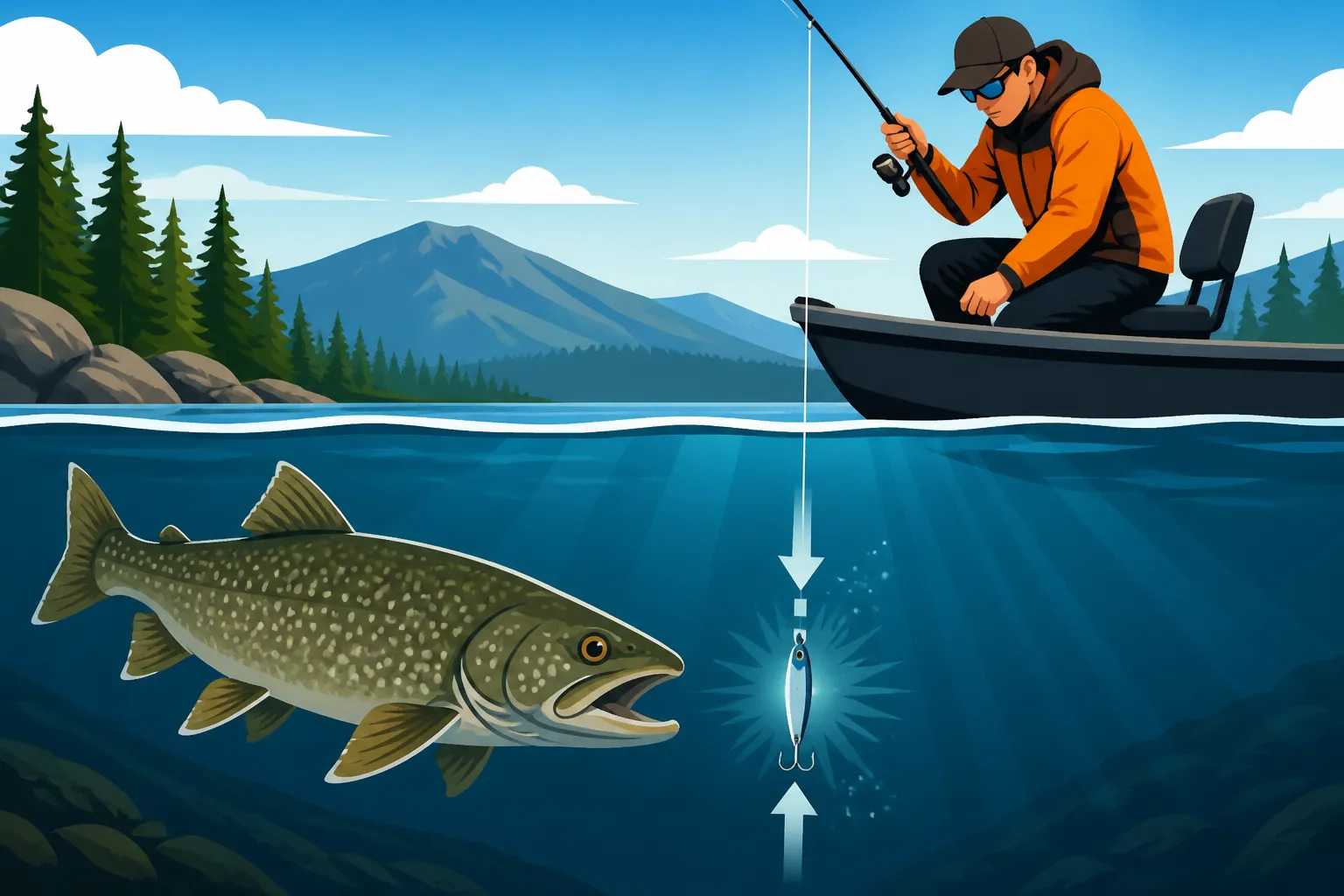
Once you're positioned, drop your lure straight down. Pay close attention as it falls; sometimes a laker will hit it on the drop! Let it hit the bottom, then reel up a few feet. Lake trout often feed just above the bottom, but they can also suspend much higher. The basic jigging motion involves a sharp lift of the rod tip, anywhere from one to five feet, followed by letting the lure fall back down on a semi-slack line. The "fall" is often when the strike occurs, so be ready.
Vary your retrieve. Some days, a fast, aggressive snap and fall works best. Other times, a subtle lift-and-drop, almost a slow-motion presentation, will entice bites. Experiment with the height of your lifts, the speed of your drops, and the pauses in between. It's often helpful to count your jigging cycles (e.g., "lift, fall, one-two-three, repeat") to help you replicate successful patterns. Remember, you're trying to imitate a wounded or fleeing baitfish. Every twitch and flutter can trigger a predatory instinct.
Reading Your Electronics for Bites
Your fish finder isn't just for locating fish; it's a powerful tool for seeing your lure and the fish's reaction to it. Many modern units are sensitive enough to display your jig as a small line or dot. Watch for fish marks approaching your lure. If a fish rises to meet your jig, or even just sits directly underneath it, that's a strong indicator they're interested. This visual feedback allows you to adjust your presentation in real-time. If a fish is following but not hitting, try changing your jigging cadence, speeding it up, slowing it down, or giving it an extra long pause.
Sometimes a bite will be a violent strike that nearly rips the rod from your hands. Other times, especially in deep water, it might feel like a subtle tap, a slight weight, or even just the line going slack as the fish swims up with your lure. This is why the braided line and sensitive rod tip are so important. When you feel anything out of the ordinary, set the hook! A quick, firm upward sweep of the rod is usually all it takes.
Tips for Maximizing Your Vertical Jigging Success
Vertical jigging is a continuous learning process. Even seasoned anglers find new tricks. Here are a few extra tips to help you put more lake trout in the boat.
Seasonal Considerations and Adjustments
Lake trout behavior changes throughout the year, and so should your jigging approach.
- Spring (Ice-out to early summer): Right after ice-out, lake trout can often be found shallower, cruising rocky points and submerged humps as they feed actively. They might still be relatively deep, but not necessarily in the extreme depths of mid-summer. Jigging shallower structure (20-50 feet) can be very productive.
- Summer: This is when lakers retreat to their deepest, coolest haunts. You'll be focusing on depths of 60-120+ feet, often suspended over basins or tight to deep offshore structure. This is prime time for vertical jigging. Focus on finding the thermocline and any associated baitfish.
- Fall: As water temperatures drop, lake trout become more active and can often be found shallower again, particularly as they prepare for spawning. They might be in 30-70 feet of water, aggressively feeding on schools of baitfish before winter sets in.
Always consult the New Hampshire Fishing Season Dates and Closures and New Hampshire Fishing Regulations Explained for specific water bodies, as rules can vary and impact your seasonal plans. Also, remember that baitfish presence is often a bigger driver than the calendar. Find the smelt, find the lakers.
Common Mistakes to Avoid
Even with the right gear and knowledge, it's easy to make mistakes. Here are some of the most common pitfalls when vertical jigging for lake trout:
- Not using your electronics effectively: Just having a fish finder isn't enough; you need to understand what you're seeing and how to interpret it. Don't be afraid to adjust sensitivity and zoom settings.
- Lack of patience: Lake trout aren't always biting like crazy. Sometimes you need to sit on a school of fish and work your lure for a while before one commits. Don't give up too quickly on a promising mark.
- Too much slack line: While you need some slack for the lure to flutter naturally on the fall, too much slack means you won't feel subtle bites or be able to set the hook effectively. Maintain a semi-taught line.
- Not varying your presentation: If one retrieve isn't working, change it up! Try different jigging motions, speeds, and pauses. Sometimes a subtle change is all it takes to trigger a strike.
- Using too light of tackle: This isn't panfish fishing. Lake trout are strong, and you're often fighting them in deep water. Underpowered gear can lead to lost fish and broken lines.
- Ignoring safety: When out on the water, especially in deeper, larger lakes, always prioritize safety. Wear your life jacket, know how to operate your boat, and be aware of changing weather conditions. Life Jacket Requirements for New Hampshire Boaters is a must-read for all anglers.
By understanding these common mistakes and actively working to avoid them, you'll significantly increase your chances of success. Vertical jigging for lake trout can be incredibly rewarding, offering a direct, interactive way to connect with these magnificent deep-water dwellers.
Disclaimer
This article is for general informational purposes only and does not constitute professional advice. Laws, prices and regulations vary by location and change over time. Consult a qualified professional for guidance on your specific situation.