Best trolling spread for landlocked salmon
Few things are as frustrating as knowing landlocked salmon are cruising beneath your boat, but you just can't get them to bite. It's a common scenario for many anglers, especially in New Hampshire's vast and deep lakes. The key to unlocking consistent success often lies not just in your lure choice, but in how you present a varied "trolling spread" to these elusive fish. This guide will walk you through crafting the ultimate trolling spread to entice New Hampshire's magnificent landlocked salmon, covering everything from gear to specific configurations.
The Elusive Nature of New Hampshire Landlocked Salmon and Why Spreads Matter
Landlocked salmon are a prized sportfish in New Hampshire, known for their powerful fights and incredible beauty. However, they're also notoriously challenging to catch because of their nomadic nature and preference for specific water conditions. Unlike some other species that hug structure, salmon often roam the open water, chasing down baitfish. This makes presenting your offerings in a way that maximizes your chances of interception absolutely crucial, and that's where a well-thought-out trolling spread becomes your best friend.
Understanding Salmon Movement and Feeding Habits
Landlocked salmon are pelagic, meaning they inhabit the open water column, not necessarily sticking to the bottom or specific submerged features like bass often do. They are predators that follow schools of baitfish, primarily rainbow smelt, which are their main food source in many New Hampshire lakes. Understanding this behavior is paramount to success. Salmon are constantly on the move, often suspending at certain depths where water temperature and oxygen levels are optimal, usually near the thermocline during warmer months. They're also highly light-sensitive, tending to go deeper on bright, sunny days and moving shallower during low light conditions or on overcast days.
Because of this constant movement and their pursuit of fast-moving prey, a single line in the water is often a shot in the dark. You need to cover a wide area and multiple depths to increase the odds of a salmon crossing paths with one of your lures. Think of it like a net; the wider and deeper your net, the more likely you are to catch something. This is the fundamental principle behind a trolling spread – it's about maximizing your lure's presence in the water column and horizontally across the water to intersect with these cruising fish.
The Importance of Presentation in a Spread
Beyond simply covering water, a trolling spread allows for diverse presentations. Salmon can be finicky; one day they might hit a small silver spoon flashing erratically, and the next they might prefer a subtle fly pattern mimicking a natural smelt. With a spread, you can deploy several different lure types, colors, and actions simultaneously. This strategy lets the fish "tell" you what they want. If one rod starts getting all the action, you can then adjust the other rods in your spread to match that successful presentation. It's a real-time problem-solving approach to salmon fishing.
Furthermore, varying the distance of your lures behind the boat can be just as important as varying depth. Some salmon might be boat-shy, preferring lures that are far back in the wake, while others might be aggressive and hit closer to the prop wash. A good spread incorporates these horizontal variations too, creating a comprehensive "net" that covers not just different depths but also different zones relative to your boat. It’s a dynamic system that allows for constant adaptation to what the fish are doing on any given day. You can learn more about how to tempt these fish by reading our guide on How to Catch Landlocked Salmon in New Hampshire.
Essential Gear for Your Landlocked Salmon Trolling Spread
Before you can build an effective trolling spread, you need the right tools. Landlocked salmon fishing often requires specialized gear to handle the depths, the speed, and the powerful runs these fish are known for. Investing in quality equipment will not only make your fishing more productive but also more enjoyable.
Rods, Reels, and Line: The Foundation
Your rod and reel setup is the backbone of your trolling spread. You'll want specific characteristics to effectively fish for salmon. For rods, look for something in the medium-light to medium action range, typically 7 to 9 feet in length. These longer rods help to spread lines out, absorb shock from strong runs, and provide leverage for fighting fish. A sensitive tip is crucial for detecting subtle bites, while a robust backbone is necessary to handle a hard-fighting salmon. For deep-water trolling, you might even consider specialized downrigger rods that have a softer tip to absorb the pressure from the downrigger ball and a strong butt section.
Reels are where line capacity and retrieval power come into play. Line counter reels are a true game-changer for trolling, as they allow you to precisely deploy your lures to a specific depth or distance behind the boat, making repeatable presentations incredibly easy. Look for reels with smooth drags that can handle sustained runs without overheating. When it comes to line, many anglers use a braided main line for its strength, lack of stretch (for increased sensitivity), and thin diameter, especially when using downriggers. For leaders, fluorocarbon is a popular choice due to its low visibility in clear water and its abrasion resistance. You might also opt for a premium monofilament on some setups, particularly if you want a bit more stretch to act as a shock absorber. Knowing the appropriate Best Line Weight for Lake Trout Trolling can also give you insights as lake trout are often caught using similar gear.
Lures, Attractors, and Baits: The Enticers
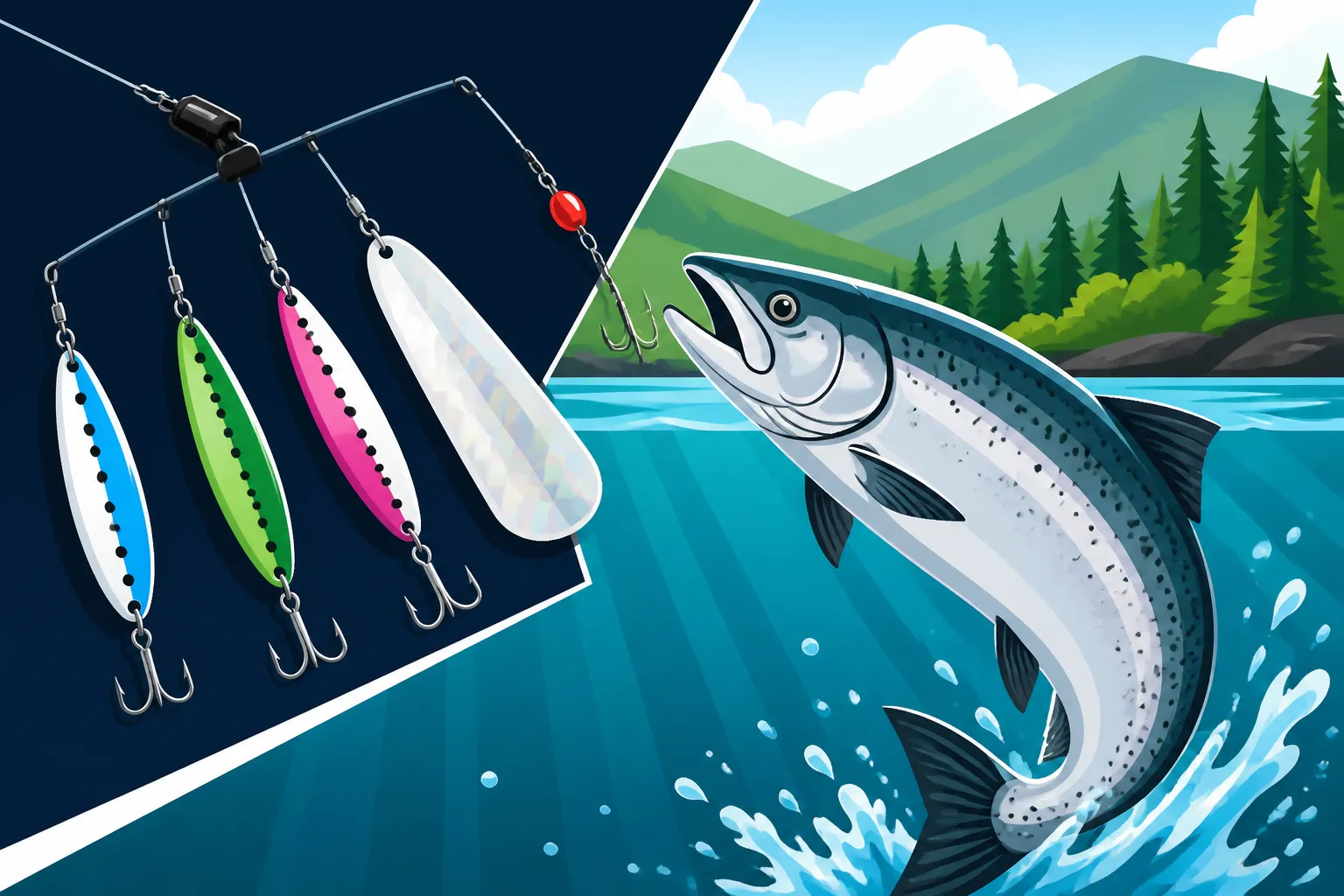
The variety of lures available for landlocked salmon is vast, and experimenting is part of the fun. Classic choices include small spoons like the venerable Mooselook Wobbler, Suttons, or other flutter spoons. These imitate smelt or other small baitfish and come in a dazzling array of colors and patterns. Stickbaits, such as Rapalas or S.K.P.s, are also highly effective, especially those with a slender profile that mimics a smelt. Don't forget streamer flies, often trolled behind a lead core or sinking line, which can be incredibly realistic imitations of natural forage. Colors will vary depending on water clarity and light conditions; natural silver, blue, and black are often go-to choices, but don't shy away from brighter colors on cloudy days or in stained water.
Attractors like flashers or dodgers aren't meant to be eaten directly but create significant commotion and flash in the water, mimicking a school of baitfish or drawing attention to your trailing lure. They come in various sizes and colors, and the key is to match their action to your trolling speed and the type of lure you're pulling behind them. For natural bait, live or dead smelt (where legal) are exceptionally effective, often fished on a harness. Shiners are another excellent option. Always check the current New Hampshire Fishing Regulations Explained regarding bait use, as restrictions can vary by water body. Many of these items, from line counter reels to a diverse range of lures, can be conveniently found and ordered through retailers like Amazon.
Depth Control Devices: Reaching the Strike Zone
Because salmon can suspend at precise depths, mastering depth control is absolutely critical for success. You have several tools at your disposal:
- Lead Core Line: This specialized line has a lead core wrapped in a braided sheath, causing it to sink. It's color-coded in 10-yard segments, with each segment typically sinking 5-7 feet at common trolling speeds. By deploying a specific number of colors, you can achieve a fairly accurate depth without external weights. It's fantastic for mid-range depths and provides a more natural, flexible presentation than a heavy weight directly on the line.
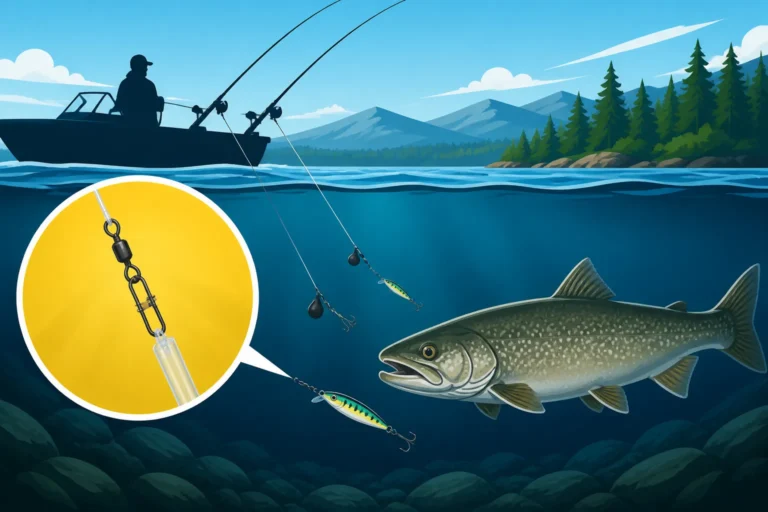
- Downriggers: These are the most precise tools for depth control. A heavy ball (6-12 lbs) is deployed to a specific depth, and your fishing line is clipped to a release clip on the downrigger cable. When a fish strikes, the line releases from the clip, allowing you to fight the fish directly without the weight of the downrigger ball. Downriggers allow you to run very light leaders and lures deep, presenting them naturally. They are indispensable for deep-water salmon fishing. For instance, knowing the Best Downriggers for Lake Trout Trolling can guide your choice since these devices are shared for both species.
- Dipsy Divers, Jet Divers, and Planer Boards: These devices help you spread your lines horizontally away from the boat and achieve varying depths. Dipsy Divers are disc-shaped devices that dive to a specific depth and trip when a fish strikes. Planer boards float on the surface and pull lines out to the side of the boat, allowing you to cover a much wider swath of water and keep lures out of the boat's prop wash. These are particularly useful when running multiple lines from the surface to mid-depths.
- Snap Weights/In-line Weights: These are simpler, clip-on weights that can be added to your line at a specific distance from your lure to help it sink. While less precise than downriggers or lead core, they are easy to use and can be effective for slight depth adjustments.
A comprehensive trolling spread often employs a combination of these depth control methods, allowing you to target fish throughout the water column and across a wide horizontal plane.
Crafting Your Multi-Dimensional Trolling Spread
Now that you understand the gear, let's talk about putting it all together. The goal of a trolling spread is to cover as much water as possible, both horizontally and vertically, while presenting a variety of lures. The number of rods you can deploy depends on your boat size, equipment, and local regulations. Always check the New Hampshire Bag and Possession Limits by Species and general rules, as there are often limits on the number of lines per angler or per boat.
The Classic 2-Rod Spread: Getting Started
If you're just starting out or fishing with limited space, a two-rod spread is an excellent way to begin. This basic setup still allows you to cover different depths and test the waters.
- Shallow Line (Top-Water/Mid-Depth): This rod can be deployed with a long fluorocarbon leader and a small stickbait or spoon, fished simply off the back of the boat without any added weight or with a very light in-line weight. Alternatively, you could use a few colors of lead core to get it down to 10-20 feet. This line targets salmon that might be cruising shallower, especially during low light conditions, overcast days, or right after ice-out. Keep it well behind the boat, perhaps 100-150 feet, to avoid spooking fish.
- Deeper Line (Lead Core or Downrigger): For your second rod, focus on a deeper presentation. If you have a downrigger, set it to a specific depth where you've marked fish or bait (e.g., 30-50 feet). If using lead core, deploy several colors to reach depths of 25-40 feet. This line is crucial for targeting salmon that are holding deeper, particularly during bright conditions or in the middle of the day. Using a different lure type or color on this deeper line than your shallow line is a smart way to figure out what the fish prefer.
Even with just two rods, you're presenting two distinct profiles at two different depths, significantly increasing your chances compared to a single line.
Expanding to a 4-Rod Spread: Covering More Water and Depths
Once you're comfortable with two rods, expanding to a four-rod spread offers a much more comprehensive approach, often becoming the go-to for many dedicated salmon anglers. This typically involves incorporating more advanced depth control methods.
A common 4-rod setup might look like this:
- Two Downriggers: These are your primary deep-water attack. Run one downrigger at a specific depth, perhaps 40 feet, and the other at a slightly different depth, maybe 50-60 feet. This creates a vertical separation. You can also vary the lead length behind the downrigger ball for each rig. Using different lures on each downrigger allows for experimentation.
- One Lead Core Line: This rod is excellent for targeting mid-depths, often between 20-35 feet. Deploy enough colors to reach your desired depth, and run it further back behind the boat than your downriggers. This presents a lure in a more natural, free-swimming manner.
- One Flat Line (Surface/Shallow): Similar to the shallow line in the 2-rod spread, this rod fishes closer to the surface or in the top 10 feet. It’s perfect for stickbaits or small spoons that run well on their own. This line can be run very long, sometimes 200 feet or more behind the boat, to target wary fish.
This configuration gives you four lures covering different depths and distances behind the boat, significantly improving your odds of finding active salmon. Remember that you can also learn more about New Hampshire Boating Laws for Anglers to ensure you're compliant with all regulations while running multiple lines.
Advanced 6+ Rod Spreads: Maximum Coverage and Experimentation
For those with larger boats and dedicated setups, a 6-rod (or even more) spread offers maximum coverage and the ultimate in experimentation. This typically involves using a combination of downriggers, lead core, and side planer boards to achieve both vertical and horizontal separation.
An advanced 6-rod spread might look something like this:
- Two Downriggers (Deep): These would be your deepest presentations, perhaps 50-70 feet, targeting fish holding tight to the thermocline or deeper.
- Two Lead Core Lines (Mid-Depth): These would cover depths from 20-45 feet, varying the number of colors deployed on each rod. Run these at different distances behind the boat.
- Two Planer Board Lines (Shallow/Side): These rods are run off the sides of the boat using planer boards, pulling your lures far out to the left and right. This creates a massive horizontal spread, covering water that wouldn't be disturbed by your boat's presence. These are often fished with stickbaits or spoons that run 5-15 feet deep.
This setup creates a massive "fishing net" behind and to the sides of your boat, covering a wide range of depths and profiles. It’s particularly effective in large lakes like Lake Winnipesaukee, where salmon have vast areas to roam.
Here's a potential 6-rod spread configuration in a table format:
| Rod Position | Depth Control Method | Target Depth Range | Lure Type (Example) | Distance Behind Boat (Approx.) | Purpose |
|---|---|---|---|---|---|
| Port Side Out | Planer Board | 5-15 feet | Stickbait (Silver) | 100-150 ft (off to side) | Wary fish, maximum horizontal spread |
| Port Side In | Lead Core (3-4 colors) | 20-30 feet | Small Spoon (Blue) | 75-100 ft | Mid-depth, natural presentation |
| Port Downrigger | Downrigger | 40-50 feet | Streamer Fly | 10-20 ft (behind ball) | Precise deep presentation, subtle lure |
| Starboard Downrigger | Downrigger | 55-65 feet | Spoon (Green/Yellow) | 15-25 ft (behind ball) | Deeper fish, different color/action |
| Starboard In | Lead Core (5-6 colors) | 35-45 feet | Stickbait (Black/Gold) | 100-120 ft | Deeper mid-depth, different action |
| Starboard Out | Planer Board | 5-15 feet | Spoon (Fire Tiger) | 100-150 ft (off to side) | Wary fish, different lure type/color |
This table is just an example; the exact configuration will depend on your specific gear, the conditions, and the salmon's behavior on a given day. Always be ready to adjust!
Tips for Success and Adapting to New Hampshire's Unique Waters
A well-crafted trolling spread is a dynamic system. You can't just set it and forget it. Constant observation, adjustment, and understanding of the local conditions are what separate good days from great days on the water.
Speed, Turns, and Reading Your Electronics
One of the most critical factors in trolling for landlocked salmon is speed. Salmon are fast, active predators, and your lures need to mimic the movement of their prey. Typically, trolling speeds range from 1.5 to 3 miles per hour, but it can vary. Pay close attention to your lure's action at different speeds; some lures are designed to run optimally at specific speeds. If you're not getting bites, try subtle changes in speed. Even a half-mile-per-hour adjustment can make a huge difference. You can also learn more about Trolling Techniques for New Hampshire Lake Trout as these are often applicable to salmon.
Turns are another powerful tool in your trolling arsenal. When you make a turn, the lures on the inside of the turn will slow down and drop, while those on the outside will speed up and rise. This change in speed and depth can often trigger a strike from following fish that were hesitant to commit. Don't be afraid to make wide, sweeping turns periodically.
Finally, your boat's electronics are your eyes underwater. Use your fish finder to locate schools of baitfish, identify the thermocline (where temperatures change rapidly, often holding salmon), and even spot individual fish or arches that could be salmon. Pay attention to the depths where you're seeing activity and adjust your spread accordingly. If you consistently mark fish at 45 feet, make sure you have at least one or two lures running at that precise depth. Quality fish finders, which can be sourced from retailers like Amazon, are invaluable for this type of precision trolling.
Adjusting for Conditions and Specific Lakes
New Hampshire's fishing conditions can change rapidly, and so should your trolling strategy. On bright, sunny days, salmon will generally hold deeper to avoid the intense light, so you'll want to focus your downriggers and deeper lead core lines. On cloudy or overcast days, or during dawn and dusk, salmon might move much shallower, making your flat lines and planer board setups more effective. Water temperature is also key; use a thermometer to find the thermocline, as this is often where salmon will be actively feeding.
New Hampshire is home to many fantastic salmon lakes, each with its own characteristics. Lakes like Lake Winnipesaukee and Sunapee Lake are large and deep, often requiring deeper trolling presentations. Newfound Lake is another excellent spot, known for its clear water. In smaller, shallower lakes or at certain times of the year, salmon might be found closer to the surface. Always tailor your approach to the specific water body you're fishing and the conditions of that particular day. For example, understanding the Best Time of Day to Catch Landlocked Salmon on Sunapee Lake might influence your spread choices.
Maintenance and Best Practices
Finally, don't underestimate the importance of routine maintenance and sound fishing practices. Regularly check your lines for nicks and abrasions, especially after catching a fish or if you've been dragging through potential snags. Re-tie knots often. Ensure your lure's hooks are razor-sharp; a dull hook can mean the difference between a landed fish and a missed opportunity. Also, periodically check the action of your lures next to the boat to ensure they're running true at your chosen trolling speed. Sometimes a lure can foul, spin improperly, or pick up a piece of weed, rendering it ineffective.
When running multiple lines, organization is key. Use rod holders that securely hold your rods and keep your lines from tangling. Have a system for deploying and retrieving lines so you don't end up with a mess when a fish strikes. Being prepared and organized will reduce frustration and keep you focused on what matters most: catching those magnificent New Hampshire landlocked salmon!
Disclaimer
This article is for general informational purposes only and does not constitute professional advice. Laws, prices and regulations vary by location and change over time. Consult a qualified professional for guidance on your specific situation.