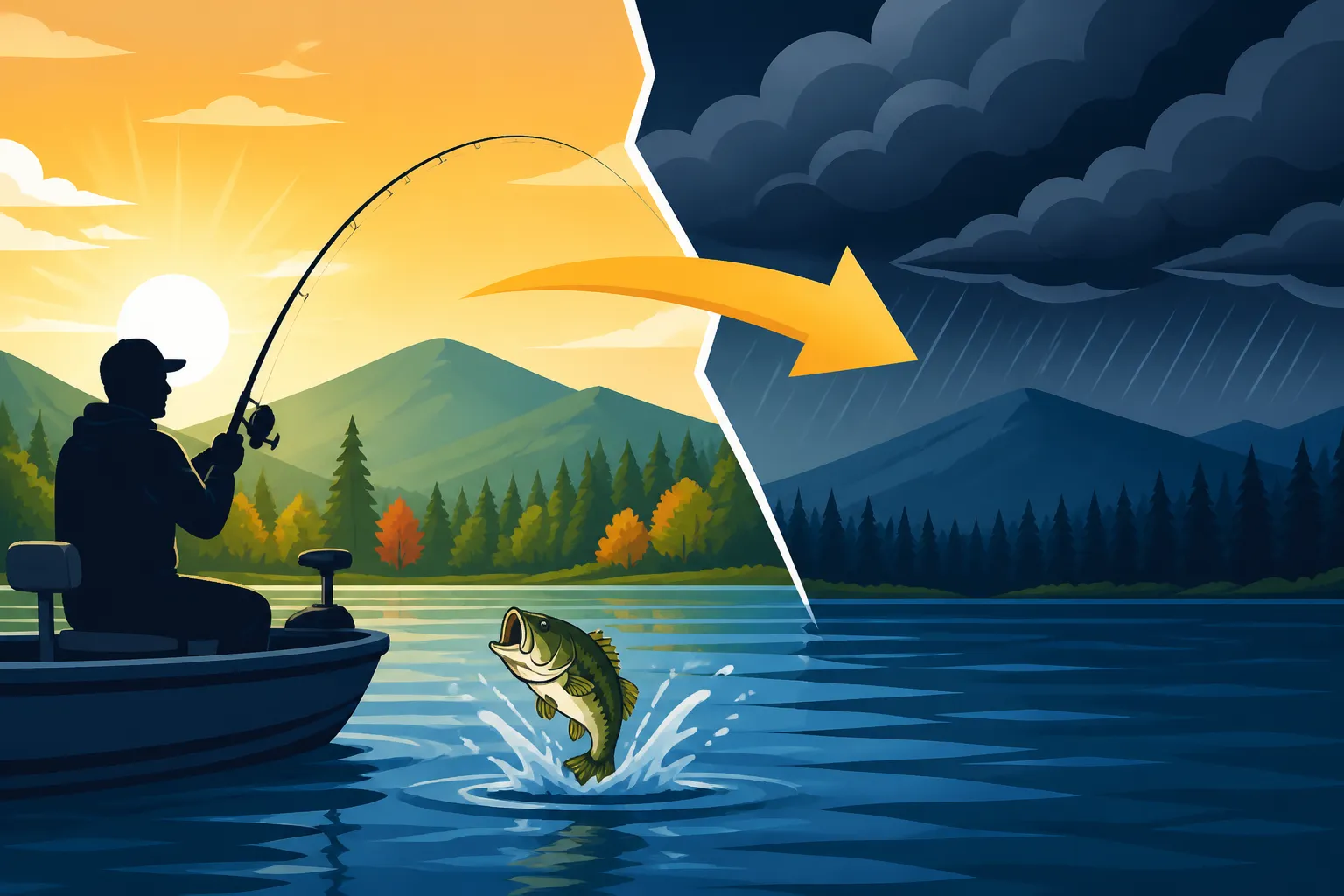
Best time to fish before a cold front
You check the forecast on Thursday night and see it: a sharp cold front sweeping across New Hampshire on Saturday, with bluebird skies and a north wind behind it. Your only free day is the weekend, and everyone says fishing dies after a front. The good news is that the hours just before that front arrives can be the best of the whole week. This guide shows you how to time them.
What Happens to Fish Before a Cold Front
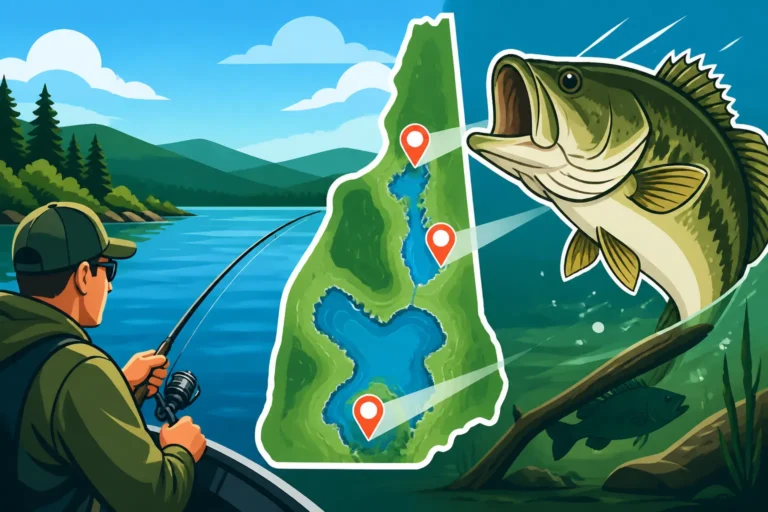
A cold front is the leading edge of a cooler, drier air mass pushing into warmer, moister air. In New Hampshire, fronts usually roll in from the west or northwest, sliding over the Connecticut River valley and across the Lakes Region before heading out to the Seacoast. As one approaches, the weather goes through a predictable sequence, and fish respond to each stage of it.
The Pre-Front Feeding Window
The period before a front is often called the pre-front bite, and anglers have talked about it for generations. As the front approaches, barometric pressure starts to fall, clouds thicken, the wind usually picks up from the south or southwest, and the light dims. Many anglers find that bass, pickerel, perch and trout become noticeably more active and aggressive during this window.
Nobody knows every reason fish respond this way, but the combination of falling pressure, reduced light and wind-driven chop seems to make predators more comfortable roaming and feeding. Baitfish scatter in the chop, and the dim light gives predators an ambush advantage. Whatever the exact cause, the pattern is consistent enough that experienced anglers plan around it. If you want to dig into the science, our article on How barometric pressure affects New Hampshire bass fishing covers it in more detail.
The window can be short. On a fast-moving front, the best action might last only a few hours. On a slow front, you might get a full day of good fishing before the weather turns.
How the Bite Changes Hour by Hour
Here is a rough timeline of what typically happens as a front approaches and passes. Every front is different, so use this as a guide rather than a guarantee.
| Stage | Typical Weather | Fish Behavior | Best Approach |
|---|---|---|---|
| One to two days before | Stable, warm, light winds | Normal patterns | Standard tactics |
| Twelve to twenty-four hours before | Pressure starting to fall, clouds building | Activity increasing | Cover water, moving baits |
| Final few hours before | Pressure dropping fast, wind rising, dark skies | Often the peak feeding window | Fast, aggressive presentations |
| Front passes | Rain, gusts, possible thunder | Erratic, safety first | Get off the water |
| One to two days after | Clear skies, high pressure, cold north wind | Sluggish, tight to cover | Slow, finesse presentations |
Why Lakes and Rivers React Differently
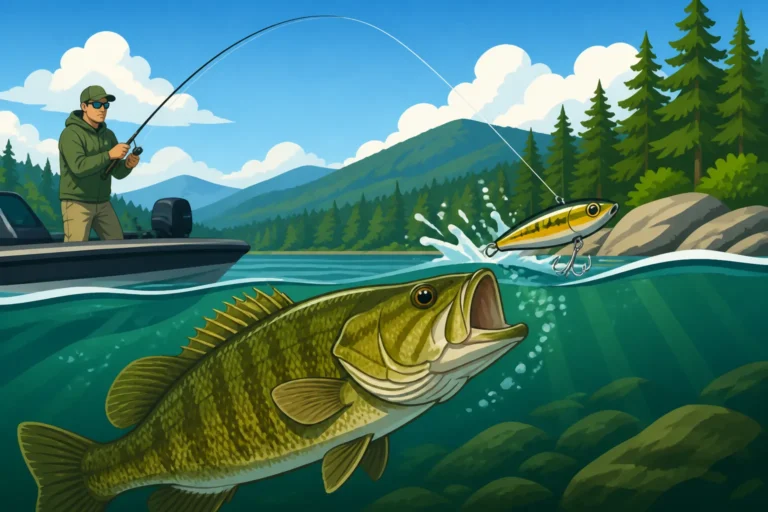
Big lakes like Winnipesaukee, Squam and Sunapee respond to fronts differently from small ponds and rivers. On big water, the wind that comes ahead of a front stacks up waves on windward shores, pushing baitfish against points and rocky banks. Smallmouth bass often feed heavily along these wind-blown shorelines. Our guide to Smallmouth Bass Habits on Winnipesaukee explains more about where they hold.
Small ponds react more quickly to temperature changes, so the pre-front window may be shorter and the post-front slump sharper. Rivers can be affected by rain that comes with the front, which may raise water levels and color the water. Trout in rivers often feed actively as the water rises and colors slightly, but heavy rain can make rivers unfishable.
Picture two anglers fishing the same Saturday. One is on a small, shallow pond near Concord, and the other is trolling for salmon on a deep lake up north. The pond angler might see an explosive bite for two hours before the wind shift and then nothing at all, because the shallow water cools fast once the front arrives. The lake angler may find the fish less dramatic but more consistent, since deep, cold water buffers the change. Knowing which kind of water you are fishing helps you set realistic expectations and decide how long to stay.
Timing Your Trip Around the Front
The trick is to be on the water during the right window and to know when to quit.
Reading the Forecast Like an Angler
Watch the forecast for several days ahead. Look for the timing of the frontal passage, the wind direction and speed before and after, and any thunderstorm risk. Pay attention to barometric pressure trends. A pressure graph showing a steady drop followed by a sharp rise is the classic cold front pattern.
A simple barometer or a weather app with pressure graphs can help you track these changes. Many anglers buy an inexpensive digital barometer or a fishing weather station from Amazon to keep in the truck or boat.
The most useful forecast details are the ones people skip. Note the expected wind shift, which usually swings from south or southwest ahead of the front to west or northwest behind it. Note the hour the rain is supposed to start, because that is often the end of the safe fishing window rather than the start of something better. And note the overnight low after the front, since a big temperature drop on a small pond can shut the bite down for a day or two. A front that drops temperatures five degrees is a very different event from one that drops them twenty.
Picking the Best Hours
In general, the best time to fish before a cold front is the last several hours before it arrives, when pressure is falling fastest and the wind is picking up. If the front is forecast to arrive in the evening, the afternoon before can be excellent. If it is due in the morning, the previous evening and early morning may be best.
Combine this with normal time-of-day patterns. Dawn and dusk are prime feeding times anyway, and if they coincide with the pre-front window, the fishing can be outstanding. For salmon on lakes like Sunapee, see Best Time of Day to Catch Landlocked Salmon.
Here is how I would plan a typical Saturday when a front is due to arrive in the late afternoon.
- Launch or arrive at the bank at first light to take advantage of the normal dawn feeding period.
- Spend the morning on dependable spots with steady, proven tactics while conditions are still stable.
- Around midday, as clouds thicken and the wind builds, move to wind-blown points and shorelines.
- Switch to faster, more aggressive lures and fish hard through the early afternoon peak.
- Watch the western sky and the radar, and head for the ramp or the car at the first sign of lightning or a sudden temperature drop.
- Make a note of where and how you caught fish so you can compare with the next front.
That last step matters more than it seems. Every lake has its own personality, and a simple log of fronts and results will teach you more about your home water in one season than any article can.
Seasonal Differences in New Hampshire
Cold fronts affect fishing differently in each season. In spring, a front can drop water temperatures and shut down bass that were moving shallow to spawn. In summer, a front can provide relief from heat and trigger feeding. In fall, fronts drive the seasonal cooling that pushes fish into heavy feeding before winter. Late September and October fronts can be especially productive on the big lakes, when smallmouth gang up on rocky points and feed hard before each new blast of cold air. Spring fronts are trickier: in May, when bass are cruising the shallows to spawn, the pre-front warm spell can produce some of the easiest fishing of the year, but the cold snap that follows can push fish off their beds and out to the first drop-off for a day or two. Read New Hampshire Fishing Seasons by Month for more context.
Ice anglers notice fronts too. On frozen lakes and ponds, many anglers find that perch, pickerel and trout often bite better as pressure falls ahead of a storm, while the bright, cold days after a front are known for slow flags and finicky fish. The same safety rules apply on the ice as on open water: a front can bring dangerous winds across a frozen lake, and blowing snow can make it hard to find your way back to shore.
Lures and Tactics for the Pre-Front Bite
Moving Baits That Cover Water
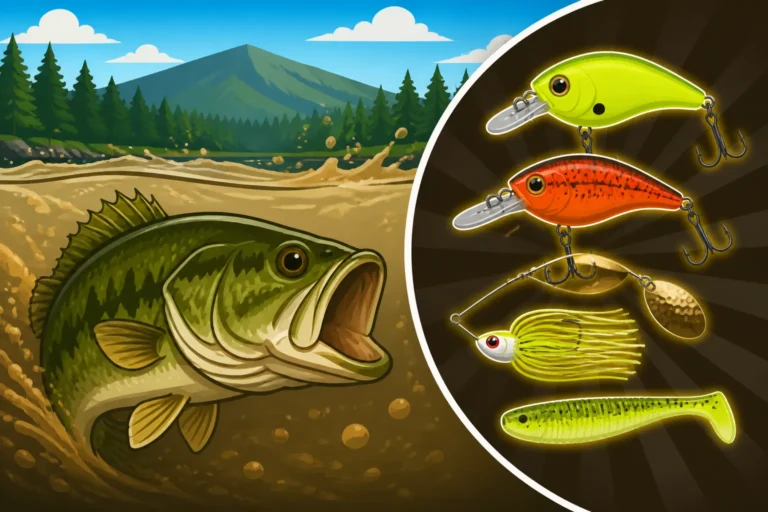
During the pre-front window, fish are often active and willing to chase. This is the time to use moving baits that cover water quickly. Spinnerbaits, crankbaits, swimbaits and topwater lures are excellent choices. See How to fish a spinnerbait for New Hampshire lake bass and Topwater Fishing for Smallmouth Bass in New Hampshire for details.
In stained water, bright colors and baits with lots of vibration help fish find your lure. Our guide to Best crankbait for stained lake water has suggestions.
In clear water, such as many of the deeper lakes in the Lakes Region, natural colors that match local baitfish often work better, but the dim light ahead of a front lets you get away with slightly bolder colors than you could on a sunny day. Do not be afraid to experiment. The pre-front window is one of the few times when fish forgive a lure that is a little too big, a little too bright or retrieved a little too fast.
If you prefer bait, keep it moving rather than letting it sit. A live shiner drifted along a weed edge or a nightcrawler slowly dragged across a flat lets active fish find it quickly. Trout anglers on rivers can do well with spinners and streamers as clouds roll in, especially if a little rain starts to color the water before the heavy weather arrives.
Targeting Wind-Blown Banks
Wind is your friend during the pre-front window. Focus on windward shorelines, points and rocky banks where baitfish are pushed by the waves. Cast into the wind and retrieve with it, working your lure along the edge where the chop meets the shoreline.
The wind-blown bank theory works on small ponds too, though on a smaller scale. Even a light breeze will push surface food and plankton toward one shoreline, and baitfish follow. Start there, then work the nearest drop-off or weed edge if the shallows are empty. If you have a boat, use the wind to drift along the shoreline while casting rather than fighting it with the trolling motor all day. A drift sock or a good anchor helps you control your position when gusts pick up.
Staying Safe When the Front Arrives
Cold fronts can bring sudden, violent weather, including strong winds, heavy rain and lightning. On big lakes like Winnipesaukee, waves can build quickly and become dangerous for small boats. Watch the sky, monitor the forecast, and get off the water before the front arrives. Good rain gear is essential, and our guide to Best Rain Gear for New Hampshire Anglers covers what to bring. Many anglers order rain gear from Amazon before the season starts.
A few simple safety habits make a big difference. Tell someone where you are fishing and when you expect to be back. Keep your life jacket on, not under the seat, whenever the wind is rising. If you hear thunder, you are close enough to be struck, so leave immediately rather than finishing one more cast. And remember that the temperature behind a strong front can drop quickly, especially in spring and fall, so pack a warm layer even if the morning starts out mild. A compact dry bag from Amazon or a local outfitter keeps that extra layer and your phone dry when the rain hits.
After the front passes, the fishing usually slows. See Best time to fish after a cold front and Cold Front Fishing Tactics for New Hampshire Bass for strategies to handle post-front conditions.
If you can only fish one day around a front, choose the day before it rather than the day after. The pre-front window rewards average anglers with active fish, while the bluebird day after a front demands slow finesse presentations, precise boat control and a lot of patience. That is not to say you cannot catch fish after a front, because skilled anglers do it all the time. But for a weekend angler with limited time, the falling barometer is your best ally.
Disclaimer
This article is for general informational purposes only and does not constitute professional advice. Laws, prices and regulations vary by location and change over time. Consult a qualified professional for guidance on your specific situation.