Best downrigger settings for summer lake trout
Summer lake trout fishing in New Hampshire can be incredibly rewarding, but it often presents a unique challenge: these fish go deep as the surface waters warm, making them tricky to target effectively. Many anglers struggle with getting their lures down to the exact depth where these cold-water dwellers are actively feeding, leading to frustration and fewer strikes. This comprehensive guide will walk you through the nuances of downrigger settings, helping you precisely present your baits and dramatically improve your chances of success on New Hampshire's pristine deep lakes.
Understanding Lake Trout Behavior in Summer
Before we even talk about mechanical settings, it's crucial to grasp what drives lake trout behavior once the summer sun beats down. Understanding their preferences will inform every decision you make about your downrigger setup. These fish aren't just "deep"; they're reacting to very specific environmental cues.
The Deep Water Migration
As New Hampshire's lakes warm throughout late spring and early summer, the surface layers become uncomfortable for cold-loving species like lake trout. Their preferred water temperatures are typically in the low to mid-50s Fahrenheit, which is often found much deeper than you might expect during the dog days of summer. This means they'll migrate from shallower, post-ice-out feeding grounds to the cooler, more stable depths.
This migration isn't random; it's a calculated move to find their ideal thermal zone. You might find them congregating around deep structure, such as submerged humps, rocky ledges, or points that drop off into significant depths. These areas provide both the cooler water they crave and access to forage fish like rainbow smelt. Knowing this general pattern is your first step to success. You won't find them cruising the shorelines in July; you'll need to go to them, and that often means employing specialized gear like downriggers.
Thermocline and Oxygen Levels
The thermocline is a critical concept for summer lake trout fishing. This is the distinct layer within a lake where the water temperature changes rapidly with depth. Above the thermocline, the water is warm; below it, it's cold. Lake trout will often position themselves right around or just below this thermocline because it offers that ideal cool water. However, it's not just about temperature. Oxygen levels also play a vital role.
While deeper water is cooler, the very deepest parts of some lakes can become oxygen-depleted in late summer, especially in nutrient-rich waters. This means there's a "sweet spot" – a depth range where the water is both cool enough and has sufficient oxygen to support healthy lake trout. Your fish finder will be an invaluable tool here, as it can often show you the thermocline as a distinct band. If your electronics also have the capability to display water temperature and oxygen levels (though less common for recreational units), you're even further ahead. For a deeper dive into their habitat, check out our guide on Lake Trout Fishing in New Hampshire.
Essential Downrigger Components and Setup
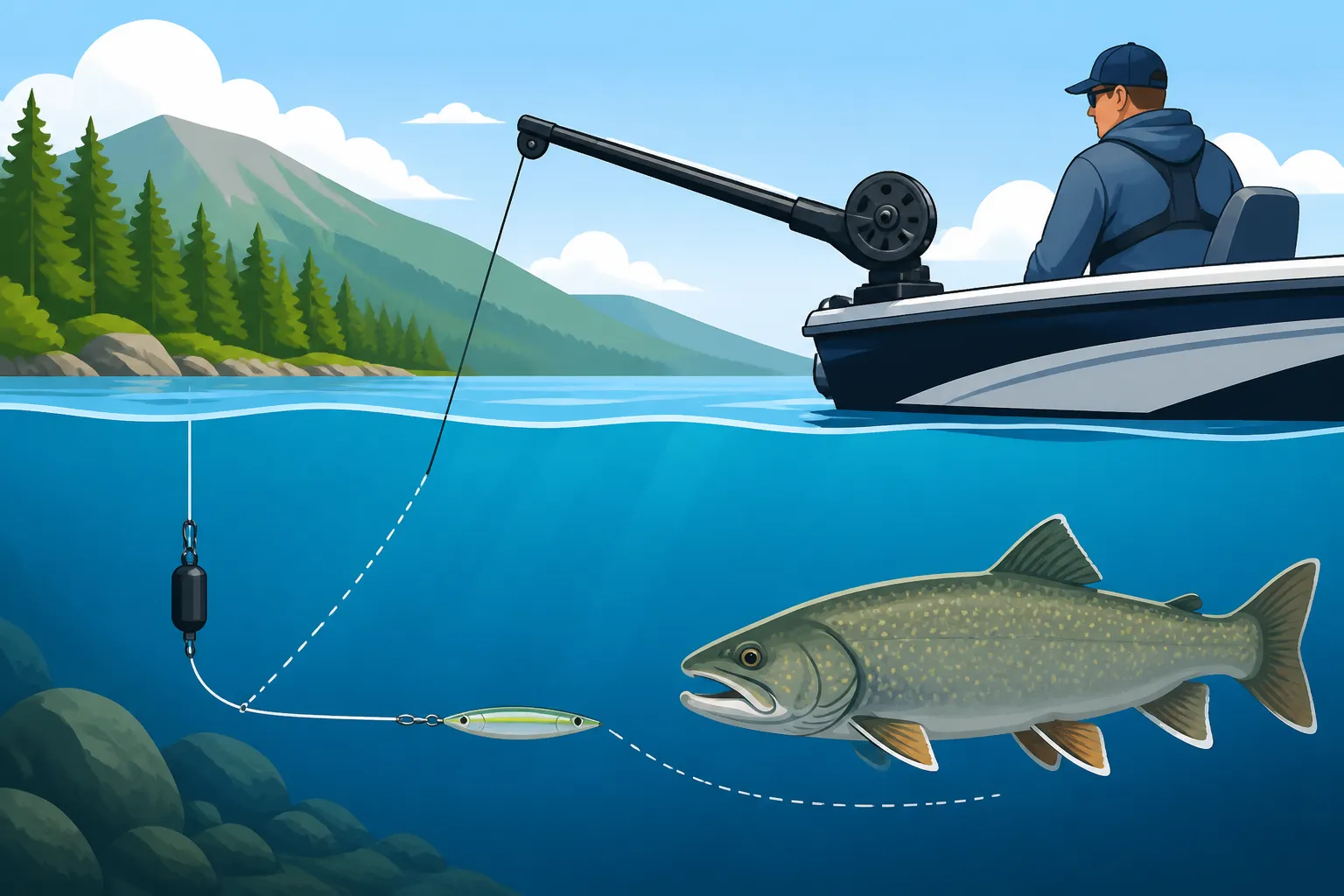
Downriggers might seem intimidating at first, with their cranks, cables, and clips, but they're fundamentally simple machines designed to do one thing: get your lure to a precise depth and keep it there while trolling. Understanding each component is key to effective use.
The Downrigger Unit Itself
A downrigger unit consists of a boom, a spool of cable (usually stainless steel or braided line), a cranking mechanism (manual or electric), and a depth counter. The boom extends out from your boat, positioning the downrigger ball and your fishing line away from your boat's wake and propeller. Electric downriggers, like those from Cannon or Scotty, offer push-button control for raising and lowering your weight, which can be a huge convenience, especially when frequently adjusting depths or when you're fishing alone. Manual downriggers, while requiring more effort, are often more affordable and perfectly effective for many anglers.
When mounting your downriggers, stability is crucial. They need to be securely attached to your boat, often to the transom or gunwales, with robust mounting plates. Consider the type of boat you have – a larger vessel might handle two or more downriggers with ease, allowing you to run a spread of lures at different depths. For smaller boats or kayaks, a single, carefully positioned downrigger might be sufficient. You can find a wide range of options, from basic manual models to advanced electric units with integrated rod holders, on platforms like Amazon.
Rods, Reels, and Line for Downrigging
While you can use your standard spinning or casting gear, dedicated downrigger rods and reels will make your life much easier and increase your success rate. Downrigger rods are typically longer (7-9 feet), with a softer, parabolic action that allows them to "load up" when the line is clipped to the downrigger release. This bend in the rod tip acts as a visual indicator of a strike when the line pops free.
For reels, a robust baitcasting or level-wind reel with a strong drag system and a decent line capacity is ideal. You'll be fighting fish that often come from deep water, so power and reliability are paramount. As for line, many anglers opt for monofilament (15-25 lb test) for its stretch, which acts as a shock absorber when a fish hits. Some prefer fluorocarbon for its invisibility and low stretch in deep, clear water, or even braid with a mono or fluoro leader. The choice often comes down to personal preference and the specific conditions. Our guide on Best Line Weight for Lake Trout Trolling offers more specific recommendations.
Selecting Your Downrigger Ball and Release
The downrigger ball is the weight that carries your fishing line to the desired depth. These come in various weights (typically 6-12 pounds), shapes (cannonball, pancake, torpedo), and even colors. Heavier balls maintain depth better in current or at faster trolling speeds, while lighter ones are fine for slower speeds or calm conditions. Consider a pancake-shaped ball if you experience significant blowback (the angle the line takes due to water resistance) as its design helps it track straighter.
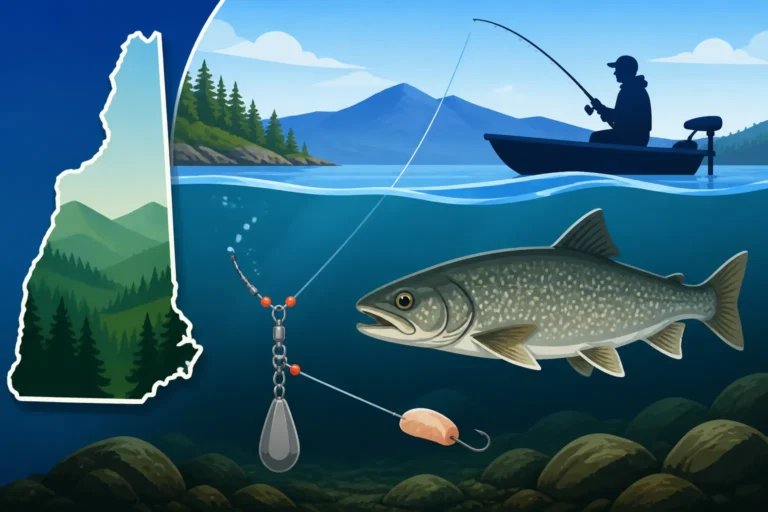
The release clip is arguably the most critical component. This small device attaches your fishing line to the downrigger cable, allowing it to "release" when a fish strikes. There are many types, from simple pinch clips to more sophisticated stacker releases that allow you to run multiple lines from a single downrigger. The tension on the release needs to be set correctly: tight enough to hold your lure at depth without prematurely releasing, but light enough to spring free with a strike. Experimentation is key here; a good starting point is to set the tension so a gentle tug will release the line. You can often find a variety of downrigger balls and release clips on Amazon.
Dialing In Your Downrigger Settings for Success
This is where the art and science of downrigging truly come together. Getting your settings just right involves a careful balance of depth, speed, and lure presentation.
Depth Management: Finding the Strike Zone
The core function of a downrigger is precise depth control. As discussed, lake trout will seek out specific temperature and oxygen zones in summer. Your goal is to get your lure directly into that zone. Start by using your fish finder to locate schools of baitfish, marks that resemble larger fish (likely lake trout), and the thermocline. Many anglers will try to fish just above, in, or just below the thermocline.
Don't just pick a depth and stick with it. Lake trout can suspend at various levels, and their exact preferred depth might change throughout the day or due to weather patterns. Start by setting one downrigger at a depth where you're seeing activity, and then stagger other downriggers at slightly different depths (e.g., 5-10 feet increments) until you find where the fish are hitting. Pay close attention to your depth counter; modern electric downriggers often have digital counters that are incredibly accurate. If you're using multiple downriggers, you can get a lot of information by spreading them out. Our article How deep lake trout go in summer explores this topic further.
Speed and Lure Presentation
Trolling speed dramatically affects how your lure behaves in the water and how much "blowback" your downrigger ball experiences. Lake trout often prefer relatively slow trolling speeds, typically between 1.5 and 2.5 miles per hour, but this can vary depending on the lure type and fish activity. Experiment with speed until you find what triggers bites.
The distance you run your lure behind the downrigger ball (the "lead") is also critical. A longer lead (e.g., 50-150 feet) can make your lure appear more natural and less affected by the downrigger ball itself, especially in clear water. However, too long a lead makes it harder to detect subtle bites and to retrieve quickly. A good starting point is usually 75-100 feet. The lure presentation itself is vital; make sure your spoons, stickbaits, or flies are swimming with their intended action at your chosen speed. For specific lure recommendations, refer to Best Lures for Lake Trout Trolling.
Staggering Depths and Spreads
When you're running multiple downriggers, staggering your depths and lures creates a more effective presentation and helps you pinpoint exactly where the fish are. For example, if you have two downriggers, you might set one at 60 feet and the other at 75 feet. If you have four, you could run them at 50, 65, 80, and 95 feet. This covers a wider water column and helps you find that elusive strike zone faster.
Beyond just depth, consider your lure spread. Use different colors, sizes, and types of lures on each line. One downrigger might have a large spoon, another a smaller stickbait, and a third a dodger and fly combo. This allows you to "pattern" the fish – identifying not only their preferred depth but also their preferred meal. Remember that the furthest out downrigger should always be set to the shallowest depth to avoid tangles. A well-executed spread can make all the difference, particularly on large bodies of water like Lake Winnipesaukee. You can also explore Trolling Techniques for New Hampshire Lake Trout for more strategic approaches.
Advanced Tips and Troubleshooting
Even with the perfect setup, lake trout fishing with downriggers can throw you some curveballs. Here are some advanced tips and ways to troubleshoot common issues.
Reading Your Electronics
Your fish finder is your best friend when downrigging. Don't just look for fish; interpret what the screen is telling you. Identify the thermocline, which often appears as a distinct hazy line or a change in density. Look for baitfish schools, as lake trout are rarely far from their food source. Pay attention to suspended marks – these could be individual lake trout or smaller schools. Mark specific depths where you get bites, and continuously adjust your downrigger settings to stay in that zone. Some advanced units, including many popular brands available on Amazon, can even display bottom hardness and water temperature profiles, providing invaluable data. Understanding how to use your Best Fish Finders for New Hampshire Lakes effectively will directly translate into more successful downrigger fishing.
Adjusting for Currents and Boat Speed
Even in seemingly still lakes, underwater currents can significantly affect your downrigger ball and lure depth. Blowback – the angle at which your downrigger cable trails behind the boat – is a key indicator. If your ball is showing 100 feet on the counter but your cable angle is severe, your lure might only be at 80 or 90 feet. Heavier downrigger balls (e.g., 10-12 lbs) can help mitigate blowback, as can specialized "pancake" or "shark" shaped weights designed to track straighter.
Your boat speed is directly related to blowback. Trolling faster increases the angle, making it harder to hit precise depths. Monitor your GPS speed and make small adjustments. Sometimes, a slight turn or a change in speed can trigger a strike by altering your lure's action. Don't be afraid to experiment with S-turns or gentle curves; these subtle changes in speed and depth can be incredibly effective at enticing finicky lake trout.
Common Downrigger Challenges
- Tangles and Fouls: This is probably the most common headache. To minimize tangles, ensure your leads are appropriate for your boat speed, your lures are swimming correctly, and your downrigger balls are not swinging wildly. If running multiple downriggers, ensure your deepest line is always the shortest lead, and the shallowest line is the longest lead, maintaining separation. Also, check your terminal tackle regularly for twisted lines or fouled hooks.
- Premature Releases: If your line is popping out of the release clip without a fish, the tension might be too light, or your lure might be putting too much resistance on the clip. Try increasing the tension slightly or changing to a lure with less drag. A strong surge from a wave or a sharp turn can also cause premature releases.
- Fish Not Hitting: If you're marking fish but not getting bites, it's time to change something. Alter your depth by a few feet, change your lure color or type, or adjust your trolling speed. Sometimes, simply varying your speed from slow to a quick burst can trigger a chase instinct. Also, ensure your lures are clean and free of debris, as even a tiny weed can kill a lure's action. Remember, lake trout can be incredibly finicky!
| Setting Consideration | Description | Why it Matters |
|---|---|---|
| Depth | Where your downrigger ball and lure are positioned in the water column (e.g., 60 feet). | Lake trout hold to specific temperature/oxygen zones in summer. Precision is key. |
| Lead Length | Distance your fishing line runs from the downrigger release clip to your lure (e.g., 75-150 feet). | Affects lure presentation, naturalness, and visibility of the downrigger ball. |
| Trolling Speed | Your boat's speed through the water while dragging lures (e.g., 1.5 – 2.5 mph). | Influences lure action and how much blowback you experience. |
| Release Clip Tension | How much force is required to pull your fishing line from the downrigger release. | Must be tight enough to hold, loose enough to release on a strike. |
| Downrigger Ball Weight | The weight of the lead ball used to take your line to depth (e.g., 8-12 lbs). | Heavier balls reduce blowback and maintain depth better in current or at speed. |
| Lure Type/Color | The specific bait or artificial lure you are using (e.g., silver spoon, smelt-imitating plug). | Match the hatch! Lake trout respond to specific forage patterns and visual stimuli. |
| Staggering Depths | Using multiple downriggers set at different depths (e.g., 60 ft and 75 ft). | Covers more of the water column, helps find the "hot" zone faster. |
Mastering downrigger settings takes practice and observation, but the payoff in terms of successful summer lake trout fishing in New Hampshire is immense. Good luck out there!
Disclaimer
This article is for general informational purposes only and does not constitute professional advice. Laws, prices and regulations vary by location and change over time. Consult a qualified professional for guidance on your specific situation.