Best bait for chain pickerel in weed beds
If you've spent any time fishing the lakes and ponds of New Hampshire, you've undoubtedly encountered the frustration (and sometimes the thrill!) of trying to pull a feisty chain pickerel out of a thick weed bed. These aggressive predators love to hide in the dense vegetation, ambushing unsuspecting prey, but getting your bait or lure to them without snagging can feel like an impossible puzzle. This guide is all about cracking that code, showing you the very best baits and techniques to consistently tempt pickerel from their leafy lairs.
Understanding the Chain Pickerel's Weed Bed Ambush Strategy
Before we dive into specific baits, it's really helpful to understand why chain pickerel gravitate toward those thick weed beds in the first place and how they hunt there. They're not just hanging out; they're actively setting up an ambush. Pickerel are visual predators, long and streamlined, perfectly built for quick bursts of speed to snatch prey.
Why Weeds are Pickerel Heaven
Think about it from a pickerel's perspective. Weed beds, whether they're submerged coontail, emergent lily pads, or dense cattails along the shore, offer a perfect blend of cover and opportunity. They provide:
- Camouflage: The dappled light and broken lines of vegetation make pickerel incredibly hard for their prey to spot as they lie in wait. Their mottled green and yellow patterns blend in seamlessly.
- Protection: Bigger predators, like some lake trout or even larger bass, might struggle to navigate the thick stuff, giving pickerel a safe haven from becoming someone else's meal.
- Abundant Food: Smaller fish, frogs, insects, and even mice or ducklings (if they're foolish enough to venture too close) all seek shelter and food within these weed-rich environments. For a pickerel, it's like living in a pantry!
- Oxygenation and Temperature Regulation: In warmer months, weeds produce oxygen through photosynthesis, and their shade can offer cooler pockets of water, both of which are attractive to fish.
Knowing this, our goal isn't just to cast into the weeds, but to present a bait or lure that looks like an easy, vulnerable meal to a pickerel lying in ambush. The challenge is doing it without getting hopelessly tangled on every retrieve.
Common New Hampshire Weed Bed Types
When you're out fishing in New Hampshire, you'll encounter a variety of aquatic vegetation. Understanding the common types can help you adjust your approach:
- Lily Pads: These are classic pickerel haunts. The broad leaves create shade and cover on the surface, while the stems provide vertical structure below. Pickerel often lurk right under the pads or along their edges.
- Cattails and Reeds: Found in shallower water along shorelines, these emergent plants create dense vertical walls. Pickerel will patrol the channels and open pockets within these reeds or position themselves on the outer edges.
- Submerged Grasses (e.g., Pondweed, Coontail, Milfoil): These can form vast underwater meadows, sometimes coming right to the surface. Fishing these often requires weedless presentations to avoid constant snagging. Pickerel will be found in open lanes, sparse patches, or right on top if the grass is matted.
- Brush Piles and Laydowns: While not strictly "weeds," downed trees and submerged brush often occur alongside weed beds and offer similar ambush points for pickerel. These areas can be especially tricky to fish but are incredibly productive.
Regardless of the type, the key is knowing that these areas are prime real estate for pickerel, and with the right approach, you can make them your most productive fishing spots. If you're wondering when these active periods might be, check out our guide on New Hampshire Fishing Seasons by Month for timing your trips.
Top Live Baits for Weed Bed Pickerel
When it comes to tempting a wary pickerel out of its leafy hideaway, nothing beats the natural appeal of live bait. The movement, scent, and lifelike appearance are often irresistible. However, fishing live bait in thick weeds requires specific rigging to minimize snags.
Shiners and Minnows: The Pickerel's Favorite Snack
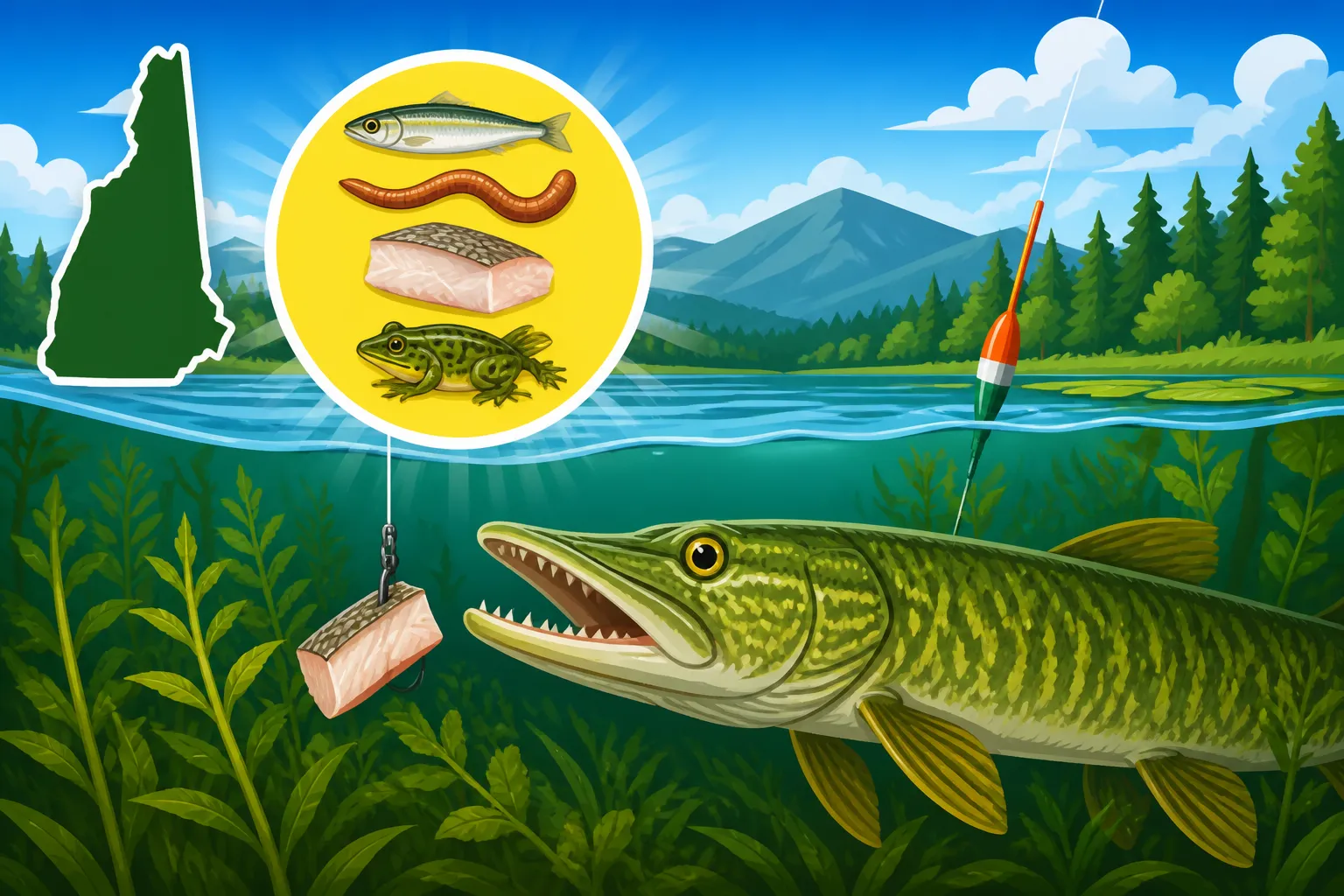
If there's one live bait that reigns supreme for chain pickerel, it's the humble shiner or minnow. These small forage fish are a natural part of a pickerel's diet, and their erratic swimming is a huge trigger.
- Rigging for Weeds: Forget split shots and bare hooks. For weed beds, you want a semi-weedless approach.
- Under a Bobber (Weedless Style): Use a slip bobber to set your depth just above or within the weed tops. Instead of a standard J-hook, try a wide gap worm hook (like you'd use for bass fishing). Hook the shiner lightly through the back, near the dorsal fin, with the hook point barely exposed or even "skin-hooked" back into the minnow's body. This minimizes snags while still allowing for a solid hookset. Alternatively, hook it through both lips, from bottom to top, ensuring the hook point is upward.
- Freelined: In sparser weeds or along edges, you can simply cast a lip-hooked shiner with no weight at all. Let it swim naturally. The lighter the line, the more natural the action.
- Presentation: Cast your shiner into pockets within the weed bed, along the edges of lily pads, or into open lanes. Let it swim for a minute or two, then slowly retrieve it just enough to keep it moving. Watch your bobber closely – pickerel strikes can be subtle at first, then explosive. If you're getting short strikes or lost bait, consider a slightly larger shiner or a different rigging method.
- Procuring Bait: You can buy shiners at most New Hampshire bait shops, or, if permitted by local regulations, you can trap your own. Keep them lively in a good bait bucket; fresh, active bait is always best.
Frogs: An Undeniable Topwater Treat
If you're fishing in lily pads or areas with heavy surface vegetation, a live frog can be absolutely deadly. Pickerel, like their larger pike and muskie cousins, are opportunistic predators who won't pass up an easy meal on the surface.
- Rigging for Weeds: This is where you need to be creative for weedless presentation.
- Single Weedless Hook: Use a large, wide gap, straight shank hook. Hook the frog through both lips, or gently through the skin of its back, ensuring the hook point is tucked or positioned to avoid snags.
- Treble Hook (with caution): While a treble hook offers a better hook-up ratio, it's much more prone to snagging. If you use one, you'll need to fish it in extremely open pockets or along clear edges.
- Presentation: Cast the frog onto a lily pad or into a small opening in the weeds. Let it sit for a moment, then give it a gentle twitch, making it "hop" or swim a short distance. The key is subtlety – frogs don't usually race across the water. The explosion of a pickerel hitting a topwater frog is one of the most exciting fishing experiences you can have.
- Legality: Always double-check New Hampshire's fishing regulations regarding the use of live frogs as bait. Some states have restrictions, or require you to catch your frogs from the same body of water you're fishing.
Remember, when using live bait, you'll want to have a good pair of pliers to safely unhook these toothy critters. You can find excellent options on Amazon, which can make the process much smoother and safer for both you and the fish.
Effective Artificial Lures for Weed Bed Pickerel
While live bait is fantastic, artificial lures offer the advantage of covering more water quickly and, crucially, can often be designed specifically to be weedless. This means less frustration and more fishing time!
Weedless Spoons: The Classic Pickerel Catcher
Weedless spoons are arguably one of the most effective lures for chain pickerel in thick cover. Their design allows them to glide over and through vegetation with minimal snagging, and their flash and wobble are irresistible.
- The Johnson Silver Minnow: This iconic spoon is a prime example, often available on Amazon. It has a single, upturned hook that's partially protected by a wire weed guard, allowing it to slide over lily pads and through grass without getting hung up.
- Action and Color: The classic silver or gold finish is often all you need, mimicking a baitfish. However, spoons with red and white, or even fluorescent colors, can be effective in stained water or on overcast days. The spoon's wobble creates flash and vibration, imitating a struggling baitfish.
- Retrieve: Cast your weedless spoon into the densest cover you dare. Let it sink briefly, then begin a steady, medium retrieve. You can also add pauses, allowing the spoon to flutter down, which often triggers strikes. If you feel it pick up a bit of weed, a sharp snap of the rod tip can often clear it without stopping your retrieve.
- Tipping the Spoon: For added attraction, you can tip your weedless spoon with a small piece of pork rind or a soft plastic trailer. This adds bulk, scent, and extra action, making it even more tempting to a lurking pickerel.
Soft Plastics: Weedless Versatility
Soft plastic lures, when rigged correctly, offer incredible versatility and a highly weedless presentation that can entice even the most reluctant pickerel.
- Texas Rigged Worms/Creatures: This is a go-to weedless rig for bass, but it's equally effective for pickerel. Use a bullet weight (or no weight for lighter presentations) and a wide gap worm hook. Thread a straight-tail worm, lizard, or creature bait onto the hook, burying the hook point back into the plastic body. This makes it virtually snag-proof.
- Presentation: Cast into open pockets, along weed lines, or even directly onto dense mats. Slowly drag or twitch the lure across the bottom or through the sparse cover. The subtle movements are great for pickerel that might be feeling a bit finicky.
- Flukes and Swimbaits (Weedless Hooks): Soft jerkbaits (like Zoom Super Flukes) or small paddle-tail swimbaits can be rigged on a weighted or unweighted weedless swimbait hook. This allows them to be worked through cover with a darting, injured baitfish action.
- Presentation: Work these with an erratic twitch-pause retrieve, mimicking a panicked baitfish. They excel along the edges of weed beds or in slightly clearer lanes.
- Color Selection: Natural baitfish colors like white, pearl, smoke, or watermelon are always good starting points. Chartreuse or firetiger patterns can also be very effective, especially in lower light conditions or stained water.
Spinnerbaits and Buzzbaits: Flash and Vibration
These lures are fantastic for fishing over submerged weeds or along the edges of dense cover, creating a lot of commotion that calls pickerel in.
- Spinnerbaits: Featuring one or more spinning blades (Colorado, Willowleaf, Indiana), a skirted body, and an upward-pointing hook, spinnerbaits are surprisingly weedless when fished correctly.
- Presentation: Cast parallel to weed lines or over sparse submerged weeds. A steady retrieve is often all it takes, letting the blades flash and vibrate. If you hit a clump of weeds, rip the rod tip to clear it – this often triggers a reaction strike. Choose heavier models to cast further and keep them just above the weeds.
- Buzzbaits: These are surface lures with a propeller blade that creates a loud "buzzing" or "gurgling" sound as you retrieve them. They are excellent for topwater action in warmer water and especially effective over matted weeds or lily pads where you want to draw fish up.
- Presentation: Cast beyond your target area and retrieve immediately, keeping the blade churning on the surface. These are pure reaction strike lures, so keep the retrieve consistent.
- Color and Size: White, chartreuse, or black are standard effective colors for both. For pickerel, a smaller profile spinnerbait (1/4 to 3/8 ounce) is often perfect.
For anglers looking to expand their arsenal, consider our article on Best Tackle Box Setup for New Hampshire Anglers to ensure you have all the essentials for these toothy predators.
Here's a quick comparison of some bait and lure options for weed bed pickerel:
| Bait/Lure Type | Best Use Case | Pros | Cons | Weedless Rating |
|---|---|---|---|---|
| Live Minnows/Shiners | All weed types, especially slow retrieves | Natural scent & action, highly effective | Prone to snagging without careful rigging | Moderate |
| Live Frogs | Lily pads, heavy surface cover | Exciting topwater strikes, very natural | Legal restrictions, difficult to rig truly weedless | Low to Moderate |
| Weedless Spoons | Dense submerged weeds, lily pads, emergent reeds | Very snag-resistant, good flash and wobble | Can collect some vegetation, less natural | High |
| Texas Rigged Soft Plastics | Heaviest cover, deep in weeds, slow retrieves | Extremely weedless, versatile, subtle action | Slower retrieve, less "flash" attraction | Very High |
| Spinnerbaits | Over submerged weeds, along weed edges | High flash & vibration, good for covering water | Can snag in very dense cover | High |
| Buzzbaits | Over matted surface weeds, lily pads | Topwater excitement, great for reaction strikes | Only effective on surface, not for deep weeds | High |
Techniques and Practical Tips for Dominating Weed Beds
Having the right bait or lure is only half the battle. Knowing how to present it effectively and navigate the challenging environment of a weed bed is crucial for consistent success with New Hampshire's chain pickerel.
Precision Casting and Retrieval Strategies
Pickerel are ambush predators, meaning they're waiting for prey to come to them. Your job is to put your bait or lure right in their strike zone.
- Targeting Pockets and Edges: Don't just cast blindly into the middle of a dense mat. Look for small open pockets, channels, or the distinct edges where the weeds meet open water. These are prime ambush points. Practice your casting accuracy!
- Slow Down: While pickerel can be aggressive, a slow, deliberate retrieve often works best when you're trying to coax them out of dense cover. Let live bait swim naturally. With artificials, focus on movements that mimic a struggling or easy-to-catch meal.
- Vary Your Retrieve: Don't be afraid to experiment. Sometimes a steady retrieve is best; other times, erratic twitches, pauses, or even ripping the lure through weeds can trigger a strike. Pay attention to what the fish are telling you.
- Dealing with Snags: Despite using weedless rigs, you'll still get snagged occasionally. Instead of a hard pull that buries the hook deeper, try walking to the other side of the snag (if safe and possible) and pulling from that angle. Often, a sharp flick of the wrist can free a light weed snag.
Line, Leaders, and Hooksets for Toothies
Pickerel have sharp teeth, similar to their larger northern pike cousins, and they can easily cut through standard monofilament or fluorocarbon line.
- Heavy Line: Use at least 10-15 lb test monofilament or braided line. Braided line is excellent because it has no stretch, providing better feel and stronger hooksets, and it can help "saw" through lighter weeds.
- Leaders are a Must: To prevent bite-offs, you absolutely need a leader.
- Fluorocarbon Leader: A heavy fluorocarbon leader (20-30 lb test) offers a good compromise between invisibility and abrasion resistance. It's less visible than wire but more resistant to teeth than regular mono.
- Wire Leader: For maximum protection, a short (6-12 inch) steel or titanium wire leader is your best bet. While more visible, it guarantees you won't lose your lure to a pickerel's sharp chompers. Some anglers use a combination, with a short wire leader tied to a longer fluorocarbon section.
- Strong, Immediate Hooksets: When a pickerel strikes, it's often aggressive. Set the hook hard and immediately. This ensures the hook penetrates their bony mouth and helps pull them out of the weeds quickly. Once hooked, keep steady pressure on the fish to prevent it from burying itself deeper in the cover.
Accessing and Navigating Weed Beds
How you approach and move around weed beds can make a big difference in your success.
- Boats and Kayaks: A shallow-draft boat or a fishing kayak are ideal for accessing weed-choked areas. They allow you to get into spots that shore anglers can't reach and maneuver quietly. Check out our articles on Best Boats for New Hampshire Lakes and Rivers or Best Kayaks for New Hampshire Fishing for options.
- Stealth is Key: Pickerel are skittish, especially in shallower water. Approach weed beds quietly, using your trolling motor on a low setting or paddling gently. Avoid loud noises or splashing that could spook fish.
- Working the Area Methodically: Don't just cast to one spot and move on. Work an entire weed bed or section of a weed bed methodically. Make casts into open pockets, along the outer and inner edges, and even over sparse sections. Fan cast to cover a wide area.
- Understanding Regulations: Always be aware of the specific New Hampshire Fishing Regulations Explained and New Hampshire Bag and Possession Limits by Species for chain pickerel on the waterbody you are fishing. Regulations can vary, and it’s important to stay informed.
By combining the right bait or lure with these thoughtful techniques, you'll find that those frustrating weed beds transform into exciting, productive fishing grounds where you can reliably hook into New Hampshire's feisty chain pickerel. Happy fishing!
Disclaimer
The information provided in this guide is for general informational purposes only and is based on common fishing practices and available data. Fishing regulations, conditions, and best practices can change. Always consult the most current New Hampshire Fish and Game Department regulations before heading out on the water. Fishing involves inherent risks; please exercise caution and prioritize safety.