Fly Patterns for New Hampshire Trout Streams
One of the biggest head-scratchers for any fly angler hitting the streams of New Hampshire is figuring out which fly patterns to even begin with. With so many options out there, it’s easy to feel overwhelmed, standing at the water's edge with a fly box full of potential but no real direction. This guide is here to cut through the confusion, offering a realistic, in-depth look at the most effective fly patterns for tempting New Hampshire's diverse trout populations, from the smallest brookies to the biggest browns.
Understanding New Hampshire's Trout Stream Ecosystems
Before we even talk about specific patterns, it's crucial to understand what makes New Hampshire's trout streams tick. These aren't just pretty places; they're complex ecosystems where trout have evolved to feed on specific insects, crustaceans, and baitfish. Knowing what's naturally available in the water at different times of the year is your first, best step toward choosing the right fly. Our streams offer incredible diversity, from the high-gradient, boulder-strewn flows of the White Mountains to the slower, meandering reaches of southern New Hampshire, and each has its own buffet.
Types of Trout in New Hampshire Streams
New Hampshire is a haven for trout anglers, boasting three primary species that call our streams home. Each has its own habits, preferences, and, often, a slightly different dietary focus, which in turn influences the fly patterns you'll want to present.
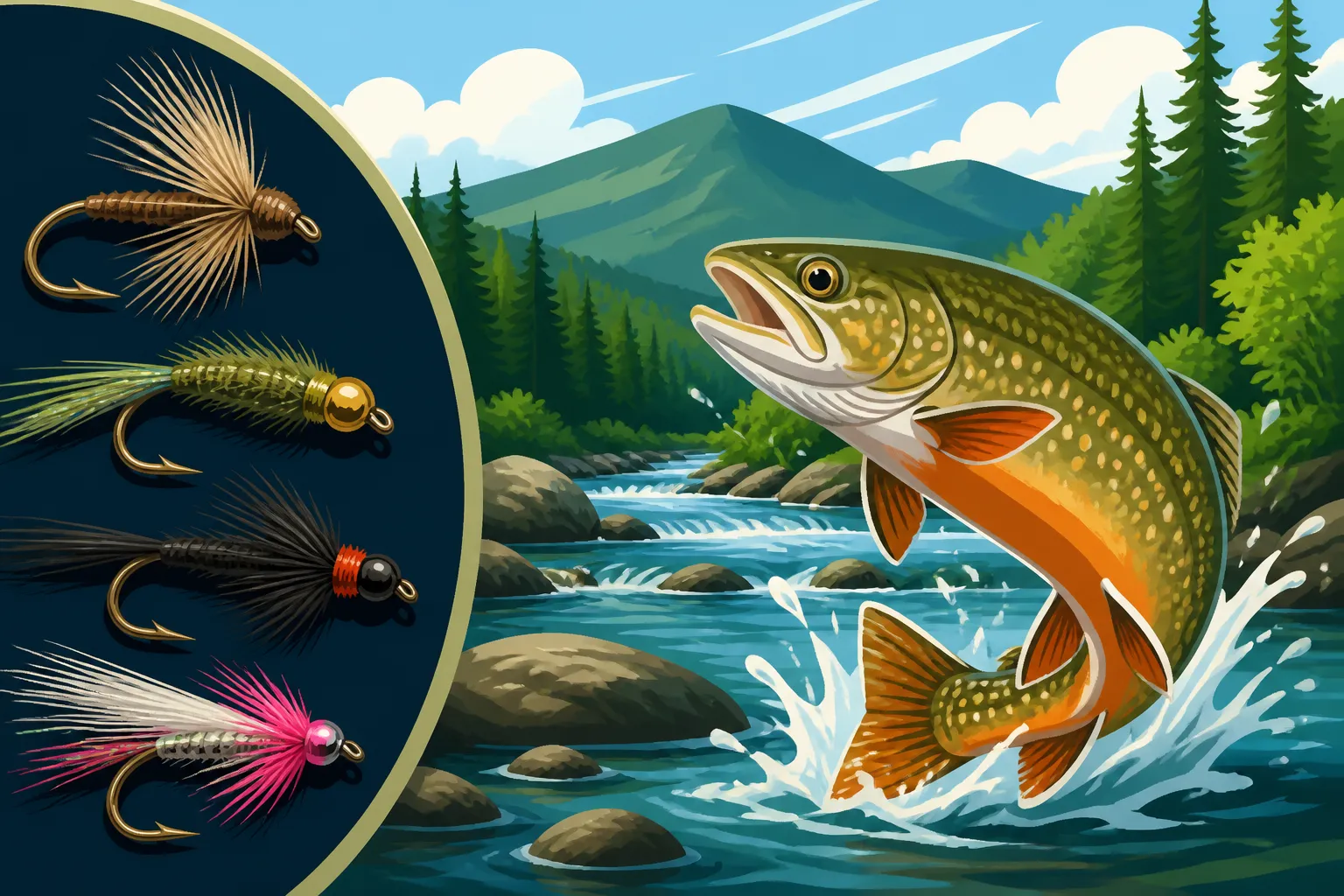
First up, we have the Brook Trout: New Hampshire's Native Trout. These stunning fish, with their vibrant colors and distinctive worm-like markings, are often found in the colder, smaller, and higher-elevation streams. They're typically less wary than their cousins and often eager to rise to a well-presented dry fly or aggressively chase a small streamer. Their native status means they're perfectly adapted to our unique waterways, making them a true delight to target. You'll often find them tucked into small pockets of water, behind rocks, or at the tail ends of runs, ready to ambush anything edible drifting by.
Then there are the Brown Trout Habits in New Hampshire Streams. These fish are notorious for being a bit more discerning and often grow to larger sizes, especially in the more fertile rivers. Brown trout are opportunistic feeders, meaning they'll eat just about anything if the opportunity arises – from tiny nymphs to large baitfish and even small rodents. They're often more nocturnal in their feeding habits, particularly the bigger ones, making streamer fishing at dawn, dusk, or even after dark highly effective. Browns are known for their beautiful spotted patterns and incredible fight, making them a coveted catch for many anglers.
Finally, we have the Rainbow Trout Stocking in New Hampshire. While some wild rainbow populations exist, many of the rainbows you encounter in New Hampshire streams are a result of diligent stocking efforts by the New Hampshire Fish and Game Department. These fish are generally less cautious, especially right after stocking, and can be very aggressive, taking a wide variety of patterns. They tend to prefer faster-moving water with good oxygenation and can be found throughout many of our larger streams and rivers. Stocked rainbows can provide fantastic action, especially for newer anglers, and are often a reliable target when other species are finicky.
Key Aquatic Insects and Forage
The trout in New Hampshire's streams are primarily insectivores, but they're not afraid to snack on bigger meals when available. Understanding the major food sources is like having a secret menu for your fly box.
Mayflies are the epitome of trout food, and their hatches are legendary among fly anglers. These delicate insects spend most of their lives as nymphs clinging to the stream bottom, then emerge as duns (sub-imagoes), float on the surface, and eventually transform into spinners (imagoes) to mate and die. Key New Hampshire species include the various Ephemerella (e.g., Eastern Pale Evening Dun), Baetis (Blue-Winged Olive), and Heptagenia (Light Cahill). Each stage offers a distinct pattern opportunity, from weighted nymphs mimicking their underwater life to delicate dry flies for their brief surface dance. Matching the hatch during a strong mayfly emergence can lead to incredible fishing, but even when no hatch is obvious, a good mayfly nymph imitation is almost always effective.
Caddisflies are another huge part of a trout's diet. Unlike mayflies, caddisflies undergo a complete metamorphosis. Their larvae often build cases of pebbles or sticks, while pupae actively swim to the surface before emerging as adults. The adults are often referred to as "tent-winged" flies and can be quite skittish on the water, skittering and jumping. Important local caddis species range from the small Black Caddis to larger Great Grays. Nymph patterns mimicking the larvae and pupae are incredibly effective, as are dry flies that imitate the adults, especially during egg-laying flights when they dive and skitter. These are particularly prevalent in our more robust, faster-flowing river sections.
Stoneflies are the behemoths of the aquatic insect world, especially their nymphs. These larger insects prefer well-oxygenated, rocky bottom streams, meaning they're abundant in many of our mountain rivers. Their nymphs are often dark-bodied and have a distinctive segmented look. They crawl rather than swim, and their emergence is often nocturnal, so nymph patterns are generally more effective than dry flies. Larger stonefly nymphs, like those imitating Golden Stones or Sallies, can be a meal in themselves for bigger trout and are excellent "lead" flies in a multi-nymph rig. They represent a substantial protein source, especially during colder water periods when trout are less likely to chase smaller prey.
Beyond aquatic insects, Terrestrials play a huge role, especially during the summer months when insects like grasshoppers, ants, and beetles accidentally fall into the water. When stream levels are low and the air is warm, trout often key in on these land-based meals. A well-placed grasshopper or ant pattern near overhanging vegetation can produce explosive strikes, particularly from larger trout holding patiently in shaded lies. Similarly, small Minnows and other baitfish, like the rainbow smelt, are a critical food source for larger trout and landlocked salmon in our bigger rivers and lakes. This is where streamer patterns really shine, imitating these small fish. Crayfish, too, are an often-overlooked but significant food source, especially for bigger brown trout, that dwell on the bottom of many of our larger rivers and streams.
Essential Dry Fly Patterns for New Hampshire
Dry fly fishing is arguably the most exciting way to catch trout. There's nothing quite like seeing a trout rise to sip your carefully presented imitation from the surface. For New Hampshire's diverse streams, having a solid selection of dry flies that cover common hatches and opportunistic feeding is non-negotiable.
Mayfly Imitations for Hatch Matching
When mayfly hatches are in full swing, trout can become incredibly selective, keying in on specific sizes, colors, and profiles of the emerging insects. Having a variety of mayfly dry flies is crucial for successful "hatch matching."
The Parachute Adams is an absolute workhorse and should be in every New Hampshire angler's fly box. Its sparse hackle and white parachute post make it incredibly visible to the angler, while its realistic profile and low-riding body fool even the wariest trout. It's an excellent imitation for a wide variety of darker-bodied mayflies and is often a reliable "searching pattern" when you're not sure what's hatching. You can find excellent quality Parachute Adams patterns on Amazon, often in multi-packs, covering sizes from a tiny #20 up to a #12, making it versatile for anything from a Blue-Winged Olive to a larger Quill Gordon.
For specific hatches, you'll want to carry patterns like the Blue-Winged Olive (BWO). These tiny, olive-bodied mayflies hatch prolifically during cooler, overcast days in spring and fall. Carrying BWO patterns in both dun and spinner forms, typically in sizes #18-22, is essential. The Light Cahill (sizes #12-16) is another classic, imitating a cream-colored mayfly often seen hatching in the evenings during late spring and summer. For bigger mayflies, especially the March Browns or Green Drakes, a larger Comparadun or Hairwing Dun pattern (sizes #10-14) can be deadly. These patterns have a distinct silhouette that pushes through the surface film effectively, making them stand out to cruising trout. Remember, presentation is key with these delicate imitations; a drag-free drift is paramount.
Caddisfly and Stonefly Dry Flies
While stonefly adults are mostly nocturnal, caddisflies are a daytime staple, and their dry fly imitations are incredibly effective, often eliciting aggressive takes.
The Elk Hair Caddis is, without a doubt, the most popular and effective caddisfly imitation available. Its deer hair wing floats high and realistically, making it a fantastic choice for both emergers and adult caddisflies. It's a buggy, durable pattern that you can fish dead-drift or skitter across the surface, mimicking an egg-laying caddis. I keep a range of colors from olive to tan to black, and sizes #12-18, to cover the various caddis species found in New Hampshire streams. This fly is especially effective when you're fishing faster riffles and runs where a high-floating, visible fly is critical. Many anglers even "combo" it with a trailing nymph underneath for a deadly tandem rig.
For larger stoneflies, while not always a primary dry fly target during their typically nocturnal emergence, the Stimulator (sizes #8-14) is a fantastic attractor pattern that can imitate a large adult stonefly, caddisfly, or even a grasshopper. Its bushy profile and buoyant nature make it a great choice for prospecting in turbulent water or as a lead fly in a dry-dropper setup. It's a "buggy" looking fly that screams "meal" to a hungry trout. When fishing deeper, faster runs or looking for a big aggressive trout, this pattern can often coax them to the surface even when they aren't actively rising. Don't forget that a good selection of materials for tying these patterns yourself can be found on Amazon if you're into fly tying!
Terrestrial Patterns for Summer Success
When the heat of summer sets in, and natural insect hatches become sparse, trout often turn their attention to land-based insects that fall into the water. This is when terrestrial patterns truly shine in New Hampshire streams.
Grasshopper patterns are a summer essential, especially from July through September. Whether you're using a foam-bodied hopper like the Dave's Hopper or a realistic pattern like the Charlie Boy Hopper, these flies are designed to imitate the clumsy fall of a grasshopper into the water. Fish them close to grassy banks, overhanging vegetation, or anywhere a gust of wind might knock a bug into the stream. The takes on hopper patterns are often violent and exciting, as bigger trout smash them from beneath. Having them in various sizes and colors, from tan to yellow to pink, can make all the difference on a sunny summer afternoon. They are a significant meal, so expect aggressive strikes.
Beyond grasshoppers, Ants and Beetles are also vital terrestrial imitations. Trout consume thousands of ants throughout the summer, often without much fanfare. A simple Black or Cinnamon Ant pattern in sizes #16-20 can be incredibly effective, especially when fishing slower, glassy pools or undercut banks. Similarly, small foam or deer hair Beetle patterns (sizes #14-18) can perfectly imitate the various beetles that frequently tumble into the water. These smaller terrestrials are often overlooked but can be a secret weapon when trout are being finicky or ignoring other patterns. Present them subtly and allow for a natural drift, as these small insects aren't known for their swimming prowess once they hit the water. This is where precision in your cast, even for a short distance, can really pay off.
Go-To Nymph Patterns for Subsurface Action
Let's be realistic, most of a trout's feeding happens below the surface. Nymphing is often the most consistent way to catch trout in New Hampshire streams, regardless of the season or visible hatches. A well-presented nymph, drifting naturally along the bottom, can be irresistible. To truly master the art of nymphing, understanding the nuances of how trout feed on these underwater insects is key. Many anglers find success by mastering techniques like those discussed in our guide to Euro Nymphing New Hampshire Trout Streams.
Mayfly Nymphs for All Seasons
Mayfly nymphs are a year-round food source, and having a diverse selection is paramount. They represent the bread and butter of a trout's diet.
The Hare's Ear Nymph is a classic for a reason – it's incredibly versatile and effectively imitates a wide range of mayfly nymphs. Its buggy, impressionistic profile and shaggy body are irresistible to trout. I carry it in both natural and olive variations, often with a bead head for added weight, in sizes #12-18. It's a great "searching pattern" to start with when you're not sure what nymphs are present. This fly can imitate anything from a small baetis nymph to a larger burrowing mayfly nymph, making it highly adaptable across different water conditions and seasons in New Hampshire's various waters, including those highlighted in our New Hampshire Trout Stocking and Fishing Rules article.
For more specific imitations, the Pheasant Tail Nymph is another must-have. Its slender profile and segmented body perfectly mimic many clinger and crawler mayfly nymphs. It's particularly effective for imitating smaller Baetis nymphs and other slim-bodied insects. Sizes #16-22 are usually my go-to. I also always have a few Prince Nymphs in my box (sizes #10-16). While often considered an attractor pattern, its distinct white biots give it a unique look that can mimic certain stonefly and even larger mayfly nymphs. It's particularly effective in freestone rivers with strong currents, where its profile stands out. Having a range of these patterns, some weighted, some unweighted, allows for adaptability to different water depths and currents.
Caddisfly and Stonefly Nymphs for Deeper Water
When fishing deeper pockets, runs, or faster currents, caddisfly and stonefly nymphs often get the call. Their larger size and robust nature make them a substantial meal for actively feeding trout.
The Caddis Larva (Green Rock Worm) and Caddis Pupa patterns are incredibly effective, especially the latter during a caddis emergence. The larva patterns, often tied with a green body and a tungsten bead, are perfect for bouncing along the bottom, imitating the case-less or free-living caddis larvae. For pupa, patterns like the LaFontaine Sparkle Pupa or various soft hackle caddis pupa imitations (sizes #12-18) are deadly when trout are keying in on the vulnerable pupae rising to the surface. These are excellent choices for targeting trout in the middle of the water column, especially during a hatch.
For heavy lifting, especially in our larger rivers, Stonefly Nymphs are indispensable. Patterns like the Pat's Rubber Leg or various Golden Stone Nymphs (sizes #6-12) are perfect for imitating these large, crawling insects. Their bulky profile and rubber legs create a lot of movement in the water, which can trigger aggressive strikes from bigger trout. These are often fished as the heavy point fly in a two-nymph rig, helping to get smaller, lighter nymphs down to the strike zone quickly. They are particularly good for early season fishing when water levels are high and trout are looking for a hearty meal. Our guide on Wading Techniques for New Hampshire Trout Streams emphasizes how important it is to get your flies deep where these insects reside.
Attractor Nymphs and Euro Nymphing Favorites
Sometimes, trout aren't keying in on a specific natural insect, or they just need a little extra persuasion. This is where attractor nymphs come into play, and they are central to effective techniques like Euro nymphing.
Walt's Worm and Squirmy Wormy patterns are simple, yet incredibly effective attractor nymphs. The Walt's Worm, a sparse, buggy pattern, often with a subtle hot spot, is a fantastic generalist that mimics a variety of aquatic invertebrates. The Squirmy Wormy, with its highly mobile and brightly colored material, is almost ridiculously effective, especially for freshly stocked trout or after a rain event when natural worms might be washed into the stream. They defy strict insect classification but trigger an aggressive feeding response. While some purists shy away from the Squirmy Wormy, its results are undeniable, making it a must-have for consistent action.
For specialized Euro nymphing techniques, patterns with distinct "hot spots" and heavy tungsten beads are crucial. The Frenchie (a variation of the Pheasant Tail with a brightly colored collar) and the Perdigon Nymph (a slim, heavily weighted, and often UV-enhanced nymph) are top choices. These flies are designed to sink rapidly and get into the strike zone quickly, and their subtle flash or bright colors often elicit reaction strikes even when trout aren't actively feeding. You'll find a wide variety of these specialized patterns available on platforms like Amazon, making it easy to build your Euro nymphing arsenal. These flies are perfect for targeting those deep, often overlooked pockets where larger fish might be holding.
Effective Streamer Patterns for Aggressive Trout
While nymphs and dry flies cover the majority of a trout's diet, there are times when bigger, more aggressive patterns are the ticket. Streamers imitate baitfish, sculpins, leeches, and crayfish, and they can entice the largest trout in the stream to strike. Fishing streamers is often a game of enticing a predatory instinct, rather than matching a specific hatch.
Baitfish Imitations for Larger Trout
For anglers targeting truly large trout, especially the elusive brown trout and even some of the bigger rainbows and brook trout in our systems, baitfish imitations are indispensable. These flies mimic the small fish that make up a significant portion of a trophy trout's diet.
The Woolly Bugger is perhaps the most famous and versatile streamer ever created, and for good reason. Its marabou tail and hackled body give it an incredible amount of lifelike movement in the water. I carry Woolly Buggers in various colors – black, olive, brown, and white – and sizes from #4 to #10. Fish them by stripping them aggressively, swinging them through runs, or even dead-drifting them like a nymph. They can imitate everything from a leech to a sculpin to a small baitfish, making them an incredible all-around pattern. It’s a confidence fly that consistently produces, whether you’re fishing for newly stocked trout or trying to coax a territorial wild brown from its lie.
For a more specific baitfish profile, patterns like the Clouser Minnow or various Articulated Streamers are highly effective. The Clouser Minnow, originally designed for saltwater, has found a dedicated following in freshwater thanks to its weighted eyes and realistic baitfish profile. It sinks quickly and has a fantastic jigging action on the retrieve. White/chartreuse or olive/white are popular color combinations. Articulated streamers, which are tied on two or more hook shanks connected by wire, offer an even more sinuous and lifelike swimming action. These bigger, more complex patterns are often what it takes to tempt a truly large, predatory trout. These are especially effective in larger rivers with good populations of baitfish, where trout have grown accustomed to chasing down a meal. You might find our "Best Lures for Lake Trout Trolling" guide interesting if you're looking for larger fish imitations, as many of those concepts translate well to streamer fishing.
Sculpin and Crayfish Patterns
Beyond general baitfish, specific imitations of bottom-dwelling creatures like sculpins and crayfish can be absolute game-changers, particularly for larger brown trout that have grown accustomed to these protein-rich meals.
Sculpin patterns are designed to imitate the small, mottled, bottom-dwelling fish that are prevalent in many New Hampshire rivers and streams. Patterns like the Muddler Minnow (which can also imitate a caddis or grasshopper) or various heavily weighted, articulated sculpin patterns with dumbbell eyes are excellent choices. Sculpins are masters of camouflage, so drab colors like olive, brown, and black are usually best. Fish them right on the bottom, with short strips and pauses, mimicking the darting and resting movements of a real sculpin. Trout often pin these flies to the bottom before engulfing them, leading to a solid, aggressive take. These are perfect for probing deep pools and undercut banks where the biggest trout often reside.
Crayfish patterns, while perhaps less commonly used, can be deadly in rivers that have healthy crayfish populations. Patterns tied with rabbit strips or synthetic materials to create a bulky body and prominent claws are effective. Colors like olive, brown, or rust are usually best. Fish them with short, jerky strips and long pauses, allowing them to settle on the bottom and mimic a fleeing or defensive crayfish. Many large brown trout rely heavily on crayfish as a food source, and presenting a realistic imitation can trigger a powerful strike. These patterns are particularly effective during late summer and fall when crayfish are more active and vulnerable.
| Insect Type / Forage | Life Stage | Key Fly Patterns | Typical Sizes | Prime Season | Best Waters |
|---|---|---|---|---|---|
| Mayfly | Nymph | Pheasant Tail, Hare's Ear | #14-20 | Year-round | All streams |
| Mayfly | Dry | Parachute Adams, BWO Dun | #16-22 | Spring, Fall, Summer | All streams |
| Caddisfly | Nymph/Pupa | Green Rock Worm, Sparkle Pupa | #12-18 | Year-round | Faster rivers |
| Caddisfly | Dry | Elk Hair Caddis | #12-18 | Spring, Summer | All streams |
| Stonefly | Nymph | Pat's Rubber Leg, Golden Stone Nymph | #6-12 | Year-round | Rocky rivers |
| Terrestrial | Dry | Dave's Hopper, Black Ant | #10-20 | Summer, Early Fall | Grassy banks |
| Baitfish/Leech | Streamer | Woolly Bugger, Clouser Minnow | #4-10 | Year-round | Larger rivers |
| Sculpin/Crayfish | Streamer | Muddler Minnow, Sculpin Helmet | #2-8 | Year-round | Deep pools |
Seasonal Fly Pattern Selection Strategies
The beauty of fly fishing in New Hampshire is its seasonality. What works in April might be completely ignored in August. Adapting your fly selection to the time of year and prevailing conditions is a hallmark of an effective angler. This isn't just about what might be hatching, but what the fish are expecting to eat based on the water temperature, flow, and available food sources. For broader season information, our "New Hampshire Fishing Seasons by Month" guide offers a fantastic overview.
Spring Hatches and High Water Patterns
Spring in New Hampshire is a time of awakening, both for nature and for trout. As the ice melts and water temperatures begin to rise, trout become more active, and the first major insect hatches begin. However, spring also often brings high, cold, and sometimes turbid water, which significantly impacts fly selection.
During early spring, as snowmelt swells the rivers, water levels are typically high and often off-color. Trout will be hunkered down, looking for larger, easily accessible meals. This is prime time for big Stonefly Nymphs like the Pat's Rubber Leg (sizes #6-10) or heavily weighted Woolly Buggers (black or olive, sizes #4-8). Fish these deep and slow, sometimes even trailing a brightly colored attractor nymph like a Squirmy Wormy, to get the attention of trout holding tight to the bottom. Don't be afraid to add extra weight to your leader to ensure your flies are getting down to the strike zone. Our guide on Best Techniques for High Water Spring Conditions delves into this further.
As spring progresses and water temperatures stabilize, the first significant mayfly and caddisfly hatches begin. Quill Gordons and Hendricksons (mayflies) are early season staples, so having Parachute Adams (sizes #12-16) and specific Hendrickson Dry Fly patterns is important. Caddisfly hatches also become more prominent, making Elk Hair Caddis (tan and olive, sizes #14-16) crucial. Nymphs mimicking these emerging insects, such as Pheasant Tail Nymphs and Hare's Ear Nymphs, fished just below the surface or in the middle of the water column, can be incredibly effective when trout are keying in on emergers. This transitional period often calls for a "two-fly" rig: a heavy nymph on the bottom and a lighter emerger or dry fly as your upper dropper.
Summer Low Water and Terrestrial Tactics
Summer in New Hampshire means warmer temperatures, often lower and clearer water, and a shift in trout behavior. Hatches become more sporadic, and trout often become warier, making presentation critical. This is the realm of terrestrials and technical nymphing.
When stream levels drop and the water becomes crystal clear, trout become much more easily spooked. Long, fine leaders and delicate presentations are a must. Smaller Pheasant Tail Nymphs and Baetis Nymphs (sizes #18-22) are incredibly effective when fished subtly. Target shady areas, undercut banks, and deep pools where trout seek refuge from the sun and heat. This is also prime time for fishing Dry Fly Fishing New Hampshire Mountain Streams with smaller patterns, as discussed in our specialized guide.
This is the absolute sweet spot for Terrestrial patterns. From late June through early September, you'll want to have a full arsenal of Grasshoppers, Ants, and Beetle patterns. Fish hoppers along grassy banks and meadow streams; present small black or cinnamon ants near overhanging foliage. Even small Green Weenies (a simple green inchworm pattern) can be deadly when caterpillars or other larvae are falling from trees. Trout are looking up during these months, and a well-placed terrestrial can lead to an explosive strike. Remember, even in summer, trout in cold mountain streams might still be keying on small caddis or small mayfly hatches in the evenings.
Fall Spawning Runs and Streamer Fishing
Fall is arguably one of the most beautiful and productive seasons for trout fishing in New Hampshire. The crisp air, vibrant foliage, and active trout make it a favorite for many anglers. This season brings a mix of spawning behaviors and aggressive feeding as trout bulk up for winter.
As water temperatures cool down, brown trout (and to a lesser extent, brook trout) begin their spawning rituals. While it's crucial to avoid disturbing actively spawning fish on their redds, the cooler water also triggers a strong feeding response. This is prime time for larger Streamer patterns. Think big Woolly Buggers (black, olive, brown, white, sizes #4-8), Muddler Minnows, and various Sculpin patterns. Trout, especially browns, become highly territorial and predatory, often aggressively striking streamers out of instinct or to protect their spawning grounds. Swing streamers through deep runs, strip them through pools, and focus on areas adjacent to known spawning gravels.
Beyond streamers, fall can also see strong, albeit sporadic, insect hatches, particularly Blue-Winged Olives (BWOs) on overcast days. Having BWO Dry Fly patterns (sizes #18-22) and their corresponding Nymphs is a good idea. However, the dominant strategy for fall in New Hampshire streams is often weighted nymphing with larger patterns and aggressive streamer fishing. Trout are putting on weight for the winter, and they're looking for substantial meals. Don't overlook the potential for a large lake-run fish to enter larger river systems, providing an opportunity for trophy-sized encounters. Our guide to Brown Trout Habits in New Hampshire Streams offers more specific details on their fall behaviors.
Disclaimer
The information provided in this guide is for general informational purposes only and does not constitute professional advice. Fishing regulations, conditions, and best practices can change. Always consult the most current New Hampshire Fish and Game Department regulations before fishing. Adherence to all local, state, and federal laws is the responsibility of the angler.