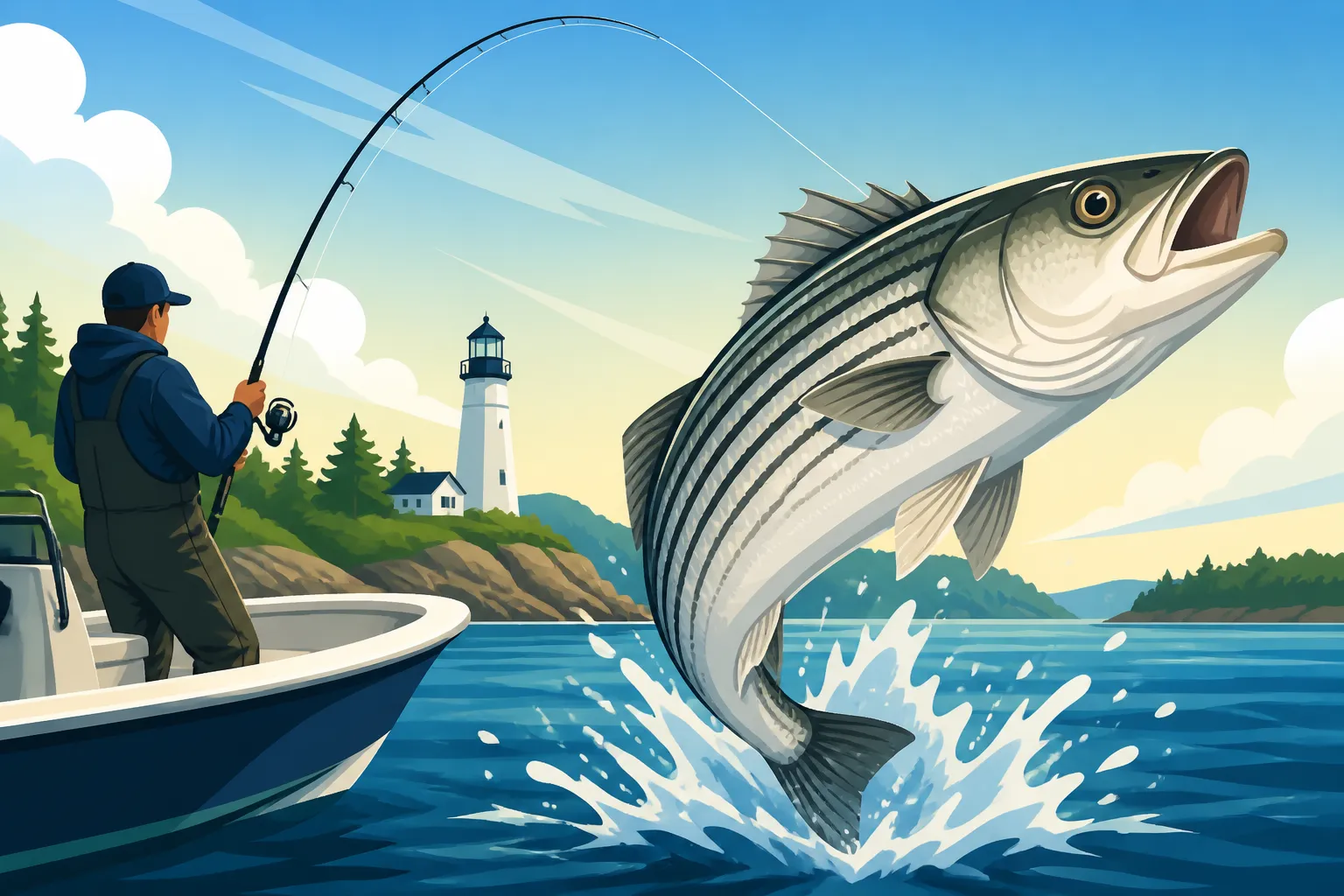
Great Bay Fishing Guide for Striped Bass
Trying to navigate the complex world of striped bass fishing, especially in a dynamic estuary like New Hampshire's Great Bay, can feel like you're constantly guessing. The tides, the seasons, the ever-changing habits of these powerful fish—it's enough to make even seasoned anglers scratch their heads. This comprehensive guide is here to untangle the mystery, providing you with the local insights and strategies you need to confidently target and catch striped bass in Great Bay.
Understanding Great Bay's Unique Striped Bass Fishery
Great Bay is far more than just a large body of water; it's a vibrant, tidal estuary that acts as a critical nursery and feeding ground for striped bass. Its intricate network of rivers, coves, and channels, influenced heavily by the powerful Atlantic tides, creates a constantly changing environment that stripers thrive in. Understanding this unique ecosystem is the first step to consistently finding and catching these elusive fish.
The Estuary's Role in Striped Bass Life Cycle
For striped bass, Great Bay isn't just a place to visit; it's a vital part of their annual migration and survival. While adult stripers typically spawn in larger rivers further south, many juveniles spend their early years within the protected, nutrient-rich waters of estuaries like Great Bay. These sheltered coves and muddy flats provide abundant food and refuge from larger predators, allowing them to grow quickly before joining the larger migratory schools.
As they mature, striped bass continue to use Great Bay as a prime feeding ground during their spring and fall migrations. The bay acts as a natural funnel, concentrating baitfish and drawing in hungry stripers looking to replenish their energy stores. This makes certain periods incredibly productive for anglers, as large numbers of fish can be found actively feeding in predictable locations.
The mix of fresh and saltwater, constantly churning with the tides, creates a unique blend of habitats. From the brackish upper reaches of the Squamscott River to the saltier channels near Portsmouth, different areas of the bay support diverse populations of baitfish, which in turn attract stripers. Knowing these patterns—when fish are moving in, where they're holding, and what they're eating—is key to successful fishing here.
Tides, Currents, and Their Impact on Fishing
If there's one thing that dictates fishing success in Great Bay, it's the tide. The powerful tidal flow from the Atlantic Ocean through the Piscataqua River system, and then into Great Bay itself, creates strong currents that significantly influence where stripers hold and feed. Ignoring the tide chart is practically a guarantee of a slow day on the water.
Generally, the incoming and outgoing tides are the most productive times to fish. As the water moves, it dislodges baitfish, crabs, and other forage from structure and covers, pushing them into currents where stripers lie in ambush. The hour or two leading up to high tide and the first few hours of the outgoing tide are often peak feeding periods. Slack tide, when the water movement is minimal, can be notoriously slow, as bait and fish disperse.
Understanding the specific current patterns in different parts of the bay is also crucial. Some areas might have stronger currents on the incoming tide, while others become feeding lanes on the outgoing. Observing how the water moves around points, islands, and river mouths can reveal prime ambush points where stripers will hold, waiting for an easy meal to be swept past. This dynamic interplay means that a spot that's red hot on an incoming tide might be completely barren just hours later on the outgoing.
Forage Species and What Stripers Eat
Striped bass are opportunistic predators, and their diet in Great Bay is incredibly varied, dictated largely by what baitfish are abundant at any given time. However, certain forage species are consistently present and form the backbone of the striper diet, making them important to understand for lure and bait selection.
One of the primary forage fish in Great Bay are river herring, including alewives and blueback herring. These schooling fish make their way into the bay and its tributary rivers in huge numbers during their spawning runs, providing a massive food source for hungry stripers. Another crucial baitfish is the Atlantic silverside, small, silvery fish that school in immense numbers along the shallow flats and shorelines, especially in the spring and early summer.
Further, you'll find mummichogs, a small killifish, in the muddy bottom areas and around salt marshes. Eels are also a significant food source, particularly for larger stripers, and their snake-like profile is often mimicked by popular artificial lures. Crabs, shrimp, and even juvenile flounders or other bottom fish also make up part of their diet. Matching the hatch, or at least using lures that generally imitate these common baitfish, is often the most effective strategy.
Prime Fishing Seasons for Great Bay Stripers
Striped bass are migratory fish, and their presence in Great Bay is highly seasonal, driven by water temperatures and their annual migration patterns. Knowing when they arrive, when they're most active, and when they begin to depart is essential for planning a successful fishing trip. Each season presents its own unique opportunities and challenges.
Early Season: Arrival and Pre-Spawn Patterns
The first whispers of striped bass returning to Great Bay typically begin in late April to early May, as water temperatures slowly climb into the mid-50s Fahrenheit. These initial arrivals are often smaller "schoolie" stripers, scout fish testing the waters after their long migration from overwintering grounds further south. They're typically hungry and aggressive, eager to feed after their journey.
As May progresses, larger fish, including some impressive "cows" (big females), will start to move into the bay, often following the influx of river herring into the tributary rivers. During this pre-spawn period, stripers are actively feeding to build energy reserves before moving on to their spawning grounds, which for the largest fish are typically further south in rivers like the Merrimack or Connecticut.
Targeting these early season fish often means focusing on shallower flats and areas where the water warms up quickly. River mouths and tidal creeks are particularly productive as they serve as migration corridors and concentrate bait. Light tackle and smaller, realistic baitfish imitations often work best for these initial arrivals, though larger fish will readily hit bigger offerings if they're around.
Summer Heat: Challenging but Rewarding
By late June and through July and August, the Great Bay waters can get quite warm, often pushing stripers into deeper, cooler channels, or sending them out of the bay into the slightly cooler waters of the Piscataqua River and beyond. Fishing during the peak of summer can be more challenging, but it's by no means unproductive if you know where to look.
During the summer, dawn and dusk become prime fishing times, as the cooler temperatures and lower light levels encourage stripers to move into shallower feeding grounds. Night fishing can also be incredibly effective, especially for larger fish that become much bolder under the cover of darkness. Focus on areas with good current flow and deeper pockets, or structure that provides ambush points and a slight reprieve from the heat.
While some fish will linger in the bay all summer, many of the largest stripers will spend their time in the cooler, deeper waters outside the bay, moving in and out with the tides to feed. For those fishing inside Great Bay, patience and persistence are key, often requiring longer waits between bites. However, when you do connect, these summer fish are typically robust and strong.
Fall Run: Feeding Frenzy and Migration
The fall run, typically from late August through October, is arguably the most exciting time to fish for striped bass in Great Bay. As water temperatures begin to drop, stripers instinctually know it's time to put on the feedbag before their southward migration. This results in an aggressive, often frenzied, feeding behavior that can make for some epic fishing days.
During the fall run, baitfish are abundant throughout the bay, and stripers will be actively chasing and herding them, often creating visible surface boils and blitzes. This is the time when you might encounter large schools of stripers, both schoolies and bigger fish, actively busting on bait. Focusing on areas where baitfish are concentrated, such as around river mouths, shallow flats, and channel edges, can be incredibly productive.
The fall run also offers a chance at some of the largest fish of the season, as these bigger stripers are keenly focused on fattening up for their long journey. They become less particular about what they eat, often striking at a wide variety of lures and baits. The action can be fast and furious, but it's important to remember that as water temperatures continue to drop, the fish will eventually move out of the bay entirely, usually by early November, heading south for the winter.
Top Fishing Spots within Great Bay
Great Bay is a vast and complex system, and knowing where to focus your efforts can make all the difference. While stripers can be found throughout the bay at various times, certain areas consistently hold fish due to their structure, current, and abundant forage. Understanding these prime locations will significantly increase your chances of success.
River Mouths and Confluences
The numerous rivers that feed into Great Bay are natural magnets for striped bass, especially during the spring and fall migrations. The fresh water flow, combined with the tidal influence, creates unique feeding zones where baitfish are often concentrated and disoriented, making them easy prey for stripers.
The mouths of the Lamprey River, Squamscott River, Oyster River, and Bellamy River are particularly productive. Here, you'll often find drop-offs, current seams, and areas where the river current meets the bay's tidal flow, creating perfect ambush points for stripers. These areas are also critical corridors for anadromous baitfish like river herring, which draw in hungry bass. Anglers fishing from shore or small boats can have excellent success by targeting these points and bends in the river. You can check the New Hampshire Fishing Season Dates and Closures to ensure you're fishing during peak times.
When fishing these areas, pay close attention to the tide. The incoming tide often pushes baitfish further upriver, while the outgoing tide flushes them out into the bay. Both can be productive, but the fish's exact location will shift with the changing water. Look for eddies and current breaks where fish can rest out of the main flow while still having access to passing food.
Flats and Channels
Great Bay is characterized by extensive shallow flats that are crisscrossed by deeper channels. This combination creates dynamic environments where stripers either cruise for food or lie in wait. The flats, particularly those with eelgrass beds or shell bottom, are rich in marine life, making them excellent feeding areas on certain tides.
During high tide, stripers will often move onto the shallow flats to hunt for crabs, worms, and small baitfish. This can be fantastic for sight fishing, especially with fly fishing gear, as you can spot cruising fish in the clear water. However, as the tide recedes, these fish will often retreat into the deeper channels, which then become critical holding areas. Knowing the best Great Bay best striper fishing spots requires understanding these tidal movements.
The deeper channels, especially those closer to the Piscataqua River and leading out towards the ocean, serve as highways for migrating stripers. These channels, with their stronger currents and deeper water, often hold larger fish during the summer months when they're seeking cooler temperatures. Trolling or drifting live baits or large swimbaits along these channel edges can be very effective, especially where the channel meets a significant drop-off or submerged structure.
Structure Fishing: Docks, Bridges, and Pilings
Striped bass are notorious for relating to structure, and Great Bay offers plenty of it. Docks, bridges, pilings, and even submerged rock piles provide current breaks, ambush points, and cover for both predators and prey. These man-made structures are often overlooked but can hold some impressive fish.
The numerous docks and mooring fields throughout towns like Dover, Newington, and Durham offer excellent opportunities. Stripers will often hold underneath these structures, darting out to ambush baitfish that swim too close. Casting jigs, soft plastics, or even live bait around these pilings and dock lines can be incredibly effective, particularly during low light conditions or at night.
Bridges, like the General Sullivan Bridge, are another prime target. Their pilings create strong current breaks and eddies, concentrating bait and providing perfect feeding lies for stripers. Fishing around bridge abutments and shadows, especially during peak current flows, can yield excellent results. However, always be mindful of boat traffic and navigation rules around these busy areas. Some of the fishing spots here are incredibly popular, so you might even consider booking a trip through a service like FishingBooker to learn the ropes from a local guide.
Essential Gear and Tackle for Great Bay Striped Bass
Having the right gear is fundamental to success when targeting striped bass in Great Bay. These powerful fish can put a serious bend in your rod, and the dynamic environment of the bay demands tackle that can stand up to strong currents and the rigors of saltwater fishing. Skimping on quality here can lead to lost fish and frustration.
Rods, Reels, and Line Selection
For Great Bay stripers, you'll generally want a medium-heavy to heavy action spinning or baitcasting rod, typically between 7 to 8 feet long. This length provides the casting distance needed to cover water, while the robust action gives you the backbone to fight a strong striper in current. Rods designed for inshore saltwater fishing are ideal, as they're built to handle the abuse.
Matching your rod with a durable, corrosion-resistant spinning reel (sizes 4000-6000) or a sturdy baitcasting reel is crucial. The reel needs to have a smooth, powerful drag system, as a big striper will make blistering runs. Ensure your reel has enough line capacity to hold at least 200 yards of line. You can find excellent options from brands like Penn, Shimano, and Daiwa that are built for saltwater conditions.
When it comes to line, braided line is the go-to choice for many striper anglers in Great Bay. Its incredible strength-to-diameter ratio allows for longer casts and better sensitivity, helping you feel subtle bites in strong currents. A common choice is 20-40 pound test braid. Always tie on a fluorocarbon leader, typically 3-5 feet long and 20-40 pound test, for abrasion resistance and invisibility, especially in clear water conditions. You might also want to look at a guide on Best Fishing Rods for New Hampshire Lakes for a general understanding of rod types, though specific striper gear will be more robust.
Lures and Baits That Get Strikes
Striped bass are not particularly picky eaters, but having a selection of proven lures and baits is essential. Matching the hatch—using lures that imitate the prevalent baitfish—is often the most effective strategy.
Soft plastics, such as paddle-tail swimbaits (3-6 inches) rigged on jig heads (3/8 to 1 ounce, depending on current and depth), are incredibly versatile and effective. Brands like Hogy, Tsunami, and Z-Man offer a wide range of colors and sizes. Chartreuse, pearl white, and olive green are consistent producers. Bucktail jigs are another classic, particularly for fishing deeper channels or around structure, and can be tipped with a strip of pork rind or a soft plastic trailer for added appeal.
Topwater lures like poppers and walk-the-dog style baits can provide exhilarating strikes, especially during dawn, dusk, or when fish are actively feeding on the surface. Pencil poppers from companies like Guppy Lures or wooden poppers are extremely effective for drawing aggressive bites. Plugs and minnow imitations, whether sinking or floating, are also staples in a striper angler's tackle box, especially those that mimic a silverside or river herring. For those who prefer natural bait, live or fresh cut mackerel, pogies (menhaden), or even eels can be incredibly effective, especially for larger fish. A good guide to How to Rig Live Bait for Great Bay Striped Bass can be very helpful here.
Essential Accessories and Safety Gear
Beyond your rod and reel, several accessories are critical for a productive and safe fishing trip in Great Bay. A good pair of pliers with split ring openers and a line cutter is indispensable for changing lures and unhooking fish. A stout pair of fish grips or a lip gripper can help you safely handle a thrashing striper without risking injury to yourself or the fish.
When fishing from a boat, safety is paramount. Always ensure you have enough life jackets for everyone on board—it's not just smart, it's the law, especially considering Life Jacket Requirements for New Hampshire Boaters. A first-aid kit, communication device (VHF radio or fully charged cell phone), and navigation tools (GPS or charts) are non-negotiable. If you're going out on the water, understanding New Hampshire Boating Laws for Anglers is also crucial.
For shore anglers, a comfortable backpack or tackle bag to carry your lures, leader material, and snacks is a must. Wading boots with good grip are essential if you plan to access rocky shorelines or wade into the shallows. A headlamp is also invaluable for early morning or late evening fishing, ensuring you can see what you're doing and navigate safely in low light.
Effective Techniques for Landing Great Bay Stripers
Catching striped bass in Great Bay requires a diverse set of skills and a willingness to adapt to changing conditions. Whether you're casting from shore or trolling from a boat, understanding the most effective techniques for the specific environment and time of year will greatly improve your success rate.
Shore Fishing Strategies
Shore fishing in Great Bay can be incredibly rewarding, offering accessibility without the need for a boat. The key is to identify areas with good current flow, structure, or access to deeper water. Popular shore fishing spots include rocky points, jetties, river mouths, and tidal creeks accessible by public land.
One of the most effective techniques from shore is casting and retrieving soft plastics or bucktail jigs. Fan cast the area to cover as much water as possible, varying your retrieve speed and depth until you find what the fish are responding to. Work your lure parallel to the shoreline, along current seams, and through any visible structure like submerged rocks or docks. Early morning and late evening are prime times, as stripers will move closer to shore to feed under the cover of low light.
Live bait fishing from shore can also be deadly. Using a simple fish-finder rig with a circle hook and a fresh chunk of mackerel, clam, or a live mummichog can entice larger, less aggressive fish. Cast your bait into a promising current seam or drop-off and let it sit, or slowly drift it along the bottom. Just remember that the Great Bay Striped Bass Fishing Rules will dictate what you can keep, so know the regulations before you head out.
Boat Fishing Tactics Trolling, Drifting, Casting
Fishing from a boat opens up a whole new world of opportunities in Great Bay, allowing you to access deeper channels, offshore structures, and broader flats. The choice of boat depends on your preference and the area you're fishing. Smaller, agile boats are great for navigating the narrower rivers and shallower flats, while larger vessels are better suited for the main bay and rougher waters closer to the ocean. If you're looking into buying a boat, our guide on Best Fishing Boats for New Hampshire Lakes and Rivers might give you some ideas, keeping in mind the bay's saltwater demands.
Trolling is a highly effective method for covering large areas and finding schooling fish, especially in the deeper channels. Use diving plugs, tube-and-worm rigs, or umbrella rigs to present your lures at different depths. Vary your speed until you find the sweet spot, typically 2-4 knots. Pay close attention to your fish finder for bait schools and subsurface structure, as stripers will often be nearby. This is a great way to explore the vast expanse of the bay.
Drifting with live bait or cut bait is another excellent tactic, particularly around river mouths, channel edges, or over rocky bottoms. Allow your boat to drift with the current, presenting your bait naturally. This is a subtle approach that can entice wary fish. Casting artificial lures, such as soft plastics, topwater baits, or plugs, from a boat allows for precise targeting of specific structures or visible feeding activity. When you spot a blitz, motor upwind and drift into the action, casting into the feeding frenzy. If you're new to the area, consider hiring a local guide through FishingBooker to learn the nuances of boat fishing in Great Bay.
Fly Fishing for Striped Bass
Fly fishing for striped bass in Great Bay offers a unique and incredibly engaging challenge, appealing to anglers who love the art and finesse of the long rod. While it requires specific gear and techniques, the thrill of hooking a striper on a fly in this scenic estuary is unmatched.
For Great Bay stripers, you'll want a sturdy 9-10 weight fly rod, paired with a matching large arbor reel that has a smooth, powerful drag and can hold at least 200 yards of backing. A weight-forward intermediate or sinking fly line is usually preferred to get your fly down in the current and reach the fish effectively. For leaders, a 9-foot tapered leader with a 15-20 pound test fluorocarbon tippet is a good starting point.
Popular fly patterns include deceivers, clousers, and various baitfish imitations tied on strong, corrosion-resistant hooks. Colors like chartreuse and white, olive and white, or all white are consistent producers. Focus on casting these flies into current seams, around structure, and over shallow flats where stripers are actively feeding. A sharp, erratic retrieve often mimics a fleeing baitfish and can trigger aggressive strikes. Fly fishing can be particularly effective during the early season and fall run when stripers are actively chasing bait, and also during high tides on the shallow flats where you might even sight-fish for them. Our guide to Fly Fishing for Trout in New Hampshire gives a good overview of fly fishing, though striper fly gear will be significantly heavier.
Navigating Regulations and Conservation Efforts
Fishing for striped bass in Great Bay isn't just about catching fish; it's also about being a responsible angler and understanding the critical role regulations play in managing this valuable resource. Striped bass populations have faced challenges, and adhering to limits and practicing conservation-minded techniques helps ensure healthy fisheries for future generations.
Understanding New Hampshire Striped Bass Limits
New Hampshire's striped bass regulations are put in place by the New Hampshire Fish and Game Department, often in conjunction with interstate management plans that cover the entire Atlantic coast. These regulations dictate bag limits, size limits, and often a slot limit—meaning you can only keep fish within a specific length range. These limits are subject to change based on population assessments, so it's absolutely crucial to stay up-to-date with the latest information.
For example, a common regulation might be a one-fish bag limit per person per day, with a slot limit (e.g., 28 to 31 inches total length). This slot limit is designed to protect both the smaller, juvenile fish and the larger, spawning-age females, allowing them to reproduce and sustain the population. You will definitely need a valid New Hampshire Saltwater Fishing License, Explained before you even cast a line in Great Bay, as well as being aware of any specific Great Bay Striped Bass Fishing Rules.
Always measure your fish accurately from the tip of the nose to the tip of the tail. If a fish falls outside the slot limit, it must be immediately released unharmed. Ignorance of the law is not an excuse, and penalties for violations can be significant, including hefty fines and loss of fishing privileges. Make it a habit to check the current regulations before every fishing season.
Best Practices for Catch and Release
Given the importance of maintaining healthy striped bass populations, practicing proper catch and release techniques is more important than ever, especially for fish outside the legal slot limit or when you've already met your bag limit. A successfully released fish lives to fight another day and contribute to the fishery.
First and foremost, minimize the fight time. While a prolonged battle might be fun, it exhausts the fish, reducing its chances of survival. Use appropriate tackle that allows you to land the fish efficiently. Once landed, keep the fish in the water as much as possible. If you must remove it, do so quickly and carefully, supporting its body horizontally. Avoid holding a striper vertically by its jaw, as this can damage internal organs.
Use circle hooks when fishing with natural bait, as they are designed to hook fish in the corner of the mouth, reducing gut hooking and making release much easier. Have a de-hooking tool or pliers readily available to remove hooks quickly. If the fish is deeply hooked, cut the line as close to the hook as possible rather than trying to rip it out. For larger fish, revive them by holding them upright in the water, facing into the current, until they are strong enough to swim away on their own.
Importance of Conservation
Beyond individual regulations, responsible angling contributes to broader conservation efforts that protect the striped bass fishery. This includes being mindful of your impact on the environment and supporting organizations that work to study and protect these fish.
Conservation often starts with understanding the fish's biology. Knowing about Striped Bass Migration into Great Bay, for example, helps us appreciate the scale of their journey and the importance of protecting their habitat. Protecting critical estuarine habitats like Great Bay from pollution and development is paramount, as these areas serve as nurseries and feeding grounds. Advocating for sustainable fishing practices, supporting catch limits, and participating in angler surveys or citizen science programs all play a role.
Consider joining local fishing clubs or conservation groups that are dedicated to protecting New Hampshire's marine resources. These groups often work with state agencies to provide input on regulations and participate in habitat restoration projects. By taking a proactive approach, we can all contribute to ensuring that future generations can enjoy the thrill of fishing for striped bass in Great Bay.
Planning Your Great Bay Fishing Trip
A successful fishing trip to Great Bay involves more than just knowing where and how to fish; it also requires careful planning. From understanding local conditions to knowing your access options, a little preparation goes a long way in ensuring a safe, enjoyable, and productive day on the water.
Hiring a Local Guide or Charter
For many anglers, especially those new to Great Bay or striped bass fishing, hiring a local guide or booking a charter can be an invaluable investment. A professional guide brings years of local knowledge, understanding the bay's complex tides, currents, and fish patterns like the back of their hand. They know where the fish are holding, what they're eating, and what techniques are working best on any given day.
A guide or charter typically provides all the necessary high-quality gear, bait, and safety equipment, meaning you don't have to worry about bringing your own or investing in expensive new tackle. They can teach you specific techniques for Best Techniques for Striped Bass in Great Bay, show you prime fishing spots, and help you understand the nuances of the fishery. This can dramatically shorten your learning curve and significantly increase your chances of catching fish.
When choosing a guide, look for someone with a strong reputation, good reviews, and a focus on responsible angling practices. Websites like FishingBooker are excellent resources for finding and booking reputable Great Bay fishing charters. Always communicate your expectations beforehand, whether you're looking to target trophy fish, learn new skills, or simply have a fun day on the water.
Public Access Points and Boat Launches
Accessing Great Bay can be done from various points, whether you prefer shore fishing or launching a boat. Familiarizing yourself with public access points and boat launches beforehand will save you time and hassle on your fishing day.
For boaters, several public boat launches around Great Bay provide access. These include the Dover City Boat Ramp on the Cocheco River, offering access to the upper bay, and other ramps in places like Durham or Newington. Larger boats typically launch from ramps closer to the Piscataqua River for easier access to the main bay and ocean. Always check launch conditions, parking availability, and any fees associated with using the ramps.
Shore anglers have options too. Many of the tributary rivers, such as the Lamprey and Oyster Rivers, have public access points or town landings that allow for bank fishing. State parks and conservation areas along the bay's perimeter may also offer limited shore access. However, much of Great Bay's shoreline is privately owned, so always be respectful of private property and adhere to posted signs. Some bridges and causeways can also offer fishing access, but again, be aware of specific regulations and safety concerns regarding foot traffic and bridge access.
Weather and Environmental Considerations
Great Bay fishing is heavily influenced by weather and environmental factors. Paying attention to these conditions is crucial for both safety and fishing success.
Always check the marine weather forecast before heading out. High winds can make boating dangerous and uncomfortable, especially in the larger, more exposed sections of the bay. Rain, while often not deterring fish, can affect water clarity and angler comfort. Fog can also be a significant hazard, particularly on the wider bay sections, reducing visibility and increasing the risk of collisions.
Water temperature is another critical factor. As discussed earlier, it dictates when stripers enter and leave the bay and influences their activity levels. Keep an eye on local water temperature reports. Storms, particularly heavy rains, can also introduce significant freshwater runoff and debris into the bay, affecting water clarity and temporarily altering fish behavior. Strong currents also bring safety considerations for all kinds of boaters, so be especially mindful of that.
Understanding these variables and adjusting your plans accordingly will lead to a much more enjoyable and productive fishing experience. Flexibility is key when fishing Great Bay, as conditions can change rapidly.
Great Bay Striped Bass Fishing Summary
To help you get started on your Great Bay striped bass adventure, here's a quick overview of key information:
| Factor | Early Season (May-June) | Mid-Summer (July-Aug) | Fall Run (Sept-Oct) |
|---|---|---|---|
| Water Temp | 50s-60s°F | 60s-70s°F | 50s-60s°F |
| Fish Behavior | Migratory, hungry, pre-spawn | Often deeper/nocturnal, post-spawn | Aggressive feeding, pre-migration |
| Best Tides | Incoming/Outgoing | Dawn/Dusk, Night, Strong Current Hours | Incoming/Outgoing |
| Top Spots | River mouths, shallow flats, channel edges | Deeper channels, bridge pilings, structure | River mouths, flats, baitfish blitz areas |
| Techniques | Light tackle, soft plastics, small plugs | Live bait, jigging, night fishing | Topwater, large plugs, soft plastics, trolling |
| Recommended Lures | Paddle tails, small plugs, bucktails | Live eels, mackerel, large swimbaits | Pencil poppers, large plugs, swimbaits |
| Gear Notes | Standard light-medium inshore gear | Heavier tackle for deeper fish | All-around inshore gear, quick retrieve reels |
Disclaimer
The information provided in this guide is for general informational purposes only and is subject to change. Fishing regulations, season dates, and limits are set by the New Hampshire Fish and Game Department and can be updated at any time. It is the angler's responsibility to check and comply with all current state and local fishing regulations before heading out on the water. Always prioritize safety, wear appropriate personal flotation devices, and be aware of weather and water conditions.