Best umbrella rig for winter bass
Trying to find and coax a bite out of New Hampshire bass during the depths of winter can feel like searching for a needle in a frozen haystack. Many anglers pack up their gear when the air turns crisp, convinced that bass simply hibernate until spring. But for those dedicated few who brave the cold, an often-overlooked secret weapon can turn a slow day into an epic winter tale: the umbrella rig. This guide will help you understand why this unique setup is a game-changer for cold-water bass and how to select and fish the best one to trick those notoriously finicky fish.
Understanding the Winter Bass Challenge in New Hampshire
Winter bass fishing in New Hampshire presents a unique set of challenges. The vibrant, aggressive strikes of summer become rare, and the fish seem to vanish from their familiar haunts. It’s not just about the cold air; it's about the cold water impacting every aspect of a bass's behavior. Understanding these fundamental shifts is the first step to unlocking winter success, and it truly helps to frame why the umbrella rig becomes such a powerful tool.
Why Winter Bass are So Finicky
When water temperatures drop significantly, a bass's metabolism slows down dramatically. Think of it like a bear preparing for hibernation – they're not expending much energy, and their feeding windows become much shorter and less frequent. This means they're not chasing down fast-moving baits or expending precious energy on erratic lures. They become incredibly lethargic, preferring to conserve energy and wait for an easy meal to come directly to them. This finicky nature is why your usual summer arsenal might prove completely ineffective. You’re not just trying to catch a fish; you're trying to convince a largely inactive predator that your offering is worth the effort, and that's a tough sell when they're running on low power.
Furthermore, bass can become incredibly sensitive to changes in light, boat noise, and even minor fluctuations in water temperature. A sudden cloud cover or an unexpected drop in barometric pressure can shut them down completely. They often hug tight to cover or the bottom, seeking stability and refuge from the elements. This means you need a presentation that is not only appealing but also delivered with precision and minimal disturbance, making the choice of your rig and how you fish it paramount. It's not just about what you throw, but how you present it to a very unenthusiastic audience.
The Deep Water Hideouts
As the surface water cools, bass in New Hampshire lakes and ponds will seek out more stable, warmer water. This almost always means heading to deeper zones. While "deep" is relative and can vary from one lake to another, you're generally looking for areas 20 feet or more, depending on the specific water body. Bass will congregate in these deeper areas, often relating to significant bottom structure like submerged humps, deep points, rock piles, or channel edges. These spots provide both thermal refuge and ambush points for any unsuspecting baitfish that might wander by.
These deeper hideouts aren't always easy to find. Modern electronics, like a good fish finder, become absolutely indispensable during the winter months. You're not just looking for fish; you're looking for the right kind of structure where fish are likely to be holding. Without this knowledge, you're essentially casting blind into vast expanses of cold water. Understanding Best Fish Finders for New Hampshire Lakes can dramatically improve your chances of locating these winter bass sanctuaries. They'll often school up in these locations, forming tight groups to conserve energy, which is exactly what makes the umbrella rig so potent—it presents a full meal to a group of hungry, but lazy, predators.
What Exactly is an Umbrella Rig? And Why It Works in Winter
The umbrella rig, often affectionately called an Alabama rig or A-rig, isn't just another lure; it's a system designed to imitate a school of baitfish. When conditions are tough, like during a New Hampshire winter, this presentation can be incredibly effective. It's all about tricking bass into thinking they've stumbled upon a massive, easy meal, minimizing the energy they need to expend for a bite.
The Components of a Great Umbrella Rig
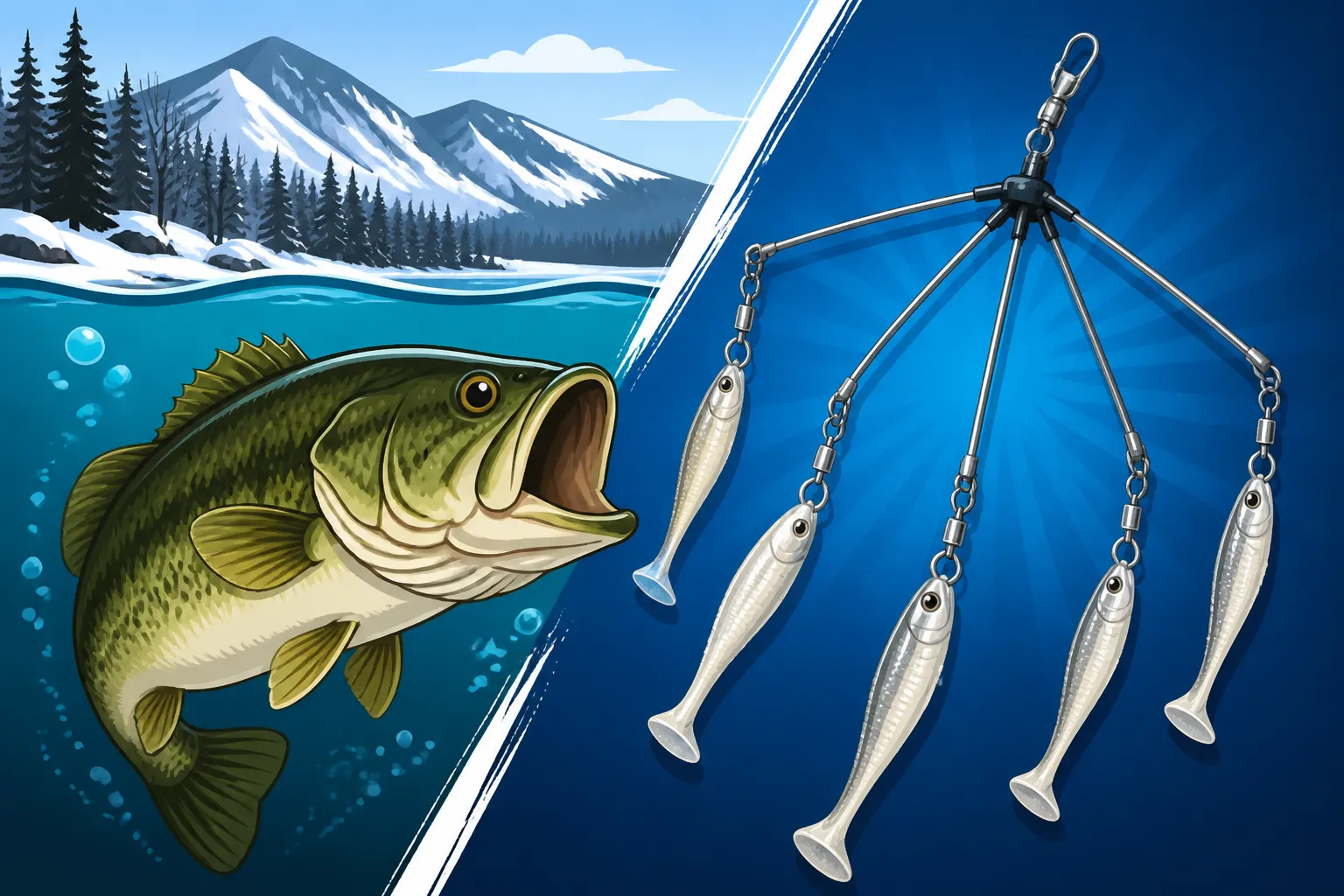
At its core, an umbrella rig consists of a central wire body with multiple "arms" radiating outwards. These arms are typically made of stainless steel wire, flexible enough to allow movement but strong enough to withstand the pull of multiple fish. Each arm usually has a swivel and a snap attached to its end, where you'll connect your individual swimbaits or jigs. The central wire often has a line tie for attaching it to your main fishing line. The number of arms can vary, but commonly you'll see 3-arm or 5-arm versions. The choice depends on local regulations (some states limit the number of hooks or lures), and the size of the baitfish you're trying to mimic.
The beauty of the umbrella rig lies in its ability to present multiple baits simultaneously. Imagine five small swimbaits swimming in concert, looking exactly like a panicked school of smelt or shiners. This creates a much larger, more enticing profile than a single bait ever could, grabbing the attention of even the most sluggish winter bass. The individual components, from the strength of the snaps to the sharpness of your jig heads, all play a role in the rig's overall effectiveness. Getting these details right can mean the difference between frustrating skunks and a productive day on the water.
Mimicking Bait Balls: The Key to Winter Success
Bass are ambush predators, and in winter, they become even more opportunistic. They're looking for the biggest caloric payoff for the least amount of effort. A single baitfish might not be enough to pique their interest when their metabolism is running at half speed. But a tight school of baitfish? That's an irresistible proposition. The umbrella rig perfectly replicates this natural phenomenon. When retrieved, the swimbaits wiggle and flash, giving the impression of a small, vulnerable bait ball moving through the water column.
This "bait ball" effect is particularly potent in winter because bass are often schooled up themselves, and when one fish sees an easy meal, the competitive instinct can kick in, even if they're lethargic. It's a risk-reward calculation for the bass: expend a little energy for what appears to be a huge reward. This is also why matching your swimbaits to the local forage, like the prevalent smelt in many New Hampshire lakes, is critical. The more realistic your "school" looks, the higher your chances of getting a bite. Understanding What landlocked salmon eat in New Hampshire lakes or What lake trout eat in New Hampshire lakes can even give you insights into the forage base that bass might also be targeting in deeper, colder waters.
Selecting the Best Umbrella Rig for New Hampshire Winter Bass
Choosing the right umbrella rig isn't a one-size-fits-all situation, especially when you're targeting cold, finicky bass in New Hampshire. There are several factors to consider that will help you optimize your presentation for these challenging conditions.
Arm Count and Wire Gauge Considerations
For New Hampshire winter bass, you generally want a rig that presents a compact, yet substantial, profile. A 3-arm rig is often a fantastic choice, especially if local regulations limit the number of hooks. It still provides the "schooling" effect but is a bit more streamlined than a 5-arm rig, which can sometimes be overkill in super-cold water when bass are less aggressive. If regulations allow and you're in a known area with very dense baitfish schools, a 5-arm rig can be deadly. However, remember that more arms also means more drag and a heavier setup, which can be tiring to retrieve all day.
The wire gauge (thickness) of the arms is also important. Heavier gauge wires are more durable and can handle bigger fish and more abuse, which is good when you're dragging it through rocky structure. However, they can also be stiffer, making the swimbaits appear less natural. Lighter gauge wires offer more natural movement, but might bend or break more easily with aggressive strikes or snags. For winter bass, a medium to heavy gauge wire is often preferred, striking a balance between durability and action, especially if you're targeting rocky bottoms or areas with submerged timber. You can find a good variety of umbrella rigs with different arm counts and wire gauges at retailers like Bass Pro Shops or through online options like Amazon.
Swimbait Selection: Size, Color, and Action
This is where you truly customize your umbrella rig for New Hampshire's winter bass. Your choice of swimbaits will dictate the overall size and appeal of your "bait ball."
- Size: For winter bass, smaller swimbaits (typically 3 to 4.5 inches) are usually more effective. Remember, bass are trying to conserve energy, so a mouthful of smaller, easier-to-swallow baits is often more appealing than a single large one. Match the size to the predominant baitfish in the lake you're fishing. If you're fishing a lake known for large smelt, you might go a bit larger, but err on the side of smaller in colder water.
- Color: Natural colors are almost always best in clear, cold water. Think shad, smelt, or shiner patterns – silver, white, light blues, and grays. Clear water allows bass to see more detail, so realism is key. However, don't be afraid to experiment with a "shot of chartreuse" or a bright color on one of the dummy baits (the ones without hooks) to act as an attractor. Sometimes a slight flash of something different can trigger a reaction strike.
- Action: You want swimbaits with a subtle, natural swimming action, even at very slow retrieve speeds. Paddletail swimbaits are a classic choice for their consistent tail kick. Soft plastics that have a lot of inherent body wiggle, even when barely moving, are ideal. In winter, speed is out, and finesse is in. Ensure the swimbaits are rigged perfectly straight on your jig heads to ensure they track true and don't spin, which can quickly put off wary bass.
Jig Heads and Terminal Tackle
The jig heads are crucial for balancing your umbrella rig and presenting your swimbaits correctly. You'll typically want jig heads in the 1/8 to 1/4 ounce range for each swimbait. The weight should be consistent across all jig heads to ensure a balanced, natural presentation of the "school." You might consider using slightly heavier jig heads on your "trailer" baits (the ones with hooks) if local regulations allow you to have a mix, to give them a slightly deeper sink rate and make them stand out.
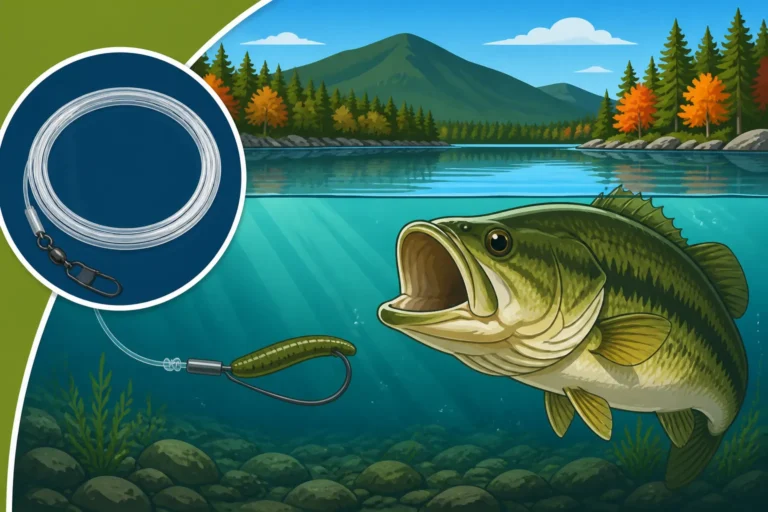
The hooks on your jig heads need to be sharp and strong. Winter bass bites can be very subtle, so a sticky-sharp hook is essential for good penetration. Because you're often fishing around cover, quality hooks are paramount. While most umbrella rigs come with decent snaps and swivels, it's always a good idea to check them. If you suspect any weakness, upgrading to stronger, high-quality components can save you from losing a trophy bass. Fluorocarbon leaders can also be beneficial in the clear winter water to reduce line visibility, especially if the fish are super shy.
Here's a quick comparison of common umbrella rig types:
| Feature | 3-Arm Umbrella Rig | 5-Arm Umbrella Rig |
|---|---|---|
| Arm Count | 3 | 5 |
| Wire Gauge | Often medium-heavy for good balance and action | Can vary, but heavy gauge common for durability |
| Profile | More compact, less intrusive | Larger, denser bait ball imitation |
| Retrieve Drag | Moderate | High, requires stout tackle |
| Ideal For | Finicky winter bass, clearer water, current, regulations | Aggressive bass, turbid water, open water schooling |
| Regulations | Often legal where hook limits are strict | May be restricted in states with low hook limits |
| Versatility | Easier to cast and retrieve with standard gear | Requires specialized heavy gear due to weight and drag |
Techniques for Fishing an Umbrella Rig in Winter
So, you've got your perfectly rigged umbrella rig, swimbaits fluttering just right. Now comes the art of presentation. Winter bass fishing with an umbrella rig isn't about power fishing; it's about finesse and patience. Every movement, every retrieve, needs to be deliberate and slow.
Slow Rolling the Depths
The most effective technique for winter bass with an umbrella rig is a painfully slow, steady retrieve, often referred to as "slow rolling." Cast your rig out, let it sink all the way to the bottom (or just above the depth where you've marked fish), and then begin a continuous, very slow retrieve. The goal is to keep the rig moving just fast enough for the swimbaits to maintain their natural swimming action, but no faster. You want the baits to appear like an easy, unhurried meal, not a frantic escape.
The depth at which you maintain your retrieve is critical. If bass are suspended at 25 feet over a 40-foot bottom, you want your rig to run consistently at or slightly above that 25-foot mark. This often means counting down your rig as it sinks or using your fish finder to monitor its depth. Every now and then, introduce a very subtle twitch of your rod tip or a slight pause to impart a dying baitfish look, but generally, consistency is key. These fish aren't going to chase, so your "school" needs to pass right by their noses. Don't be afraid to experiment with different depths until you find where the fish are most comfortable feeding.
Targeting Structure and Transitions
As mentioned, winter bass relate heavily to structure. When fishing your umbrella rig, always keep your eye on your fish finder and your internal mental map of the lake. Focus your casts on the edges of deep humps, along subtle drop-offs, over submerged rock piles, and near the mouths of deep creek channels. These are the highways and dinner tables for winter bass. Instead of casting haphazardly, identify key structural elements and make precise casts that allow your rig to traverse these areas effectively.
Think about transition zones – areas where a hard bottom meets a soft bottom, or where rocks give way to sand. Bass will often hold along these invisible lines, especially if there's an abrupt depth change nearby. The umbrella rig is excellent for covering these larger structural elements, as its multiple baits increase the chances of one of them being seen by a lethargic bass. Sometimes, even a subtle change in the bottom composition can hold a cluster of fish. Learning to interpret your electronics and understanding the lake's topography will drastically improve your success. This skill is vital whether you're targeting bass or even Lake Trout Fishing in New Hampshire, as both species often relate to similar deep-water structures.
The Right Gear for Rigging Up
Fishing an umbrella rig effectively, especially a 5-arm version with heavy swimbaits, requires specialized tackle. You can't just throw it on your everyday spinning rod; it will quickly overwhelm your gear and lead to fatigue and frustration.
- Rod: You'll need a stout, heavy-action rod, typically 7'6" to 8' in length. A longer rod provides better casting distance for the heavy rig and improved leverage for fighting multiple fish. A moderate-fast action will help load up the rod for casting and provide enough give to prevent hooks from pulling out.
- Reel: A heavy-duty baitcasting reel with a low gear ratio (e.g., 5.1:1 or 4.1:1) is ideal. The low gear ratio provides the cranking power needed to retrieve the heavy rig and fight fish, while the larger spool capacity can hold the necessary heavy line.
- Line: Braided line in the 50-80 lb test range is a must. Its strength and lack of stretch are essential for casting heavy rigs, detecting subtle bites, and battling bass in deep water. Connect a 20-30 lb fluorocarbon leader to your braid for increased invisibility at the business end. Learn more about Best Fishing Rods for New Hampshire Lakes and Best Tackle for New Hampshire Smallmouth Bass to ensure your setup is truly optimized.
- Net: Since you might hook multiple fish, a large, sturdy landing net is highly recommended. It’s easier and safer for the fish to land them quickly.
Equipping yourself properly is just as important as selecting the rig itself. Using undersized or inadequate gear will only lead to frustration, lost fish, and potentially damaged equipment. Investing in the right tools will make your winter bass fishing experience much more enjoyable and productive.
Winter bass fishing with an umbrella rig in New Hampshire is a cold-weather strategy that can produce incredible results when traditional methods fall short. By understanding the challenges of winter bass behavior, selecting the right rig and swimbaits, and employing patient, methodical techniques, you can unlock a whole new dimension of angling success. Don't let the cold keep you indoors; embrace the challenge, equip yourself with an umbrella rig, and experience the thrill of a winter bass bite in the Granite State. Remember to always check New Hampshire Fishing Regulations Explained before heading out to ensure your rig complies with local rules regarding the number of hooks.
Disclaimer
This article is for general informational purposes only and does not constitute professional advice. Laws, prices and regulations vary by location and change over time. Consult a qualified professional for guidance on your specific situation.