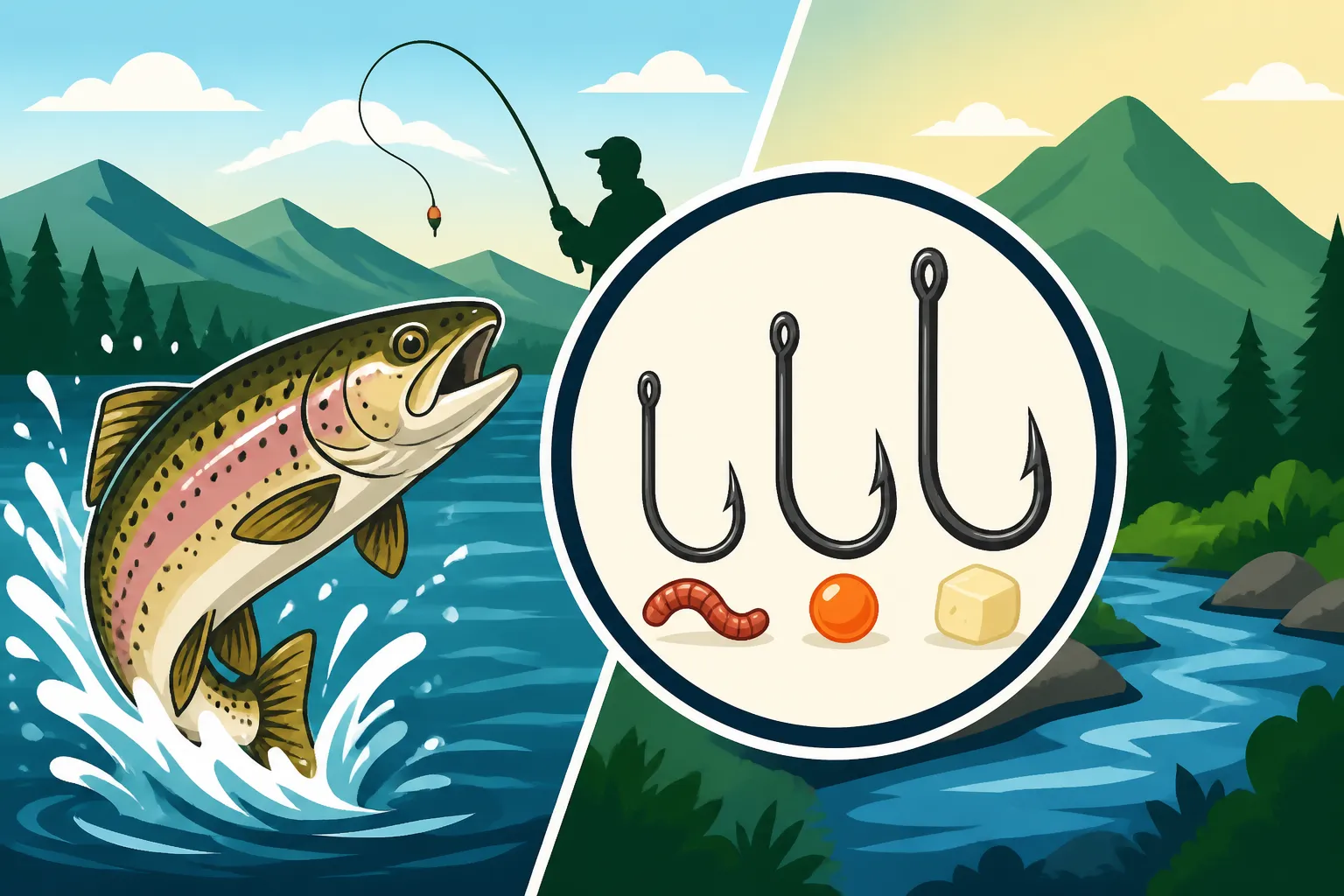
Best hook size for stocked trout bait fishing
It’s a scenario every angler who has chased stocked trout in New Hampshire knows all too well: you cast out your favorite bait, watch your line twitch, maybe even see your bobber dance a little jig, only to reel in… nothing. The bait’s gone, but the fish isn't on the hook. It's frustrating, right? You know the trout are there, they're biting, but for some reason, they’re just not committing. Often, the culprit isn't your bait, your technique, or even your luck, but a simple oversight: your hook size. This comprehensive guide will delve deep into why choosing the right hook size is paramount for successful stocked trout bait fishing in the Granite State and help you finally land those elusive fish.
Why Hook Size Matters More Than You Think for Stocked Trout
Stocked trout, especially those fresh from the hatchery, can be a different breed compared to their wild cousins. They're often accustomed to a steady diet, and while they're opportunistic feeders, they can also be incredibly cautious once they hit natural waters. This unique behavior makes hook selection a critical component of your tackle setup.
The Finicky Nature of Stocked Trout
When trout are raised in a hatchery, their feeding instincts are geared towards readily available pellets. Once they're introduced into a pond or stream in New Hampshire, they're suddenly exposed to a wider variety of natural food sources, but they also retain some of that hatchery-induced wariness. They might mouth a piece of PowerBait, nibble at a worm, or gently test a kernel of corn before fully committing. If they feel resistance, or worse, the hard, unnatural feel of a hook that's too large, they'll often spit it out without a second thought. This is precisely why so many anglers experience those frustrating "bait-stealers" – the trout are investigating, but the presentation isn't convincing enough for a solid hook-up.
Moreover, many of the trout stocked in New Hampshire waters are on the smaller side, especially the pan-sized brook, rainbow, and brown trout. These fish simply have smaller mouths than larger, more mature wild trout. A hook that might be perfectly fine for a wild brook trout in a remote mountain stream could be completely overwhelming for a newly stocked rainbow in a local pond. You might be getting bites, but if the hook is too big for the trout to properly engulf, it's virtually impossible to set it firmly. Understanding this nuance is key to turning those missed bites into landed fish.
Matching the Hatch… or the Bait
Think of hook size as an extension of your bait presentation. Just as fly anglers "match the hatch" by selecting flies that imitate natural insects, bait anglers need to match their hook size to the bait they're using. The goal is to make the bait look as natural and appealing as possible, with the hook virtually disappearing within it. If your hook is too large for your bait, it not only becomes more visible, potentially spooking cautious trout, but it also alters the natural action or buoyancy of the bait.
For example, a large hook can weigh down a buoyant bait like PowerBait, preventing it from floating up enticingly off the bottom. Conversely, if you're trying to hide a hook in a small worm or a few kernels of corn, a hook that's disproportionately large will stick out like a sore thumb, signaling danger to a wary trout. The right hook size allows your bait to move, drift, or sit in the water in the most natural way possible, increasing the chances that a trout will confidently take it deep enough for a solid hook set. It's all about tricking their senses and making the meal irresistible and seemingly safe.
Understanding Hook Sizing: The Numbers and the 'Oughts'
Before we dive into specific recommendations, let's clear up the often-confusing world of hook sizing. It's not as intuitive as you might think, and knowing the system is fundamental to making the right choice for your New Hampshire trout adventures.
The Standard Sizing System (Size 1 to 32)
For most freshwater fishing, and especially for targeting stocked trout, you'll be dealing with what's called the "standard" hook sizing system. This system can be a bit counter-intuitive at first glance: the smaller the number, the larger the hook. So, a size 1 hook is much larger than a size 10 hook, and a size 10 hook is larger than a size 14 hook. This is where many beginner anglers can get tripped up, assuming a larger number means a larger hook, like with fishing line test or rod power.
When targeting pan-sized stocked trout, you'll typically be looking at hooks ranging from about size 8 all the way down to size 18 or even 20. For example, a size 8 or 10 hook might be suitable for a larger piece of nightcrawler, while a size 14 or 16 would be perfect for a small glob of PowerBait or a single kernel of corn. It's a system that takes a little getting used to, but once you understand that smaller numbers equal bigger hooks in this range, you'll be well on your way to selecting the right tackle. You can usually find these clearly labeled in multi-packs at your local tackle shop or even on Amazon, making it easy to grab a few different sizes to experiment with.
The 'Ought' System (1/0, 2/0, etc.) and Why It's Less Common for Trout
You might also come across hooks labeled with a number followed by a slash and a zero (e.g., 1/0, 2/0, 3/0, 4/0, and so on). This is known as the "ought" system, and it works in the opposite way to the standard sizing. In the 'ought' system, the larger the number before the '/0', the larger the hook. So, a 4/0 hook is significantly larger than a 1/0 hook. This system typically begins where the standard system leaves off, with 1/0 hooks being larger than size 1 hooks.
While crucial for targeting larger species like bass, pike, or saltwater fish, the 'ought' system hooks are generally far too large for the average stocked trout in New Hampshire. A 1/0 hook would be a massive, gaping hook that a typical hatchery trout wouldn't even be able to get into its mouth, let alone get hooked on. So, for the purposes of stocked trout bait fishing, you can almost entirely disregard the 'ought' sizes and focus solely on the standard number system (like sizes 8, 10, 12, etc.). Keep your eye on those smaller numbers when you’re browsing the hook section at Bass Pro Shops or your local outfitter.
The Sweet Spot: Recommended Hook Sizes for Common Stocked Trout Baits
Now that we understand the sizing system, let's get down to the brass tacks: what specific hook sizes work best with the baits you're most likely to use for stocked trout in New Hampshire? The goal is always stealth and effective hook-up potential.
PowerBait and Marshmallows: Tiny Hooks for Soft Baits
When you're fishing with moldable baits like PowerBait (especially the floating dough varieties) or even small pieces of marshmallow, you're looking for hooks that can be completely concealed within the bait. This is where small, sharp hooks truly shine. For these baits, many anglers find success with treble hooks in sizes 14 to 18 or small single hooks in sizes 10 to 14.
The beauty of a small treble hook (like a size 16 or 18) is that its three points increase your chances of a hook-up, even with a light bite, and it holds the moldable bait incredibly well. You can completely cover the hook, leaving no metal exposed, which makes the bait look utterly natural to a wary trout. When using floating PowerBait, hiding the hook entirely also helps maintain the bait's buoyancy, allowing it to suspend tantalizingly off the bottom, just above any debris. If you prefer single hooks, a small, light-wire bait holder hook in a size 10 or 12 can work wonders. The key is to mold your PowerBait around the hook, ensuring that the point and barb are just barely covered, ready to expose themselves with the slightest pressure from a biting trout. It's a delicate balance, but master it, and your hook-up ratio will soar. You can learn more about specific bait choices in Best Bait for Opening Day Trout in New Hampshire.
Worms and Live Bait: Single Hooks Are Key
For natural live baits such as worms (nightcrawlers, garden worms, red wigglers) or small shiners, single hooks are generally the preferred choice. They allow for a more natural presentation, especially when you want the bait to wiggle or swim enticingly. For worms, bait holder hooks or Aberdeen hooks in sizes 8 to 12 are excellent options.
A bait holder hook typically has small barbs along the shank, designed to keep the worm from sliding down and bunching up. When using a nightcrawler, you don't necessarily need to thread the entire worm onto the hook. Instead, try threading just enough to cover the shank and barb, leaving a good portion of the worm to dangle and squirm freely. This creates a much more natural and active presentation that trout find irresistible. For smaller worms, like red wigglers, a size 10 or 12 hook might allow you to thread the entire worm, or at least a good portion of it, masking the hook completely. Aberdeen hooks, characterized by their round bend and fine wire, are also fantastic. Their fine wire makes them less visible and easier to remove from a fish, which is great for catch-and-release efforts, but they can straighten out if you snag on something heavy. Choosing the right hook for your live bait ensures the presentation is natural and the hook is ready to set when a trout strikes.
Corn and Small Lures: The Versatility of Smaller Single Hooks
Simple baits like corn are often surprisingly effective for stocked trout, and they also require a discreet hook. For a single or a few kernels of corn, small single hooks in sizes 10 to 14 are ideal. The trick here is to thread just enough corn onto the hook to cover the shank and point, leaving the barb exposed or just barely covered. You want the corn to look like it's drifting naturally, not held rigid by a giant piece of metal.
Beyond traditional bait, if you're trying very small artificial lures like tiny spoons, spinners, or even micro jigs, the hook size that comes with them is usually appropriate. However, if you're adapting a small lure or making your own, a size 12 or 14 single hook can often be a good starting point for a subtle presentation. Sometimes, anglers will even use tiny jig heads in sizes 12-16 with a bit of scented soft plastic or a wax worm, presenting it like a small fly under an indicator. This can be especially effective when trout are being particularly finicky or when you're fishing in clear water where visibility is high. For more specialized techniques, consider exploring Fly Fishing for Trout in New Hampshire for inspiration on subtle presentations.
| Bait Type | Recommended Hook Sizes (Standard System) | Hook Type Suggestions | Key Considerations |
|---|---|---|---|
| PowerBait Dough | #14, #16, #18 (Treble) | Small Treble Hooks, Single Octopus Hooks | Must be fully concealed; maintains buoyancy; easier hook-ups. |
| Marshmallows | #14, #16 (Treble or Single) | Small Treble Hooks, Light Wire Bait Holders | Concealment is vital; keeps bait floating naturally. |
| Nightcrawlers (pieces) | #8, #10, #12 (Single) | Bait Holder Hooks, Aberdeen Hooks | Thread to cover shank & barb; allow natural movement; prevent sliding. |
| Garden/Red Worms | #10, #12, #14 (Single) | Bait Holder Hooks, Aberdeen Hooks | Full concealment for smaller worms; natural presentation. |
| Corn Kernels | #10, #12, #14 (Single) | Small Baitholder Hooks, Single Octopus Hooks | Thread just enough to cover hook; discreet presentation. |
| Small Shiners/Minnows | #8, #10 (Single) | Kahle Hooks, Circle Hooks (for live baiting) | Hook lightly through lip or dorsal fin; ensures natural swim; ethical hook-sets. |
Beyond Hook Size: Other Factors for Stocked Trout Success
While choosing the correct hook size is a monumental step towards improving your stocked trout success, it's far from the only factor. Many other elements of your tackle and technique work in concert with your hook to create an irresistible offering.
Line Diameter and Leader Material
Even the smallest hook can be rendered ineffective if it's tied to line that's too heavy or too visible. Stocked trout, especially in heavily fished ponds and lakes, are incredibly wary of anything that looks unnatural. Using light line, typically 2 to 4 lb test, is crucial. This not only makes your presentation more stealthy but also allows your bait to move more freely and naturally in the water. Pairing your main line with a fluorocarbon leader is an absolute game-changer. Fluorocarbon is nearly invisible underwater, has excellent abrasion resistance, and a bit of stretch to absorb sudden strikes.
Imagine you've got a perfectly sized #14 hook hidden in a glob of PowerBait, but it's tied directly to 8 lb monofilament. That thick, visible line could easily be enough to spook a cautious trout, causing it to shy away or spit the bait once it feels the resistance. A long, light fluorocarbon leader (say, 4-6 feet of 2-4 lb test) creates a much more subtle connection to your bait, making your entire rig less detectable. This is particularly important in clear New Hampshire waters where trout have excellent visibility. You can find a wide array of options for leader material both in stores like Bass Pro Shops and through online retailers like Amazon.
Presentation and Rigging
The way you present your bait is just as important as the hook itself. For floating baits like PowerBait, a simple slip sinker rig with a small swivel and a short leader allows the PowerBait to float freely a foot or two off the bottom, keeping it out of the muck and visible to cruising trout. For worms, a similar setup with a very light split shot or two crimped a foot or so above the hook can allow the worm to sink slowly and naturally, mimicking a struggling insect or an earthworm washed into the water.
Consider how the bait behaves in the water. Does it look natural? Does it drift with the current? Is it suspended at the right depth? Small details, like covering the knot on your hook with a tiny piece of PowerBait, can make a difference. The more thought you put into making your bait look like a natural, easy meal, the more success you'll have. Sometimes, even the way you cast can impact your success; a gentle lob that doesn't splash loudly will be less likely to spook fish in shallow, clear ponds. Mastering these subtle aspects of presentation will greatly improve your catch rates.
Reading the Water and Adjusting
Fishing is rarely a one-size-fits-all endeavor, and stocked trout fishing is no exception. What works one day might not work the next, or what's effective in one pond might be a bust in another. Always be prepared to adapt. If you're getting bites but missing fish, your hook size might be slightly off. Try going down a size or two. If you're not getting any bites at all, consider switching your bait entirely, or adjusting your leader length or sinker weight.
Pay attention to what's happening around you. Are other anglers catching fish? What are they using? Observe their techniques, their baits, and if possible, try to discern their hook choices. The trout's behavior can change based on water temperature, time of day, fishing pressure, and even weather patterns. Having a variety of hook sizes, baits, and rigging options in your tackle box is essential. Don't be afraid to experiment! Sometimes the smallest change, like moving from a size 12 to a size 14 hook, can make all the difference between a frustrating day and a successful outing. For a broader overview of how to approach trout fishing in general, check out Trout Fishing in New Hampshire. Knowing when and where the trout are stocked can also be invaluable, so take a look at the New Hampshire Trout Stocking and Fishing Rules and the New Hampshire Trout Stocking Report and Map.
Disclaimer
This article is for general informational purposes only and does not constitute professional advice. Laws, prices and regulations vary by location and change over time. Consult a qualified professional for guidance on your specific situation.