Best line color for clear lake water
Few things are as frustrating as watching a wary fish spook and dart away just because it saw your fishing line shimmering in the crystal-clear water. We’ve all been there, casting perfectly into a promising spot on a pristine New Hampshire lake, only to have a beautiful smallmouth or a prized landlocked salmon vanish without a trace. It leaves you wondering: was it my lure, my approach, or was my line just too obvious? This guide will dive deep into understanding fishing line visibility and help you choose the best line color to give you an edge in the exceptionally clear waters found across the Granite State.
Understanding How Fish See Fishing Line
Before we can pick the perfect line color, it's really helpful to understand the world from a fish's perspective. They live in an environment where light behaves very differently than it does for us above the surface, and their vision is adapted to detecting movement and subtle variations in their aquatic world.
The Science of Fish Vision in Water
Water isn't just a medium; it's a filter and a refractor of light. When light hits the water's surface, some of it reflects, creating glare, and some penetrates, bending and scattering. This phenomenon, called refraction, means that a straight object like your fishing line appears bent or distorted to a fish, potentially making it more visible. Different colors of light also penetrate water to varying depths. Red light is absorbed very quickly, disappearing within the first few feet, while blue and green light penetrate much deeper. This is why many deep-sea creatures appear red – it's effectively "invisible" to them in the depths where only blue light remains.
Fish eyes are also quite different from human eyes. Many species have excellent close-up vision and a wide field of view, making them highly adept at spotting potential threats or food sources. They can detect movement, changes in light intensity, and even, in some cases, ultraviolet light. The lateral line system also plays a huge role, sensing vibrations and pressure changes, but for seeing your line, it's all about their eyes. In clear New Hampshire lakes, where light can penetrate quite deep and the water is often devoid of much particulate matter, your line's visibility becomes a much larger factor than in murkier conditions.
Factors Affecting Line Visibility
It's not just the inherent color of your line that determines how visible it is. Several environmental factors play a significant role, creating a dynamic challenge for anglers.
First, water clarity is paramount. In the exceptionally clear glacial lakes of New Hampshire, like Lake Winnipesaukee or Squam Lake, visibility can be astonishingly high. On a calm, sunny day, you might see the bottom in 15-20 feet of water. In such conditions, a line that might disappear in a tannic river will stand out like a beacon. Conversely, in a slightly stained pond or a river with a bit of sediment after a rain, the line's visibility is naturally reduced.
Next, depth matters immensely. As mentioned, certain light wavelengths are absorbed at different rates. A bright yellow line might be highly visible on the surface, but if you're fishing 50 feet down for lake trout, that yellow will have long since faded to a dull gray, potentially making it less conspicuous. Most fish, especially predators, are looking up for their prey against the bright sky, or scanning horizontally. A line directly above them against the brighter surface can be very noticeable.
Finally, light conditions are crucial. On a bright, sunny day, glare on the water's surface can make it harder for fish to see your line if it's cutting through the glare. However, the abundance of light also means that any line that reflects light or stands out against the background will be easily spotted. On overcast days, or during dawn and dusk, the overall light is dimmer, which can work in your favor by making lines less distinct. But even then, fish are accustomed to low light and their eyes are adapted to it. It’s a constant dance between how much light is available and how that light interacts with your fishing line.
The Best Line Colors for Clear Water Conditions
So, with all that science out of the way, what does it mean for the actual color you spool onto your reel? In clear water, the goal is always to achieve the lowest possible visibility.
Clear Monofilament: The Classic Choice and Its Nuances
For decades, clear monofilament has been the default choice for anglers fishing in clear water, and for good reason. Monofilament line is made from a single strand of nylon, and its transparent nature allows light to pass through it rather than reflecting it overtly. In theory, this makes it blend in with the surrounding water. It's often referred to as "invisible," though in reality, it's more "low-visibility."
The nuance with clear mono is that it's rarely truly invisible. In bright sunlight, especially when stretched tight or under certain angles, it can still catch the light and create a faint, shimmering outline. Think of a piece of clear plastic wrap – it's transparent, but you can still see its edges. This effect is amplified in perfectly still, clear water. However, for general fishing in New Hampshire's clearer waters, especially for species like bass or panfish where stealth is important but not paramount, clear monofilament is a very dependable and often economical choice. It offers good knot strength and shock absorption, making it a versatile option for many situations. Many anglers still rely on clear mono for their main line, opting to attach a nearly invisible leader for their terminal tackle.
Fluorocarbon: The Near-Invisible Solution
If clear monofilament is "low-visibility," then fluorocarbon is the undisputed king of "nearly invisible." This is due to its unique refractive index, which is very close to that of water. In simple terms, light bends through fluorocarbon at almost the same angle as it does through water, making the line virtually disappear beneath the surface. This is a game-changer when you're targeting highly pressured fish or species known for their keen eyesight, such as trout, salmon, or the wary smallmouth bass found in many New Hampshire lakes.
Fluorocarbon is denser than monofilament, causing it to sink faster, which can be an advantage for getting lures down to depth quickly. It also has very low stretch, providing excellent sensitivity to detect subtle bites. While it tends to be stiffer and less supple than mono, making it a bit trickier to tie knots with, its invisibility factor in clear water is unparalleled. Many anglers will use a main line of braided line (which is highly visible but incredibly strong and sensitive) and then tie on a long fluorocarbon leader. This gives them the best of both worlds: the strength and sensitivity of braid, coupled with the invisibility of fluorocarbon right at the lure. You can find excellent fluorocarbon options at most reputable fishing retailers, including Bass Pro Shops, or easily ordered through Amazon. This is often the best choice when fishing for species like landlocked salmon in the famously clear waters of New Hampshire.
Low-Visibility Green and Blue Lines: Blending with the Environment
While clear and fluorocarbon lines aim for invisibility, sometimes a line that simply blends into the natural background can be just as effective, especially as a main line or in specific water conditions. This is where low-visibility green and light blue lines come into play.
-
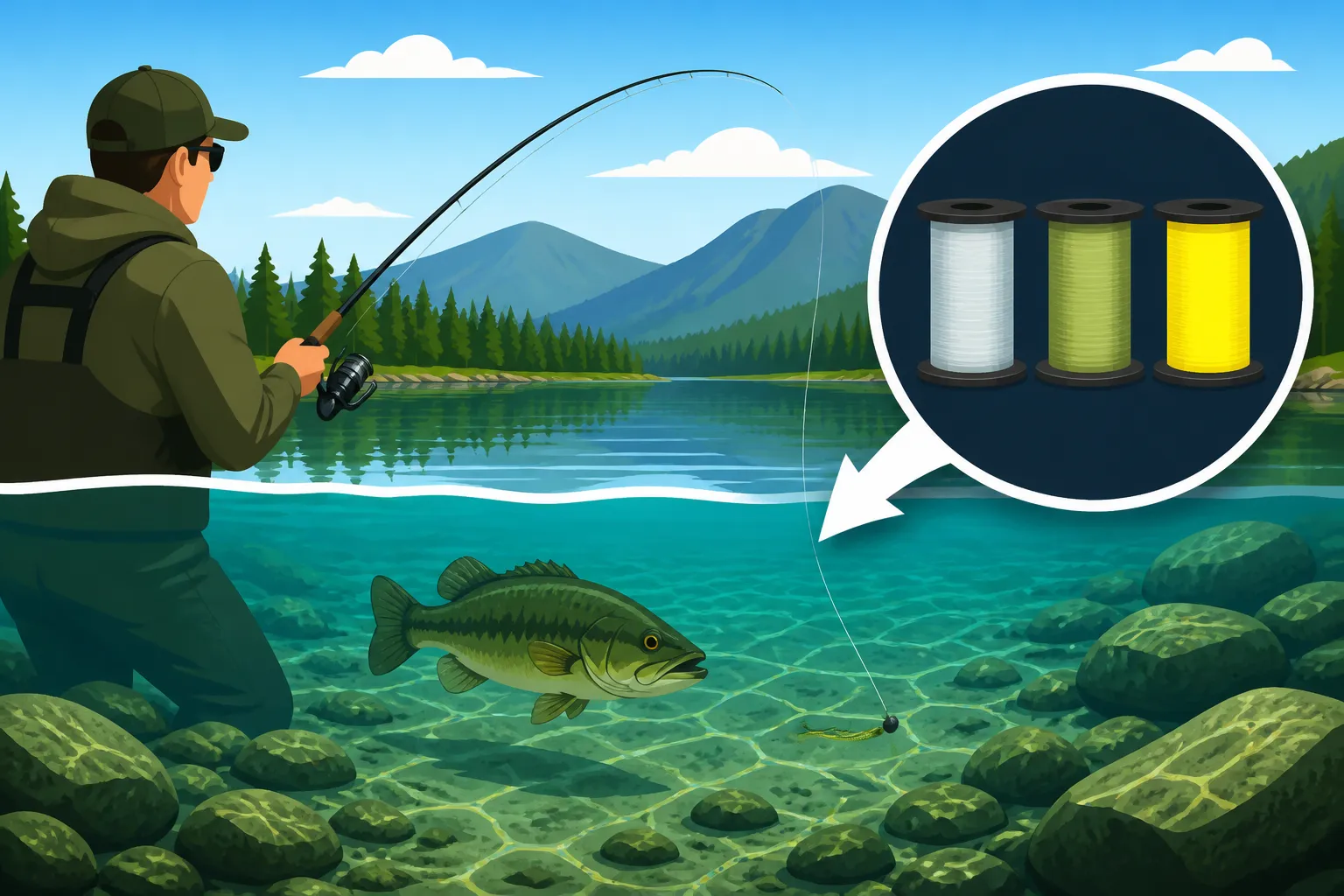
Low-Visibility Green: This color is designed to mimic the aquatic vegetation and algal blooms that are naturally present in many lakes and rivers. In waters that have a green tint due to plant life, or even a slight overall greenish hue, a dull green line can surprisingly vanish. It doesn't reflect light sharply like some brighter colors might, but rather absorbs it and blends in. This can be particularly effective in ponds or shallower areas where there's a good amount of weed growth or stained water.
-
Light Blue: As we discussed, blue light penetrates deepest into water. A light blue or clear-blue line can effectively disappear against the vast, blue backdrop of open water, particularly in deeper sections of lakes or when fishing away from structure. It mimics the sky and the natural blue tint of clear, deep water. If you're trolling for lake trout or salmon in the open expanses of a large lake, a good quality light blue monofilament or even a specific blue-tinted fluorocarbon might be a smart choice for your main line or leader, especially if you're not going deep enough for the color to be completely absorbed.
The key with these colors is "low-visibility." They aren't trying to be perfectly transparent but rather to seamlessly integrate with the ambient light and natural colors of the underwater environment. They often perform better than clear mono in situations where clear mono might still cast a faint shadow or shimmer.
When Line Color Matters Less (And When It Matters Most)
It's tempting to think line color is always the deciding factor, but the truth is, its importance can vary wildly depending on your fishing situation. Understanding these nuances can save you a lot of headache and help you focus on what truly matters.
Deep Water and Low Light Scenarios
The deeper you go, the less important line color becomes. Why? Because light penetration dramatically decreases with depth. Beyond a certain point, roughly 10-20 feet depending on clarity and conditions, most colors are absorbed and become indistinguishable shades of gray or black to a fish. If you're targeting species like lake trout in their deep summer haunts, where they might be suspended at 60 feet or more, a bright yellow or orange braided main line won't make much difference to the fish themselves. The vibrations and movements of your lure will be far more important.
Similarly, in very low light conditions – think dawn, dusk, or during a heavy overcast storm – the overall lack of light makes any line less visible. While fish still have excellent low-light vision, the stark contrast that might make a line stand out in bright sun is simply absent. In these situations, your focus might shift to a line that offers better visibility for you, the angler, especially if you're trying to detect subtle bites or watch your line for strikes. High-visibility lines can be a huge asset in monitoring your lure's position and detecting those faint twitches that signal a bite.
Topwater and Reaction Strike Situations
When you're fishing topwater lures for aggressive smallmouth bass that are crashing baits on the surface, or when you're triggering "reaction strikes" with fast-moving crankbaits or spinnerbaits, line visibility often takes a backseat. In these scenarios, the fish are typically reacting to the commotion, vibration, and flash of the lure itself, making split-second decisions based on instinct and aggression rather than a detailed inspection of your line.
The speed of the retrieve or the explosive nature of a topwater strike means the fish doesn't have time to notice your line. Here, factors like line strength, casting distance, and how well the line handles the lure become far more important. A powerful largemouth bass exploding on a frog bait in a lily pad field isn't scrutinizing your leader; it's focused solely on that enticing meal. For these types of situations, many anglers opt for a highly visible braided line as their main line because of its incredible strength, casting distance, and sensitivity, sometimes with a very short fluorocarbon leader simply for abrasion resistance.
Leader Usage and Line-to-Lure Connection
This is where many experienced anglers find their balance, especially in clear New Hampshire waters. The concept is simple: use the main line that best suits your fishing style and the demands of the retrieve (e.g., strong, sensitive braid for casting distance), but then connect a leader of a much less visible material directly to your lure.
A leader is a shorter section of line, typically 2-10 feet, tied to the end of your main line, and then your lure is tied to the leader. In clear water, fluorocarbon leaders are almost universally recommended. You can use a bright, high-visibility braided main line for sensitivity and strength, knowing that the last critical feet of your presentation are nearly invisible. This strategy is extremely effective for trout, salmon, and even wary bass. For example, if you're fly fishing for trout in a clear mountain stream, you'd use a fly line that you can easily see, but your tippet (the last section of your leader) would be extremely thin, clear fluorocarbon to fool the fish. Check out Best Fluorocarbon Line for Clear Lake Water for more in-depth details on this material. This setup maximizes stealth where it matters most – right at the lure – while allowing you to benefit from the performance characteristics of different line types for your main spool.
| Line Type | Key Benefit (Clear Water) | Typical Use Case (NH) | When It Matters Most |
|---|---|---|---|
| Fluorocarbon | Near-invisible | Wary trout, salmon, smallmouth bass; leaders | Sight fishing, slow retrieves, highly pressured fish |
| Clear Mono | Low-visibility | General bass, panfish; main line with fluoro leader | When fish are less line-shy, general versatility |
| Low-Vis Green | Blends with vegetation | Stained ponds, weed beds, greenish water | Shallow, vegetated areas |
| Light Blue | Blends with open water | Deep lake trolling, offshore fishing | Open water, targeting deeper fish |
| Braid (HV) | No stretch, sensitive | Main line, always with a leader in clear water | Reaction strikes, deep water, casting distance |
Practical Tips for Choosing and Using Line in Clear New Hampshire Lakes
Alright, so you've got the theory down. Now, let's talk about putting it into practice in our beautiful New Hampshire waters. Every angler develops their own preferences, but there are some solid principles to follow.
Matching Line to Specific New Hampshire Species and Waters
New Hampshire offers an incredible diversity of fishing, from pristine mountain streams to vast, deep lakes. What works in one spot might not be ideal for another.
-
For Trout and Landlocked Salmon: These are typically the most line-shy fish you'll encounter in New Hampshire's clear waters. Whether you're chasing brook trout in the Swift River or trolling for landlocked salmon on Lake Sunapee, fluorocarbon leaders are absolutely essential. For your main line, a good quality clear monofilament is a decent choice, but many experienced anglers prefer a low-stretch braid for sensitivity, connecting a long, light fluorocarbon leader (e.g., 4-8 lb test for trout, 8-12 lb for salmon). The clearer the water, and the more sunshine, the lighter your leader should be. This approach is key to success when you're trying to fool these wary species. If you're after trout, you'll find more helpful tips in our guide Fly Fishing for Trout in New Hampshire.
-
For Smallmouth Bass: New Hampshire boasts fantastic smallmouth bass fishing, especially in lakes like Winnipesaukee and Squam. Smallmouths can be quite discerning in clear water. When fishing with finesse techniques like drop shotting, shaky heads, or Ned rigs, a fluorocarbon main line or a fluorocarbon leader on braid is your best bet. If you're throwing fast-moving reaction baits, a high-visibility braid might be fine, but still consider a shorter fluoro leader for an extra edge. For a deeper dive, check out How to Catch Smallmouth Bass in New Hampshire Lakes.
-
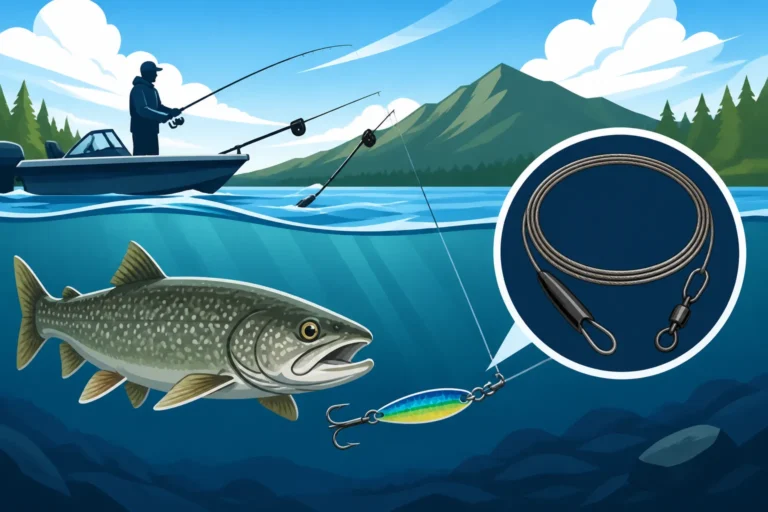
For Lake Trout: Often found in the deep, cold waters of large lakes, lake trout might seem less concerned with line visibility due to depth. However, they are still predators with keen eyesight. While your main line (often heavy braid for trolling or jigging) can be any color, a long fluorocarbon leader is highly recommended. It provides that invisibility where it counts, close to your lure or bait, and also offers excellent abrasion resistance against the lake bottom or rocks. Learn more about targeting these deep dwellers in How to Catch Lake Trout in New Hampshire.
-
For Panfish (Perch, Crappie, Bluegill): While less line-shy than trout, panfish can still be spooky, especially larger specimens in clear, shallow water. For these species, light monofilament in clear or light green works wonderfully. An ultralight setup with 2-4 lb test line is often all you need, and the thinner diameter is naturally less visible.
Experimentation and Local Knowledge
Ultimately, there's no single "magic bullet" line color. The best approach for any New Hampshire angler is a combination of understanding the principles of line visibility, learning from local conditions, and not being afraid to experiment.
- Don't Be Afraid to Try Different Colors: If you're having a tough day on the water and suspect line visibility might be an issue, try switching to a different color or adding a longer fluorocarbon leader. Keep a few spools of different line types and colors on hand. What works for your buddy on one side of the lake might not work for you in a different cove with slightly different water clarity or light conditions.
- Observe Your Success: Pay attention to when and where you get bites. Did you just switch to a clear fluorocarbon leader and suddenly start catching fish? That’s a strong indicator. Keep a mental note, or even a fishing journal, to track what combinations of line color and type work best for various species and locations.
- Tap into Local Knowledge: Talk to anglers at local bait and tackle shops (like those found near Bass Pro Shops locations), or consult online forums about fishing specific New Hampshire lakes and rivers. Local experts often have invaluable insights into what works best in their particular waters. They’ve spent years figuring out the nuances, and their advice can shortcut your learning curve significantly. Always be open to learning from others.
By understanding how fish perceive your line and adapting your choices to the specific conditions and species you're targeting, you can significantly improve your success rate in the stunning, clear waters of New Hampshire. Sometimes, the smallest detail, like the color of your line, can make all the difference.
Disclaimer
This article is for general informational purposes only and does not constitute professional advice. Laws, prices and regulations vary by location and change over time. Consult a qualified professional for guidance on your specific situation.