Best landing net mesh for catch and release
We've all been there: you've battled a feisty smallmouth or a gorgeous brook trout to the boat or shore, and the moment of truth arrives. You reach for your trusty landing net, scoop up the fish, and then… a sinking feeling. You see scales shed, fins bent, or worse, a hook hopelessly tangled in coarse, knotted mesh. It's frustrating for us anglers, but even more so for the fish we care so much about releasing safely. This guide is here to shed light on why your landing net's mesh matters more than you think for successful catch and release in New Hampshire, and how to choose the very best option for healthy fish.
Why Your Net's Mesh Matters for Catch and Release
When you're out fishing the beautiful waters of New Hampshire, from the tiniest mountain streams to the expansive depths of Lake Winnipesaukee, responsible angling means more than just following the regulations. It means doing everything we can to ensure the fish we release have the best chance of survival. And honestly, a lot of folks overlook one of the most critical tools in that effort: the landing net.
The Problem with Traditional Knotty Mesh
Think back to those classic green or black nylon nets with the visible knots. They were, for a long time, the standard. But if you've ever used one for catch and release, you know the struggle. Those knots, while great for holding the net together, are like tiny cheese graters for a fish's delicate skin and slime coat. The slime coat is a fish's first line of defense against infection, parasites, and disease. When it's scraped away, the fish becomes incredibly vulnerable, even if it swims away strongly.
Beyond the slime coat, those stiff, knotted fibers can easily damage fins, especially the soft rays of a trout or salmon's tail. A bent or broken fin can impact a fish's ability to swim and forage effectively, reducing its chances of survival. And let's not even get started on hooks! Anyone who's tried to untangle a treble hook from a traditional knotted net knows the exasperation. Not only does it waste precious time – keeping the fish out of the water longer – but the vigorous untangling process can further injure the fish as it thrashes around. It’s a lose-lose situation that often leaves both angler and fish stressed.
The Goal: Minimizing Stress and Injury
The whole point of catch and release is to minimize harm. We want that fish to return to the water as healthy and unharmed as possible, ready to spawn, grow, and be caught another day. This isn't just about being a good steward; in some areas, minimizing harm is directly tied to specific regulations for certain species or waters. For instance, in some of New Hampshire's designated fly-fishing-only or catch-and-release-only sections, proper handling is paramount.
A good landing net for catch and release is designed to cradle the fish gently, reducing any physical abrasion or trauma. It should allow for quick, easy removal of the hook, getting the fish back into its environment in seconds, not minutes. The less time a fish spends out of the water, struggling against a net, or being handled, the higher its survival rate. This is especially true for delicate species like brook trout or landlocked salmon, which can be particularly sensitive to handling stress. When we use the right gear, like a net with fish-friendly mesh, we’re actively participating in conservation, ensuring the health of our fisheries for the future.
Understanding Different Landing Net Mesh Types
When you start looking for a new landing net, you'll quickly realize there's a lot more out there than just the old green knotted stuff. Manufacturers have stepped up their game, recognizing the growing importance of catch and release. The material of your net's mesh is the single most important factor in determining how fish-friendly it is.
Rubberized Mesh Coated and Uncoated
If you're serious about catch and release, rubberized mesh is, hands down, the gold standard. There are typically two main types:
- Coated Nylon Mesh: This is essentially a regular nylon mesh that has been dipped in a rubber or PVC coating. The coating smooths out the fibers, eliminating those abrasive knots and providing a slick surface. This significantly reduces friction against a fish's slime coat and scales. Hooks tend to slide right out, making for quick and stress-free unhooking. These nets are also usually more durable and less prone to absorbing fish odors than uncoated nylon. Many anglers find these a great compromise between traditional nets and full rubber, often at a slightly lower price point. You might find excellent options like these at Bass Pro Shops or on Amazon.
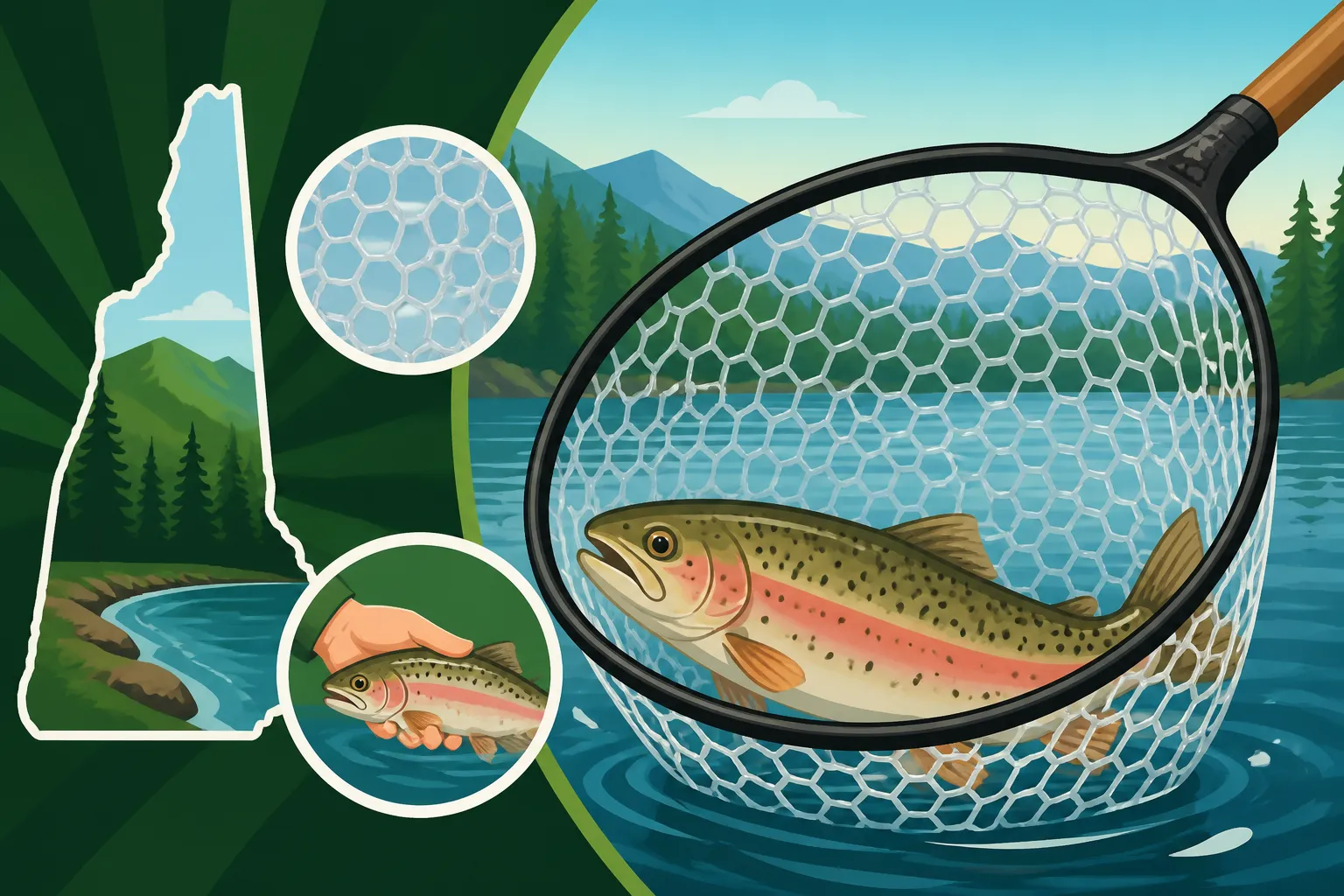
- True Rubber (or Silicone) Mesh: This is the crème de la crème for catch and release. Made entirely of soft, pliable rubber or silicone, these nets are incredibly gentle on fish. The material is completely smooth, so there's virtually no risk of damaging scales or stripping off the slime coat. Hooks rarely, if ever, get tangled in solid rubber mesh; they just can't penetrate the material. These nets are also fantastic for hygiene, as they don't absorb water, odors, or slime. They dry quickly and are very easy to clean – just a quick rinse is usually all it takes. The only real downside is they can be a bit heavier and sometimes a little bulkier, and often come with a higher price tag. But for the health of the fish, many anglers consider it a worthy investment, especially when targeting prized species like those you'd find when Landlocked Salmon Fishing in New Hampshire.
Both variations excel at protecting the fish, reducing tangles, and simplifying the release process, making them ideal for modern angling ethics.
Knotless Nylon Mesh
Before the widespread adoption of rubberized nets, knotless nylon mesh was a significant improvement over its knotted counterpart. Instead of individual strands tied together, knotless nylon is woven or extruded in a way that creates a smooth, continuous pattern. This eliminates the abrasive knots that cause so much damage.
While a definite step up from knotted nets, knotless nylon still isn't quite as fish-friendly as rubberized options. The fibers, though smooth, can still create friction against a fish's delicate skin, and hooks can still sometimes snag in the weave, even if less frequently than with knotted nets. However, they are generally lighter and less expensive than rubber nets, making them a popular choice for anglers on a budget or those prioritizing a very lightweight setup for hiking into remote trout streams. If you're targeting panfish or smaller trout where quick, clean releases are still important but the fish aren't as fragile as, say, a wild brook trout, knotless nylon can be a viable choice.
Other Mesh Materials
While rubber and nylon dominate the market, you might occasionally encounter nets made with other materials or specialized weaves. Some nets, for example, might feature a tightly woven, fine mesh designed to prevent even the smallest scales from shedding, almost like a fine fabric. Others might integrate unique coatings or polymer blends to achieve similar non-abrasive properties without being full rubber.
These alternative materials often try to combine the best aspects of rubber (fish protection, tangle resistance) with the lightness and affordability of nylon. However, they are less common and typically haven't achieved the same widespread acclaim as rubberized mesh for overall catch-and-release effectiveness. When in doubt, sticking with a proven rubber or rubber-coated mesh is usually your safest bet for minimizing harm.
Key Features to Look For in a Catch and Release Net
Beyond the mesh material itself, several other design elements contribute to how effective and practical a landing net is for responsible catch and release. These considerations ensure the net not only protects the fish but also fits your fishing style and the conditions you'll encounter on New Hampshire's waters.
Mesh Material and Depth
We've covered the mesh material extensively, but it bears repeating: rubber or rubber-coated mesh is paramount. When selecting a net, also pay close attention to the mesh depth. A shallow net might seem convenient, but it doesn't give the fish enough room to relax and stay submerged if you're unhooking it in the water. A deeper bag allows the fish to remain mostly horizontal and fully enveloped, preventing it from thrashing and potentially flopping out. This is particularly important for larger fish, ensuring their weight is supported evenly and they don't try to jump out before release.
Imagine you've landed a beautiful lake trout from Lake Winnipesaukee; a deep, rubberized net can cradle it gently while you retrieve your camera and pliers. Conversely, a shallow net might have the fish halfway out of the water, causing more stress and a higher chance of it slipping free before you're ready. The mesh size, or aperture, is also worth noting; smaller holes prevent fins from poking through and getting bent or damaged, which is a common issue with wider-holed nets.
Hoop Size and Handle Length
The physical dimensions of your net—the size of the hoop and the length of the handle—are crucial for matching it to your target species and fishing environment.
- Hoop Size: For most New Hampshire trout streams, where you might be catching brook or rainbow trout up to 15-20 inches, a moderate hoop size (around 10-15 inches wide) is sufficient. This keeps the net nimble for wading. However, if you're targeting bigger bass on Squam Lake or hunting for trophy landlocked salmon, you'll want a larger hoop (18-24 inches or more) to ensure you can scoop the fish cleanly on the first try. A wide hoop reduces the chance of bumping the fish's head or tail against the frame.
- Handle Length: This is often a personal preference, but it ties directly into your fishing method.
- Short Handles (8-12 inches): Ideal for fly fishing in small streams or for wading in rivers where you need minimal bulk. They're also great for small kayaks or float tubes where space is at a premium.
- Medium Handles (18-36 inches): A versatile choice for most boat fishing or shore fishing from a low bank. This length gives you enough reach without being unwieldy.
- Long/Telescoping Handles (3 feet or more): Essential for fishing from higher banks, docks, or larger boats, especially when targeting bigger fish like those found when Lake Trout Fishing in New Hampshire. Telescoping handles offer the best of both worlds, compact for storage but extending for maximum reach when needed.
The right combination will make landing a fish smooth and efficient, which directly benefits the fish by reducing fight time and handling time.
Durability and Maintenance
A landing net is an investment, especially one designed for catch and release. You want it to last through many seasons on the water. Look for nets with robust frames, ideally made of aluminum or strong composite materials that won't rust or bend easily. Handles should feel solid and secure, especially if they are telescoping.
Durability also extends to the mesh itself. While rubber is inherently more durable against hooks and UV damage than traditional nylon, ensure the attachments to the hoop are sturdy. Good quality stitching or secure crimps will prevent the mesh from separating from the frame over time.
Maintenance is another key factor in the net's longevity and effectiveness. One of the great advantages of rubberized nets is how easy they are to clean. Since they don't absorb water or fish slime, a quick rinse with freshwater is usually all it takes to remove debris and prevent odors. This keeps your net in top condition, free from lingering scents that might deter future fish, and ready for your next adventure. Taking care of your gear, like your net, is just another part of being a prepared New Hampshire angler. For further gear recommendations, you might want to explore resources like Best Gear for New Hampshire Trout Fishing or Best Tackle for New Hampshire Smallmouth Bass.
Choosing the Right Net for Your New Hampshire Fishing Style
New Hampshire offers an incredible diversity of fishing, from tiny, cold mountain brooks to vast, deep lakes. The "best" landing net isn't a one-size-fits-all solution; it really depends on where and how you typically fish. Matching your net to your specific angling pursuits will ensure optimal fish health and ease of use.
Trout Streams and Small Ponds
If your passion lies in chasing brook trout in the White Mountains or targeting stocked rainbows in small, accessible ponds, a compact, lightweight net with a fish-friendly mesh is ideal. Think about the delicate nature of trout; their scales and slime coat are easily damaged.
For wading small streams or fly fishing, a net with a rubber or fine, soft knotless nylon mesh and a short, fixed wooden or composite handle is often preferred. These nets are easy to carry on your back via a magnetic release or clip, and they don't get in the way when you're casting. A hoop size of 10-14 inches is usually plenty, as most stream trout won't exceed that length. Keeping the fish in the water while unhooking is always the best practice, and these smaller nets allow you to do that while providing support. When Fly Fishing for Trout in New Hampshire, a net that keeps the trout wet and healthy for release is paramount.
Bass and Panfish Lakes
New Hampshire's lakes and larger ponds are teeming with largemouth and smallmouth bass, as well as plenty of panfish like yellow perch and black crappie. These fish can be a bit more robust than stream trout, but their health still matters, especially if you're practicing catch and release for future trophies.
For bass fishing, especially if you're using lures with treble hooks, a rubberized mesh net is an absolute game-changer. It prevents those frustrating snags that can cost you time and potentially harm the fish. A medium-sized hoop (16-20 inches) with a handle long enough to reach from your boat or kayak is usually a good bet. If you primarily fish from a boat, a longer handled net with a larger hoop will make landing active bass much easier. Brands like Frabill and StowMaster offer excellent telescoping options that are popular among bass anglers. For smaller panfish, a similar rubberized net, perhaps a bit smaller in hoop size, will keep those delicate fins intact.
Big Water and Trophy Fish (Salmon, Lake Trout)
When you're venturing out onto big waters like Lake Winnipesaukee, Lake Sunapee, or Newfound Lake in pursuit of landlocked salmon or massive lake trout, your net needs to be up to the task. These are powerful fish, often weighing in at several pounds, and they require a net that can handle their size and strength.
For these trophy species, you absolutely want a large, deep hoop (24-30 inches or more) with strong, durable, full-rubber mesh. The depth is crucial here to fully contain the fish, preventing it from flopping out and injuring itself or you. A long, sturdy handle, often telescoping, is a necessity for reaching out from the boat to scoop up a fish that's been brought alongside. These nets are heavier and more expensive, but they are essential for safely landing and releasing a powerful fish. Imagine fighting a 10-pound salmon; you wouldn't want it to bounce out of a shallow net right at the boat! Check out options designed for How to Catch Lake Trout in New Hampshire or Landlocked Salmon Fishing in New Hampshire for appropriate nets.
How to Find the Right Net
Once you have an idea of the type of net you need, where do you find it? Local New Hampshire bait and tackle shops are a fantastic resource. They often carry nets specifically suited to the local waters and can offer expert advice. For a wider selection, particularly of specialized rubberized nets, large outdoor retailers like Bass Pro Shops or online platforms like Amazon offer extensive choices. Reading reviews from other anglers can also provide valuable insights into a net's real-world performance. Remember, a net is a tool, and the right tool makes the job easier and more effective for everyone involved—especially the fish.
Here’s a quick overview of common net mesh types and their suitability for catch and release:
| Mesh Type | Pros for Catch and Release | Cons for Catch and Release | Ideal Usage (NH Examples) |
|---|---|---|---|
| Knotty Nylon | Widely available, inexpensive | Highly abrasive to fish, tangles hooks easily | Not recommended for catch and release |
| Knotless Nylon | Less abrasive than knotty, lightweight, affordable | Can still damage slime coat, some hook tangles | Panfish, smaller stocked trout, budget-conscious anglers, remote hiking for Trout Fishing in New Hampshire |
| Rubber Coated Nylon | Gentle on fish, reduces tangles, more durable | Can be heavier than nylon, slightly more costly | General purpose, bass, larger trout, mid-sized lakes like Lake Winnipesaukee, How to Catch Smallmouth Bass in New Hampshire Lakes |
| Full Rubber / Silicone | Extremely gentle, tangle-free, odor-resistant, fast drying | Heavier, bulkier, higher price point | All serious catch and release, delicate species (brook trout, salmon), trophy fish, Lake Trout Fishing in New Hampshire |
Ultimately, investing in a high-quality, fish-friendly landing net with the right mesh is a simple yet powerful way to practice responsible angling in New Hampshire. It's a choice that reflects your commitment to the health of our fisheries and ensures that the thrill of the catch can be preserved for generations to come.
Disclaimer
This article is for general informational purposes only and does not constitute professional advice. Laws, prices and regulations vary by location and change over time. Consult a qualified professional for guidance on your specific situation.