What American eel look like and where they live
When you think of New Hampshire fishing, images of leaping trout, feisty bass, or even the thrill of a landlocked salmon on the line probably fill your mind. But tucked away in many of our freshwater rivers and lakes, and especially closer to the coast, is a truly fascinating, often misunderstood, and undeniably unique creature: the American eel. These elusive fish are a vital, native part of our aquatic ecosystem, and understanding what they look like and where they reside can totally change your perspective on fishing our beautiful Granite State waters, or at least prepare you for an unexpected encounter. This guide will help you identify them and know their habitat.
What American Eels Look Like: Identification and Key Features
American eels ( Anguilla rostrata) are a marvel of the natural world, instantly recognizable once you know what to look for. They don't look like your typical finned fish, and that's often where the confusion begins for many anglers who might mistake them for something else entirely. Their unique appearance is a big part of their charm – or, for some, their apprehension!
Their Distinctive Snake-like Body
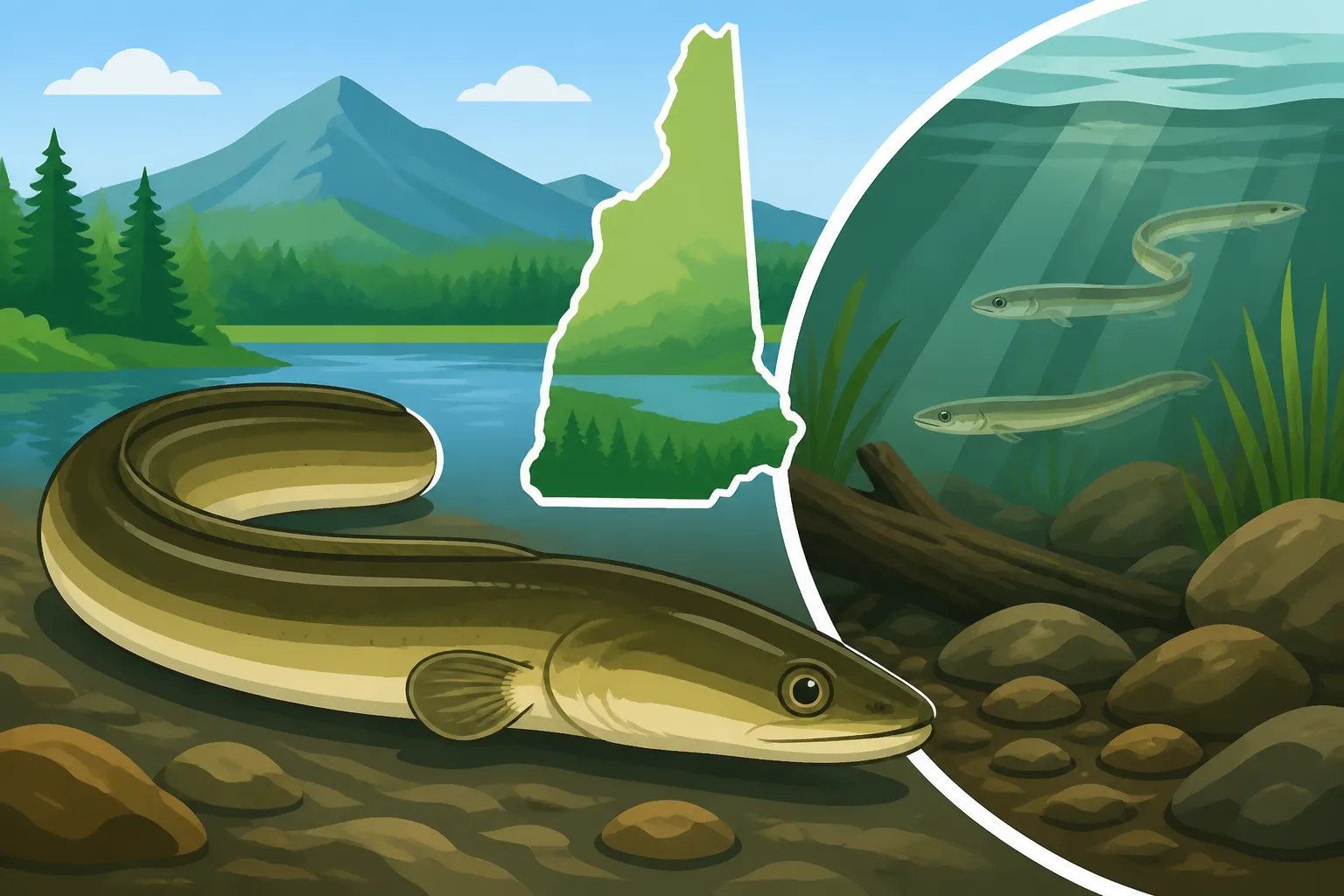
The most striking feature of the American eel is its long, slender, snake-like body. Unlike other fish that might have a more torpedo or oval shape, the eel is almost uniformly cylindrical from head to tail, tapering only slightly towards the end. This allows them to slither through tight spaces, burrow into mud, and navigate complex aquatic environments with incredible agility. They lack the prominent, separated dorsal and anal fins you see on most fish; instead, their dorsal, caudal (tail), and anal fins are continuous, forming a single, flowing ribbon along most of their back and belly that meets at the pointed tail. This continuous fin helps propel them through the water with an undulating motion.
Another key identifier is the absence of pelvic fins. They only possess small, paddle-like pectoral fins located just behind their small, pointed heads. Their skin is incredibly smooth and slimy, lacking visible scales that are common on most fish. If you do manage to get one in hand, you'll immediately notice this slick texture, which is a protective layer and makes them notoriously difficult to hold onto. Their mouth is relatively small, but they do have many tiny, sharp teeth, which they use to grasp their prey.
Coloration and Size Variations
The coloration of American eels isn't static; it actually changes depending on their life stage and environment, which can sometimes add to the confusion for anglers trying to identify them.
Typically, freshwater eels are referred to as "yellow eels" due to their brownish-yellow to olive-green backs and yellowish bellies. This provides excellent camouflage against the muddy or vegetated bottoms they often inhabit. As they mature and prepare for their incredible migration back to the ocean to spawn, they undergo a transformation into what are known as "silver eels." During this stage, their backs become darker, almost black or dark gray, and their bellies turn a distinct, often shiny, silvery-white. Their eyes also enlarge, adapting them for the deep, dark ocean environment they are about to enter. These silver eels are often more streamlined and robust, storing energy for their epic journey.
In terms of size, American eels can vary quite a bit. Juvenile eels, called elvers or glass eels, are tiny and translucent as they first enter freshwater from the ocean. In New Hampshire's rivers and lakes, adult eels can range from about 1 to 4 feet in length, though some older individuals can grow even larger, occasionally reaching lengths of 5 feet or more. Their weight typically ranges from a pound or two up to several pounds for the really big ones. While not typically a target species for most recreational anglers, encountering a large eel can be quite a surprise!
Distinguishing Eels from Other Creatures
It's easy to mistake an eel for something else, especially during a quick glimpse or if you're not familiar with them. The most common mix-ups include lampreys or even snakes.
- Eels vs. Lampreys: While both are long and somewhat snake-like, there are critical differences. Lampreys lack pectoral and pelvic fins entirely and have a distinctive, round, sucking disc mouth without jaws. Eels, as mentioned, have small pectoral fins and a true mouth with jaws. Lampreys are also typically scaleless, but their skin texture is different from an eel's.
- Eels vs. Water Snakes: This is a less common but understandable confusion, especially if seen swimming near the surface or slithering near the bank. Eels are fish; they have gills, fins, and breathe underwater. Snakes are reptiles, breathe air, and do not have fins. If you see something in the water that looks snake-like but has visible fins or seems to be "swimming" with its whole body underwater for extended periods, it's almost certainly an eel.
If you're ever in doubt about what you've caught, it's always best to practice careful catch and release. For anglers who like to be prepared for anything, a good pair of long-nosed pliers, readily available on Amazon, can make unhooking a slimy eel much easier.
Where American Eels Live and Travel in New Hampshire
The life cycle and migratory habits of the American eel are truly astounding, making them one of the most remarkable fish species in New Hampshire's waters. They are catadromous, meaning they spawn in saltwater but spend most of their lives growing in freshwater or estuarine environments. This journey takes them through a vast network of waterways across the Granite State.
The Incredible Catadromous Migration
Every American eel begins its life in the Sargasso Sea, a vast, calm region of the Atlantic Ocean southeast of Bermuda. From there, as tiny, leaf-like larvae called leptocephali, they drift on ocean currents for hundreds, sometimes thousands, of miles towards the North American coast. By the time they reach our shores, they've transformed into transparent "glass eels."
Once they enter New Hampshire's coastal waters, they become pigmented and are known as "elvers." This is where their remarkable freshwater journey begins. Driven by instinct, these tiny elvers migrate upstream into rivers, streams, ponds, and lakes. They are incredibly persistent, capable of overcoming significant obstacles. They can even leave the water for short periods and wriggle over damp ground, around small dams, or through culverts to reach new freshwater habitats. This incredible drive to move inland means you can find them surprisingly far from the ocean.
After years of growth in freshwater (typically 5 to 20 years for females, less for males), these "yellow eels" transform into "silver eels" and begin their epic return journey, migrating downstream back to the Sargasso Sea to spawn once and then die. This complete life cycle, spanning vast distances and diverse environments, is a testament to their resilience. If you're interested in their migration, you might also find reading about American Eel in New Hampshire Rivers fascinating.
Preferred Habitats in New Hampshire Waters
Given their migratory nature, American eels can be found in a wide array of aquatic environments throughout New Hampshire, particularly in systems connected to the Atlantic Ocean.
- Major River Systems: The Connecticut River, Merrimack River, and other coastal rivers like the Lamprey, Piscataqua, and Exeter Rivers are primary highways for migrating eels. They will move far upstream into the tributaries of these large systems. You can find them in the main stem of the Merrimack River Fishing Spots or navigating the waters accessible from various points along the Connecticut River Fishing Access in New Hampshire.
- Lakes and Ponds: While eels prefer flowing water for migration, they readily take up residence in lakes and ponds that are connected to these river systems. Larger lakes with muddy or silty bottoms and plenty of submerged structure are ideal. They thrive in environments where they can hide, such as under rocks, sunken logs, dense weed beds, or burrowed into soft sediments. They are largely nocturnal, so during the day, they will seek refuge in these hidden spots.
- Estuaries and Coastal Areas: Near the coast, eels are abundant in brackish waters and estuaries, which serve as crucial transitional zones between freshwater and saltwater. Places like Great Bay are important habitats for them.
When searching for specific fishing spots, knowing the general Best Fishing Rivers in New Hampshire or even the Best Fishing Lakes in New Hampshire will often put you in proximity to eel habitat, even if they aren't your target species. They are adaptable creatures, thriving in varied conditions from clear, rocky river sections to murky, warm pond environments.
Factors Affecting Eel Distribution
While eels are incredibly resilient, certain factors impact their distribution in New Hampshire.
- Dams and Obstructions: Historically, dams have been a significant barrier to eel migration, limiting their access to upstream habitats. However, efforts are often made to install fish ladders or other passage solutions to aid their journey.
- Water Quality: Like all aquatic life, eels are sensitive to water pollution, although they can tolerate a range of conditions. Healthy river systems are vital for their long-term survival and successful migration.
- Habitat Diversity: Eels thrive in areas with diverse habitats, offering both cover for daytime resting and open areas for nocturnal foraging. A healthy mix of rocky bottoms, muddy flats, and submerged vegetation supports robust eel populations.
Understanding these habitats and their unique migration makes encountering an American eel a truly special moment, connecting you to one of the ocean's most incredible travelers right here in New Hampshire. When you're fishing any of these waters, particularly after dark, you stand a good chance of crossing paths with one.
American Eels: Their Ecological Role and Angler Encounters
Far from being just a strange catch, American eels play a crucial role in the aquatic ecosystems of New Hampshire. For anglers, encountering one is often an unexpected event that requires a bit of knowledge to handle safely and respectfully.
Important Members of the Ecosystem
American eels are omnivores and opportunistic feeders, making them important members of the food chain in both freshwater and estuarine environments.
- Scavengers: They are excellent scavengers, helping to clean up dead or decaying organic matter on the bottom of lakes and rivers. This role is vital for maintaining water quality and the overall health of the ecosystem.
- Predators: As nocturnal predators, they feed on a variety of aquatic invertebrates, insects, worms, and small fish. Larger eels can even prey on crustaceans and amphibians. This helps keep populations of their prey in check, contributing to ecological balance.
- Food Source: Eels themselves are a food source for larger predatory fish, birds of prey like ospreys and eagles, and various mammals. They are also culturally significant and have been a traditional food source for humans, including Native American tribes, for centuries.
Their presence indicates a relatively healthy and connected aquatic system, capable of supporting their complex migratory needs. They're not just a curiosity; they're an ecological cornerstone.
What to Do If You Catch an Eel
Catching an American eel is often an accidental occurrence for anglers targeting other species like bass or trout. They're known for taking various baits, from worms to cut bait, and even artificial lures, especially when fishing on the bottom or after dark.
If you find yourself with an eel on your line, here’s how to handle the situation:
- Be Prepared for a Fight: Eels are incredibly strong and muscular for their size. They can twist and writhe, making them feel much heavier than they are. They also have a knack for wrapping themselves around your line or anything else nearby.
- Handle with Care: Their sliminess is legendary, and it's their defense mechanism. It makes them difficult to hold, but also helps protect their delicate skin. If you're going to touch them, wet your hands thoroughly first to protect their slime coat. You might even consider a specialized fish handling glove, which you can often find with customer reviews and various options on Amazon, to protect your hands and get a better grip.
- Unhooking: Eels will often swallow hooks deeply. If the hook is visible and easily accessible, use long-nosed pliers or a de-hooking tool to gently remove it. If the eel has swallowed the hook deeply and you can't remove it without causing significant harm, it's often best to cut the line as close to the hook as possible. The hook will eventually rust out, and the eel has a good chance of survival. This is a common practice for any deeply hooked fish, including trout or bass.
- Release Promptly: Since American eels are a native species and not typically targeted for harvest in recreational fishing, it's generally best to release them quickly and carefully. Get them back into the water as soon as possible.
- Check Regulations: Always double-check the current New Hampshire fishing regulations in the New Hampshire Fishing Regulations Explained guide or the official NH Fish and Game digest. While often not subject to specific limits for recreational anglers, it's good practice to be aware of any rules concerning them, especially if you consider keeping one (which is generally uncommon).
Encountering an eel provides a unique perspective on the biodiversity present in New Hampshire's waters. Many anglers looking for reliable gear for handling all sorts of catches, from trout to these unique eels, start their search on platforms like Amazon for convenience and selection. Even something as simple as a durable headlamp for night fishing, a necessity you can easily browse on Amazon, might illuminate an eel in its nocturnal habitat.
Conservation Status and Importance
While American eels are widespread, their populations have faced significant declines in some areas due to habitat loss, pollution, and especially barriers to migration such as dams. Conservation efforts often focus on improving fish passage around dams, restoring habitat, and monitoring populations. As native residents of our waters, their health is a good indicator of the overall health of New Hampshire's aquatic environments. Learning more about them helps foster an appreciation for all the fascinating creatures that call our fishing spots home.
| Feature | American Eel | Lamprey | Water Snake |
|---|---|---|---|
| Body Shape | Long, slender, cylindrical | Long, slender, cylindrical | Long, slender, cylindrical |
| Fins | Continuous dorsal, caudal, anal; small pectoral fins | No paired fins; dorsal fins present but separate from tail | No fins (reptile) |
| Mouth | True mouth with jaws, small teeth | Round sucking disc, no jaws, rasping teeth | True mouth with jaws, fangs (some) |
| Skin/Scales | Smooth, very slimy, embedded scales (not visible) | Smooth, not slimy, no scales | Scaly (reptile) |
| Gills | Visible gill slit | Seven pore-like gill openings | No gills (lungs for air breathing) |
| Habitat | Freshwater, brackish, saltwater | Freshwater (larvae), parasitic in freshwater/saltwater (adults) | Terrestrial, semi-aquatic |
| Breathing | Underwater (gills) | Underwater (gills) | Air (lungs) |
This table can help you quickly distinguish an American eel from similar-looking creatures you might encounter. If you're researching identification guides, many excellent waterproof fish identification charts can be purchased through retailers like Amazon, perfect for keeping in your tackle box.
Disclaimer
This article is for general informational purposes only and does not constitute professional advice. Laws, prices and regulations vary by location and change over time. Consult a qualified professional for guidance on your specific situation.