How many trout species live in New Hampshire
It’s a question that echoes through fly shops, around campfires, and across online forums: just how many kinds of trout are we talking about when we’re fishing in New Hampshire? It's easy to get confused with all the different names thrown around, from brookies to rainbows to landlocked salmon, and even the mysterious splake. This guide is here to clear up the confusion, helping you identify what’s at the end of your line, understand where they live, and appreciate the unique joy each species brings to the Granite State’s diverse waters.
The Essential Three: True Trout Species in New Hampshire
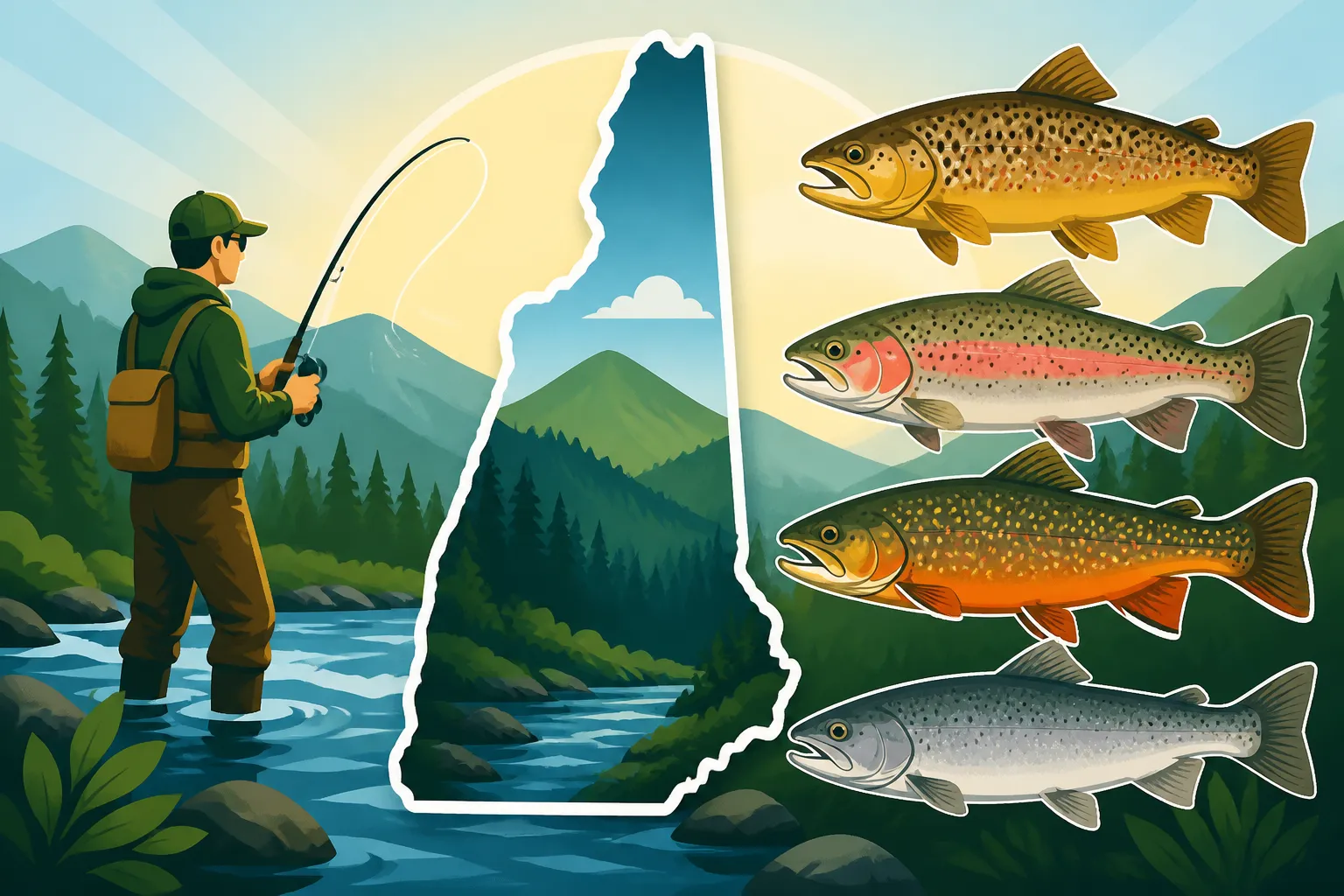
When we talk about "true trout" in New Hampshire, we're generally referring to three distinct species: brook trout, brown trout, and rainbow trout. While some other fish, like landlocked salmon, are part of the broader "salmonid" family and share many characteristics with trout, these three are the ones most commonly identified as trout by anglers in our state. Each one has its own story, its preferred habitat, and its unique charm for those of us who love to cast a line.
Native vs. Introduced: A Quick Clarification
One of the first things to understand about New Hampshire's trout populations is the difference between native and introduced species. A native species is one that naturally occurred in our waters before human intervention, adapting over millennia to the specific ecological conditions of the region. Introduced species, on the other hand, were brought here by people, often for sport fishing, and have since established populations, sometimes with the help of ongoing stocking programs.
This distinction isn't just an academic one; it matters profoundly for conservation efforts and the overall health of our aquatic ecosystems. Protecting native species, like our beloved brook trout, often involves safeguarding pristine habitats and minimizing competition from introduced species. For anglers, knowing whether you're targeting a wild, native fish or a stocked, introduced one can influence your approach, from the gear you choose to your catch-and-release practices. It's a key part of understanding the fishing landscape here in New Hampshire.
Brook Trout: The Granite State's Native Gem
The brook trout ( Salvelinus fontinalis) holds a special place in the hearts of New Hampshire anglers. It’s our only truly native trout species, gracing the cold, clear waters of countless streams, rivers, and remote ponds across the state. These fish are absolute beauties, adorned with a dark, olive-green body, distinct vermiculations (worm-like markings) along their back, and scattered red spots often surrounded by a light blue halo. Their lower fins, especially the pectoral, pelvic, and anal fins, are typically edged with white, followed by a black stripe and a vibrant reddish-orange.
Brook trout are indicator species, meaning their presence signifies excellent water quality. They demand cold, oxygen-rich water, typically preferring temperatures below 68 degrees Fahrenheit. You'll find them in the pristine headwaters of mountain streams, beaver ponds, and remote backcountry lakes, especially in the White Mountains and northern parts of the state. These are often the fish you have to hike for, making the reward of catching one even sweeter. They're not usually the largest trout, but their striking colors and the wild places they inhabit make them a prized catch. Many anglers seek out these wild fish, finding immense satisfaction in connecting with a truly indigenous creature of the Granite State. For more on these incredible fish, you might enjoy Brook Trout: New Hampshire's Native Trout.
Fishing for brook trout often involves a stealthy approach and light tackle. Small spinners, tiny spoons, and a variety of dry flies and nymphs are usually effective. If you’re wading a small stream, wearing neutral colors and moving slowly can make all the difference, as these fish can be surprisingly wary. The experience is often as much about being immersed in the wild, serene environment as it is about the catch itself. Finding a secluded pocket of water with active brook trout can feel like discovering a hidden treasure.
Brown Trout: The Hardy European Import
Brown trout ( Salmo trutta) were introduced to North American waters from Europe in the late 19th century and have since established robust populations in many of New Hampshire's larger rivers and lakes. While not native, they've become a staple for many anglers due to their hardiness and impressive fighting abilities. Brown trout typically have a golden-brown to olive-brown body with prominent dark spots, often surrounded by a lighter halo, and some red or orange spots, particularly on their sides. Unlike brook trout, their tails are usually square or slightly forked, and their coloration can vary quite a bit depending on their diet and habitat.
These trout are known for their adaptability. They can tolerate slightly warmer water temperatures than brook trout and are often found in larger river systems like the Connecticut River or Merrimack River, and many of our larger, deeper lakes where they can grow to considerable sizes. Brown trout are also often stocked in various waters across the state, complementing the wild populations. They're a favorite among anglers looking for a challenging fight and the chance to land a truly large trout.
Brown trout can be a bit more elusive than their rainbow counterparts, especially the larger ones, which often become quite nocturnal. They'll readily take a variety of baits, lures, and flies. Larger spoons, crankbaits, and swimbaits are popular for targeting bigger browns in lakes, while streamers and nymphs are often the go-to for river anglers. Fly fishing for brown trout, particularly during evening hatches or with large articulated streamers, can be an incredibly rewarding experience. They provide a strong fight, often making acrobatic leaps, ensuring every catch is memorable.
Rainbow Trout: The Popular Stocked Sport Fish
Rainbow trout ( Oncorhynchus mykiss) are another introduced species, originally from the Pacific coast of North America, and they are arguably the most widely recognized and frequently stocked trout in New Hampshire. They are easily identified by their iridescent, silvery body, which often features a prominent red or pink stripe running laterally along their sides, from gill plate to tail. Their entire body, including the dorsal, adipose, and tail fins, is usually covered in small, distinct black spots.
Rainbow trout are stocked extensively throughout New Hampshire, making them highly accessible to anglers of all skill levels. You'll find them in numerous ponds, lakes, and rivers, especially those managed for put-and-take fisheries. They are less tolerant of sustained warm water than brown trout but can thrive in a wide range of freshwater environments, particularly in water bodies that see regular stocking. These fish are known for their aggressive strikes and lively fights, often jumping clear out of the water when hooked, making them a thrilling catch.
Because they are so readily stocked and aggressive, rainbow trout are an excellent species for beginner anglers and families. They will strike at a huge array of baits, lures, and flies. Worms, powerbait, corn, spinners, spoons, and various dry flies, nymphs, and streamers are all effective. From casting from shore at a local pond to trolling in a larger lake or drifting flies in a river, rainbows offer versatile fishing opportunities. If you're looking for consistent action and a fun fight, rainbow trout are often your best bet in New Hampshire. The state's stocking programs ensure a steady supply, providing opportunities for everyone. For general guidance on fishing for these and other trout, check out Trout Fishing in New Hampshire.
Beyond the Basics: Other Salmonids You'll Encounter
While brook, brown, and rainbow trout are the primary "trout" species in New Hampshire, the broader family of salmonids includes a few other incredible fish that anglers often target. These species share many biological similarities with trout, such as preferring cold, clean water, but have their own unique characteristics and appeal. It’s important to know the difference, not just for identification, but also because regulations can vary significantly between them.
Landlocked Salmon: The Freshwater Powerhouses
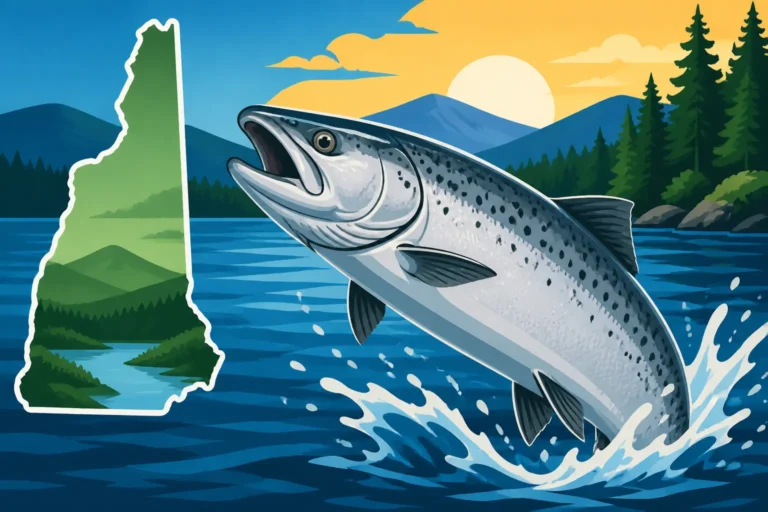
Landlocked salmon (Salmo salar) are not technically "trout," but they are a very close cousin, part of the same Salmo genus as brown trout, and are often confused with them or lake trout due to their similar silvery appearance. These magnificent fish are essentially Atlantic salmon that have adapted to live their entire lives in freshwater lakes rather than migrating to the ocean. They are sleek, torpedo-shaped, and predominantly silver with scattered small black spots, particularly above the lateral line. Their tail is distinctly forked, a key identifier compared to some trout.
New Hampshire is home to several premier landlocked salmon fisheries, particularly in large, deep, cold lakes like Lake Winnipesaukee, Lake Sunapee, and Newfound Lake. These salmon are piscivorous, meaning they primarily feed on other fish, with rainbow smelt being their absolute favorite forage. The health of a landlocked salmon fishery is often directly tied to the abundance of smelt. They require deep, cold, oxygenated water, making them a challenge to target, especially during the warmer summer months when they retreat to the thermocline.
Targeting landlocked salmon usually requires specialized techniques, most commonly trolling with downriggers to present lures or bait at specific depths. Spoons, stickbaits, and even live or dead smelt are popular choices. Fly fishing for salmon can also be effective, especially during early spring or late fall when they are shallower. Catching a landlocked salmon is often considered a pinnacle achievement for many freshwater anglers due to their size, power, and the skill required to pursue them. They offer an incredible fight, characterized by long runs and spectacular jumps. For dedicated anglers, How to Catch Landlocked Salmon in New Hampshire is an invaluable resource.
Splake: The Unique Hybrid Challenge
Splake (Salvelinus namaycush x Salvelinus fontinalis) are a fascinating and somewhat unique fish you might encounter in New Hampshire. They are a hybrid, a cross between two native species: a male brook trout and a female lake trout. This hybridization is typically done in hatcheries, and the resulting fish are sterile, meaning they cannot reproduce. Splake are stocked in various lakes and ponds across the state to provide a different angling experience, combining characteristics of both parent species.
Visually, splake can be a bit tricky to identify, as they often exhibit a mix of traits from brook and lake trout. They tend to have the worm-like markings (vermiculations) of a brook trout on their back, but their body shape is often more streamlined and robust, leaning towards the lake trout. Their tail is typically not as deeply forked as a lake trout’s but more so than a brook trout’s. Coloration can vary, but they often have a darker, mottled appearance with some spots.
Splake are usually stocked in lakes and ponds that have cold, deep water, similar to lake trout habitat, but they can also thrive in some of the larger, cooler ponds that might hold brook trout. They are known for being quite aggressive feeders, growing faster than brook trout and often reaching respectable sizes, which makes them a popular target, especially for ice fishing. They provide a robust fight and are a unique addition to New Hampshire’s diverse fishery.
Fishing for splake often involves methods similar to those used for lake trout or larger brook trout. Trolling with spoons or stickbaits, jigging with small jigging spoons or soft plastics, and bait fishing with worms or cut bait can all be effective. They tend to be eager biters, especially through the ice, offering a great winter angling opportunity. Knowing where they are stocked can really improve your chances, so it's always a good idea to check the latest stocking reports.
Distinguishing Your Catch: A Handy Guide
Accurately identifying your catch isn't just a fun part of fishing; it's often crucial for adhering to New Hampshire's fishing regulations. Different species have different length limits, bag limits, and even season dates. Misidentifying a fish could lead to accidental violations, which no angler wants. Thankfully, there are several key features that can help you tell these beautiful salmonids apart. Pay attention to subtle differences, as coloration alone can sometimes be misleading due to environmental factors.
Key Features for Identification
When you've got a fish in hand, here's what to look for to help make a positive identification:
- Spots and Markings:
- Brook Trout: Distinctive worm-like (vermiculations) patterns on their back and dorsal fin. Red spots with blue halos on their sides.
- Brown Trout: Large, dark spots on their back and sides, often with a light halo. Some red/orange spots present. No worm-like patterns.
- Rainbow Trout: Numerous small black spots covering their entire body, including the tail fin. A prominent red or pink stripe along the lateral line.
- Landlocked Salmon: Silvery body with scattered small black spots, usually above the lateral line. No spots on the tail, or very few near the base.
- Splake: A mix – often have some vermiculations on their back like brook trout, but may also have spots, and usually not as many prominent red spots.
- Tail Shape:
- Brook Trout: Square or very slightly emarginate (shallowly forked).
- Brown Trout: Square or slightly emarginate.
- Rainbow Trout: Square or slightly forked, with spots often extending onto the tail.
- Landlocked Salmon: Distinctly forked tail.
- Splake: Typically moderately forked, more so than a brook trout but less than a lake trout or salmon.
- Fin Coloration:
- Brook Trout: White leading edge on pectoral, pelvic, and anal fins, followed by a black stripe and reddish-orange.
- Brown Trout: Fins are usually drab, matching the body color.
- Rainbow Trout: Fins often have small black spots.
- Landlocked Salmon: Fins are generally plain, grayish.
- Splake: Can have some white on the fin edges, but usually less pronounced than a brook trout.
- Body Shape:
- Brook Trout: More stout, especially in smaller streams.
- Brown Trout: Can be deep-bodied, especially large lake-dwelling fish.
- Rainbow Trout: Generally streamlined and somewhat slender.
- Landlocked Salmon: Very streamlined, built for speed in open water.
- Splake: Often intermediate, stockier than a rainbow but perhaps not as streamlined as a pure salmon.
Species Identification Table
To help you quickly differentiate between the most common trout and salmonid species in New Hampshire, here’s a handy reference table focusing on their key identifying characteristics. Remember, natural variations exist, but these are the general guidelines to follow.
| Feature | Brook Trout | Brown Trout | Rainbow Trout | Landlocked Salmon | Splake |
|---|---|---|---|---|---|
| Native Status | Native | Introduced | Introduced | Introduced (Atlantic Salmon) | Hybrid (Stocked) |
| Back Markings | Worm-like (vermiculations) | Uniform color, few markings | Uniform color, few markings | Uniform color, few markings | Some vermiculations, mottled |
| Side Spots | Red spots w/ blue halos | Large dark spots, some red | Numerous small black spots | Sparse black spots (above LL) | Varied, often few distinct |
| Tail Spots | No spots | Few to no spots | Many small black spots | Few to no spots | Few to no spots |
| Tail Shape | Square/Slightly Emarginate | Square/Slightly Emarginate | Square/Slightly Forked | Deeply Forked | Moderately Forked |
| Lower Fins | White leading edge, black, red | Plain, often dull | Plain, may have spots | Plain, often dull | Less distinct white edge |
| Preferred Habitat | Cold, clear streams/ponds | Rivers, larger lakes | Stocked ponds/rivers | Deep, cold lakes | Deep, cold lakes/ponds |
Remember to always consult the latest New Hampshire Freshwater Fishing Digest for the most accurate and up-to-date regulations, as identification directly impacts what you can keep or how you must handle the fish. Reading the New Hampshire Freshwater Fishing Digest is essential for every angler.
The Role of New Hampshire Fish and Game
The New Hampshire Fish and Game Department plays an absolutely vital role in managing and maintaining the diverse trout and salmonid populations across the state. Without their dedicated work, the fishing opportunities we enjoy today would look dramatically different. They balance the needs of conservation with the desires of anglers, a task that requires careful planning, scientific research, and active management strategies.
Stocking Programs and Their Impact
One of the most visible aspects of NH Fish and Game's work is its extensive stocking program. Millions of fish, including rainbow trout, brown trout, and splake, are raised in state hatcheries and released into New Hampshire waters annually. This is done for several key reasons:
- Enhance Sport Fishing: Stocking provides abundant opportunities for anglers, especially in easily accessible ponds and rivers, ensuring a good chance of success for beginners and experienced anglers alike. This helps foster interest in fishing and conservation.
- Create Fisheries in Suitable Waters: Some water bodies don't have natural reproduction for certain species but can support them, so stocking creates viable fisheries where none would otherwise exist.
- Relieve Pressure on Wild Populations: By providing stocked fish, some angling pressure is diverted from more sensitive wild populations, helping them thrive.
These programs are carefully planned, with specific species and sizes stocked into waters that can best support them. Anglers eagerly await the New Hampshire Trout Stocking Report and Map each season, which details where and when fish are released, helping them plan their fishing trips. While some purists prefer only wild trout, the reality is that stocking provides an immense amount of enjoyment and access for a vast number of anglers in New Hampshire.
Conservation Efforts for Wild Populations
While stocking boosts recreational fishing, NH Fish and Game is equally, if not more, dedicated to conserving New Hampshire's native and wild fish populations. This is particularly true for the brook trout, our state's only native trout species. Conservation efforts include:
- Habitat Protection and Restoration: Working to protect watersheds, maintain riparian buffers, and restore degraded stream habitats to ensure clean, cold water for wild trout. This often means collaborating with landowners and other agencies.
- Special Regulations: Implementing specific rules, such as catch-and-release only sections or special gear restrictions, in certain waters to protect sensitive wild populations. These "special regulation waters" are often critical for maintaining robust wild trout numbers and can be some of the most rewarding places to fish for experienced anglers. Knowing these rules is paramount, and you can find more about them in Special Regulation Waters in New Hampshire.
- Research and Monitoring: Continuously studying fish populations, water quality, and environmental factors to understand trends and adapt management strategies. This science-based approach ensures that decisions are made to benefit the long-term health of the fisheries.
These efforts are vital for preserving the ecological integrity of our state's waterways and ensuring that future generations can also experience the thrill of catching a wild New Hampshire brook trout.
Navigating Regulations for Each Species
Given the variety of trout and salmonid species, it should come as no surprise that New Hampshire's fishing regulations can vary significantly depending on what you're targeting and where you're fishing. It's not a one-size-fits-all situation, and understanding these nuances is a core responsibility of every angler.
For example, the daily limit for brook trout in a specific stream might be different from the limit for rainbow trout in a nearby pond. Lake trout in a large lake might have unique size restrictions or closed seasons that don't apply to brown trout in a river. Landlocked salmon often have very specific regulations regarding size, bag limits, and even the method of take.
The best advice is always to obtain and thoroughly read the current New Hampshire Freshwater Fishing Digest before you head out. This document, available online and at license vendors, is your definitive guide to all rules, season dates, and limits. It details everything from New Hampshire Trout Limit and Possession Rules to species-specific regulations for many water bodies. Familiarizing yourself with these rules is part of being a responsible and ethical angler, ensuring that you contribute to the sustainability of New Hampshire's incredible fishing heritage.
Essential Gear for New Hampshire Trout Fishing
Tackling New Hampshire's diverse trout and salmonid fisheries means having the right tools for the job. You wouldn't use a sledgehammer to drive a nail, and similarly, the gear you choose for a remote brook trout stream will likely be quite different from what you need for trolling for landlocked salmon on Lake Winnipesaukee. Thankfully, the market offers an incredible range of options, and you can find an immense variety of high-quality gear on platforms like Amazon.
Rods, Reels, and Line Choices
The foundation of any fishing setup is your rod, reel, and line. For trout fishing in New Hampshire, you'll likely want a few different configurations:
- For Small Streams and Brook Trout: A light to ultralight spinning rod (4-6 feet) paired with a small spinning reel spooled with 2-4 lb test monofilament or fluorocarbon line is perfect. Fly anglers will lean towards a 2-4 weight fly rod, 6-8 feet in length, which allows for delicate presentations in tight quarters. The key here is finesse and sensitivity.
- For Larger Rivers and Stocked Ponds (Rainbows/Browns): A medium-light spinning rod (6-7 feet) with a 6-8 lb test line offers more versatility. This setup can handle a wider range of lures and bait, and gives you a better chance against larger stocked fish. For fly fishing, a 4-6 weight fly rod (8-9 feet) is standard, allowing for longer casts and handling heavier flies or nymph rigs.
- For Lakes (Browns/Salmon/Splake): Trolling for these larger species often calls for specialized gear. A medium-action trolling rod, often fiberglass, paired with a line-counter reel spooled with lead core line or braided line (with a fluorocarbon leader) is common. Downriggers are also frequently used to get lures to precise depths. If you're casting from shore or boat for larger browns, a medium-heavy spinning rod with 8-12 lb test fluorocarbon can be effective.
Choosing the right line is crucial. Fluorocarbon leaders are excellent for clear New Hampshire waters due to their near invisibility, while braided lines offer strength and sensitivity. You'll find an incredible selection of all these components from various reputable brands on Amazon, allowing you to tailor your setup precisely to your angling ambitions.
Lures, Baits, and Flies
The choice of what to put at the end of your line is arguably the most fun part of preparing for a fishing trip! Different trout species and different conditions call for different approaches.
- Baits: For stocked rainbow and brown trout, classic baits like worms (nightcrawlers, mealworms), PowerBait (in various colors and forms), and corn are highly effective. For larger brown trout, and especially for landlocked salmon, live or dead smelt can be irresistible if legally permitted as bait.
- Lures: Spinners (like Mepps, Panther Martin, or Rooster Tail), small spoons (such as Kastmasters or Little Cleos), and minnow-imitating crankbaits are staples for all three main trout species. For aggressive brown trout and splake, even soft plastic swimbaits or larger jerkbaits can be deadly. Whether you prefer classic spinners or the latest soft plastics, a quick browse on Amazon will show you just how many options are out there.
- Flies: Fly fishing opens up a whole different world. Dry flies (caddis, mayflies, midges) are fantastic for when trout are rising to insects on the surface. Nymphs (Prince Nymphs, Hare's Ear, Pheasant Tail) imitate aquatic insects and are highly effective when fish are feeding below the surface. Streamers (Woolly Buggers, Clouser Minnows) imitate baitfish and are excellent for larger trout and salmon. If fly fishing is your passion, consider checking out the extensive fly selection on Amazon for patterns specifically tied to mimic New Hampshire's hatches and forage. Don't forget Best Fly Fishing Rivers in New Hampshire for where to try them.
Waders and Safety Gear
Beyond your rod and reel, having the right personal gear can make or break your New Hampshire fishing experience, especially given our sometimes-chilly waters and unpredictable weather.
- Waders: If you plan on wading in rivers or streams, a good pair of chest waders is essential. They keep you warm and dry, allowing you to access prime fishing spots that aren't reachable from shore. Breathable waders are great for warmer weather, while neoprene models offer superior warmth for colder seasons or ice fishing. Good quality waders are an investment, and you'll find a wide range of options on Amazon, from entry-level to high-end. Remember to pair them with appropriate wading boots for traction on slippery riverbeds. Check out Best Waders for New Hampshire Trout Streams for more detailed advice.
- Layered Clothing: New Hampshire weather can change rapidly. Always dress in layers, using moisture-wicking materials against your skin, insulating layers for warmth, and a waterproof/windproof outer shell.
- Personal Flotation Device (PFD): If you're fishing from a boat, kayak, or canoe, a PFD is non-negotiable. Safety first, always! Many lightweight, comfortable fishing-specific PFDs are available.
- Other Essentials: A good pair of polarized sunglasses to reduce glare and spot fish, a wide-brimmed hat for sun protection, bug spray, a small first-aid kit, and plenty of water are all vital for an enjoyable and safe day on the water.
Having the right gear not only makes your fishing more comfortable and effective but also significantly enhances your safety, especially when exploring the more remote and wild corners of New Hampshire.
Disclaimer
This article is for general informational purposes only and does not constitute professional advice. Laws, prices and regulations vary by location and change over time. Consult a qualified professional for guidance on your specific situation.