Black Crappie in New Hampshire Waters
For many New Hampshire anglers, the thought of panfish often conjures images of yellow perch or bluegill. But there's another fantastic species swimming in our waters that deserves just as much attention, if not more: the black crappie. These beautiful, tasty, and often abundant fish can provide incredible action, whether you're a seasoned ice angler or a fair-weather enthusiast casting from shore. Many folks overlook them, not realizing the joy (and delicious meals!) they're missing out on, or they simply don't know where to start looking. This guide aims to pull back the curtain on black crappie, helping you understand their habits, find them, and ultimately catch more of these speckled beauties in the Granite State.
Understanding Black Crappie in New Hampshire
Black crappie are often overshadowed by their larger, more aggressive cousins like bass or trout, but they offer a unique and rewarding fishing experience. They're schooling fish, which means if you find one, you've often found a whole lot more! This can lead to some truly memorable days on the water.
Identification and Characteristics
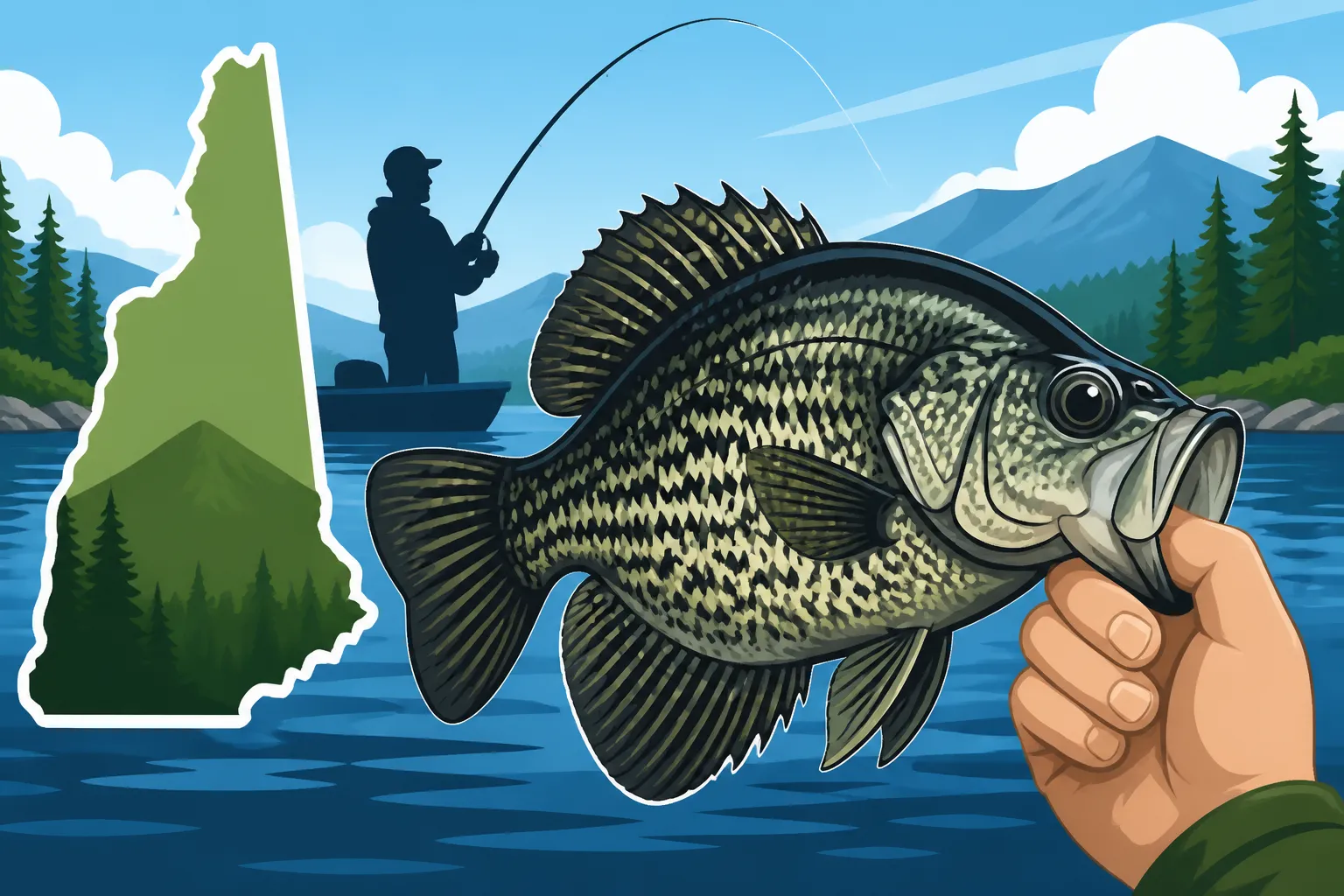
Black crappie, scientifically known as Pomoxis nigromaculatus, are easily recognized by their deep, slab-sided bodies and a mottled pattern of black spots and blotches over a silvery-green or golden background. Unlike their close relatives, white crappie, black crappie typically have 7 or 8 dorsal spines, whereas white crappie usually have 5 or 6. This is a subtle but key identifying feature once you get them in hand. Their mouths are relatively small, which is a big hint when you're choosing your bait and hook size! They also possess large eyes, indicative of a fish that feeds efficiently in low light conditions, such as dawn, dusk, or in deeper, stained water.
Their coloration can vary quite a bit depending on the clarity of the water and the fish's diet. Crappie living in clear, weedy lakes might exhibit more vibrant greens and golds, while those from murkier ponds could appear darker, almost olive-brown. No matter the hue, their distinctive speckled pattern is almost always present. It's this visual appeal, combined with their delectable flavor, that makes them such a popular target once anglers discover them.
Life Cycle and Spawning Habits
The life cycle of a black crappie revolves heavily around water temperature, particularly when it comes to spawning. Typically, in New Hampshire, crappie begin to move into shallower, warmer waters when the water temperature consistently reaches the mid-50s to low-60s Fahrenheit, usually from late April through early June. They seek out areas with submerged vegetation, brush piles, or other forms of cover, often in just a few feet of water. The males will fan out small, circular nests on the bottom, usually near this cover, and aggressively guard them once a female lays her eggs.
During this spawning period, crappie are highly concentrated and can be incredibly active, offering some of the best fishing opportunities of the year. After the spawn, they tend to move back to deeper water, though they'll still relate to structure. Understanding this annual migration is critical for consistent success. If you're missing out on the early spring bite because you're waiting for bass season to open, you're truly letting some prime crappie action slip through your fingers!
Behavioral Patterns and Preferred Habitat
Black crappie are structure-loving fish. They thrive in lakes, ponds, and slower-moving river sections that offer an abundance of submerged timber, brush piles, fallen trees, docks, bridge pilings, and weed beds. These structures provide both ambush points for feeding on baitfish and insects, as well as protection from larger predators. Unlike some species that roam wide-open water, crappie prefer to hang tight to cover, often suspending themselves just above it. This makes them a fascinating challenge to locate, as you're essentially hunting for underwater hideouts.
Their schooling nature means they are almost always found in groups, sometimes large ones. This is fantastic news for anglers because once you pinpoint a school, you can often catch multiple fish from the same spot. They are also sensitive to light, preferring lower light conditions or the shade provided by deep water or dense cover. This influences when and where they'll be most active. On bright, sunny days, they'll likely be tucked deep into cover or in deeper water, while overcast days or early morning/late evening hours might see them moving shallower and becoming more aggressive. Knowing this helps you predict their movements and select the right presentation.
Where to Find Black Crappie in New Hampshire
Finding crappie in New Hampshire isn't always as simple as tossing a worm into any pond. They have preferences, and knowing what to look for can drastically improve your chances.
Common Crappie Waters in New Hampshire
While crappie aren't found in every single water body, New Hampshire has a good number of lakes and ponds where they thrive. You'll often find them in warmer, nutrient-rich waters with plenty of vegetation and submerged structure. Many of the state's larger, shallower lakes and ponds, particularly in the central and southern regions, hold strong populations. Smaller, less pressured ponds can also be crappie goldmines. Places like Pawtuckaway Lake are well-known for their crappie populations, with plenty of coves and submerged timber for them to hide in. Other great spots can include specific bays and shallower sections of larger lakes like Winnisquam Lake, where they find the type of habitat they love.
It's always a good idea to check with local bait shops or the New Hampshire Fish and Game Department's resources for specific water body reports. They often provide insights into which lakes are known for good crappie fishing. Remember, crappie populations can fluctuate, so what was hot one year might be just warm the next. Don't be afraid to explore new waters once you understand their preferred habitat, as some of the best crappie fishing can be found in lesser-known spots. For more general advice on where to cast your line, you might consult resources like Best Fishing Lakes in New Hampshire or Best Fishing Rivers in New Hampshire.
Identifying Prime Crappie Structure
As we discussed, crappie are absolute magnets for structure. When you're on the water, whether in a boat or fishing from shore, keep an eye out for tell-tale signs of good crappie habitat. This includes visible features like fallen trees extending into the water, old dock pilings, submerged brush, and distinct weed lines. However, much of the best crappie structure is hidden beneath the surface. This is where a good fish finder really shines. Look for abrupt depth changes, humps, old road beds, and especially clusters of submerged timber or brush piles on your sonar. Crappie will often suspend themselves right in, above, or around these features.
When approaching a promising area, don't just cast blindly. Take your time to thoroughly investigate the structure. If you're near a dock, cast under it. If there's a submerged tree, fan-cast around its branches, paying special attention to the deep side where crappie might be holding for shade. Sometimes, the most subtle piece of structure – a single submerged stump or a small patch of thicker weeds – can hold a school of crappie. The key is persistence and a methodical approach to picking apart these underwater hiding spots.
Navigating Different Water Types for Crappie
Crappie can be found in a variety of water environments, but your approach needs to change based on the specific type of water you're fishing.
- Lakes and Ponds: This is where most New Hampshire crappie fishing happens. In large lakes, focus on protected coves, river mouths, and bays with plenty of cover. Think about areas less exposed to wind and boat traffic. In smaller ponds, crappie might be found closer to shore during spring and fall, retreating to deeper holes or brush piles in the middle during summer and winter.
- Rivers and Flowages: While crappie prefer calmer waters, you can find them in river systems in New Hampshire, particularly in oxbows, backwaters, and slow-moving sections where eddies form. Look for areas out of the main current flow that offer similar submerged structure as lakes. Bridge pilings in slower stretches can be fantastic crappie real estate. Your approach here might involve anchoring upstream and letting your bait drift into potential crappie holding spots.
- Ice Fishing: During winter, crappie fishing takes on a whole new dimension. They'll often school up tightly in deeper basins, relating to major underwater structure like humps or the edges of old creek channels. A portable fish finder (flasher or sonar) becomes an indispensable tool for locating these schools under the ice. You'll often find yourself drilling a series of holes to locate active fish before settling in. You can learn more about finding these winter hotspots in Best Ice Fishing Lakes in New Hampshire and New Hampshire Ice Fishing Regulations by Water Body.
Best Times and Seasons for Crappie in New Hampshire
Just like with any other fish, timing is everything when it comes to crappie. Their behavior and location change dramatically throughout the year, so knowing when and where to fish can make all the difference between a slow day and a banner catch.
Springtime Spawning Frenzy
Without a doubt, spring is prime time for crappie fishing in New Hampshire. As the ice recedes and water temperatures climb into the mid-50s to low-60s Fahrenheit, crappie move shallow to spawn. This typically happens from late April through early June, depending on the specific water body and weather patterns. They'll be concentrated in protected coves, along gradual sloping banks, and around any submerged vegetation or brush in 2-10 feet of water.
During this period, crappie are aggressive and actively feeding, making them relatively easy targets. You can often spot them cruising near cover or even see their nests if the water is clear enough. This is the time for light tackle, small jigs, and a patient approach. Many anglers will target them from shore or by slowly cruising in a kayak or small boat, casting to visible cover. The action can be fast and furious, providing incredible numbers of fish. Just be mindful of local regulations, as some areas may have specific rules during the spawn to protect the fish. For general regulation information, always refer to something like New Hampshire Fishing Regulations Explained.
Summer Deep Water Tactics
Once the spawning is over and the water warms significantly, crappie retreat from the shallow banks to deeper, cooler waters. They still relate to structure, but now they're often suspending over deeper brush piles, submerged timber, or along deep weed lines and drop-offs. Finding them in summer can be more challenging, as they are less concentrated and often require more advanced electronics like a good fish finder to locate schools.
Targeting summer crappie usually involves vertical jigging directly over these deep structures or slow trolling with small jigs or live minnows. Look for schools suspended 10-25 feet down, sometimes even deeper in very large lakes. They'll often hug the thermocline if one is present. Fishing in low light conditions, such as early morning or late evening, can still be productive as they may move slightly shallower to feed during these times. Don't be surprised if you find them holding tight to the shade of a dock or bridge pilings on a sunny summer afternoon.
Fall Feeding and Winter Ice Fishing
As autumn arrives and water temperatures begin to cool, crappie become much more active, often schooling up tightly and feeding aggressively in preparation for winter. This "fall feeding frenzy" can rival the spring spawn in terms of action. They'll often be found in transitional areas – deeper channels leading into coves, points, or large flats with scattered structure. They might still be relatively deep, but often shallower than their mid-summer haunts, perhaps 8-20 feet. This is a great time to cover water by slow trolling or casting small crankbaits and jigs to locate active schools.
When winter sets in and the ice forms, crappie are a popular target for ice anglers in New Hampshire. They tend to school up in predictable patterns, often concentrating in deep basins, over submerged humps, or near the mouths of major inlets/outlets. A flasher or ice fishing sonar is absolutely essential for locating these schools, as they'll often suspend at specific depths. Once found, anglers use tiny jigs, often tipped with a piece of bait or a small plastic, presented vertically through the ice. It's a game of finesse and patience, but when you hit a school, the action can be non-stop. For those looking to learn more about cold-weather angling, Ice Fishing in New Hampshire is a great resource.
Effective Techniques and Baits for Black Crappie
Crappie aren't usually picky eaters, but they do have preferences, and how you present your offering is often more important than what you're using. These techniques are generally effective across the seasons, with minor adjustments for depth and speed.
Jigging and Small Lures
Jigging is arguably the most popular and effective method for catching black crappie. Their small mouths and penchant for subtle strikes mean small baits are key. Think tiny jigs, typically 1/32 to 1/16 ounce, sometimes even smaller, especially for ice fishing. These micro jigs can be tipped with small plastic bodies like grub tails, tube baits, or tiny swimbaits. Colors can vary, but chartreuse, white, pink, and black are consistent producers. Experimentation is always good; sometimes a bright, aggressive color works, other times a natural, subtle hue is best. You can find a huge variety of these tiny jigs and plastics on platforms like Amazon, making it easy to stock up.
The retrieve is usually slow and subtle. Crappie often prefer a gentle lift-and-drop, or just holding the jig perfectly still at the depth where the fish are suspending. Many anglers use a bobber (slip bobber for deeper water) to suspend their jig at the desired depth. When ice fishing, a slight jiggle or quiver of the rod tip is often all it takes to entice a strike. The trick is to watch your line closely for any unnatural movement, as crappie bites can be incredibly light – sometimes just a slight "tick" or a sudden slackening of your line.
Live Bait for Finicky Crappie
When crappie are finicky, or if you're just looking for a surefire way to get a bite, live bait is hard to beat. Small minnows, often called "crappie minnows" or "shiners," are the go-to choice. They mimic the crappie's natural forage and their erratic swimming action is incredibly enticing. You can rig them in a couple of ways:
- Under a Bobber: Hook the minnow lightly through the back, just behind the dorsal fin, or through both lips. Suspend it under a small bobber at the depth where you're seeing crappie. The bobber will act as both a strike indicator and a way to keep your bait at the desired depth. This is especially effective in spring and fall when crappie are shallower.
- On a Jig Head: If you're vertical jigging, you can simply hook a minnow through the lips or back onto a bare jig head. The weight of the jig head will get it down to the desired depth, and the minnow's natural movement will do the rest. This works great for summer deep water tactics or ice fishing.
Small worms, pieces of nightcrawler, or even wax worms (especially for ice fishing) can also be effective, particularly when crappie are feeding on insect larvae. Keep your hooks small – a size 6 or 8 Aberdeen hook is often perfect to accommodate their small mouths and keep the bait looking natural.
Slip Bobber and Trolling Strategies
The slip bobber rig is a game-changer for crappie fishing, especially when you need to present bait or a jig at a precise depth in deeper water. Unlike a fixed bobber, a slip bobber slides freely on your line up to a small knot (a bobber stop) that you can adjust. This allows you to cast a relatively short leader and bobber, but then let your bait fall to a depth of 10, 20, or even 30 feet. It's incredibly versatile for targeting suspended crappie over brush piles or along drop-offs. The key is to know your depth, set your bobber stop accurately, and then wait for that tell-tale dip!
Trolling is another excellent strategy for covering water and locating crappie, particularly in larger lakes. This involves slowly moving your boat (often using a trolling motor for precise speed control) while dragging multiple lines with jigs, small crankbaits, or live minnows behind you. "Spider rigging," where multiple rods are spread out from the bow of the boat like a spider's legs, is a common crappie trolling method. You can vary depths by using different jig weights, small diving crankbaits, or adding split shot. This allows you to present baits at various levels until you find the depth where the crappie are holding. It's a fantastic way to quickly identify active schools when they're scattered.
| Technique | Best Season | Preferred Depth | Typical Bait/Lure | Retrieval/Presentation |
|---|---|---|---|---|
| Jigging | All seasons, esp. Ice | Varies (shallow to deep) | Small jigs (1/32-1/16 oz) w/ plastic, tipped w/ bait | Subtle lift-drop, jiggle, or hold still; vertical |
| Slip Bobber | Spring, Fall, Summer | Shallow to mid-depth | Live minnows, small jigs, worms | Suspended at precise depth, waiting for strike |
| Trolling | Summer, Fall | Mid-depth to deep | Small crankbaits, jigs, live minnows | Slow, consistent retrieve behind boat; cover water |
| Bank Fishing | Spring, Fall | Shallow | Jigs, live minnows under bobber, worms | Casting to visible cover, slow retrieve near bottom |
| Ice Fishing | Winter | Mid-depth to deep | Tiny jigs, wax worms, small minnows | Vertical presentation, subtle jiggle near bottom/structure |
Essential Gear for Crappie Fishing
You don't need a massive tackle box or a professional bass boat to catch crappie, but having the right tools can make a big difference in your success and enjoyment. Their delicate bites and relatively small size call for specialized, often lighter, gear. For a broader look at what gear you might need for similar species, consider Best Tackle for Panfish.
Ultralight Rods and Reels
When it comes to crappie fishing, "light" is the operative word. An ultralight spinning rod and reel combo is absolutely essential. The rod should be between 5 to 7 feet long, with a fast or moderate-fast action, allowing you to feel those incredibly subtle crappie bites. The light action also makes even a pan-sized crappie feel like a trophy, adding to the fun! Paired with a small, lightweight spinning reel (a 500 to 1000 size is ideal), you'll have a balanced setup that's easy to cast all day. The reel should have a smooth drag system, which is important even for smaller fish, and be capable of handling light line.
Using an ultralight setup not only enhances the fight but also allows for more precise presentations with tiny jigs and light baits. Trying to cast a 1/32 ounce jig with a medium-heavy bass rod is like trying to swat a fly with a baseball bat – clumsy and ineffective. A dedicated ultralight setup is a small investment that will pay dividends in crappie catches and overall fishing enjoyment. If you're looking for specific recommendations, checking customer reviews on Amazon for "ultralight spinning combos" can offer some great starting points.
Line Choices and Terminal Tackle
Your line choice is just as critical as your rod and reel for crappie fishing.
Monofilament line in 2-4 pound test is a classic choice. It has some stretch, which can be forgiving with light bites and helps prevent hooks from tearing out of delicate crappie mouths. It's also relatively inexpensive and floats, which can be a benefit when using bobbers.
Fluorocarbon line in similar light tests (2-4 lb) is another excellent option. It's virtually invisible underwater, has very little stretch, and sinks, making it great for feeling subtle bites and getting jigs down quickly. Its low visibility can be a huge advantage in clear New Hampshire waters, especially when crappie are shy.
Braided line can also be used, typically 6-10 pound test, but always with a fluorocarbon leader (2-4 lb test). Braid offers incredible sensitivity, which helps detect those faint crappie taps, and its strength-to-diameter ratio is unbeatable. However, its lack of stretch can sometimes lead to hooks pulling out, so a softer rod action and a good drag setting are important.
For terminal tackle, keep it minimal and small:
- Hooks: Size 6 or 8 Aberdeen or Octopus hooks for live bait.
- Jig Heads: 1/32 to 1/16 ounce, sometimes 1/8 ounce for deeper water or current.
- Bobbers: Small clip-on bobbers for shallow water, or slip bobbers for deeper presentations.
- Split Shot: Tiny removable split shot for adding weight to your line if needed.
- Swivels: Small barrel swivels if you're experiencing line twist, but generally not needed for single hook setups.
Choosing the right size and strength of line can drastically impact your success, particularly when considering the delicate nature of a crappie's mouth. You can find many brands of light monofilament and fluorocarbon line on Amazon.
Essential Accessories for Crappie Anglers
Beyond the rod, reel, and basic tackle, a few accessories can make your crappie fishing trips much more productive and comfortable.
- Pliers/Forceps: Crappie have small mouths, and sometimes hooks can be swallowed deeply. A good pair of long-nosed pliers or fishing forceps is invaluable for removing hooks safely, minimizing harm to the fish if you plan to release them. This is especially important for adhering to New Hampshire Bag and Possession Limits by Species and practicing responsible angling.
- Livewell or Cooler: If you plan to keep crappie for dinner (and they are delicious!), a small livewell or a cooler with ice is essential to keep your catch fresh.
- Electronics: A portable fish finder or a flasher is an absolute game-changer, particularly for summer and winter fishing. It helps you locate schools of crappie suspended around structure, saving you countless hours of blind casting.
- Kayak or Small Boat: While shore fishing can be productive, a kayak or small boat gives you access to far more crappie habitat. They allow you to get to those brush piles, deep weed lines, and submerged timber that are out of reach from the bank. For tips on choosing the right watercraft, check out Best Kayaks for New Hampshire Fishing.
- Clothing: Layered clothing is key for New Hampshire's variable weather. Don't forget polarized sunglasses to cut glare and spot structure, and a wide-brimmed hat for sun protection.
- Tackle Box/Bag: A compact tackle box or a small bag, readily available on Amazon, designed for panfish gear will help keep your small jigs, plastics, and hooks organized and easily accessible.
Conservation and Regulations for Black Crappie
Fishing for black crappie in New Hampshire is generally a plentiful endeavor, but it's important to be a responsible angler. Understanding and following regulations ensures that these fun-to-catch fish will be around for generations to come.
New Hampshire Crappie Limits and Rules
Like all fish species in New Hampshire, black crappie are subject to specific regulations designed to manage their populations and maintain healthy fisheries. These rules typically include daily bag limits (how many fish you can keep in a day) and possession limits (how many fish you can have in your possession at any given time). There may also be length limits, although crappie regulations are often more focused on quantity due to their prolific nature.
It is absolutely crucial to consult the most current New Hampshire Freshwater Fishing Digest, published annually by the New Hampshire Fish and Game Department. This digest is your authoritative source for all regulations, including any specific rules that might apply to particular water bodies or seasonal changes. You can usually find a PDF version online or pick up a physical copy wherever fishing licenses are sold. Ignoring these rules can lead to significant penalties, so it's always worth taking the time to review them before you hit the water. This also applies to general licensing requirements, which you can read about in New Hampshire Fishing License Guide for 2026.
Practicing Catch and Release Effectively
While crappie are excellent table fare, there are times when practicing catch and release is beneficial, whether you're targeting trophy-sized fish, fishing a water body with sensitive populations, or simply want to release smaller fish. Crappie are relatively hardy, but proper handling is still important to ensure their survival.
When releasing crappie:
- Minimize handling: Try to keep the fish in the water as much as possible. If you must handle it, do so gently with wet hands to protect its protective slime coat.
- Use appropriate tools: Small pliers or forceps are excellent for quickly and cleanly removing hooks, especially if the fish has swallowed the bait deeply.
- Support the fish: If holding the fish for a quick photo, support its body horizontally. Avoid holding it by the jaw vertically, as this can damage its internal organs.
- Revive if necessary: If the fish seems sluggish, gently hold it in the water, facing into a mild current if possible, until it regains its strength and swims away on its own.
Responsible catch and release practices contribute to sustainable fisheries and ensure that future generations can enjoy the thrill of catching black crappie.
Protecting Crappie Habitats
The health of crappie populations is directly tied to the health of their habitat. As anglers, we have a vital role to play in protecting these environments. Crappie rely heavily on submerged structure and aquatic vegetation for spawning, feeding, and protection.
Here are some ways to help protect crappie habitats:
- Practice "Leave No Trace": Always pack out everything you pack in. This includes old fishing line, bait containers, and any other trash. Old fishing line, in particular, can be deadly to wildlife.
- Respect private property: Be mindful of where you're fishing and always get permission if you're on private land.
- Avoid disturbing spawning beds: During the spring spawn, be cautious not to wade or anchor directly in areas where crappie are nesting, as this can destroy eggs and disrupt breeding.
- Report pollution: If you notice any signs of pollution or habitat degradation, report it to the New Hampshire Fish and Game Department.
- Be mindful of boat wakes: In shallower coves and bays, excessive boat wakes can erode shorelines and disturb sensitive aquatic vegetation crucial for crappie.
By being good stewards of our natural resources, we ensure that New Hampshire's black crappie populations continue to thrive, providing countless hours of angling enjoyment for everyone.
Disclaimer
This article is for general informational purposes only and does not constitute professional advice. Laws, prices and regulations vary by location and change over time. Consult a qualified professional for guidance on your specific situation.