New Hampshire state record landlocked salmon weight
There's a special kind of thrill that courses through a New Hampshire angler's veins when they hear whispers of state records, especially when it comes to a magnificent fish like the landlocked salmon. Many of us dream of that one monumental catch, a fish so impressive it etches its name into the history books. But what does it really take, and what's the benchmark we're all secretly striving for with these incredible freshwater giants? This guide dives deep into the realm of New Hampshire's state record landlocked salmon, exploring not just the legendary weight, but also the stories, the waters, and the dedicated pursuit behind such an achievement.
The Elusive Champion: New Hampshire's State Record Landlocked Salmon
The pursuit of a state record isn't just about the numbers; it's about the dedication, the countless hours on the water, and the sheer luck that culminates in that one unforgettable moment. For many, the landlocked salmon represents the pinnacle of freshwater fishing in New Hampshire—a powerful, acrobatic fish that tests every ounce of an angler's skill and patience.
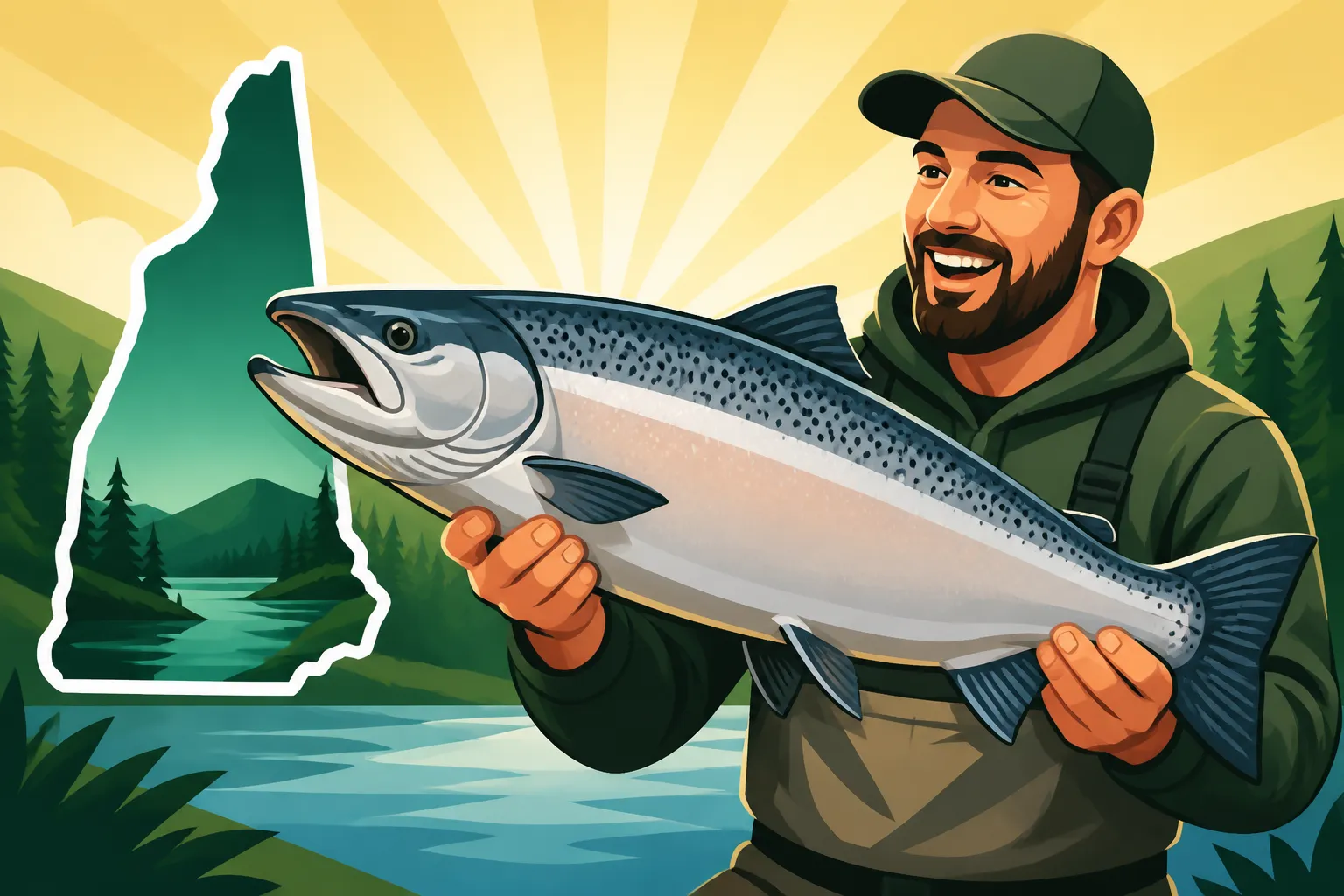
When it comes to the New Hampshire state record for landlocked salmon, we're talking about a fish that truly redefined what was thought possible in our waters. The existing record stands at an impressive weight, a testament to the incredible growth potential of these fish in our cold, clear lakes. While specifics can sometimes feel a bit like folklore handed down through generations of anglers, the record-holding landlocked salmon weighed in at 16 pounds, 8 ounces. This colossal fish was caught in Lake Winnipesaukee, a body of water renowned for its diverse fishery and the significant challenge it presents to anglers.
Imagine the fight! A fish of that size would put any angler and their gear to the ultimate test, stripping line, leaping clear of the water, and pulling with a strength that belies its sleek, silver appearance. It's a weight that sets a high bar, one that inspires countless others to cast their lines in hopes of encountering their own personal best, or perhaps, just perhaps, the next state record. This record isn't just a number; it's a legacy, a symbol of the wild beauty and exceptional fishing opportunities that New Hampshire offers.
Why Landlocked Salmon are So Prized in New Hampshire
Landlocked salmon, or Salmo salar (formally the Atlantic salmon), are an incredibly sought-after species here in the Granite State. Unlike their anadromous cousins who journey to the ocean, landlocked salmon spend their entire lives in freshwater lakes, primarily in colder, deeper environments. Their beauty is undeniable, with iridescent silver scales, often adorned with faint X-shaped spots, and powerful, streamlined bodies built for speed and fighting prowess.
But it's more than just their looks. They offer a unique angling challenge. They are often finicky eaters, preferring specific forage like rainbow smelt, and they inhabit expansive, deep lakes, making them difficult to locate consistently. When hooked, they are renowned for their spectacular aerial displays and strong runs, making every catch a memorable battle. For many New Hampshire residents and visitors, catching a landlocked salmon is a significant achievement, and landing a truly large one is a badge of honor. Our lakes are carefully managed to support healthy populations of these fish, making the pursuit of a trophy a realistic, albeit challenging, endeavor. For more on these incredible fish, check out our Landlocked Salmon Fishing in New Hampshire guide.
The Thrill of Pursuing Such a Fish
The dream of catching a state record salmon is what keeps many anglers returning to the water, season after season. It’s the whisper of what could be just below the surface. This pursuit isn't just about the potential glory; it's about the entire experience. It's the early mornings when the mist still hangs over the lake, the quiet anticipation as you troll your carefully selected lures, and the sudden, heart-stopping strike that breaks the tranquility.
Imagine the scenario: you're out on a vast lake like Winnipesaukee, your downriggers set, watching the sonar for any signs of baitfish or larger marks. Hours can pass with nothing but the gentle rocking of the boat and the scenic beauty of the New Hampshire landscape. Then, without warning, a rod violently doubles over, the drag screams, and line peels off at an alarming rate. That's the moment when all the planning, all the patience, and all the dreaming coalesce into pure, adrenaline-fueled action. Bringing a fish of record proportions to the net is a moment of triumph, a testament to skill, persistence, and a bit of good fortune.
The Quest for a Record Breaker: Understanding Landlocked Salmon in NH
To even dream of challenging the state record, an angler needs to understand the very nature of landlocked salmon in New Hampshire. These fish don't just grow large by accident; their environment, diet, and habits all contribute to their impressive size. Knowledge is power when you're targeting true trophy fish.
Where These Giants Typically Live in New Hampshire
New Hampshire is blessed with several deep, oligotrophic lakes that provide the ideal habitat for landlocked salmon. These lakes are characterized by cold, well-oxygenated water, especially in their deeper zones, and a robust population of their primary forage fish: rainbow smelt.
Lake Winnipesaukee is perhaps the most famous and productive landlocked salmon fishery, and indeed, where the current state record was caught. Its immense size, complex underwater structure, and deep, cold pockets make it perfect for salmon to grow large. Anglers targeting this lake often focus on deepwater areas, especially around humps, reefs, and points where salmon might ambush schools of smelt. Other notable salmon lakes include Sunapee Lake, known for its healthy salmon population, and occasionally Newfound Lake and Squam Lake, though Winnipesaukee often stands out for trophy potential. These lakes are rigorously managed by New Hampshire Fish and Game to ensure sustainable populations and quality fishing experiences. For a deeper dive into one of our prime salmon waters, check out the Lake Winnipesaukee Fishing Guide.
Their Diet and Habits That Contribute to Large Size
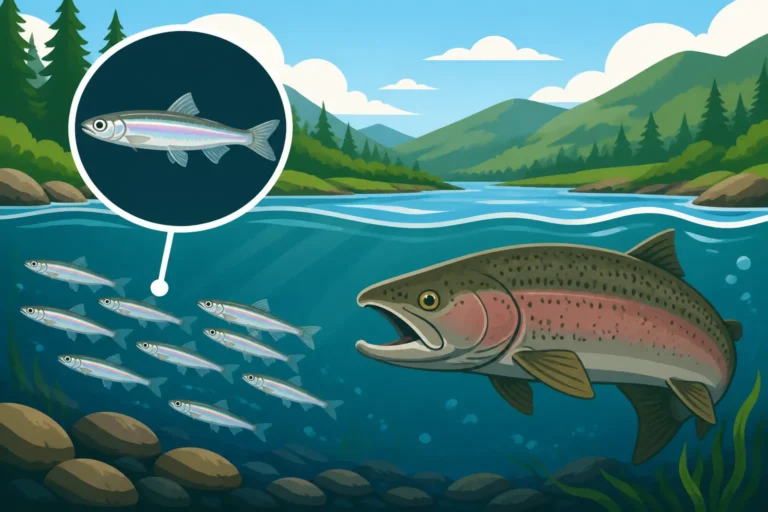
The primary reason landlocked salmon in New Hampshire grow to such impressive sizes is their diet, specifically their reliance on rainbow smelt. Smelt are highly nutritious, fatty baitfish that provide the energy and protein salmon need for rapid growth. These cold-water baitfish tend to school in open water, often suspending at specific depths, which in turn dictates where and how salmon hunt.
Salmon are apex predators in their freshwater environments, constantly on the move, chasing down schools of smelt. This constant activity means they burn a lot of calories, requiring them to consume large quantities of food to maintain and increase their body mass. Their habits vary with the seasons. In early spring after ice-out, they might be found near the surface as they follow smelt into shallower waters. As the water warms, they descend into the thermocline—the layer where warm surface water meets cold deep water—to find comfortable temperatures and abundant food. Understanding these seasonal movements and their dependency on smelt is crucial for locating and catching larger salmon.
Challenges in Catching Large Salmon
Catching any landlocked salmon can be a challenge, but landing a true giant requires a different level of dedication. Here are some of the hurdles anglers face:
- Locating Them: Salmon are often found in vast expanses of open water. Without good sonar and a thorough understanding of their seasonal movements and preferred depths, it's like looking for a needle in a haystack. They don't relate to cover in the same way bass do.
- Deep Water Fishing: During much of the year, especially summer, salmon are found in deep water. This necessitates specialized equipment like downriggers or lead core line to get lures down to the correct depth where the fish are holding.
- Finicky Biters: Salmon can be notoriously picky. They might follow a lure for a long time without striking, or they might only hit specific colors or actions on a given day. Experimentation and persistence are key.
- The Fight: Even if you do everything right and hook a trophy salmon, the battle is far from over. Their powerful runs, head shakes, and acrobatic leaps mean that light line or improper drag settings can quickly lead to a lost fish. Landing a large salmon requires a cool head and proper fish-fighting technique.
How to Chase Your Own Trophy Salmon in New Hampshire
While the state record is a high bar, chasing a trophy-sized landlocked salmon of your own is an incredibly rewarding endeavor. It combines skill, strategy, and the thrill of the hunt. Here's how you can increase your odds of connecting with a giant.
Techniques for Targeting Big Fish
When it comes to targeting large landlocked salmon, certain techniques stand out:
- Trolling with Downriggers: This is arguably the most effective method for consistently catching salmon in deeper waters. Downriggers allow you to precisely present lures at specific depths, which is crucial when salmon are suspended in the thermocline chasing smelt. You can run multiple lines at different depths to cover the water column efficiently. Keep an eye on your fish finder for bait schools and individual fish, and adjust your downrigger depths accordingly. For similar techniques, you might find our Trolling Techniques for New Hampshire Lake Trout article helpful, as many principles apply.
- Lead Core Line: Another effective way to get lures deep without downriggers is using lead core line. This specialized line sinks at a predictable rate, allowing you to estimate your lure's depth based on the amount of colored line you have out. It's often used in conjunction with longer trolling rods.
- Flatlining (Early Season/Ice-Out): In the early spring, immediately after ice-out, smelt and salmon can be found nearer the surface. This is a prime time for flatlining small stickbaits or spoons far behind the boat with no weight, or minimal weight, allowing them to run shallow. This is a tactic where you might get a massive hit as a big salmon cruises the shallows for an easy meal.
- Specific Lures: For trophy salmon, lures that imitate rainbow smelt are paramount. Thin-profile spoons, like those from companies such as Amazon, in silver, blue, or green are often highly effective. Small stickbaits (like Rapala or similar brands) and soft plastics rigged to mimic smelt are also popular choices. Experiment with different colors and sizes until you find what the fish are keying in on that day. For more on what to use, see Best Spoons for Lake Trout Trolling, as many crossover effectively for salmon.
Best Times of Year for Big Fish
Timing is everything when pursuing trophy salmon. Here's a breakdown:
- Ice-Out (Late March to Early May): This is perhaps the most exciting time for big salmon. As the ice recedes, the entire water column is cold and oxygenated, allowing salmon to range into shallower areas. They are often aggressive and can be caught near the surface. This is when flatlining or even casting from shore in specific access points can yield incredible results.
- Late Spring/Early Summer (May to June): As surface temperatures rise, salmon begin to move deeper, establishing themselves in the thermocline. Trolling with downriggers becomes the dominant strategy. This period still offers excellent opportunities for large fish as they actively feed to bulk up.
- Fall (September to November): As lake temperatures begin to cool again, salmon once more become more active and can be found shallower, especially as they prepare for their spawning rituals. While specific spawning regulations exist to protect these fish, the pre-spawn period can offer fantastic opportunities for robust, aggressive salmon.
Understanding these seasonal patterns, combined with checking local regulations like New Hampshire Fishing Season Dates and Closures, will significantly increase your chances.
Gear Considerations
You wouldn't bring a butter knife to a sword fight, and the same goes for targeting state-record landlocked salmon. Appropriate gear is non-negotiable.
- Rods and Reels: For trolling, you'll want medium-heavy to heavy action rods, typically 7-9 feet long, capable of handling the strain of downriggers or heavy lead core. A good quality baitcasting reel with a smooth, powerful drag system and ample line capacity (at least 200 yards of 15-20 lb monofilament or braided line) is essential. For flatlining or casting, a medium-heavy spinning rod and reel combo can work, but for big fish, durability is key. Looking for reliable options? Many anglers find great deals and a wide selection of suitable rods and reels on platforms like Amazon.
- Line: For downrigger setups, many anglers opt for a good quality braided mainline with a fluorocarbon leader. Fluorocarbon is nearly invisible underwater, which can be crucial for enticing wary salmon, especially in clear New Hampshire lakes. A 10-15 lb test fluorocarbon leader is common. For lead core, the line itself provides the weight, so you'll typically use a short monofilament or fluorocarbon leader.
- Terminal Tackle: Always use strong, sharp hooks. Many spoons and stickbaits come with decent hooks, but consider upgrading them to ensure they can handle a powerful fish. Quality swivels and snaps are also important to prevent line twist and provide a secure connection to your lure.
- Nets: A large, rubber-coated landing net is crucial. The rubber coating protects the fish's slime coat, which is vital for its health if you plan on releasing it. A large net also makes landing a heavy, thrashing salmon much safer and easier, reducing the chances of losing it at the boat. Our Best Landing Net for Lake Trout article offers excellent advice applicable to salmon as well.
Here’s a quick overview of essential gear for chasing trophy salmon:
| Gear Category | Recommended Item | Purpose |
|---|---|---|
| Rods | Medium-heavy to Heavy Trolling Rod (7-9 ft) | Handles downriggers/lead core, fights large fish |
| Reels | Quality Baitcasting Reel (High Line Capacity, Smooth Drag) | Resists long runs, holds enough line |
| Main Line | Braided Line (15-20 lb) or Lead Core Line | Strength for trolling, or depth control |
| Leader | Fluorocarbon (10-15 lb, 6-10 ft length) | Low visibility, abrasion resistance |
| Lures | Smelt-Imitation Spoons & Stickbaits | Mimics primary forage, attracts aggressive strikes |
| Depth Control | Downriggers, Dipsy Divers, or Lead Core System | Gets lures to target depth consistently |
| Net | Large, Rubber-Coated Landing Net | Safely lands and protects fish for release/documentation |
| Electronics | Quality Fish Finder/Sonar with GPS | Locates fish, bait, and underwater structure |
| Safety Gear | Life Jacket, VHF Radio, First Aid Kit | Essential for all boating, especially on large lakes |
Respecting the Resource: Catch, Document, and Release (or Keep Responsibly)
Successfully landing a potential record-breaking landlocked salmon is an incredible feat, but the responsibility doesn't end there. Proper handling, documentation, and adherence to regulations are paramount, whether you plan to release the fish or keep it for the record books.
Proper Handling of Large Fish
If you're fortunate enough to hook a massive salmon, the moments after it's in the net are critical. Large fish, especially powerful ones like salmon, are under immense stress from the fight.
- Minimize Out-of-Water Time: If you plan to release the fish, get it back in the water as quickly as possible. Keep it in the net, in the water, while you get your measuring board, camera, and scale ready.
- Wet Hands: Always handle fish with wet hands to protect their delicate slime coat, which is their primary defense against disease and parasites.
- Support the Fish's Body: If you must lift a large salmon for a quick photo, support its entire body horizontally, especially its belly, to avoid internal damage. Never hold a heavy fish by just its jaw or tail in a vertical position.
- Revive Carefully: If the fish seems sluggish, hold it gently in the water, facing into the current (if any), or move it back and forth to force water over its gills until it regains its strength and can swim away on its own.
Official Record Submission Process
If you believe you've caught a state record landlocked salmon, there's a specific process to follow to ensure your catch is officially recognized by the New Hampshire Fish and Game Department. This isn't just a casual weigh-in; it requires careful documentation.
- Get it Weighed on a Certified Scale: This is non-negotiable. The fish must be weighed on a scale that has been certified by a government agency (like a grocery store, butcher shop, or an official weigh station at a tournament). The scale should be zeroed before weighing, and the weighing process should ideally be witnessed.
- Measure the Fish: Take accurate measurements of the fish's total length (from the tip of the nose to the tip of the tail) and girth (the widest part of the fish's body).
- Take Clear Photos: Document your catch with clear, well-lit photographs. Include photos of the fish on the scale, with the measuring tape, and a photo of you with the fish. These photos help verify the species and the size.
- Contact NH Fish and Game: As soon as possible, contact the New Hampshire Fish and Game Department. They will guide you through the official submission process, which includes completing specific forms and potentially having the fish inspected by a fisheries biologist to confirm its species.
Remember, the goal is often to celebrate the achievement, and following the rules ensures your place in the record books is legitimate and undisputed. For general rules, our New Hampshire Fishing Regulations Explained can provide a good overview, but always check the official Fish and Game website for record submission specifics.
Importance of Conservation
While the dream of a state record is thrilling, it's vital to remember the broader picture: conservation. Every angler plays a role in protecting New Hampshire's incredible fisheries for future generations.
- Follow Regulations: Always adhere to New Hampshire's fishing regulations, including bag limits, size limits, and season dates. These rules are in place to ensure sustainable fish populations. You can find detailed information in resources like New Hampshire Bag and Possession Limits by Species and New Hampshire Landlocked Salmon Regulations.
- Practice Catch and Release: For fish that aren't intended for the dinner table or for record submission, practicing proper catch and release techniques is crucial. This ensures that the fish survives to grow larger and contribute to the spawning population.
- Respect the Environment: Pack out all your trash, avoid littering, and be mindful of your impact on the natural habitats. Healthy ecosystems lead to healthy fish.
- Report Poaching: If you witness any illegal fishing activity, report it to the New Hampshire Fish and Game Department. Protecting our shared resources is everyone's responsibility.
The state record for landlocked salmon is a beacon for many New Hampshire anglers, a testament to the potential of our waters and the dedication of those who pursue these magnificent fish. Whether you're chasing that elusive record or simply enjoying a day on the lake, understanding the fish, employing the right techniques, and respecting the resource will ensure a rewarding experience every time.
Disclaimer
This article is for general informational purposes only and does not constitute professional advice. Laws, prices and regulations vary by location and change over time. Consult a qualified professional for guidance on your specific situation.