How to catch trophy lake trout in the fall
Catching a true trophy lake trout in New Hampshire can feel like a quest for the Holy Grail, especially as the crisp air of autumn descends. These ancient, powerful fish become even more elusive, shifting their patterns as the water cools and their thoughts turn to spawning. If you've ever spent countless hours trolling without a single bite, or struggled to locate where these giants go in the fall, you're not alone. This guide is designed to peel back the layers of mystery surrounding fall lake trout behavior, offering practical strategies and insights to help you land that lunker you've been dreaming of.
Understanding Fall Lake Trout Behavior in New Hampshire
Fall in New Hampshire is a magical time, but for lake trout anglers, it brings a whole new set of challenges and opportunities. Understanding why these fish move and behave the way they do is the first step to consistently finding the big ones. They're not just swimming around aimlessly; their movements are deeply tied to critical biological urges and environmental factors.
The Urge to Spawn and Shallow Movements
As the water temperatures drop, usually when they hit the low to mid-50s Fahrenheit, a primal instinct kicks in for lake trout: the urge to spawn. Unlike some other species that create nests in soft bottoms or vegetation, lake trout are particular. They seek out very specific hard-bottom areas, often rocky shoals, reefs, or even gravelly points that are exposed to wave action and current. These areas, sometimes called "spawning beds" or "reefs," might be much shallower than where you'd typically find them during the summer months.
Imagine a large, old lake trout that has survived many seasons. It knows exactly where to go. These fish will begin migrating towards these traditional spawning grounds. This means that giants that spent all summer in the deepest, coldest parts of the lake might suddenly be found in depths of 10-30 feet, especially as you get closer to peak spawning time. This can be a short window, often lasting only a few weeks, typically from mid-October through early November, depending on the specific lake and the year's temperatures. The challenge is that they might not be actively feeding aggressively during this period; their focus is elsewhere. However, they are accessible, and a well-placed lure at the right time can still entice a strike. Knowing when New Hampshire Lake Trout Ice Fishing Season Dates begin or when New Hampshire Lake Trout Ice Fishing Season Dates end can give you an idea of how long the colder water fishing lasts into the season.
Forage Fish Follow and Deep Water Holds
While the spawning migration is a big draw, it's important to remember that not all lake trout will be on the spawning grounds at the same time, nor will they stay there constantly. Many will still be heavily influenced by their primary food source: baitfish. In New Hampshire's deep, clear lakes, rainbow smelt are a common and crucial forage species for lake trout. As autumn progresses, these smelt will also move. They often school up in large aggregations, sometimes suspending in the water column or relating to deep structure where they can find cooler water and plankton.
Trophy lake trout are opportunistic predators. If there's a large school of smelt or other baitfish, like ciscoes, congregating in deep water, you can bet that some big lakers will be nearby, even if they aren't actively spawning yet. These fish might be holding around deep points, humps, or even along the thermocline if it hasn't completely dissipated. Look for bait balls on your sonar; if you find them, larger arches beneath or around them are often trophy lake trout actively feeding or preparing to feed. Don't discount those deeper haunts just because it's fall. Some of the largest fish may delay their spawning run or simply choose to gorge on baitfish before or after a brief visit to the spawning grounds. This often requires different techniques than those used in the shallows.
Water Temperature and Oxygen Levels
The science of lake stratification and turnover plays a huge role in where lake trout will be found in the fall. During the summer, lakes stratify into distinct layers: a warm surface layer (epilimnion), a rapidly changing temperature layer (thermocline), and a cold, deep layer (hypolimnion). Lake trout, being cold-water fish, spend their summers in the hypolimnion, often near or below the thermocline where the water is cold and oxygenated.
As fall progresses, the surface water cools, becoming denser and eventually sinking. This process, known as "fall turnover," causes the lake's water column to mix, equalizing temperatures and oxygen levels from top to bottom. Once turnover is complete, lake trout no longer have to seek out specific deep, cold, oxygenated pockets. They can, theoretically, be found almost anywhere in the water column, from very shallow depths to the deepest parts of the lake.
This turnover can be a tricky time for anglers. The mixing water can temporarily disperse baitfish and make the lake trout less predictable. However, once the lake stabilizes, usually after a week or two, fishing can pick up significantly. The key is to understand when turnover happens in your target lake (it varies by size and depth) and adjust your strategy accordingly. Early fall might see fish still relating to a weak thermocline or deep structure, while late fall, post-turnover, allows them more freedom to roam. Learning about New Hampshire Lake Trout Ice Fishing Season Dates can give you insight into just how cold the water gets and how long it stays that way.
Essential Gear and Tactics for Fall Trophy Lakers
Targeting trophy lake trout in the fall means you need to be prepared with the right equipment and a versatile set of tactics. These fish are smart, powerful, and often require specific presentations to convince them to strike. You can't just throw out any old lure and expect success; you need to understand what works when.
Trolling Techniques and Lure Selection
Trolling is arguably the most consistent method for covering water and finding active lake trout, especially the larger, more nomadic ones. In the fall, depending on whether the fish are shallow for spawning or deeper feeding on bait, your trolling depth and lure choice will change.
For fish relating to shallower spawning grounds (10-30 feet), you can use long lines, planer boards, or even lead core lines to get your lures into the strike zone. You'll want to troll parallel to rocky shorelines, points, and humps that fit the description of spawning habitat. Focus on slower speeds, typically 1.5 to 2.5 miles per hour, to give the lakers a good look at your offering. Lure choices for these shallower fish often include larger stickbaits, spoons, or even big swimbait presentations. Think about mimicking a wounded baitfish or a smaller fish encroaching on their territory. Brands like Rapala, Smithwick, or even locally tied flies can be very effective.
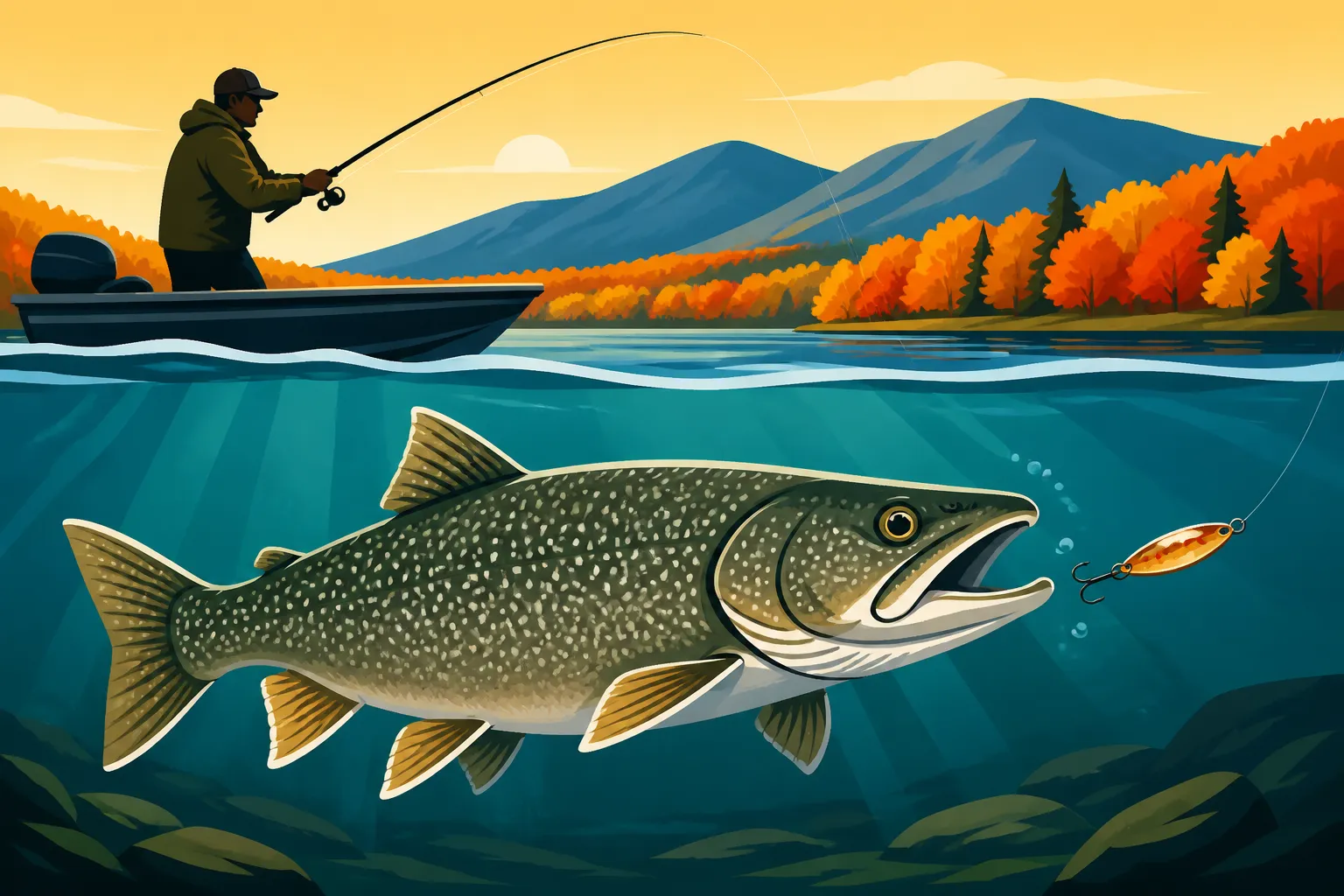
When lake trout are deeper, chasing schools of bait (30-80+ feet), downriggers become your best friend. This allows you to precisely control the depth of your lures. Pair downriggers with longer rods (8-10 feet) that have a good backbone to handle heavy weights and powerful fish. You'll want to use larger spoons, such as those from Luhr-Jensen or Doctor Spoon, or even large plastics on a jig head. Trolling speed might be slightly faster, up to 3 mph, especially if you're trying to cover vast areas. Pay close attention to your electronics to identify bait balls and adjust your downrigger depths to run your lures just above or through them. For a great selection of these specialized trolling spoons and downrigger accessories, I often browse Amazon because of their wide range of options and quick shipping. Mastering Trolling Techniques for New Hampshire Lake Trout is key for consistent success.
Vertical Jigging in Structure and Depths
Vertical jigging is an often-underestimated tactic for fall lake trout, but it can be incredibly effective, especially when fish are holding tight to structure or are less active. This method involves positioning your boat directly over fish or structure you've identified on your fish finder and dropping a jig straight down.
For fish holding on deep humps, along steep breaks, or even suspended over deep water, heavy jigs are essential. Jigging spoons, blade baits, or large soft plastic swimbaits on heavy jig heads (3/4 oz to 2 oz, or even heavier) are excellent choices. The key is to present these lures directly to the fish you see on your sonar. A common technique is to drop the jig to the bottom, then lift it with a sharp jerk, letting it flutter back down on a semi-slack line. Many strikes occur on the fall, so paying close attention to your line is crucial. Sometimes a slower, more subtle lift-and-fall works better, while other times an aggressive jigging motion is needed to provoke a reaction strike. This is particularly effective for those solitary, trophy-sized lakers that might not chase a trolled lure. For specialized ice fishing jigs that cross over well into vertical jigging, check out the options on Amazon.
Electronics and Lake Mapping for Success
Modern marine electronics are not just a luxury; they are a necessity for consistently catching trophy lake trout, especially in the vast, complex waters of New Hampshire. A quality fish finder with GPS and detailed lake mapping capabilities will dramatically increase your success rate.
You need a unit that can clearly display bottom contours, structure (like humps, points, and submerged reefs), and the presence of baitfish schools. Side imaging and down imaging technologies can reveal structure and fish far beyond the traditional sonar cone, helping you identify those rocky spawning shoals or deep baitfish aggregations more effectively. Spend time studying your lake maps before you even launch your boat. Look for areas with sharp depth changes, underwater islands, and extensive rock piles—these are prime lake trout habitats in the fall.
Once on the water, use your GPS to navigate precisely to these spots. Mark waypoints when you find fish or successful trolling passes. Don't be afraid to experiment with different depths and areas, but always use your electronics to understand what's beneath you. For understanding the deep water haunts of these fish, knowing New Hampshire Lake Winnipesaukee lake trout regulations can sometimes give you hints about prime locations. High-quality fish finders from brands like Garmin, Lowrance, or Humminbird are well worth the investment, and you can find a comprehensive range of models and accessories on Amazon. These tools help you pinpoint not just where the fish are, but why they're there.
Key New Hampshire Lakes for Trophy Lake Trout in Autumn
New Hampshire is blessed with a number of deep, cold-water lakes that hold impressive populations of lake trout. While many lakes have lakers, some stand out when it comes to the consistent potential for trophy-sized fish, especially as autumn colors paint the landscape.
Lake Winnipesaukee
When you talk about New Hampshire lake trout, Lake Winnipesaukee is usually the first name that comes to mind. This sprawling body of water, with its numerous islands, deep basins, and complex underwater structure, is a prime location for trophy lakers. In the fall, Winnipesaukee’s sheer size can be intimidating, but its diverse habitat means there's always a good chance of finding fish.
Look for classic lake trout structure like "The Broads," which offers vast deep-water expanses where lakers might be chasing bait. However, in the fall, you also need to focus on rocky points and reefs near islands or mainland shorelines, particularly in areas known for good wave action. Spots like Rattlesnake Island, Cow Island, and areas around the Witches tend to have the kind of rocky substrate that lake trout seek for spawning. Early in the fall, before the full spawning run, many fish will still be found suspended over deep water, often 50-80 feet down, feeding on smelt. As the water cools further, they'll begin their move shallower. A good strategy is to start wide and deep, looking for active feeding fish, then shift your focus to known spawning grounds as the season progresses. Understanding Lake Winnipesaukee Lake Trout Fishing specifics will further enhance your success.
Newfound Lake and Sunapee Lake
While smaller than Winnipesaukee, both Newfound Lake and Lake Sunapee are renowned for their incredible lake trout fisheries and excellent trophy potential. These lakes are deep, clear, and hold healthy populations of smelt, providing ample forage for lakers to grow to impressive sizes.
Newfound Lake, often considered one of New Hampshire's purest lakes, boasts impressive depths and a simple, elegant structure that makes it easier to pattern fish. In the fall, focus on the deeper basins and prominent points. As spawning approaches, the rocky shelves and ledges that drop into deep water become key areas. The lakers here are often found relating to these sharp breaks. Don't be afraid to fish depths of 40-70 feet early in the season, before transitioning to shallower rocky structures as water temperatures continue to fall.
Lake Sunapee also holds magnificent lake trout, with a reputation for producing some true giants. Like Newfound, it's a deep, clear lake with excellent forage. Fall fishing on Sunapee will involve similar strategies: targeting deep-water baitfish schools early on, then focusing on the numerous rocky reefs and shoals scattered throughout the lake as the spawning urge intensifies. Pay attention to prominent underwater points and sudden depth changes. The fish here are accustomed to consistent trolling pressure, so subtle presentations and varied speeds can be important. When fishing Sunapee, being familiar with Sunapee Lake Landlocked Salmon Fishing techniques might also prove useful, as both species often inhabit similar deep, cold waters.
Other Productive Waters
While Winnipesaukee, Newfound, and Sunapee are the undisputed kings for trophy lake trout, New Hampshire has other waters that can yield fantastic results, especially if you're looking for a quieter experience or a new challenge. Smaller, deeper lakes like Squam Lake, although better known for its bass, also holds a respectable population of lake trout that can surprise you. Merrymeeting Lake also offers a good chance at lakers, often with less pressure than the big three. Even some of the lesser-known, remote ponds in the northern parts of the state might hold "wild" strains of smaller, but equally feisty, lake trout. These might not be trophy in size, but they are certainly trophy in spirit. However, for consistent shots at true giants, sticking to the larger, well-established lake trout waters will give you the best odds. Before heading out, always check New Hampshire Fishing Regulations Explained for any specific rules pertaining to these particular water bodies.
Common Challenges and Troubleshooting for Fall Lake Trout
Autumn lake trout fishing isn't without its hurdles. These powerful, intelligent fish can test the patience and skill of even the most seasoned angler. Understanding the typical challenges and having a plan to troubleshoot them can make all the difference between a frustrating day and a successful one.
Dealing with Changing Weather and Water Conditions
Fall weather in New Hampshire is notoriously unpredictable. One day you might have calm, sunny conditions, and the next brings strong winds, heavy rain, or even an early snow flurry. These rapid changes in weather directly impact water conditions, which in turn affect lake trout behavior.
Strong winds can create choppy water, making it difficult to maintain precise trolling depths or keep your boat steady for vertical jigging. The waves can also make it harder to read your electronics effectively. When facing high winds, consider fishing the leeward side of islands or mainland points, where the water might be calmer. Alternatively, embrace the chop, as it can sometimes disorient baitfish and make lakers more aggressive. Adjust your lure size and color to account for reduced visibility in rougher water – brighter, more erratic lures might be more visible.
Rainfall, especially heavy downpours, can introduce cold runoff into the lake, temporarily lowering surface temperatures and affecting overall water clarity. While lake trout generally prefer clear water, a little turbidity from runoff might concentrate baitfish. The biggest challenge, however, is the full lake turnover we discussed earlier. During turnover, the fish can be scattered and less willing to bite. If you suspect turnover is occurring (often indicated by cloudy, mixed water and inconsistent temperature readings throughout the water column), the best strategy is often to cover a lot of water at varying depths and speeds until you find active fish. Sometimes, waiting a few days for the lake to stabilize post-turnover is the best "tactic." You can learn more about general seasonal patterns in the Best Time of Year to Fish in New Hampshire.
The Spooky Nature of Big Lakers
Trophy lake trout didn't get big by being careless. They are often incredibly wary, especially in clear water, and can be easily spooked by boat noise, shadows, or even improper lure presentations. This "spooky" nature is amplified in the fall when they might be shallower or more focused on spawning.
One of the biggest culprits is boat noise. Using a quiet, electric trolling motor when maneuvering over specific spots, rather than constantly starting and stopping a gas outboard, can make a difference. Avoid sudden movements or dropping heavy objects in the boat. In very clear water, consider using longer leaders made of fluorocarbon line, which is less visible underwater. For high-quality fluorocarbon leaders, a visit to Amazon can equip you with options from top brands like Seaguar or Berkley.
Lure presentation is also crucial. Sometimes, a subtle flutter of a spoon or a slow, methodical retrieve of a stickbait is what it takes. Other times, an aggressive jerkbait action might trigger a reaction strike from a fish that's otherwise uninterested. Pay attention to how the fish react on your sonar. Are they scattering? Are they ignoring your lure? Adjust your speed, depth, and lure action until you find what triggers a bite. For truly wary fish, downsizing your presentation slightly or using more natural colors can sometimes make the difference. Also, remember that lake trout often follow a lure for a long time before striking, so maintaining a consistent, enticing action is vital.
Importance of Catch and Release
While the goal is to catch a trophy, the responsible angler understands the importance of conservation, especially for these long-lived fish. Trophy lake trout represent years, sometimes decades, of growth. Releasing them ensures they can continue to contribute to the fishery, potentially spawning again or providing a thrilling challenge for another angler.
When handling a trophy lake trout, minimize its time out of the water. Have your camera ready, your measuring device handy, and your release tools (like long-nosed pliers or a dehooker) easily accessible. Use a large, knotless rubberized landing net to support the fish and prevent damage to its slime coat and fins. Avoid holding the fish vertically by its jaw, as this can cause internal damage. Instead, support its belly with one hand while holding the base of its tail with the other, keeping it horizontal. If possible, keep the fish partially submerged during photography. Gently revive the fish at the side of the boat, facing it into any current, until it swims away strongly on its own. Practicing careful catch and release is not just good sportsmanship; it's essential for the health and future of New Hampshire's incredible lake trout fishery. Learn more about general best practices in Lake Trout Fishing in New Hampshire.
Fall Lake Trout Lure and Tactic Overview
To help you get ready for your next trip, here’s a quick overview of some popular lures and the conditions they excel in during the fall season for lake trout.
| Lure Type | Best Depth Range (Feet) | Preferred Water Temp (Fahrenheit) | Key Conditions | Retrieval/Action | Notes |
|---|---|---|---|---|---|
| Large Spoons | 20-80+ | 45-55 | Post-turnover, chasing baitfish | Trolled or jigged, erratic wobble | Silver, blue/silver, chrome/chartreuse patterns. Mimics smelt. |
| Stickbaits | 10-30 | 50-60 | Pre-spawn, near rocky structure | Trolled, slow wobble or erratic jerk | Natural baitfish colors or bright "attractor" patterns. |
| Swim Baits | 15-50 | 48-58 | Around structure, active feeders | Trolled or vertical jigged, realistic swim | Larger profiles (5-8 inches), natural colors. |
| Blade Baits | 30-70 | 45-55 | Deep humps, vertical jigging | Lift-and-fall, vibrating action | Creates a lot of vibration, good for reaction strikes. |
| Jigging Spoons | 40-100+ | 40-50 | Suspended fish, deep structure | Aggressive jig, flutter on the fall | Heavy enough to get down quickly, often with a flashy finish. |
| Large Soft Plastics | 25-60 | 48-58 | Reluctant fish, slower bite | Vertical jigged, subtle twitches | Tube jigs, large grubs on heavy heads. Less aggressive presentation. |
Disclaimer
This article is for general informational purposes only and does not constitute professional advice. Laws, prices and regulations vary by location and change over time. Consult a qualified professional for guidance on your specific situation.