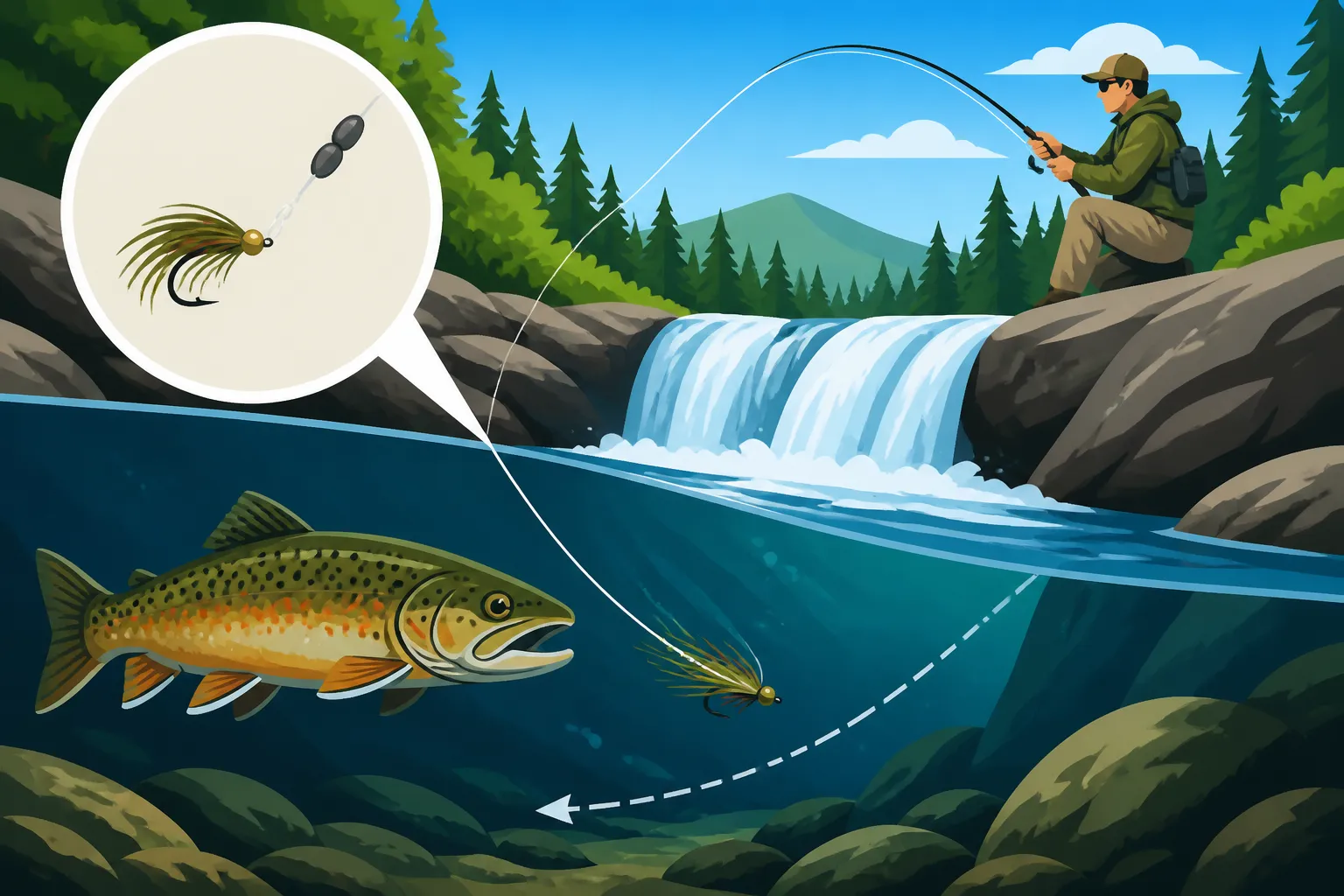
Best technique for fishing a plunge pool
Plunge pools, those churning, dark pockets of water at the base of waterfalls or rapids in New Hampshire's rivers, can be incredibly intimidating for anglers. The sheer power of the water, the spray, and the often slippery, treacherous footing can make them seem unfishable. But tucked within those roiling depths are often some of the biggest, most aggressive fish in the river, seeking refuge and an easy meal. This guide will walk you through the most effective techniques to safely and successfully unlock the fishing potential of these dynamic natural features.
Understanding the Dynamics of a Plunge Pool
Before you even think about casting, it's crucial to understand what makes a plunge pool such a magnet for fish and, conversely, such a challenge for anglers. These aren't just random deep spots; they are complex ecosystems shaped by the powerful forces of moving water.
What Defines a Plunge Pool?
A plunge pool is essentially a deep depression carved out of the riverbed by the intense erosive force of falling or rapidly flowing water. Think of a waterfall cascading down, or a series of rapids culminating in a deep, swirling cauldron. The water that plunges into these pools creates a highly oxygenated, turbulent environment. This constant agitation scours out a deeper section, often forming distinct current lines, eddies, and calm pockets within the main flow. You'll notice the water is often darker, concealing its true depth, and the currents can be surprisingly strong, even if the surface appears somewhat uniform. This depth and turbulence are key to their allure for fish.
These pools are dynamic; their exact shape and character can change with water levels and over time as the river continues its work. What might be a small, manageable plunge pool during a dry spell could become an unfishable torrent after heavy rains, making observation and caution paramount. Always remember that the power of moving water is immense and should be respected.
Why Fish Love Plunge Pools
Fish are incredibly efficient creatures, always looking for the path of least resistance when it comes to expending energy, especially in a river environment. Plunge pools offer a perfect combination of shelter, food, and oxygen, making them prime real estate.
Firstly, the deep water provides cover from predators, both aerial and terrestrial. It also offers a thermal refuge; in summer, deeper water stays cooler, and in winter, it can be slightly warmer and less prone to freezing. Secondly, the very turbulence that creates the plunge pool acts as a conveyor belt for food. Invertebrates, dislodged from upstream rocks, and even smaller baitfish or terrestrial insects that fall into the current are funneled into these pools. The fish can sit in the calmer "cushions" or eddy lines adjacent to the main current, waiting for meals to be delivered right to them without having to fight the main flow constantly.
Lastly, the aeration from the plunging water super-saturates the pool with oxygen. This is particularly vital during warmer months when oxygen levels in shallower, slower-moving parts of the river can drop, making the plunge pool an oxygen rich sanctuary. Trout, especially, thrive in these highly oxygenated environments, which is why plunge pools are often some of the Best trout ponds in New Hampshire and rivers.
Essential Gear for Plunge Pool Fishing Success
Fishing plunge pools effectively means being prepared with the right equipment. It's not just about having a sturdy rod; it's about having gear that can stand up to the unique challenges of powerful currents, deep water, and potentially large, strong fish.
Rods, Reels, and Line: The Power Trio
When tackling plunge pools, you're often dealing with powerful currents and potentially larger, stronger fish that have adapted to this environment. A flimsy ultralight setup might be fun for small panfish, but it won't cut it here.
For spin fishing, a medium to medium-heavy action rod, usually in the 6.5 to 7.5-foot range, offers the backbone you'll need to cast heavier lures and turn a fish in a strong current. Pair this with a reliable spinning reel that has a smooth, strong drag system. You'll want to spool it with a braided line (10-20 lb test) for its sensitivity and strength, backed with a fluorocarbon leader (6-10 lb test) for its abrasion resistance and invisibility underwater. Fluorocarbon is excellent for these applications as it sinks, helping your lure get down in the current. If you're looking for specific recommendations, you can find a wide array of options for Best Fishing Rods for New Hampshire Lakes and rivers on platforms like Amazon, often with reviews that can guide your choice.
Fly anglers targeting plunge pools will likely benefit from a 6 to 8-weight fly rod. This heavier setup allows you to cast larger, weighted flies and nymphs, and provides the leverage needed to land strong fish. A weight-forward or shooting head fly line will help punch through wind and get your presentation into the deeper, faster water. Again, a stout leader and tippet (0X-2X) are essential to withstand the fight and potential snags. You might also want to explore options for Best Fly Rods for New Hampshire Trout Streams that offer a bit more power.
Lures and Baits of Choice for Deep Water
Getting your offering down to where the fish are holding in a plunge pool requires lures and baits with some heft, or methods that overcome the current.
- Jigs: Heavy jigs (1/8 oz to 1/2 oz or more, depending on current) tipped with soft plastics (grubs, tubes, swimbaits) or even natural bait like worms are incredibly effective. The weight helps them sink quickly, and you can work them vertically or with a short, controlled drift. Darker colors like black, brown, and olive often work well, mimicking dislodged insects or crayfish.
- Spinners & Spoons: Heavier inline spinners or casting spoons can be effective, especially when cast upstream and allowed to swing through the pool. The flash and vibration can trigger aggressive strikes. Look for models designed for strong current. These can also be found on Amazon, where you can compare different brands and weights. You might want to try an Best inline spinner for stream trout in a larger size for these conditions.
- Worms and Natural Baits: A good old nightcrawler or garden worm, fished on a weighted hook or under a float, can be deadly. The natural scent and action are hard for fish to resist. Consider rigging them on a Carolina rig or a drop shot to keep them near the bottom in the current.
- Flies (Nymphs & Streamers): For fly anglers, heavy nymphs (like stoneflies, caddis pupae, or even egg patterns) with split shot or weighted streamers (Woolly Buggers, Sculpin patterns) are the go-to. The goal is to get the fly deep and allow it to tumble naturally with the current. This is a great way to mimic the natural food sources that the current delivers. Knowing How to fish a wooly bugger for trout effectively can be a game-changer in these spots.
Wading and Safety Gear
Safety is absolutely paramount when fishing plunge pools. The slippery rocks, strong currents, and often deep, cold water present real hazards. Never underestimate the power of the river.
- Waders and Boots: Chest waders are essential, not just for staying dry but for providing a layer of insulation in cold water. More importantly, investing in high-quality wading boots with good ankle support and grippy soles (felt or rubber with studs) is non-negotiable. The rocks around plunge pools are often slick with algae or moss. Many anglers find the Best wading boots for rocky streams on Amazon by reading reviews and comparing features.
- Wading Staff: A sturdy wading staff, preferably collapsible, acts as a third point of contact and can literally be a lifesaver. It helps you maintain balance, probe depth before stepping, and brace yourself against strong currents. Learning to use a Best wading staff for fast mountain streams can greatly enhance your safety and confidence.
- Personal Flotation Device (PFD): While perhaps not worn constantly by all river anglers, a PFD (life jacket) is a smart choice, especially if you're exploring new or particularly turbulent plunge pools. It offers peace of mind and could be critical in an unexpected fall.
- First Aid Kit: Always carry a small, waterproof first aid kit. Slips and falls are common, and a minor cut or scrape can become a big problem if not addressed quickly.
- Communication: Fish with a buddy if possible. If alone, let someone know where you're going and when you expect to return. Cell service can be spotty in remote river areas, so don't rely solely on your phone.
Mastering the Techniques for Plunge Pool Domination
Fishing a plunge pool isn't just about throwing a lure in and hoping for the best. It requires observation, precise presentation, and an understanding of how fish relate to the dynamic water.
Reading the Water: Deciphering the Current
The first and most critical step is to observe the water before making a cast. Plunge pools, despite their chaotic appearance, have distinct features that reveal where fish might be holding and how to present your offering.
Look for current seams, which are the visible lines where fast water meets slower water. Fish often sit just off these seams, darting out to grab food that drifts by. Eddies, those swirling pockets of water that move in a circular motion, are also prime holding areas, particularly at their edges where they interact with the main flow. Pay attention to any discernible calm pockets or "cushions" immediately downstream of larger rocks or obstructions within the pool itself. These are places where fish can rest out of the main current while still being in a position to ambush food. Sometimes, a subtle boil or back-current on the surface indicates a deep hole or an underwater obstruction where a fish might be hunkering down. Understanding How to fish a run and pool trout stream effectively really starts with this careful observation.
The Art of Presentation: Getting Your Lure to the Strike Zone
Once you've identified potential holding lies, the challenge is getting your lure or bait into that strike zone and keeping it there for long enough to entice a bite, all while battling strong currents.
- Upstream Cast and Controlled Drift: This is a go-to technique for both spin and fly fishing. Cast your lure or fly well upstream of your target area, allowing it to sink as it drifts downstream. The goal is to achieve a "dead drift" – where your lure moves at the same speed as the current, appearing natural and unattached. For spin anglers, this might mean opening your bail and letting line peel off, or using a very slow retrieve that matches the current speed. For fly anglers, it means careful line management, mending your line upstream to avoid drag.
- Vertical Jigging: In deeper, less turbulent plunge pools, a vertical jigging presentation can be highly effective. Position yourself directly over or slightly upstream of the target area, drop a heavy jig, and work it up and down with short, sharp lifts and drops. This mimics a wounded baitfish or a struggling insect.
- Swinging Lures/Flies: Casting across or slightly downstream of the plunge pool and allowing your lure or streamer to swing through the current can trigger aggressive strikes. As the lure swings, it often changes depth and speed, which can be irresistible to an opportunistic fish. This works particularly well with spoons, heavy spinners, and large streamer patterns like a Woolly Bugger.
Specific Methodologies for Plunge Pools
Different angling styles offer different advantages when fishing plunge pools.
Spin Fishing Tactics
Spin fishing offers versatility and the ability to cast heavier offerings. When using jigs, remember that the "feel" is everything. You want to feel the jig tap the bottom occasionally but not constantly snag. Experiment with jig weights to find the lightest one that still gets to the bottom. For spinners and spoons, a steady retrieve that allows the blade to flutter or the spoon to wobble naturally is key. Pay close attention to your retrieve speed; often, a slower retrieve works best in these deeper, turbulent areas. Don't be afraid to let your lure sink for a few seconds before starting your retrieve, allowing it to get deeper into the column where fish might be.
Fly Fishing Strategies
Fly fishing plunge pools often centers around nymphing or streamer fishing. For nymphing, a strong indicator and enough weight (split shot or heavily weighted flies) are critical to getting your flies down. Use a longer leader and tippet combination to allow for a more natural drift. For streamers, casting slightly upstream and stripping the fly back in erratic bursts can imitate a fleeing baitfish. Focus on getting the fly deep and into the slower currents along the edges. Remember, the fish here are often aggressive, so don't shy away from larger, more imitative patterns. Fly fishing these spots can be challenging but incredibly rewarding for those who hone their Fly Fishing for Trout in New Hampshire skills.
Bait Fishing Approaches
Bait fishing in plunge pools can be surprisingly effective due to the natural scent and appeal. A popular method is to use a simple bottom rig with an egg sinker above a swivel, leading to a short leader with a hook and bait. This allows the bait to bounce along the bottom, mimicking food washed downstream. Alternatively, a float (bobber) rig can be used if you can manage to keep your bait in the desired drift path without the float being constantly pulled under by currents. The key is to present the bait naturally, letting the current do most of the work, but keeping just enough tension on your line to feel a bite.
Navigating the Challenges and Maximizing Your Catch
Plunge pools present unique challenges that go beyond just getting a lure to the right depth. Understanding these and knowing how to adapt can significantly increase your success and safety.
Dealing with Strong Currents and Eddies
The very feature that makes plunge pools attractive to fish – the strong current – is also what makes them tricky to fish. Managing your line is crucial. Too much slack, and you won't feel subtle bites; too much tension, and your lure will be unnaturally pulled by the current.
For spin anglers, a slightly heavier lure than you might typically use can help cut through the current. Practice mending your line (lifting your rod tip and flipping a loop of line upstream) to allow your lure a more natural, drag-free drift. When a fish hits in strong current, they feel much larger than they are, but a stout rod and strong drag are your allies. Don't be afraid to let them run a bit, especially if they are headed downstream, but try to guide them towards calmer water when possible. This kind of finesse is also important when considering Wading Techniques for New Hampshire Trout Streams.
Fly anglers must master the art of the stack mend or parachute mend to keep their indicator and flies drifting naturally. Longer rods help with line control over complex currents. Often, you'll want to cast slightly upstream and across, letting the line fall in an S-curve, which buys you time for a drag-free drift before the current pulls your line tight. If you're struggling to get your flies deep enough, don't hesitate to add more split shot or use heavier-weighted flies.
Safe Access and Exit: Prioritizing Your Well-being
Accessing plunge pools can often involve scrambling over slippery, uneven rocks or navigating steep banks. Always scout your approach carefully. Look for stable footing, and avoid mossy or algal-covered rocks, which are extremely slick. If you need to wade, use your wading staff to test depth and stability with every step.
Never jump or make quick movements. Move slowly and deliberately. If the water is too swift or the footing too precarious, it’s always best to find another spot or fish from the bank. Exiting the area can be just as challenging, especially if you're tired or carrying a fish. Always have a clear path in mind for retreating if conditions change or you hook into a substantial fish that leads you into a dangerous area. Remember, no fish is worth risking your safety.
Adapting to Water Levels
New Hampshire rivers are notorious for fluctuating water levels, and plunge pools are particularly sensitive to these changes.
- High Water: After heavy rains or snowmelt, rivers swell, and plunge pools can become raging torrents, often too powerful and dangerous to fish effectively. The water will be murky, making it hard for fish to see your presentation, and currents will be extreme. This is typically a time to avoid plunge pools and seek out calmer, slower-moving backwaters or tributaries. However, a slightly elevated but clearing water level might draw fish out of the very center of the current, making the edges of the pool or the immediate downstream areas more productive as fish seek slightly calmer water while remaining close to the food source. You'll need to know your New Hampshire Fishing Regulations Explained regardless of water level, as closures can occur.
- Low Water: During dry spells, plunge pools can become even more crucial fish refuges. The reduced flow might concentrate fish, making them easier to locate. However, low, clear water also makes fish warier. You'll need to use lighter lines, smaller lures or flies, and exceptionally stealthy approaches. Longer casts and fishing from a distance become more important to avoid spooking fish. In very low water, some plunge pools might become stagnant or too shallow to hold larger fish, so observation is key.
Remember to consult official sources for specific regulations, as water levels can sometimes trigger special rules or closures. Understanding these variations and adapting your approach will make you a more versatile and successful angler.
Table of Plunge Pool Fishing Techniques
Here's a quick comparison of popular techniques to help you decide which approach might work best for your next plunge pool adventure:
| Technique | Target Fish (Typical) | Best Conditions | Lure/Bait Type | Key Advantage | Primary Challenge |
|---|---|---|---|---|---|
| Upstream Nymphing | Trout, Salmon | Clear to Slightly Stained | Weighted Nymphs, Indicators | Natural drift, highly effective for wary fish | Achieving drag-free drift in complex currents |
| Spin Casting Jigs | Bass, Trout, Pickerel | Moderate to Stained Water | Jigs (soft plastic, hair), Grubs | Excellent depth control, covers water | Snags, maintaining feel in strong current |
| Drift Fishing Bait | All Species | Any (especially after rain) | Worms, PowerBait, Minnows | Natural scent, effective for passive fish | Keeping bait on bottom without constant snags |
| Streamer Fishing | Aggressive Trout, Bass | Clear to Stained Water | Streamers (Woolly Buggers, Sculpin) | Imitates baitfish, triggers reaction strikes | Requires active retrieve, can be tiring |
| Casting Spoons/Spinners | Trout, Bass, Salmon | Moderate to Clear Water | Heavy Spoons, Inline Spinners | Covers water quickly, strong vibration/flash | Maintaining depth, retrieving without snagging |
Fishing plunge pools in New Hampshire offers some of the most exciting and rewarding experiences a freshwater angler can have. They demand respect for the river's power, a keen eye for subtle clues, and a willingness to adapt your techniques. But with the right gear, a focus on safety, and a thoughtful approach, you can unlock the secrets of these powerful, fish-filled pockets of water. Tight lines out there!
Disclaimer
This article is for general informational purposes only and does not constitute professional advice. Laws, prices and regulations vary by location and change over time. Consult a qualified professional for guidance on your specific situation.