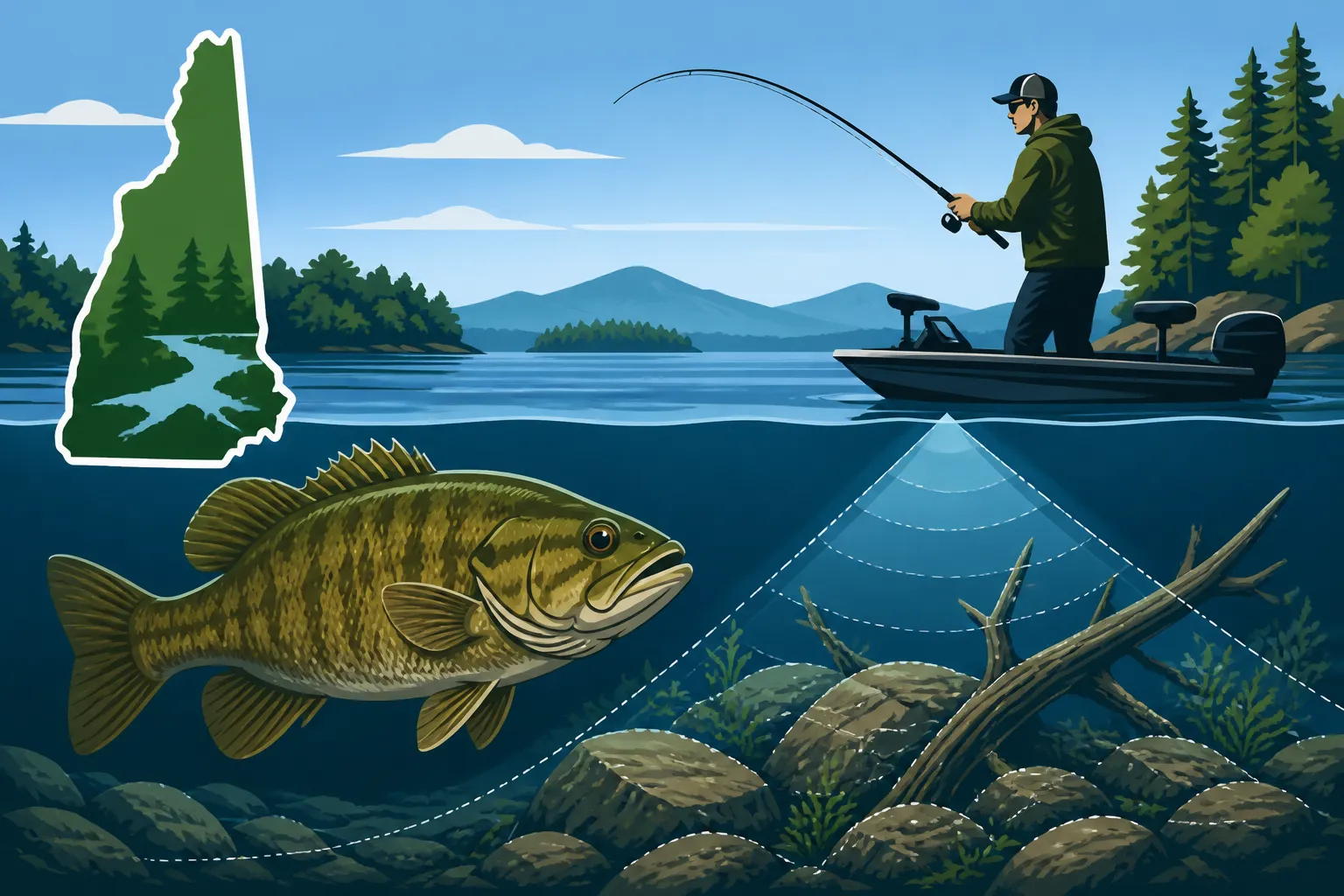
How to read structure for smallmouth on Winnipesaukee
Lake Winnipesaukee, a majestic jewel in New Hampshire's crown, offers incredible smallmouth bass fishing, but its sheer size and complex underwater landscape can feel utterly overwhelming. Many anglers spend countless hours just idling around, hoping to stumble upon a school, often leaving frustrated and empty-handed. This guide is dedicated to cutting through that confusion, helping you systematically decipher the lake's structure to consistently locate and catch those elusive bronzebacks.
Understanding Lake Winnipesaukee's Unique Underwater Topography
Winnipesaukee isn't just a big lake; it's a deep, cold, glacially-carved basin with a diverse and incredibly varied underwater terrain. Its origins as a glacial lake mean it's characterized by dramatic depth changes, numerous islands, submerged rock piles, and vast expanses of deep water. This unique geology creates a complex mosaic of habitats that smallmouth bass, true to their name, absolutely love. Without understanding this fundamental layout, you're essentially fishing blind.
The Glacial Legacy: How Ice Shaped the Lake Bed
Imagine colossal sheets of ice grinding their way across the landscape, carving out depressions and piling up debris. That's essentially how Winnipesaukee was formed. This process left behind a lake bed that is far from uniform. You'll find sharp drop-offs, deep trenches, and what geologists call "drumlins" – elongated hills formed by glacial ice, which often translate into submerged humps and reefs. These features aren't random; they're the direct result of ancient ice movements, and smallmouth bass have adapted to use every nook and cranny. Understanding this history helps you anticipate where certain types of structure might be found. For instance, areas with exposed bedrock on shore are likely to continue as rocky bottom or ledges underwater, extending far out into the lake.
Depth and Clarity: Influencing Smallmouth Movement
Winnipesaukee is notoriously deep in many areas, with sections plunging over 180 feet. Its waters are also exceptionally clear, especially during the summer months. These two factors profoundly influence how smallmouth bass behave and where they position themselves. In clear water, smallmouth rely heavily on structure for cover and ambush points, as they can be easily spotted by predators or prey in open water. They might hug tight to a rock face or position themselves on the deeper side of a hump. The depth allows them to retreat to cooler, more stable temperatures when surface waters warm up, making deep structure critical during the dog days of summer. Learning to read these depth contours on your map is like getting an x-ray of the lake floor, revealing the highways and hideouts of these opportunistic predators. For more on navigating these depths, check out our guide on how to read structure for smallmouth on Winnipesaukee.
Deciphering Prime Smallmouth Structure
When we talk about "structure" for smallmouth bass on Winnipesaukee, we're really talking about anything that breaks up the uniform bottom and provides cover, current breaks, or ambush points. These fish are masters of using their environment to their advantage, and if you can identify these key elements, you're halfway to a successful day.
Rocky Points and Ledges: Classic Smallmouth Havens
Picture a shoreline point that juts out into the lake. Underwater, this point often continues, extending into a finger-like projection or a dramatic ledge. These are absolute magnets for smallmouth. Why? Because they serve as natural highways for baitfish moving along the shore or deeper water, and they provide excellent ambush points. Smallmouth will often sit on the "down-current" side of a point or along the edge of a drop-off, waiting for an unsuspecting school of perch or smelt to swim by. Look for points that have a steep taper into deeper water, especially those with jagged rocks or boulders. These features provide cover and places for crayfish, a prime smallmouth food source, to hide. When fishing these areas, targeting different depths along the point can reveal where the fish are holding based on light penetration, water temperature, and baitfish activity.
Humps, Reefs, and Shoals: Underwater Gold Mines
Away from the shoreline, Winnipesaukee is littered with countless submerged humps, reefs, and shoals. These are essentially underwater islands or elevated sections of the lake bed that rise significantly from the surrounding deeper water. They can be anywhere from a few feet to 50 feet below the surface. These offshore structures are prime locations for smallmouth because they concentrate baitfish, act as navigational waypoints, and provide critical spawning and feeding areas. A hump might rise from 80 feet of water to 20 feet, creating a dramatic vertical change that fish love to relate to. The key to finding productive humps and reefs is often through your electronics and detailed lake maps. Once you find one, pay attention to its "cap" (the shallowest part), its "shoulders" (the sloping sides), and the deep-water access points around it. Each part can hold fish depending on the season and time of day. Exploring the best fishing lakes in New Hampshire often involves finding these underwater features.
Transition Zones and Submerged Cover: The Subtle Indicators
Sometimes, the most productive structure isn't a dramatic point or a towering hump, but rather a subtle change in the bottom composition or the presence of isolated submerged cover. Smallmouth often patrol "transition zones" – areas where a rocky bottom gives way to sand, or where a weed bed meets open water. These changes, though less dramatic visually, represent ecological shifts where different forage might be found, creating attractive feeding lanes. Additionally, don't overlook isolated pieces of submerged cover like large boulders, sunken timber, or even old docks. A single rock in an otherwise flat, sandy area can act like a smallmouth lighthouse, attracting fish that use it as a solitary ambush point or a resting spot. These subtle forms of structure are often overlooked but can yield some of the biggest and most consistent catches if you know how to identify them, sometimes with the help of powerful fish finders available on Amazon.
Employing Electronics to Uncover Hidden Gems
Gone are the days of just guessing where the fish are on a lake as vast as Winnipesaukee. Modern marine electronics are an absolute game-changer, acting as your eyes beneath the surface. Learning to properly use and interpret your fish finder and GPS mapping system is arguably the most crucial skill for consistently locating smallmouth bass on this lake.
Sonar and Down Imaging: Seeing Beneath the Surface
Your traditional 2D sonar and Down Imaging (also sometimes called DownScan or DownVision) are your primary tools for seeing what's directly beneath your boat.
- 2D Sonar: This gives you a broader cone of coverage, showing fish as arches and bottom structure. A hard, jagged bottom (like rocks) will show a thick, intense return, while a soft, muddy bottom will appear thinner and less defined. Learn to distinguish between baitfish clouds, individual smallmouth arches, and the bottom contour itself. Look for fish positioned just above the bottom or tight to vertical structure.
- Down Imaging: This technology provides a picture-like view, almost like a photographic image of the bottom. It excels at showing distinct objects, allowing you to differentiate a sunken tree from a pile of rocks, or even see individual boulders on a ledge. Use Down Imaging to confirm what your 2D sonar is telling you and to get a clearer understanding of the exact composition of the structure. When you mark fish on your 2D, switch to Down Imaging to see if they are suspended over, in, or around specific cover. Knowing the difference between these types of fish finders can significantly improve your success rate for specific species like lake trout, too.
Side Imaging and GPS Mapping: Expanding Your Underwater View
While traditional sonar looks directly down, Side Imaging (or SideScan) literally "looks" to the sides of your boat, scanning out up to several hundred feet on either side. This is where the true power of structure fishing on Winnipesaukee comes alive.
- Side Imaging: Instead of just seeing what's directly under you, Side Imaging paints a wide, detailed picture of the bottom, revealing humps, rock piles, old foundations, and even individual fish arches far off to your port or starboard. You can quickly scan vast areas to identify promising structures that you would have otherwise driven right over. Look for shadows cast by objects – the longer the shadow, the taller the object. This helps you identify submerged trees, large boulders, or steep ledges without ever having to be directly over them.
- GPS Mapping: Modern fish finders come preloaded with incredibly detailed contour maps, often from companies like Lakemaster or Navionics. These maps, which you can often purchase separately or get updates for on platforms like Amazon, show depth contours, navigation hazards, and sometimes even highlight specific structure. Combine your Side Imaging discoveries with your GPS map: mark waypoints on intriguing structures, trace contour lines to understand depth changes, and use your track log to systematically cover an area. Identifying sharp bends in contour lines or areas where they "bunch up" often indicates a rapid depth change or a steep break, which are prime smallmouth spots. Utilizing your GPS to precisely navigate back to these marked spots after you've identified them is key to effective fishing. Mastering the use of the Best Fish Finders for New Hampshire Lakes will make a huge difference.
Seasonal Patterns and Smallmouth Behavior
Smallmouth bass are highly attuned to seasonal changes, primarily driven by water temperature and their spawning cycle. Their relationship with structure shifts throughout the year, meaning what works in spring might be completely ineffective in summer. Adapting your approach to these patterns is crucial for consistent success.
Spring to Summer Transitions: Following the Bait
As the ice retreats and spring waters begin to warm, smallmouth move from their deep wintering holes to shallower, more accessible structures. This period encompasses their pre-spawn, spawn, and post-spawn phases.
- Pre-Spawn (Late April – May): Smallmouth will stage on rocky points, humps, and ledges adjacent to deeper water, often in the 10-30 foot range. They are looking for warmer water and actively feeding to build energy for spawning. This is a time when they can be very aggressive, hitting jerkbaits, hair jigs, and tube baits. They’ll often use these structures as staging areas before moving onto the actual spawning grounds.
- Spawn (Late May – Mid-June): Once water temperatures consistently hit the low to mid-60s, smallmouth move into shallower, protected areas, often with gravel or small rock bottoms, typically 5-15 feet deep. While technically "structure," these are more about specific bottom composition. They'll create nests (redds) on flat spots near rocks or submerged timber. During this sensitive period, catching them can be easy, but many anglers practice catch-and-release to protect the spawn. Knowing the New Hampshire Bass Catch-and-Release Season, Explained is important.
- Post-Spawn (Late June): After the spawn, males guard the fry for a period before moving off. Both sexes can be sluggish immediately after spawning but quickly resume feeding. They'll often move slightly deeper to secondary points, humps, and ledges, recouping energy. Topwater baits and soft plastics can be very effective as they become more active.
Fall Feast to Winter Retreat: Adapting Your Approach
As summer fades and autumn arrives, smallmouth enter a crucial feeding period, gorging themselves to build fat reserves for the long winter. Then, as temperatures drop, they begin their migration to deeper water.
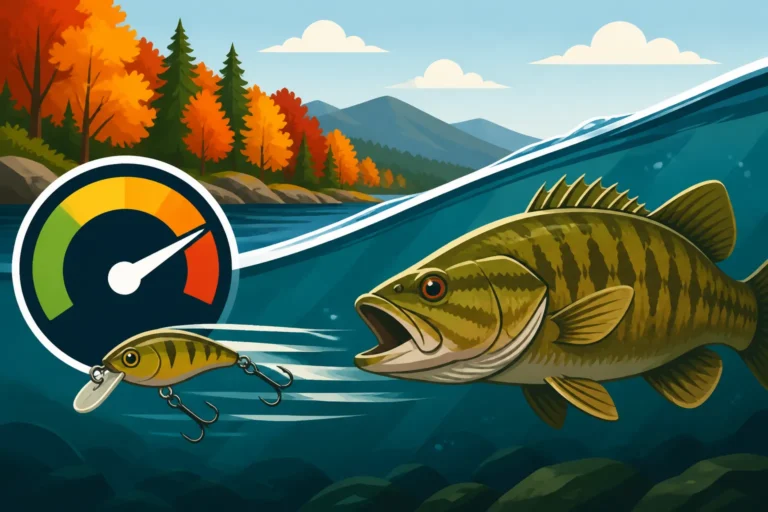
- Fall (September – November): This is often considered one of the best times for trophy smallmouth on Winnipesaukee. Fish are incredibly aggressive and will actively hunt baitfish on offshore humps, deep points, and ledges, often in 20-50 feet of water. They follow the schools of smelt and perch. Crankbaits, swimbaits, and blade baits are excellent choices for covering water and triggering strikes. Look for structures that provide clear access to deep water where baitfish can escape. The Best Time of Year to Fish in New Hampshire for smallmouth often falls within this period.
- Winter (December – March): Once the lake freezes over, smallmouth retreat to deep basins, often suspending over structure or relating tightly to the bottom in 40-80+ feet of water. Ice fishing for smallmouth on Winnipesaukee requires specialized techniques like vertical jigging with small spoons or blade baits. They become less active, but a well-presented bait can still draw a bite. Locating them requires good electronics to find these deep-water haunts and suspended schools of baitfish.
Here's a quick reference for common smallmouth structure:
| Structure Type | Description | Why Smallmouth Use It | Ideal Depth Range (Feet) | Best Lure Types |
|---|---|---|---|---|
| Rocky Points | Land features extending underwater, often with sharp drop-offs. | Ambush points, current breaks, baitfish highways. | 10-40 | Jerkbaits, Tubes, Jigs, Drop Shot |
| Ledges/Breaks | Steep vertical changes in the lake bed. | Cover, temperature changes, deep-water access, ambush points. | 20-60 | Jigs, Drop Shot, Spoons, Deep Cranks |
| Humps/Reefs | Submerged elevated areas rising from deeper water. | Concentrate baitfish, navigational waypoints, spawning areas. | 15-50 (top), deeper edges | Crankbaits, Spoons, Jigs, Swimbaits |
| Shoals/Flats | Large, relatively flat, shallow areas, often rocky. | Spawning grounds, feeding areas for crayfish/insects. | 5-20 | Topwater (early/late), Tubes, Grubs, Spinnerbaits |
| Transition Zones | Areas where bottom composition changes (rock to sand, weeds to rock). | Concentrate different forage, subtle ambush points. | 5-30 | Tubes, Jigs, Finesse Worms, Spinnerbaits |
| Submerged Timber/Boulders | Isolated trees, logs, or large rocks underwater. | Prime cover, ambush points for solitary fish. | 5-40 | Jig & Pig, Texas Rig, Drop Shot, Swimbaits |
Learning to read structure for smallmouth on Winnipesaukee is a lifelong pursuit, but by understanding the lake's geology, focusing on key structural elements, and effectively using your electronics, you'll dramatically increase your success. Remember, these fish are always relating to something, and your job is to figure out what that something is on any given day. Mastering the use of Best Tackle for New Hampshire Smallmouth Bass will definitely complement your understanding of structure. Don't forget to review New Hampshire Bass Limits and Slot Rules before heading out.
Disclaimer
The information provided in this guide is for general informational purposes only and is subject to change. Always consult the most current New Hampshire Fish and Game Department regulations before fishing. Fishing conditions and fish behavior can vary greatly, and personal safety should always be your top priority.