Best surf fishing spots on the New Hampshire seacoast
Finding reliable surf fishing spots along New Hampshire's relatively short, often rocky coastline can be a real head-scratcher for many anglers. It’s not like the endless sandy beaches of other states, and knowing where to set up shop for a productive day of casting into the waves can make all the difference. This comprehensive guide will walk you through the top locations, essential gear, and crucial techniques to help you successfully target fish from the Granite State's scenic shores.
Understanding the New Hampshire Seacoast for Surf Fishing
New Hampshire's coastline, though brief compared to its neighbors, offers a surprising diversity for surf anglers, from long sandy stretches to rocky outcrops and jetty systems. This unique mix presents both challenges and fantastic opportunities for those willing to explore. Understanding the lay of the land, or rather, the lay of the sand and rock, is the first step to a successful outing.
Coastal Geography and Its Challenges
Unlike the vast, continuous sandy beaches you might find further south, New Hampshire’s seacoast often features a mix of rocky shorelines, small coves, and shorter sandy beaches punctuated by jetties and estuaries. This varied terrain means you need to be versatile in your approach. On one hand, the rocks and structure provide excellent cover and ambush points for predatory fish like striped bass. On the other, they can be a nightmare for snagging lines and losing expensive tackle. Wading boots with good grip are non-negotiable, and understanding tidal movements becomes even more critical when navigating uneven, slippery rocks. The short nature of the coast means access points are concentrated, and popular spots can sometimes get crowded, especially during peak striper season.
Target Species from the Surf
When you're casting your line into the Atlantic waters off New Hampshire, you're primarily hoping to tangle with striped bass. These powerful, migratory fish are the undisputed kings of the surf here, especially from late spring through early fall. They cruise the coastline, often lurking in the turbulent waters around structure or patrolling the edges of baitfish schools. Beyond stripers, you might also encounter mackerel, especially earlier in the season, which are a blast to catch on lighter tackle and make excellent bait. Flounder can sometimes be found in sandy bottom areas, particularly in calmer waters, and during late summer, bluefish occasionally make an appearance, bringing their aggressive strikes and sharp teeth to the mix. Less common but not unheard of are cod and even pollock if you can cast far enough or fish deeper rocky areas.
Prime Surf Fishing Destinations on the New Hampshire Seacoast
While the New Hampshire coastline might be compact, it boasts several fantastic surf fishing locations, each with its own character and best approach. Knowing these spots and what they offer will greatly enhance your fishing experience.
Hampton Beach State Park
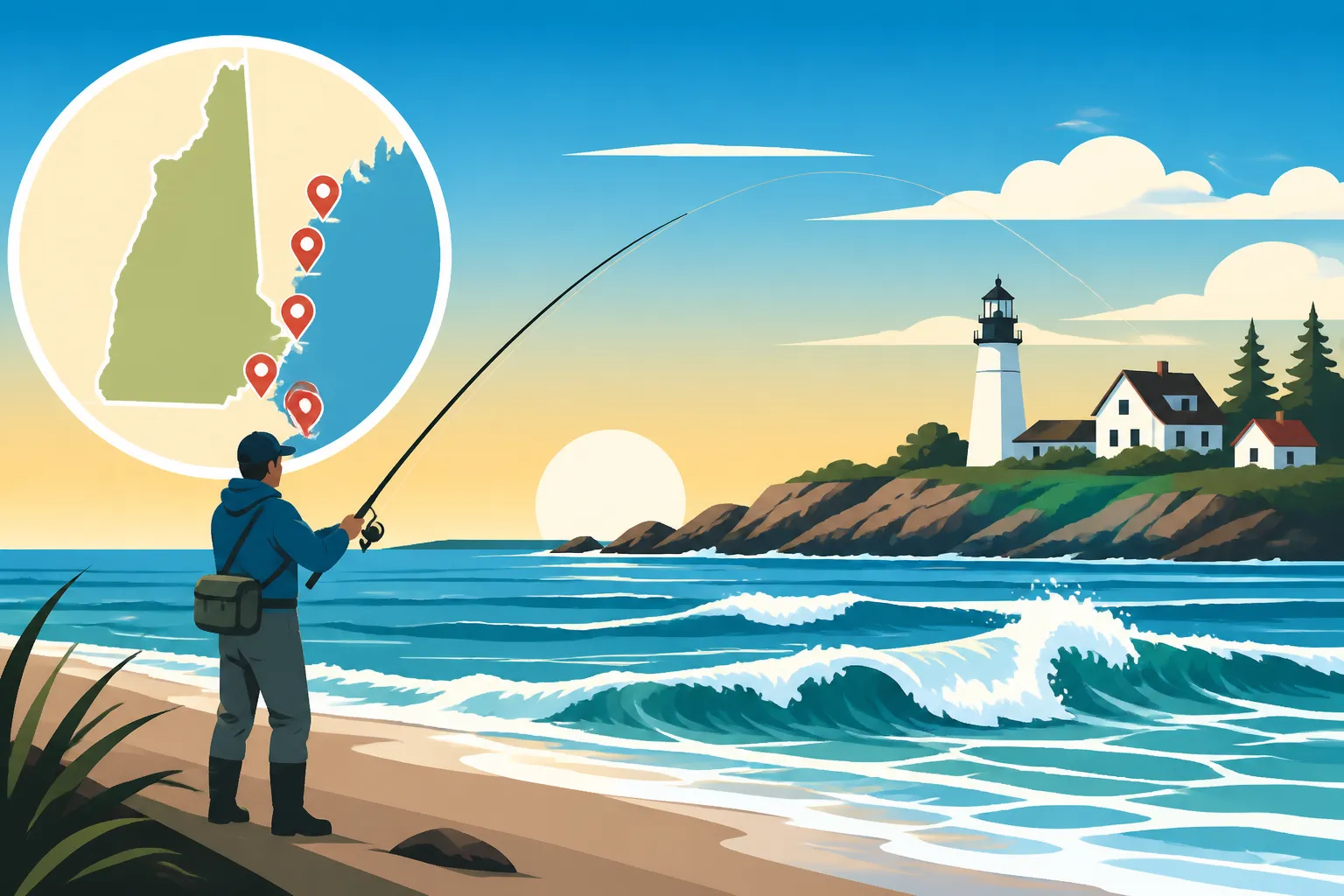
Hampton Beach State Park is arguably the most popular and accessible surf fishing destination in New Hampshire, and for good reason. It features a long, sandy beach that stretches for miles, interrupted by the mighty Hampton Harbor Inlet. This combination provides excellent opportunities for anglers looking to cast into open water. The sandy bottom here is prime territory for baitfish, which in turn attracts hungry striped bass.
You'll often find anglers spread out along the main beach, especially during the early morning or late evening hours, casting various lures or soaking bait. The key here is mobility and understanding the ebb and flow of the tide. Stripers will often move closer to shore during higher tides, especially around sunrise and sunset, foraging in the shallower water. The jetty at the mouth of Hampton Harbor, though often crowded, is a hotspot for stripers. Its rocky structure creates current breaks and deeper pockets where fish love to ambush prey. Just remember to be courteous to other anglers and mindful of the footing on the jetty rocks. This area is also popular for clamming, so ensure you're aware of any harvest closures or regulations for shellfish if you're planning to dig bait.
Rye Beaches and Jetties
Moving north from Hampton, the town of Rye offers a different surf fishing experience, characterized by a mix of smaller sandy coves and prominent rocky sections, often interspersed with robust jetties. Popular spots include Jenness Beach, Wallis Sands State Park, and Odiorne Point State Park. These areas are excellent for anglers who prefer fishing around structure.
At places like Jenness Beach and Wallis Sands, you’ll find sandy stretches perfect for traditional surf casting, but the real advantage here lies in the rocky points and small jetties that extend into the ocean. These structures create rips and currents that are irresistible to striped bass. Anglers often target the white water where waves crash over rocks, as this churned-up water disorients baitfish and provides cover for predators. Fishing these areas with artificial lures like bucktail jigs, soft plastics, or even live mackerel can be incredibly effective. Remember that the bottom can be very rocky in many of these areas, so bring extra tackle to account for snags. Parking can be an issue at some Rye beaches, especially during summer weekends, so planning an early morning or late evening trip is often advisable.
Odiorne Point State Park
For those who truly love fishing hard structure and are willing to navigate a more rugged environment, Odiorne Point State Park in Rye offers a unique and highly productive surf fishing experience. This park is less about long sandy casts and more about working rocky shorelines, tidal pools, and exposed ledges. The diverse habitat here means there are countless nooks and crannies for striped bass to hide.
Anglers at Odiorne often use medium-heavy spinning gear to cast jigs, topwater lures, or live bait into the rips and channels created by the tides flowing around the rocks. It’s a place where stealth and precision casting can pay off significantly. You might not have the wide-open casting lanes of Hampton Beach, but the abundance of natural structure can concentrate fish. Exploring different areas within the park at various tide stages is key to figuring out where the fish are holding. Always be extremely cautious on the slippery rocks, especially when wet, and watch out for rapidly changing tides that could cut off your access back to shore. Consider hiring a local guide if you're new to this kind of rugged coastal fishing; you can often find options through services like FishingBooker that list local charter captains familiar with these specific zones.
Here's a quick comparison of these prime spots:
| Location | Primary Bottom Type | Key Features | Primary Target Species | Best Conditions | Notes |
|---|---|---|---|---|---|
| Hampton Beach | Sand, some rock | Long beach, Hampton Harbor Inlet Jetty | Striped Bass, Flounder, Mackerel | High tide, Dawn/Dusk, Incoming/Outgoing tide | Excellent accessibility, can be crowded. |
| Jenness/Wallis Sands | Sand & Rock | Jetties, rocky points, sandy coves | Striped Bass, Bluefish | Moving tides, especially around structure | Moderate crowds, parking can be tight. |
| Odiorne Point | Heavy Rock | Ledges, tidal pools, strong current breaks | Striped Bass, occasional Pollock | All tides, but be mindful of footing | Rugged terrain, stealth and precision rewarded. |
Essential Gear and Techniques for New Hampshire Surf Fishing
Having the right equipment and understanding how to use it effectively is paramount for successful surf fishing on the New Hampshire coast. It’s a demanding environment, and your gear needs to stand up to the challenge.
Rods, Reels, and Line for the Surf
For New Hampshire surf fishing, you'll want a rod that can handle long casts and powerful fish. A medium-heavy to heavy action spinning rod, typically between 9 to 11 feet in length, is a good starting point. This length provides the leverage needed to cast heavier lures or bait rigs over considerable distances and battle strong currents and fish. Pair this with a robust spinning reel in the 5000 to 8000 series, capable of holding a good amount of line and possessing a strong drag system. When considering your setup, remember that Best Spinning Rods for Smallmouth Bass might give you ideas for a versatile freshwater setup, but for the surf, you need something significantly more robust to stand up to saltwater conditions and larger, stronger fish.
For line, braided line is a popular choice among surf anglers due to its strength-to-diameter ratio and lack of stretch, which enhances sensitivity and casting distance. A 30 to 50 lb test braided line is common. It’s crucial to use a fluorocarbon leader of at least 20-30 lb test, typically 3-6 feet long, connected to your main line with a strong knot like an FG knot or a double uni. The leader provides abrasion resistance against rocks and sharp teeth and is less visible to fish. If you're wondering about specific leader characteristics, checking out information like Best Leader for Striped Bass in Great Bay can provide more detailed insights into effective leader setups for powerful saltwater species.
Baits, Lures, and Rigs
The choice of bait and lure can heavily influence your success. For live bait, fresh seaworms (sandworms or bloodworms) and fresh clams are perennial favorites for striped bass. These can be fished on a fish-finder rig or a high-low rig, which keeps the bait near the bottom where stripers often feed. Live mackerel, if you can catch them (or buy them), are also irresistible to large stripers. Chunk bait, such as mackerel or bunker, can also be highly effective, especially when fished at night. For anglers keen on catching their own bait, consider local bait and tackle shops like Kittery Trading Post in Kittery, ME (just over the border) or local vendors who specialize in fresh marine baits.
When it comes to artificials, a variety of lures work well from the surf. Bucktail jigs, often tipped with a piece of pork rind or a soft plastic trailer, are versatile and can imitate many types of baitfish. Soft plastic swimbaits, like those from Z-Man or Bass Kandy Delights, rigged on a weighted swimbait hook, are incredibly effective for mimicking injured baitfish. Topwater lures, such as poppers or walk-the-dog style baits, create a commotion on the surface that can trigger aggressive strikes, especially during low light conditions or when stripers are actively feeding on the surface. Metal casting spoons, like Kastmasters or Hopkins lures, are excellent for long casts and imitating small baitfish like silversides or mackerel. For specific bait guidance, even articles like Best Live Bait for Smallmouth Bass can offer foundational knowledge on presenting natural offerings, although the specific species targeted will differ.
Reading the Water and Tides
Understanding how to "read" the water is a skill that separates successful surf anglers from those who struggle. Look for areas where baitfish might congregate or where predatory fish might ambush prey. This includes areas of current breaks behind jetties, rips where two currents meet, or troughs and depressions in the sandy bottom that run parallel to the beach. These subtle features can hold significant numbers of fish.
Tides play a monumental role in surf fishing success. Generally, the incoming and outgoing tides are the most productive, as the moving water stirs up bait and creates feeding opportunities. Many anglers find the last two hours of the incoming tide and the first two hours of the outgoing tide to be particularly fruitful. Pay attention to lunar cycles; new and full moons often bring stronger tides, which can mean more active fish. You can check local tide charts online or at bait and tackle shops. For planning your fishing trip with precise timing, services like FishingBooker often include tide information in their charter listings, giving you an idea of favorable conditions.
Navigating Regulations and Staying Safe on the Seacoast
Before you even think about casting a line, it's essential to understand the local regulations and prioritize your safety. The ocean environment is beautiful but can be unforgiving.
New Hampshire Fishing Regulations for Saltwater
First and foremost, you will need a New Hampshire saltwater fishing license. Unlike some states, New Hampshire requires a license for all saltwater anglers 16 years of age and older, even when fishing from shore. You can easily purchase these online through the New Hampshire Fish and Game Department website, or at authorized license agents throughout the state. For a complete understanding of what's required, you can refer to our guide, New Hampshire Saltwater Fishing License, Explained. Always keep your license with you while fishing, either a printed copy or a digital version on your phone.
Beyond the license, it’s crucial to be aware of species-specific regulations. Striped bass, for instance, have strict size and bag limits that can change annually. As of recent regulations, there is often a slot limit for striped bass, meaning you can only keep fish within a specific length range (e.g., 28 to less than 31 inches), and a limit of one fish per person per day. These regulations are designed to protect the fish population and ensure sustainable fishing for future generations. Ignorance of the law is not an excuse, and penalties for violations can be steep. You can find up-to-date regulations by checking the New Hampshire Fish and Game website or by consulting resources like New Hampshire Fishing Regulations Explained. Pay particular attention to specific rules for popular areas like Great Bay, which might have additional restrictions on species like striped bass; understanding Great Bay Striped Bass Fishing Rules is key if you plan to fish those estuary systems.
Safety First: Tides, Waves, and Footing
Safety should always be your top priority when surf fishing. The ocean can be unpredictable, and conditions can change rapidly. Always keep an eye on the waves and the tide. Rogue waves can easily knock you off your feet, especially when fishing from jetties or rocky shorelines. If you're wading, be mindful of the outgoing tide, as it can create strong undertows that are difficult to fight.
Good footwear is critical. Wading boots with excellent grip are essential for navigating slippery rocks and uneven terrain. Many experienced surf anglers also use a wading staff for added stability, especially when moving over slick areas or in strong currents. Always tell someone where you are going and when you expect to return. Consider wearing a life jacket, especially if you plan to fish from jetties or in areas with strong currents. While primarily aimed at boaters, understanding Life Jacket Requirements for New Hampshire Boaters reinforces the importance of personal flotation devices in any marine environment. If you're bringing a cooler for your catch or bait, make sure it's secure; a sturdy Best Cooler for a Fishing Boat type cooler can also serve as a makeshift seat or gear holder on the beach, but ensure it won't float away with the tide.
Finally, be respectful of the environment and other anglers. Pack out everything you pack in, and dispose of fishing line and other waste properly. Releasing fish carefully, especially those outside the slot limit or those you don't intend to keep, ensures they survive to fight another day. If you're fishing near swimmers or sunbathers, always be courteous and cast safely.
Disclaimer
Please remember that fishing regulations and conditions can change rapidly. Always consult the official New Hampshire Fish and Game Department website or relevant local authorities for the most current information before heading out on your fishing trip. Stay safe and enjoy the beautiful New Hampshire seacoast!