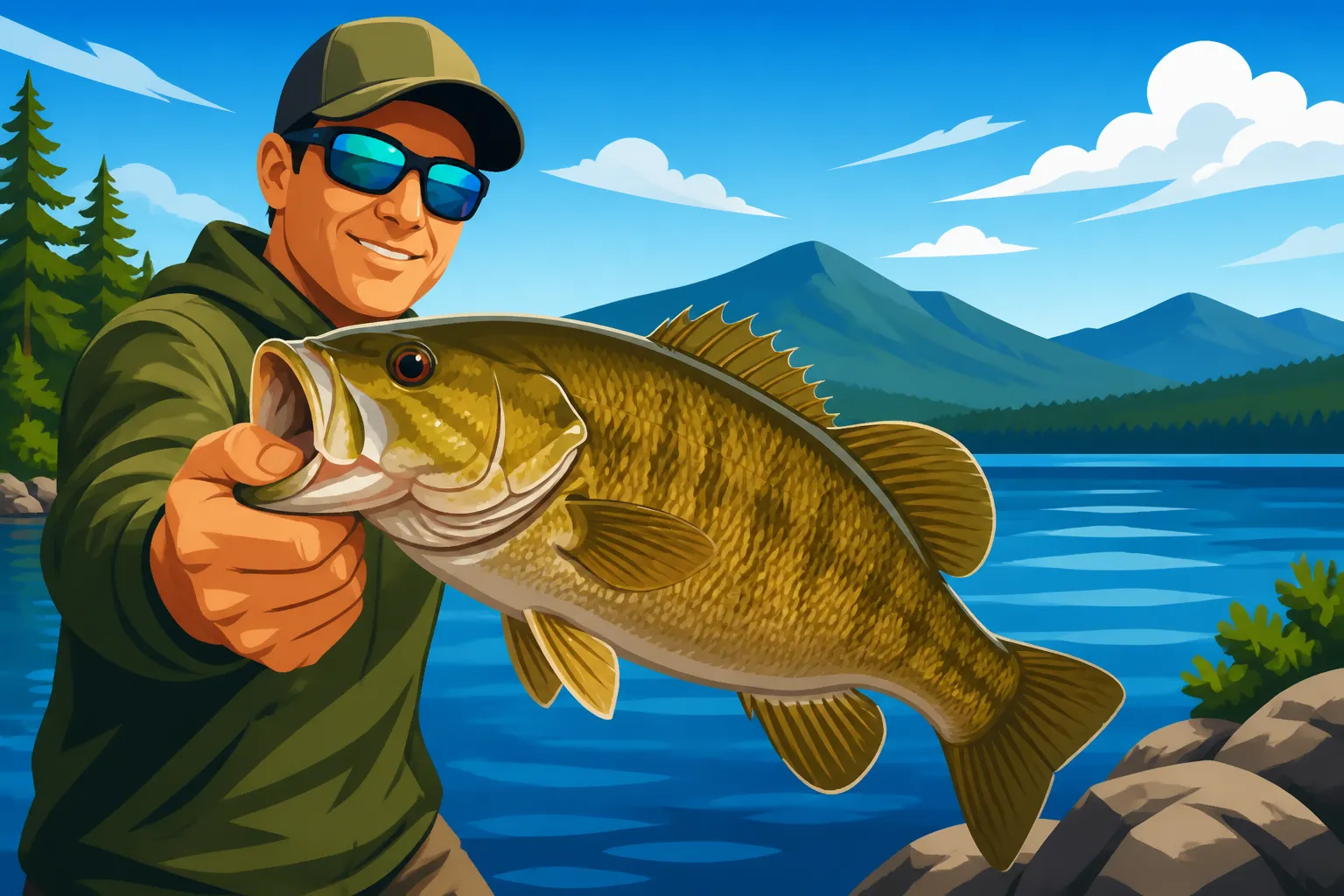
Newfound Lake smallmouth bass fishing
Newfound Lake, with its deep, clear waters and stunning backdrop, is a true gem for anglers in New Hampshire. However, many find themselves staring at its vast expanse, wondering where to even begin their search for its legendary smallmouth bass. This guide aims to cut through that frustration, providing you with detailed, actionable insights into understanding the unique smallmouth habitat of Newfound Lake, pinpointing the prime locations, mastering effective techniques, and adapting your strategy to the changing seasons, ensuring your next trip is a successful one.
Understanding Newfound Lake's Unique Smallmouth Habitat
Newfound Lake isn't just another pretty body of water; it's a deep, oligotrophic lake, meaning it's incredibly clear and relatively nutrient-poor, which dictates a lot about how its fish, especially smallmouth bass, behave. Knowing these fundamental characteristics is the first step to unlocking its secrets.
The Deep, Clear Water Advantage
The clarity of Newfound Lake's water is a double-edged sword for smallmouth bass. On one hand, it allows them to see prey from a distance, making them efficient hunters. On the other hand, it means they are more visible to predators, including eagles, ospreys, and even larger lake trout. This increased visibility makes smallmouth in Newfound often more wary and prone to seeking cover or deeper water, especially during bright conditions. You'll find them holding tight to structure or suspending over deeper pockets, using the depths as a refuge. This also means long leaders and fluorocarbon line are often critical for successful presentations, as fish have ample time to inspect your offering.
Structure and Submerged Features
Newfound Lake is carved out of glacial rock, leading to a fantastic array of rocky structures that smallmouth absolutely adore. These fish are true rock dwellers, and Newfound delivers. You'll want to focus on:
- Rocky Points: These extend out into the lake, often acting as highways for smallmouth moving between shallower feeding areas and deeper refuge. The points can have gradual slopes or dramatic drop-offs, both of which are productive.
- Ledges and Drop-offs: Where the bottom abruptly changes depth, creating a vertical face or a steep slope, smallmouth will congregate. These transition zones are ambush points where bass can sit just out of sight and dart out to strike.
- Humps and Submerged Islands: These are underwater high spots that can be magnets for baitfish, which in turn attract smallmouth. Often, these humps are found in the middle of deeper basins and require good electronics to locate and fish effectively.
- Boulder Fields: Areas with scattered rocks and boulders provide endless nooks and crannies for smallmouth to hide and ambush prey. These areas often appear featureless on a basic map but can be extremely productive if you know how to read your sonar.
Forage Base and Its Influence
The smallmouth bass in Newfound Lake are opportunistic predators, but their diet heavily influences where and when you'll find them. The primary forage species here include rainbow smelt, yellow perch, and various crayfish.
- Rainbow Smelt: These silvery baitfish are a cornerstone of the Newfound ecosystem, especially for game fish like landlocked salmon, lake trout, and yes, smallmouth. Smelt often school in open water or near deep drop-offs, particularly in cooler months, drawing smallmouth with them. Understanding their movements is key to finding active bass.
- Yellow Perch: Abundant in Newfound, yellow perch provide a steady food source. Smallmouth will often hunt perch in shallower weed lines (where they exist in limited patches) or rocky transition areas.
- Crayfish: These bottom-dwelling crustaceans are a favorite food, especially in rocky areas. When crayfish are active, smallmouth will be found scrounging the bottom, making presentations like jigs and creature baits highly effective.
Prime Locations for Newfound Lake Smallmouth Bass
Finding the fish in a lake as large and varied as Newfound can feel like searching for a needle in a haystack. However, by understanding the typical smallmouth behavior and relating it to specific areas, you can significantly narrow your search.
Northern Shoals and Rocky Points
The northern end of Newfound Lake, particularly around the towns of Hebron and Bristol, offers some fantastic smallmouth habitat. These areas are characterized by extensive rocky shoals, prominent points that jut out into the deeper water, and countless boulders.
- Near Hebron: The points and rocky shoreline extending from Hebron towards the middle of the lake are prime territory. Look for areas where the depth drops quickly from 5-10 feet down to 20-30 feet. These ledges provide perfect ambush points. During the spring and fall, smallmouth will often patrol these shallower sections before retreating to deeper water as summer progresses. You might even find good action around the public access points or town beach areas early in the season, though boat access will open up more opportunities.
- Bristol Area Points: The eastern shoreline near Bristol also has several prominent points and rocky outcroppings that hold smallmouth. Consider areas near the Pasquaney Power Boat Club or the sections just north of the state park boat launch. These points often have scattered deep boulders that offer excellent cover. When fishing these areas, it's wise to cast parallel to the shoreline or fan-cast the points, paying close attention to any sudden changes in depth or bottom composition on your fish finder.
The Mid-Lake Humps and Drop-offs
As you venture further into the middle of Newfound Lake, the character changes dramatically. The depths plunge, and the smallmouth become more structure-oriented, often suspending or relating to offshore features. This is where your electronics become indispensable.
- Offshore Humps: There are several submerged humps and reefs in the central basin of Newfound Lake that consistently hold smallmouth, particularly during the summer months when fish move deep to escape warm surface temperatures. These humps might rise from 80-100 feet to 30-40 feet, creating significant current breaks and attracting schools of smelt. A good way to find these is to slowly idle around with your sonar, looking for sharp contours or baitfish schools congregating near these elevated structures. Once you locate a hump, focus on the edges, the peak, and any irregular features on its sides.
- Deep Water Edges: Beyond the main points, Newfound has extensive main lake basin edges that drop into very deep water. Smallmouth will often cruise these edges, especially where there are subtle changes in bottom composition or scattered rocks. These fish might be holding at 40-60 feet, making vertical presentations or slow trolling effective. Platforms like FishingBooker can help you find experienced local fishing guides who know the exact coordinates of these hidden gems, significantly shortening your learning curve on such a vast lake.
Southern Basins and Transition Zones
The southern end of Newfound Lake, while perhaps less dramatic in topography than the north, still offers excellent smallmouth fishing, particularly in its more expansive basins and where shallower areas transition to deeper water.
- Newfound Lake State Park Area: The waters around the state park, while popular, can still be very productive. Look for the transition areas where the shallower sandy flats meet the rocky drop-offs. Smallmouth will often stage here, particularly during pre-spawn or in the fall when baitfish move into these areas. The rocky points just outside the main swimming areas can also be very good.
- Eastern Shoreline Coves: The eastern side of the lake has some more gradual slopes and smaller coves, often with a mix of rock and some sparse aquatic vegetation in protected areas. While not as prevalent as in other New Hampshire lakes, any patches of healthy submerged weeds can hold smallmouth. These coves are excellent for kayak fishing, allowing anglers to quietly explore without disturbing the fish.
Effective Techniques for Newfound Lake Smallmouth
The crystal-clear water and deep structure of Newfound Lake demand specific techniques to consistently catch its smallmouth bass. Finesse is often the name of the game, but don't count out power fishing, especially when conditions are right.
Finesse Fishing in Clear Water
When fishing Newfound Lake, stealth and subtle presentations are often paramount. Smallmouth here are often spooky due to the clarity of the water and light fishing pressure in some areas.
- Drop-Shotting: This is a classic clear-water smallmouth technique. A small, soft plastic bait (like a minnow imitation or worm) is tied above a weight, allowing it to suspend tantalizingly off the bottom. It's incredibly effective for targeting fish holding on ledges, humps, or suspended over deeper water. The key is to use light line, a sensitive rod, and subtle twitches. Consider a setup with a good quality fluorocarbon leader, which is nearly invisible underwater.
- Ned Rig: This simple, yet incredibly effective, presentation involves a small mushroom-shaped jig head paired with a short, buoyant soft plastic stick bait. It stands straight up on the bottom, presenting a very natural, non-threatening profile. Cast it out, let it sink, and slowly drag or hop it along the bottom. It's deadly when smallmouth are finicky or feeding on crayfish.
- Shaky Head: Similar to a Ned rig, a shaky head jig uses a lead head with a screw-lock keeper for a worm or creature bait. It excels at probing rocky bottoms and maintaining bottom contact. The subtle "shaking" motion imparted by the angler can entice strikes from even the most lethargic bass. These finesse presentations are excellent for getting strikes on deep structure where other baits might be ignored.
Trolling and Power Fishing Tactics
While finesse rules in many situations, there are times when covering water quickly or eliciting a reaction strike is the way to go.
- Trolling with Crankbaits: Especially during the summer months when smallmouth might be suspended or spread out, trolling can be very effective. Use deep-diving crankbaits that can reach depths of 15-30 feet, matching the color to the local forage (silver/blue for smelt, brown/green for perch or crayfish). Vary your speed and direction, focusing on those mid-lake humps and deep-water points. Some anglers use downriggers to precisely control the depth of their lures, especially for deeper holding fish. You can learn more about specific techniques in guides like Trolling Techniques for New Hampshire Lake Trout which can be adapted for smallmouth.
- Jerkbaits: For active fish, particularly in spring and fall when they are shallower, jerkbaits are hard to beat. Their erratic, darting action perfectly mimics a wounded baitfish. Experiment with different retrieve patterns – long pauses can often be the trigger for a strike. Colors like chrome/blue, natural shad, or perch patterns are usually effective.
- Swimbaits: Both hard-bodied and soft plastic swimbaits can be deadly for targeting larger smallmouth. Rig soft swimbaits on weighted swimbait hooks or jig heads and retrieve them steadily through potential ambush zones, mimicking a cruising baitfish. Hard swimbaits offer a more realistic profile and action, often drawing aggressive strikes.
Live Bait and Soft Plastics
Sometimes, nothing beats the real thing, or a close imitation. Live bait can be incredibly effective, especially for wary smallmouth.
- Live Shiners or Smelt: Fished on a plain hook with a split shot or under a float, live bait is irresistible to smallmouth. Present them near structure or suspended at the depth where you're seeing fish on your sonar. A good source for live bait can be local tackle shops around the lake.
- Worms and Crayfish: While not always readily available live, plastic imitations of worms and crayfish are staples. Texas-rigged worms or Carolina-rigged creature baits are excellent for working along the bottom in rocky areas. The slow, natural fall of these baits can often trigger strikes when fish are less aggressive. Remember to check the New Hampshire Bass Limits and Slot Rules to ensure you are compliant with current regulations when fishing with live bait or keeping your catch.
Seasonal Strategies for Smallmouth Success
Newfound Lake smallmouth bass behavior shifts dramatically with the seasons, driven primarily by water temperature and food availability. Adapting your approach to these changes is crucial for consistent success.
Spring: Pre-Spawn and Spawn
Spring is an exciting time for smallmouth anglers on Newfound. As the ice recedes and water temperatures begin to climb, smallmouth move shallower, preparing to spawn.
- Pre-Spawn (Late April – May): After ice-out, smallmouth will stage in deeper areas adjacent to their eventual spawning grounds, which are usually rocky flats, points, and protected coves. Water temperatures in the low 40s to low 50s Fahrenheit will trigger this movement. They are actively feeding to build energy for the spawn. Jerkbaits, spinnerbaits, and swimbaits can be very effective as fish are aggressive. Look for depths of 10-25 feet initially, gradually moving shallower.
- Spawn (Late May – Mid-June): When water temperatures hit the mid-50s to low 60s, smallmouth will move onto rocky beds in 5-20 feet of water. During the spawn, fish are often highly visible and protective of their nests. It's crucial to practice catch and release at this time to protect the fishery. Gentle presentations like a tube jig or a small grub can draw strikes from territorial males, but avoid excessively harassing spawning fish. After the spawn, males remain on the beds for a short period, guarding the fry. For detailed information on specific season dates, refer to New Hampshire Fishing Season Dates and Closures.
Summer: Deep Water and Thermocline
Summer fishing on Newfound Lake often means going deep, especially during the heat of July and August.
- Thermocline Fishing (June – August): Newfound Lake develops a distinct thermocline – a layer of water where the temperature changes rapidly. Smallmouth, like many other cold-water species, will often suspend or relate to structure just above or within this thermocline, seeking cooler, oxygenated water. This could mean depths of 25-60 feet or even more, depending on the lake's conditions. This is prime time for deep-water presentations like drop-shotting, vertical jigging with spoons or tubes, and deep trolling with crankbaits or live bait.
- Offshore Structure: Focus on those mid-lake humps, rock piles, and deep points. Electronics are your best friend here. Look for baitfish schools and arcs indicating bass nearby. Early morning and late evening can bring fish shallower to feed, but for most of the day, they'll be in the depths. Remember that Best Water Temperature Smallmouth Bass Prefer is typically in the 60s, so they will seek that depth range.
Fall: Feeding Frenzy
As water temperatures cool in September and October, smallmouth bass in Newfound Lake go on a serious feeding binge, stocking up for winter.
- Transition to Shallower Water (September – October): Fish begin to move back shallower, often holding on the same rocky points, ledges, and humps they occupied in spring, but now with a voracious appetite. They'll actively chase down baitfish. Crankbaits, jerkbaits, and swimbaits become highly effective again. The bites can be incredibly aggressive during this time.
- Late Fall (November – December): As temperatures continue to drop, smallmouth will move to deeper wintering grounds, often stacking up on deep breaks, main lake points, and channel swings. Vertical jigging with heavy spoons or blade baits, and slow presentations with Ned rigs or drop shots, can still entice strikes. The fishing can be tough, but the rewards can be large, as fish are typically in excellent condition.
Here's a quick reference table for your Newfound Lake smallmouth bass adventure:
| Season | Target Depth Range | Preferred Techniques | Recommended Lures/Baits | Key Locations |
|---|---|---|---|---|
| Spring | 5-25 feet | Jerkbaits, Spinnerbaits, Jigs | Chrome/Blue Jerkbaits, White Spinnerbaits, Green Pumpkin Jigs, Live Shiners | Rocky Points, Shallow Flats, Protected Coves |
| Summer | 25-60+ feet | Drop-shot, Vertical Jigging, Trolling | Small Soft Plastics, Spoons, Deep-Diving Crankbaits, Live Smelt | Mid-Lake Humps, Deep Drop-offs, Thermocline |
| Fall | 10-40 feet | Crankbaits, Jerkbaits, Swimbaits, Jigs | Perch/Shad Crankbaits, Natural Jerkbaits, Swimbait on Jighead | Rocky Points, Ledges, Offshore Humps |
Before you head out, make sure you have the right gear. A good quality Best Spinning Rods for Smallmouth Bass and Best Fish Finders for New Hampshire Lakes can make a huge difference in locating and landing these beautiful fish. If you're planning a trip and need a reliable boat rental or want to connect with a local guide, platforms like FishingBooker can offer a wide selection and ensure you're well-equipped for Newfound Lake's challenges. FishingBooker lists a number of experienced captains who specialize in New Hampshire's deep-water fisheries, including Newfound Lake. Remember to always fish responsibly and check the latest regulations from the New Hampshire Fish and Game Department.
Disclaimer
Please be aware that fishing conditions and regulations can change rapidly. Always consult the most current New Hampshire Fish and Game Department regulations, advisories, and licensing requirements before heading out on the water. This guide provides general information and recommendations for informational purposes only.