How deep landlocked salmon go in summer
The warm embrace of a New Hampshire summer is a beautiful thing for most of us, but for landlocked salmon, it signals a significant shift. As lake waters heat up, these magnificent fish don't just magically disappear; they simply go where the conditions are more favorable. If you've ever found yourself wondering why your usual spots aren't producing in July or August, chances are you're not fishing at the right depth. This guide will dive deep into understanding where landlocked salmon retreat during the hottest months and how you can adapt your strategy to find them.
Understanding Landlocked Salmon Behavior in New Hampshire Summers
When the sun beats down on New Hampshire's pristine lakes, a remarkable phenomenon occurs beneath the surface: thermal stratification. This is the key to understanding where landlocked salmon disappear to during the warmer months. These fish are incredibly sensitive to water temperature, and as surface waters heat up, they have to seek out cooler, oxygen-rich environments.
The Thermocline and Salmon's Preferred Temperature Range
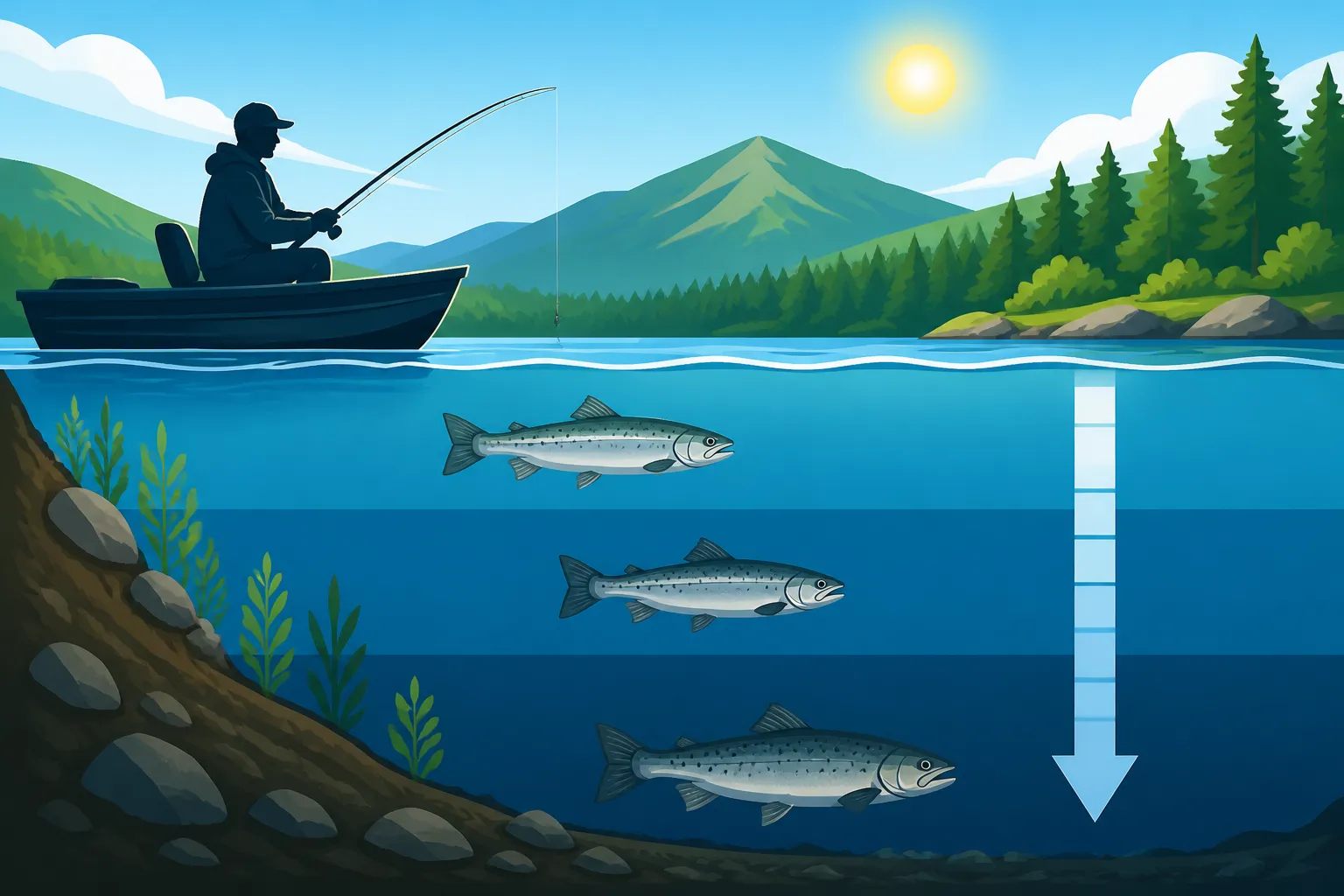
Imagine a lake as a layered cake. In the summer, the top layer, called the epilimnion, gets warm from the sun. Below that, there's a distinct layer where the temperature drops rapidly – this is the thermocline. And even deeper, there's the hypolimnion, which is cold and usually has lower oxygen levels. Landlocked salmon are cold-water fish, and they thrive in a very specific temperature range, typically between 50 and 60 degrees Fahrenheit (10-15 degrees Celsius). Anything much warmer than that and they start to get stressed; anything too cold and their metabolism slows.
During the summer, this ideal temperature range is almost exclusively found within or just above the thermocline. The epilimnion becomes too warm, and the deep, dark hypolimnion can sometimes become oxygen-depleted, especially in smaller or less oxygenated lakes. So, salmon are effectively squeezed into a relatively narrow band of water. This creates a challenging but predictable scenario for anglers: find the thermocline, and you're likely to find the salmon. It’s a constant quest for that perfect balance of temperature and oxygen that dictates Landlocked Salmon Life Cycle in New Hampshire Lakes.
Forage Fish and Depth Migration
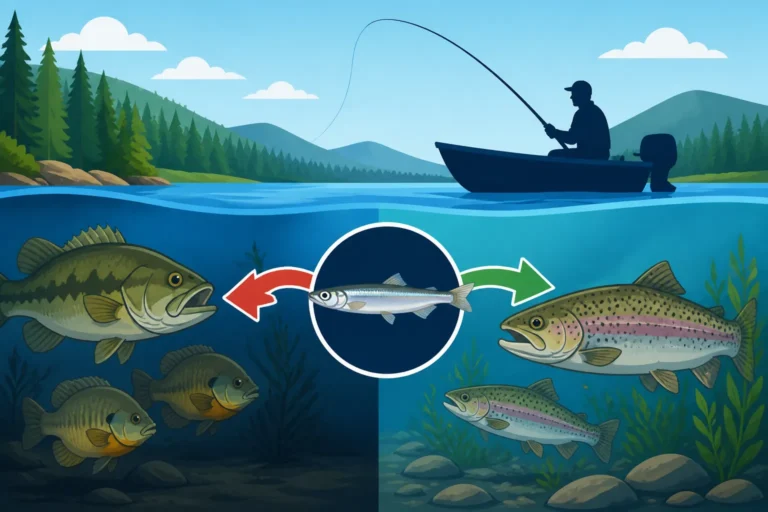
It's not just about temperature; it's also about dinner! Landlocked salmon are predators, and their primary food source in many New Hampshire lakes is rainbow smelt. And guess what? Smelt are also cold-water fish. As the lake stratifies, smelt will also follow the cooler water and congregate near the thermocline, often just below or within it. This creates a double whammy for salmon: they're seeking comfortable temperatures, and they're also following their food source.
If you can locate schools of smelt on your fish finder, you're usually in the right ballpark for salmon. These baitfish will often form dense schools, appearing as large, cloudy masses or distinct arcs on your sonar screen. The salmon will be lurking nearby, either right in the middle of the school, or patrolling the edges, ready to ambush. Understanding What landlocked salmon eat in New Hampshire lakes is crucial for predicting their movements.
Seasonal Changes in Salmon Depth
While summer is generally a time for deep fishing, the exact depth isn't static. It evolves as the season progresses. In early summer, just after ice-out and before the lakes fully stratify, salmon might still be found relatively shallow, perhaps 15-30 feet deep, especially in the mornings or evenings. But as July rolls in and the heat intensifies, the thermocline establishes firmly, pushing salmon deeper. By mid-August, when surface temperatures are at their peak, salmon might be forced into their deepest holding patterns. Late summer can sometimes see them move up slightly during cooler weather or overcast days, but generally, the trend is towards deeper water. This seasonal depth migration is part of New Hampshire Fishing Seasons by Month.
Typical Summer Depths for Landlocked Salmon in New Hampshire Lakes
So, we know they go deep, but how deep are we talking? This isn't a "one size fits all" answer, as every lake is different, but there are definitely general ranges and patterns to consider. It's about thinking like a salmon and understanding their refuge.
Early Summer June-July Depth Ranges
As June transitions into July, especially after a period of warm weather, the lake's thermal layers become more defined. In early summer, you can often find landlocked salmon anywhere from 30 to 60 feet deep. At this time, the thermocline is usually settling in, and oxygen levels are still good across a wide range of depths.
Consider Lake Winnipesaukee, for example. In early June, you might start by targeting areas around 20-30 feet, especially near rocky points or submerged humps where baitfish might be congregating after the initial post-spawn activity. By the end of June or early July, as the surface approaches 70 degrees Fahrenheit, you'll need to drop your presentations to the 40-50 foot range, or even deeper if the sun is high and bright. The salmon are actively feeding and still have a bit more room to roam before the deepest summer heat really sets in. This is when they might be a bit more aggressive, making them a prime target if you're using the right trolling setups.
Mid-to-Late Summer August-September Depth Ranges
This is when New Hampshire lakes really feel the summer heat, and landlocked salmon go to their deepest sanctuaries. From late July through August and into early September, you'll often find these fish much deeper, typically ranging from 50 to 80 feet, sometimes even 90 or 100 feet in very deep lakes with good oxygen.
Take Squam Lake or Sunapee Lake, known for their trophy landlocked salmon. In August, the surface temperatures can easily hit the mid-70s or even 80s. This compresses the salmon into a tighter zone. You'll likely be looking for that 50-degree band, which could be 60 feet down. Not only are they seeking cooler temperatures, but they're also following their primary forage, the smelt, which also head to these depths. Anglers targeting these deep-water fish often rely heavily on downriggers to precisely present lures at these specific depths. You can find excellent downrigger options and accessories on platforms like Amazon, making it easier to equip yourself for deep-water trolling.
Factors Influencing Daily Depth Adjustments
Even within these general summer ranges, salmon don't stay at one exact depth all day, every day. Several factors can cause them to make subtle adjustments:
- Light Penetration: On bright, sunny days, salmon tend to go a bit deeper to escape the intense sunlight. Conversely, on overcast days or during low-light periods like dawn and dusk, they might move up a bit shallower, perhaps 10-20 feet higher than their midday average.
- Weather Changes: A sudden cold front can sometimes temporarily push baitfish, and thus salmon, slightly shallower as the entire water column experiences a minor shift. Heavy rains can also introduce cooler surface water, though this usually doesn't impact deep-dwelling salmon much.
- Boat Traffic: Heavy boat traffic, especially during peak summer weekends, can sometimes push fish deeper or into less disturbed areas. Salmon are wary fish, and constant noise and shadows can make them uncomfortable.
- Oxygen Levels: While the thermocline generally has good oxygen, in some lakes, prolonged stratification can lead to oxygen depletion in the very deepest parts of the hypolimnion. If this happens, salmon will avoid those areas, effectively further compressing their habitable zone. This is why knowing your lake's unique characteristics is so important when planning How to Catch Landlocked Salmon in New Hampshire.
Locating Summer Landlocked Salmon in New Hampshire
Finding landlocked salmon in their deep summer haunts isn't a game of guesswork; it's a science. Modern technology and a keen understanding of lake topography are your best friends.
Using Sonar and Fish Finders
Your fish finder is arguably the most critical piece of equipment for summer salmon fishing. It's your eyes underwater. When you're out on a New Hampshire lake, you're not just looking for fish; you're looking for the thermocline and baitfish.
- Identifying the Thermocline: Most modern fish finders will show you the thermocline as a distinct band on your screen – a darker, more intense line where the temperature changes rapidly. Some high-end units can even display water temperature at various depths. Once you identify this band, you know the general zone where salmon will be holding. Aim to present your lures right in this zone or just above it.
- Locating Baitfish Schools: Look for those tell-tale clouds or arcs of rainbow smelt. These schools can be massive, sometimes hundreds of feet wide. If you find the smelt, the salmon are usually not far behind. Focus your efforts on the edges of these schools or slightly below them, as salmon will often patrol these areas, waiting for an opportunity. Having a quality Best Fish Finders for New Hampshire Lakes can truly make or break your trip. Many anglers purchase reliable units and mounts from Amazon, often with user reviews that can help guide your choice.
Trolling Techniques for Specific Depths
Once you've located the right depth, the challenge shifts to getting your lure down there accurately and keeping it there. This is where specialized trolling gear comes into play.
- Downriggers: These are the most precise tools for deep-water trolling. A downrigger uses a heavy cannonball weight to pull your fishing line down to a specific, adjustable depth. Your lure is then clipped to the cannonball with a release clip. When a fish strikes, the line pops free, and you fight the fish directly without the weight. This allows for incredibly accurate depth control, crucial for targeting salmon in their narrow thermal bands.
- Lead Core Line: This specialized line has a lead core inside a braided nylon sheath, which causes it to sink. The general rule of thumb is that each "color" (usually 10 yards) of lead core sinks approximately 5 feet at a trolling speed of 2-3 mph. So, if you want to fish 50 feet deep, you'd let out 10 colors. It's less precise than a downrigger but very effective for covering a range of depths, especially when combined with longer leaders.
- Weighted Lines and Dipsy Divers: Heavy sinking lines, snap weights, or even specialized diving planes like Dipsy Divers can also help get your lures down. These are often used for shallower deep-water presentations (20-40 feet) or in conjunction with downriggers to cover more of the water column. For those looking to upgrade their arsenal, Best Trolling Gear for New Hampshire Lake Trout often applies well to salmon fishing and many components are readily available on Amazon.
Interpreting Lake Maps and Contours
Before you even launch your boat, spend time studying a detailed lake map, often called a bathymetric chart. These maps show the underwater topography, including depth contours, drop-offs, humps, and submerged islands.
- Deep Water Structure: Salmon love structure, even deep down. Look for underwater points, humps, and sudden changes in depth (like a steep drop-off next to a deep flat). These areas create current breaks and ambush points for salmon, as well as holding areas for baitfish.
- Connectivity: Pay attention to how deep channels connect different areas of the lake. Salmon will use these channels as highways to move between feeding grounds and thermal refuges. Mapping out a trolling pass that follows a deep contour line or crosses a known hump can be incredibly effective. Consider how these features relate to the typical depths for Best Lakes for Trophy Landlocked Salmon in New Hampshire.
Common Mistakes and Advanced Tips for Summer Salmon Fishing
Summer salmon fishing can be incredibly rewarding, but it also presents unique challenges. Avoiding common pitfalls and embracing a few advanced strategies can significantly increase your success rate.
Overlooking the Small Details
Many anglers make the mistake of simply "going deep" without truly understanding the nuances. It's not just about getting your lure down; it's about getting it to the right depth, with the right action, and the right speed.
- Speed is Critical: Salmon are notoriously finicky about trolling speed. Too fast, and your lure might not have the correct action; too slow, and it might not entice a strike. Experiment with speeds between 1.8 and 2.5 mph as a starting point, but always watch your rod tip and consider the lure's intended action. If you're using spoons, they need a certain speed to wobble effectively.
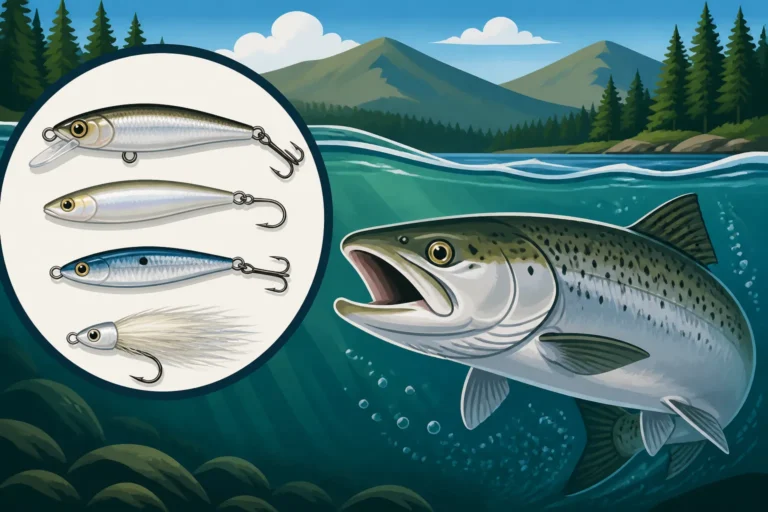
- Lure Selection and Color: While smelt imitations are often key, don't be afraid to experiment. Silver and blue are classic salmon colors, but on overcast days or in stained water, brighter colors like chartreuse or orange can sometimes be more effective. Make sure your lures are running true; a bent spoon or a dodger that's not tracking correctly will significantly reduce your chances.
- Leader Length: When using downriggers or lead core, a longer fluorocarbon leader (15-30 feet) can be crucial. This separates your lure from the main line or the downrigger ball, making it appear more natural to wary salmon. Fluorocarbon is nearly invisible underwater, which is a huge advantage in New Hampshire's clear lake waters.
Adjusting to Conditions
Flexibility is paramount when targeting summer salmon. What worked yesterday might not work today, even if the general depth is similar.
- Temperature Probe: Carrying a water temperature probe is an absolute game-changer. Rather than guessing, you can quickly find the exact depth of the thermocline and the preferred temperature band. If your fish finder doesn't give you precise temps, a simple probe on a weighted line can eliminate much of the guesswork.
- Trial and Error: Don't be afraid to adjust your depth by 5-10 feet in either direction if you're not getting bites. Salmon can be holding precisely on top of the thermocline, in the middle of it, or even just below it, depending on oxygen and baitfish distribution. Experiment with different depths in the same area until you find the sweet spot.
- Targeting Structure: Even deep down, structure matters. Trolling over a submerged hump, along a deep channel edge, or near an underwater point can concentrate fish. These are prime ambush points.
Gear Considerations for Deep Water
Deep water fishing requires specific gear to handle the challenges of depth and the powerful runs of a landlocked salmon.
- Rods and Reels: You'll want medium to medium-heavy action rods with a good backbone for trolling. They need enough give to absorb the shock of a strike but enough power to handle a heavy fish and heavy weights. Reels should have a high line capacity, especially if you're using lead core or fishing very deep. A good quality level wind reel is a popular choice for lead core, while larger spinning or conventional reels are suitable for downriggers.
- Line Choice: Beyond lead core, braided line can be excellent for downriggers because it has no stretch, providing incredible sensitivity and solid hooksets, even at great depths. However, you'll still want a long fluorocarbon leader. For all your specialized deep-water gear, including quality rods, reels, line, and even rod holders for your boat, check out the extensive selection on Amazon.
- Safety Gear: Don't forget safety. Summer fishing means long days on the water. Make sure you have enough water, sunscreen, and proper rain gear if a summer squall rolls in. A comfortable life jacket is also essential, especially if you're alone.
| Summer Period | Typical Depth Range (Feet) | Key Factors | Trolling Speed (MPH) | Recommended Gear |
|---|---|---|---|---|
| Early Summer | 30-60 | Developing thermocline, active feeding | 2.0-2.8 | Downriggers, lead core, weighted line |
| Mid/Late Summer | 50-90+ | Strong thermocline, deep oxygen, baitfish migration | 1.8-2.5 | Downriggers, lead core (more colors) |
| Overcast Days | Can be 10-20 shallower | Reduced light penetration, more active fish | Varies | Depth adjustments based on conditions |
| Bright Sunny Days | Can be 10-20 deeper | Intense light, fish seeking deeper refuge | Varies | Precise depth control (downriggers) |
This comprehensive understanding of how landlocked salmon adapt to New Hampshire's summer heat, coupled with the right gear and techniques, will put you on the path to successful summer fishing. Remember, fishing is about learning, adapting, and enjoying the beautiful waters of New Hampshire.
Disclaimer
This article is for general informational purposes only and does not constitute professional advice. Laws, prices and regulations vary by location and change over time. Consult a qualified professional for guidance on your specific situation.