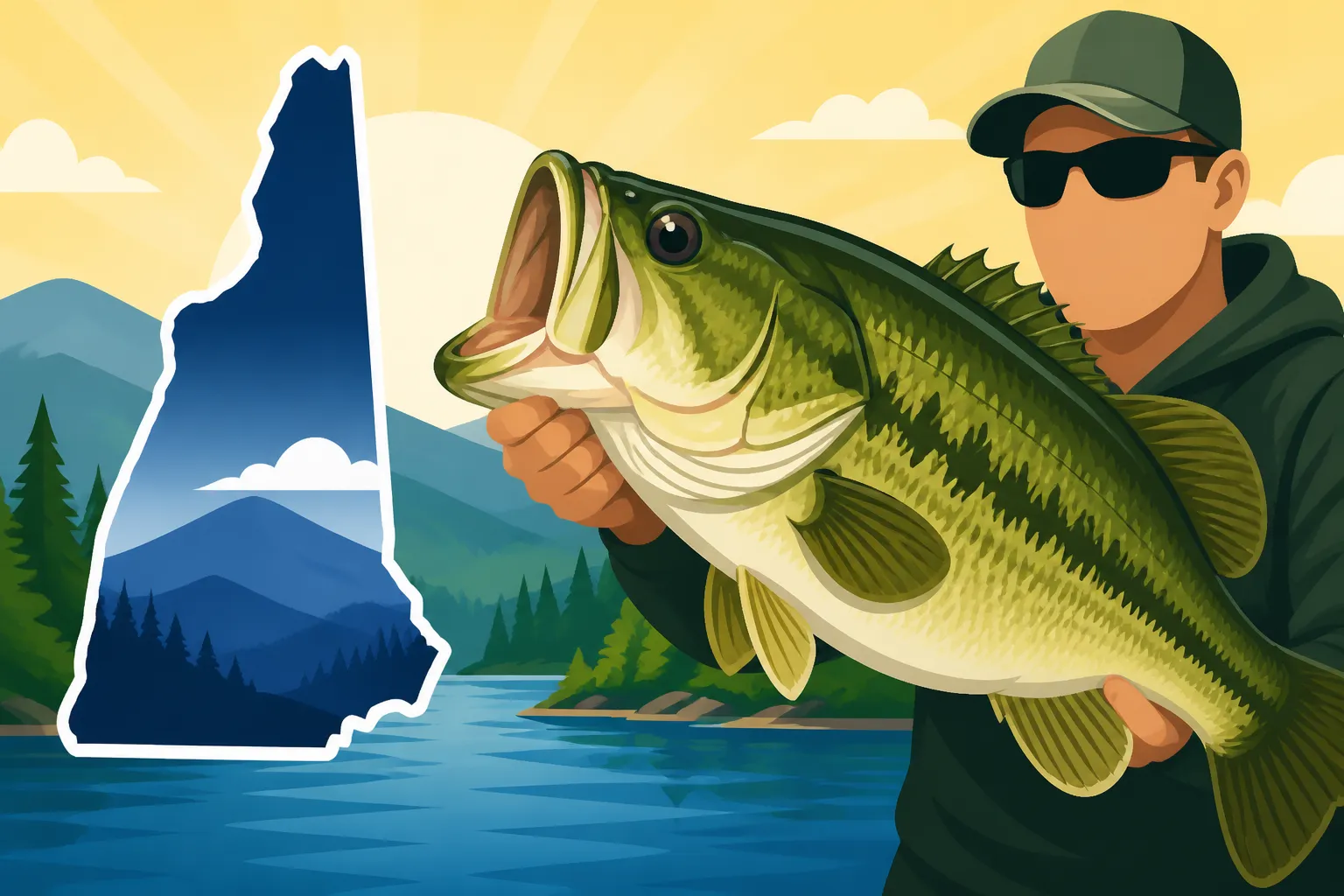
New Hampshire state record largemouth bass weight
It's incredibly exciting to think about landing that fish of a lifetime, isn't it? The New Hampshire lakes and ponds hold some truly impressive largemouth bass, and for many anglers, the dream isn't just to catch a big one, but to land a state record. However, finding clear, concise information about these benchmarks can sometimes feel like searching for a secret fishing hole. This guide is here to cut through the confusion and give you all the details on the current New Hampshire state record largemouth bass, what it takes to pursue such a fish, and how you'd go about getting your own potential record certified.
Understanding the New Hampshire State Record Largemouth Bass
The pursuit of a state record isn't just about the fish; it's about the story, the challenge, and the mark left on New Hampshire's angling history. Every angler dreams of that one cast, that one fight, that changes everything. And when it comes to largemouth bass, New Hampshire boasts a truly magnificent record, a testament to the quality of our waters and the dedication of our anglers.
The Current Record Holder and Its Significance
Let's dive right into what you're here for: the incredible New Hampshire state record largemouth bass. This record stands at a colossal 10 pounds, 8 ounces. Imagine that beast on the end of your line! It was caught by Roy Fairfield in 1967 from Spaulding Pond, which is located in Salem, New Hampshire.
This isn't just a number; it's a legendary catch that has stood the test of time for decades. It sets an incredibly high bar for all of us who chase largemouth bass in the Granite State. Roy's catch from Spaulding Pond wasn't just big for its time; it remains an absolute monster. When you hook into a bass, even a five or six-pounder feels like a truck, so picturing something twice that size is truly mind-boggling. It reminds us that even in our relatively small state, giant fish are swimming in our waters, patiently waiting for the right offering. It's a beacon of hope for every cast we make, urging us to explore new waters and refine our techniques.
Why Records Matter to the Fishing Community
Beyond the bragging rights, state records play a crucial role in the angling community. They act as benchmarks, inspiring new generations of anglers to push their limits and explore different fishing methods. When a record is set, or even just approached, it sparks conversations about conservation, habitat management, and the overall health of specific fisheries. For instance, Roy Fairfield's record highlights the potential of ponds like Spaulding Pond and encourages the New Hampshire Fish and Game Department to continue monitoring and managing these valuable resources.
Records also foster a sense of shared history and camaraderie among anglers. We all marvel at these incredible catches, sharing stories and tips in hopes of one day making our own mark. It encourages us to learn more about New Hampshire Fishing Regulations Explained and ensures we're all playing our part in protecting these precious fish for the future. The excitement around a record-breaking fish helps keep the passion for fishing alive and well, encouraging responsible angling practices and a deep respect for the natural world.
The Quest for a Trophy Largemouth in New Hampshire
Catching a largemouth bass of record-breaking caliber isn't a stroke of pure luck, though luck certainly plays a part. It's often the culmination of years of experience, meticulous planning, and an understanding of how these big fish live and behave. If you're serious about targeting a true lunker, you need to understand their world.
Key Factors for Targeting Giant Bass
Giant largemouth bass are typically older, wiser, and more elusive than their smaller counterparts. They've survived countless encounters with lures and predators, developing a cautious demeanor. To catch them, you need to think like them.
Firstly, focus on habitat. Big bass love cover and structure. This means seeking out dense lily pad fields, thick weed lines, fallen trees (laydowns), submerged brush piles, and rocky outcroppings. These areas provide ambush points for hunting prey and protection from predators. Think about where the biggest, slowest fish would feel safest and have the easiest access to food. Secondly, forage is paramount. A 10-pound bass didn't get that big eating tiny minnows. They're looking for substantial meals: larger baitfish like golden shiners, perch, or even smaller panfish, as well as crayfish, frogs, and ducklings. Understanding the dominant forage in a particular lake will dictate your lure choices. Thirdly, seasonal patterns are critical. Early spring, when water temperatures are rising and bass are pre-spawn, can be an excellent time to find them shallow and actively feeding. During summer, they might retreat to deeper, cooler waters during the day, becoming more active at dawn, dusk, or even at night. In the fall, they feed heavily to prepare for winter. Understanding what water temperature largemouth bass prefer can be a game-changer for finding these giants.
Essential Gear and Proven Techniques
When you're after a trophy, your gear needs to be up to the task. You're not just looking for a bite; you're looking for a battle. A stout heavy-action baitcasting rod paired with a reliable reel spooled with strong, abrasion-resistant line (15-20 lb fluorocarbon or braided line with a fluorocarbon leader) is often preferred. This allows you to muscle fish out of heavy cover and handle their powerful runs.
As for lures, think big. While a record-setting bass can be caught on anything, larger baits often tempt larger fish. Swimbaits, especially those mimicking local forage like perch or shiners, can be incredibly effective. Jigs, particularly those with a bulky profile and a large trailer, are excellent for probing heavy cover. Large plastic worms or creature baits, slow-fished around structure, can also entice a wary giant. Topwater lures, worked during low light conditions or over shallow weeds, can elicit explosive strikes. You can find a fantastic selection of these specialized lures, heavy-duty rods, and strong lines on platforms like Amazon, which often carries a wide array of brands and types suitable for trophy hunting. Don't be afraid to experiment, but always lean towards presentation that mimics a hearty meal. For more specific guidance, check out our guide on How to Catch Largemouth Bass in New Hampshire.
Patience, Persistence, and Learning from the Best
The quest for a state record is not for the faint of heart. It requires immense patience and persistence. You might spend hundreds of hours on the water, meticulously dissecting cover, and casting to endless spots before encountering a truly massive fish. Don't get discouraged by slow days; every cast is a learning opportunity. Pay attention to changes in weather, water conditions, and baitfish activity. Keep a detailed log of your outings, noting factors like moon phase, barometric pressure, water temperature, and successful patterns.
Learning from experienced anglers, whether through online forums, local bait shops, or even hiring a guide for a day, can dramatically shorten your learning curve. Study the largemouth bass habits on Winnipesaukee and other large lakes, even if you're fishing a smaller pond, as many behaviors are universal. The biggest bass are survivors, and understanding their psychology is as important as the lure you throw. Embrace the challenge, enjoy the process, and every fish, big or small, will contribute to your journey.
Certifying Your Catch: The Official Process
You've done it! Against all odds, you've landed a fish that looks like a new state record. The adrenaline is pumping, your hands are shaking, but this is where precise action becomes critical. The dream can quickly turn into a missed opportunity if you don't follow the proper protocols for certifying your catch. New Hampshire has a clear process, and knowing it beforehand is crucial.
The Importance of Accurate Weighing and Measurement
When you're dealing with a potential state record, accuracy is paramount. There's no room for estimation or "it felt like…" The New Hampshire Fish and Game Department requires precise measurements and weights to validate a record claim.
First and foremost, the fish must be weighed on a certified scale. This usually means a scale found at a post office, a fish and game check station, or a reputable grocery store or tackle shop that has its scales regularly calibrated and certified for accuracy. Your handheld digital scale, no matter how nice, likely won't cut it for an official record. The scale must be able to verify the weight down to the ounce. Secondly, the length and girth of the fish must be accurately measured. Use a reliable tape measure for this, and ensure the fish is laid flat and measured from the tip of the jaw to the tip of the tail, and around its widest point for girth. It's often recommended to have these measurements witnessed by a disinterested party who can also sign off on them. Getting clear, well-lit photographs of the fish, especially with the measurements and weight visible (if possible on the certified scale), is also highly recommended. Remember, the goal is to provide undeniable proof of your catch's size.
Navigating the New Hampshire Fish and Game Department's Requirements
The New Hampshire Fish and Game Department (NHFG) is the authority for certifying state records. Their process is designed to ensure fairness and accuracy for all record claims. While specific forms and contact details can change, the general steps remain consistent.
You'll need to contact the NHFG's Inland Fisheries Division as soon as possible after your catch. They will provide you with the necessary forms and walk you through the specifics. Generally, you'll need to submit a completed application form, which will require your personal details, details of the catch (date, time, location, method), and the certified weight and measurements. You'll also need the signatures of official witnesses who observed the weighing and measuring process. Sometimes, the NHFG might require a biologist to inspect the fish to verify the species. This means keeping the fish in good condition, often on ice, until it can be verified. Make sure you're familiar with the Reading the New Hampshire Freshwater Fishing Digest, as it contains detailed information on regulations and procedures, including how to contact the relevant divisions. It's always best to be proactive and understand these requirements before you even hook that potential record-breaker.
The Value of Preparation
Preparing for a potential record catch might sound a bit silly, but it's really about being ready for that once-in-a-lifetime moment. Knowing the steps, having a plan, and understanding the official requirements can make all the difference when those shaking hands are trying to get the job done.
Here’s a simple checklist to consider:
| Item | Action for Record Fish | Why It's Important |
|---|---|---|
| Certified Scale | Identify nearby locations with certified scales (post office, tackle shop, grocery store). | Ensures official, verifiable weight. |
| Measuring Tape | Keep a flexible, accurate measuring tape in your boat/bag. | For precise length and girth measurements. |
| Camera/Phone | Ensure it's charged and accessible for clear photos. | Visual documentation of the fish and measurements. |
| Witnesses | Know who you can call to witness the weighing. | Adds credibility to your claim. |
| Ice Chest/Cooler | Have a large cooler with ice to preserve the fish. | Keeps the fish in good condition for verification if needed. |
| NHFG Contact Info | Store the Inland Fisheries Division's number in your phone. | For immediate reporting and guidance on the process. |
| Regulations Knowledge | Be familiar with New Hampshire Bag and Possession Limits by Species and record procedures. | Ensures compliance and smooth processing of your claim. |
Having this kind of preparation means that if you're lucky enough to hook into a fish that could shatter the 10-pound, 8-ounce benchmark, you're not scrambling. You're executing a plan, ensuring that your incredible achievement gets the recognition it deserves. Don't let a technicality stand between you and a place in New Hampshire fishing history!
Where New Hampshire's Lunker Largemouth Hide
New Hampshire might be known for its cold-water fisheries, but don't underestimate the potential for monstrous largemouth bass. These aren't always found in the most obvious places, and sometimes, the biggest fish come from waters that fly under the radar. Understanding the preferred environments of trophy largemouth is key to finding them.
Identifying Prime Largemouth Habitat
Lunker largemouth bass thrive in environments that offer a combination of warm water, abundant forage, and extensive cover. They're typically ambush predators, meaning they prefer to hide in tangled messes, waiting for an unsuspecting meal to swim by.
Look for shallow to mid-depth lakes and ponds with soft, fertile bottoms, often rich in nutrients. These conditions foster dense aquatic vegetation like lily pads, milfoil, hydrilla, and cattails along the shorelines. These weed beds are magnets for baitfish and provide excellent hiding spots for bass. Furthermore, keep an eye out for hard structure such as fallen trees, submerged stumps, dock pilings, rock piles, and old bridge abutments. These features break up the underwater landscape and create prime ambush points. In larger lakes, humps, points, and channel swings with access to deeper water are also key areas, especially during the warmer summer months when bass might retreat from the shallows. The best largemouth lakes often have a healthy population of prey species, from various minnows to sunfish and perch, ensuring these predators have plenty to eat to grow to impressive sizes.
Southern New Hampshire's Bass Hotspots
While big bass can pop up anywhere, the southern part of New Hampshire generally offers the most consistent action for larger largemouth. This region benefits from warmer average temperatures, which extend the growing season and allow bass to reach greater sizes. The ponds and lakes here tend to be shallower and more fertile, providing ideal habitat.
Many of these waters are part of the Merrimack River watershed or are smaller, isolated ponds. While Spaulding Pond holds the record, other lakes in the southern tier are well-known for producing quality bass. Think about areas around towns like Nashua, Manchester, and Rochester. Lakes like Pawtuckaway Lake, Northwood Lake, and numerous smaller, unnamed ponds are often cited as producing impressive largemouth. These waters often have extensive shallow-water habitat with plenty of vegetation and submerged timber, perfect for a lunker to grow old and fat. Even state park ponds can be surprisingly productive, offering easy access for anglers of all skill levels. You can find more details on these and other locations in our comprehensive Best Bass Fishing Lakes in New Hampshire guide. Don't be afraid to put in the time to explore these areas; the rewards can be truly spectacular.
Beyond the Obvious: Exploring Lesser-Known Waters
While the well-known lakes certainly hold their share of big bass, sometimes the real giants come from unexpected places. Many experienced anglers understand that less pressured waters often have older, larger fish. These "honey holes" are usually smaller ponds, remote backwaters, or even sections of rivers that don't see heavy fishing pressure.
Exploring these lesser-known spots requires a bit more effort. It might mean hiking into a remote pond, launching a kayak or canoe where larger boats can't go, or meticulously studying maps and aerial photos for isolated pockets of prime habitat. These waters often offer unique challenges and incredible rewards. For example, some anglers have success in smaller ponds that are not heavily stocked or frequently fished. These places can be ecological treasures, where large bass can live relatively undisturbed for many years. Always be mindful of access rules and private property when exploring. Consider looking at the New Hampshire State Park Fishing Guide for publicly accessible waters that might not always be on the "trophy hotlist" but could hold hidden gems. A true trophy largemouth is out there, perhaps in a quiet cove or a forgotten pond, waiting for an angler with the dedication to find it.
Disclaimer
This article is for general informational purposes only and does not constitute professional advice. Laws, prices and regulations vary by location and change over time. Consult a qualified professional for guidance on your specific situation.