The biggest crappie ever caught in New Hampshire
There's nothing quite like the thrill of pursuing a truly massive fish, and for many anglers in the Granite State, that often means dreaming about the next state record. When it comes to panfish, the crappie holds a special place, often surprising even seasoned veterans with its size and fight. If you've ever wondered about the biggest crappie caught here in New Hampshire, and perhaps how you might go about chasing a similar behemoth yourself, you're in the right place. This guide will dive deep into the details of New Hampshire's state record black crappie, explore where these impressive fish hide, and arm you with the knowledge to potentially make your own mark in the crappie fishing history books.
The Elusive New Hampshire State Record Black Crappie
Every angler dreams of that one-in-a-million catch, the fish that pushes the tape measure and tips the scales like no other. In New Hampshire, when we talk about crappie, that dream often revolves around the state record black crappie. This isn't just about a big fish; it's about a truly exceptional specimen that represents the pinnacle of crappie growth in our diverse waters.
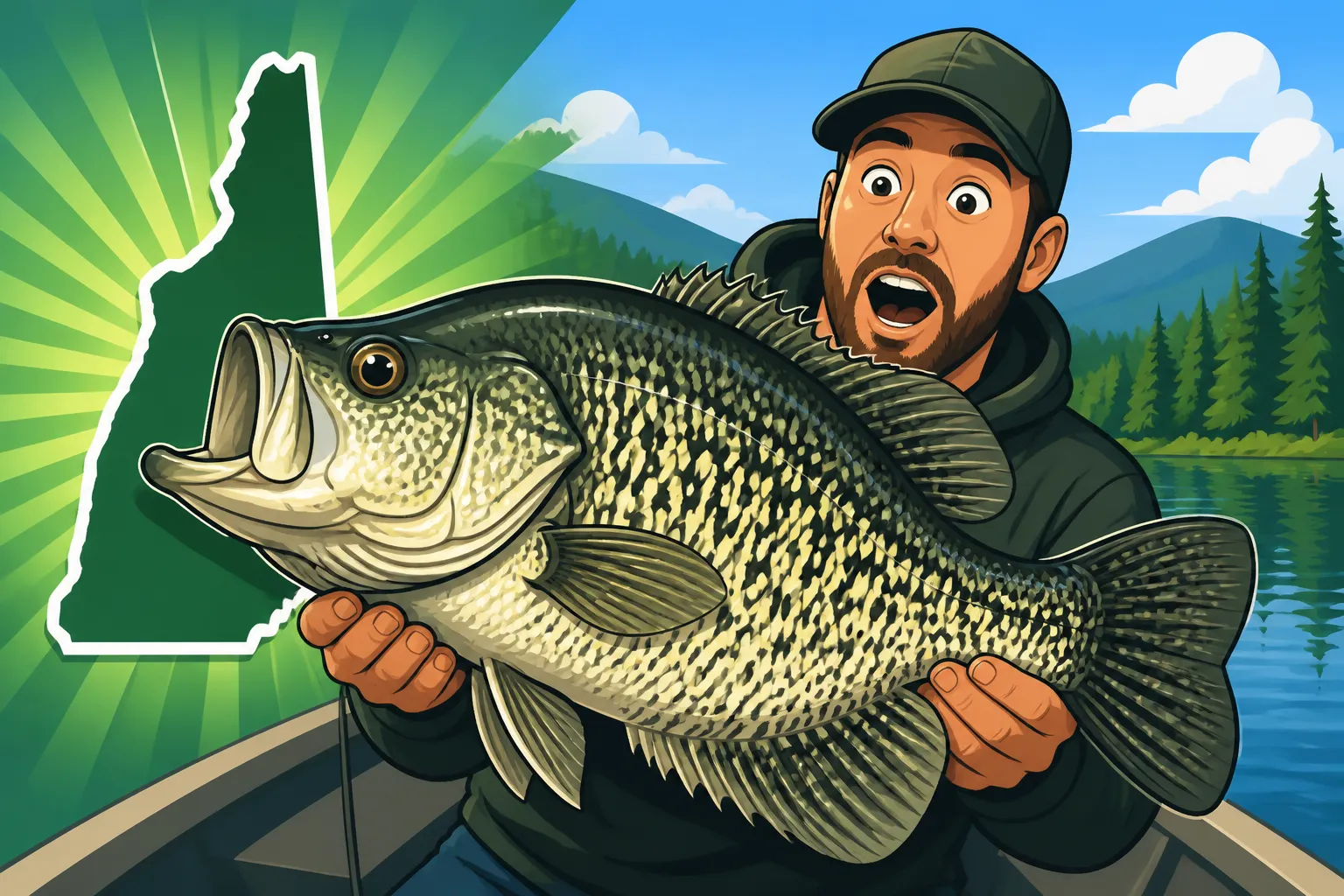
The official New Hampshire state record for a black crappie currently stands at an impressive 3 pounds, 2.4 ounces. This magnificent fish was caught back in 2004 by angler Ryan Boisselle, who pulled it from the depths of Powwow Pond. Think about that for a moment: over three pounds of crappie! Most of us are thrilled to catch a crappie that weighs a pound, maybe a pound and a half on a really good day. A fish of that size is a testament to the rich environment of Powwow Pond and the dedication of the angler who managed to coax it onto their line. It reminds us that while many fish records get broken by mere ounces, a three-pound crappie is a truly substantial catch that garners respect from any freshwater enthusiast.
The story behind such a catch is often as intriguing as the fish itself. While specific details of that exact day might be elusive now, imagine the excitement. Powwow Pond, nestled in the town of East Kingston, is known for its diverse fishery, offering everything from bass to pickerel. For a crappie to reach such a monumental size, it had to live a long, healthy life, finding abundant food and avoiding predators in its habitat. These record-breaking fish aren't caught every day; they are the result of ideal conditions, a bit of luck, and often, an angler's persistent pursuit of quality fish. It's the kind of catch that leaves an indelible memory and fuels countless fishing tales for years to come. For the latest official records, it's always wise to check with the New Hampshire Fish and Game Department, as records can sometimes be updated.
Getting to Know New Hampshire's Crappie Species
Before you can chase a record, it helps to know your quarry. In New Hampshire, when anglers talk about crappie, they are almost exclusively referring to the black crappie. While white crappie do exist in some regions of North America, they are far less common, if present at all, in New Hampshire's cold, clear waters compared to their black-spotted cousins. Understanding the black crappie's habits, preferred habitat, and diet is crucial for anyone hoping to land a trophy-sized specimen.
Black crappie, with their distinctively mottled, speckled appearance, are a beloved panfish species. Their bodies are deep and compressed, almost disc-like, and they have a relatively small mouth. One of the easiest ways to distinguish a black crappie from a white crappie (if you ever encounter one) is by counting the dorsal fin spines: black crappie typically have 7 or 8 dorsal spines, while white crappie usually have 5 or 6. They also tend to have a more scattered, pepper-like pattern of spots across their body, whereas white crappie often display vertical bars. These fish thrive in clear, vegetated lakes, ponds, and slow-moving rivers, often congregating around submerged timber, docks, weed lines, and brush piles. They are ambush predators, perfectly designed to hide in cover and dart out to snatch unsuspecting prey. To learn more about identifying panfish species in our waters, you might find our guide on Panfish Species Identification Guide for New Hampshire helpful.
Their diet is varied but heavily relies on small baitfish, insects, and crustaceans. As they grow larger, crappie become more piscivorous, meaning they eat more fish. This is a key detail for trophy hunters: bigger crappie often require bigger, more realistic baitfish imitations. They are also highly sensitive to light, preferring dim conditions. This often means they're most active during low-light hours like dawn and dusk, or on overcast days. During brighter conditions, they'll retreat to deeper water or dense cover. Knowing this helps you predict not only where they'll be but also when they'll be most willing to bite. Understanding these nuances can significantly increase your chances of finding and catching larger crappie.
Prime Waters for New Hampshire Crappie Fishing
New Hampshire is blessed with an abundance of freshwater bodies, and many of them hold respectable populations of crappie. However, to target a true trophy-sized fish, you need to focus on waters that have the right combination of food, cover, and favorable growing conditions. While the record crappie came from Powwow Pond, there are other types of water bodies across the state that consistently produce impressive crappie catches.
Crappie are known to favor lakes, ponds, and slower sections of rivers with ample structure and vegetation. Think about bodies of water with old flooded timber, expansive weed beds, submerged brush piles, man-made cribs, and even standing docks and bridge pilings. These features provide essential cover for crappie to hide from predators, ambush prey, and escape harsh sunlight. Deeper sections adjacent to these structures are particularly productive, as crappie can move vertically to find their preferred temperature and light levels. Lakes with a good population of baitfish, such as juvenile perch or shiners, will naturally support larger crappie. For a broader look at where to find great fishing, check out our Best Fishing Lakes in New Hampshire guide.
While I can't guarantee you a state record, some areas in New Hampshire are consistently noted for their excellent panfish, including crappie. Water bodies in the southern tier, which often have slightly warmer waters and richer aquatic vegetation, tend to be crappie havens. Beyond Powwow Pond, anglers often report good crappie fishing in places like Lake Massabesic, Great East Lake, and smaller ponds throughout Rockingham, Hillsborough, and Strafford counties. However, don't overlook some of the larger lakes further north; while they might be better known for salmon and trout, their shallower bays and coves can hold some surprising crappie populations. Always remember that local knowledge is gold, so striking up conversations at tackle shops or boat launches can often reveal lesser-known crappie hotspots. You can delve into more about panfish opportunities in our Best Panfish Fishing in New Hampshire article.
Tactics and Gear for Landing Your Own Trophy Crappie
Catching an average crappie is one thing; targeting a potential record-breaker requires a more deliberate approach. You'll need specific techniques and the right gear to entice these larger, often warier fish. Success often comes down to presentation, patience, and adapting to the conditions.
Strategic Approaches for Big Crappie
When it comes to actually fishing for crappie, especially the bigger ones, timing and technique are paramount. Crappie are notorious for schooling, so once you find one, you're likely to find more.
- Vertical Jigging: This is a tried-and-true method, particularly effective when crappie are holding tight to structure like brush piles or submerged trees. Use small jigs (1/16 to 1/8 ounce are common, but don't be afraid to go a bit heavier for deeper fish or wind) tipped with a small plastic grub, tube, or a live minnow. Slowly lower your offering to the depth where you've marked fish (a good fish finder is invaluable here) and use subtle jigging motions. The bites can be incredibly light, feeling like a slight pressure or just a "mushy" feeling, so pay close attention.
- Slip Bobber Rig: This is fantastic for suspending a bait or jig at a precise depth. It allows you to cast further and fish deeper than a fixed bobber, making it ideal for targeting crappie suspended over brush or along weed lines. A live minnow or a small jig under a slip bobber is a deadly combination. Let the rig drift slowly with the wind or current, or use your trolling motor for a controlled drift.
- Spider Rigging/Slow Trolling: For covering more water and enticing active crappie, especially in larger lakes, spider rigging (using multiple rods fanned out from the boat) or slow trolling with jigs or small crankbaits can be highly effective. This technique allows you to present baits at different depths and speeds until you dial into what the crappie prefer on a given day. Keep your speed minimal, just enough to give your lures some action.
The best times to target crappie are often during the spring and fall. In spring, crappie move into shallower waters to spawn, making them more accessible. They'll be found around shallow cover like lily pads, emergent weeds, and flooded timber. As the water warms in summer, they retreat to deeper, cooler water, often suspending over structure or in the thermocline. In fall, they once again become more active, feeding heavily in preparation for winter, and can be found in a variety of depths. Dawn and dusk are prime times, as are overcast days, when crappie are more likely to move out of heavy cover. For a more detailed look into specific panfish techniques, you can explore Best Techniques for Panfish in New Hampshire.
Essential Gear for Crappie Success
Having the right equipment can make all the difference, especially when a heavy crappie decides to test your line.
- Rod and Reel: For crappie, a light to ultralight spinning rod (5 to 7 feet long) with a fast action tip is ideal. This setup provides the sensitivity needed to detect those subtle bites and the backbone to handle larger fish. Pair it with a small, smooth spinning reel spooled with 4 to 6-pound test monofilament or fluorocarbon line. Braided line can also be used, especially in clearer water with a fluorocarbon leader, for even greater sensitivity.
- Lures and Baits:
- Jigs: Small marabou jigs, tube jigs, and soft plastic grubs in sizes from 1/32 to 1/8 ounce are crappie staples. Experiment with colors; chartreuse, white, black, and natural baitfish colors are often top producers.
- Live Bait: Nothing beats a live minnow for finicky crappie. Hook them lightly through the lips or dorsal fin. Small worms or maggots can also be effective, especially when paired with a tiny jig.
- Small Crankbaits: For aggressive crappie or when trolling, small diving crankbaits that mimic baitfish can be very productive.
- Electronics: A good fish finder is almost mandatory for consistently finding crappie, especially suspended schools or those hidden in deep cover. Look for models with good down-imaging or side-imaging capabilities to identify submerged structure.
- Accessories: Don't forget a small landing net, especially for a potential record fish, to avoid unnecessary stress on the fish and ensure a clean landing. Pliers for hook removal, a livewell or cooler for keeping bait fresh, and a scale to weigh your catches are also important.
When gearing up, you have a lot of options. Many anglers find a wide selection of suitable rods, reels, and a huge variety of crappie jigs and baits on platforms like Amazon. It's a convenient way to compare different brands and styles of tackle, from a basic panfish kit to more specialized gear. For a comprehensive list of specific items, our Best Tackle for Panfish guide offers some great recommendations.
| Crappie Fishing Gear Type | Recommended Specifications | Purpose |
|---|---|---|
| Rod | 5-7 ft, Ultralight to Light power, Fast action | Sensitivity for light bites, suitable for small lures/baits |
| Reel | 500-1000 series spinning reel | Smooth drag, light weight to balance rod |
| Line | 4-6 lb Monofilament or Fluorocarbon; 6-10 lb Braid (w/ leader) | Sensitivity, low visibility (fluorocarbon), strength (braid) |
| Jigs | 1/32 – 1/8 oz, various colors (chartreuse, white, black) | Vertical jigging, casting, tipping with plastics/minnows |
| Baits | Live minnows, small plastic grubs/tubes, worms | Primary attractant for crappie |
| Bobbers | Slip bobbers with appropriate weight | Suspending bait at precise depths, especially for deeper water |
| Fish Finder | Portable or mounted with down/side imaging | Locating schools of fish, identifying submerged structure |
| Net | Small, fine-mesh landing net | Safe landing of fish, especially larger ones |
Practicing Responsible Crappie Fishing in New Hampshire
The pursuit of trophy fish is exciting, but it comes with the responsibility of ensuring healthy fisheries for the future. As anglers, we have a vital role in conservation, and that includes understanding and adhering to regulations, as well as practicing ethical angling.
Every angler in New Hampshire needs to be intimately familiar with the current fishing regulations. These rules are put in place by the New Hampshire Fish and Game Department to manage fish populations and ensure sustainable fishing. This includes understanding statewide regulations for freshwater fishing, such as daily bag limits and possession limits. For crappie, specific length limits are not typically in place statewide, but daily bag limits exist to prevent overharvest. However, always double-check the latest digest, as rules can change. Our New Hampshire Fishing Regulations Explained guide can provide an excellent overview, and always refer to the official N.H. Fish and Game Freshwater Fishing Digest for the most up-to-date rules. For specific species limits, you'll find New Hampshire Bag and Possession Limits by Species incredibly useful.
When you do hook into a truly large crappie, especially one that could be a state record or just an exceptionally old fish, consider practicing catch and release. These larger fish are often vital breeders, contributing significantly to the health and genetics of the crappie population. If you intend to release a fish, handle it gently, minimize its time out of the water, and support its body fully when lifting it. If you believe you have a record-breaker, know the proper protocol for verifying the catch, which usually involves immediate weighing on certified scales and potentially photographic evidence. Always ensure you have a plan in place for verifying a record while keeping the fish's well-being in mind. By adhering to regulations and practicing careful catch-and-release, we can all help ensure that future generations of anglers have the chance to experience the thrill of catching big crappie in New Hampshire's beautiful waters.
Disclaimer
This article is for general informational purposes only and does not constitute professional advice. Laws, prices and regulations vary by location and change over time. Consult a qualified professional for guidance on your specific situation.