How to fish a swimbait for big smallmouth
If you've spent any time on New Hampshire's incredible lakes and rivers, you know the struggle of trying to tempt those truly big smallmouth bass. They're smart, they're wary, and they often seem to ignore everything but the most perfect presentation. But what if I told you there's a technique that consistently fools these giants, drawing out aggressive strikes even when other lures fall flat? This guide is all about diving deep into how to effectively fish a swimbait for those trophy smallmouth in the Granite State.
Why Swimbaits for New Hampshire Smallmouth?
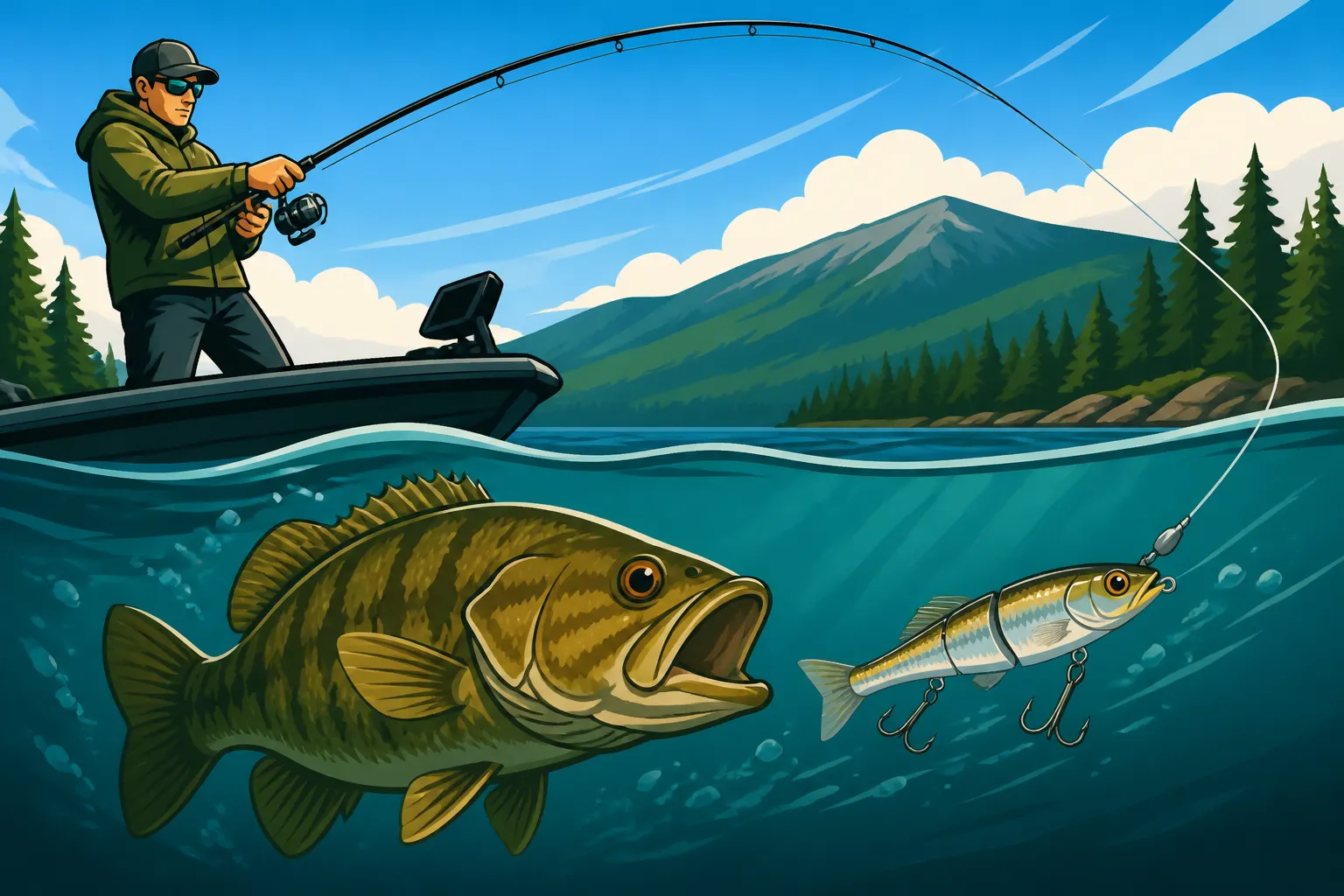
Let's be honest, seeing those monster smallmouth break the surface or flash by your boat is exhilarating, but getting them to commit can be a whole different ballgame. New Hampshire's smallmouth bass, especially the big ones, are apex predators. They didn't get that size by being foolish; they got there by being efficient hunters, often keying in on larger, more substantial meals. This is exactly where swimbaits shine. They offer a meal ticket that smaller, more erratic presentations simply can't match, presenting a convincing imitation of the larger baitfish that fuel these lunkers.
Imitating Natural Forage
Think about what those big smallmouth are really eating in a lake like Winnipesaukee or a river like the Merrimack. Sure, they'll gobble up crayfish and insects, especially when they're younger. But the true giants? They're often focused on larger baitfish. Smelt, alewives, shiners, perch, and even juvenile trout are all on the menu. A well-chosen swimbait perfectly mimics these larger forage fish, both in appearance and in its swimming action. This isn't about triggering a reaction strike from a curious fish; it's about presenting a meal so realistic and tempting that a large, hungry smallmouth can't ignore it. It taps into their primal predatory instincts, making them believe a substantial meal is attempting to escape.
Targeting Aggressive Predators
Big smallmouth aren't just hungry; they're also territorial and aggressive, especially during certain times of the year. When they see a larger baitfish swimming through their zone, their instinct is often to ambush it. Swimbaits, with their lifelike profile and seductive wobble, trigger this aggression beautifully. It’s like ringing the dinner bell for them. You're not just casting a lure; you're invading their space with something that looks vulnerable and delicious. Whether you're targeting smallmouth in the deep clear waters of Newfound Lake or working rocky points on Squam, a swimbait can be the key to unlocking those truly aggressive bites from the bigger fish. They see that substantial profile and often decide it's worth the energy expenditure for a solid meal.
Choosing the Right Swimbait for New Hampshire Waters
Stepping into the world of swimbaits can feel a bit overwhelming at first. There are so many shapes, sizes, and styles! But for New Hampshire smallmouth, narrowing down your choices means understanding the local forage and the conditions you're fishing. It's not about having every single one, but having the right ones for the job.
Hard vs. Soft Swimbaits
When it comes to swimbaits, you generally have two main categories: hard-bodied and soft-bodied. Both have their place in your tackle box, and understanding their differences is crucial.
- Hard Swimbaits: These are typically made of plastic or resin, often multi-jointed, and designed to replicate a fish's swimming motion with incredible accuracy. They come in sinking, suspending, and floating versions. Hard swimbaits tend to have a more consistent, tight wobble, and some even have internal rattles to add sound. They're fantastic when smallmouth are actively chasing baitfish in clear water. Their durability is also a major plus, as they can withstand many aggressive strikes. However, they can be more expensive, and if a joint breaks, the lure is often toast. Some excellent hard swimbaits can be found through various retailers, and Amazon often has a good selection.
- Soft Swimbaits: These are made from soft plastic, often rigged on a jig head or a weighted swimbait hook. They offer a more subtle, natural action, especially the paddle-tail varieties that have a mesmerizing kick. Soft swimbaits are incredibly versatile; you can fish them fast, slow, deep, shallow, and through cover. They’re also much more forgiving on your wallet, so you won't wince as much when one gets snagged or torn up. The downside is that they are less durable than hard swimbaits and can be shredded by a few aggressive fish. However, their natural feel in the water and the ability to customize your rigging make them indispensable for catching How to Catch Smallmouth Bass in New Hampshire Lakes.
Sizing Up Your Swimbait
One of the biggest mistakes anglers make with swimbaits is going too small. Remember, we're trying to appeal to big smallmouth, and big smallmouth eat big meals. While a 3-inch swimbait might catch plenty of average fish, if you're truly hunting for that 4-pound-plus beast, you'll want to size up.
For most New Hampshire smallmouth applications, a 4-inch to 6-inch swimbait is a fantastic starting point. If you're really looking for that absolute giant, don't be afraid to throw something 7 or even 8 inches, especially in larger, deeper lakes like Lake Winnipesaukee Smallmouth Bass Fishing. The general rule of thumb is to match the size of the predominant forage in the water you're fishing. If the smallmouth are gorging on 5-inch smelt, a 5-inch swimbait is likely to be a hot ticket. Consider the body of water; smaller rivers or ponds might warrant a slightly smaller profile, but don't shy away from larger options in the big lakes.
Color and Action Considerations
Color and action are just as important as size, especially when smallmouth can be picky.
- Colors: Natural baitfish colors are almost always a safe bet. Shad patterns, perch patterns, and subtle silver or white variations are excellent choices for clear water. If you're fishing stained or dark water, don't be afraid to go with brighter, more contrasting colors like chartreuse, white, or even black and blue. Sometimes, a darker silhouette against a bright sky can be incredibly effective. Always have a few translucent colors for super clear, sunny days. Experimentation is key, but start with what mimics the local baitfish.
- Action: This refers to how the swimbait moves through the water. Some have a wide, thumping paddle tail, others a more subtle, S-shaped swim. Hard swimbaits often have a more aggressive, jointed wiggle. The key is to match the action to the mood of the fish and the conditions. In warmer water when fish are active, a more aggressive, faster-wobbling swimbait can be deadly. In colder water or when fish are lethargic, a more subtle, slow-rolling action is often more effective. Don't be afraid to mix it up! What works on a calm morning might not work when a strong breeze picks up, or if the What water temperature smallmouth bass prefer changes rapidly.
Essential Gear for Swimbait Fishing
You can't effectively cast and retrieve larger swimbaits without the right tools. Trying to throw a 1-ounce swimbait on a finesse spinning rod is a recipe for frustration, not to mention potential gear damage. Investing in the proper rod, reel, and line will make your swimbait fishing much more enjoyable and, ultimately, more successful.
Rod and Reel Setup
For big swimbaits, you need gear that can handle the weight of the lure and the power of a hard-fighting smallmouth.
- Rods: A medium-heavy to heavy power casting rod, typically 7 to 8 feet in length, is ideal. You want a rod with enough backbone to launch those heavier baits a good distance and to control big fish, but with a moderate-fast to moderate action. This action allows the rod to load up properly on the cast, preventing fatigue and aiding in hooksets, especially when a smallmouth hammers a moving bait. A moderate action also acts as a shock absorber, helping to keep big fish buttoned up during their explosive runs and jumps. If you're looking for specific recommendations, check out a guide on Best Spinning Rods for Smallmouth Bass, keeping in mind that for swimbaits, you'll generally want a heavier power rating.
- Reels: A baitcasting reel with a robust drag system and a decent line capacity is essential. A gear ratio around 6.3:1 to 7.1:1 is a good all-around choice. This allows you to retrieve line quickly to pick up slack or work the bait faster when needed, but also provides enough power for slower retrieves and battling big fish. Ensure your reel is spooled correctly to prevent backlashes, which can be particularly annoying with heavier baits.
Line Selection
Your choice of fishing line plays a critical role in swimbait success. It affects casting distance, sensitivity, and your ability to land fish.
- Fluorocarbon: This is often the top choice for swimbait fishing, especially in clear New Hampshire waters. Fluorocarbon is nearly invisible underwater, extremely sensitive, and has good abrasion resistance – vital when fishing around rocky structure. It also sinks, which can help keep your swimbait at the desired depth. A 12-20 pound test fluorocarbon is a common range, depending on the size of your swimbait and the cover you're fishing. For more detailed insights, you might find Best Fluorocarbon Line for Clear Lake Water helpful.
- Braided Line: While braid offers incredible strength, sensitivity, and casting distance, its visibility underwater can be a deterrent for wary smallmouth. If you opt for braid (say, 20-40 pound test), it’s almost always recommended to tie on a fluorocarbon leader (12-20 pound test). This gives you the benefits of braid for casting and hook setting, combined with the invisibility and abrasion resistance of fluorocarbon at the business end.
Hooking Up and Leader Materials
Proper rigging is paramount for both bait action and successful hooksets.
- Hooks: For soft swimbaits, you'll typically use a weighted swimbait hook or a jig head. Weighted swimbait hooks, often called "belly-weighted" hooks, help the bait swim true and keep it weedless. The weight can vary from 1/16 oz to 1/2 oz or more, influencing the bait's sink rate and depth. Jig heads also work wonderfully, particularly if you want to fish deeper or vertically jig the swimbait. Ensure your hook size matches the size of your swimbait for optimal action and hook penetration. For hard swimbaits, the hooks are built-in, but always check them for sharpness and replace dull or bent hooks.
- Leader Materials: If you're using braided mainline, a fluorocarbon leader is a must. A leader of 2-4 feet is generally sufficient, tied to your main line with a strong knot like an FG knot or an Albright knot. The leader provides the necessary invisibility and abrasion resistance directly to the lure, which is especially important when big smallmouth are known for their sharp eyes and powerful fights around rocks and other cover.
Mastering Swimbait Presentation and Retrieval
Now that you've got the gear and the right swimbait, it's time to learn how to put it all together on the water. Presenting a swimbait effectively is less about brute force and more about finesse and understanding the water.
Casting and Locating Structure
Casting accuracy and understanding where to throw your swimbait are key. New Hampshire smallmouth love structure and changes in bottom contour.
- Targeting Key Structure: Look for rocky points, humps, submerged ledges, drop-offs, and even standing timber. Smallmouth often ambush prey from these locations. On larger lakes, use your electronics to How to read structure for smallmouth on Winnipesaukee and identify potential holding spots. In rivers, target current breaks, eddies, and the seams where faster water meets slower water.
- Casting Accuracy: With larger swimbaits, long casts are often beneficial to cover more water and avoid spooking fish. However, accuracy is just as important. Aim your casts precisely to land your swimbait just past the structure you intend to retrieve it through or over. This allows the bait to achieve its natural swimming action before it enters the strike zone.
- Patience and Observation: Don't just cast and reel. Observe the water, look for baitfish activity, and pay attention to how your swimbait is moving. Sometimes, smallmouth will follow a swimbait for a long distance before deciding to strike.
Varied Retrieves for Different Conditions
The beauty of swimbaits is their versatility in retrieve. There's no single "right" way to fish them; it all depends on the conditions and the mood of the fish.
- Slow Roll: This is perhaps the most common and often effective retrieve. Cast your swimbait out, let it sink to your desired depth (or near the bottom), and then simply reel it in slowly and steadily. The goal is to let the swimbait's natural action do the work, mimicking a leisurely swimming baitfish. This retrieve is excellent in colder water or when fish are less active, and it's perfect for covering large areas, especially in clear water where smallmouth have time to track the bait.
- Twitch and Pause: Mimicking a wounded or erratic baitfish, this retrieve involves reeling a few cranks, then giving your rod tip a subtle twitch or two, followed by a short pause. Many strikes occur during the pause as the swimbait slowly sinks or suspends. This works well when fish are a bit more aggressive or when you need to trigger a reaction from hesitant fish.
- Rip and Swim: A more aggressive retrieve, where you rip the rod tip sharply (like ripping a jerkbait), then allow the swimbait to fall, followed by a steady retrieve. This can provoke powerful reaction strikes, especially when fish are highly active or when you suspect they're ignoring a slower presentation. This is fantastic around schooling baitfish.
- Burning: Sometimes, a super-fast retrieve, or "burning," a swimbait can trigger incredible reaction strikes. This is particularly effective when smallmouth are chasing fast-moving baitfish or when they are highly aggressive. It's less about a natural presentation and more about pure speed and triggering that instinctual chase.
Here's a quick table to summarize retrieve types and conditions:
| Retrieve Type | Typical Conditions | Smallmouth Mood | Key Action |
|---|---|---|---|
| Slow Roll | Cooler water, deep structure, covering open water | Neutral, lethargic, curious | Steady, slow retrieve; let bait's natural action work |
| Twitch & Pause | Moderate activity, clear water, target specific cover | Slightly active, wary | Reel, twitch 1-2 times, pause (strike often occurs here) |
| Rip & Swim | Active fish, schooling baitfish, reaction bite | Aggressive, chasing | Sharp rod rip, let fall, steady retrieve |
| Burning | Highly active fish, chasing fast baitfish | Extremely aggressive, reaction-oriented | Very fast, steady retrieve; pure speed |
Understanding the Strike
When a big smallmouth hits a swimbait, it's often not a subtle tap. It can be a jarring "thump," a sudden weight on your line, or your rod simply getting ripped out of your hand! Because swimbaits are larger, smallmouth often inhale them completely, but sometimes they'll just whack it.
- Feeling the Bite: Pay close attention to your line and the feel through your rod. Fluorocarbon line helps immensely with this sensitivity. Any unusual sensation – a sudden stop, a light tick, or even a feeling of "mush" – could be a bite.
- The Hookset: Unlike a jig where you often set the hook instantly, with a swimbait, especially a larger one, it's sometimes beneficial to wait a split second. Let the fish fully commit and turn with the bait. Once you feel solid pressure, set the hook with a strong, sweeping motion, not a straight up-and-down jerk. This helps drive the hook home, especially with thicker-bodied swimbaits and bigger hooks. After the hookset, keep constant pressure on the fish and be ready for those aerial acrobatics Best Baits for Smallmouth Bass on Winnipesaukee are famous for!
Fishing swimbaits for big smallmouth in New Hampshire is a rewarding challenge. It takes confidence to throw larger baits, but the payoff can be truly spectacular. Experiment with different brands, sizes, and colors; many anglers find fantastic quality and variety on sites like Amazon. Don't be afraid to dedicate some time to this technique, and you'll soon be experiencing the thrill of battling some of the Granite State's most impressive smallmouth bass. Remember to check local New Hampshire Bass Limits and Slot Rules before heading out!
Disclaimer
This article is for general informational purposes only and does not constitute professional advice. Laws, prices and regulations vary by location and change over time. Consult a qualified professional for guidance on your specific situation.