How to catch striped bass on the incoming tide
It can be incredibly frustrating to head out to the coast, full of anticipation, only to spend hours casting without a single bite from those elusive striped bass. You've heard people talk about "tide fishing," but what does that really mean, and how do you harness the power of the incoming tide to consistently find stripers in New Hampshire? This guide will dive deep into the rhythm of the ocean, breaking down exactly how to read the water, choose the right spots, and employ the most effective techniques to catch striped bass on the incoming tide, transforming those frustrating outings into triumphant fishing adventures.
Understanding the Incoming Tide for New Hampshire Stripers
The ocean is a living, breathing entity, and its pulse is the tide. For striped bass anglers in New Hampshire, understanding this pulse, particularly the incoming tide, isn't just helpful – it's absolutely critical for consistent success. It's the difference between blindly casting and knowing you're in the right place at the right time.
The Rhythmic Pulse of the Ocean
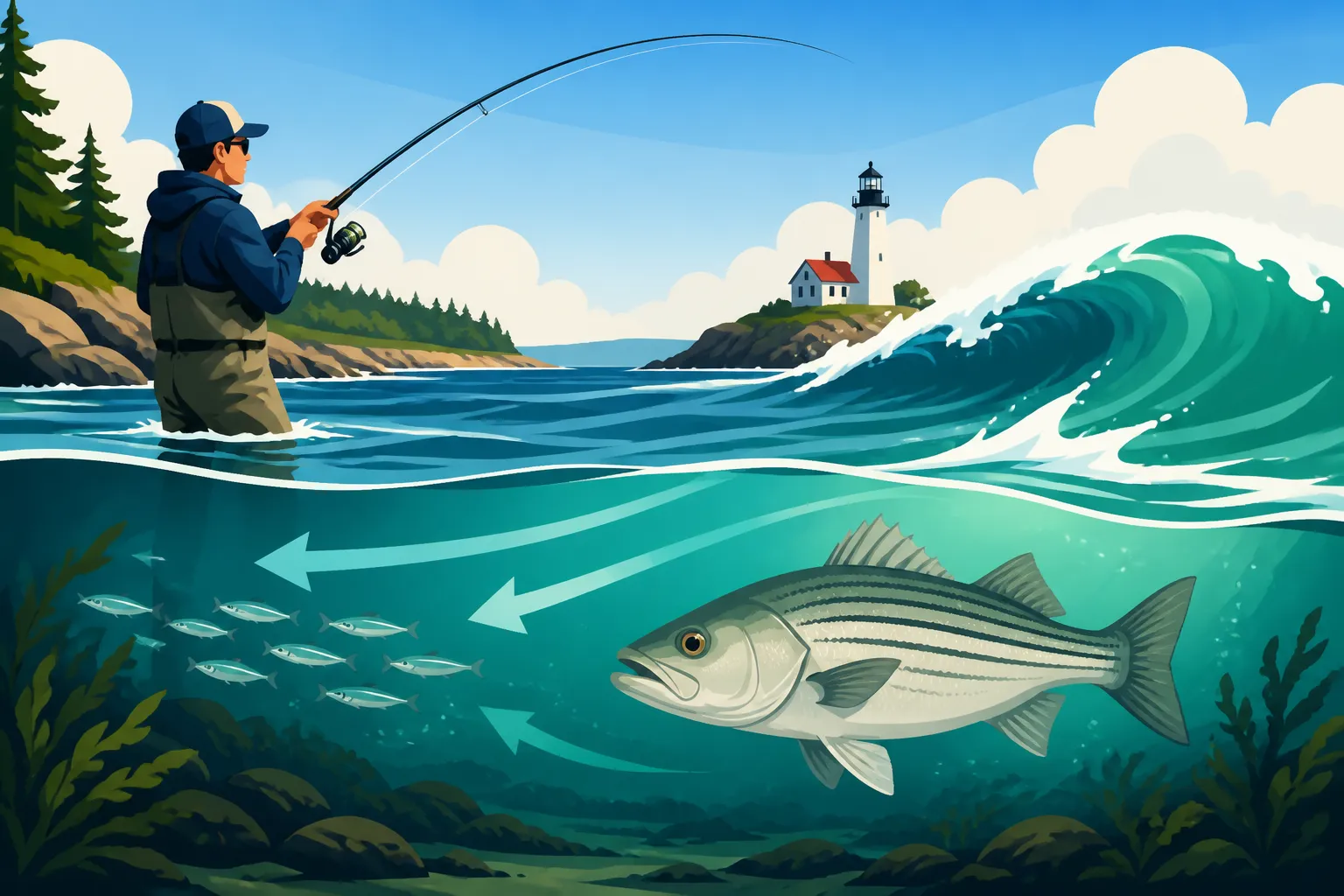
Think of the tide as a giant conveyor belt for the ocean. The incoming tide, also known as the flood tide, is when the sea level rises and water flows inland, pushing into estuaries, rivers, and coastal areas. This isn't just about water depth; it's about movement. This movement creates currents, stirs up the bottom, and, most importantly, brings new food sources into areas that might have been dry or stagnant just hours before. Fish, especially predatory ones like striped bass, are incredibly tuned into these movements. They instinctively know that moving water means feeding opportunities. It’s like a diner bell ringing for them, signaling that breakfast, lunch, or dinner is being served.
During the low tide, many of these prime feeding areas, like shallow flats or the mouths of smaller creeks, might be inaccessible or lack sufficient water to hold larger fish. But as the tide begins to push in, these areas slowly come to life, attracting baitfish and, consequently, the stripers that chase them. Observing the nuances of the incoming tide is a skill that can take time to develop, but once you start paying attention to the way the water moves and changes throughout the day, you'll begin to see the patterns that successful anglers rely on. It’s a dynamic environment, and understanding its rhythm is your first step to mastering it.
Why Stripers Love the Inflow
Striped bass are opportunists, and the incoming tide presents a smorgasbord of opportunities. As the water pushes in, it often carries with it dislodged crabs, worms, shrimp, and various baitfish that were hiding in the bottom structure or in the calmer, shallower zones. The currents created by the incoming tide also help concentrate these food items, making them easier targets for hungry stripers. Imagine a buffet table being slowly moved towards a group of hungry diners – that's essentially what happens for a striper.
Furthermore, the rising water allows stripers to access new hunting grounds that were previously too shallow. This means they can push into smaller creeks, explore rocky shorelines, or ambush baitfish along newly submerged points and ledges. They use the rising water to their advantage, often positioning themselves at pinch points or current breaks where baitfish are swept past, making for an easy meal. This is particularly true in places like the Great Bay Striped Bass Fishing Rules area, where numerous tidal creeks and flats become accessible with the rising water. The increased water depth also provides a sense of security for these larger fish, allowing them to hunt more aggressively without fear of being stranded or easily spotted by predators from above.
Identifying the Optimal Stage of the Incoming Tide
While the entire incoming tide cycle can be productive, there are usually specific windows that are hotter than others. Generally, the last half of the incoming tide and the beginning of the high slack tide are often considered the prime times.
- First Half of Incoming: As the tide just starts to turn and push in, the water begins to move. This is when the initial flush of bait and dislodged morsels starts, and stripers might begin to move from deeper holding areas towards the newly accessible feeding grounds. Fishing can be good, but often improves as more water comes in.
- Last Half of Incoming: This is often the sweet spot. The current is strong, pushing a significant volume of water and bait. Stripers are typically actively feeding, positioning themselves in current seams, eddies, and ambush points where they can easily pick off passing prey. This is when those rocky points, jetties, and creek mouths really light up. The sheer volume of water moving creates maximum opportunity for both bait and predators.
- High Slack Tide: The period just before and after the absolute high tide, when the water movement slows down significantly. While some believe slack tide is unproductive, the transition from moving water to still, and then still to moving again, can be excellent. Baitfish might become disoriented or clustered, making them easy targets for stripers. However, once the tide truly goes slack for an extended period, the bite can sometimes taper off until the outgoing flow begins.
Keeping a tide chart handy is a must. You can often find these online or at local bait and tackle shops. Pay attention to the moon phases as well; full and new moons typically create stronger tidal swings, which can sometimes mean more aggressive feeding.
Prime New Hampshire Locations for Incoming Tide Stripers
New Hampshire's coastline, though relatively short, offers some fantastic opportunities for striped bass fishing, especially during the incoming tide. Knowing where to focus your efforts as that water pushes in can make all the difference. We’re talking about targeting specific types of structure and geography that stripers instinctively use.
Estuaries and River Mouths: Great Bay and Beyond
New Hampshire is blessed with some incredible estuaries, none more famous than Great Bay. As the tide rushes in, it funnels saltwater, baitfish, and marine life deep into these brackish waters, creating a haven for striped bass. The mouths of rivers and creeks that feed into larger bodies like Great Bay, the Piscataqua River, or even smaller coastal rivers become absolute magnets.
Consider the Great Bay best striper fishing spots where the incoming tide brings a fresh influx of baitfish like mackerel, herring, or even river herring into the bay system. Stripers will stage at the confluence of these currents, waiting to ambush anything that gets swept past. Look for areas where a deeper channel meets a shallower flat, or where a point extends into the current. The mixing of fresh and saltwater also creates a rich ecosystem that supports a robust food chain, making these areas highly attractive. Remember, these are dynamic environments, and the best spots can shift with the intensity of the tide and the presence of bait. Anglers often find success fishing the numerous bridges and causeways that cross these waters, as the pilings create excellent current breaks.
Rocky Coasts and Structure: Feeder Lanes
The rugged New Hampshire coastline, particularly around places like Rye and Hampton, is riddled with rocky points, ledges, and jetties that become prime feeding grounds on an incoming tide. As the water rises, it washes over these submerged structures, dislodging crabs, worms, and other small crustaceans. More importantly, these structures act as natural current breaks and ambush points for stripers.
When fishing the Best jetty fishing spots near Rye New Hampshire, for example, the incoming tide will create strong currents around the jetties. Stripers will often position themselves on the downcurrent side of these structures, out of the main flow, waiting for baitfish to be swept past them. They also use the rocks themselves for cover, darting out to strike and then retreating. Look for eddies, current seams, and areas where the current forms a distinct "rip." The turbulent water created by waves crashing against rocks also disorients baitfish, making them easier targets. These spots require a bit more careful casting to avoid snags, but the rewards can be substantial.
Beaches and Flats: Ambush Points
While often associated with calmer waters, New Hampshire's beaches and tidal flats can also be incredibly productive during an incoming tide, particularly for shore anglers. As the water gradually covers these expansive areas, it brings in baitfish that graze on the newly flooded bottom or seek refuge in the shallower depths.
Along the Best fishing spots near Hampton Beach for striper, the incoming tide will push baitfish closer to shore. Stripers will patrol the surf line, especially where there are subtle changes in bottom contour like troughs or sandbars. These depressions act as natural highways for baitfish and ambush points for stripers. Casting into these troughs as the tide fills them can be very effective. The rising water also makes it safer for stripers to move closer to the beach, particularly during dawn or dusk, giving them the confidence to hunt in shallower water. Look for signs of baitfish, like nervous water or diving birds, which are sure indicators that stripers are likely to be in the vicinity.
Top Techniques and Tackle for the Incoming Tide
Having a solid understanding of the incoming tide and prime locations is only half the battle; the other half is knowing what to throw and how to present it. Striped bass can be surprisingly picky, but with the right techniques and tackle, you can turn their finickiness into your advantage.
Lure Selection: Imitating the Influx
During an incoming tide, the goal of your lure choice should be to imitate the natural prey being swept in or actively hunting. This often means mimicking baitfish, crabs, or worms.
- Soft Plastics: These are incredibly versatile. Paddle tail shads, like those from popular brands you can find on Amazon, rigged on jig heads are fantastic. They mimic baitfish being swept in by the current and can be worked effectively near the bottom, along structure, or higher in the water column. Colors like chartreuse, white, or natural baitfish patterns often excel. Jerk shads, retrieved with a twitch-pause retrieve, can imitate a struggling baitfish, drawing aggressive strikes.
- Plugs and Swimmers: Hard plastic plugs, especially those designed to imitate mackerel or herring, are excellent for covering water, particularly in areas with strong current or deeper channels. Surface poppers or walk-the-dog style lures can be explosive during low light conditions or when stripers are actively feeding on the surface, especially if baitfish are being pushed to the surface by the incoming tide.
- Bucktail Jigs: A classic for a reason. Bucktails are incredibly effective for stripers, especially when tipped with a soft plastic trailer or a piece of bait. They sink quickly, allowing you to get them down in the current, and their pulsating action is irresistible. Experiment with different weights to match the current speed – you want the jig to tumble and swim naturally, not just get swept away.
When thinking about What striped bass eat when they enter Great Bay, remember that the incoming tide is often bringing in river herring and other forage from the ocean. Matching the hatch, or at least the general profile and color, can significantly improve your odds.
Live and Cut Bait: Natural Presentations
Sometimes, nothing beats the real thing. Live bait and fresh cut bait can be incredibly effective, especially when stripers are holding in a specific area or being particularly finicky.
- Live Bait: Mackerel, herring, eels, or even bunker (pogies) are prime choices. Rig them naturally, allowing them to swim with the incoming current. If fishing from shore or a jetty, a slip sinker rig can allow the bait to drift freely while keeping your weight on the bottom. From a boat, you can drift them in current seams or near structure. Stripers often prefer a living, struggling meal, so keeping your bait fresh and lively is key. You can find excellent baitwells and aerators on Amazon to keep your bait in top condition throughout your trip.
- Cut Bait: Fresh chunks of mackerel, bunker, or even clam can be incredibly alluring, especially for larger, lazier stripers that might be waiting in ambush. Fish cut bait on a bottom rig, allowing the scent to disperse with the incoming current. This is particularly effective in estuaries and river mouths where the current will carry the scent far and wide. A simple fish-finder rig with a circle hook is often the best choice, allowing the fish to take the bait without feeling immediate resistance. When considering How to rig live bait for Great Bay striped bass, remember that presentation is everything.
Casting and Retrieval Strategies
Your presentation needs to match the conditions created by the incoming tide.
- Casting Up-Current and Drifting Down: A common and highly effective strategy is to cast your lure or bait up-current and allow it to drift naturally back towards your position. This mimics how real baitfish or food items would be carried by the tide. As it drifts, retrieve just fast enough to keep your lure swimming naturally, or simply allow the current to do most of the work for bait. This gives the appearance of an easy meal being swept along.
- Fan Casting: When you're not entirely sure where the fish are holding, fan casting can help you cover a broader area. Make casts at various angles across the current, systematically working a section of water. Pay close attention to where you get a strike; stripers often school or hold in specific pockets.
- Working Structure: Cast parallel to jetties, rocky shorelines, or bridge pilings. The goal is to keep your lure in the "strike zone" – where the current creates an eddy or a seam – for as long as possible. Stripers are often positioned tightly to structure, waiting for prey.
- Vary Your Retrieve: Don't be afraid to experiment. Sometimes a slow, steady retrieve is best; other times, erratic jerks and pauses will trigger a strike. Mimic a wounded baitfish with a stop-and-go retrieve, or a fleeing one with a faster, more aggressive pull. The incoming tide often means stripers are actively feeding, so they might react well to a more aggressive presentation.
Maximizing Your Chances: Beyond Just the Tide
While the incoming tide is a powerful factor, it's part of a larger ecological puzzle. To truly maximize your chances of catching striped bass in New Hampshire, you need to consider how other environmental factors interact with the tidal flow. It's about combining your knowledge of the tides with a holistic understanding of the striper's world.
Water Temperature and Clarity
Striped bass are highly sensitive to water temperature. They generally prefer water between 55°F and 70°F. During the spring, an incoming tide that brings warmer ocean water into a colder estuary can trigger a feeding frenzy. Conversely, in late summer, an incoming tide might bring in cooler, more oxygenated water, which can revitalize lethargic stripers.
- Temperature Gradients: Look for areas where the incoming tide creates distinct temperature changes. These thermal breaks can concentrate baitfish and, therefore, stripers. A good fish finder (many excellent models are available on Amazon) can often help you identify these subtle changes.
- Clarity: Clear water often means stripers are more cautious, requiring longer leaders and more natural presentations. On the other hand, a slightly turbid incoming tide, perhaps from recent rains or churned-up bottom, can provide excellent cover for stripers, allowing them to hunt more aggressively. Excessive clarity or extreme muddiness can both be challenging, but a moderate stain in the water often seems to be ideal for striped bass. Always consider how visible your lure or bait will be in the conditions.
Time of Day and Light Conditions
Stripers, especially larger ones, are often more active during low-light conditions. This means dawn, dusk, and night fishing can be incredibly productive, especially when paired with a favorable incoming tide.
- Dawn and Dusk: As the sun rises or sets, the changing light creates shadows and makes it harder for baitfish to spot predators, giving stripers an advantage. An incoming tide during these periods is a double whammy – increased feeding opportunities coupled with prime hunting conditions. This is when topwater lures can really shine.
- Night Fishing: Many veteran striper anglers swear by night fishing, particularly during the new moon phase when darkness is deepest. Under the cover of darkness, large stripers feel safer moving into shallow water to hunt. An incoming tide at night can bring these big fish right to your feet, especially in areas like Piscataqua River Fishing Access where deep channels meet shallower flats. Black or dark-colored lures are often surprisingly effective at night, creating a strong silhouette against the moonlit (or starlit) sky. You might need a good headlamp, also readily available on Amazon, but be mindful of shining it directly on the water.
Understanding Forage Movement
Ultimately, stripers go where the food is. The incoming tide dictates much of this movement, but knowing what specific baitfish are active and how they behave is crucial.
- Seasonal Baitfish: Different baitfish are prevalent at different times of the year. Mackerel, herring, sand eels, and even squid can be brought in by the tide. Pay attention to local fishing reports and what baitfish are being seen in the area. Your lure choice should reflect this.
- Signs of Life: Always keep an eye out for signs of baitfish. Nervous water, schools of bait leaping from the surface, or diving birds are all strong indicators that predators, including stripers, are in the area. Even without a bite, seeing these signs during an incoming tide tells you you're in the right place. If you see birds diving, cast near them! They're often targeting the same baitfish that stripers are chasing.
- The Striped Bass Slot Limit: Be mindful of New Hampshire striped bass slot limit regulations. While you're focused on catching, it's important to know the rules for what you can keep. Always consult the most current regulations before heading out.
When you combine the power of the incoming tide with these other factors, you're not just fishing; you're actively hunting, putting yourself in the best possible position for success. The next time you're planning a trip to the New Hampshire coast, don't just check the weather – study the tide chart, and you'll be well on your way to a memorable striped bass experience.
| Tidal Stage | Striper Behavior | Recommended Techniques | Prime Locations |
|---|---|---|---|
| Early Incoming | Beginning to move in, scouting for first food flush. | Slow retrieves, bottom bouncing, cut bait | River/creek mouths, deeper channel edges |
| Mid-Incoming | Active feeding, pushing into new areas, strong currents. | Lures, live bait, bucktail jigs, aggressive retrieves | Jetties, rocky points, current seams, estuaries |
| Late Incoming | Peak feeding activity, highest water levels. | Topwater lures (low light), swimbaits, plugs, live bait | Shallow flats, flooded structure, beach troughs |
| High Slack | Less current, potential for clustered bait. | Finesse soft plastics, cut bait, slow-moving live bait | Eddy lines, deeper holes near structure, calmer coves |
Disclaimer
This article is for general informational purposes only and does not constitute professional advice. Laws, prices and regulations vary by location and change over time. Consult a qualified professional for guidance on your specific situation.