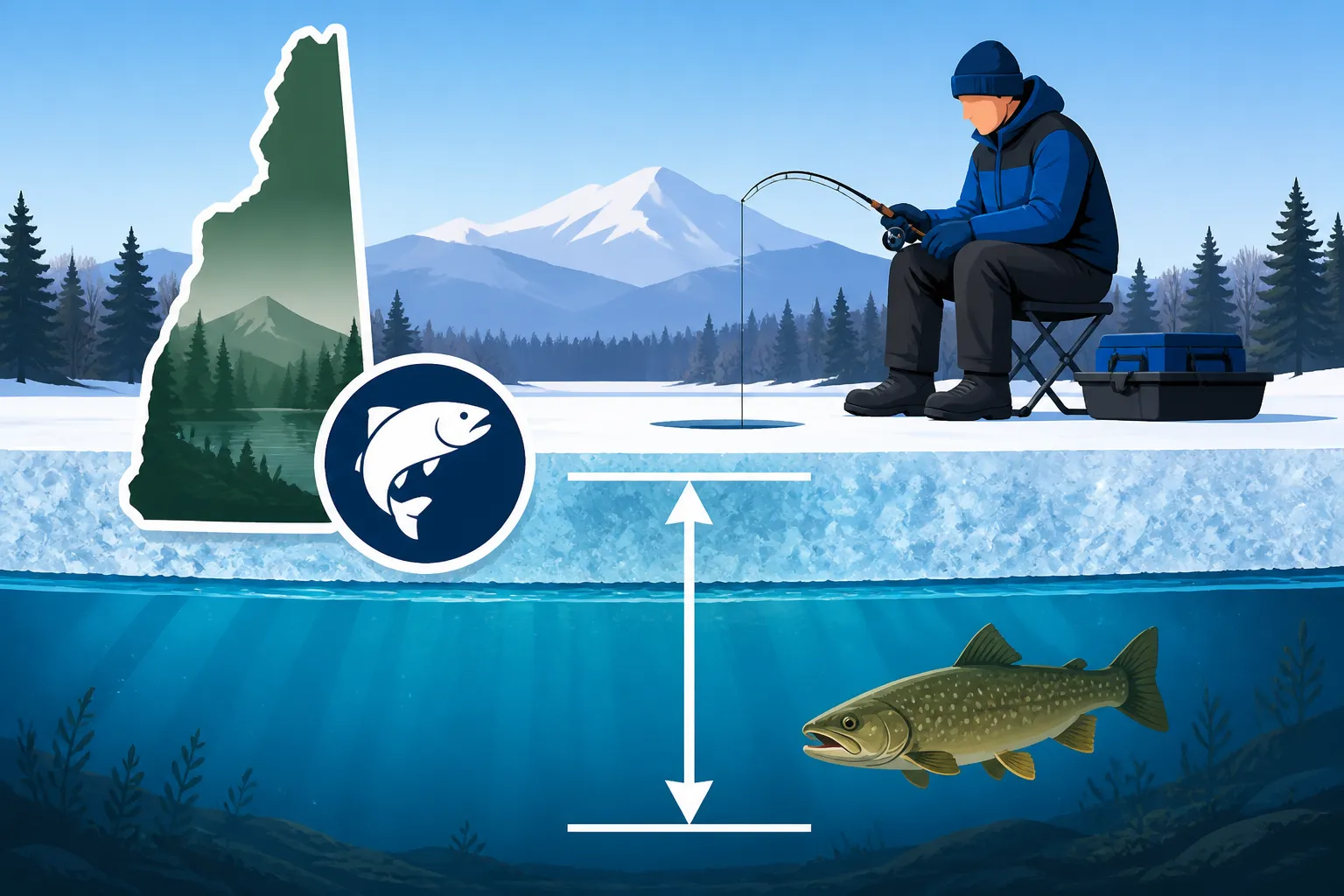
How thick ice needs to be before New Hampshire anglers fish it
There’s a unique thrill to ice fishing in New Hampshire, that crisp air, the quiet solitude of a frozen lake, and the anticipation of a tug on the line. But that exhilaration can quickly turn to dread if you're not absolutely sure about the ice beneath your feet. Many of us have felt that anxious pinch, wondering if the ice is truly solid enough, or if that darker patch is a sign of danger. This guide is here to cut through the uncertainty and provide clear, reliable information on how thick the ice needs to be for a safe and enjoyable fishing experience in the Granite State.
Understanding the Risks of Thin Ice
Stepping onto a frozen body of water is an act of trust – trust that the ice will hold you, your gear, and maybe even your companions. But that trust needs to be earned, not assumed. The risks associated with thin ice are profound and can be life-threatening, and it’s a reality every angler must face with seriousness and respect. It's not just about getting wet; it's about the immediate shock of cold water, the rapid onset of hypothermia, and the immense difficulty of self-rescue, especially when bundled in heavy winter clothing.
The Silent Dangers Beneath the Surface
What makes thin ice so treacherous isn't always obvious. You might look out across a seemingly vast, flat expanse of white and assume uniformity, but nothing could be further from the truth. Ice forms and degrades based on a multitude of factors, creating a patchwork of varying strengths. A thick, opaque layer in one spot could be mere inches from a dangerously thin, clear section over deeper water or near a current. Rivers, streams, and springs flowing under the ice can create weak spots that are invisible from above. Areas around submerged rocks, logs, or other structures can also conduct heat, leading to localized thinning. These "silent dangers" are why a comprehensive understanding of ice formation and constant vigilance are non-negotiable for ice anglers.
Beyond the visible, there's the insidious effect of temperature fluctuations. A few days of above-freezing temperatures, even followed by colder nights, can significantly weaken ice without changing its appearance. This is especially true in early and late winter. The structure of the ice changes, becoming honeycombed and brittle, even if the overall thickness hasn't drastically reduced. This "rotten ice" can shatter under pressure, giving little to no warning. Always remember that conditions can change rapidly, and what was safe yesterday might not be safe today, making it crucial to reassess continuously.
Common Misconceptions About Ice Safety
Many myths and misunderstandings persist about ice safety, often leading anglers into precarious situations. One of the most common is the idea that "if someone else is on it, it must be safe." While it's tempting to follow the crowd, that person might be lighter, have more experience reading ice, or simply be unaware of the risks themselves. Every angler is responsible for their own safety and should conduct their own assessment. Relying solely on others' judgment is a gamble you don't want to take when your life is on the line.
Another prevalent misconception is that a few cold nights will automatically make the ice safe. While sustained cold is necessary, ice formation is complex. Factors like snow cover (which insulates the ice and slows freezing), wind, currents, and underlying water depth all play a role. A lake that freezes quickly might also thaw quickly, and areas with strong currents, like those found on the Connecticut River Fishing Access in New Hampshire, will take much longer to form safe ice, if ever. Don't fall into the trap of thinking all ice is created equal, or that a simple glance is enough to deem it safe. Ice thickness alone isn't the only indicator of safety; its quality is just as, if not more, important.
The Official Guidelines for Safe Ice Thickness in New Hampshire
When it comes to ice fishing in New Hampshire, safety is paramount. The New Hampshire Fish and Game Department, like many wildlife agencies across North America, provides clear and concise guidelines regarding ice thickness. These aren't just suggestions; they are the result of extensive research and real-world experience, designed to keep anglers, snowmobilers, and anyone venturing onto the ice out of harm's way. While no ice is 100% safe, adhering to these standards significantly reduces the risk.
Minimum Ice Thickness for Different Activities
The general rule of thumb, and what the New Hampshire Fish and Game Department often communicates, is to apply ice thickness rules based on the minimum required for specific activities. It’s not a one-size-fits-all situation, and what's safe for one person walking might not be safe for a group or a vehicle. Here's a breakdown of the widely accepted recommendations:
- 2 inches or less: Absolutely stay off! This ice is not safe for any activity. It's a dangerous facade.
- 3 inches: This is the bare minimum for single individuals walking or ice fishing, but it's still considered very risky. Most experts recommend waiting for more. If you must, spread your weight and have rescue gear immediately accessible.
- 4 inches: This is the recommended minimum for walking, ice fishing alone, or small groups (2-3 people spaced out). This thickness provides a reasonable margin of safety for individual activity, but caution is still essential. This is generally the target for early season angling.
- 5-7 inches: Safe for small groups or snowmobiles. If you're planning to take a snowmobile out to your fishing spot on one of the Best Ice Fishing Lakes in New Hampshire, ensure the ice consistently measures at least this much across your route. Always check for variations, especially near shorelines or inlets.
- 8-12 inches: Generally safe for cars or small trucks. This is where things get serious. While 8 inches might technically hold a small car, the risk increases dramatically with vehicle weight and uneven distribution. Many ice fishing enthusiasts who drive vehicles onto the ice prefer to wait until ice is closer to 12 inches for added security, especially if bringing an ice shanty and a lot of gear.
- 12-15 inches: Recommended for medium trucks or heavier vehicles. Again, caution is key, and it’s always better to err on the side of more ice. Never drive a vehicle onto ice unless you are absolutely certain of its strength and quality.
It's vital to remember that these are minimum guidelines for clear, solid ice. Any deviation from ideal conditions (snow cover, cracks, slush, varying temperatures) requires a significant increase in these minimums. Don't forget that New Hampshire Ice Shanty Registration Rules might also come into play, especially if you're pulling a larger shelter onto the ice.
| Activity Type | Minimum Recommended Clear Ice Thickness (Inches) |
|---|---|
| Individual Walking / Ice Fishing | 4 |
| Small Group (2-3 people, spaced) | 4-6 |
| Snowmobile or ATV | 5-7 |
| Small Car / Light Truck | 8-12 |
| Medium Truck / Heavier Vehicle | 12-15+ |
Factors That Compromise Ice Strength
Just because the ice looks thick doesn't mean it's strong. Several factors can significantly compromise ice strength, turning a seemingly safe surface into a dangerous trap. Ignoring these can lead to catastrophic consequences, even if your measurements show adequate thickness.
One of the most common culprits is snow cover. A thick blanket of snow acts as an insulator, preventing the ice from thickening further and even causing it to thin from below if the water is warmer. Worse, heavy snow can push down on the ice, causing water to seep up through cracks, creating slush. This slush then freezes into "snow ice," which is opaque and appears thick but is significantly weaker than clear, black ice. Snow ice can take twice the thickness to support the same weight as clear ice, so a "foot of ice" could be deceiving if much of it is snow ice.
Currents and inlets/outlets are notorious for creating dangerously thin areas. Even in large, seemingly still lakes, underwater currents from streams, rivers, or springs can continually erode ice from below. These spots, often near shore, bridge abutments, or narrow passages, can have ice that is dramatically thinner than the surrounding areas. Always be extra cautious around these locations, as they are common points of ice failure. For example, some areas of Lake Winnipesaukee, even during peak ice fishing season, might have weak spots due to hidden currents. Anglers targeting species like lake trout in these deeper areas should be especially vigilant and consult local knowledge or maps if possible, on top of their own measurements.
Finally, daily temperature fluctuations and freeze-thaw cycles have a cumulative weakening effect. Even if the ice refreezes overnight, the repeated warming and cooling can cause internal stress, micro-fractures, and a "honeycombed" structure, especially in late winter. This "rotten ice" might look solid but can crumble under pressure. Rain can also rapidly degrade ice by melting its surface and seeping into cracks, further compromising its integrity. Always consider the recent weather patterns, not just the current temperature, before heading out. The ice isn't a static entity; it's a dynamic, ever-changing surface.
How to Accurately Measure Ice Thickness
Knowing the recommended ice thickness is one thing, but accurately measuring it is another. You can't just eyeball it. Relying on visual estimates is a recipe for disaster. Getting a precise measurement is straightforward with the right tools and technique, and it's a step you should never skip, especially when venturing onto a new body of water or in early/late season conditions. This process should be repeated as you move around, as ice thickness can vary dramatically even within a short distance.
Essential Gear for Ice Measurement
Before you even step foot on the ice, make sure you have the right equipment for measuring. This isn't just about convenience; it's about safety.
First and foremost, you'll need an ice auger or spud bar. A spud bar is a long, heavy chisel that allows you to test the ice ahead of you as you walk, creating a hole to measure. It's especially useful for initial exploration or when you're unsure of the ice quality. For consistent fishing holes, a manual or power ice auger is indispensable. Brands like Eskimo and Jiffy are popular, and you can find a good selection of them, along with replacement blades, on sites like Amazon. Having sharp blades is crucial for quickly and safely drilling through ice.
Next, a tape measure or a specialized ice ruler is essential. Many ice auger covers or spud bars have markings for quick measurement, but a dedicated tape measure or ruler offers greater accuracy. Look for one that's easily readable in cold conditions, preferably with bold markings. A good rule of thumb is to carry a bright colored one so it doesn't get lost in the snow.
Finally, consider a safety pick set worn around your neck. These are two sharp, spiked handles connected by a cord. If you do break through, these can be invaluable for gripping the ice and pulling yourself out. While not directly for measurement, they are a critical piece of gear for anyone testing ice. You can often find these bundled with other ice safety gear on Amazon.
Step-by-Step Measurement Process
Measuring ice thickness should be a methodical process, not a rushed one. Here's how to do it effectively:
- Start at the Shoreline: Never assume the ice near shore is thick. In fact, it's often weaker due to fluctuating water levels, currents, and sun exposure. Begin by testing the ice a few feet out from the bank. Use your spud bar to tap and chip away, listening to the sound and feeling the resistance. If it takes several solid swings to get through, it's a good sign. If it breaks through easily, stay off.
- Make Initial Holes: Once you've determined the near-shore ice is safe (at least 4 inches for a single person), carefully move a short distance (maybe 10-15 feet) and drill your first hole with your auger. This initial hole is primarily for measurement, not fishing.
- Measure the Thickness: Dip your tape measure or ice ruler into the hole. Hook the end onto the bottom edge of the ice and pull up until it's snug against the top surface. Read the measurement. Pay attention to the color and texture of the ice you drill through – clear, black ice is strongest. Slushy, milky, or bubbly ice is weaker.
- Repeat as You Go: Do not assume the entire body of water has uniform thickness. As you venture further out, drill new test holes every 20-30 feet, or more frequently if you notice changes in ice appearance (e.g., snow drifts, cracks, open water in the distance) or hear unusual sounds. For instance, if you're exploring a new spot on Newfound Lake Fishing Guide or another large waterbody, constant checking is crucial due to varying depths and contours.
- Look for Warning Signs: Even without drilling, pay attention to visible cues. Darker areas often indicate thinner ice. Pressure ridges (cracks where ice plates have buckled) can be very unstable. Areas with standing water or slush are also red flags.
Interpreting Your Findings and Making the Call
Once you have your measurements, the real "call" is yours to make. Even if the ice hits the minimum recommended thickness, don't ignore your gut feeling. If something feels off, or you're unsure about the ice quality (e.g., it's mostly snow ice), retreat.
The goal isn't just to find enough ice, but good ice. Clear, "black" or "blue" ice, formed during sustained cold periods without snow, is the strongest. It's often so clear you can see through it to the bottom in shallow areas. This is the gold standard. In contrast, "white" or "slush" ice, which forms from refrozen slush or snow, has a lot of air trapped within it and is considerably weaker. You might need 8 inches of snow ice to equal the strength of 4 inches of clear ice.
Consider the entire picture: the thickness you measured, the quality of that ice, the recent weather history, the presence of currents, and the number of people in your group. If you're planning to target specific species like lake trout in New Hampshire Lake Trout Ice Fishing Season Dates, you might be venturing into deeper, potentially more treacherous areas, requiring even greater caution. Always err on the side of caution. No fish is worth the risk of falling through. If in doubt, stay on shore or find a safer, better-known spot.
Proactive Safety Measures Beyond Ice Thickness
While ice thickness is undeniably the most critical factor, a truly safe ice fishing experience in New Hampshire involves a multi-layered approach to safety. Relying solely on a measurement without considering other precautions is like building a house with a strong foundation but no roof. These additional measures are your personal safety net, designed to prevent incidents and, if the worst happens, increase your chances of survival and rescue.
Never Venture Alone and Always Tell Someone Your Plans
The buddy system isn't just for kids; it's a vital safety rule for all ice anglers. Whenever possible, go ice fishing with at least one other person. In an emergency, a companion can provide immediate assistance, call for help, or go for help. Even a strong swimmer can struggle immensely in frigid water while burdened with winter clothing, making self-rescue incredibly difficult. Having someone there to toss you a rope or pull you to safety can be the difference between a close call and a tragedy.
Beyond a fishing partner, it's absolutely crucial to inform someone reliable about your plans. This means telling a family member or friend exactly where you're going, what time you expect to be back, and who you're with. Provide specific details, like "I'll be on the east side of Pawtuckaway Lake near the boat ramp," or "We're heading to one of the smaller ponds listed in the Best Trout Ponds in New Hampshire guide, specifically Conner Pond." This way, if you don't return when expected, someone knows where to send help. A simple text message or a quick phone call could save your life. Don't assume anything; make it a habit every single time you head out on the ice.
Essential Safety Equipment to Carry
Just like you wouldn't go boating without checking Life Jacket Requirements for New Hampshire Boaters, you shouldn't go ice fishing without proper safety gear. Carrying the right equipment ensures you're prepared for the unexpected.
- Ice Picks (Spud Picks): These are small, sharp, handled tools that you wear around your neck. If you break through, you can use the picks to grip the ice and pull yourself out. They are compact, inexpensive, and incredibly effective. You can find reliable sets on Amazon.
- Throw Rope: A buoyant rope, at least 50 feet long, with a small float or ball on the end, stored in a throw bag. This allows you to assist a companion who has fallen through the ice from a safe distance without putting yourself in danger. Practice throwing it before you need it.
- Whistle: A simple, loud whistle can signal for help if you're in distress or need to alert a distant companion.
- Personal Flotation Device (PFD): While not always comfortable for active fishing, a lightweight, inflatable PFD or a float suit (an insulated snowmobile/ice fishing suit with built-in flotation) significantly increases your chances of survival if you fall in by keeping your head above water and providing thermal protection. If you're using a vehicle like an ATV, consider wearing a PFD.
- Warm, Dry Clothes in a Dry Bag: Stash a complete change of clothes, socks, and gloves in a waterproof dry bag. If you do get wet, changing into dry clothes quickly can help prevent hypothermia. This is especially important for anglers targeting species like perch or pickerel in colder seasons, as discussed in New Hampshire Ice Fishing Season for Pickerel and Perch.
- First-Aid Kit: A basic first-aid kit is always a good idea for any outdoor activity, including minor cuts or scrapes.
What to Do if You Fall Through the Ice
Even with all precautions, accidents can happen. Knowing what to do in the terrifying event of falling through the ice can literally save your life. Panic is your biggest enemy, so try to remain calm and follow these steps:
- Don't Panic, Stay Calm: The initial shock of cold water is overwhelming, but fighting it will only deplete your energy faster. Focus on your breathing.
- Turn Towards Where You Came From: The ice you just broke through was presumably thinner than the ice you were just on. Turn towards the direction you were approaching from, as that ice is likely thicker and more stable.
- Use Your Ice Picks: Dig your ice picks into the solid ice ahead of you. Kick your feet vigorously to help propel yourself horizontally onto the ice. Try to get as much of your body onto the ice as possible.
- Roll Away: Once you're out of the water, don't stand up immediately. Roll away from the hole, spreading your weight evenly, until you reach thicker, more stable ice.
- Get to Safety and Warm Up: Once on solid ground, head immediately for shelter and get out of your wet clothes. Change into the dry clothes you brought in your dry bag. If you have companions, they should assist you. Seek medical attention if you suspect hypothermia. Remember that the techniques for Jigging for Perch Through the Ice or other species become secondary to your immediate survival in this scenario.
Knowing these steps and having the right equipment could be the difference between a close call and a tragic outcome. Always prioritize your safety and be prepared for the worst while hoping for the best.
Disclaimer
The information provided in this guide is for general informational purposes only and does not constitute professional advice. Ice conditions are highly variable and can change rapidly. Always exercise extreme caution when venturing onto ice. The New Hampshire Fish and Game Department or local authorities should be consulted for the most current and specific regulations and safety recommendations for any particular body of water. No ice is 100% safe, and personal responsibility for safety is paramount.