Best spinnerbait blade color for stained water
There’s nothing quite like the disappointment of arriving at your favorite New Hampshire fishing spot, only to find the water is murky and stained, looking more like chocolate milk than prime angling habitat. It’s a common frustration, especially after a heavy rain or during periods of high runoff, and it leaves many anglers wondering if it’s even worth casting a line. The good news is, you absolutely can still have a productive day, but it often requires a strategic shift in your lure choice. This guide is all about helping you understand how different spinnerbait blade colors perform in stained water, ensuring you pick the right one to grab a fish's attention when visibility is low.
Understanding Stained Water and Its Impact on Lures
Before we dive into specific colors, let’s talk a little about what stained water actually means for fishing and why it makes our lives as anglers a bit tougher. When the water isn't clear, it changes everything about how fish perceive their environment and, crucially, how they see your lure.
What is "Stained Water"?
When we talk about "stained water" in New Hampshire, we're generally referring to water that has reduced clarity due to suspended particles or dissolved organic matter. This isn't necessarily dirty or polluted, though heavy runoff can certainly bring pollutants along. More often, it's a natural phenomenon.
For example, a sudden downpour can churn up bottom sediments in a shallow lake or river, making the water cloudy with mud or silt. In other cases, tannins from decaying leaves and vegetation, especially prevalent in many of our forested New Hampshire ponds and bogs, can give the water a tea-stained or even brownish-red hue. Algae blooms, particularly in warmer months, can also create a green or yellowish stain. Each of these types of stained water presents its own challenges, but the common thread is that light doesn't penetrate as effectively, and objects are harder for fish to see.
How Stained Water Affects Light Penetration
Think about trying to see underwater in a swimming pool versus a muddy puddle. In the clear pool, colors are vibrant and true. In the muddy puddle, everything is dull, and beyond a few inches, it's just a murky blur. The same principle applies to fishing in stained water.
Light waves are absorbed and scattered differently depending on the water's clarity and the nature of the suspended particles. Red light, for instance, is absorbed very quickly in water, even clear water, so a red lure might appear dull brown or even black at a relatively shallow depth. Blues and greens penetrate deeper in clear water. However, in stained water, most colors get muted or disappear entirely much faster. Fish, particularly those that rely on sight to ambush prey, have a much smaller window to detect your lure. This means that instead of relying purely on visual accuracy, we need to focus on aspects that stand out or create a strong profile.
Why Spinnerbaits Shine in Stained Water
This is where the spinnerbait truly comes into its own. Unlike a crankbait or a soft plastic that might rely heavily on its exact color or realistic profile, a spinnerbait offers two huge advantages in low-visibility conditions: vibration and flash.
The spinning blades, whether they are Colorado, Willowleaf, or Indiana styles, create a significant amount of "thump" or vibration in the water. This disturbance travels through the water and can be detected by a fish's lateral line system, even if they can't see the lure. It's like a sonar ping calling them in. The fish feels the lure before it sees it. Secondly, the metallic or painted blades reflect any available light, creating a flash. Even in extremely dim conditions, that flicker can be enough to catch a fish's eye from a distance. These two elements make spinnerbaits exceptionally effective tools for getting noticed when fish are relying more on their sense of feel and subtle visual cues than on perfect sight. Anglers often find success with spinnerbaits in the lower stretches of the Merrimack River after heavy rains, for example, when the water gets particularly turbid.
The Go-To Spinnerbait Blade Colors for Stained Water
When the water turns murky, the old adage "match the hatch" takes a backseat to "stand out from the muck." We're looking for colors that either provide strong contrast or create a distinct silhouette.
Bright and Bold: White, Chartreuse, and Bright Orange
These are arguably the most popular and often most effective colors for stained water, and for good reason. They are designed to scream "look at me!"
-
White: White is a fantastic choice because it offers incredible contrast against dark, stained water. It doesn't absorb light like darker colors do, so it maintains its brightness longer and appears as a distinct, attention-grabbing blob in murky conditions. Think of it like a flashlight beam in a dusty room – it cuts through the haze. Many New Hampshire anglers swear by white spinnerbaits for largemouth bass in tannin-stained ponds or even for smallmouth in rivers when the clarity drops. It mimics shad or other baitfish trying to escape, and that bright flash is irresistible. You might find a great selection of white spinnerbaits at a local tackle shop or even on Amazon.
-
Chartreuse: This vibrant, neon yellow-green color is a proven winner in stained water across the board. Its intense hue penetrates murky water surprisingly well and appears as a strong, almost glowing presence to fish. Chartreuse offers an unparalleled level of visibility. It's often used with great success for bass, pike, and even panfish when the water is off-color. Whether you're fishing a muddy agricultural pond or a tannin-stained lake in the White Mountains, a chartreuse spinnerbait should always be in your tackle box. Its distinctness is hard for fish to ignore, especially when paired with a good thumping blade.
-
Bright Orange/Firetiger: While perhaps not as universally popular as white or chartreuse, bright orange can be a phenomenal color in certain stained water scenarios, particularly those with a brownish or greenish tint. It creates a bold, unnatural splash of color that can trigger an aggressive strike from curious or irritated fish. The "firetiger" pattern, which combines chartreuse, orange, and sometimes black stripes, takes this a step further by offering multiple high-contrast elements. This pattern is particularly good in water that's not totally opaque but just heavily stained. You'll often see these used effectively in early spring when runoff is prevalent.
Dark and Silhouetted: Black, Junebug, Blue
It might seem counterintuitive to go dark in dark water, but these colors work on a completely different principle: creating a strong, defined silhouette against the lighter surface above.
-
Black: When the water is really soupy and visibility is next to zero, sometimes the best strategy is to create the strongest possible silhouette. A black spinnerbait, especially one with a large blade, presents a solid, unbroken profile that fish can detect as it passes by overhead. Imagine looking up from underwater: a dark object passing above you creates a distinct shape against the faint light filtering from the surface. Black spinnerbaits are incredibly effective on cloudy days or in very dark, muddy water. They don't rely on reflecting light; they rely on blocking it. This can be especially deadly for ambush predators like largemouth bass lurking in cover.
-
Junebug (Dark Purple): This color, a very dark, often flecked, purple, is a fantastic stained-water option that combines the silhouette effect with a subtle hue. While it appears very dark to our eyes in low light, the purple undertone can sometimes be just enough to offer a different contrast than straight black. It’s a popular choice in southern waters for bass, but it translates very well to stained conditions in New Hampshire, particularly in areas with heavy vegetation or dark bottom. It offers that strong profile but with a hint of something "different."
-
Blue (Dark Blue/Royal Blue): Dark blue, often used in conjunction with black or chartreuse, can also be a surprisingly effective color in stained water. It creates a solid silhouette, much like black, but with a color that some fish species, especially smallmouth bass, seem to key in on. In some deeper, stained waters, blue light might penetrate slightly better than other colors, giving it a subtle advantage. Consider a dark blue skirt with a silver or gold blade – the contrast can be quite compelling. For instance, smallmouth in some of the deeper sections of Lake Winnipesaukee might respond well to this if the water clarity changes.
Metallic Flash for Low Light
The blades themselves play a huge role, regardless of the skirt color. The flash they produce is a primal attractant.
-
Gold and Copper Blades: These are often superior to silver in stained or low-light conditions. Gold and copper metals reflect a warmer, more subtle light that can appear more natural or simply stand out better in murky water. Think of how a sunset looks compared to a bright midday sun – gold and copper blades provide that kind of warmer glow. They excel on cloudy days or when fishing in heavily tannin-stained waters, where a bright silver flash might be too harsh or disappear too quickly. The reflective qualities of gold and copper are more subdued but often more visible in these conditions.
-
Silver Blades: While silver is excellent in clear or slightly stained water where it can reflect true sunlight, its effectiveness diminishes rapidly in very dark or muddy water. The bright, sharp flash of silver tends to be absorbed by the murky water rather than cutting through it. However, if the stained water has a lot of particulate that actually reflects light, like certain silty rivers, silver can still create enough flash to draw attention. It's often best used in combination with a bright or dark skirt color to ensure overall visibility.
Blade Combinations and Sizes for Optimal Visibility
It's not just about the color of a single blade or the skirt; how the blades are arranged, their size, and their shape all contribute to a spinnerbait's effectiveness in stained water.
Mixing Colors and Styles
Many spinnerbaits come with multiple blades, offering a fantastic opportunity to create custom attraction profiles for stained water.
-
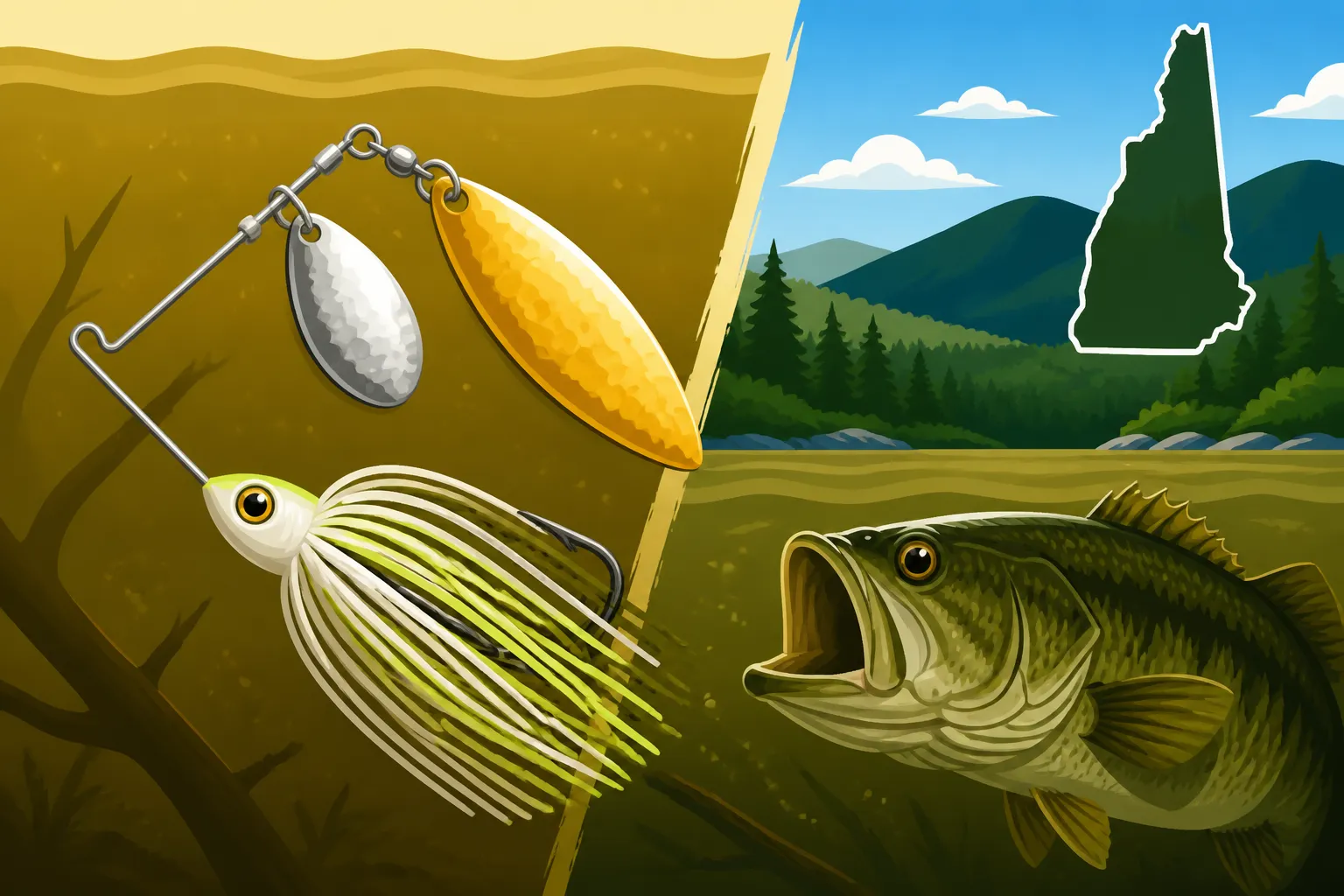
Tandem Blades: Most spinnerbaits feature two blades, often a smaller "teaser" blade and a larger "thumper" blade. In stained water, combining blade colors can be very effective. For instance, a gold Colorado blade with a chartreuse Willowleaf blade might offer both a warm flash and a wide vibration pattern, alongside a visual pop from the chartreuse. The contrast between the two blade colors can also be a trigger. Some anglers even paint one side of a metallic blade with a bright or dark color to enhance this effect.
-
Colorado vs. Willowleaf vs. Indiana:
- Colorado Blades: These are round and broad, creating the most vibration or "thump" in the water. They spin slower and displace a lot of water, making them absolutely phenomenal for stained water because fish can feel them from a greater distance. When visibility is poor, a strong vibration is often more important than a perfect visual.
- Willowleaf Blades: These are long and narrow, providing less vibration but more flash due to their faster rotation. They are often preferred in clearer water or when fish are highly active and chasing. In stained water, a Willowleaf blade can still provide a valuable flash if there's enough ambient light, but it might not have the same "thump" as a Colorado.
- Indiana Blades: These are a hybrid, offering a balance between vibration and flash. They are a good all-around choice.
For heavily stained water, a spinnerbait with a large Colorado blade (or two) is usually your best bet. If the water is only moderately stained, an Indiana or even a Willowleaf in combination might work, especially if you're trying to cover water quickly. Many anglers will head to Bass Pro Shops to stock up on spinnerbaits with different blade configurations for varying water clarity.
Importance of Blade Size and Vibration
In stained water, bigger is often better when it comes to blades. A larger blade creates a more significant vibration and a larger profile, making it easier for fish to detect.
- Maximized Thump: Large Colorado blades send out powerful pressure waves that fish pick up with their lateral lines. This is crucial when their sight is impaired. A subtle throb from a small blade might go unnoticed, but a strong pulse from a bigger blade can draw them in from several feet away.
- Increased Profile: A larger blade also presents a more substantial target. Even if the fish only sees a blurred outline, a bigger blur is easier to distinguish than a small one. This can make the difference between a curious glance and an aggressive strike. When you're fishing areas known for larger fish, or waters that get exceptionally murky after rain, opting for a spinnerbait with a #5 or #6 Colorado blade can dramatically improve your hook-up ratio. How to Catch Largemouth Bass in New Hampshire often depends heavily on these subtle gear choices.
Considering Skirt Colors
While blades get most of the attention in stained water discussions, the skirt color plays a vital supporting role.
- High-Contrast Skirts: Just like with blades, you want skirts that offer strong contrast. White, chartreuse, black, and junebug are excellent choices. A white or chartreuse skirt paired with a gold or silver blade creates a vibrant, visible package.
- Dark Skirts for Silhouette: A black or junebug skirt complements dark blades perfectly by extending that strong silhouette. But they can also work with bright metallic blades to create a "hotspot" effect, where the flash contrasts sharply with the dark body.
- Flash in the Skirt: Many spinnerbait skirts incorporate flashabou or other reflective strands. This added sparkle can further enhance visibility in stained water, even if it's just a subtle glimmer within the main body of the lure. Don't underestimate the collective power of a flashy blade and a shimmering skirt working together.
Real-World Application and Situational Tips for New Hampshire
Knowing the theory is great, but applying it on the water is where the magic happens. New Hampshire offers diverse fishing environments, and stained water can pop up anywhere from our big lakes to our small streams.
Matching the Hatch (Even in Murky Water)
While "stand out" is the general rule, there are times when a more nuanced approach is beneficial. Even in stained water, fish might still have some prey preferences.
- Mimicking Local Baitfish: If you know the body of water you're fishing has a prevalent baitfish, say shiners or yellow perch, try to select a spinnerbait that has some resemblance, even if it's just a general color. For instance, a spinnerbait with a white or silver blade and a subtle hint of yellow or green in the skirt might imitate a disoriented perch. In some of the deeper, cooler lakes where smelt are common, a white or silver spinnerbait can mimic those struggling baitfish.
- Subtle Stains: If the water is only lightly stained, rather than completely opaque, you might get away with slightly more natural colors like white, pearl, or light chartreuse, especially if you're targeting fish that are still somewhat sight-dependent. The key is still contrast, but it doesn't have to be quite as loud. When fishing the Pemigewasset River Fishing Guide after a slight rise in water, you might find that subtle changes make a difference.
Experimentation is Key
Fishing, especially in challenging conditions like stained water, is rarely a "one size fits all" endeavor. What works on Lake Winnipesaukee after a rainstorm might not work on a tannin-stained pond in southern New Hampshire.
- Start with the Staples: Always have white, chartreuse, and black spinnerbaits ready. These are your foundational stained-water colors.
- Vary Your Retrieve: Even with the perfect color, how you retrieve your lure is crucial. In stained water, a slower retrieve often allows fish more time to detect and react to the lure. Sometimes a stop-and-go retrieve, letting the spinnerbait flutter and then kick back into action, can trigger strikes. The sudden change in vibration and flash can be irresistible.
- Change It Up: Don't be afraid to experiment with different blade combinations, skirt colors, and even trailer types (like a soft plastic grub or chunk) until you find what the fish are responding to. If a bright chartreuse isn't working, switch to black. If gold isn't producing, try silver (if conditions allow). Being adaptable is a hallmark of successful anglers. A small tackle box just for your spinnerbaits, organized by color and blade type, can be a huge time-saver. You can find excellent tackle organization solutions at Bass Pro Shops or browse various options on Amazon.
Local New Hampshire Stained Water Scenarios
Let's think about some specific New Hampshire situations where these tips can come in handy.
- Post-Rain River Fishing: Rivers like the Merrimack or Connecticut often get murky after heavy rains. This is a prime time for large Colorado blade spinnerbaits in chartreuse or white. The strong vibration and bright visibility cut through the heavy flow and suspended silt, making it easier for smallmouth and largemouth bass to find them. Remember to check New Hampshire Fishing Regulations Explained for any specific rules related to high water or seasonal closures.
- Tannin-Stained Ponds: Many of our smaller, often shallower ponds, particularly those surrounded by wetlands or dense foliage, have naturally tea-stained water. Here, gold blades and brighter skirts (chartreuse, white, or even firetiger) tend to perform exceptionally well. The warm glow of the gold blade seems to complement the brownish tint of the water. These ponds can be fantastic for largemouth bass. You can also explore Best Trout Ponds in New Hampshire for similar considerations.
- Algae Bloom Lakes: In late summer, some lakes might experience green algae blooms, turning the water a greenish-yellow. In these conditions, chartreuse continues to shine, but sometimes a dark blue or black spinnerbait can provide a compelling contrast against the green water. Consider the impact of seasonal changes; knowing the Best Time of Year to Fish in New Hampshire can sometimes help predict water clarity.
- Deep, Dark Lakes: Even our large, deep lakes like Winnipesaukee can have stained sections or periods of reduced clarity. While lake trout are often targeted with different methods, smallmouth bass in the shallows or along shorelines will still be affected. Here, a bigger, thumpier blade in gold or chartreuse can be key.
Here's a quick reference table to help you choose:
| Stained Water Type | Best Blade Colors | Best Skirt Colors | Blade Type Preference | Key Principle |
|---|---|---|---|---|
| Heavy Mud/Silt | White, Chartreuse, Black | White, Chartreuse, Black | Large Colorado | Strong Contrast / Silhouette |
| Tannin (Tea-Stain) | Gold, Chartreuse, Orange | Chartreuse, White, Orange | Colorado, Indiana | Warm Flash / High Visibility |
| Algae Bloom (Green/Yellow) | Chartreuse, Dark Blue, Black | Chartreuse, Dark Blue, Black | Colorado, Indiana | Contrasting Pop / Silhouette |
| Low Light (Cloudy/Dawn/Dusk) | Gold, Silver (with bright skirt) | White, Chartreuse, Black | Colorado, Indiana | Enhanced Flash / Strong Profile |
| Moderate Stains | White, Chartreuse, Gold, Silver | White, Chartreuse, Black, Blue | Colorado, Indiana, Willowleaf | Versatile Visibility |
Remember, the goal in stained water is to provide a visual and vibrational signal that fish cannot ignore. By understanding how light and color behave in murky conditions, and by judiciously selecting your spinnerbait blade and skirt colors, you can turn a challenging day into a triumph. Happy fishing in the Granite State, even when the water looks a little cloudy!
Disclaimer
This article is for general informational purposes only and does not constitute professional advice. Laws, prices and regulations vary by location and change over time. Consult a qualified professional for guidance on your specific situation.