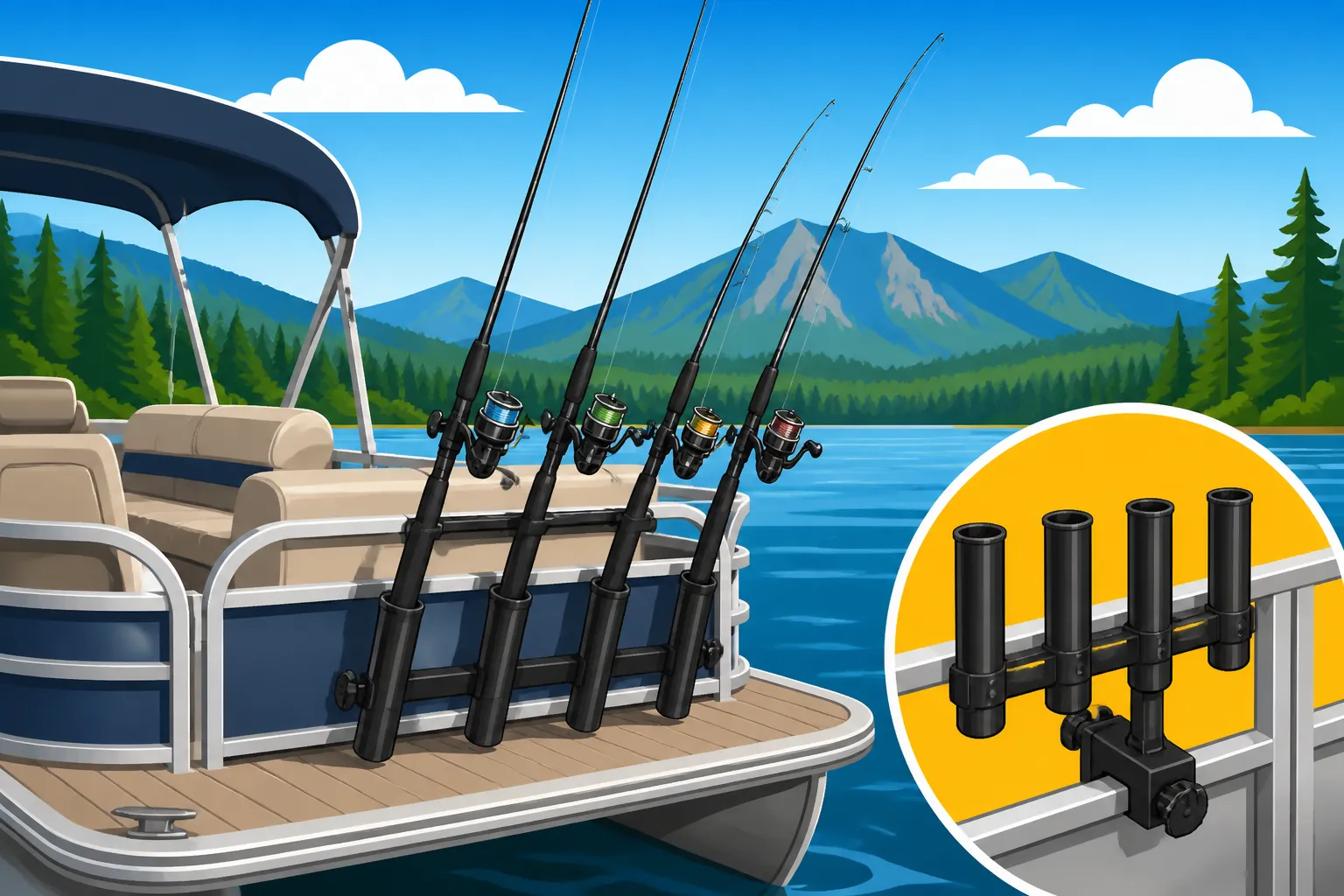
Best rod holder setup for a pontoon boat
There's nothing quite like spending a beautiful New Hampshire day out on the water, especially when you're on a pontoon boat. They're perfect for family outings, cruising, and just generally enjoying our stunning lakes like Winnipesaukee or Squam. But let's be honest, if you've ever tried to get some serious fishing done from a pontoon straight out of the showroom, you've probably faced the universal frustration: where do all the rods go? They end up leaning against railings, getting stepped on, tangled, or even worse, sliding overboard when you hit a wake. This guide is all about solving that problem, helping you transform your family-friendly pontoon into a true fishing machine with the best rod holder setup for your New Hampshire angling adventures.
Why Pontoon Rod Holders Are a Game-Changer for New Hampshire Fishing
Many pontoon boat owners initially buy their boats for leisure—family fun, swimming, and leisurely cruises. And while those activities are fantastic, for many of us, the call of the fish is simply too strong to ignore. Suddenly, that spacious deck, perfect for sunbathing, feels a little less perfect when you're trying to juggle multiple fishing rods, tackle boxes, and maybe a cooler full of snacks for the kids. This is where a well-thought-out rod holder setup makes all the difference, elevating your pontoon from a mere pleasure craft to a versatile angling platform.
The Frustration of Unsecured Rods
Imagine this: you've finally found that perfect drop-off on Lake Winnipesaukee where the Lake Winnipesaukee Lake Trout Fishing is rumored to be hot. You've got your trolling lines out, maybe a couple of bottom rigs for lake trout, and you're trying to keep an eye on everything. But your rods? They're either laid haphazardly on the deck, creating a tripping hazard, or precariously balanced against the pontoon railing. A sudden turn, a bump from a wave, or even just an excited kid pointing at a passing speedboat, and splash—there goes a rod and reel right into the deep. That heart-sinking feeling is something no angler wants to experience, especially when you've invested good money into your gear. The simple fact is, unsecured rods are a recipe for frustration, damage, and potentially lost equipment, completely undermining the relaxed fishing experience you're after.
The clutter on the deck isn't just an aesthetic issue; it's a practical one. When you're actively fishing, you need clear space to move, cast, and land fish. If your rods are constantly in the way, tangled in each other, or requiring you to gingerly step around them, it makes the whole process less enjoyable and more prone to mishaps. This is particularly true when you're dealing with larger, more powerful fish that require you to move around the boat quickly. Trying to fight a feisty smallmouth bass on Lake Winnipesaukee Smallmouth Bass Fishing while navigating a minefield of unsecured rods can quickly turn an exciting battle into a tangled mess.
Maximizing Your Fishing Potential
Proper rod holders do more than just keep your rods safe and tidy; they significantly expand your fishing capabilities. With a solid setup, you can run multiple lines simultaneously, which is a huge advantage, especially when trolling for species like landlocked salmon or lake trout in our deeper New Hampshire lakes. Instead of just one or two lines, you can comfortably deploy four, six, or even more, covering a wider area and increasing your chances of a bite. This multi-line approach is critical for many types of fishing, allowing you to experiment with different depths, lures, and bait presentations all at once.
Beyond trolling, rod holders are invaluable for still fishing or drift fishing. Imagine having several lines out, each holding a different bait, soaking in a promising spot for panfish or bottom-dwelling species. You can relax, enjoy the scenery, and simply wait for a tip to bend. If you're ice fishing on a pontoon (yes, some hardy souls do it, usually as a shanty base!), rod holders can secure tip-ups or jigging rods while you focus on one hole, or keep multiple holes active with minimal effort. This ability to multitask and maintain multiple lines in the water without constantly holding a rod makes your fishing trips far more efficient and productive. It turns your pontoon into a true fishing platform, ready for any species or technique our New Hampshire waters throw at you.
Types of Rod Holders Perfect for Pontoon Boats
The beauty of pontoon boats is their adaptability, and rod holders are no exception. There's a wide variety designed to integrate seamlessly with the unique construction of a pontoon, from its flat deck to its often-present perimeter railings. Choosing the right type depends on your boat's layout, your comfort with installation, and ultimately, your specific fishing needs.
Clamp-On Rod Holders: Versatility and Ease
Clamp-on rod holders are probably the most popular choice for pontoon owners, and for good reason. Their biggest advantage is their sheer versatility and ease of installation. These holders typically feature a C-clamp or similar mechanism that allows you to attach them directly to the square or round railings that run around most pontoon boats. This means no drilling, no permanent modifications, and the ability to reposition them as your fishing setup or preferences change. They're fantastic for anglers who want flexibility, or for those who use their pontoon for a mix of fishing and recreational activities. You can add them for a fishing trip and remove them when it's time for family swimming.
Many brands offer robust clamp-on options, and you can find a huge selection from retailers like Bass Pro Shops or online at Amazon. They come in various materials, from sturdy plastics to corrosion-resistant aluminum, and often feature adjustable angles and rotations, allowing you to fine-tune the rod's position. This adjustability is key for dialing in your trolling spread or ensuring your rod tips are visible from your seating position. While generally very secure, it's always wise to check the clamp's tightness periodically, especially during bumpy rides or when battling a strong fish. They are an excellent starting point for any pontoon angler looking to enhance their setup without committing to permanent fixtures.
Flush Mount and Track Systems: Permanent Solutions
For the angler who knows their pontoon is primarily a fishing vessel, or who simply prefers a cleaner, more integrated look, flush mount and track systems are worth considering. Flush mount rod holders are installed directly into the deck or gunwale of the pontoon. This involves cutting a hole and securing the holder, resulting in a low-profile, permanent fixture. They are incredibly strong and secure, providing a rigid hold that's excellent for heavy-duty trolling or fighting larger species like big lake trout. The downside, of course, is the permanence and the need for careful measurement and cutting during installation.
Track systems offer a fantastic blend of permanence and flexibility. These systems involve installing a sturdy aluminum or composite track along the gunwale or transom of your pontoon. Once the track is mounted, you can then slide various accessories—including rod holders—into the track and lock them into place. This allows for incredible customization; you can move holders along the track, add or remove them easily, and even incorporate other accessories like cutting boards, cup holders, or tool holders. Brands like Cannon and Scotty make popular track systems, and while the initial installation of the track itself is more involved than a simple clamp, the long-term versatility is unmatched. This setup is ideal for anglers who like to change their spread frequently or use different techniques depending on the day's target, whether it's New Hampshire Landlocked Salmon Regulations or New Hampshire Bass Limits and Slot Rules.
Rail-Mounted Rod Holders: Classic and Reliable
Rail-mounted rod holders are another classic option, distinct from clamp-on types in that they are typically bolted or screwed directly to the boat's existing rails. While this does involve drilling into the rail (which many pontoon owners are hesitant to do), it provides an exceptionally secure and robust mounting point. These are often made from high-grade polished stainless steel or anodized aluminum, offering both durability and a sleek appearance. They are particularly popular for larger pontoon boats or those used in more demanding fishing conditions.
The security of a bolted rail mount means less worry about the holder shifting or failing under the strain of a heavy bite or aggressive fish. They often come in fixed positions or with adjustable swivel bases, allowing for precise angling of your rods. While less flexible for repositioning compared to clamp-ons or track systems without re-drilling, their steadfast nature is a huge plus for dedicated anglers. Before going this route, carefully consider the material of your pontoon rails and ensure you use appropriate marine-grade fasteners to prevent corrosion. For many, a permanent, rock-solid attachment to the rail is the ultimate in peace of mind when their expensive rods are on the line.
Here's a quick comparison of these popular rod holder types:
| Rod Holder Type | Installation Effort | Repositioning Ease | Security Level | Best For | Pros | Cons |
|---|---|---|---|---|---|---|
| Clamp-On | Easy (no drilling) | Very Easy | Moderate-High | Casual fishing, mixed-use pontoons | No permanent modifications, highly flexible, affordable | May need occasional tightening, less robust than bolted options |
| Flush Mount | Difficult (drilling) | None (permanent) | Very High | Dedicated fishing pontoons, heavy-duty trolling | Clean look, extremely secure, won't snag lines | Permanent modification, fixed position, requires careful installation |
| Track System | Moderate (drilling) | Very Easy (within track) | High | Versatile anglers, custom setups, multi-species fishing | Highly customizable, secure, can mount other accessories | Initial track installation is more involved, higher initial cost |
| Rail-Mounted (Bolted) | Moderate (drilling) | Difficult (re-drilling) | Very High | Dedicated fishing, heavy tackle, clean permanent look | Extremely secure, durable, clean appearance once installed | Permanent holes in rail, less flexible for repositioning |
Choosing the Right Rod Holder Setup for Your New Hampshire Adventures
Deciding on the perfect rod holder setup for your pontoon isn't a one-size-fits-all situation. It truly depends on how you fish, what you fish for, and the specific characteristics of your pontoon boat. Thinking through these factors before you buy will save you time, money, and potential headaches down the line.
Consider Your Fishing Style and Target Species
Your primary fishing methods and the types of fish you pursue in New Hampshire waters should heavily influence your rod holder choices. Are you a dedicated troller, slowly dragging lures for How to Catch Landlocked Salmon in New Hampshire or How to Catch Lake Trout in New Hampshire across the big lakes? If so, you'll need robust, adjustable rod holders that can withstand the constant pressure of trolling and allow for precise angle adjustments. Anglers focused on trolling often benefit from having several holders spread around the pontoon, creating a wide "spread" of lines. Track systems or securely bolted rail mounts excel in this scenario due to their strength and the ability to fine-tune the angles.
Perhaps you're more into still fishing or drifting for bass, pickerel, or panfish in smaller ponds or slow-moving rivers. For this, less heavy-duty holders might suffice, and ease of repositioning could be more important. Clamp-on holders work wonderfully here, allowing you to quickly adjust to different spots on the boat as the bite moves around. If you're targeting big, hard-fighting species, even if not trolling, you'll want something that can handle a powerful strike without giving way. Consider how many rods you typically fish with at one time, and if you need additional holders for storing spare rods out of the way. If you plan on fishing specific locations like Great Bay Fishing Guide for Striped Bass, you might need specific holder types that can handle stronger currents and heavier tackle.
Material, Adjustability, and Security
When evaluating rod holders, the material they're made from is crucial, especially in the variable New Hampshire weather. Look for marine-grade materials that can stand up to freshwater exposure, sun, and temperature fluctuations. Stainless steel, anodized aluminum, and high-strength, UV-resistant composites are excellent choices. Cheaper plastics might suffice for very light use but can become brittle over time and break when you least expect it. Spending a little more on quality materials will pay off in durability and peace of mind.
Adjustability is another key feature. Can you change the angle of the rod? Can it rotate? This flexibility allows you to adapt to different fishing techniques, retrieve methods, and even boat orientations. For trolling, being able to point rods out to the sides or straight back at various angles is essential for avoiding tangled lines and presenting lures effectively. For still fishing, you might want rods angled more upright to see bites clearly. Lastly, and most importantly, consider the security of the holder itself. How securely does it grip the rod? Does it have a retention strap or collar to prevent the rod from bouncing out, especially on choppy water? Does the mounting mechanism feel solid and dependable? A rod holder is only as good as its ability to hold your rod safely and securely. Brands like Scotty and Cabela's (available through Bass Pro Shops) offer a range of products with excellent reputations for security and adjustability.
Quantity and Placement for Optimal Coverage
Once you've decided on the type of rod holders, the next step is to plan out the quantity and strategic placement on your pontoon. Don't just slap a couple on; think about your fishing strategy. For trolling, you might want holders spaced evenly along the stern railing, allowing for a wide spread of lines. Some anglers prefer to place a few additional holders further forward on the pontoon to give different angles or to hold rods ready for casting. A common setup might include 4-6 primary fishing holders, plus 2-4 additional "storage" holders for when rods aren't actively in use.
Consider line of sight: can you easily see the rod tips from your captain's chair or preferred fishing spot? Are they positioned so they won't interfere with walking paths or other boat activities? If you frequently fish with a partner, ensure there's enough space and holders for both of you. On a larger pontoon, you might even consider a dedicated "fishing station" on the stern, perhaps with a track system that allows for multiple holders and other accessories like a bait tray. The goal is to create a functional, uncluttered fishing zone that maximizes your ability to catch fish while maintaining the comfort and usability of your pontoon. Remember, you can always start with a few and add more as you discover your ideal setup.
Installation Tips and Maintenance for Longevity
Getting your rod holder setup installed correctly is just as important as choosing the right ones. A poorly installed holder is a liability, not an asset. And once they're in place, a little ongoing care will ensure they serve you well for many New Hampshire fishing seasons to come.
Secure Mounting Without Damaging Your Pontoon
Whether you're using clamp-on, flush mount, or rail-mounted holders, security is paramount. For clamp-on holders, ensure the clamp is tightened firmly to the railing, but avoid over-tightening to prevent damage to the rail itself. Many clamp-on holders come with rubber inserts or pads; always use these to protect the rail's finish and provide a more secure, non-slip grip. Periodically check the tightness, as vibrations from the motor and waves can sometimes loosen them over time.
For any installation that requires drilling—such as flush mounts or bolted rail mounts—take your time. Measure twice (or three times!) and drill once. Use marine-grade stainless steel fasteners to prevent rust and corrosion, which can quickly degrade your pontoon's structure. If drilling into aluminum, use anti-corrosion paste or sealant around the holes to prevent galvanic corrosion between dissimilar metals. Always seal any drilled holes with a marine-grade sealant, even if they're covered by the rod holder's base, to prevent water intrusion into the pontoon's core or under the decking. If you're unsure about drilling into your pontoon, consider consulting a professional boat shop or opting for non-drilling solutions like clamp-ons or a dedicated track system where the track itself is professionally installed. Remember, New Hampshire Boating Laws for Anglers require certain safety equipment, and a secure boat means a safer fishing experience.
Regular Checks and Care
Like all marine equipment, your rod holders need a bit of love to stay in top shape. After each use, especially if you've been saltwater fishing in New Hampshire Saltwater Fishing License, Explained areas like Great Bay, it's a good practice to rinse your rod holders with fresh water. This helps remove salt residue, fish slime, and any dirt or debris that could lead to corrosion or hinder their moving parts. For metal holders, you might consider an occasional wipe-down with a marine-grade protectant or polish.
Check all mounting hardware periodically. Are the bolts tight? Are the clamps still firm? Look for any signs of wear, cracks, or corrosion. If you notice any issues, address them promptly. Replacing a worn bolt or a cracked plastic component is much easier and cheaper than replacing a lost rod and reel. If your holders have adjustable parts, ensure they move freely and lock securely into place. Sometimes a little silicone spray or a drop of marine lubricant can keep things moving smoothly. This simple, routine maintenance will significantly extend the life of your rod holders and keep your pontoon fishing-ready.
Accessories to Enhance Your Setup
Beyond the basic rod holders, there are a few accessories that can really elevate your pontoon fishing experience. Many manufacturers offer extension risers for rod holders, which can be useful if your pontoon's railings are too low for comfortable rod access or if you need to clear other obstructions. These risers lift the rod holder higher, allowing for better line of sight and easier handling.
Another useful accessory is a safety leash or tether for your rods. Even in the most secure rod holder, a violent strike from a large fish or an unexpected wave can sometimes dislodge a rod. A simple lanyard that attaches the rod to the boat or the rod holder itself can be a small investment that prevents a major loss. Some anglers also find rod holder caps or covers beneficial, especially for flush-mount holders, to keep debris out when not in use. Finally, if you're installing a track system, consider adding other compatible accessories like cup holders, tool holders, or small tackle trays that can slide into the track. This creates a highly organized and efficient fishing space, ensuring that everything you need is within arm's reach while you're focused on reeling in your next New Hampshire trophy.
Disclaimer
This article is for general informational purposes only and does not constitute professional advice. Laws, prices and regulations vary by location and change over time. Consult a qualified professional for guidance on your specific situation.