What fish species thrive in cold tailwaters
For anglers who love the challenge and reward of pristine, cold water fishing, few environments are as appealing or as demanding as New Hampshire's tailwaters. It can be frustrating to approach these highly oxygenated, powerful flows without knowing what to expect, but understanding the unique ecosystems found below our state's dams is key to unlocking incredible fishing opportunities. This guide will dive deep into the fish species that not only survive but truly thrive in these unique New Hampshire habitats.
Understanding New Hampshire's Cold Tailwater Environments
Tailwaters are a special kind of fishing experience, often overlooked by those unfamiliar with their distinct characteristics. If you've ever found yourself struggling to find fish in a river below a large dam, it's likely because you weren't targeting the right species or understanding the nuances of the water.
What Exactly is a Tailwater?
At its simplest, a tailwater is the section of a river or stream immediately downstream from a dam. But it's not just any river section. The water released from the dam, especially if it's drawn from the bottom of a large reservoir, is consistently cold. This is because the deeper parts of a lake remain much cooler than the surface, even in the height of summer. This consistent flow and temperature regime creates a unique environment that fish either love or hate. Think about the difference between a naturally flowing river that warms up in the sun and a river that's perpetually fed by chilly, deep lake water—it's like night and day for aquatic life. The current can also be quite powerful and steady, unlike natural rivers that experience more fluctuating flows.
Why Cold, Consistent Water Matters for Fish
This cold, consistent water isn't just a preference for certain fish; it's a biological necessity. Cold water holds significantly more dissolved oxygen than warm water. For fish like trout and salmon, which require high levels of oxygen to thrive, these tailwaters are a lifesaver, especially during summer months when natural river temperatures might become too high for them to comfortably survive. Imagine trying to run a marathon in stifling heat versus cool, crisp air—the fish feel something similar. The steady flow also brings a constant supply of food, from insects dislodged upstream to smaller baitfish, making these areas incredibly productive for species adapted to current. While some species will avoid these conditions, others are absolutely built for them, developing robust bodies and keen senses to navigate and feed in the constant flow.
Common Challenges and Rewards of Tailwater Fishing
Fishing New Hampshire's tailwaters presents a unique set of challenges and, consequently, immense rewards. The challenges often stem from the very conditions that make these waters so productive: the strong, consistent currents and often crystal-clear water. Learning to read the subtle seams, eddies, and riffles where fish might hold takes practice. You'll need to adapt your casting, retrieve, and tackle to present your offerings naturally in the current. Additionally, the colder water often means fish are harder fighting and can be more elusive than their warm-water cousins.
However, the rewards are often spectacular. Tailwaters are renowned for producing larger, healthier fish. The consistent food supply and ideal oxygen levels allow fish to grow to impressive sizes. It’s not uncommon to pull out a trophy-sized trout or salmon from a tailwater that might surprise you given the river's overall size. These waters also tend to have longer "prime" fishing seasons because the stable temperatures keep fish active even when other rivers are too warm or too cold. Plus, the sheer beauty of many of New Hampshire's tailwater stretches, often nestled in scenic valleys, makes the entire experience unforgettable.
The Resilient Species of New Hampshire's Cold Tailwaters
When you head to a New Hampshire tailwater, you're usually looking for a select group of hardy, cold-water loving fish. These are the species that have adapted perfectly to the unique conditions found below dams.
Brown Trout: The Tailwater Kings
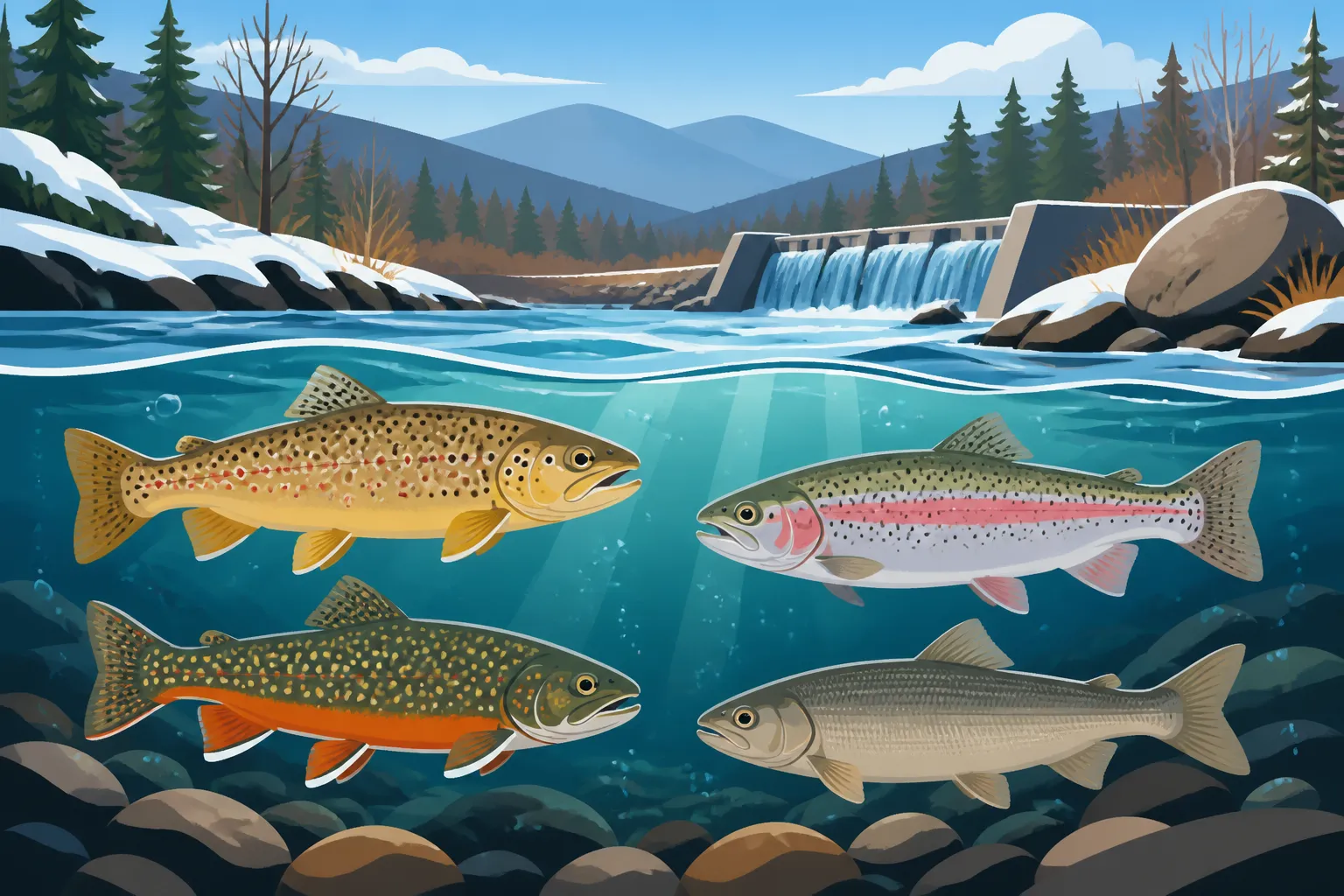
If there's one fish that truly embodies the spirit of a New Hampshire tailwater, it's the brown trout. These fish are incredibly adaptable and robust, thriving in the cold, consistent flows and often growing to impressive sizes. Brown trout are opportunistic feeders, meaning they'll eat just about anything that comes their way—insects, small fish, crawfish, and even rodents or amphibians that might fall into the water. This varied diet, combined with the rich food sources often found in tailwaters, allows them to pack on pounds. They tend to be a bit more elusive than rainbow trout, often preferring to hug the bottom or hold in deeper, darker pockets, making them a true prize for any angler. Their rich, golden-brown flanks and distinctive red and black spots are a beautiful sight, and their powerful runs in the current are something you won't soon forget. If you want to learn more about these fascinating fish, check out our guide on Brown Trout Habits in New Hampshire Streams.
Rainbow Trout: Fast Water Fighters
Rainbow trout are another staple of New Hampshire's tailwaters, often stocked in these productive waters due to their fast growth rates and enthusiastic feeding habits. Unlike the more secretive brown trout, rainbows are often found actively feeding in riffles and runs, eager to snatch up nymphs, emergers, or even dry flies drifting by. They are renowned for their acrobatic fights, often leaping clear of the water when hooked, making them a thrilling adversary on light tackle. Their iridescent, often pink-striped sides are instantly recognizable. Because they are frequently stocked, especially in easily accessible tailwater sections, they provide fantastic opportunities for anglers looking for consistent action. For more on where these fish are introduced, you can read about Rainbow Trout Stocking in New Hampshire.
Brook Trout: Native Gems in Select Tailwaters
While brown and rainbow trout often dominate the larger, more accessible tailwaters, don't discount the possibility of finding New Hampshire's native brook trout in certain sections. Especially in tailwaters that retain a more natural, pristine character, or in smaller, colder tributaries feeding into them, brook trout can still be found. These fish prefer the coldest, cleanest, most oxygenated water and are often an indicator of excellent water quality. They rarely grow as large as brown or rainbow trout in tailwaters but make up for it with their stunning coloration—a mosaic of red, orange, and blue spots on dark olive bodies, often with white leading edges on their fins. Catching a native brook trout in its pristine tailwater habitat is a special experience, connecting you directly to the wild heart of New Hampshire fishing. Discover more about our state's beautiful native fish in Brook Trout: New Hampshire's Native Trout.
Landlocked Salmon: Anadromous Relatives in Select Rivers
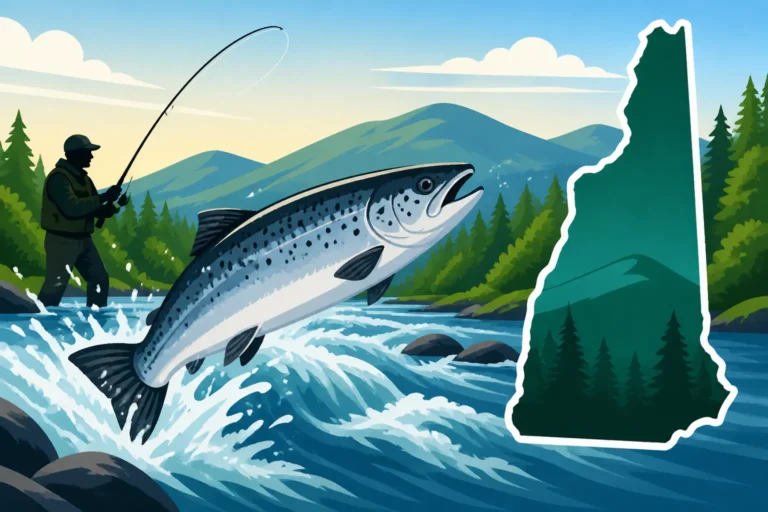
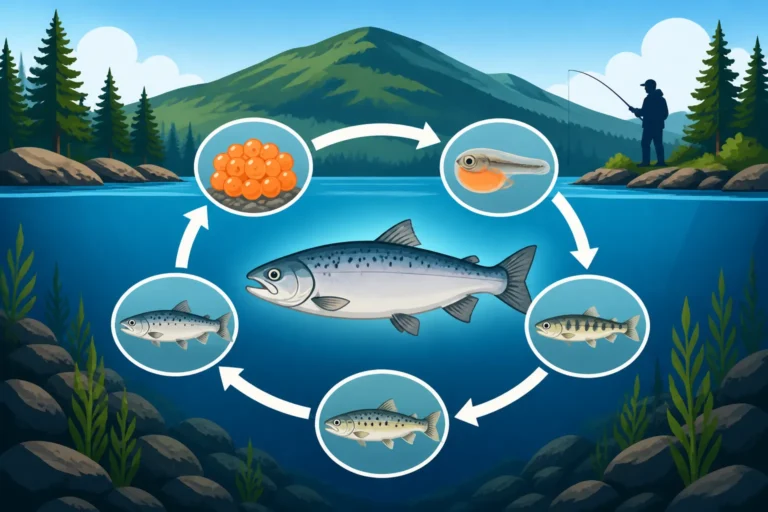
In some of New Hampshire's larger river systems that feature dams and are connected to significant lake fisheries, you might even encounter landlocked salmon in the tailwaters. These magnificent fish are genetically identical to Atlantic salmon but complete their entire life cycle in freshwater, often migrating up rivers and into the cold tailwater sections to spawn or to find refuge during warmer months. They are incredibly powerful, fast, and famously hard-fighting. Like lake trout, they require very cold, highly oxygenated water, making tailwaters below large lakes prime habitat. While perhaps less common than trout, hooking into a landlocked salmon in a tailwater is a truly memorable event. For a deeper dive into these amazing fish, check out How to Catch Landlocked Salmon in New Hampshire.
Gear and Techniques for New Hampshire Tailwaters
Successfully fishing New Hampshire's tailwaters requires a thoughtful approach to both your gear and your techniques. The strong currents and often wary fish demand precision and the right tools for the job.
Essential Gear for Tailwater Success
When you're wading into the powerful currents of a New Hampshire tailwater, having the right gear isn't just a comfort—it's a necessity for safety and success.
- Waders and Boots: You'll want breathable chest waders for comfort and flexibility, coupled with sturdy wading boots that offer excellent grip. Felt soles or rubber soles with studs are often preferred for navigating slick, rocky river bottoms. A good wading staff is also indispensable for stability in strong currents. You can find excellent options for Best Waders for New Hampshire Trout Streams on platforms like Amazon, which offers a wide range of brands and reviews to help you choose.
- Rods and Reels: For fly fishing, a 9-foot, 5- or 6-weight rod is a versatile choice, capable of handling larger flies and fighting bigger fish in the current. Pair it with a reliable reel that has a smooth drag system. For spin fishing, a medium-light to medium action rod, 6.5 to 7.5 feet in length, with a matching spinning reel spooled with 6-8 pound fluorocarbon or braided line with a fluorocarbon leader, is ideal.
- Tackle: Your tackle box or fly box should be well-stocked. For fly anglers, a variety of nymphs (e.g., stoneflies, caddis, mayfly patterns) in different sizes and weights are crucial for getting down in the current. Streamers mimicking baitfish are also highly effective. Spin anglers will find success with small inline spinners, spoons, and jerkbaits. Carrying a range of weights and colors is important for adapting to water conditions. It's easy to stock up on these essentials and even discover new tackle from various brands through Amazon.
- Accessories: Don't forget essentials like a good pair of polarized sunglasses to cut glare and spot fish, forceps for hook removal, a durable landing net (preferably rubberized for fish safety), and a dry bag for your valuables.
Consider our comprehensive guide on Best Gear for New Hampshire Trout Fishing for more in-depth recommendations.
Mastering Tailwater Techniques
Fishing tailwaters isn't just about casting and hoping; it's about understanding the water and the fish.
- Nymphing: For fly anglers, nymphing is often the most productive technique. This involves using weighted flies to imitate aquatic insects drifting along the bottom. European nymphing (Euro Nymphing) techniques, using long, sensitive rods and specialized lines, are incredibly effective for detecting subtle bites in strong currents.
- Streamer Fishing: Especially when targeting larger brown trout or landlocked salmon, streamer fishing can be deadly. Casting baitfish imitations across or downstream and stripping them back aggressively can trigger powerful strikes. This is particularly effective during cloudy conditions or low light.
- Spin Fishing with Lures: Spin anglers can excel by using small inline spinners (like Panther Martins or Mepps), spoons (such as Kastmasters or Little Cleos), or small jerkbaits. Cast upstream or across the current and retrieve just fast enough to get the lure wobbling, allowing it to drift naturally with the flow while maintaining tension. Adjust your retrieve speed and lure weight to get into the strike zone.
- Adjusting to Current: The key to all these techniques is adapting to the current. Use enough weight (split shot for nymphs, heavier lures for spin fishing) to get your offering down to where the fish are holding without dragging excessively. Mending your line (for fly fishing) or maintaining a controlled drift (for spin fishing) is crucial for a natural presentation.
Reading the Water for Productive Spots
Understanding where fish hold in a tailwater can make all the difference. These are not stagnant waters; fish expend energy to hold their position, so they're always looking for current breaks and feeding lanes.
- Current Seams: Look for lines where fast water meets slower water. Fish will often sit in the slower water, darting into the faster current to grab food as it passes by. These are prime ambush points.
- Eddies and Backcurrents: Behind large rocks, fallen trees, or bends in the river, you'll often find eddies where the current slows or even flows upstream. These are resting spots where fish can feed with minimal effort.
- Riffles and Runs: Riffles (shallow, turbulent water) and runs (deeper, smoother stretches of current) are oxygen-rich feeding grounds. Fish will hold behind submerged rocks or in depressions, waiting for food.
- Depth Changes: Pay attention to drop-offs, troughs, and deeper pools. Larger fish, especially brown trout, often prefer deeper water for security and cooler temperatures. A good pair of polarized glasses, readily available on Amazon, can really help you spot these underwater structures.
- Structure: Any submerged structure, be it a log, boulder, or even an underwater ledge, provides shelter from the current and potential ambush points for feeding fish.
Preservation and Responsible Angling in Tailwaters
New Hampshire's tailwaters are precious resources, offering incredible fishing opportunities. It's our responsibility as anglers to ensure they remain healthy and vibrant for future generations.
Catch and Release Practices
Many of New Hampshire's tailwaters, especially those known for larger, wilder trout, operate under specific catch-and-release regulations or have healthy populations of fish that are best returned to the water. Practicing responsible catch and release is paramount.
- Minimize Fight Time: Bring fish to hand as quickly as possible to reduce stress.
- Keep Fish in Water: Avoid removing fish from the water entirely, especially large ones. Use a net to cradle them gently.
- Wet Hands: Always wet your hands before handling a fish to protect its protective slime coat.
- Gentle Hook Removal: Use forceps or pliers to quickly and gently remove hooks. If a fish is deeply hooked, consider cutting the line as close to the hook as possible.
- Revive Carefully: Hold the fish upright in the current, facing upstream, until it can swim away strongly on its own.
These practices ensure that the fish you catch today can grow larger and spawn tomorrow, contributing to the health of the fishery.
Respecting Special Regulations
New Hampshire Fish and Game Department frequently implements special regulations for specific tailwater sections. These regulations are designed to protect particular species, manage fishing pressure, or enhance the trophy potential of certain areas. It is absolutely crucial to check the current New Hampshire Fishing Regulations Explained or New Hampshire Trout Stocking and Fishing Rules for the specific tailwater you plan to fish. You might find unique rules regarding:
- Gear Restrictions: Some tailwaters are fly-fishing-only, or may restrict the use of bait.
- Size and Bag Limits: Minimum and maximum length limits, or reduced bag limits, are common.
- Seasonal Closures: Certain sections might have specific seasons for different species.
Ignoring these regulations can lead to penalties and, more importantly, can harm the very fishery we love. Always carry a copy of the freshwater fishing digest, or have the digital version readily available on your phone.
Local Conservation Efforts
Supporting local conservation efforts is another vital part of responsible angling. Many organizations work tirelessly to protect and restore New Hampshire's rivers, including its tailwaters. From advocating for better water management practices at dams to organizing river cleanups and habitat restoration projects, these groups play a critical role. When purchasing gear, look for brands that support environmental initiatives, or consider donating a portion of your savings from a purchase on Amazon to a local New Hampshire conservation group. Your participation, whether through volunteering, donations, or simply adhering to regulations, helps ensure that these incredible cold tailwater fisheries continue to thrive for generations of anglers to come.
Here's a quick look at the fantastic species you can encounter in New Hampshire's cold tailwaters:
| Fish Species | Preferred Water Temperature | Typical Size in Tailwaters | Primary Diet | Key Characteristics |
|---|---|---|---|---|
| Brown Trout | 45-65°F (optimal) | 12-20+ inches | Insects, baitfish, crustaceans | Hardy, opportunistic, often secretive, large growers |
| Rainbow Trout | 50-65°F (optimal) | 10-18 inches | Insects, small baitfish | Acrobatic fighters, often actively feeding |
| Brook Trout | 40-60°F (optimal) | 6-12 inches | Insects, small crustaceans | Native, indicator of pristine water, vibrant colors |
| Landlocked Salmon | 40-55°F (optimal) | 15-25+ inches | Smelt, other baitfish | Powerful, fast, requires high oxygen, migratory |
Disclaimer
This article is for general informational purposes only and does not constitute professional advice. Laws, prices and regulations vary by location and change over time. Consult a qualified professional for guidance on your specific situation.