How to tell a largemouth from a smallmouth bass
Oh, the age-old question that has stumped many an angler, even seasoned folks out on New Hampshire's beautiful waters: "Is that a largemouth or a smallmouth?" It's a common frustration, especially when they're about the same size, or you're just getting a quick glimpse as it flashes by. But don't worry, you're not alone in sometimes struggling with this. This guide is here to untangle the mystery and give you all the tips and tricks you need to confidently tell these two fantastic New Hampshire fish apart, whether you're staring at them in your net or just seeing a photo.
The Classic Conundrum: Why Distinguishing Bass Can Be Tricky
You'd think it would be simple, right? One has a "large mouth," the other a "small mouth." But out on the water, when adrenaline is pumping or the lighting isn't perfect, those subtle differences can seem to disappear. New Hampshire is home to both species, and they often share the same lakes and rivers, making it a real head-scratcher sometimes.
Overlapping Habitats and Appearances
One of the biggest reasons for the confusion is that largemouth and smallmouth bass aren't always found in completely separate environments. While they have distinct preferences, there's plenty of overlap, especially in larger, diverse bodies of water. You might be fishing a rocky point on Lake Winnipesaukee and catch both a smallmouth and a largemouth within minutes of each other. The same can happen in Squam Lake or even some of the broader sections of rivers like the Merrimack.
To complicate matters, young bass of both species can look remarkably similar. A juvenile largemouth might not have developed that signature gaping maw yet, and a smallmouth might still have a very subtle lateral line that can be misleading. Their coloration, too, can be highly variable depending on the water clarity, bottom composition, and even the time of year. A largemouth pulled from dark, tannic water might appear much darker and less distinctly green than one caught from a clear, sandy flat, blurring the lines between the species in the angler's eye.
The Importance of Correct Identification
Beyond just satisfying your curiosity, knowing the difference between a largemouth and a smallmouth bass is incredibly important for a few practical reasons. For starters, New Hampshire Bass Limits and Slot Rules can differ between the two species, or sometimes between different water bodies for the same species. Imagine the headache of accidentally keeping a fish that's out of season or size for its specific species simply because you misidentified it! Conservation efforts are also often species-specific, and anglers play a vital role in adhering to these guidelines.
Furthermore, these two bass have different personalities, which means different strategies are often more effective for catching them. What works for a largemouth lurking in a weed bed might not entice a smallmouth schooling over a rocky shoal. Understanding which species you're targeting or have just landed helps you refine your techniques and become a more successful and responsible angler. This knowledge allows you to use the right tackle, the right lures, and fish the right spots with much greater confidence.
Key Visual Identifiers: Spotting the Differences Like a Pro
Alright, let's get down to brass tacks. While there can be some overlap and tricky moments, there are several reliable physical characteristics that will help you tell these two bass species apart with confidence. Think of these as your angler's checklist for bass identification.
The Jawline Tell: A Mouthful of Clues
This is, hands down, the most definitive and easiest characteristic to spot, once you know what to look for. Forget the color or the stripes for a second; focus on the jaw.
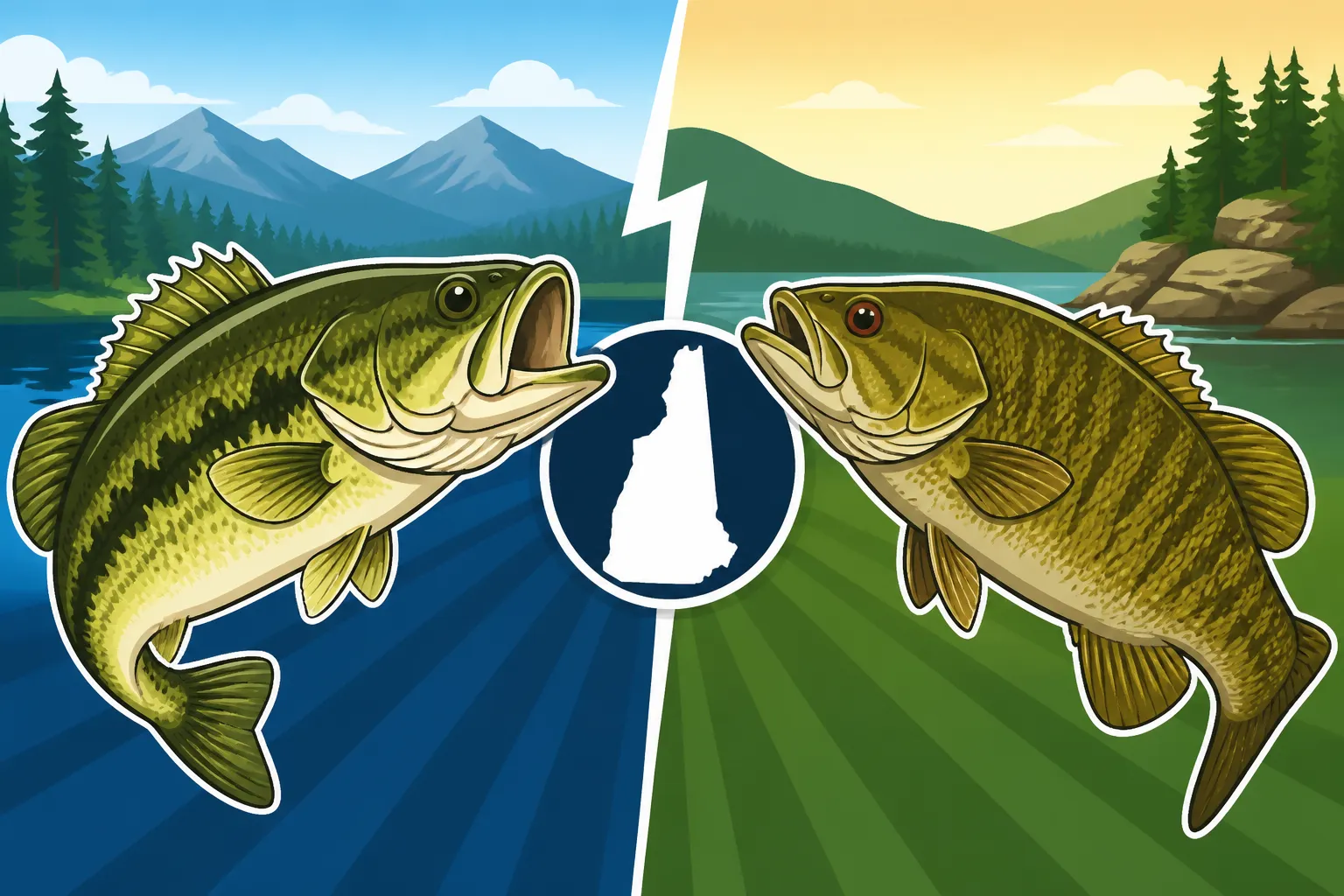
- Largemouth Bass: The upper jaw, when the mouth is closed, extends noticeably beyond the back edge of the eye. Imagine drawing an imaginary line straight down from the back of the eye; a largemouth's jaw will clearly cross that line. This gives them that characteristic "bucket mouth" or "alligator mouth" look that makes them so iconic. They truly have a huge gape, perfect for swallowing large prey whole.
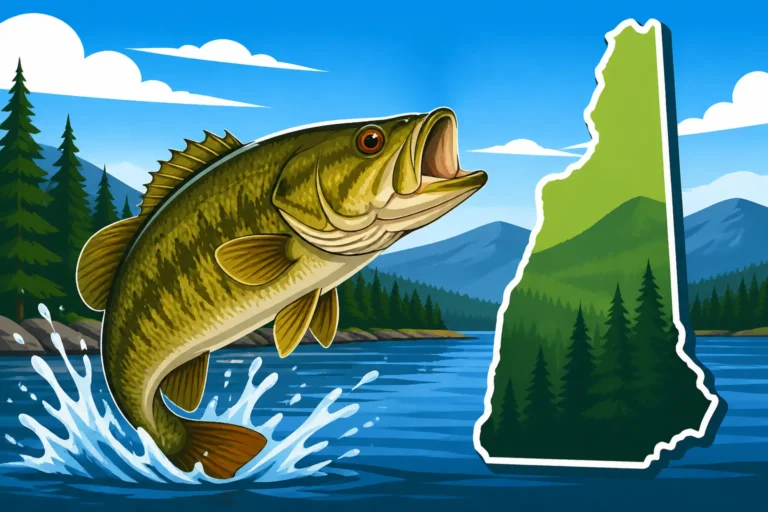
- Smallmouth Bass: In contrast, the upper jaw of a smallmouth bass, when closed, will end at or before the back edge of the eye. It won't extend past that imaginary line. Their mouth looks much more proportionate to their head, giving them a less aggressive, more streamlined profile. This is often the first and best indicator, even for smaller fish.
Next time you catch a bass in New Hampshire, gently hold it still and observe its jaw. This one tell alone will often give you the answer you're looking for immediately.
Body Shape and Fin Characteristics
Beyond the mouth, the overall body shape and even the dorsal fin can offer strong clues.
- Largemouth Bass: These fish tend to have a deeper, more robust, almost football-shaped body. They can look stocky and thick, especially around the belly. A classic largemouth often has a very distinct dark, horizontal stripe or series of blotches running along its side, though this can sometimes be broken or faded depending on habitat. Their dorsal fin (the one on their back) is typically deeply notched, appearing almost as two separate fins connected by a very low membrane. It's like someone took a knife and cut a deep groove between the spiny front section and the softer rear section.
- Smallmouth Bass: Smallmouth, on the other hand, are generally more streamlined, torpedo-shaped, and somewhat slender. They're built for speed and chasing prey in open water. They typically lack a distinct horizontal stripe. Instead, they often display subtle vertical bars or blotches along their sides, which gives them a somewhat "tiger-striped" or mottled appearance. Their dorsal fin has a much shallower notch, making it appear more continuous and connected, like one long fin rather than two distinct ones.
Think of it like this: if it looks like a stout, deep-bodied fish with a big dark stripe and a fin that's almost split in two, you're likely holding a largemouth. If it's sleeker, with faint vertical bars and a more continuous fin, it's probably a smallmouth.
Coloration and Markings: Beyond the Green and Brown
While coloration can be highly variable and shouldn't be your only identifier, it certainly helps when combined with other features.
- Largemouth Bass: Generally, largemouth bass tend to be greener. They're often described as olive green, dark green, or even a yellowish-green, especially on their backs and sides. The belly is usually white or cream-colored. That prominent dark lateral line mentioned earlier is also a key part of their coloration. In very clear water with light bottoms, they can appear almost pale green, while in dark, stained waters, they might be nearly black.
- Smallmouth Bass: Smallmouth bass typically have a more bronzy, brownish, or even yellowish hue. Some anglers call them "bronze backs." Their bellies can range from white to yellowish or even slightly mottled. The distinctive vertical bars or blotches are usually darker shades of brown or black against their bronzy body, offering excellent camouflage in rocky environments. These bars are a dead giveaway for a smallmouth when present. You might even notice a radiating pattern of dark lines extending from their eye, which is another common smallmouth trait.
So, while a green fish is usually a largemouth and a bronzy fish is usually a smallmouth, always confirm with the jawline and body shape before making a final call.
Eye Color and Size
While less pronounced than the jaw, eye color can sometimes offer another piece of the puzzle, especially on vibrant, healthy fish.
- Largemouth Bass: The eyes of a largemouth bass are typically duller, often a brownish or sometimes a reddish-brown color, and generally smaller in proportion to their head. It's not usually a "feature" that stands out.
- Smallmouth Bass: Many anglers notice that smallmouth bass often have a distinctive red or orange-red eye. This can be a very striking feature and is a great secondary characteristic to look for after checking the jaw. The eye can also appear slightly larger in proportion to their more compact head.
| Feature | Largemouth Bass | Smallmouth Bass |
|---|---|---|
| Upper Jaw (closed) | Extends past the back edge of the eye | Ends at or before the back edge of the eye |
| Body Shape | Deeper, robust, football-shaped | More streamlined, torpedo-shaped, slender |
| Lateral Line | Prominent, dark horizontal stripe/blotches (often broken) | Less distinct, often replaced by vertical bars/blotches |
| Dorsal Fin | Deeply notched, almost appearing as two fins | Shallower notch, appearing more continuous |
| Primary Color | Typically greener (olive, dark green, yellowish-green) | Typically bronzy, brownish, or yellowish |
| Markings | Distinct horizontal stripe | Vertical bars/blotches, radiating lines from eye (often) |
| Eye Color | Dull, brownish, sometimes reddish-brown | Often reddish or orange-red |
| Preferred Habitat | Warm, shallow, weedy, woody structure | Cool, clear, rocky, current, deep water |
Habitat Preferences and Behavior: Where to Find Each Species
Knowing where each type of bass likes to hang out can be just as helpful as knowing what they look like. Their preferred environments dictate their behavior, and understanding this makes you a more effective angler in New Hampshire's diverse waters.
Largemouth Bass: The Structure Seeker
Think of the largemouth bass as the stealthy ambush predator, always looking for a place to hide and spring out on unsuspecting prey. They absolutely adore cover and warmer water. You'll find them in:
- Shallow, vegetated areas: Lily pads, dense weed beds, cattails – anything that provides shade and a place to hide.
- Woody cover: Submerged logs, brush piles, fallen trees (often called "laydowns"), and old dock pilings are prime real estate.
- Murkier water: While they exist in clear water, largemouth often thrive in slightly stained or turbid conditions where their camouflage and ambush tactics are even more effective.
- Slow-moving or still water: Ponds, backwaters of rivers, coves, and shallower lakes are perfect for them.
In New Hampshire, this means you're more likely to find largemouth bass in many of the smaller, warmer ponds, the quieter coves of larger lakes, or the slower sections of rivers. If you're targeting largemouth, you'll be casting your lures right into the thick stuff, around visible cover. Places like Pawtuckaway Lake, or the weed-choked arms of Lake Winnipesaukee, are classic largemouth haunts. For more ideas on where to specifically target them, check out our guide on Best Largemouth Bass Fishing in New Hampshire. They are truly the kings of the jungle in these environments.
Smallmouth Bass: The Rocky Bottom Dweller
The smallmouth bass is the "brown bomber" of the open water, built for speed and chasing down baitfish. They prefer cooler, clearer water with distinct bottom structures that offer hiding spots and ambush points, but also allow them to roam. They are often schooling fish, so where you find one, you'll often find others. You'll typically find them:
- Deep, clear water: They prefer lower water temperatures than largemouth, often seeking out depths, especially during the summer.
- Rocky structures: Gravel flats, rocky points, boulder fields, ledges, and steep drop-offs are their preferred domains. They blend in perfectly with these surroundings.
- Current: Smallmouth bass in rivers will often position themselves just out of the main current, waiting for food to wash by. In lakes, they'll congregate on points or humps where current or wind pushes baitfish.
- Open water: They are more comfortable in open water environments, especially when chasing schools of baitfish like smelt.
When fishing in New Hampshire, smallmouth bass are synonymous with our deep, clear, rocky lakes like Lake Winnipesaukee, Newfound Lake, and Sunapee Lake. They are also prevalent in our larger, clearer rivers, such as sections of the Connecticut River. If you're looking to catch smallmouth, you'll often be targeting offshore structures, casting along rocky shorelines, or exploring deep-water humps. For specific tips on how to catch them, read our article How to Catch Smallmouth Bass in New Hampshire Lakes.
Practical Tips for Anglers: Applying Your Knowledge on the Water
Now that you've got the visual cues and habitat preferences down, let's talk about how to apply this knowledge to make your time on the water more productive and enjoyable.
Gear and Lure Choices for Each Bass
Your identification skills aren't just for following regulations; they directly impact your success rate. Different bass species often respond to different presentations.
- Largemouth Bass: Since they love thick cover, your gear for largemouth often needs to be a bit heavier. Think medium-heavy to heavy power rods, casting reels spooled with stout monofilament or braided line, designed to pull fish out of weeds and wood. Lures are typically designed to be weedless or create a lot of commotion. Soft plastics like Texas-rigged worms or creature baits, jigs pitched into cover, topwater frogs skimmed over lily pads, and spinnerbaits retrieved through sparse weeds are all classic largemouth presentations. You can find a huge variety of these lures on platforms like Amazon, perfect for stocking up your tackle box for those specific largemouth scenarios.
- Smallmouth Bass: Smallmouth, especially in clear water, can be more finicky and often respond better to finesse techniques. Medium-light to medium power spinning rods with lighter fluorocarbon or monofilament line are often preferred. Lures typically mimic baitfish or crawfish. Drop shot rigs, Ned rigs, tube jigs, small swimbaits, jerkbaits, and small crankbaits that dive to rocky bottoms are all fantastic smallmouth producers. Don't forget topwater lures like poppers or walking baits for explosive surface strikes when they're feeding aggressively! Again, online retailers such as Amazon offer a comprehensive selection of these more specialized smallmouth lures.
By understanding what you're likely to catch based on the habitat, you can pre-rig your rods with the appropriate lures and save valuable time on the water.
"When in Doubt" Scenarios and What to Do
Despite all the tips, there will inevitably be those moments when a bass truly stumps you. Maybe it's a small one, or it has atypical coloration, or you just didn't get a good look at the jaw. It happens to the best of us!
When you're genuinely in doubt about whether you've caught a largemouth or a smallmouth, it's always best to err on the side of caution. New Hampshire's fishing regulations are designed to protect fish populations, and if one species has a more restrictive size or creel limit, assume your fish is that species. This ensures you stay within the law and contribute to sustainable fishing practices.
Also, remember that handling fish properly is crucial for catch and release, regardless of species. Wet your hands before touching the fish, support its weight horizontally, and release it gently back into the water as quickly as possible. Even if you're keeping it, minimizing stress is humane.
Observing Local Patterns and Resources
Finally, don't underestimate the power of local knowledge. Every lake and river in New Hampshire has its own nuances, and what might be a common occurrence in one spot could be rare in another.
- Local Bait and Tackle Shops: These places are goldmines of information. The folks working there often spend countless hours on the water themselves and hear daily reports from other anglers. They can tell you which species are biting where, and sometimes even share tips on how to differentiate tricky ones in their specific local waters.
- New Hampshire Fish and Game Department: Their website and publications, particularly the New Hampshire Freshwater Fishing Digest, are invaluable resources. They provide detailed information on regulations, species distribution, and even stocking reports. Keeping a copy of the digest (digital or physical) with you while fishing is a smart move.
- Fellow Anglers: Don't be shy about striking up conversations at boat ramps or fishing piers. Most anglers are happy to share their experiences and tips, and you might learn a trick or two about identifying bass that you hadn't considered.
By combining these identification tips with local insights and responsible angling practices, you'll not only become more adept at telling largemouth and smallmouth bass apart but also a more skilled and knowledgeable New Hampshire angler overall. Happy fishing!
Disclaimer
This article is for general informational purposes only and does not constitute professional advice. Laws, prices and regulations vary by location and change over time. Consult a qualified professional for guidance on your specific situation.