How to tell a brook trout from a rainbow trout
There’s nothing quite like the thrill of feeling that tug on your line, setting the hook, and reeling in a beautiful trout from the crisp waters of New Hampshire. But once that shimmering fish is in your net, a common question often pops into many anglers' minds: Is this a brook trout or a rainbow? It can be surprisingly tricky to tell them apart, especially for newer anglers or when you're caught up in the excitement. This guide is here to help you confidently distinguish between these two popular species, ensuring you stay within regulations and deepen your appreciation for New Hampshire's diverse fish populations.
The Basics of Trout Identification: Why It Matters to Anglers
Understanding the specific species of trout you've caught isn't just about showing off your knowledge (though that's certainly part of the fun!). It's a crucial aspect of responsible angling, with direct implications for obeying regulations, practicing good conservation, and even improving your future fishing strategies. It really adds another layer to the whole experience when you can confidently identify what you've landed.
Understanding New Hampshire's Trout Regulations
Here in New Hampshire, our Fish and Game Department works hard to manage our fisheries sustainably, and that often means different rules for different fish. Imagine spending a glorious morning on a remote stream, catching what you think is a native brook trout, only to realize later it was a rainbow, and you were actually over the limit for that particular species in that specific water body. That’s a headache no one wants. Bag limits, size restrictions, and even specific seasonal closures can vary significantly between brook trout, rainbow trout, and other salmonid species like brown trout or landlocked salmon.
For instance, certain "Wild Trout Management" waters might have strict catch-and-release rules or highly reduced creel limits for native brook trout to protect their fragile populations, while a nearby pond heavily stocked with rainbow trout might allow for a more generous harvest. Knowing the difference between the two can literally mean the difference between a successful, legal day on the water and an unintentional violation. Always check the New Hampshire Freshwater Fishing Digest for the most up-to-date information, because these rules are specific and can change.
Conservation and Respect for the Fishery
Beyond just following the law, being able to identify your catch speaks to a deeper respect for the natural environment and our shared angling resources. Brook trout, as we'll discuss, are New Hampshire's only native trout species. They've been here for millennia, adapting to our pristine, cold headwater streams. Rainbow trout, while incredibly popular and a blast to catch, are generally a stocked species in our state, introduced to provide additional angling opportunities.
When you correctly identify a brook trout, you're recognizing a piece of New Hampshire's natural heritage. This awareness fosters a greater appreciation for the delicate ecosystems where they thrive and encourages practices that protect their habitats. Being able to tell the difference also helps you understand the impact of stocking programs, which are vital for providing angling access in many areas. It means you can contribute to citizen science observations if needed, and simply be a more informed and conscientious steward of our waters. For more on this, you might find articles like Difference between wild and stocked trout in New Hampshire particularly insightful.
Spotting a Brook Trout: New Hampshire's Native Gem
If you're talking about pure, undiluted New Hampshire angling heritage, you're talking about the brook trout. These fish are true jewels of our cold mountain streams and remote ponds, renowned for their stunning colors and delicate beauty. When you hook into a wild brook trout, you're connecting with a legacy that runs deep through the granite state.
Distinctive Coloration and Markings of Brook Trout
Brook trout (technically a char, but we'll stick with trout for simplicity) are absolutely vibrant. Their bodies are typically an olive-green or dark brown, fading to lighter flanks, and often a creamy white belly, especially in wilder, more colorful specimens. But what really sets them apart are their signature markings.
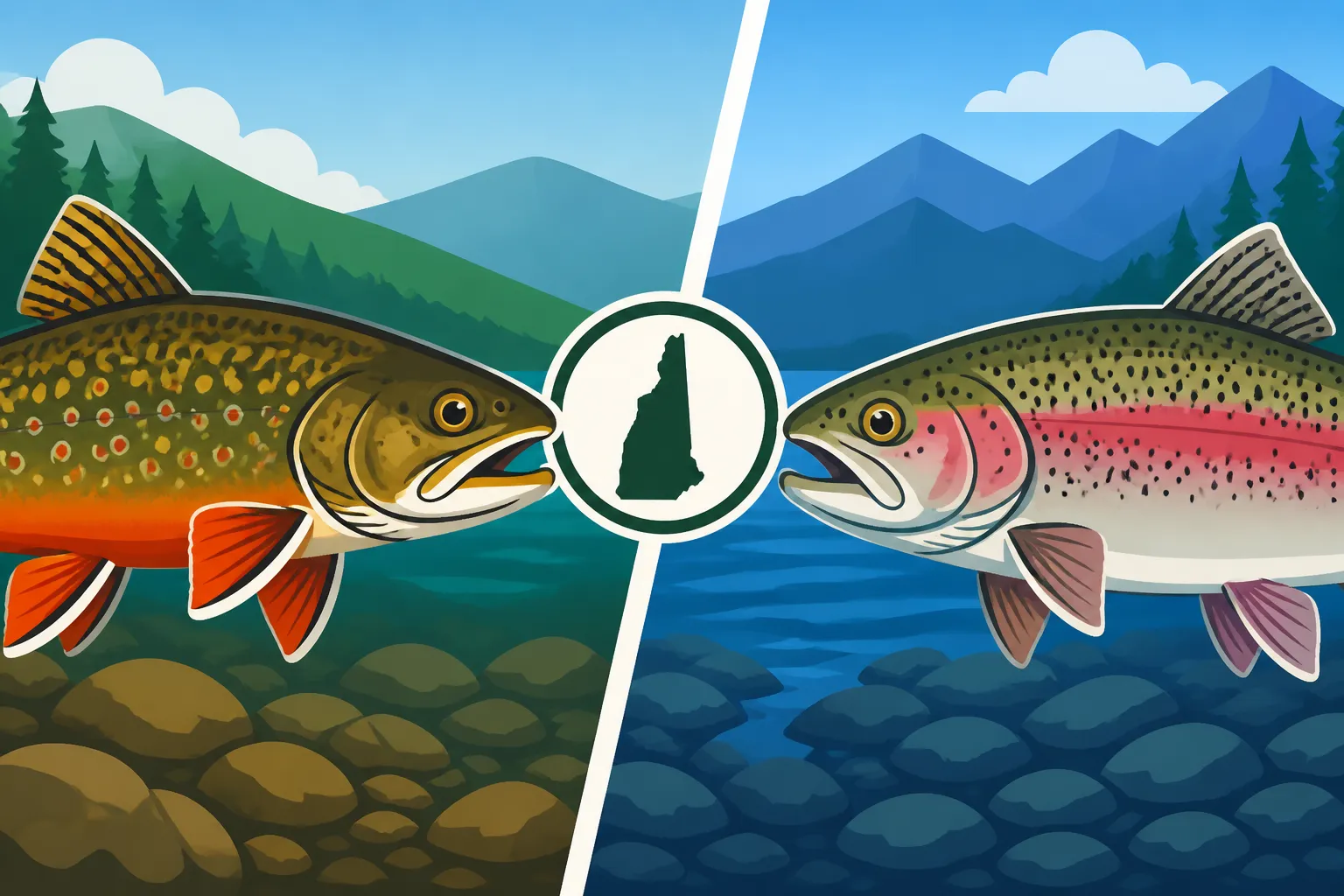
Look closely, and you'll see intricate, worm-like patterns on their backs and upper sides. This is called "vermiculation," and it's a dead giveaway for a brook trout. These squiggly lines are usually a lighter, yellowish-cream color against their darker background. Then, there are the spots. Brook trout have distinctive red or orange spots along their sides, but these aren't just plain dots. Each red spot is typically surrounded by a pale blue halo, sometimes called an "areola." These blue halos are a classic brook trout identifier. Finally, check their lower fins – the pectoral, pelvic, and anal fins. You'll almost always see a bright white leading edge, often followed by a thin black stripe, before the rest of the fin transitions to reddish-orange. This white edge is another very reliable characteristic. If you're struggling to see these details, a good pair of polarized sunglasses, available on Amazon, can really cut through the glare and make a difference.
Habitat and Behavior Clues for Brook Trout
Where you catch a fish can often be as important as what it looks like in determining its species. Brook trout are cold-water specialists. They thrive in pristine, highly oxygenated waters, often found in the headwaters of mountain streams, beaver ponds, and remote spring-fed lakes. If you're hiking into a small, bubbling stream in the White Mountains or exploring a secluded pond tucked away in the backcountry, chances are good that any trout you catch there will be a brook trout.
They are generally shyer than their rainbow cousins, often hiding under fallen logs, undercut banks, or behind large rocks, waiting for insects to drift by. Their diet often consists of aquatic insects, terrestrial insects that fall into the water, and small crustaceans. While they can be found in some larger rivers or lakes, especially those with good cold-water inflows, their true domain is typically the smaller, wilder, and colder waters. Understanding this helps you pinpoint their likely locations, which is key information for articles like Brook Trout: New Hampshire's Native Trout and Best Fly Fishing Rivers in New Hampshire.
Identifying a Rainbow Trout: The Popular Stocked Fighter
Rainbow trout are undoubtedly one of the most widely recognized and popular game fish across the globe, and New Hampshire is no exception. They're known for their acrobatic fights and willingness to bite, making them a favorite target for many anglers, particularly in our stocked waters. While beautiful, they have a distinctly different look from our native brookies.
Key Physical Characteristics of Rainbow Trout
The most iconic feature of a rainbow trout is, as its name suggests, the often vibrant, iridescent pink or red stripe running horizontally along its side, from its gill plate back to its tail. This "rainbow" stripe can range in intensity from a subtle blush to a brilliant, undeniable band, especially in spawning males.
Unlike brook trout, rainbow trout generally have small, dark spots scattered over their entire body, including their head, fins, and tail. These spots are typically uniform in color, without the blue halos you see on brook trout. Crucially, rainbow trout do not have the worm-like vermiculation patterns on their back that brook trout possess. Their backs are usually a bluish-green or olive-green. Their fins also lack the distinctive white leading edge seen on brook trout, usually being clear or slightly clouded with spots. These visual cues are essential for correct identification, and having a good New Hampshire fishing guide or species identification poster, perhaps from Amazon, can be a great help.
Common Habitats and Behaviors of Rainbow Trout
Rainbow trout are incredibly adaptable and robust fish, which is one reason they're so widely stocked. In New Hampshire, you'll most often encounter rainbow trout in larger rivers, ponds, and lakes that are part of the state's stocking program. They thrive in a wider range of water temperatures than brook trout and can tolerate slightly less pristine conditions. If you're fishing in a well-known public pond or a larger section of a river that's easily accessible by road, the trout you're catching are very likely to be rainbows.
They are generally more aggressive feeders than brook trout, readily hitting a variety of baits, lures, and flies. This makes them a fantastic species for anglers of all skill levels. They're often found cruising open waters, along drop-offs, or near inlets where food is plentiful. Their strong fighting spirit makes them a thrill to catch, whether you're fly fishing, spin casting, or trolling. To get an idea of where they might be, check out the New Hampshire Trout Stocking Report and Map which often details stocking locations. They're a fantastic fish for anglers to target in places like the Best Trout Ponds in New Hampshire or certain sections of larger rivers.
Side-by-Side Comparison: Brook Trout vs. Rainbow Trout
Putting these two beautiful species head-to-head helps to solidify the differences. While they're both trout and offer fantastic fishing experiences, a closer look reveals their unique characteristics. Mastering these visual cues will make you a more confident and knowledgeable angler on New Hampshire's waters.
Visual Cues at a Glance
Let's break down the primary visual identifiers. When you've got a fish in your net (or ideally, still in the water for a quick glance before release), zero in on these key features. If you're ever in doubt, the best practice is always to release the fish unharmed, especially if you suspect it might be a native species in a restricted area, or if you're unsure of the local New Hampshire Trout Limit and Possession Rules.
Here’s a quick reference table to help you compare:
| Feature | Brook Trout (Salvelinus fontinalis) | Rainbow Trout (Oncorhynchus mykiss) |
|---|---|---|
| Back/Upper Sides | Dark olive-green/brown with distinctive worm-like (vermiculation) patterns, no spots. | Bluish-green/olive back, generally without vermiculation. |
| Spots | Light red or orange spots, each typically surrounded by a blue halo. | Numerous small, dark spots scattered over entire body, head, and fins. No blue halos. |
| Lateral Line | No prominent stripe, though some subtle coloration may exist. | Distinctive pink or red iridescent stripe running horizontally from gill to tail. |
| Lower Fins | Pectoral, pelvic, and anal fins have a prominent white leading edge, often followed by a thin black line. | Lower fins typically lack a white leading edge. May have some spots. |
| Tail | Typically square or slightly forked. | Slightly forked to nearly square, often covered in spots. |
| Color Intensity | Can be incredibly vibrant, especially during spawning, with deep oranges and reds on the belly. | Color intensity varies, the red stripe is the key, but overall body can be silvery. |
This table can be a handy tool, perhaps printed and laminated, or saved on your phone for quick reference while out fishing. It's like having a miniature field guide right in your pocket.
Beyond Sight: Other Factors to Consider
While visual identification is paramount, other factors can often provide strong clues about whether you've caught a brook trout or a rainbow. Think of these as supplementary detectives that help you build a stronger case.
1. Location, Location, Location: As mentioned earlier, the specific body of water you're fishing is a huge indicator. Are you in a small, remote, high-elevation stream with pristine, icy-cold water? That screams "brook trout." Are you in a larger, easily accessible pond or river section that's known for being stocked regularly? That's typically prime rainbow trout territory. Checking New Hampshire Fish and Game's stocking reports is invaluable here; if a water body isn't stocked with rainbows, you're unlikely to catch one!
2. Time of Year and Water Temperature: Brook trout are less tolerant of warm water. During the heat of summer, they'll retreat to the coldest springs and deepest pockets. Rainbows are a bit more forgiving, although they still prefer cool water. If you're catching trout in water that feels relatively warm, it's more likely to be a rainbow.
3. Fishing Method and Gear: While both species can be caught on a variety of methods, certain patterns emerge. Fly anglers targeting native brookies often use smaller patterns on light tackle in tight quarters. Those chasing rainbows might use larger streamers, spinners, or bait in more open water. For example, if you're looking for fly fishing gear, you'll find a wide selection of specific Fly Patterns for New Hampshire Trout Streams on Amazon that can target either species.
4. Size: While not a definitive identifier, wild brook trout in New Hampshire's smaller streams rarely grow very large. A 10-inch wild brook trout is a trophy in many places. Stocked rainbow trout, on the other hand, can often be caught at larger sizes, as they are specifically raised for that purpose. Larger rainbows are common in many stocked lakes and rivers.
By combining visual identification with these contextual clues, you'll quickly become an expert at telling New Hampshire's brook trout from its rainbow trout, enhancing every fishing trip and contributing to the conservation of our precious aquatic resources. For a broader understanding, consulting a Trout Species Identification Guide for New Hampshire will provide even more valuable details.
Disclaimer
This article is for general informational purposes only and does not constitute professional advice. Laws, prices and regulations vary by location and change over time. Consult a qualified professional for guidance on your specific situation.