New Hampshire fishing without a license penalty
We've all been there, standing by a beautiful New Hampshire lake or stream, maybe even with a rod in hand, and that sudden thought pops into your head: "Did I remember to get my fishing license this year?" Or worse, perhaps you're out with a buddy, enjoying the day, and a New Hampshire Fish and Game Warden approaches. The pit in your stomach when you realize you might not be in compliance with the rules can be gut-wrenching. It's a common worry, and one that carries real weight. This comprehensive guide is here to lay out exactly what happens if you're caught fishing without a valid license in the Granite State, what the penalties truly look like, and most importantly, how to avoid finding yourself in such a predicament.
The Immediate Fallout: Getting Caught Without a License
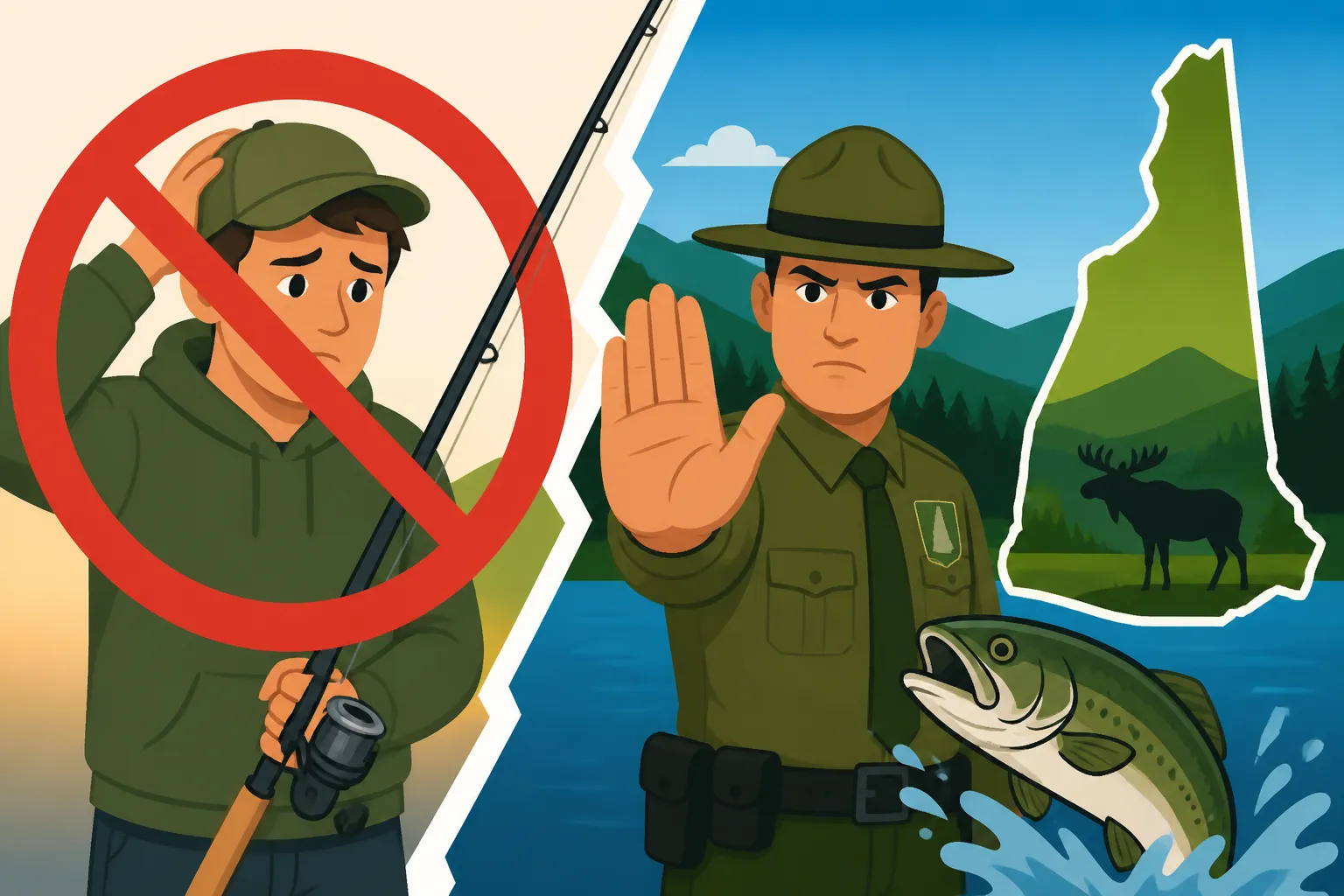
It's a beautiful day, the sun is shining, and you've got a line in the water, maybe at Lake Winnipesaukee or a quiet stretch of the Connecticut River. Suddenly, a uniformed individual identifies themselves as a New Hampshire Fish and Game Conservation Officer, or "Game Warden." Their job is to protect the state's natural resources and ensure everyone is following the rules, and that includes checking fishing licenses. This isn't a friendly chat about the weather; it's a compliance check.
The immediate reaction for many anglers, especially if they know they're without a license, is often a mix of embarrassment and dread. You might try to explain, perhaps that you just forgot it at home, or that you genuinely thought you were exempt. While sincerity is appreciated, ignorance of the law is rarely an acceptable excuse in the eyes of the law. These officers are highly trained and experienced; they're not there to make arbitrary decisions but to uphold state statutes.
When they ask to see your license, if you can't produce a valid one, either a physical copy or a digital version that can be verified, you're in violation. This isn't just a slap on the wrist. New Hampshire takes its fishing regulations seriously, and fishing without a license is categorized as a violation offense under New Hampshire Revised Statutes Annotated (RSA) 206:13. The warden will typically issue you a summons or a warning, depending on the circumstances, which means you'll either have to pay a fine directly or appear in court. It’s a moment that can quickly turn a peaceful day of angling into a stressful encounter with the legal system.
Understanding the Legal Ramifications and Fines
Let's talk brass tacks: what's this going to cost you? Fishing without a license in New Hampshire is generally classified as a violation, not a misdemeanor or felony, for a first offense. This means it's similar to a traffic ticket in its legal classification, but don't let that fool you into thinking it's minor. The financial penalties can still be significant, and they can vary.
According to New Hampshire law (specifically RSA 206:17-a), the minimum fine for fishing without a license can start around $124 for a standard violation, which includes a court surcharge. However, this is just a baseline. Depending on the specific circumstances, such as whether you were also violating other regulations (like bag limits or fishing in a closed area), or if you were using prohibited gear, the fine can escalate considerably. A judge has the discretion to impose higher fines up to $1,000 for certain violations, especially if they deem the offense to be particularly egregious or if it's a repeat offense.
It’s not just the standard fine you have to worry about. There are often additional court fees and administrative costs that pile on top. For instance, if you're cited for fishing without a license and also for possessing an over-limit of trout, you could be facing multiple fines, each adding to the total financial burden. This is why understanding the full scope of New Hampshire Fishing Regulations Explained is so crucial, beyond just the license itself.
Here's a simplified breakdown of what you might expect for a typical first offense:
| Offense Type | Minimum Fine (Approx.) | Potential Max Fine | Additional Penalties (Possible) |
|---|---|---|---|
| Fishing without a valid license | $124 | Up to $1,000 | License suspension, equipment seizure, restitution |
| Fishing in a closed season/area | $124+ | Up to $1,000 | License suspension, equipment seizure, restitution |
| Exceeding bag/possession limits | $124+ | Up to $1,000 | License suspension, equipment seizure, restitution, civil forfeiture |
| Using illegal gear/methods | $124+ | Up to $1,000 | License suspension, equipment seizure |
| Refusal to show license/obstruction | $250+ | Up to $1,000 | License suspension, additional legal charges |
Note: These figures are approximate and subject to change based on specific laws, court decisions, and additional surcharges. Always refer to the most current New Hampshire Fish and Game regulations for exact figures.
These fines aren't just an inconvenience; they can be a real financial hit for individuals and families. Imagine setting aside money for new fishing gear – maybe that nice fishing reel you saw on Amazon – only to have to pay a fine that could have covered it twice over. It's a costly lesson to learn, and one that is easily avoidable by simply purchasing the required license. You can find detailed information on How Much Does a New Hampshire Fishing License Cost to ensure you're budgeting correctly.
Beyond the Fine: Other Potential Consequences
While the financial penalty is often the first thing people think about, the consequences of fishing without a license can extend far beyond just paying a few hundred dollars. New Hampshire Fish and Game wardens have broader authority that can significantly impact your ability to fish in the future and even your personal property.
License Suspension or Revocation
One of the most impactful consequences is the potential suspension or outright revocation of your fishing privileges. While a first-time violation might not immediately lead to this, repeat offenses or combined violations (e.g., no license and an egregious over-limit) can trigger a review by the New Hampshire Fish and Game Department. This review can result in you losing the right to purchase a fishing license for a specified period, sometimes for years. This isn't limited to just fishing; often, hunting and trapping licenses can also be affected, as they fall under the same departmental purview. Imagine being passionate about angling but being legally barred from casting a line for a whole season, or even longer. It’s a bitter pill to swallow.
Equipment Seizure and Forfeiture
This is where things can get particularly tough. New Hampshire law empowers conservation officers to seize any fishing equipment, including rods, reels, nets, and even boats or vehicles, that were used in the commission of a violation. While minor license violations might not always lead to immediate seizure, particularly if you're cooperative, it's a very real possibility, especially for more serious offenses.
Consider this hypothetical: you're out on your brand-new fishing kayak, fully rigged with a fish finder and a cooler you picked up on Amazon, and you're caught without a license. Not only could you face a hefty fine, but the warden could, under certain circumstances, seize your kayak and all its expensive accessories. While you might be able to reclaim it later after legal proceedings, it could involve additional fees, storage costs, and a lengthy process. In some cases, the equipment could be forfeited to the state permanently. That expensive gear you invested in? Gone.
Civil Restitution
If you've illegally taken fish, especially protected species, or exceeded bag limits without a license, the state can seek civil restitution. This means you could be ordered to pay an additional amount to compensate the state for the value of the fish you illegally harvested. This isn't just about the market value of the fish; it's about the ecological and recreational value, which can be surprisingly high. For certain species, like trout or landlocked salmon, these civil penalties can add hundreds or even thousands of dollars to your overall bill. It’s a clear message that illegal harvesting impacts the state's natural resources, and there’s a price to pay for that impact.
Reciprocity with Other States
Many states have agreements with New Hampshire regarding license suspensions. If your fishing privileges are suspended in New Hampshire, that suspension could be recognized and enforced by other states, meaning you might be unable to fish in neighboring states like Maine, Vermont, or Massachusetts as well. This can be a significant blow for anglers who enjoy traveling to different regions for various fishing opportunities.
How to Ensure You're Always Legal on New Hampshire Waters
The good news is that avoiding these penalties is incredibly straightforward. It boils down to being informed and prepared. Here's how to make sure your next fishing trip is enjoyable and stress-free, with no unexpected legal complications.
Purchase and Carry Your License
This is the most fundamental step. Always purchase the appropriate fishing license for your age, residency status, and the type of fishing you plan to do. New Hampshire offers various licenses, including resident, non-resident, annual, and short-term options. You can easily purchase a license online through the New Hampshire Fish and Game website, from authorized license agents (like many bait shops and sporting goods stores), or at the Fish and Game headquarters in Concord. For full details on the process, check out Where and How to Buy a New Hampshire Fishing License.
Once purchased, make sure you have it with you. Whether it's the physical paper copy you printed at home, a durable plastic card issued by a vendor, or a digital copy on your smartphone, be ready to present it to a conservation officer upon request. It’s wise to also carry a form of identification, especially if you’re relying on a digital license, to verify your identity and residency. Don't forget, you can also consider a New Hampshire Combination Hunting and Fishing License Options if you enjoy both activities, often offering convenience and value.
Understand Age and Residency Requirements
Many anglers make assumptions about who needs a license. For example, Do Kids Need a Fishing License in New Hampshire? is a common question. Generally, in New Hampshire, residents and non-residents 16 years of age or older need a fishing license. However, there are nuances and specific exemptions, such as those related to New Hampshire Fishing License Age Requirements for seniors or certain military personnel. Always confirm these details before heading out, especially if you're fishing with children or elderly relatives. Residency rules are also specific; living in New Hampshire for a specific period typically qualifies you for a resident license, but merely owning property might not. Ensure you understand New Hampshire fishing license residency requirements to avoid issues.
Be Aware of Free Fishing Days
New Hampshire typically offers "Free Fishing Days" a couple of times a year, usually in the summer and winter, where residents and non-residents can fish without a license. This is a fantastic opportunity, especially for beginners or those introducing new people to the sport. However, all other fishing regulations, such as bag limits and season dates, still apply. Always check the New Hampshire Fish and Game website for the exact dates of New Hampshire Free Fishing Days, Explained before you go. These days are publicized well in advance, so mark your calendar!
Stay Informed About Regulations
Beyond just having a license, it's your responsibility as an angler to know and follow all other fishing regulations. This includes:
- Season Dates: When specific species can be harvested, and when certain waters are open or closed.
- Bag and Possession Limits: The number of fish you can catch and keep daily, and how many you can have in your possession.
- Length Limits: Minimum or maximum lengths for certain fish.
- Gear Restrictions: What type of bait, lures, or methods are allowed in specific waters.
The best way to stay informed is to annually review the Reading the New Hampshire Freshwater Fishing Digest. This publication, available online and at license vendors, is your go-to source for all regulations. Special regulation waters often have unique rules, so always cross-reference if you're fishing a new spot.
Dealing with a Lost or Damaged License
Life happens, and sometimes licenses get lost, soaked, or torn. If your license is damaged or lost, don't despair and certainly don't fish without one. New Hampshire Fish and Game has a process for replacing licenses. Often, you can print a duplicate directly from the online licensing system or visit an agent. Knowing the Replacing a lost New Hampshire fishing license procedure can save you a lot of grief. Remember, having a digital copy on your phone can act as a great backup if your physical copy goes missing. For more on this, check out Printing or Carrying a Digital Fishing License in New Hampshire.
Being prepared with your license and knowledge of the regulations is not just about avoiding penalties; it's about being a responsible angler who contributes to the conservation of New Hampshire's incredible fisheries.
Disclaimer
The information provided in this guide is for general informational purposes only and does not constitute legal advice. While we strive to keep the information up-to-date and correct, laws and regulations can change frequently. Always consult the official New Hampshire Fish and Game Department website or relevant state statutes (RSA) for the most current and accurate legal information regarding fishing licenses and penalties in New Hampshire. Penalties can vary based on specific circumstances and judicial discretion.