New Hampshire fishing license age 16 saltwater requirement
It's incredibly frustrating when you're just trying to enjoy a day on the water, whether it's casting a line from a peaceful pier or reeling in a striped bass from the shore, only to be bogged down by confusing license rules. For many young anglers in New Hampshire, a common question arises right around that pivotal sixteenth birthday: do I need a saltwater fishing license now, and what exactly are the rules? This comprehensive guide is here to clear up all the confusion surrounding New Hampshire's saltwater fishing license requirements specifically for those turning 16, ensuring you stay legal and focused on the thrill of the catch.
Understanding New Hampshire's Saltwater Fishing License Basics
Before we dive into the specifics of turning 16, let's get a solid grasp on what New Hampshire's saltwater fishing license entails in general. The Granite State has a fantastic coastline, from the bustling harbors of Portsmouth to the sandy beaches of Hampton, offering incredible opportunities for saltwater angling. But with these opportunities come regulations designed to manage fish populations and ensure sustainable fishing for generations to come.
Who Needs a Saltwater Fishing License in New Hampshire?
Generally speaking, anyone 16 years of age or older who wishes to fish in New Hampshire's saltwater or anadromous waters (waters where fish migrate from the sea to spawn in fresh water, like certain river mouths) needs a saltwater fishing license. This isn't just a state rule; it's also tied into a federal mandate. The National Saltwater Angler Registry requires most states to collect data on saltwater recreational fishing, and issuing licenses to anglers 16 and older is how New Hampshire participates. It’s a bit different from some freshwater rules, which might have broader age exemptions or specific provisions for children.
This universal requirement means that whether you're a seasoned angler chasing striped bass or just dipping a line for mackerel off a jetty, if you've hit that magical age, you'll need the proper paperwork. It’s a crucial distinction, as often folks get confused thinking that because they don't need a freshwater license until a certain age, the same applies to the ocean. Not so! The salt is a different beast entirely when it comes to licenses. For a broader overview of all the rules, check out our guide on New Hampshire Saltwater Fishing License, Explained
The Specifics for Anglers Turning 16
Here's where it often gets a little tricky and causes a fair bit of head-scratching. You've been fishing with your family for years, perhaps without a license because you were under 16, and then suddenly, your birthday rolls around. The moment you celebrate that sixteenth birthday, you are officially required to have a New Hampshire saltwater fishing license if you plan to continue fishing in coastal waters. There's no grace period that extends to the end of the calendar year or anything like that. It's an immediate transition.
This means if your birthday is in July, and you plan on doing some summer fishing along the coast, you'll need to purchase your license on or after your birthday before you make your next cast. Failing to do so could lead to a fine, and nobody wants that to put a damper on their fishing trip. It’s a good idea to mark your calendar and make this a priority. You can even plan ahead and get some of your gear ready; perhaps you'll find a new rod and reel combo on Amazon to celebrate the milestone!
Navigating the Age 16 Saltwater Fishing License Requirement
Understanding that you need a license is one thing, but knowing when and why these rules exist for saltwater fishing, particularly for those turning 16, helps to make sense of it all. It’s not just arbitrary; there are practical reasons behind these specific regulations that differentiate saltwater from freshwater licensing for younger anglers.
When Does the Requirement Kick In?
Let's be absolutely clear: the requirement for a saltwater fishing license in New Hampshire kicks in on your 16th birthday. It's not about the calendar year you turn 16, it's about the actual date you officially become 16 years old. So, if you're out fishing on your 15th birthday, you're fine without one. But on your 16th birthday, or any day thereafter that you intend to fish in New Hampshire's marine waters, you must have that license in your possession.
Imagine you're planning a big fishing trip with friends or family for the weekend after your birthday. You absolutely must make sure your license is purchased and valid before you even leave the house to head to the coast. It’s a common misconception that you might have until the start of the next license year, but that simply isn't true for saltwater licenses once you hit 16. The state wants to ensure proper management and data collection right from the moment you become a legally required participant in the registry. Keep an eye on your calendar and plan your license purchase to avoid any unwelcome surprises from conservation officers. You can learn more about general age requirements in our post on New Hampshire Fishing License Age Requirements
Why is Saltwater Different from Freshwater for Minors?
This is a really common point of confusion for many anglers, and for good reason! In New Hampshire, children under 16 generally do not need a freshwater fishing license. This often leads people to assume the same exemption applies to saltwater. However, it doesn't. The key difference lies in federal mandates and the nature of marine fisheries management.
New Hampshire participates in the National Saltwater Angler Registry, a program administered by the National Oceanic and Atmospheric Administration (NOAA) Fisheries. This federal program requires states to collect data on saltwater recreational anglers aged 16 and older. This data is crucial for assessing fish stocks, understanding fishing effort, and implementing effective conservation measures for highly migratory and commercially important marine species like striped bass, cod, and haddock. The federal requirement ensures a consistent national approach to managing these shared resources.
Freshwater fisheries, while also managed, often fall under state-specific regulations that can differ significantly, particularly regarding youth exemptions. Many states, including New Hampshire, encourage youth participation in freshwater fishing by allowing younger children to fish without a license, making it more accessible for families. This policy reflects a different management priority – often fostering interest in the sport – compared to the federal data collection mandate for saltwater species. So, while your younger sibling might still be able to fish for trout in a local pond without a license, as soon as you turn 16 and head to the ocean, that saltwater license becomes a necessary piece of gear, much like your rod and reel. For a deeper dive into all regulations, consider checking out our guide on New Hampshire Fishing Regulations Explained
How to Obtain Your New Hampshire Saltwater Fishing License
Getting your New Hampshire saltwater fishing license once you turn 16 is a straightforward process, but knowing your options beforehand can save you time and hassle. The New Hampshire Fish and Game Department (NHF&G) makes it fairly accessible, offering a few different avenues to ensure you can get your license when you need it.
Online, In-Person, and Mail Options
You've got a few convenient ways to secure your license:
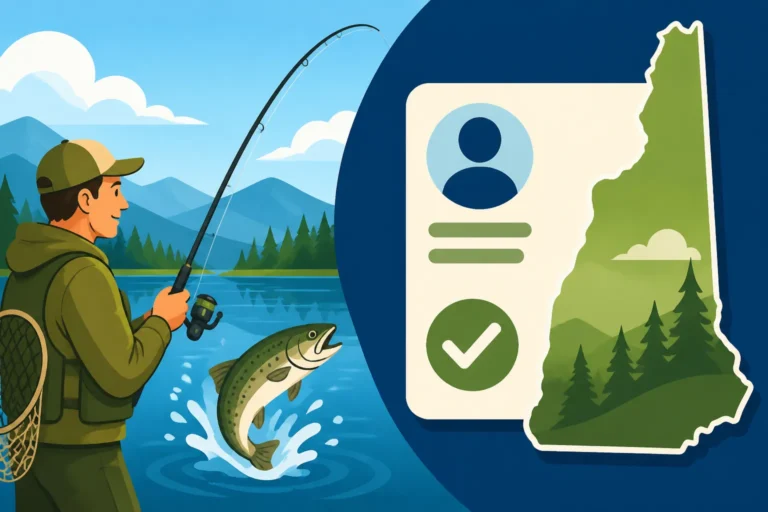
- Online: This is by far the easiest and fastest method for many. You can visit the official New Hampshire Fish and Game website, navigate to their licensing portal, and purchase your saltwater license. The process is usually intuitive, allowing you to pay with a credit card and print your license right from home. This is especially handy if your birthday is approaching and you want to be ready to go the very next day. You can generally print a temporary copy to carry immediately, and a more durable one might be mailed to you, or you can just carry the digital version on your phone. To learn more about this process, refer to our article on How to Buy a Fishing License Online in New Hampshire
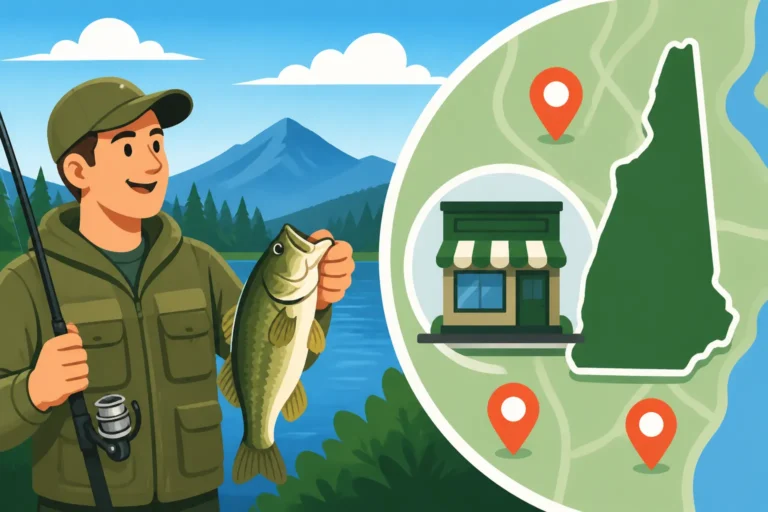
- In-Person: If you prefer a more traditional approach, or simply enjoy chatting with local experts, you can visit an authorized NHF&G license agent. These agents are often bait and tackle shops, sporting goods stores like Kittery Trading Post (just across the border, but a popular spot for NH anglers), or even town clerks in coastal communities. They can issue your license on the spot. It’s a great way to also pick up some local bait or get the latest fishing report!
- Mail: While less common for immediate needs, especially for a specific birthday requirement, you can also obtain licenses by mail. You would typically download a form from the NHF&G website, fill it out, and mail it in with payment. However, this option takes time for processing and delivery, making it less ideal if you need your license right away after your 16th birthday.
Having these multiple options means there’s really no excuse to be caught without a license once you hit that age milestone. Many young anglers find the online option the most convenient, especially when juggling school and other activities.
What Information You'll Need to Provide
When you go to purchase your New Hampshire saltwater fishing license, you'll need to provide some basic personal information. Don't worry, it's nothing too invasive, just the standard details required for identification and to register you with the state and federal systems.
Typically, you'll need:
- Your full legal name
- Your date of birth: This is obviously critical for verifying your age, especially for that 16-year-old cutoff.
- Your physical address: To determine residency status.
- Your email address: For confirmations and potential future communications (though this might be optional).
- Proof of residency: If you're a New Hampshire resident, you might need to confirm your residency status, often through a driver's license number or similar identifier. Non-residents will simply apply for a non-resident license.
- A form of payment: Credit card for online purchases, or cash/check/credit for in-person purchases.
It's a straightforward process, much like signing up for other online services. Just make sure all your information is accurate to avoid any issues with your license validity. It's always a good idea to double-check everything before finalizing your purchase, whether you're doing it yourself online or having an agent process it for you. This ensures that your New Hampshire fishing license age exemptions summary is correct.
Cost Considerations for the Saltwater License
The cost of your New Hampshire saltwater fishing license can vary based on whether you are a resident or a non-resident of the state. Generally, resident licenses are more affordable as they are subsidized by state taxes. Non-residents, who might be visiting New Hampshire for a vacation or just live across the border, pay a higher fee.
For example, a New Hampshire resident 16 years of age or older would typically pay a nominal fee for an annual saltwater recreational fishing license. Non-residents will face a higher annual fee. It's important to remember that these costs are subject to change, so always check the current fees on the NHF&G website before purchasing. There are sometimes options for combination licenses, like a freshwater and saltwater combo, which might offer a slight discount if you plan to fish both environments throughout the year. You can generally find current pricing details in our article on How Much Does a New Hampshire Fishing License Cost
Here’s a simplified table illustrating potential costs (always verify current rates on the NHF&G website):
| License Type | Residency | Typical Annual Cost (Approx.) | Notes |
|---|---|---|---|
| Saltwater Recreational Fishing | Resident | $11 – $15 | Required for ages 16+ |
| Saltwater Recreational Fishing | Non-Resident | $13 – $20 | Required for ages 16+ |
| Combination (Fresh & Salt) | Resident | $35 – $45 | Often a better value if you fish both |
| Combination (Fresh & Salt) | Non-Resident | $65 – $80 | Comprehensive option for visitors |
Note: These are approximate costs and can change. Always check the official NHF&G website for the most current pricing.
Remember, the revenue generated from these license sales goes directly back into fisheries management, conservation programs, and enforcement efforts that benefit all anglers. So, while it's an expense, it's also an investment in the health and future of New Hampshire's incredible fishing resources.
Common Questions and Misconceptions for Young Anglers
Even with the clearest explanations, specific scenarios can pop up that leave young anglers scratching their heads about their new saltwater license responsibilities. Let's tackle some of those common "what ifs" and clarify a few persistent misconceptions.
What About Fishing from a Chartered Boat?
This is a fantastic question that often trips people up! If you're planning a deep-sea fishing adventure on a charter boat or a headboat (party boat) that operates in New Hampshire's saltwater, you might wonder if you still need your own license. The answer depends on the vessel's registration.
Most reputable New Hampshire charter and headboat operations will have a federal Highly Migratory Species (HMS) permit or be enrolled in the National Saltwater Angler Registry. If the captain and boat are properly licensed and registered, individual anglers (including those 16 and older) fishing from that vessel typically do not need to purchase their own individual New Hampshire saltwater fishing license. The boat's permit covers everyone on board for recreational fishing.
However, it is always, always a good idea to confirm with the specific charter captain or booking agent before your trip. Policies can vary, and it's better to be safe than sorry. A quick phone call or email can save you a lot of hassle. Don't just assume; verify! This is an important distinction, as many other forms of fishing do require your personal license.
Combined Licenses and Other Exemptions
As mentioned earlier, New Hampshire does offer combination licenses that include both freshwater and saltwater fishing privileges. For an angler who loves to pursue trout in the White Mountains one weekend and striped bass along the coast the next, a combination license can be a convenient and often cost-effective choice. It simplifies things by putting all your fishing privileges on one piece of paper. You can find more details on these comprehensive options in our guide to New Hampshire Combination Hunting and Fishing License Options
Beyond that, specific exemptions for the saltwater license for those 16 and older are extremely limited, primarily because of the federal registry requirement. Unlike some states that might have specific disability exemptions for saltwater, New Hampshire generally aligns with the federal age-based requirement. The most common "exemption" would be if you are fishing from a federally permitted charter boat, as discussed above.
It's crucial not to confuse saltwater rules with freshwater exemptions. For instance, New Hampshire has Free Fishing Days, Explained, which are typically geared towards freshwater and allow residents and non-residents to fish without a license for a couple of specific days each year. However, these rarely apply universally to saltwater for anglers 16 and over due to the federal registry. Always double-check the specifics of any exemption with the NHF&G directly if you believe you might qualify.
Consequences of Fishing Without a License at 16
Fishing without the required license, especially once you're 16 and fishing in saltwater, can lead to some unpleasant consequences. New Hampshire Fish and Game conservation officers patrol the coast, docks, and river mouths, and they are authorized to check licenses.
If you are caught fishing without a valid saltwater license when you are 16 or older, you could face:
- Fines: These vary, but a first offense can often result in a significant monetary penalty. This isn't just a slap on the wrist; it can be a few hundred dollars, which is certainly more than the cost of the license itself!
- Confiscation of Gear: In some cases, particularly for repeat offenders or serious violations, your fishing gear might be confiscated.
- Legal Action: While less common for a first-time licensing offense, serious or repeated violations could lead to more substantial legal issues.
The reality is that fishing without a license is simply not worth the risk. It’s not just about the legal consequences; it's about respecting the regulations that help protect New Hampshire's marine resources for everyone. The best advice is simple: if you're 16 or older and planning to fish in saltwater, buy your license beforehand. Keep it with you, whether it's the physical copy or a digital version on your phone, as detailed in our article on Printing or Carrying a Digital Fishing License in New Hampshire For a more detailed understanding of the penalties involved, you can consult our dedicated article on Fishing Without a License in New Hampshire: Penalties Don't let a simple oversight ruin a potentially great fishing day along the beautiful New Hampshire coast.
Disclaimer
The information provided in this guide is intended for general informational purposes only and does not constitute legal advice. Fishing regulations, license requirements, and fees are subject to change. Always consult the official New Hampshire Fish and Game Department website or contact them directly for the most current and accurate information before engaging in any fishing activities.