Best trailer hitch setup for a small boat
Hauling your small boat to your favorite New Hampshire fishing spot, whether it's a quiet pond or a bustling lake, can feel like a daunting task when you're staring at an empty hitch receiver. Many of us have been there, scratching our heads, wondering if we have the right setup, or worse, worrying about what could go wrong on the road. This guide is here to cut through the confusion and help you build the best trailer hitch setup for your small boat, ensuring your precious cargo arrives safely and you can focus on reeling in that next big catch.
Getting Started: Understanding Your Boat's Weight and Your Vehicle's Capacity
Before you even think about buying a hitch, you need to understand the fundamental relationship between your boat and your tow vehicle. This isn't just about matching numbers; it's about safety, legal compliance, and avoiding costly damage or, heaven forbid, an accident on the scenic New Hampshire roads.
How Heavy Is Your Small Boat, Really?
This is where many folks make their first misstep. When you look up your boat's weight, you're often finding the "dry weight" – that's just the boat itself, maybe the engine, but usually nothing else. The reality of towing is far more complex. Your "small boat" might weigh significantly more once it's prepped for a day on the water.
Think about it: you'll have fuel in the tank (and gasoline is heavy, about 6 pounds per gallon!), fishing gear (tackle boxes, rods, nets, coolers full of snacks and ice), maybe a trolling motor, extra batteries, and any other accessories you've added. Even the water that might collect in the bilge after a rainy day adds weight! You need to calculate the Gross Trailer Weight (GTW), which is the total weight of your fully loaded boat, plus the weight of the trailer itself. If you're unsure, a trip to a public scale (like those at truck stops or transfer stations) with your loaded boat on its trailer is the most accurate way to get this crucial number. Don't guess; your safety, and the safety of others on the road, depends on it.
What Your Vehicle's Tow Rating Actually Means
Just because your truck or SUV looks like it can tow doesn't mean it can handle your specific boat. Every vehicle has a manufacturer-specified towing capacity, and it's absolutely vital to know yours. You'll usually find this in your vehicle's owner's manual, or sometimes on a sticker inside the driver's side door jamb. This rating isn't just a suggestion; it's the maximum safe weight your vehicle is engineered to pull.
Exceeding this capacity can lead to a whole host of problems: accelerated wear and tear on your engine, transmission, and brakes, reduced control, overheating, and even structural damage to your vehicle. It's also important to remember that the towing capacity often includes a "tongue weight" limit, which is the downward force exerted by the trailer coupler onto the hitch ball. This tongue weight should typically be 10-15% of the total trailer weight. Your vehicle's Gross Vehicle Weight Rating (GVWR) and Gross Combined Weight Rating (GCWR) also play a role, encompassing not just what you're towing, but also the weight of passengers and cargo inside your vehicle. For more on the bigger picture of boating rules, you might want to read up on New Hampshire Boating Laws for Anglers.
The Core Components of a Safe Hitch Setup
Now that you're armed with your boat's actual weight and your vehicle's towing capacity, it's time to assemble the right hitch setup. Each piece plays a critical role in ensuring a secure connection and a smooth, safe journey to the launch ramp.
Choosing the Right Hitch Receiver for Your Vehicle's Anchor Point
The hitch receiver is the robust steel component that attaches to the frame of your tow vehicle, providing a sturdy socket for your ball mount. Hitches are classified by their towing capacity and receiver opening size. For most small boats, you'll likely be looking at a Class I, II, or III receiver.
- Class I (1.25-inch receiver): Typically rated for up to 2,000 pounds. Great for very small jon boats, canoes, or single personal watercraft.
- Class II (1.25-inch receiver): Often rated for up to 3,500 pounds. Suitable for many small aluminum fishing boats, small fiberglass runabouts, or slightly larger utility boats.
- Class III (2-inch receiver): Generally rated for up to 8,000 pounds. This is a common choice for a wide range of boats, offering more versatility and usually found on SUVs and light trucks.
Having a Class III receiver, even if your boat is lighter, provides an extra margin of safety and allows for potential upgrades down the line. Installation can be a DIY project if you're handy, but for something as critical as towing, professional installation at an auto shop or a dedicated trailer outfitter is often recommended for peace of mind. They'll ensure it's securely bolted to your vehicle's frame and meets all safety specifications.
Here's a quick reference for typical hitch receiver classes:
| Hitch Class | Receiver Opening Size | Max Gross Trailer Weight (GTW) | Max Tongue Weight (TW) | Common Use Cases for Small Boats |
|---|---|---|---|---|
| Class I | 1.25 inches | Up to 2,000 lbs | Up to 200 lbs | Kayaks, Canoes, Jon Boats, PWC |
| Class II | 1.25 inches | Up to 3,500 lbs | Up to 350 lbs | Small Aluminum Boats, Skiffs |
| Class III | 2 inches | Up to 8,000 lbs | Up to 800 lbs | Most Bass Boats, Runabouts, Walleye Boats |
Ball Mount and Hitch Ball: Making the Connection
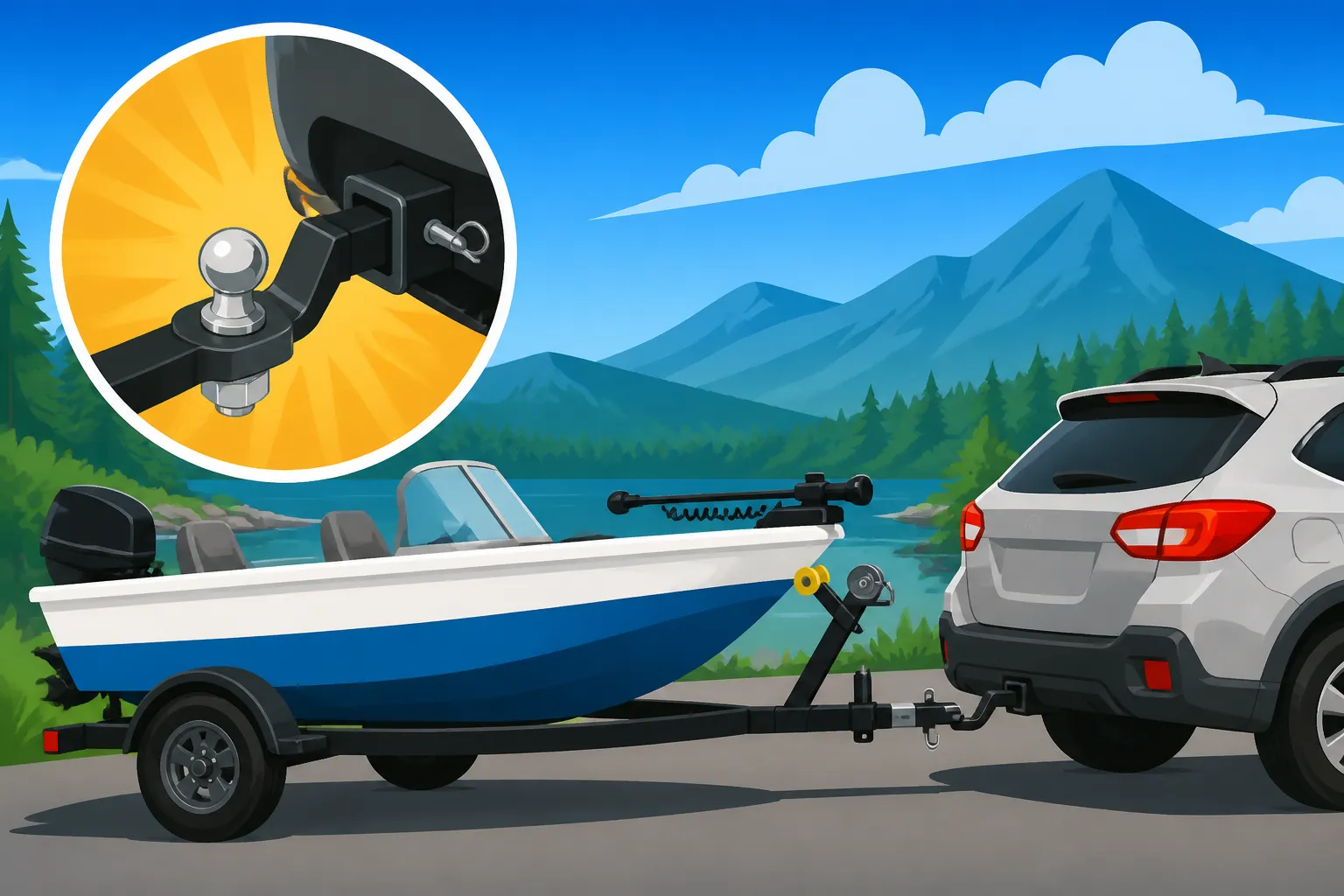
Once you have your receiver, the next step is the ball mount and hitch ball, which are the direct connection between your vehicle and the trailer. The ball mount slides into the receiver and is held in place by a hitch pin. They come in various "drops" or "rises" to ensure your trailer tows as level as possible. A level trailer distributes weight evenly across its axles, reduces sway, and prevents excessive stress on either the front or rear of the trailer or tow vehicle.
To determine the correct drop or rise, measure the distance from the ground to the top of your hitch receiver opening. Then, measure the distance from the ground to the top of your trailer's coupler when the trailer is level. The difference between these two measurements will tell you if you need a ball mount with a drop (if your receiver is higher than the coupler) or a rise (if your coupler is higher). You can find a huge selection of ball mounts and hitch balls at places like Bass Pro Shops or online retailers like Amazon, often with diagrams to help you measure correctly.
The hitch ball itself must match the size of your trailer's coupler (the part on the trailer that latches onto the ball). Common sizes are 1 7/8 inch, 2 inch, and 2 5/16 inch. Using the wrong size can lead to dangerous disconnections. Always double-check this measurement before you buy! For most small boats, a 2-inch ball is quite common. You also want to consider the material; a chrome-plated steel ball is standard, but if you're frequently trailering to saltwater spots like Great Bay, a stainless steel ball might offer better corrosion resistance.
Electrical Wiring and Trailer Lights: See and Be Seen
This isn't just a suggestion; it's a legal requirement and an absolute safety must. Your trailer needs functioning brake lights, turn signals, and running lights that synchronize with your tow vehicle. For most small boat trailers, a simple 4-pin flat connector is all you'll need. This connector handles the ground, tail lights, left turn/brake, and right turn/brake signals.
Installing trailer wiring might seem intimidating, but many modern vehicles come with a factory towing package that includes a pre-wired harness, making it a plug-and-play affair. If not, a universal wiring kit can tap into your vehicle's existing light circuits. Regardless of how it's installed, always test your lights before every trip. Have a friend stand behind the trailer while you run through the lights: brakes, left turn, right turn, and headlights (for running lights). There's nothing worse than getting pulled over by local law enforcement for a non-working tail light, or worse, causing a dangerous situation because other drivers can't tell your intentions. Corrosion on the wiring connections is a common culprit for light issues, especially after dunking your trailer in water, so keep those contacts clean!
Crucial Safety & Legal Considerations for New Hampshire Boating
Getting your boat to the water is only half the battle. You need to ensure your setup is safe and compliant with New Hampshire regulations. These often overlooked details can make all the difference for a stress-free day of fishing.
The Critical Role of Safety Chains and Breakaway Cables
These are your unsung heroes, the backup system that can prevent a catastrophe if your primary connection fails. Safety chains are required by law in New Hampshire and connect the trailer to your tow vehicle's frame (not to the hitch receiver itself, but typically to designated loops near the receiver). They should be crossed under the trailer coupler – forming an 'X' – so that if the coupler detaches, the tongue of the trailer rests within the 'X' instead of digging into the pavement. This keeps the trailer tongue from hitting the ground and helps maintain some control over the trailer. Ensure they have enough slack to allow for turns but aren't dragging on the ground.
For trailers equipped with brakes, a breakaway cable is another critical safety device. This cable attaches from the trailer to a separate point on the tow vehicle. If the trailer completely separates from the tow vehicle, the breakaway cable will pull a pin, activating the trailer's brakes to bring it to a stop. This prevents a runaway trailer, which is a truly terrifying thought for anyone who's ever imagined such a scenario. Always double-check that both your safety chains and breakaway cable (if applicable) are properly connected before you drive off.
When Do You Need Trailer Brakes?
This is a question many small boat owners ponder. In New Hampshire, trailer brakes are generally required for any trailer with a Gross Vehicle Weight Rating (GVWR) exceeding 3,000 pounds. While many smaller boats on their trailers might come in under this threshold, it's essential to know your exact GTW. If your boat and trailer together tip the scales over 3,000 pounds, you absolutely need trailer brakes.
There are two main types: surge brakes (most common on boat trailers) and electric brakes. Surge brakes activate automatically when your tow vehicle slows down, causing the trailer to "push" on the hitch and engage the trailer's braking system. Electric brakes, on the other hand, require a brake controller installed in your tow vehicle, allowing you to manually or automatically apply the trailer brakes. Even if your boat and trailer are just under the legal requirement, having trailer brakes provides a significant safety advantage, especially when navigating steep hills or making emergency stops. They reduce stopping distances and dramatically lessen the strain on your vehicle's brakes.
Pre-Trip Checks and On-Road Tips
Even with the perfect hitch setup, neglecting pre-trip checks can lead to trouble. Before every journey, do a quick walk-around:
- Tires: Check tire pressure on both your tow vehicle and trailer tires. Underinflated tires can cause sway and heat buildup, leading to blowouts.
- Lug Nuts: Give the lug nuts on your trailer wheels a quick check to ensure they're tight. Road vibration can sometimes loosen them.
- Lights: As mentioned, test all lights – running, brake, and turn signals.
- Connections: Confirm your coupler is securely latched to the hitch ball, the safety chains are crossed and attached, and the wiring harness is plugged in firmly.
- Load: Ensure your boat is properly secured to the trailer with transom straps and a bow tie-down. Loose items in the boat can become projectiles.
On the road, remember that you're driving a much longer and heavier vehicle combination. Allow for greater stopping distances, take wider turns, and reduce your speed, especially on winding roads or in adverse weather. Be mindful of highway speeds, as trailer tires often have lower speed ratings than vehicle tires. You're not just driving, you're towing, and that requires a different mindset. Getting to your fishing destination, perhaps one of the Best Fishing Lakes in New Hampshire or for some striped bass action in Great Bay Fishing Guide for Striped Bass, is far more enjoyable when you know you've done everything to ensure a safe trip.
Your Checklist Before Hitting the Road
Let's consolidate everything into a practical checklist. Preparing your setup thoroughly will help alleviate any pre-trip jitters and ensure you're ready to hit the road with confidence.
Confirm Your Boat and Trailer Weight
First and foremost, have a firm grasp on the total weight of your boat and trailer, fully loaded with all your gear, fuel, and anything else you usually bring. Don't rely solely on manufacturer's dry weights; that's just a starting point. A quick trip to a local weigh station with your loaded trailer will give you the most accurate number. This weight dictates everything from your hitch class to whether you need trailer brakes. Knowing this number also helps you stay within your vehicle's capabilities, preventing undue stress on your engine, transmission, and brakes. Remember, it's always better to be slightly over-prepared in terms of capacity than to push the limits.
Verify Vehicle Towing Capacity and Hitch Rating
Once you know your total trailer weight, compare it to your vehicle's towing capacity found in your owner's manual or door jamb sticker. Make sure your vehicle can comfortably handle the load. Simultaneously, confirm that your hitch receiver's class and weight rating are appropriate for your boat's weight. For example, if your boat and trailer weigh 2,800 pounds, a Class II hitch (rated for up to 3,500 pounds) would be sufficient, but a Class III (up to 8,000 pounds) offers an even greater buffer. Ensure the hitch ball's capacity also exceeds your trailer's GTW. A mismatched setup here is a recipe for disaster, and understanding these numbers means you're not just guessing.
Inspect All Connection Points and Safety Devices
Before every single trip, do a thorough visual inspection. Is the ball mount securely pinned into the receiver? Is the coupler properly latched and locked onto the hitch ball? Are the safety chains crossed and attached to your vehicle's frame, not dragging on the ground? If your trailer has brakes, is the breakaway cable properly connected to your tow vehicle and not entangled? Check the wiring harness connection to ensure it's snug and free from corrosion. A loose or damaged connection could lead to no lights or, worse, the trailer disconnecting. These small checks only take a few minutes, but they are absolutely essential for your safety and for avoiding issues on the road.
Test Trailer Lights and Brakes
This is non-negotiable. Have a friend help you, or use a mirror, to verify that every light on your trailer is working: running lights, brake lights, and turn signals for both sides. If you have trailer brakes, test them too. For surge brakes, a quick test stop in a safe, open area will usually confirm they engage. For electric brakes, check your in-cab controller for proper function. Issues with trailer lights are one of the most common reasons for roadside stops by law enforcement, and they're a significant safety hazard. Keeping your lights in tip-top shape also reduces your risk of accidents, especially if you're pulling your boat after dark from a great New Hampshire Lake Trout Ice Fishing Season Dates outing. For general boat registration requirements, you might also find New Hampshire Boat Registration Requirements helpful.
Secure Your Boat and All Gear
Finally, make sure your boat itself is properly secured to the trailer. Transom straps should hold the stern down, and a bow strap or chain should keep the front of the boat firmly against the bow stop. Any loose items in the boat, like fishing rods, tackle boxes, or coolers, should either be secured or removed and placed in your tow vehicle. Wind can create surprising lift, and bumps in the road can send unsecured items flying. Imagine losing your favorite fishing reel on I-93! Taking a moment to secure everything prevents damage, loss, and potential hazards for other drivers. It's also a good idea to ensure all drain plugs are out during transit, preventing water accumulation.
You're now equipped with the knowledge to create a safe and effective trailer hitch setup for your small boat, getting you out on the beautiful waters of New Hampshire with confidence.
Disclaimer
This article is for general informational purposes only and does not constitute professional advice. Laws, prices and regulations vary by location and change over time. Consult a qualified professional for guidance on your specific situation.