Best technique for winter smallmouth bass
Winter in New Hampshire brings a unique set of challenges for anglers, and none more so than targeting smallmouth bass. When the water turns frigid and the air bites, these feisty bronzebacks can seem to vanish, leaving many feeling frustrated and bewildered. But don't despair! This guide is here to unravel the mysteries of finding and enticing winter smallmouth bass, offering practical tips and techniques to help you extend your fishing season and land some incredible fish.
Understanding Winter Smallmouth Behavior
Fishing for smallmouth bass in the colder months isn't just about throwing different lures; it's about fundamentally understanding how these fish react to plummeting water temperatures. Their entire metabolism slows down, making them less active and more selective in their feeding. What works during the warm summer months simply won't cut it when the mercury drops.
The Impact of Cold Water on Smallmouth Metabolism
Think of smallmouth bass in winter like a person bundled up on a couch, trying to conserve energy. They're not going to be running marathons or chasing down fast food. Their digestive process slows considerably, and they need fewer calories to sustain themselves. This means they won't chase a lure very far, and they certainly won't exert much energy for a meal that isn't easily caught or substantial enough to be worth the effort. It's a delicate balance of energy expenditure versus caloric intake. This biological shift is the root of why traditional aggressive tactics often fail miserably in winter. They're not angry; they're just sluggish and picky.
Where Smallmouth Bass Go in Winter
One of the biggest hurdles for winter anglers is simply locating the fish. During the summer, smallmouth are often found cruising shallow rocky banks, ambush points, and chasing baitfish in open water. But as the water cools, they migrate to deeper, more stable environments. This usually means dropping down to the thermocline if one still exists, or finding the deepest available structure in a lake or river. We're talking about deep humps, main lake points that drop off into significant depths, submerged timber, and deep rock piles. They'll often school up tightly in these areas, sometimes in massive numbers, making them a treasure trove if you can pinpoint their location. This can be particularly true on larger bodies of water like Lake Winnipesaukee, where the deep-water structure offers sanctuary. Understanding Smallmouth Bass Habits on Winnipesaukee can provide further insight into their seasonal movements.
Key Feeding Windows and Periods of Inactivity
Just because smallmouth are sluggish doesn't mean they stop eating entirely. They still have to eat, but their feeding windows become much shorter and more sporadic. These brief bursts of activity are often tied to subtle changes in conditions, like a slight warming trend, a few hours of consistent sunshine penetrating the water, or even specific barometric pressure shifts. You might find them active for only an hour or two in an entire day, usually around midday when the water temperature is at its "warmest." The rest of the time, they're likely suspended or tucked tight to structure, conserving every last bit of energy. Patience and persistence are absolutely crucial for success during these short windows.
Essential Gear for Braving the Cold and Catching Winter Bass
Don't let the cold keep you off the water. With the right gear, you can stay comfortable and give yourself the best chance at success. Winter fishing requires a slightly different setup than your typical summer arsenal, focusing on sensitivity and cold-weather durability.
Rods and Reels for Cold Water Sensitivity
When fish are lethargic, bites can be incredibly subtle – sometimes feeling like nothing more than a slight "tick" or added weight. This demands extremely sensitive rods. Look for longer, light to medium-light power spinning rods (7' to 7'6" is often ideal) with fast or extra-fast actions. Graphite blanks are your friend here, as they transmit those faint taps better than fiberglass. Pairing these rods with a smooth, smaller spinning reel (size 2000 or 2500) is key. Ensure the reel has good quality internal components that won't seize up in freezing temperatures. You can often find excellent options for sensitive rods and reels on Amazon that are specifically designed for finesse techniques.
Line Choices: Managing Ice and Detecting Bites
Your fishing line is the crucial connection between you and the fish, and in winter, it faces unique challenges. Freezing guides are a constant battle, so choosing the right line can make a huge difference.
- Fluorocarbon: For leader material, fluorocarbon is a top choice due to its near invisibility underwater and excellent sensitivity. Its low stretch helps transmit those subtle winter bites. A 6-8 lb test fluorocarbon leader is often sufficient.
- Braided Line with Fluorocarbon Leader: Many anglers prefer braided line as their main line because it has virtually no stretch, providing ultimate sensitivity. However, braid can absorb water and freeze in your guides, which is incredibly frustrating. To combat this, some anglers will use a very light coating of reel grease or line conditioner on their braid. A 10-15 lb test braid paired with a 6-8 lb fluorocarbon leader is a popular and effective setup.
- Monofilament: While less sensitive, a good quality monofilament can be an option, particularly for techniques like suspending jerkbaits, where a little stretch can be beneficial. It's also less prone to freezing in guides than braid, though it will still happen.
Remember, whatever line you choose, routinely check it for nicks and abrasions, especially after fishing around rocky structure.
Cold Weather Apparel and Safety Equipment
Staying warm and dry isn't just about comfort; it's about safety. Hypothermia is a serious risk in New Hampshire's winter. Layering is your best friend. Start with a moisture-wicking base layer, add insulating mid-layers (fleece, down), and top it off with waterproof and windproof outer layers. High-quality insulated boots, warm gloves or mittens (often with convertible fingers for tying knots), and a warm hat are non-negotiable.
Beyond clothing, always carry essential safety gear. A good pair of ice picks, a spud bar (if fishing on ice), and a rope are crucial. If you're fishing from a boat in cold water, wearing a PFD (personal flotation device) is absolutely paramount, even if you're an experienced swimmer. The shock of cold water can quickly incapacitate you. It's wise to review Life Jacket Requirements for New Hampshire Boaters before heading out.
Proven Techniques and Lures for Frigid Waters
Since smallmouth bass are lethargic in winter, your presentation needs to be slow, subtle, and right in their face. Aggressive retrieves and flashy baits that worked in summer will often just spook them.
Finesse Jigging: The Art of the Subtle Presentation
When smallmouth are glued to deep structure, finesse jigging is often the most effective technique. This involves using light jigs with subtle movements to entice a strike.
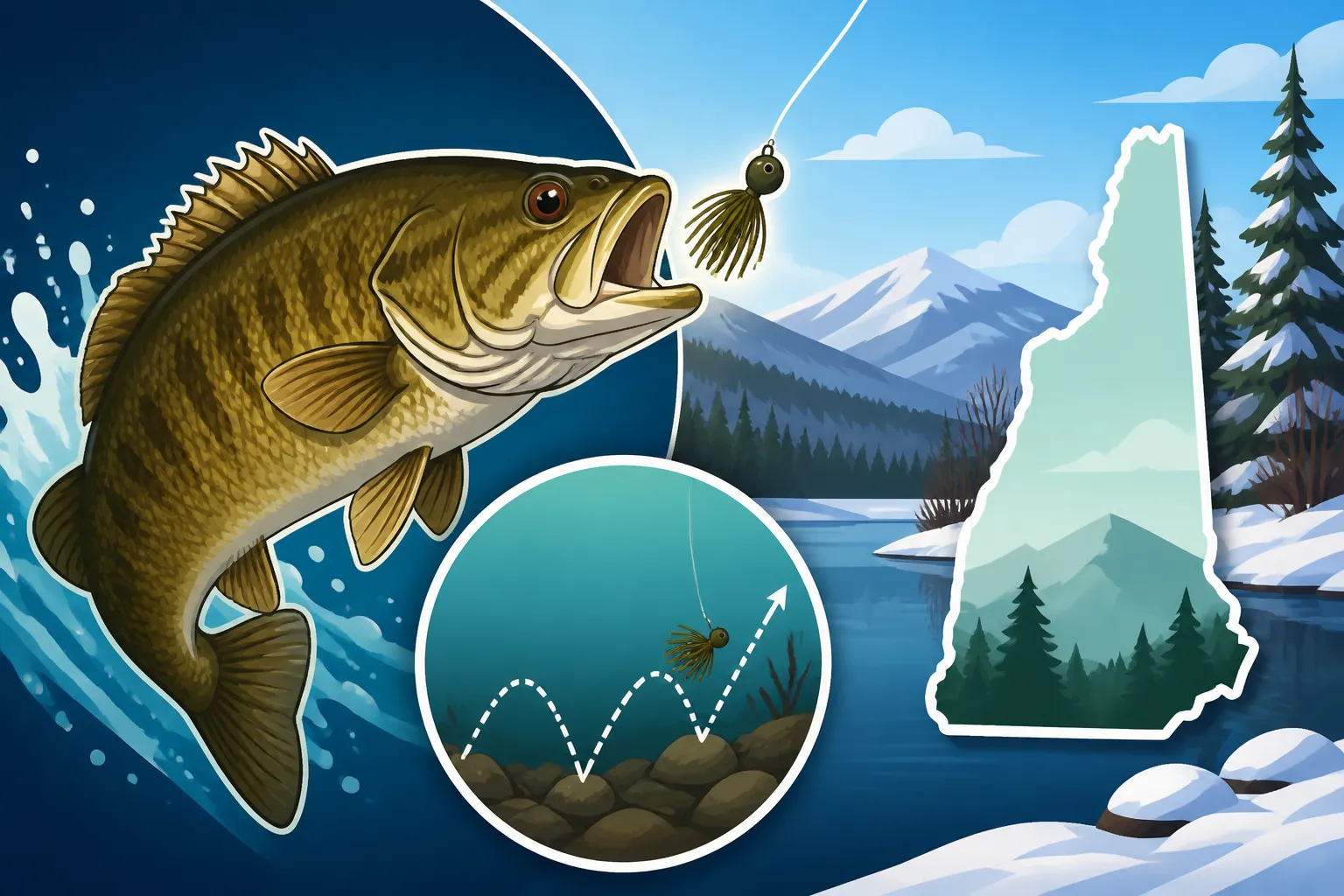
- Tube Jigs: These are a classic for a reason. A 3-4 inch tube jig, often in drab colors like green pumpkin, brown, or black, rigged on a 1/8 to 1/4 oz jig head, can be deadly. The key is to impart very small hops or shakes on the bottom, mimicking a dying baitfish or crawfish. Let it sit for long pauses.
- Drop Shot Rigs: The drop shot allows you to present a small plastic bait (like a minnow imitation or worm) off the bottom, right in the fish's strike zone, without the weight interfering with the bait's action. The weight maintains contact with the bottom while your bait hovers tantalizingly. Slight twitches of the rod tip make the bait quiver.
- Ned Rigs: These simple rigs, consisting of a mushroom-shaped jig head and a small, buoyant soft plastic (often 2-3 inches), are incredibly effective for cold-water bass. Their buoyancy causes them to stand straight up off the bottom, offering a subtle, enticing profile. A super slow drag-and-pause retrieve is usually best. Many anglers stock up on these versatile finesse baits from retailers like Amazon.
Suspending Jerkbaits: Mimicking Stunned Baitfish
Jerkbaits are a staple for cold water, especially when smallmouth might be suspended just off structure or relating to baitfish schools. The magic of a suspending jerkbait is its ability to stay at a specific depth during a pause, perfectly mimicking a stunned or dying baitfish.
- Long Pauses are Key: Cast the jerkbait out, reel it down to its running depth with a few quick jerks, and then pause. These pauses should be much longer in winter, sometimes 10, 20, or even 30 seconds. The colder the water, the longer the pause. The bass needs time to react and decide if it's worth the energy to strike.
- Subtle Twitches: Instead of violent jerks, use softer, more subtle twitches of the rod tip to give the bait a lifelike darting action. Think less "erratic" and more "struggling."
- Color and Size: Natural baitfish colors like silver, white, perch, or ghost patterns are often effective. Stick to baits in the 3.5 to 5-inch range.
Blade Baits and Spoons: Vertical Appeal for Deep Fish
When smallmouth are tightly schooled in deeper water, vertical presentations like blade baits and spoons can be incredibly effective. These baits fall quickly and can be worked directly over fish marked on your electronics.
- Blade Baits: These thin metal baits vibrate intensely on the lift and flutter on the fall. A common technique is to lift the rod tip sharply a foot or two, then let the bait fall on a semi-slack line, feeling for the "thump" of a strike. Again, pauses after the fall can be critical.
- Spoons: Jigging spoons, often made of lead or zinc, shimmer and flutter on the drop, resembling a dying baitfish. A lift-and-drop technique is common, but don't be afraid to experiment with how high you lift or how long you pause. Heavier spoons (1/2 to 3/4 oz) can get down to deep fish quickly and are easier to control in wind or current.
- Targeting Depths: Use your fish finder to locate schools of bass and baitfish, then drop your blade bait or spoon directly into the school. The goal is to aggravate a reactionary strike rather than relying on an active feeding response.
Here's a quick comparison of common winter smallmouth lures:
| Lure Type | Typical Weight (oz) | Target Depth | Retrieve Style | Best Conditions | Notes |
|---|---|---|---|---|---|
| Tube Jig | 1/8 – 1/4 | Bottom (10-40 ft) | Slow hops, drags, long pauses | Fish tight to bottom structure, lethargic | Mimics crawfish/baitfish. High sensitivity needed. |
| Drop Shot Rig | 1/8 – 1/2 | Suspended or bottom | Subtle quivers, long pauses, maintain bottom contact | Fish suspended or relating to subtle structure | Bait hovers, minimal movement. |
| Ned Rig | 1/16 – 1/4 | Bottom (5-25 ft) | Super slow drag, long pauses, stand-up action | Highly lethargic fish, clear water, subtle bites | Excellent for finesse. |
| Suspending Jerkbait | N/A (floating/susp.) | Mid-column (5-15 ft) | Jerk-jerk-pause (long!), subtle twitches | Fish suspended, relating to baitfish | Requires patience. |
| Blade Bait | 1/4 – 3/4 | Deep water (15-60 ft) | Sharp lifts, controlled falls, short pauses | Vertical jigging over schooled fish | Creates vibration. |
| Jigging Spoon | 1/4 – 1 | Deep water (15-70 ft) | Lift-and-fall, erratic twitches | Vertical jigging, reaction strikes | Mimics dying baitfish. |
Finding Winter Smallmouth Bass in New Hampshire
Locating the fish is often the hardest part of winter smallmouth fishing, especially when you're dealing with vast lakes or winding rivers. Successful winter anglers rely heavily on electronics and a good understanding of topography.
The Importance of Good Electronics
In winter, your fish finder or sonar unit isn't just a nice-to-have; it's practically a necessity. Smallmouth bass will be tightly schooled and often difficult to find without it.
- Side Imaging/Down Imaging: These technologies are invaluable for scanning broad areas quickly to identify deep structure like rock piles, humps, and submerged timber, as well as detecting schools of baitfish and bass.
- 2D Sonar: Use traditional 2D sonar to pinpoint the exact depth of fish and to distinguish between bass and bait. Look for "arches" or dense balls of bait. Pay attention to the bottom contour and any hard returns that indicate rock or wood.
- GPS and Mapping: Mark successful spots with GPS waypoints. High-definition lake maps are critical for identifying contours, sharp drop-offs, and deep points before you even get on the water. Spend time studying these maps at home, marking potential winter holding areas. These tools are indispensable, whether you're navigating Lake Winnipesaukee Fishing Guide or exploring a smaller, lesser-known pond.
Key Structural Elements to Target
When the water is cold, smallmouth bass will gravitate to specific types of deep structure that offer stability, cover, and proximity to deeper water.
- Deep Humps and Reefs: These offshore structures often top out at 15-30 feet but are surrounded by much deeper water. Smallmouth will relate to the sides or tops, depending on the day.
- Main Lake Points with Deep Water Access: Points that gradually slope or abruptly drop into 30+ feet of water are prime winter real estate. Bass will often hold on the deeper breaks of these points.
- Submerged Timber and Rock Piles: While less common in New Hampshire's granite lakes, any significant submerged wood (like old stumps or laydowns) in deep water, or large rock piles, can hold concentrations of fish. These provide ambush points and cover.
- Transition Areas: Look for areas where different bottom compositions meet – for example, where a rocky bottom transitions to sand or mud in deeper water. These transition lines can be highways for bass.
Consider areas that also provide access to deep channels or basins where fish can retreat if conditions become too harsh. Remember, New Hampshire Fishing Season Dates and Closures will dictate when you can legally target these areas.
Open Water and Ice Fishing Considerations
Depending on the specific water body and how cold the winter gets, you might be fishing open water from a boat or through the ice.
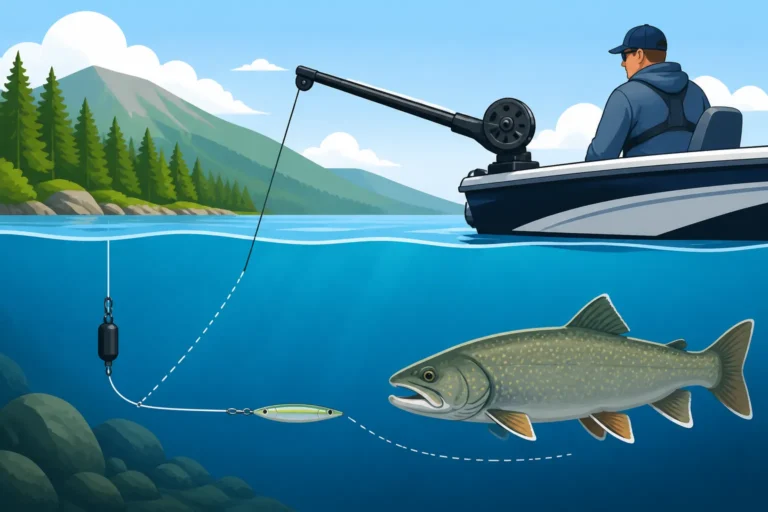
- Open Water (Boat): If you're able to launch a boat, focus on using your electronics to idle over potential deep structures. Once you mark fish, deploy your vertical presentations (jigs, spoons, blade baits) or cast suspending jerkbaits to those depths. Pay close attention to current, even subtle currents can position fish. Make slow, controlled drifts over suspected areas. Remember, safety always comes first; ensure your boat is well-maintained and you have all the necessary New Hampshire Boating Laws for Anglers and safety equipment.
- Ice Fishing: When the ice is thick enough (always check How thick ice needs to be before New Hampshire anglers fish it!), smallmouth bass can be targeted effectively through the ice. Use a portable flasher or fish finder to locate schools. Jigging spoons, blade baits, and even small swimbaits can be dropped down directly to the fish. Focus on drilling multiple holes over deep humps, points, and channel edges to find their holding zones. Once you find them, they'll likely be concentrated. Many anglers consider Best Ice Fishing Lakes in New Hampshire for targeting a variety of species, including smallmouth.
No matter the technique, remember that winter smallmouth fishing in New Hampshire is a game of patience, precision, and understanding the fish's slow, cold-water cadence. Dress warmly, fish slowly, and don't be afraid to experiment with slight variations in your retrieve until you crack the code.
Disclaimer
This article is for general informational purposes only and does not constitute professional advice. Laws, prices and regulations vary by location and change over time. Consult a qualified professional for guidance on your specific situation.