How to fish a wooly bugger for trout
There's nothing quite like the thrill of chasing trout in New Hampshire, whether you're wading a cold mountain stream or casting into a tranquil pond. But let's be honest, sometimes those finicky fish just aren't looking up for a dry fly, and you need a versatile, irresistible offering that can get down to where they're feeding. That's where the venerable Wooly Bugger comes in – a fly that has saved countless days on the water for anglers when nothing else seems to work. This guide will walk you through everything you need to know to effectively fish a Wooly Bugger for trout, ensuring you have the confidence to tie one on and bring more fish to the net.
The Undeniable Appeal of the Wooly Bugger for New Hampshire Trout
The Wooly Bugger isn't just a fly; it's a legend. Its effectiveness isn't a secret, and for good reason. It’s a pattern that can mimic a smorgasbord of aquatic life, making it an absolute must-have in any New Hampshire angler's fly box.
Anatomy of a Killer Fly: What Makes It So Versatile
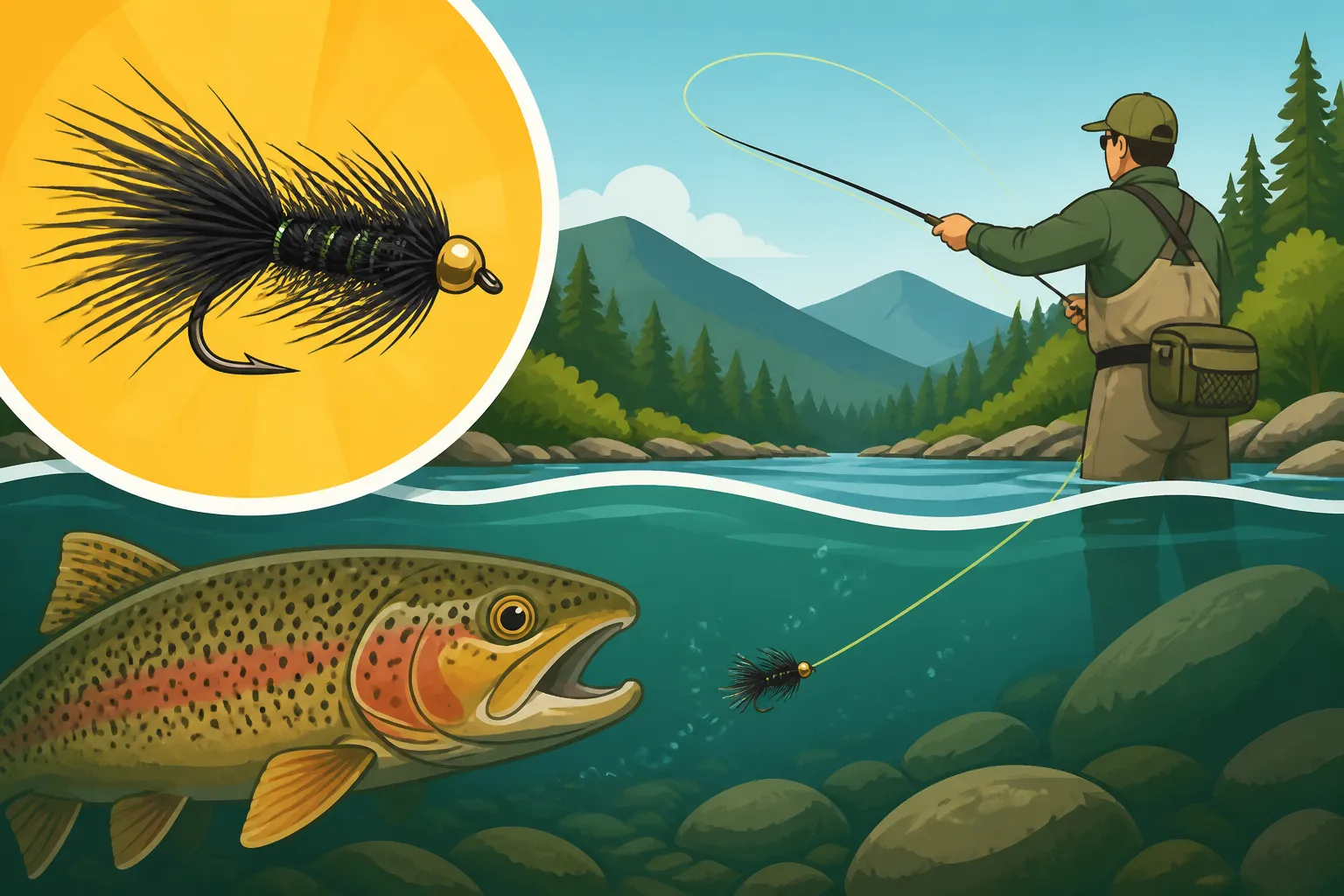
At its heart, the Wooly Bugger is a simple design, yet its components combine to create a remarkably lifelike and enticing presentation. It typically features a chenille body, often ribbed with fine wire, that provides bulk and texture. The most distinctive feature is its marabou tail, which undulates and pulses with incredible realism in the water, perfectly imitating the swimming motion of a baitfish or the twitch of a leech. Completing the look is a soft hackle collar, usually palmered forward over the body, which breathes and expands, adding to the illusion of movement and depth.
Consider a smallmouth stream where trout might be opportunistic feeders. A black or olive Wooly Bugger, with its lifelike movement, could easily be mistaken for a leech or a sculpin, both common prey items. In a stocked pond, a brighter colored bugger might look like a pellet or a larger insect, tapping into the trout's instinct for an easy meal. This chameleon-like ability to imitate so many different food sources is precisely what makes the Wooly Bugger so deadly across various New Hampshire waters and fishing scenarios. It's truly a fly that transcends specific hatches or feeding patterns.
Why it Consistently Catches Trout in Diverse NH Waters
New Hampshire offers an incredible array of trout fishing opportunities, from the rushing waters of the Pemigewasset River to the quiet depths of countless stocked ponds. The beauty of the Wooly Bugger is its ability to perform in almost all of them. Unlike highly specialized patterns that require specific insect hatches or water conditions, the Wooly Bugger taps into the trout's fundamental predatory instincts. It looks like food, it moves like food, and frankly, hungry trout rarely pass it up.
Imagine fishing one of the many Best Fly Fishing Rivers in New Hampshire after a rain shower, when the water is a bit off-color and trout are more likely to be feeding subsurface. A black or olive Wooly Bugger stripped through a promising run can be incredibly effective. Or picture yourself targeting a deep pool on a sunny summer afternoon when trout are holding tight to the bottom. A weighted Wooly Bugger allowed to sink and then retrieved slowly can tempt even the most reluctant fish. It’s also phenomenal in the spring, especially in recently New Hampshire Trout Stocking and Fishing Rules, where aggressive, recently stocked fish will readily chase a moving target. Its robust construction also means it can stand up to repeated strikes from feisty trout, allowing you to stay in the action longer.
Essential Wooly Bugger Techniques for New Hampshire Trout
Knowing how to fish a Wooly Bugger isn't just about casting it out; it's about presenting it in a way that truly brings it to life and convinces a trout to strike. Different environments and conditions call for different approaches, and mastering a few key techniques will significantly boost your success.
Stream and River Tactics: Bringing the Bugger to Life
When you're wading a New Hampshire river or stream, like the Swift or Ellis, your presentation often needs to account for current, depth, and structure. The Wooly Bugger excels in these dynamic environments because its design allows for a variety of retrieves that mimic natural prey movement.
One of the most effective methods is the "swing" technique. Cast your Wooly Bugger slightly upstream and across the current, letting it sink for a moment. As it drifts downstream, allow the current to put a slight bow in your line. This will cause the fly to swing across the current, presenting a broadside profile to any trout holding downstream. As it swings, the marabou tail pulses, and the hackle breathes, making it appear like a struggling baitfish or insect. You can vary the swing by mending your line upstream to slow it down, or even adding a twitch with your rod tip to create an erratic darting motion. This technique is particularly deadly in runs and at the tail end of pools where trout often lie in wait.
Another potent technique is the "strip-and-pause." Cast your fly upstream or directly across into promising pockets, behind boulders, or along undercut banks. Allow it to sink to the desired depth, then begin a series of short, sharp strips of your fly line, followed by pauses. The strips make the marabou tail flare and collapse, mimicking a fleeing baitfish. The pause allows the fly to sink and settle, often triggering a strike as the trout pounces on what it perceives as an injured or easy meal. This method gives you excellent control over the fly's depth and speed, which is crucial when trying to pinpoint trout holding in specific eddies or current seams. When exploring different approaches, you can often find a wide variety of fly lines on Amazon that help control retrieve depth and speed, allowing for better execution of these dynamic river techniques.
Stillwater Strategies for Ponds and Lakes: Subtlety and Depth
Fishing a Wooly Bugger in New Hampshire's many ponds and lakes, such as those listed in our Best Trout Ponds in New Hampshire guide, requires a slightly different mindset than river fishing. Without a strong current, you become the primary source of movement for the fly, and understanding depth is paramount.
For stillwaters, the "slow strip" is a go-to technique. Cast your Wooly Bugger out and allow it to sink. The amount of time you let it sink will depend on the depth you're targeting. If trout are cruising shallow weed lines, a short sink time might be all you need. If they're holding in deeper thermoclines, you'll need to let it descend for much longer, often counting down to achieve a specific depth. Once it's at the desired depth, begin a slow, continuous retrieve, using long, steady strips of your fly line. The marabou tail will undulate with a mesmerizing motion, mimicking a slowly swimming leech or a languid baitfish. This retrieve is particularly effective for less aggressive trout or when fish are holding deeper and require a more subtle presentation.
Another effective stillwater technique is the "erratic retrieve." This involves mixing up your strip length and speed, adding twitches and pauses to imitate a wounded or fleeing prey item. Imagine a baitfish suddenly darting away or a leech contracting quickly. Cast your fly, let it sink, then strip it quickly for a few feet, pause, give a sharp twitch, then strip slowly again. This unpredictable movement can trigger reaction strikes from more aggressive trout, especially during dawn or dusk, or when fishing near structure like submerged logs, rock piles, or weed edges. Sometimes, simply casting out a weighted Wooly Bugger and letting it sink all the way to the bottom, then imparting very subtle movements by slowly lifting and dropping your rod tip, can entice trout that are hugging the lakebed.
Varying Your Retrieve: The Key to Triggering Strikes
Regardless of whether you're on a flowing river or a placid lake, the single most important aspect of fishing a Wooly Bugger is varying your retrieve. Trout aren't always looking for the same thing, and what works one moment might be ignored the next.
Think of your retrieve as a conversation with the fish. If they're not responding to a slow, steady pull, try speeding it up with short, sharp strips. If that doesn't work, let it sink longer, or try longer, slower strips with extended pauses. Sometimes, just a gentle twitch of the rod tip, without any line retrieve, is enough to make the marabou tail pulse and grab a trout's attention. The more you experiment with different speeds, pauses, and depths, the better you'll understand what the fish are looking for on any given day. Keeping a selection of retrieve speeds in your arsenal is crucial, as is adapting to conditions. Remember, fishing isn't just about getting the fly to the fish; it's about making the fish want the fly.
Choosing the Right Wooly Bugger for New Hampshire Conditions
The Wooly Bugger comes in a dazzling array of colors, sizes, and weights. While its versatility means almost any bugger can catch a fish, selecting the right one for the conditions you're facing can make a significant difference in your success.
Colors and Sizes for Different Scenarios
The color of your Wooly Bugger can be a critical factor, often depending on water clarity, light conditions, and what local forage is prevalent.
- Black: This is arguably the most versatile and essential color. Black buggers are fantastic in low light conditions (dawn, dusk, overcast days), stained or murky water, and when imitating leeches or dark baitfish. Many anglers swear by black as a universal attractor.
- Olive: Another indispensable color. Olive buggers excel in clearer water and are superb imitations of sculpins, aquatic insects, and various baitfish. It's a natural color that often works well in a wide range of New Hampshire trout waters.
- White/Cream: Excellent for mimicking lighter baitfish, especially in clear water or when fish are keying in on smaller minnows. They can also stand out well in darker water, creating a strong silhouette.
- Brown/Tan: Good for imitating crayfish or certain darker nymphs and baitfish. Effective in rocky rivers and streams where these creatures reside.
- Flashy Colors (e.g., Chartreuse, Hot Pink): While not always primary choices, these brighter colors can be incredibly effective in certain situations, particularly for freshly stocked trout in ponds or when trying to trigger an aggressive reaction strike in murky water. These can be particularly good for Spring Trout Fishing Techniques for New Hampshire Ponds.
When it comes to size, a range from #6 to #12 will cover most trout fishing situations. Larger sizes (#6, #8) are great for aggressive trout, bigger rivers, or when you suspect fish are targeting larger baitfish. Smaller sizes (#10, #12) are more subtle and often better for spooky trout in clear, low-water conditions, or when trout are feeding on smaller insect larvae. Having a variety of sizes and colors in your Best Tackle Box Setup for New Hampshire Anglers is a smart move.
Weight and Flash: Getting to the Fish and Grabbing Attention
Beyond color and size, the weight and amount of flash in your Wooly Bugger also play crucial roles.
- Weighted vs. Unweighted: Many Wooly Buggers come with a bead head (brass or tungsten) or lead wire wrapped under the body. These weighted versions are invaluable for getting your fly down quickly to the strike zone, especially in deeper pools, faster currents, or stillwater environments. If you're fishing shallow riffles or want a more subtle, slower sink rate, unweighted or lightly weighted buggers are ideal. Sometimes, an unweighted fly fished on a sinking leader can provide a more natural drift. When looking for different bead head materials or lead wire to tie your own, you might find a comprehensive selection available on Amazon.
- Adding Flash: Some Wooly Buggers incorporate strands of Krystal Flash or similar flashy materials into the tail or body. This added sparkle can mimic the reflective scales of a baitfish, catching the light and drawing attention from a distance. In clear water, a subtle amount of flash can be effective, while in stained water, a bit more flash might be needed to make your fly noticeable. However, too much flash can sometimes spook wary trout, so it's good to have options with varying amounts.
| Wooly Bugger Color | Common Sizes | Best Conditions / Imitations |
|---|---|---|
| Black | #6 – #12 | Low light, murky water, leeches, dark baitfish |
| Olive | #6 – #12 | Clearer water, sculpins, general insects, baitfish |
| White/Cream | #8 – #12 | Clear water, lighter baitfish, high visibility |
| Brown/Tan | #8 – #10 | Rocky rivers, crayfish, darker nymphs |
| Chartreuse/Pink | #6 – #10 | Freshly stocked trout, reaction strikes, murky water |
Troubleshooting and Advanced Tips for Success with the Wooly Bugger
Even with the right fly and basic techniques, trout fishing can be challenging. Sometimes you need to dig a little deeper into your bag of tricks. Here are some advanced considerations and troubleshooting tips to help you maximize your success with the Wooly Bugger.
Reading the Water for Optimal Presentation
Understanding where trout hold and feed is fundamental to effective fly fishing, and it's no different with a Wooly Bugger. Trout seek out areas that offer food, shelter from current, and protection from predators.
In rivers and streams, look for current seams where fast and slow water meet. Trout often lie in the slower water, waiting for food to be swept past in the faster current. Undercut banks, logjams, and large boulders create prime holding lies. When you cast your Wooly Bugger, aim to get it into these areas, allowing it to drift or swing naturally through the strike zone. If you're fishing pocket water in a mountain stream, a short cast upstream of a likely pocket, followed by a quick retrieve as it sinks, can be incredibly effective. Consider checking out resources on Wading Techniques for New Hampshire Trout Streams to improve your ability to navigate and read flowing water.
In lakes and ponds, trout will often relate to structure and depth changes. Drop-offs, submerged humps, weed lines, and the mouths of feeder streams or culverts are all excellent places to target. If you're fishing from shore, try fan-casting to cover a wide area, varying your retrieve speed and depth until you find what works. From a boat or kayak, a fish finder can be invaluable for locating submerged structure and baitfish schools, helping you to present your Wooly Bugger directly to where the trout are likely feeding.
Pairing with the Right Gear: Rods, Leaders, and Tippets
While the Wooly Bugger is versatile, having the right setup can enhance your presentation and make landing fish easier. For most New Hampshire trout fishing with Wooly Buggers, a 5 or 6-weight fly rod is a great all-around choice. It provides enough backbone to cast weighted flies and handle larger trout, yet offers sensitivity for smaller fish. For general trout fishing, you might refer to our guide on the Best Gear for New Hampshire Trout Fishing.
Your leader and tippet selection are also important. A standard 9-foot tapered leader ending in 3X or 4X tippet is usually a good starting point. If you're fishing very clear water for spooky trout, you might drop down to 5X tippet, but be mindful of breaking strength. For weighted buggers, a slightly heavier tippet can help turn the fly over better during the cast. If you're fishing very deep or trying to get the fly down quickly, a sinking leader can be a game-changer, allowing your unweighted or lightly weighted bugger to reach impressive depths. When stocking up on these essentials, you can often find great deals on fly fishing leader and tippet on Amazon.
When to Tie One On: Beyond the Dry Fly Fallacy
Many fly anglers start their journey fixated on dry fly fishing – the romantic notion of watching a trout rise to a perfectly presented imitation. While incredibly rewarding, it's not always the most productive method, especially in New Hampshire where trout often feed subsurface. The Wooly Bugger shines precisely when dry flies aren't working, or when you're specifically targeting larger, more aggressive trout.
If you arrive at the water and don't see any surface activity, or if the water is off-color, don't hesitate to reach for a Wooly Bugger. It's an excellent "search pattern" – a fly you can cast to cover water and locate active fish. It’s also superb in the early spring and late fall when water temperatures are colder and trout are more likely to be seeking substantial, protein-rich meals deeper in the water column. Don't let the simplicity of the Wooly Bugger fool you; it's a consistently effective pattern that often outperforms more complicated flies, making it an essential tool for any angler pursuing Trout Fishing in New Hampshire.
Disclaimer
This article is for general informational purposes only and does not constitute professional advice. Laws, prices and regulations vary by location and change over time. Consult a qualified professional for guidance on your specific situation.