Fishing Without a License in New Hampshire: Penalties
There’s nothing quite like the excitement of a day out on the water in New Hampshire, lines in, soaking up the fresh air. But the peace can quickly turn to panic if a Fish and Game officer approaches and you realize you’ve forgotten, or never even obtained, a valid fishing license. This guide is here to walk you through exactly what happens when you’re caught fishing without a license in the Granite State, detailing the penalties, the enforcement process, and most importantly, how to avoid these frustrating situations altogether.
The Imperative to Obtain a New Hampshire Fishing License
Fishing in New Hampshire is a cherished pastime, a fundamental part of our outdoor lifestyle. But with that privilege comes a responsibility, and the most basic one is securing a valid fishing license. It’s not just a piece of paper; it’s a legal requirement that helps maintain the very waters and fish populations we all enjoy.
Who Exactly Needs a License to Fish?
The general rule of thumb in New Hampshire is straightforward: if you're 16 years old or older and you're casting a line in public waters, you need a license. It’s a common misconception that certain situations might exempt you, but the regulations are quite specific. For instance, even if you’re fishing from a private dock that extends into public water, a license is typically required. There are a few specific exemptions, of course. For example, individuals under the age of 16 are generally exempt from needing a license, which is fantastic for getting kids involved in the sport early! You can learn more about specific age guidelines and exemptions in our detailed guide on New Hampshire Fishing License Age Requirements. Additionally, the state often designates specific New Hampshire Free Fishing Days, Explained where licenses are not required, acting as a great opportunity for newcomers to try fishing without the initial investment. However, these are rare exceptions, not the norm.
It's vital to remember that these age exemptions primarily concern freshwater fishing. If you're looking to cast for striped bass in Great Bay, there might be different rules. It’s also important to clarify if you're fishing on truly private property with completely enclosed waters that don't connect to public waterways; however, these scenarios are less common and often still require careful checking of local ordinances. The safest bet is always to assume you need a license unless you've confirmed an explicit exemption. Getting caught without one, even due to an honest misunderstanding, can still lead to penalties.
Understanding Residency and Nonresident Obligations
New Hampshire’s licensing system differentiates between residents and nonresidents, and misunderstanding these categories can lead to issues. A resident is typically someone who has lived in New Hampshire for at least six consecutive months and intends to make it their permanent home. This often means you have a New Hampshire driver’s license, pay taxes here, and your primary residence is within the state. For those who own property here but reside elsewhere, or are just visiting for vacation, you’re considered a nonresident. The state offers various license options, from annual permits to shorter-term vacation licenses, catering to different needs.
Nonresident licenses generally come at a higher price point than resident licenses, a common practice across many states to offset the contributions residents make through taxes. For example, if you're planning a trip, exploring New Hampshire nonresident fishing license cost 2026 is a good first step. It's crucial not to misrepresent your residency status, as this can be considered a fraudulent act with more severe penalties than simply fishing without a license. College students attending school in New Hampshire, or active military personnel stationed here, might have specific rules or discounts available to them, so it's always worth checking the New Hampshire Fish and Game Department's official guidelines if your situation is unique. Our article on Resident vs Nonresident Fishing License Costs in New Hampshire provides a deeper dive into these distinctions.
Legal Consequences of Fishing Without a Valid Permit
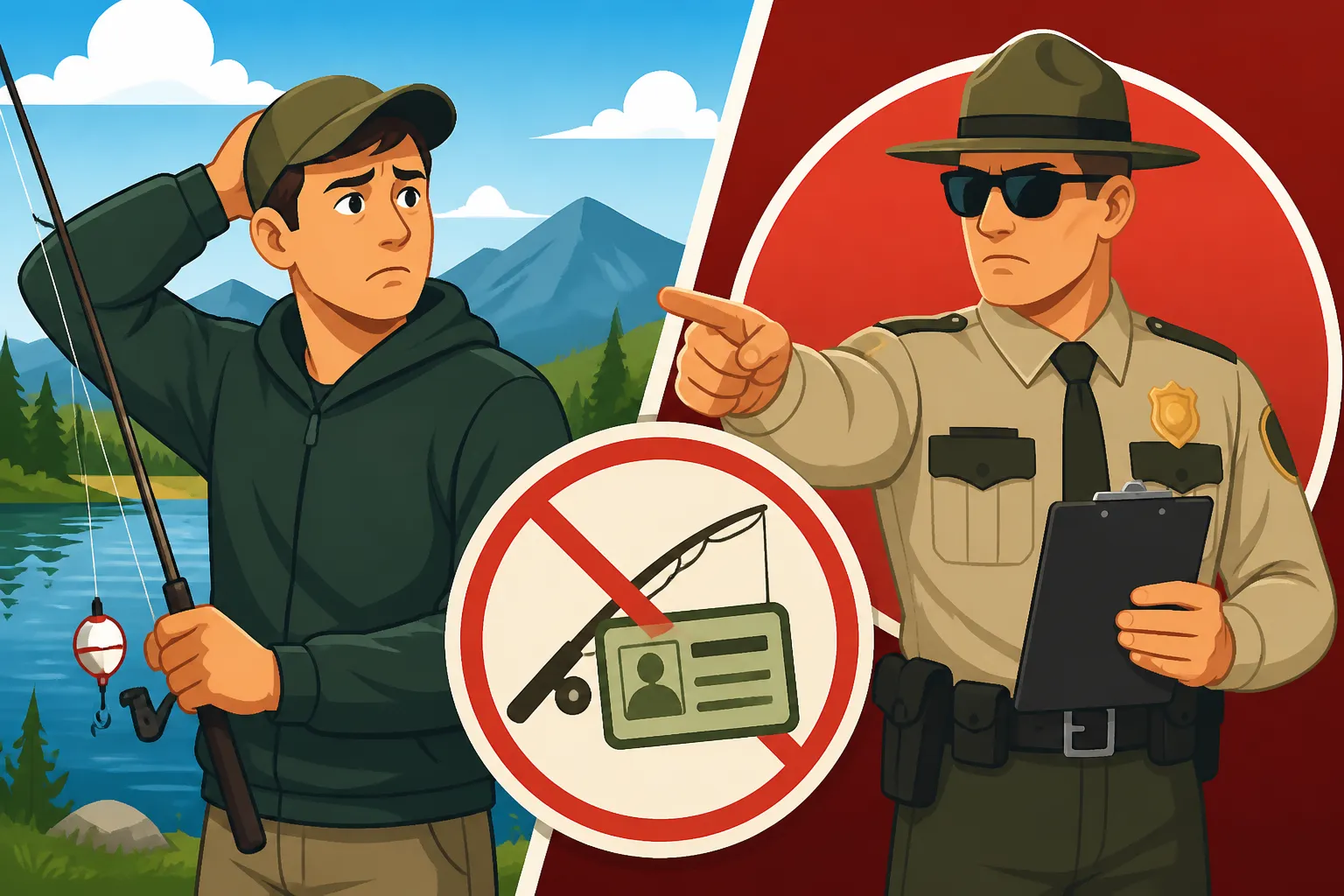
So, you’ve been approached by a New Hampshire Fish and Game officer, and you don’t have your license. What happens next? It’s rarely a simple "go home and get one" scenario. New Hampshire takes its conservation laws seriously, and fishing without a license is considered a violation with clear legal repercussions.
Fines and Monetary Penalties for Violations
The most immediate and common consequence of fishing without a license in New Hampshire is a fine. While the exact amount can vary depending on the specific circumstances, location, and the discretion of the enforcing officer, a first offense is generally considered a violation or a misdemeanor. For a typical first-time offense, you might be looking at a fine ranging from $100 to $500, plus court costs and administrative fees. These costs can quickly add up, easily exceeding the price of an annual license.
Consider a hypothetical scenario: you're enjoying a peaceful afternoon fishing for trout in the Swift River, completely absorbed in the moment. An officer approaches, asks for your license, and you sheepishly admit you don't have one. You might receive a summons to appear in court, or simply be issued a citation on the spot. Even if it's your first time and you're apologetic, the system often doesn't make exceptions. This is not just a slap on the wrist; it's a financial hit that could have been easily avoided. Moreover, a portion of these fines goes directly back into the state's Fish and Game fund, which supports wildlife conservation and management efforts, underscoring that while these penalties are inconvenient for the individual, they serve a broader purpose.
Potential Ancillary Penalties and Escalations
Beyond the initial fine, there are other, often more severe, consequences to consider, especially if it's not your first offense or if other violations are present. For repeat offenders, the penalties can escalate significantly. A second or third offense could lead to much higher fines, mandatory court appearances, and even the suspension or revocation of your fishing privileges for a set period. This means you might be legally barred from purchasing a fishing license in New Hampshire for a year or more.
In more serious cases, especially if combined with other violations like exceeding bag limits, fishing in a closed season, or using illegal methods, an officer might have the authority to confiscate your fishing equipment. This could mean losing your favorite rod and reel, your tackle box, or even your boat if it was instrumental in the violation. While less common for a simple "no license" offense, in egregious situations or those involving criminal intent, there could even be jail time, particularly if you're cited for repeated offenses and fail to appear in court or pay fines. It’s a sobering thought, but these measures are in place to deter chronic disregard for wildlife laws and ensure the integrity of New Hampshire's natural resources.
The Role of Enforcement and Angler Responsibilities
It’s natural to feel a knot in your stomach when a uniform approaches while you're focused on fishing. But understanding the role of New Hampshire Fish and Game officers and knowing how to interact with them can make all the difference in a potentially stressful situation.
Powers and Presence of Fish and Game Officers
New Hampshire Fish and Game Conservation Officers are trained law enforcement professionals with broad authority to enforce all fishing, hunting, trapping, and boating laws. They aren't just there to check licenses; they patrol our lakes, rivers, and coastal waters to ensure the health and safety of both the environment and its users. Their work is critical to sustaining fish populations, preventing poaching, and maintaining ecological balance.
You might encounter these officers anywhere: on a remote trout stream in the White Mountains, patrolling Lake Winnipesaukee by boat, or even at a popular shore fishing spot along the Merrimack River. They often wear uniforms, drive marked vehicles, and are equipped to handle a range of situations. They have the power to stop and inspect anglers, boats, and catches to ensure compliance with all state regulations. Their goal is not to ruin your day, but to protect the resource and ensure fair play for everyone. When they approach, remember they are performing their duty to uphold the New Hampshire Fishing Regulations Explained.
What to Do When Approached by Law Enforcement
Being approached by a Fish and Game officer, or any law enforcement official, can be a little intimidating, but remaining calm and cooperative is always the best course of action. When an officer identifies themselves and requests to see your fishing license and inspect your catch, you should respond courteously and promptly. Immediately cease fishing activity, if you can do so safely, and prepare to present the requested documents.
Have your license readily accessible. This is where a physical license in a waterproof wallet (easily found on Amazon) or a clear digital copy on your phone comes in handy. Answer any questions truthfully, but remember you are not obligated to offer information beyond what is directly requested. If you are cited for a violation, understand the charges, ask for clarification if needed, and follow the instructions provided regarding payment or court appearance. Arguing or being uncooperative can escalate the situation and potentially lead to additional charges, which nobody wants. Your respectful cooperation helps the process go smoothly and shows respect for the officer and the laws they enforce.
Beyond the Law: Why Licenses Are Vital for New Hampshire Waters
While the legal penalties for fishing without a license are a powerful deterrent, the importance of purchasing a license extends far beyond simply avoiding a fine. It’s about being a responsible steward of New Hampshire’s incredible natural resources.
Funding Conservation and Stocking Programs
The money generated from fishing license sales in New Hampshire is a critical funding source for the New Hampshire Fish and Game Department. This isn't just revenue; it's an investment in the future of fishing. These funds are directly allocated to a wide array of programs vital for maintaining healthy fisheries. This includes the operation of fish hatcheries, where countless trout and salmon are raised before being stocked into our lakes and rivers. Our guide on New Hampshire Trout Stocking and Fishing Rules details just how much effort goes into ensuring diverse and robust fishing opportunities.
Beyond stocking, these funds support crucial conservation initiatives such as habitat restoration projects that improve water quality, protect spawning grounds, and enhance aquatic ecosystems. They also finance scientific research that monitors fish populations, identifies environmental threats, and informs management decisions to ensure sustainable fishing for generations to come. Without these license fees, many of these essential programs would simply not exist, and the quality of fishing in New Hampshire would undoubtedly decline.
Protecting and Enhancing Future Fishing Opportunities
Every license purchased contributes to the collective effort of preserving and enhancing the very sport we love. When anglers buy licenses, they are actively participating in the management of their fishery. This collective contribution allows the New Hampshire Fish and Game Department to effectively manage species populations, control invasive species, and create public access points, such as boat launches and fishing piers, for everyone to enjoy.
Think about the pristine conditions of many of New Hampshire’s lakes and streams; a significant part of that is due to ongoing management efforts supported by license sales. From maintaining healthy populations of smallmouth bass in Lake Winnipesaukee to ensuring the survival of native brook trout in remote mountain streams, your license plays a direct role. It ensures that when you or your children go fishing, there will be abundant fish to catch and clean, accessible waters to explore, and a healthy environment to experience. It’s an investment in the long-term enjoyment and sustainability of New Hampshire’s unique aquatic heritage.
Ensuring Compliance: Easy Steps to Stay Legal
Avoiding penalties for fishing without a license is incredibly easy, thankfully. With modern technology and readily available information, there’s truly no excuse to be caught unprepared.
Streamlined License Purchase Options
Gone are the days when you had to drive miles to a specific location to get your fishing license. New Hampshire has made the process incredibly convenient. The easiest and often quickest way is to purchase your license online directly through the New Hampshire Fish and Game Department's website. This allows you to buy your license from the comfort of your home, any time of day or night. You can print it out immediately, or save it to your phone. Our article, How to Buy a Fishing License Online in New Hampshire, walks you through the precise steps.
If you prefer an in-person transaction, you have plenty of options. Licenses can be purchased at numerous authorized agents across the state, including many sporting goods stores, bait and tackle shops, and even larger retailers like Walmart. These agents often have knowledgeable staff who can answer your questions. For a comprehensive list of locations, check out the New Hampshire Fish and Game license agent list. No matter where you are in New Hampshire, you’re never far from a place to pick up your license. Plus, you can often find other essential gear like a durable tackle box to store your new license, or a good pair of fishing pliers, readily available at many of these vendors or online through Amazon.
Carrying and Presenting Your License
Once you have your license, the next crucial step is to ensure you carry it with you whenever you're fishing. It sounds obvious, but it’s amazing how often people forget. The New Hampshire Fish and Game Department accepts both physical printed licenses and digital copies displayed on a mobile device. If you opt for a digital version, make sure your phone is charged and protected in a waterproof case—a smart investment you can easily find on Amazon. Nothing is more frustrating than having your license on your phone but being unable to access it due to a dead battery or water damage.
While a digital copy is convenient, carrying a physical backup, perhaps laminated and kept in your tackle box or fishing vest, is always a good idea. This ensures you’re covered even if your phone decides to take an unexpected swim. The officer will typically ask to see your license, and being able to present it immediately shows you’re prepared and compliant. Our guide on Printing or Carrying a Digital Fishing License in New Hampshire offers more insights into the best practices for this.
Understanding the Regulations Guide
A fishing license grants you the privilege to fish, but it doesn't automatically educate you on the specific rules. That’s where the New Hampshire Freshwater Fishing Digest comes in. This annually updated guide is your bible for all things fishing regulations in the state. It outlines everything from statewide general rules to specific regulations for individual water bodies, including bag limits, length limits, season dates, and approved methods of take.
Taking the time to read through the digest, or at least familiarizing yourself with the sections relevant to where and when you plan to fish, is absolutely essential. Many unintentional violations happen because anglers simply aren't aware of a specific rule, perhaps regarding New Hampshire Bass Limits and Slot Rules or special regulations for a particular lake. You can usually pick up a free physical copy wherever licenses are sold, or access a PDF version online through the Fish and Game Department's website. Seriously, don’t skip this step. It’s the ultimate tool for avoiding any unwelcome surprises during your fishing adventures.
| Violation Type | Typical First Offense Penalty (Approx.) | Potential Ancillary Consequences |
|---|---|---|
| Fishing Without a License | $100 – $500 fine + court fees | License revocation, equipment seizure (severe cases), mandatory court appearance |
| Misrepresenting Residency for License | $250 – $1,000 fine + court fees | License revocation, criminal charges (fraud), equipment seizure |
| Exceeding Bag Limits | $150 – $750 fine + court fees | License revocation, equipment seizure, mandatory court appearance, potential community service |
| Fishing in Closed Season | $200 – $1,000 fine + court fees | License revocation, equipment seizure, mandatory court appearance, increased fines for repeat offenses |
| No Boater Registration (if applicable) | $50 – $250 fine | Towing of vessel, additional fines, increased insurance premiums |
Disclaimer
Please note that the information provided in this guide is for general informational purposes only and is not intended as legal advice. Fishing regulations and penalties can change, and specific circumstances may result in different outcomes. Always consult the official New Hampshire Fish and Game Department regulations or seek legal counsel for precise and up-to-date information.