Common carp size and habits in New Hampshire lakes
Many anglers in New Hampshire have a complicated relationship with common carp. You might hear them described as a nuisance, a bottom-feeder, or even just a "rough fish," but the truth is, these fascinating creatures are a significant part of many New Hampshire aquatic ecosystems, and understanding their presence, size, and habits can actually open up new and exciting fishing opportunities. This guide is dedicated to shedding light on common carp in our beautiful lakes and rivers, offering a clear picture of what to expect when you encounter them and how they fit into the broader fishing landscape.
Understanding New Hampshire's Carp Population
Before we dive into the specifics of catching them, it's really helpful to get a grasp on where common carp fit into the grand scheme of New Hampshire's diverse aquatic life. They're often misunderstood, sometimes overlooked, but always present in many of our waters. Knowing their background helps us understand why they behave the way they do.
Where Carp Are Found in New Hampshire
You might be surprised by just how widespread common carp are in New Hampshire. While they aren't typically found in the pristine, cold, headwater streams that hold our native brook trout, they thrive in warmer, often shallower, and more nutrient-rich waters. Think of the larger rivers like the Merrimack or the Connecticut River, and many of their associated oxbows and slower-moving sections. You'll also find them in numerous ponds and lakes, especially those with muddy or silty bottoms and abundant aquatic vegetation. These areas provide the perfect habitat for carp to forage and hide.
For instance, the lower stretches of the Merrimack River, especially around areas like Manchester and Nashua, are known carp strongholds. These waters are often warmer and have a richer sediment base, which carp absolutely love. Similarly, some of the larger, shallower coves on bigger lakes might hold populations that prefer those conditions over the deeper, colder basins. Don't be fooled into thinking they're just in one or two spots; if a water body has suitable habitat, there's a good chance carp have found a way in.
How Carp Arrived in New Hampshire Waters
Common carp aren't native to North America, and New Hampshire is no exception. They were originally brought over from Europe and Asia in the late 19th century. Back then, they were actually seen as a valuable food source and a desirable game fish, often intentionally stocked by early fish commissions to provide protein and recreation. This was a common practice across the United States. They're incredibly resilient and adaptable, which helped them establish themselves quickly in new environments.
Once introduced, their robust nature and rapid reproductive capabilities allowed them to spread efficiently through connected waterways. Floods could carry them into new ponds, and human actions, both intentional and accidental, contributed to their wider distribution. This history explains why you might find them in such a variety of waters today, often alongside species like largemouth bass or panfish, which share similar habitat preferences. It's a testament to their hardiness that they've not only survived but thrived in many of our lakes and rivers, truly becoming a naturalized part of the landscape.
The Size and Growth of New Hampshire Carp
One of the most exciting aspects of carp fishing, and perhaps one of the most underappreciated, is the sheer size these fish can attain. If you've never targeted them, you might be picturing something small, but a big common carp can provide a fight that rivals many traditional game fish.
Average Size and Weight of Carp in NH
When it comes to common carp in New Hampshire, you're looking at a pretty impressive size range. Most of the carp you'll encounter will likely be in the 5 to 15-pound range. These are solid, feisty fish that will give you a real run for your money on appropriate tackle. However, it's not at all uncommon to hook into fish well over 20 pounds. I've heard countless stories and seen photos of anglers battling carp in the 30-pound class, and even larger ones have been pulled from our waters.
The state record for common carp in New Hampshire, while not often publicized with the same fanfare as a trophy trout or salmon, stands at an incredible weight, showcasing the potential for true giants in our lakes and rivers. These larger specimens are often older fish that have had years to grow in optimal conditions, finding plenty of food and avoiding predation. Targeting these larger fish requires patience, robust gear, and a solid understanding of their habits, but the reward of landing a true behemoth is unparalleled. You can learn more about some of the New Hampshire State Fish Records by Species to see just how big some of our local fish can get.
Factors Influencing Carp Size and Growth
A carp's size isn't just a matter of age; several environmental factors play a huge role in how big they ultimately become. The most critical factor is food availability. Carp are omnivorous bottom-feeders, meaning they'll eat a wide variety of things, from aquatic insects and their larvae to small crustaceans, plant matter, and even detritus. Waters rich in these food sources will naturally support larger, healthier carp populations. If a lake or river has an abundance of nutrient-rich sediment and invertebrate life, the carp there will typically grow faster and reach greater sizes.
Water temperature also plays a significant role. Carp thrive in warmer waters, which allows their metabolism to remain high, promoting consistent feeding and growth throughout much of the year. In colder waters, their growth might slow down considerably during the winter months. Additionally, the overall size and depth of the water body, water quality, and the presence of other species (which could compete for food or prey on younger carp) all contribute to the growth trajectory of these fish. A large, fertile lake with stable warm temperatures and a healthy food chain is a recipe for trophy carp.
Habits and Behavior of Common Carp in New Hampshire
To successfully find and catch common carp, understanding their daily lives – what they eat, how they reproduce, and where they hang out – is absolutely key. They have some distinct patterns that, once understood, can make you a much more effective angler.
Feeding Habits and Diet
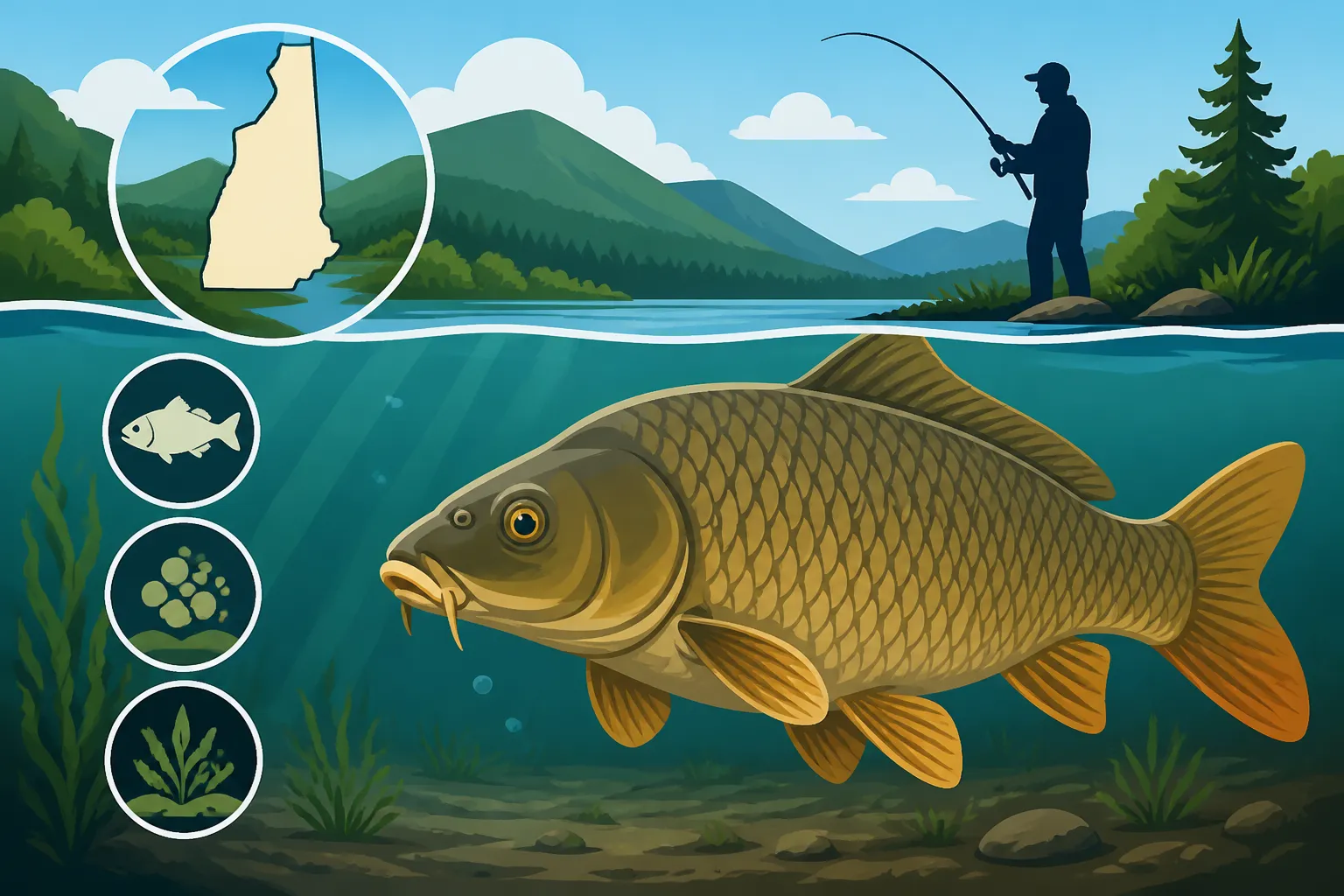
Common carp are quintessential bottom-feeders, often identifiable by their downturned mouths with barbels (whisker-like sensory organs) that help them locate food in murky water or along the bottom. They are largely omnivorous and incredibly opportunistic eaters. Their diet in New Hampshire lakes and rivers consists of a wide array of items. They'll root around in the soft bottom sediments, often creating clouds of mud, to find insect larvae, worms, small crustaceans like crayfish, and snails. Plant matter, including aquatic vegetation and seeds, also forms a significant portion of their diet.
This feeding behavior, where they stir up the bottom, is often why they get a bad rap. In very high densities, their constant "dredging" can sometimes lead to increased water turbidity, affecting other species that rely on clear water. However, it's also what makes them so accessible to anglers using baits like corn, bread, or specially formulated boilies – they are constantly searching for readily available food sources on the lakebed. Think of them as aquatic vacuum cleaners, diligently sifting through the bottom for their next meal.
Spawning and Reproduction
Common carp typically spawn in late spring or early summer in New Hampshire, once water temperatures consistently reach around 60 to 70 degrees Fahrenheit. This usually happens from May through July, depending on how quickly the local waters warm up. They prefer shallow, heavily vegetated areas for spawning, often in flooded grassy flats, coves, or backwaters where there's plenty of plant material for their eggs to adhere to. It's quite a spectacle to witness, with multiple males often chasing a single female, creating a lot of splashing and commotion at the water's surface.
Females can lay an astonishing number of eggs, sometimes hundreds of thousands, which explains their prolific nature. The eggs are sticky and attach to submerged vegetation, branches, or other debris, where they are fertilized. After spawning, the adult carp generally leave the area, and the eggs hatch within a few days to a week, depending on temperature. The newly hatched fry are tiny and vulnerable but grow rapidly in the warm, food-rich shallows. This robust reproductive strategy is a major reason why carp have established such strong populations in many New Hampshire waters.
Seasonal Movements and Preferred Habitats
Carp, like many fish, exhibit seasonal movements based on water temperature, food availability, and spawning instincts. In spring, as water temperatures rise, carp will move into shallower areas, often found in coves, bays, and along shorelines. These warmer, shallower zones are also where they'll eventually spawn, making them prime targets for anglers during the pre-spawn and spawning periods.
During the hot summer months, especially in clear lakes, carp might retreat to slightly deeper water during the day, seeking cooler temperatures, though they'll still visit shallower areas to feed, particularly in the early morning, late evening, or on overcast days. In rivers, they'll often be found in slower currents, eddies, and deeper holes where they can conserve energy. As fall approaches, they'll ramp up their feeding activity to put on weight for winter, often remaining in the same general areas but perhaps moving to slightly deeper sections of their summer haunts. In winter, they become much less active, often congregating in deeper holes or basins where temperatures are more stable, entering a semi-dormant state where they feed very little. Understanding these patterns is crucial for consistent success when targeting these often-challenging fish.
The Role of Common Carp in New Hampshire's Ecosystems
Common carp have a unique and sometimes debated role within New Hampshire's aquatic ecosystems. They are a resilient species that influences their environment in several ways, and their presence also offers distinct opportunities for anglers.
Ecological Impact, Both Positive and Negative
The ecological impact of common carp is a topic of ongoing discussion. On the negative side, in certain environments and at very high densities, their bottom-feeding behavior can increase water turbidity by stirring up sediment. This can cloud the water, making it harder for aquatic vegetation to photosynthesize and potentially impacting sight-feeding fish species. This disturbance can also release nutrients from the bottom, potentially contributing to algal blooms in nutrient-rich waters. Some argue they compete with native species for food, though the extent of this competition can vary greatly depending on the specific water body and population levels.
However, it's also important to acknowledge that in many of our established ecosystems, carp have become an integral part. They serve as a food source for larger predators, including birds of prey like ospreys and eagles, and even some larger fish. They are also incredibly efficient at converting detritus and other organic matter into biomass, playing a role in the nutrient cycling of a water body. In environments where they've been present for decades or even over a century, the ecosystem has often adjusted to their presence. It's a complex balance, and their impact is rarely as simple as "good" or "bad" across all waters.
Carp as a Sport Fish in New Hampshire
While not as traditionally popular as trout or bass fishing, carp angling is a growing pursuit in New Hampshire, attracting a dedicated following of anglers who appreciate the challenge and power of these fish. Forget the idea of them being a "trash fish" – these are intelligent, hard-fighting, and often wary adversaries that demand skill and patience. Many anglers consider carp to be among the strongest freshwater fish available, capable of making powerful runs and prolonged battles.
Targeting carp often involves specialized techniques, like using hair rigs with prepared baits such as corn, bread, or boilies, often fished on the bottom with heavy tackle. This style of fishing, often called "specimen carp fishing," has a huge following globally, and it's catching on in New Hampshire too. For those looking for an exciting fight and a chance at a truly large freshwater fish, without needing expensive gear beyond what you might find readily available on platforms like Amazon or local tackle shops, carp fishing offers an accessible and rewarding experience. It's a fantastic way to broaden your angling horizons and experience a different kind of freshwater challenge right here in New Hampshire. You might even find some useful gear suggestions in articles like Best Fishing Rods for New Hampshire Lakes or Best Tackle for New Hampshire Smallmouth Bass which can be adapted for carp fishing.
Here's a quick overview of some common carp characteristics:
| Characteristic | Description | Average Range in NH (Approx.) | Maximum Size (NH) |
|---|---|---|---|
| Typical Size | Length from nose to tail | 18-30 inches | Over 40 inches |
| Typical Weight | How heavy an average carp is | 5-15 pounds | Over 30 pounds |
| Lifespan | How long carp typically live | 15-20 years | Known to exceed 30 years in ideal conditions |
| Diet | What carp primarily eat | Omnivorous bottom-feeder | Insects, crustaceans, plant matter, detritus |
| Preferred Habitat | Where carp like to live | Warm, shallow, vegetated, silty waters | Rivers, larger lakes, impoundments |
| Spawning Season | When carp reproduce | Late spring to early summer (May-July) | Water temps 60-70°F |
When considering angling strategies, knowing their New Hampshire Fishing Regulations Explained is always a good idea, even for species that might not have strict limits. These regulations ensure sustainable practices across all species. If you're planning on using a boat, understanding New Hampshire Boating Laws for Anglers is also crucial for a safe and enjoyable experience on the water.
Conclusion
The common carp is truly a fascinating fish, and certainly a significant, albeit sometimes overlooked, part of New Hampshire's aquatic landscape. From their history as an introduced species to their incredible ability to grow to impressive sizes, they offer a unique angling opportunity for those willing to embrace the challenge. Understanding their feeding habits, preferred habitats, and seasonal movements is your ticket to unlocking some truly exciting battles on the water. So, next time you're out fishing in one of our beautiful lakes or rivers, take a moment to appreciate the resilience of the common carp – you might just find a new favorite target, and you'll certainly be better prepared to understand the diverse aquatic life around you.
Disclaimer
This article is for general informational purposes only and does not constitute professional advice. Laws, prices and regulations vary by location and change over time. Consult a qualified professional for guidance on your specific situation.