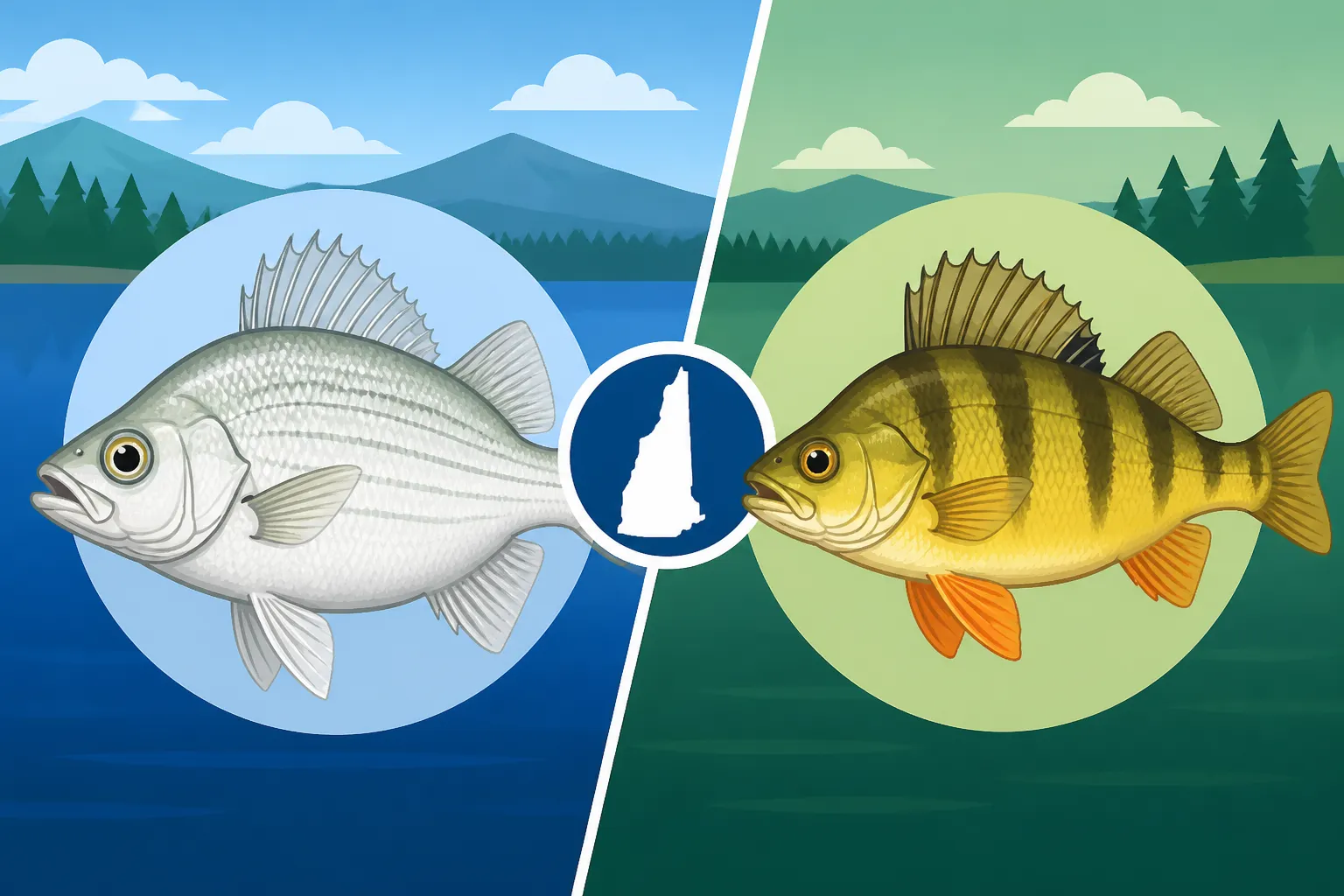
What white perch look like compared to yellow perch
It's incredibly common for anglers, whether you're a seasoned pro or just starting out, to sometimes scratch their heads when pulling a fish from the waters of New Hampshire, especially when it comes to species that look a bit similar. Telling the difference between a white perch and a yellow perch, in particular, can be trickier than you might think at first glance. This guide is here to clear up that confusion, diving deep into the distinctive features and behaviors that will help you confidently identify your catch, every single time.
The Perch Predicament: Why Identification Matters in New Hampshire Waters
There’s nothing quite like the excitement of a tug on your line, but that fleeting moment of joy can quickly turn into a furrowed brow if you're not sure exactly what species you've just landed. For many New Hampshire anglers, distinguishing between white perch and yellow perch presents a surprisingly frequent challenge. These two species, while both falling under the general "perch" umbrella, have key differences that matter a great deal, not just for bragging rights, but for responsible fishing practices.
The Importance of Correct Identification for Anglers
Firstly, correct identification is paramount for adhering to fishing regulations. While both white and yellow perch are generally abundant in New Hampshire, and often don't have super strict size or bag limits compared to, say, trout or salmon, it's always possible that specific water bodies might have unique rules. Imagine you're out on a favorite lake, reeling in panfish, and mistakenly identifying a white perch as a yellow perch when there's a specific local regulation only for one. A simple oversight like that could lead to an accidental violation. Knowing exactly what you've caught ensures you're playing by the rules and contributing to the sustainability of our fisheries. You can always check the latest rules in the New Hampshire Fishing Regulations Explained or by reading the New Hampshire Freshwater Fishing Digest.
Beyond regulations, knowing your species helps you become a more effective angler. Different fish have different habits, preferred baits, and ideal habitats. If you think you're targeting one species but are actually catching another, your strategies might be less efficient. For example, if you're specifically after yellow perch, you'll likely focus on different structures or depths than if you were purely trying to find white perch. This knowledge also feeds into conservation. When anglers can accurately report their catches or observe changes in populations, it provides valuable data to wildlife agencies, helping them manage fish stocks responsibly.
Where Both Species Call Home in New Hampshire
New Hampshire is blessed with an incredible variety of aquatic environments, from the vastness of Lake Winnipesaukee to the intricate network of rivers and coastal estuaries. Both white perch and yellow perch have found comfortable homes here, but their preferences can differ significantly.
Yellow perch (Perca flavescens) are arguably the most widespread and recognizable panfish in the state. You'll find them practically everywhere there's freshwater—from small, quiet ponds to the expansive depths of our largest lakes, and even in many of our slower-moving rivers. They are incredibly adaptable and can thrive in a wide range of conditions, making them a staple for anglers across New Hampshire. Often, if you're targeting panfish in general, you're going to encounter yellow perch. They're a classic target for Panfish Fishing in New Hampshire, especially when the ice sets in.
White perch (Morone americana), on the other hand, have a more specific distribution. While they can be found in purely freshwater environments, particularly in some of our larger lakes like Winnipesaukee and the lower sections of major rivers like the Merrimack, they really shine in brackish and estuarine waters. This means you're far more likely to encounter them in coastal areas, tidal rivers, and places like Great Bay. Their tolerance for varying salinity levels sets them apart and is a key indicator of where you might expect to find them. If you're fishing the brackish edges of our seacoast, a white perch is a very likely catch.
Decoding the Differences: A Head-to-Tail Comparison
When you've got a fish in hand, there are several key physical traits you can look at to quickly and accurately determine if it's a white perch or a yellow perch. It's all about paying attention to the details that Mother Nature painted on them.
Visual Cues: Coloration and Body Shape
Let's start with what often first catches your eye: color and overall form. These are perhaps the easiest and most immediate identifiers.
Yellow Perch are truly a sight to behold with their vibrant coloring. Their bodies are typically a brassy yellow or golden hue, often transitioning to a lighter, sometimes creamy, belly. The absolute dead giveaway for a yellow perch, however, is the presence of distinct, dark vertical bars running down their sides. These bars, usually 6 to 9 of them, are unmistakable and serve as a reliable "ID badge." Their body shape is generally more elongated and somewhat torpedo-like, especially when compared directly to a white perch. They look built for cruising through weeds and chasing down smaller prey.
White Perch present a more subdued, yet equally beautiful, palette. They are predominantly silvery, with backs that can range from greenish-gray to a darker, almost blackish tone. Their sides are a clean, uniform silver, and they lack any of the distinctive vertical bars you'd find on a yellow perch. While they are called "white" perch, don't be fooled into thinking they're pure white; their coloration can subtly shift depending on the water clarity and substrate they live in, sometimes even showing a hint of a brassy sheen if they've been in certain environments. In terms of body shape, white perch tend to be noticeably deeper-bodied and more compressed side-to-side than yellow perch. They have a rounder, stockier appearance, which can make them feel heftier for their length.
Fin Details and Jawline: Subtle but Significant
Beyond the obvious color and shape, a closer look at their fins and mouths provides definitive identification points. These might seem like minor details, but they are genetically coded and won't vary like coloration can.
Yellow Perch have two dorsal fins that are clearly and distinctly separated. If you run your finger along their back, you'll feel a gap between the spiny first dorsal fin and the softer-rayed second dorsal fin. Their anal fin, located on the underside of the fish near the tail, typically has two spines. When you look at their mouth, the lower jaw tends to protrude ever so slightly, giving them a subtle "upturned" mouth appearance, excellent for snatching prey from above or directly in front.
White Perch also possess two dorsal fins, but this is where a key difference lies. Their dorsal fins are either connected at the base or are separated by only a very shallow notch, making them appear almost as one continuous fin when viewed quickly. This connected or barely-separated dorsal fin is a primary identifier. Their anal fin, conversely, usually sports three distinct spines, one more than their yellow counterparts. For their jawline, white perch typically have a terminal mouth, meaning both the upper and lower jaws are more or less equal in length, giving a more direct, straight-ahead feeding posture.
Size and Growth Patterns
Both species can offer a fun fight on light tackle, but their typical sizes in New Hampshire waters can differ.
Yellow Perch are generally considered panfish, with most catches ranging from 6 to 10 inches. While larger specimens pushing 12-14 inches are certainly caught, especially from fertile lakes, they are less common. Their growth is moderate, and they are a popular target due to their abundance and willingness to bite. When you're out ice fishing, a pail full of 8-inch yellow perch is a common and satisfying sight.
White Perch can vary quite a bit in size depending on their environment. In freshwater lakes, they might be similar in size to yellow perch, often in the 7-10 inch range. However, in brackish water and estuaries, they have the potential to grow larger, sometimes reaching 12-15 inches and offering a surprisingly strong fight for their size. This potential for larger size in their preferred saline environments can sometimes lead to confusion with other species, but their other physical traits remain consistent. Their growth rate can be quite good when forage is abundant.
Behavior, Habitat, and Fishing Differences
Understanding how white and yellow perch behave and where they prefer to hang out can significantly boost your fishing success and help you confirm your identification even before you get a good look at them. Their differences in lifestyle are just as telling as their looks.
Preferred Habitats and Feeding Habits
Think about where you're casting your line, and that can often give you a clue about which perch you're likely to encounter.
Yellow Perch are true freshwater enthusiasts. They love to hang around structure—think weed beds, submerged logs, rock piles, and sharp drop-offs in lakes and ponds. During the warmer months, they might be found deeper during the day, moving shallower at dawn and dusk. In winter, they are a primary target for Ice Fishing in New Hampshire, often schooling up near the bottom or along contour lines. Their diet is quite varied; they'll munch on insect larvae, small crustaceans, worms, and even small baitfish. They are opportunistic feeders, which is why they respond well to a wide array of baits and lures.
White Perch, while tolerant of freshwater, really thrive in the brackish zones—where freshwater meets saltwater. This means estuaries, tidal rivers, and the lower sections of some of our major lake systems where they've established landlocked populations. They are notorious schoolers, often congregating in massive groups, which can make for incredible fishing action once you find them. Their diet tends to lean more towards small fish and crustaceans, reflecting their more estuarine habitat. They can be incredibly aggressive feeders, especially when a large school is encountered, attacking baits with gusto. If you're fishing in the Great Bay area, you'll likely find white perch mixed in with other species like striped bass. You can learn more about specific regulations and species in the Great Bay Striped Bass Fishing Rules.
Fishing Strategies and Tackle Considerations
Given their different habits and habitats, the most effective ways to fish for white and yellow perch often diverge. While there's overlap, tailoring your approach can make all the difference.
For Yellow Perch, classic panfish techniques reign supreme. They respond incredibly well to small jigs tipped with bait like worms, minnows, or even pieces of their own meat. Small soft plastics, micro-spoons, and tiny spinnerbaits are also very effective. Light spinning gear is ideal, allowing for delicate presentations and maximum fun with these feisty fish. You can find a fantastic selection of small jigs, bobbers, and live bait containers on Amazon that are perfect for targeting yellow perch. They're often found close to the bottom, so a slip bobber rig or simply bottom-bouncing a jig can be very productive. Check out our guide on Best Tackle for Panfish for more specific recommendations.
When pursuing White Perch, you might find yourself in slightly different environments, and your tackle choices can reflect that. Because they often school aggressively and can grow a bit larger, slightly heavier ultralight or light spinning gear might be preferred, especially in tidal areas where currents can be stronger. Small lures that imitate baitfish, like Kastmasters, small spoons, or soft plastic jigs (grubs, swimbaits) are very effective. They also love worms and cut bait, particularly in estuaries. Fishing multiple lines (if regulations allow) with a sabiki-style rig can sometimes yield multiple white perch at once when you hit a school. Looking for a new rod and reel combo suitable for both? Amazon offers a huge variety of entry-level to advanced light tackle setups that would be perfect.
Here's a quick comparison table to help solidify those key identification points:
| Feature | Yellow Perch | White Perch |
|---|---|---|
| Coloration | Brassy yellow to golden, lighter belly | Silvery, greenish-gray to dark back, silvery sides |
| Body Markings | 6-9 distinct dark vertical bars | No vertical bars, uniform silver sides |
| Body Shape | More elongated, somewhat torpedo-like | Deeper bodied, more compressed (stockier) |
| Dorsal Fins | Two clearly separated dorsal fins | Two dorsal fins, connected or barely separated |
| Anal Fin Spines | Typically 2 spines | Typically 3 spines |
| Mouth Position | Lower jaw slightly protrudes (upturned) | Jaws more or less equal (terminal) |
| Typical Size (NH) | 6-10 inches (up to 14 occasionally) | 7-10 inches (up to 15 in brackish water) |
| Primary Habitat | Widespread freshwater (lakes, ponds, rivers) | Brackish/estuarine waters, some large freshwater lakes |
Now that you're armed with this detailed knowledge, you should feel much more confident distinguishing between white perch and yellow perch the next time you're fishing in New Hampshire. It's not just about knowing the name; it's about understanding the fish, respecting the regulations, and becoming a more skilled angler overall. Remember to check the New Hampshire Bag and Possession Limits by Species for any specific water bodies you plan to fish, and always double-check your identification. Happy fishing!
Disclaimer
This article is for general informational purposes only and does not constitute professional advice. Laws, prices and regulations vary by location and change over time. Consult a qualified professional for guidance on your specific situation.