Brook Trout Native Range in New Hampshire
Many anglers dream of catching a brook trout in New Hampshire, but the true challenge, and often the most rewarding experience, lies in finding and catching a native brook trout – a fish whose lineage has called these waters home for generations, never seeing the inside of a hatchery. These elusive gems inhabit specific, often pristine, environments that are becoming rarer by the day. This guide is here to help you understand precisely where New Hampshire's native brook trout thrive, what makes their homes special, and how you can be a part of their conservation.
What Exactly Defines a Native Range for Brook Trout?
When we talk about the "native range" of brook trout in New Hampshire, we're not just discussing any water where you might catch a brook trout. We're referring to the specific streams, rivers, and ponds where these fish have existed naturally, reproducing generation after generation, without human intervention in their genetic line or stocking efforts. It's a critical distinction for understanding the health of our aquatic ecosystems and the true heritage of these beautiful fish.
The Concept of a "Wild" vs. "Stocked" Fish
The difference between a "wild" (or native) brook trout and a "stocked" brook trout is more profound than simply where it was born. A wild brook trout has evolved over millennia to perfectly suit its local environment. It's a product of natural selection, honed by predators, food availability, and the specific water conditions of its home stream. These fish are typically more vibrant in color, perfectly finned, and exhibit strong survival instincts. They know how to hunt, how to hide, and how to evade danger.
On the other hand, a stocked brook trout, while providing excellent angling opportunities, comes from a hatchery environment. These fish are bred for fast growth, often in crowded conditions, and are less "wild" in their instincts. They might have slightly duller coloration, show wear on their fins from hatchery tanks, and can sometimes be less wary than their wild counterparts when first introduced to a natural environment. While both offer a thrilling catch, the wild fish represents a pristine connection to nature. Understanding this distinction is key to appreciating Brook Trout: New Hampshire's Native Trout.
Ecological Significance of Native Habitats
Native brook trout are often considered an indicator species, meaning their presence (or absence) tells us a lot about the overall health of an ecosystem. Their habitats are typically characterized by extremely cold, clean, highly oxygenated water. They need stable stream flows, abundant insect life, and dense canopy cover to keep water temperatures low. Think of a small mountain stream, dappled with sunlight filtering through thick forest, with numerous logjams and undercut banks providing shelter. These are the intricate, delicate ecosystems where native brook trout can thrive.
These pristine conditions are not just good for trout; they support a whole host of other native flora and fauna. The complex food web, from microscopic organisms to aquatic insects, small amphibians, and eventually the brook trout themselves, relies on the undisturbed nature of these native habitats. Protecting these areas ensures biodiversity and preserves a crucial part of New Hampshire's natural heritage.
Tracing the Historical Footprint: Where Brook Trout Once Roamed Free
To truly appreciate the current native range of brook trout in New Hampshire, it helps to look back in time. New Hampshire, with its countless cold streams and pristine lakes, was once a veritable paradise for these vibrant fish. Their historical footprint was vast, covering nearly every cold-water system in the state.
Pre-Settlement Abundance and Distribution
Before European settlement fundamentally altered the New England landscape, New Hampshire's waterways teemed with native brook trout. Imagine a time when clear, cold streams flowed unobstructed from the highest peaks of the White Mountains down to the coastal plains, with hardly a dam or a major road in sight. Every brook, every feeder stream, and every cold-water pond was a potential home for these fish. They were the dominant cold-water species, perfectly adapted to the state's natural hydrology and climate. Their range extended across virtually all suitable cold-water systems, from the remote headwaters of the Connecticut River to the small coastal brooks feeding into the Atlantic. It was a time of immense biodiversity and ecological balance, where these resilient fish thrived in abundance.
Anglers of that era, had they existed in a modern sense, would have found brook trout almost anywhere they dipped a line, reflecting the incredibly widespread and healthy populations that once characterized the region.
Early Human Impacts on Native Populations
The arrival of European settlers brought profound changes that irrevocably impacted these pristine environments and, consequently, the native brook trout populations. The burgeoning lumber industry led to widespread deforestation, stripping away the natural canopy that shaded streams and kept water temperatures low. Logging practices often involved driving logs down rivers, which scoured stream beds and destroyed critical habitat.
Perhaps even more impactful was the construction of dams. Thousands of dams were built to power mills for lumber, textiles, and grist, fragmenting stream systems into isolated segments. These dams prevented brook trout from migrating to spawning grounds, accessing different feeding areas, or escaping adverse conditions like droughts or floods. Furthermore, as towns grew, pollution from agricultural runoff and early industrial waste began to degrade water quality, further stressing these sensitive fish. The introduction of non-native fish species, sometimes deliberately for sport or accidentally, also brought competition and predation pressures that native brook trout were ill-equipped to handle. These combined pressures drastically reduced the native range and abundance, pushing these fish into ever-smaller, more isolated pockets.
The Current Landscape: Where New Hampshire's Native Brook Trout Still Thrive
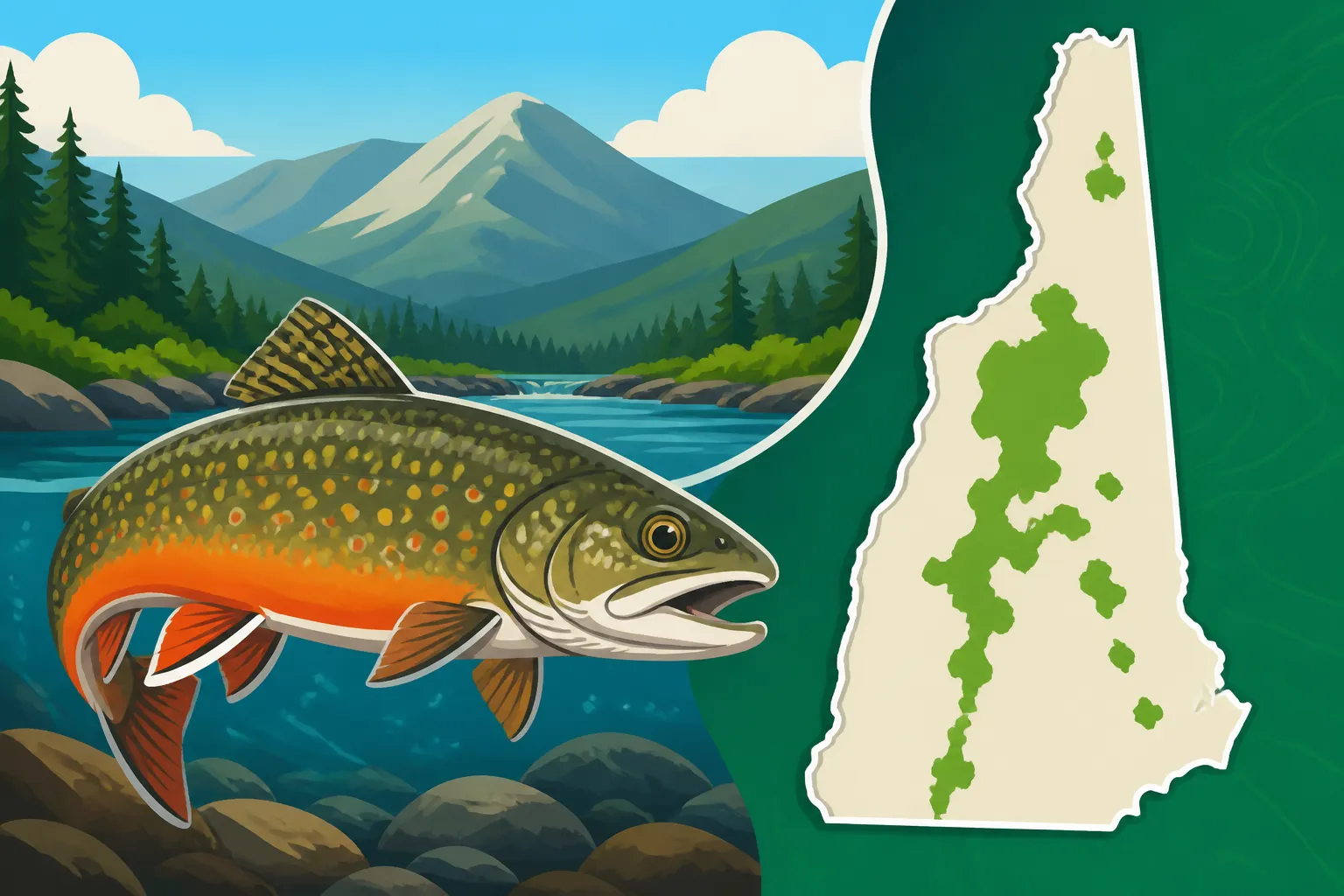
Despite centuries of environmental change, dedicated pockets of native brook trout populations persist in New Hampshire. Finding them requires a keen understanding of their specific habitat requirements and a willingness to venture into less-traveled areas. Their current strongholds are predominantly in the more remote, rugged, and naturally protected regions of the state.
Strongholds in the North Country and White Mountains
If you're looking for native brook trout, your best bet will almost always be the higher elevations and more remote reaches of New Hampshire's North Country and the White Mountains. These areas offer the ideal combination of factors: steep gradients creating cold, fast-flowing water; dense forest canopies providing crucial shade; and limited human development that helps maintain pristine water quality.
Think about the countless small, unnamed feeder streams that cascade down mountain slopes, often joining larger rivers like the Pemigewasset, Saco, or Ammonoosuc. These headwater tributaries, far from roads and towns, are often too small or too remote to be regularly stocked, allowing native strains to maintain their genetic integrity. Anglers seeking these fish often hike deep into the backcountry, navigating rough terrain to reach these untouched havens. The rivers flowing through areas like Franconia Notch State Park or Crawford Notch State Park, along with their numerous small tributaries, offer excellent opportunities to encounter these wild fish. They represent some of the most cherished Best Fly Fishing Rivers in New Hampshire.
Isolated Ponds and Tributaries
Beyond the quintessential mountain streams, another critical part of the native brook trout's range includes isolated ponds and small, often intermittent, tributaries. These smaller water bodies, particularly those at higher elevations or in wilderness areas, can act as important refugia. Many of these ponds are naturally sustained by cold springs and rainfall, remaining cold enough to support brook trout year-round, even through warmer summers. Their isolation often means limited access for anglers and minimal stocking, further preserving native populations.
Sometimes, these are "heritage ponds" – remote, high-elevation ponds managed specifically for wild brook trout. You'll find these spots often require a significant hike, adding to the sense of adventure and the reward of catching a truly wild fish. The challenging access acts as a natural protective barrier. Similarly, small tributaries that might only flow seasonally, but connect to larger, cold-water systems, provide vital spawning and nursery habitat for native fish, offering them sanctuary from larger predators and warmer waters in the main stem. These specific locations are often highlighted in resources detailing Where brook trout still live wild in New Hampshire.
Challenges to Current Distribution
Even in their strongholds, New Hampshire's native brook trout face ongoing threats. Climate change is a significant concern, as rising air temperatures directly translate to warmer water temperatures. Brook trout are cold-water specialists, and even a few degrees increase can push their habitats beyond livable thresholds, forcing them into ever-smaller, higher-elevation refuges. Droughts, which are becoming more common, can reduce stream flows to critical levels, leaving fish stranded or increasing water temperatures further.
Habitat fragmentation continues to be an issue, not just from historical dams, but also from poorly designed road crossings and culverts that block fish passage. While efforts are made to replace these with fish-friendly designs, the legacy of past infrastructure persists. Competition and hybridization with stocked brook trout can also dilute native gene pools, making it harder for these fish to maintain their evolutionary advantages. Furthermore, the spread of invasive species, whether plant or animal, can disrupt the delicate balance of these ecosystems, putting additional pressure on native trout. It's a constant battle to protect these fragile populations.
Distinguishing the Genuine Article: Native vs. Stocked Brook Trout
For the discerning angler, being able to tell a native brook trout from a stocked one is part of the experience. It adds a deeper layer of appreciation for the wildness of the fish and the purity of its habitat. While sometimes challenging, there are usually tell-tale signs.
Visual Cues and Physical Characteristics
The most striking differences are often visual. Native brook trout are renowned for their vibrant, almost jewel-like coloration. Their flanks burst with crimson spots, often ringed with electric blue halos, against a background of olive green or dark brown. Their bellies are typically bright orange or red, especially during spawning season, with stark white leading edges on their pectoral, pelvic, and anal fins, bordered by a thin black stripe. Crucially, their fins are almost always perfectly formed, un-frayed, and symmetrical, a testament to their life in natural, uncrowded conditions. Their bodies are typically more streamlined and muscular, built for navigating fast currents and evading predators.
In contrast, many hatchery-reared brook trout can appear somewhat faded in color, though this can vary. Their spots might be less distinct, and their belly coloration less intense. The most obvious giveaway for a stocked fish is often the condition of its fins. Due to the abrasive nature of concrete raceways and crowded conditions, stocked fish frequently have worn, stubby, or even missing fins. The caudal (tail) fin, in particular, might look ragged or rounded, rather than sharp and perfectly forked. While a holdover stocked fish might regain some wild characteristics, these initial visual cues are strong indicators. This distinction is part of the conversation around Difference between wild and stocked trout in New Hampshire.
Behavioral Differences and Habitat Preferences
Beyond appearance, the behavior of a native brook trout is markedly different from its stocked cousin. Native fish are inherently wild and wary. They are masters of camouflage and cover, darting for shelter at the slightest hint of danger. Approaching a native trout stream requires stealth and patience, as these fish are acutely aware of their surroundings. They're often more aggressive towards lures and flies, not because they're hungry for anything, but because they're territorial and instinct-driven predators. They know their lies – the specific rocks, undercut banks, or logjams where they feel safe and where food drifts by.
Stocked fish, especially those recently released, can be less wary and sometimes even appear disoriented. They might hold in open, exposed water, or gather in unnatural concentrations. Their feeding behavior can be less discerning, as they've been accustomed to pellets dropped from above. While they quickly adapt to natural food sources, their initial lack of natural instinct is often apparent. Native fish also exhibit a strong preference for the coldest, most oxygenated water, seeking out spring-fed pockets or deep pools even in seemingly small streams. Understanding these behavioral patterns can significantly enhance your success in targeting true wild populations.
Safeguarding the Future: Conservation Efforts for New Hampshire's Native Brook Trout
The preservation of New Hampshire's native brook trout is a collective effort, driven by dedicated state agencies, passionate conservation groups, and responsible anglers. Without these ongoing initiatives, the future of these iconic fish would be far less secure.
New Hampshire Fish and Game Department Initiatives
The New Hampshire Fish and Game Department plays a pivotal role in the protection and management of native brook trout. Their work includes extensive scientific surveys to identify and monitor existing native populations, assess habitat quality, and track population trends. These surveys help them understand where native trout persist and what threats they face. A core part of their strategy is habitat restoration, which involves projects like removing outdated dams to restore fish passage, stabilizing eroding stream banks, planting riparian buffers to increase shade, and placing structures like logjams to create cover and complex habitat.
Furthermore, the Department implements selective stocking practices in many waters, ensuring that stocked fish are not introduced into known native brook trout strongholds, thereby preventing genetic dilution and competition. They also manage specific "heritage brook trout" waters, which are designated solely for the protection of native strains, often with special regulations like catch-and-release only or specific gear restrictions to minimize impact. These efforts are crucial in preserving Native trout species found in New Hampshire.
The Role of Anglers in Preservation
Anglers are not just participants in the fishery; they are vital stakeholders and frontline conservationists. Our actions on and off the water directly impact the health of native brook trout populations. Practicing ethical catch and release is paramount, especially when targeting wild fish. This means handling fish gently with wet hands, using barbless hooks, minimizing air exposure, and ensuring a strong revival before release. Choosing the right gear can also help; opting for a lightweight, soft-mesh landing net, available on Amazon, can reduce damage to a fish's delicate slime coat and fins.
Beyond individual actions, anglers can contribute by educating themselves and others about native trout conservation. Supporting organizations dedicated to cold-water conservation, advocating for responsible land use policies, and adhering strictly to fishing regulations are all ways to help. Reporting any instances of poaching or habitat degradation to Fish and Game officials is another critical responsibility. By being mindful of our impact, respecting the environment, and actively participating in conservation, we ensure that future generations can also experience the thrill of catching a truly wild New Hampshire brook trout.
The Thrill of the Chase: Fishing for New Hampshire's Native Brook Trout
There's a unique satisfaction that comes from outsmarting a truly wild brook trout. It's not just about the catch; it's about the journey, the pristine surroundings, and the connection to a pure, untamed piece of nature. Fishing for native brook trout often means adapting your approach and embracing a different kind of angling.
Gear and Techniques for Remote Waters
When venturing into remote waters for native brook trout, your gear needs to be efficient, lightweight, and effective. Forget the heavy tackle; these fish are usually smaller, and the streams are often tight and overgrown. A light-action fly rod (like a 2 or 3-weight) or an ultralight spinning rod is ideal. For fly anglers, a small selection of simple, classic patterns like stimulators, elk hair caddis, small nymphs (e.g., hare's ear, pheasant tail), and tiny streamers will often suffice. You can easily find compact fly boxes and essential fly-tying materials on Amazon to stock your arsenal. Stealth is your most potent weapon: approach stream banks slowly, keep a low profile, and make accurate casts that land gently. Often, the first cast into a promising pocket or undercut bank is your best shot. Wading carefully, using techniques discussed in Wading Techniques for New Hampshire Trout Streams, is also key to avoiding spooking fish.
For spin anglers, tiny inline spinners (sizes 0-1) or micro jigs are highly effective. Focus on presenting your lure upstream and letting it drift naturally through pools and riffles. Longer leaders of light fluorocarbon line, also available on Amazon, can make a huge difference in clear, low-pressure waters. Remember, these fish are feeding on natural insects and small baitfish, so presentations that mimic nature are best. Packing light, perhaps with a small sling pack for essentials, means you can cover more ground and reach those truly remote honey holes.
Ethical Angling and Leave No Trace Principles
Fishing for native brook trout in their fragile habitats demands the highest level of ethical responsibility. Every angler should adopt "Leave No Trace" principles, which means minimizing your impact on the environment. Pack out everything you pack in, and perhaps even a bit more. Avoid trampling vegetation along stream banks, and be mindful of your footing in and around the water.
Beyond environmental impact, prioritize the well-being of the fish. If you intend to release them, use barbless hooks to minimize injury and reduce handling time. Carry a pair of forceps or hemostats (easily found on Amazon) for quick and easy hook removal. Keep the fish in the water as much as possible, especially during warmer weather, as even a few seconds of air exposure can be stressful. If a fish is exhausted, hold it gently facing upstream in a current until it revives and swims off strongly on its own. Respecting these small, wild fish and their pristine homes ensures that these special places will remain vibrant for future generations to explore. If you’re interested in specific flies, check out Fly Patterns for New Hampshire Trout Streams.
Disclaimer
This article is for general informational purposes only and does not constitute professional advice. Laws, prices and regulations vary by location and change over time. Consult a qualified professional for guidance on your specific situation.