New Hampshire lake trout ice season January 1 to March 31
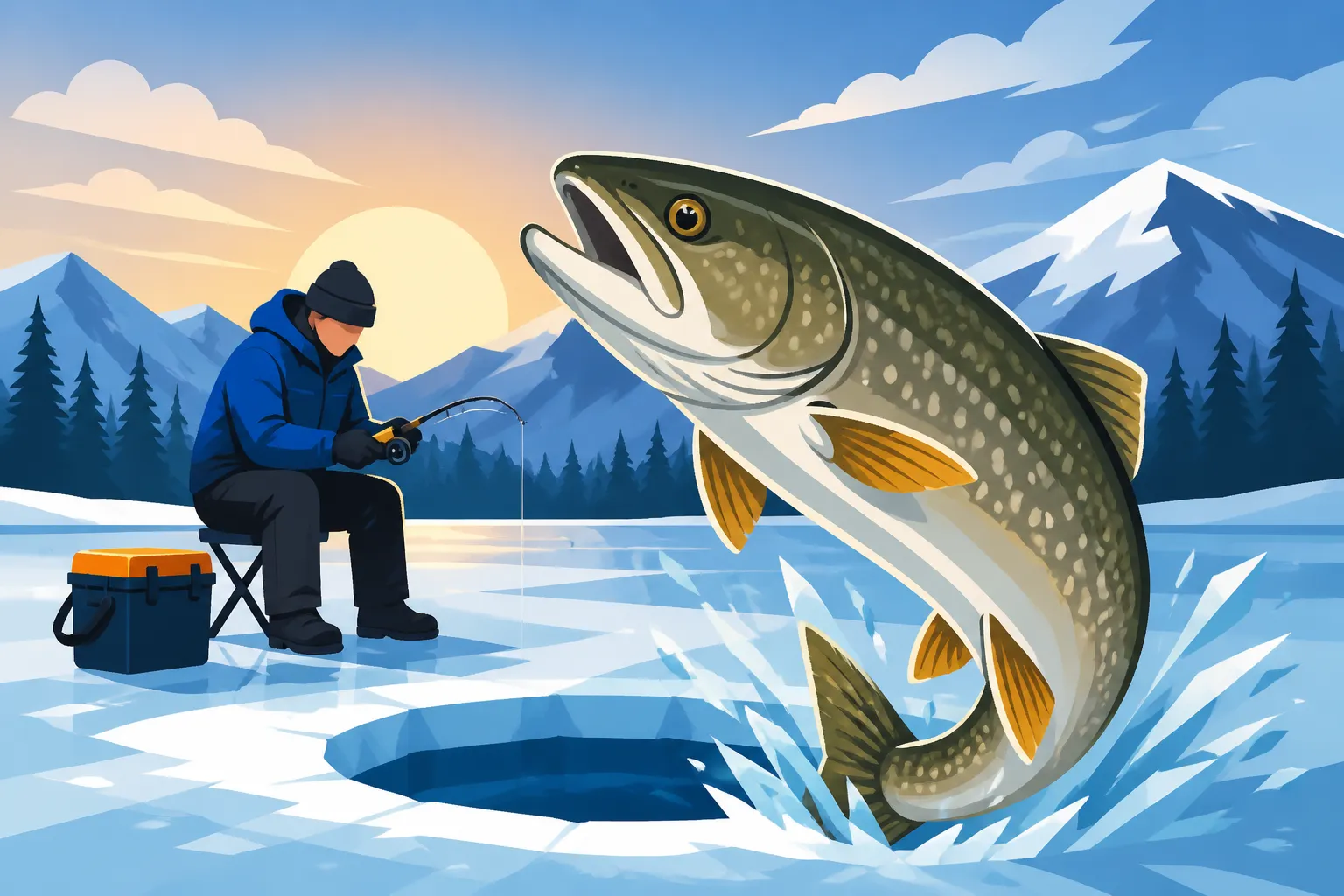
There's nothing quite like the crisp, silent mornings out on a frozen New Hampshire lake, eagerly awaiting a powerful tug from a deep-dwelling lake trout. However, for many anglers, the excitement can quickly turn to frustration when trying to decipher the specific rules that govern this thrilling winter pursuit. Keeping track of varying season dates, limits, and special water body regulations can feel like navigating a maze. This comprehensive guide aims to cut through that confusion, meticulously detailing the New Hampshire lake trout ice fishing season, which typically runs from January 1 to March 31, alongside essential regulations, recommended gear, and critical safety tips to ensure your next ice fishing adventure is both compliant and successful.
Understanding New Hampshire's Lake Trout Ice Season Dates
The pursuit of lake trout through the ice is a cherished winter tradition in the Granite State, offering a unique challenge and the potential for truly impressive catches. Knowing the precise dates is the first, and arguably most important, step in planning your expedition.
The Official Calendar for Lake Trout Ice Fishing
For the vast majority of New Hampshire's lakes and ponds that hold lake trout, the ice fishing season for this species officially kicks off on January 1st and concludes on March 31st. This three-month window provides ample opportunity for anglers to brave the cold and target these magnificent cold-water predators. It’s important to understand that this calendar is set by the New Hampshire Fish and Game Department to manage fish populations and angling pressure, ensuring sustainable fishing for years to come. While some species might have more complex, staggered seasons throughout the year, the lake trout ice season generally adheres to this consistent and widely recognized period. You won't find many surprises with the start and end of the general season for lake trout under the ice, but as we'll discuss, individual lake rules can certainly alter the how and what you can keep.
The anticipation leading up to January 1st is palpable among dedicated ice anglers. It marks the opening of prime time for pursuing these hard-fighting fish, often when the ice is at its thickest and most stable, and the lake trout are actively feeding in the colder water columns. This consistent season gives anglers a clear target window, though smart fishermen know that ice conditions themselves will dictate exactly when and where it's safe to venture out. Always consult the official New Hampshire Fishing Season Dates and Closures to confirm any minor updates or water-specific variations, although the January 1st to March 31st window for lake trout ice fishing is a long-standing tradition.
Why These Dates Matter for Anglers
Adhering strictly to these season dates isn't just about following the rules; it's about protecting the fishery and ensuring you avoid potential legal troubles. Fishing outside the designated season, or disregarding other regulations, can lead to significant penalties, including hefty fines and the loss of fishing privileges, as detailed in "Fishing Without a License in New Hampshire: Penalties". No angler wants a successful day on the ice tarnished by an unexpected run-in with a conservation officer because they were unaware of a specific regulation.
Beyond legal compliance, understanding the season dates helps you plan your strategy around the lake trout's natural behavior. During this January to March period, lake trout are typically active and often found cruising deep structures, humps, and drop-offs, making them excellent targets for various ice fishing techniques. Early season ice often sees them shallower, while mid-to-late season might find them deeper or more spread out. The changing conditions throughout this window can influence where and how you target them. Keeping a close eye on the New Hampshire Freshwater Fishing Digest, which we discuss more in "Reading the New Hampshire Freshwater Fishing Digest", is paramount, as it's your go-to source for all official guidelines. This digest provides not only the general season dates but also the all-important, sometimes complex, exceptions for specific water bodies that could make or break your trip.
Key Regulations for Lake Trout During Ice Season
While the January 1st to March 31st season is fairly consistent for lake trout ice fishing across New Hampshire, the specific rules regarding daily limits, possession limits, and minimum lengths can vary dramatically from one lake to another. This is where many anglers trip up, so paying close attention to these nuances is absolutely critical.
Daily and Possession Limits to Know
The New Hampshire Fish and Game Department establishes daily and possession limits to manage fish populations, ensuring that enough fish remain to reproduce and maintain a healthy ecosystem. The daily limit refers to the maximum number of fish you can catch and keep in a single day. For lake trout in most New Hampshire waters during the ice season, this is typically 2 fish. The possession limit is the total number of fish you can have on your person, in your cooler, or in your vehicle at any given time. Often, the possession limit is the same as the daily limit once you’ve left the immediate vicinity of the water body, or it might be twice the daily limit if you’re accumulating fish over multiple days (though in ice fishing, you're usually out for a single day's catch). For lake trout, it’s generally 2 fish in possession.
It's vital to remember that these are the general state-wide rules. Anglers must always consult the Freshwater Fishing Digest for any specific water body exceptions. Imagine having a fantastic day, catching two beautiful lake trout, only to find out later that the lake you were on had a one-fish limit for lake trout, or even a catch-and-release only rule for that species. This is a common frustration, and one that diligent research can easily prevent. Always verify the rules for your chosen destination before you drop a line to avoid any misunderstandings.
Minimum Lengths and Slot Limits
Beyond just the number of fish, New Hampshire also employs regulations regarding the size of lake trout you can keep. These rules, including minimum lengths and sometimes slot limits, are designed to protect juvenile fish, allowing them to grow and reach maturity, as well as preserving larger, breeding-size fish. For most waters, the minimum length for a legal lake trout catch during the ice season is 18 inches. This means any lake trout you catch that measures less than 18 inches from the tip of its nose to the end of its tail must be immediately released back into the water, with as little harm as possible.
Slot limits, which restrict keeping fish within a certain size range (e.g., you can keep fish under X inches or over Y inches, but not between X and Y), are less common for lake trout statewide but can exist in specific waters. The reasoning behind a slot limit is often to protect the prime breeding stock within a certain size range, while allowing harvest of smaller, younger fish or very large, older fish. For lake trout, the more common regulation you'll encounter is a simple minimum length. Proper handling of undersized fish is crucial; try to minimize their time out of the water, use a de-hooking tool if possible, and gently release them headfirst into the hole. Be aware that some of New Hampshire's trophy lakes, like New Hampshire Lake Winnipesaukee lake trout regulations, might have specific rules to foster larger fish, which could include different length requirements.
Special Water Body Regulations
This is arguably the most critical section for lake trout ice anglers. While the January 1st to March 31st season holds true for many places, New Hampshire is home to numerous unique water bodies, and many of its premier lake trout fisheries have special regulations that supersede the general state-wide rules. Failing to check these can lead to a perfectly legal catch on one lake being completely illegal on another, even if they're just a few miles apart.
For example, on popular waters like Squam Lake, while the ice fishing season still runs from January 1 to March 31, the regulations for lake trout are significantly different: it's a "no minimum length, daily limit 2, and catch-and-release only for lake trout during this period." This means you can't keep any lake trout caught through the ice on Squam. Contrast this with Newfound Lake or Sunapee Lake, where the general rules of 2 fish daily, 18-inch minimum often apply. Even a smaller lake like Big Diamond Pond might have its own unique rule, such as a daily limit of 1 fish with a 20-inch minimum length. These specific variations are not uncommon.
It cannot be stressed enough: always, always check the "Special Regulation Waters" section of the New Hampshire Freshwater Fishing Digest before heading out. This section, which can be quite extensive, provides the definitive rules for individual lakes, ponds, and rivers that differ from the general statewide regulations. You can find comprehensive information on these unique rules, which affect many species, in "Special Regulation Waters in New Hampshire". It is the angler's responsibility to know the specific rules for the water body they intend to fish, and a quick check can save a lot of heartache and potential legal issues.
Essential Gear and Techniques for Ice Fishing Lake Trout
Lake trout are formidable adversaries through the ice. Their powerful runs and deep-water preferences mean you need specialized gear and refined techniques to consistently bring them topside. Having the right tools for the job can make all the difference between a frustrating day and a memorable one.
Recommended Tackle and Lures
Successfully ice fishing for lake trout begins with having the appropriate tackle. You'll want a medium-heavy to heavy-action ice rod, typically ranging from 30 to 40 inches in length. These rods offer the backbone needed to absorb the powerful surges of a large lake trout while still providing enough sensitivity to detect subtle bites in deep water. Pair this with a sturdy spinning or baitcasting reel that has a smooth, reliable drag system, capable of handling prolonged fights. Look for reels with a good line capacity, as lake trout can make long runs, especially in larger lakes.
For line, many anglers opt for a quality braided line (15-20 lb test) for its sensitivity and strength, often adding a fluorocarbon leader (8-12 lb test) to the business end. Fluorocarbon is nearly invisible underwater, which can be crucial in clear lake trout waters, and offers excellent abrasion resistance against sharp ice edges or underwater structure. You can find a wide selection of braided and fluorocarbon lines from reputable brands on platforms like Amazon.
When it comes to lures, jigging spoons are perennial favorites for lake trout. Classic options like the Swedish Pimple, Kastmaster, and Crippled Herring, in sizes ranging from 1/2 to 1 ounce, are incredibly effective. Colors like silver, gold, and blue/silver mimic common baitfish, but don't shy away from bright chartreuse or orange on darker days. Tube jigs (3-5 inches) in white, pearl, or chartreuse, often tipped with a piece of cut bait or a small minnow, can also be deadly. Lipless crankbaits, such as those from Rapala's ice fishing lineup, can trigger aggressive strikes. For a more passive approach, especially if multiple lines are permitted, tip-ups rigged with live bait like smelt or large shiners are incredibly effective. A quick-strike rig, designed to expose two hooks when a fish takes the bait, can increase hook-up ratios with live bait. Equipping your setup with a good fish finder, like a Garmin Striker or a Humminbird Helix, which are readily available on Amazon, is paramount for locating fish and understanding the underwater structure. For a deeper dive into choosing the right electronics, check out "Best Fish Finders for New Hampshire Lakes".
Best Ice Fishing Strategies
Once your gear is dialed in, employing effective strategies is key to consistently catching lake trout through the ice. Your primary goal is to locate the fish, and that often means targeting specific underwater structures. Focus your efforts around deep humps, steep drop-offs, underwater points, and rock piles. Lake trout frequently suspend over deep water or cruise these structural elements in search of baitfish. Don't be afraid to drill multiple holes to cover a larger area, as lake trout are often on the move.
Active jigging is a highly effective technique. Drop your lure to the bottom, reel up a few feet, and then begin a rhythmic retrieve: lift your rod tip sharply, then allow the lure to fall on a semi-slack line, repeating this motion. Vary the cadence and depth until you find what the fish prefer. Sometimes, a subtle quiver is all it takes; other times, an aggressive rip will trigger a strike. Pay close attention to your fish finder; it will show you not only where the fish are but also how they react to your lure. If a fish appears on your screen but isn't biting, try changing your jigging action or switching lures.
Setting up tip-ups with live bait is another excellent strategy, especially when allowed (remember New Hampshire generally limits you to two lines per person, which includes both jigging rods and tip-ups). Position your tip-ups at various depths, from just off the bottom to suspended in the water column, particularly if you're seeing baitfish on your sonar. The classic strategy of using a live smelt or shiner on a quick-strike rig allows the bait to swim naturally, enticing wary lake trout. The early morning and late afternoon hours often produce the most active bites, so plan your day accordingly. Being mobile and willing to move if the fish aren't biting in one spot is a critical lesson for any ice angler. For more general ice fishing guidance, take a look at "Ice Fishing in New Hampshire".
Prioritizing Safety on the Ice
Ice fishing for lake trout in New Hampshire is an incredibly rewarding experience, but it comes with inherent risks. The allure of a trophy fish should never overshadow the paramount importance of safety. Every year, incidents occur due to carelessness or a lack of understanding of ice conditions. Making safety your top priority ensures that your ice fishing adventures are memorable for all the right reasons.
Ice Thickness Guidelines and Checks
The most significant danger in ice fishing is, without a doubt, thin ice. Many anglers feel a constant worry about the stability of the ice beneath their feet, and this concern is well-founded. It's crucial to understand that no ice is 100% safe, and conditions can change rapidly, even within a single day or across different parts of the same lake. Always exercise extreme caution and never take ice safety for granted.
Here are general minimum ice thickness guidelines to follow, but remember, these are just guidelines, and local conditions can vary wildly:
- 4 inches of clear, solid ice: Generally considered the minimum for walking, ice fishing, or cross-country skiing alone.
- 5-7 inches of clear, solid ice: Suitable for a single snowmobile or ATV.
- 8-12 inches of clear, solid ice: Needed for a small car or light truck (though driving on ice is generally discouraged unless absolutely necessary and confirmed safe by local experts).
These are minimums, and factors such as springs, currents, depth of water, recent snowfalls (which insulate the ice and prevent further freezing), and sunny days can all weaken ice. Always assume the ice is unsafe until you've personally verified its thickness. The best way to check ice thickness is by using a spud bar or an ice auger. As you move across the ice, especially in unfamiliar areas, use your spud bar to test ahead of you. It's also highly advisable to go with a buddy; never ice fish alone. Local bait shops or online fishing forums can sometimes provide recent ice condition reports, but these should always be verified with your own checks before you venture out. You can find more comprehensive information on safe ice levels in "How thick ice needs to be before New Hampshire anglers fish it".
Essential Safety Equipment
Beyond checking the ice, carrying essential safety equipment is non-negotiable for any ice angler. These items are not just accessories; they are life-saving tools that can make all the difference in an emergency.
First and foremost, ice picks are crucial. These inexpensive, pointed tools are worn around your neck, allowing for quick access if you break through the ice. They provide the grip you need to pull yourself out of the water. Another essential tool is a spud bar (or chisel), used to test ice thickness as you move. A heavy downward strike with a spud bar will penetrate weak ice, giving you a warning.
Wearing a life jacket or a full flotation suit is highly recommended, especially during early or late ice seasons when conditions are most unpredictable. While often associated with open-water boating, life jackets are incredibly effective in preventing drowning and providing critical insulation in freezing water, as highlighted in "Life Jacket Requirements for New Hampshire Boaters". Even a brief immersion in freezing water can lead to hypothermia, and a flotation suit can buy you precious time. You can find many options for flotation suits and personal flotation devices on Amazon.
Other vital items include a length of rope (at least 50 feet) for rescuing others, a whistle to attract attention if you're in distress, a first-aid kit for minor injuries, and a fully charged cell phone stored in a waterproof bag. Dressing in warm, layered clothing, including waterproof outer layers, is also essential to prevent hypothermia. Always inform someone of your fishing plans – where you're going, who you're with, and when you expect to return. The New Hampshire Fish and Game Department provides extensive resources and courses on ice safety, which are highly recommended for all ice anglers, regardless of experience level.
Lake Trout Ice Fishing Regulations Summary
To help you keep track of the key regulations for lake trout ice fishing in New Hampshire, here's a quick reference table. Remember, always double-check the latest New Hampshire Freshwater Fishing Digest for any specific water body exceptions before you go.
| Regulation Type | Standard New Hampshire Rule (Jan 1 – Mar 31) | Notes / Potential Exceptions |
|---|---|---|
| Season Dates | January 1 – March 31 | Check Digest for specific water bodies like Lake Winnipesaukee (which also has a summer season) or unique local season lengths. |
| Daily Limit | 2 Lake Trout | This is the general rule, but some lakes (e.g., Big Diamond Pond, Squam Lake) have different limits. Squam Lake is often catch-and-release only. |
| Possession Limit | 2 Lake Trout | Generally the same as the daily limit once removed from the immediate water body. |
| Minimum Length | 18 inches | Varies significantly by water body. Squam Lake, for example, has no minimum length but is catch-and-release only. Always verify. |
| Gear Restriction | 2 lines per person | This includes any combination of jigging rods and tip-ups per licensed angler. |
Disclaimer
The information provided in this guide is for general informational purposes only and is subject to change. While we strive to provide accurate and up-to-date details, fishing regulations can be complex and are regularly updated by the New Hampshire Fish and Game Department. Always consult the most current official New Hampshire Freshwater Fishing Digest or the NH Fish and Game website directly before engaging in any fishing activities. Compliance with all state and local regulations is the sole responsibility of the angler.