New Hampshire fishing license reciprocity on Vermont boundary waters
It can be incredibly frustrating to be out on the water, rod in hand, enjoying the peace and quiet of a perfect fishing day, only to second-guess yourself about whether your fishing license is actually valid. When you’re angling on a river that serves as a border between two states, like the mighty Connecticut River between New Hampshire and Vermont, that confusion is absolutely common. This comprehensive guide is here to clear up all the mystery surrounding New Hampshire fishing license reciprocity when you find yourself on those shared waters with our neighbors in Vermont.
Understanding Boundary Water Reciprocity
Fishing across state lines, even if it's just a cast away, can feel like navigating a legal minefield. Many anglers assume they need two licenses, one for each state, just to be safe. While that's often the case for distinct bodies of water, boundary waters often have special agreements to make life a little easier for us all.
What Are Boundary Waters?
When we talk about "boundary waters" between New Hampshire and Vermont, we're primarily referring to the main stem of the Connecticut River. This isn't just a small stream; it's a significant waterway that forms the entire western border of New Hampshire. Imagine standing on the New Hampshire side, looking across at Vermont, and that stretch of water in between – that's our boundary water.
This applies to the entire length of the Connecticut River that separates our two beautiful states, from the Massachusetts border all the way up to the Canadian border. This means if you're fishing near towns like Hanover or Lebanon on the New Hampshire side, looking towards Norwich or Hartford, Vermont, or further north near towns like Woodsville, NH and Wells River, VT, you're on these shared waters. It's a vast stretch of diverse fishing opportunities, from slow-moving sections perfect for bass to deeper runs holding trout and landlocked salmon. The unique nature of these waters means that traditional rules about needing a separate license for each state are often relaxed.
The General Reciprocity Rule
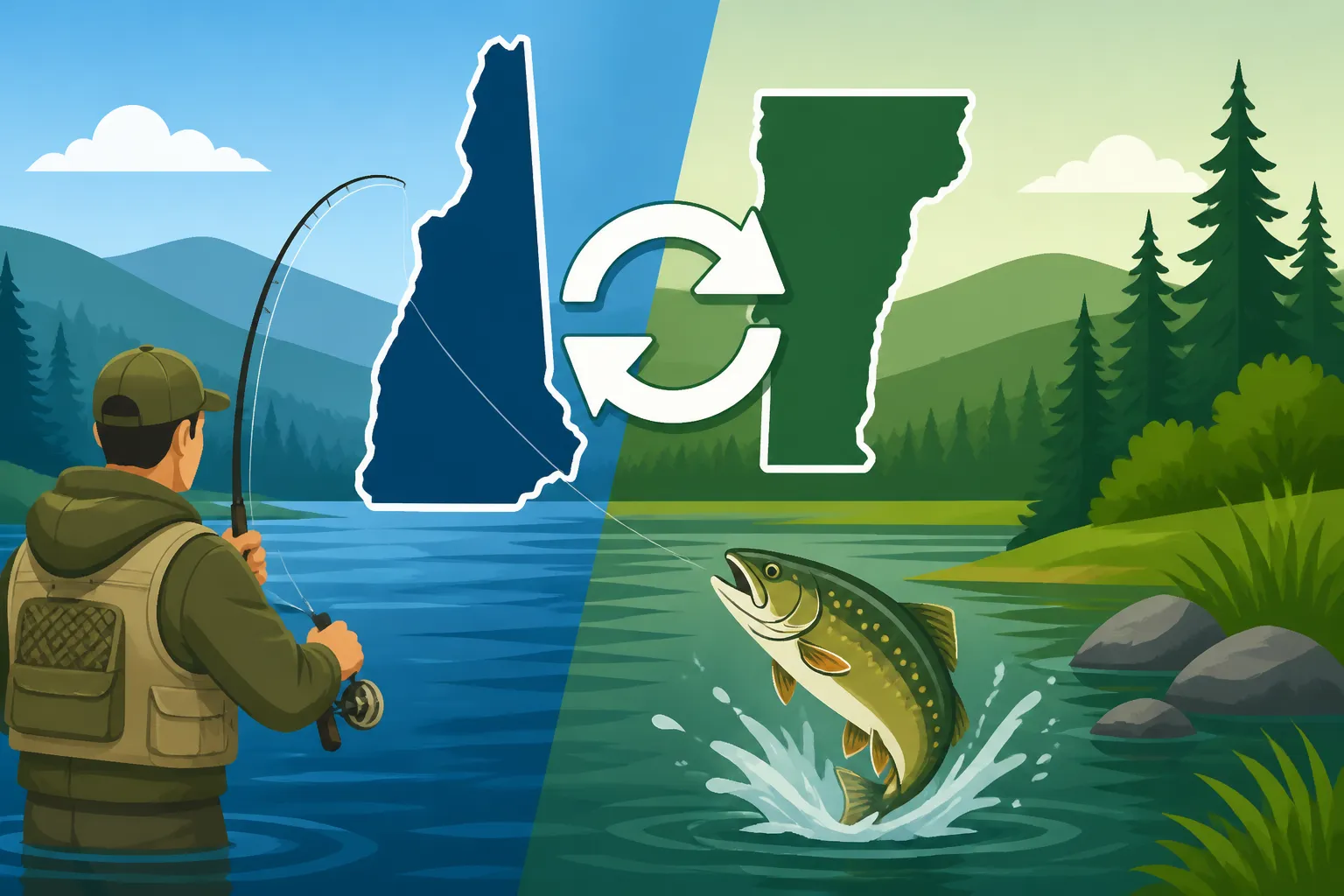
The great news for anglers is that New Hampshire and Vermont do have a reciprocal agreement for fishing on the main stem of the Connecticut River. What this means in plain English is that if you possess a valid fishing license from either New Hampshire or Vermont, you are legally permitted to fish the main stem of the Connecticut River. So, if you're a New Hampshire resident with a valid New Hampshire fishing license, you can fish from the Vermont shoreline or from a boat anywhere in the main channel of the Connecticut River without needing a separate Vermont license. The same holds true for a Vermont resident with a valid Vermont license fishing from the New Hampshire side.
This agreement is a huge convenience, saving anglers the expense and hassle of buying two separate licenses. It really simplifies things, especially for those who live close to the border or regularly cross between the two states for work or leisure. It means you can focus more on the fishing and less on the geography of where you're dropping your line. This reciprocal understanding is designed to encourage anglers to enjoy one of New England's most historic and productive rivers, rather than deterring them with bureaucratic hurdles. Remember, this specific agreement is a lifeline for many dedicated anglers, so it's worth understanding exactly how it works to avoid any potential misunderstandings.
Specifics of New Hampshire and Vermont Reciprocity
While the general rule is quite liberating, there are crucial nuances that every angler needs to grasp. The "main stem" definition is key, and understanding what is not covered by reciprocity is equally important to stay on the right side of the law.
The Connecticut River Main Stem
Let's really dive into what the "main stem" of the Connecticut River encompasses. We're talking about the primary, continuous channel of the river itself, from bank to bank, as it flows along the border. This includes all the open water, oxbows, and back channels that are directly part of the main flow. If you're out in a boat, trolling or casting, or if you're standing on either shoreline and casting into that primary river flow, your single, valid license from either New Hampshire or Vermont covers you. So, whether you're chasing smallmouth bass from a kayak near Walpole or targeting a lurking northern pike from a drift boat near Lancaster, your one license from either state is all you need for that specific stretch of water.
This clarity is particularly helpful for those who use public access points on either side of the river. For example, if you launch your boat from a New Hampshire Fish and Game access point but decide to anchor closer to the Vermont bank to fish a particular eddy, your New Hampshire license is perfectly valid. The same goes for a Vermont angler launching from a Vermont access point and fishing the New Hampshire side of the main river. This agreement truly facilitates seamless access and enjoyment of this magnificent river. To get your required license, check out how easy it is to buy a fishing license online in New Hampshire.
Tributaries and Other Waters
Now, here's where things get a bit more complex, and it's absolutely vital to pay close attention. The reciprocity agreement does not extend to tributaries, ponds, or lakes that feed into the Connecticut River, even if they are very close to the main channel. What does this mean in practical terms?
Let's say you're fishing the Connecticut River with your New Hampshire license, and you decide to paddle your kayak a few hundred feet upstream into the mouth of the Ashuelot River, which flows into the Connecticut from the New Hampshire side. The moment your boat crosses into the Ashuelot, you are no longer on reciprocal waters. To fish the Ashuelot River, or any other river or stream that originates solely within New Hampshire, you absolutely need a valid New Hampshire fishing license.
Conversely, if you're a New Hampshire angler with your NH license on the Connecticut and you venture into a tributary like the Ottauquechee River that flows in from Vermont, you would need a Vermont fishing license to legally fish there. The same principle applies to any lakes or ponds, even those that might be directly adjacent to the Connecticut River. For instance, if you're fishing the main stem and then decide to try your luck in a small oxbow pond that is clearly separated from the main river by a strip of land, you'll need the license for the state that the pond resides in. This distinction is paramount and often where anglers accidentally run afoul of the regulations. Always be aware of whether you're still on the main stem or if you've ventured into a separate body of water entirely. If you're unsure, it's always safer to assume you need the specific state's license, or better yet, consult the official fishing digests.
Navigating License Requirements and Regulations
While the license reciprocity is a relief, the journey isn't over yet. Understanding who needs a license and, perhaps more importantly, which state's regulations to follow can still be a head-scratcher.
Who Needs a License?
The general rule of thumb across most states, including New Hampshire and Vermont, is that anglers above a certain age require a fishing license. In New Hampshire, typically, anyone 16 years of age or older needs a license to fish. In Vermont, the age requirement is generally for those 15 years and older. This means if you're fishing the reciprocal waters of the Connecticut River, and you're within these age brackets, you'll need to hold a valid license from either New Hampshire or Vermont.
For example, if you have a 15-year-old from New Hampshire fishing with you on the Connecticut River, they would generally not need a New Hampshire license (as they are under 16). However, if that same 15-year-old were fishing from the Vermont bank, Vermont's rules would apply, and they would need a Vermont license (as they are 15 or older). It's a subtle but critical distinction that often trips people up. Always double-check the specific age exemptions for both states, especially if you're fishing with younger family members. For more details on this, you can look up information on if kids need a fishing license in New Hampshire.
The cost of these licenses can also vary significantly depending on your residency status. A New Hampshire resident fishing license cost 2026 will be different from a New Hampshire nonresident fishing license cost 2026. Make sure you purchase the correct license type based on your primary state of residence.
Key Regulations to Know
This is arguably the most confusing aspect of fishing boundary waters, so let's break it down carefully. While your license from either state is valid on the main stem of the Connecticut River, the fishing regulations you must follow typically depend on the state that issued your license. This is a critical point of difference from some other boundary water agreements where one set of rules applies to the entire shared water.
For example, if you hold a valid New Hampshire fishing license, you should generally adhere to the New Hampshire Fishing Regulations Explained for bag limits, length limits, and season dates for all species while fishing the main stem of the Connecticut River. If your buddy next to you has a Vermont license, they would follow Vermont's specific regulations.
This can lead to situations where one angler might legally keep a fish that another angler (with a different state's license) might not be allowed to, based on their respective state's rules. It’s a bit of a quirk! To avoid any issues, it’s always prudent to be familiar with both sets of rules. It is particularly important to check the species you are targeting. For instance, bass limits or trout possession rules might differ. A good habit is to always follow the stricter of the two state's regulations if you are ever in doubt. This ensures you're compliant regardless of which state's enforcement officer might check your catch.
You can find all these detailed rules in the official fishing digests. I highly recommend taking the time to read the New Hampshire Freshwater Fishing Digest, and for those who fish the Connecticut, grabbing a copy of Vermont’s fishing guide too. These digests are invaluable resources that provide all the specifics on New Hampshire fishing regulations explained, specific to species, seasons, and water bodies.
| Feature | New Hampshire License Holder (on CT River Main Stem) | Vermont License Holder (on CT River Main Stem) |
|---|---|---|
| License Needed | Valid NH fishing license | Valid VT fishing license |
| Regulations to Follow | New Hampshire regulations | Vermont regulations |
| Applies To | Main stem of the Connecticut River only | Main stem of the Connecticut River only |
| Excludes | Tributaries, adjacent ponds/lakes (NH side) | Tributaries, adjacent ponds/lakes (VT side) |
| Age Requirement | Generally 16+ | Generally 15+ |
Practical Tips for Anglers on Boundary Waters
Fishing these beautiful reciprocal waters offers incredible opportunities, but a little preparedness goes a long way to ensuring a smooth, enjoyable, and lawful experience.
Always Carry Your License
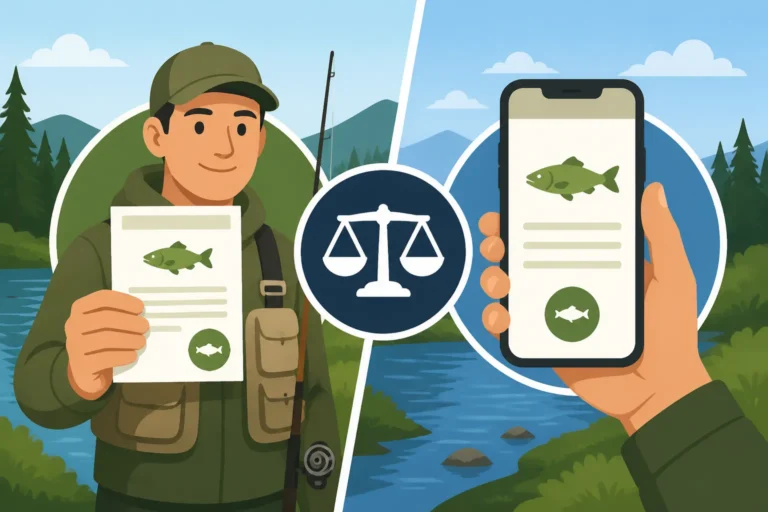
This might seem like a no-brainer, but you'd be surprised how many times I've heard stories of anglers forgetting their license or having it in a spot where it's not easily accessible. When you're fishing the Connecticut River, you could encounter a conservation officer from either New Hampshire or Vermont. Both have the authority to check your license and ensure compliance. Therefore, having your valid fishing license on you, whether it's a physical paper copy or a digital version on your phone, is non-negotiable.
Many anglers find it helpful to keep their license in a waterproof wallet or a small, waterproof pouch that can be attached to a vest or tackle bag. Products from brands like Amazon offer a wide array of options for these types of waterproof storage solutions, perfect for keeping your license, phone, and keys safe and dry. There's nothing worse than having a great day interrupted by a citation because you couldn't produce your license. Remember, printing or carrying a digital fishing license in New Hampshire is generally accepted, but always ensure your digital version is easily accessible and readable, even with wet hands or bright sunlight. A lost or damaged license can usually be replaced, but it's an unnecessary hassle.
Consult Both State Digests
I cannot stress this enough: while the license reciprocity is fantastic, the regulations are not uniformly reciprocal. As discussed, you are generally expected to follow the regulations of the state that issued your license. However, specific boundary water rules can sometimes supersede general state regulations or simply be incredibly confusing when trying to discern which applies.
The New Hampshire Fish and Game Department's Freshwater Fishing Digest and Vermont Fish and Wildlife Department's Fishing Guide are your bibles on the water. Before you head out, especially to a new stretch of the Connecticut River, take the time to review both. Look for any specific regulations related to the Connecticut River itself, as these are often explicitly stated in special regulation sections. Pay close attention to season dates, bag and possession limits, and any size restrictions for the species you intend to target.
For instance, the bass catch-and-release season dates or the daily trout limit might differ between New Hampshire and Vermont. By consulting both digests, you can make informed decisions and, when in doubt, default to the more conservative or stricter regulation. This approach will help you avoid accidental violations and potential penalties, which can include significant fines. Remember, ignorance of the law is not an excuse. Both digests are usually available online as PDFs, making them easy to access on your phone or tablet while on the water (just make sure you've downloaded them for offline access!).
Staying Informed About Changes
Fishing regulations are not set in stone; they are living documents that can and do change annually. Both New Hampshire Fish and Game and Vermont Fish and Wildlife constantly monitor fish populations, environmental conditions, and angler harvest data to make necessary adjustments to their rules. These changes are designed to protect fish stocks, improve fishing opportunities, and respond to ecological shifts.
It’s your responsibility as an angler to stay current with these changes. Before each fishing season, or even if you haven't fished a particular area in a while, make it a habit to check the latest fishing digests and the official websites of both state agencies. They typically publish updates and summaries of rule changes. Subscribing to email newsletters from these departments is another excellent way to stay informed without actively searching. Being aware of current regulations prevents unintentional infractions, such as fishing a closed season or exceeding a daily limit. These proactive steps are part of being a responsible and ethical angler, ensuring the health of our fisheries for future generations. For information regarding residency and other license particulars, always refer to the New Hampshire fishing license residency requirements.
When fishing a river that serves as a state border, it's wise to consider the details carefully. If you're looking for Connecticut River fishing access in New Hampshire, you'll find plenty of spots, but always remember the reciprocity rules. Fishing without a license in New Hampshire can lead to penalties, so always be sure your paperwork is in order.
Disclaimer
Please note that fishing regulations can change. While this guide aims to provide accurate and up-to-date information, it is ultimately your responsibility to consult the official New Hampshire Fish and Game Department and Vermont Fish and Wildlife Department resources for the most current and complete regulations before heading out to fish.