New Hampshire fishing license for blind or disabled anglers
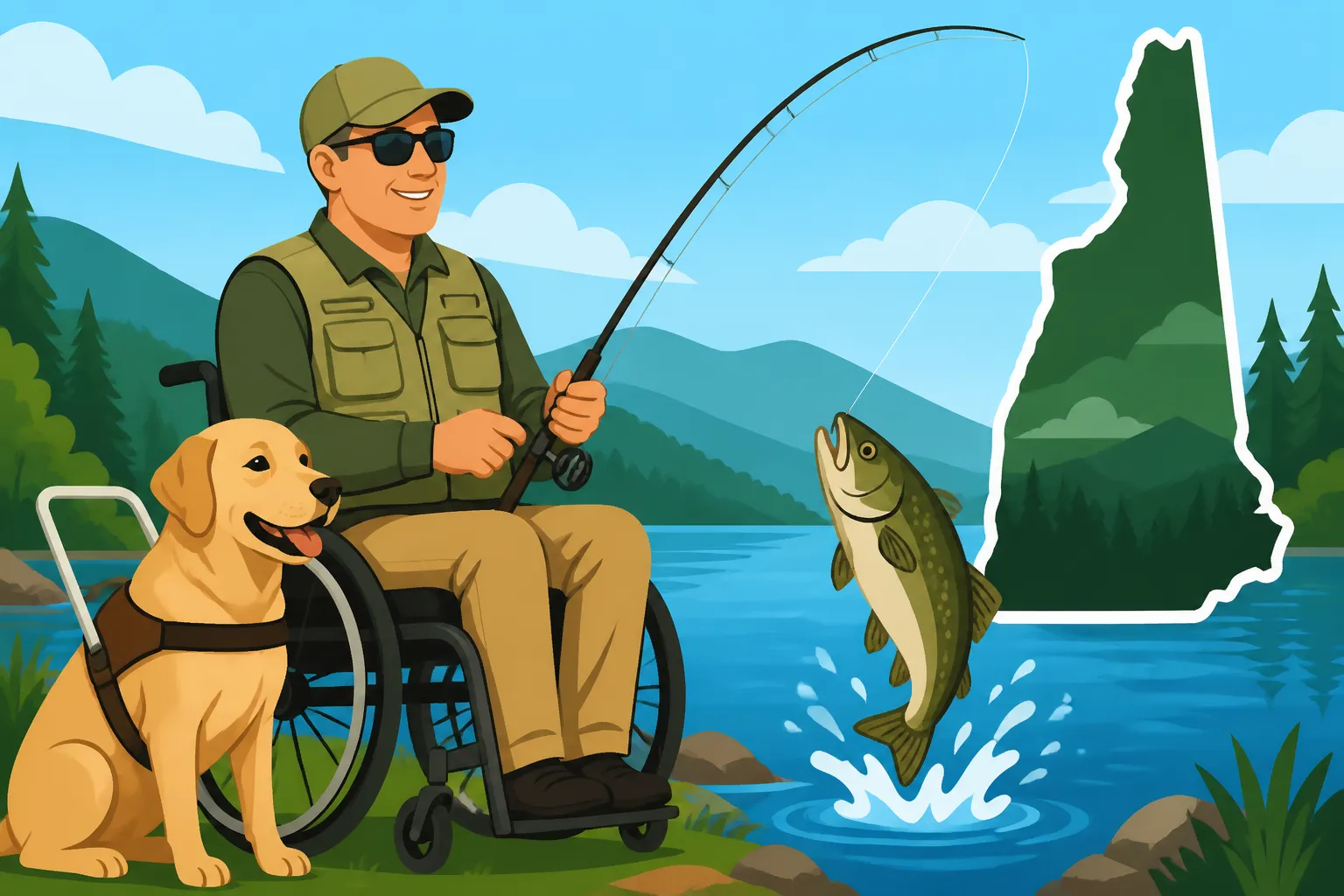
Navigating the world of fishing regulations can feel like deciphering ancient scrolls, and for anglers with blindness or disabilities, the hurdles can often seem insurmountable. Finding clear, concise information about specific licensing exemptions, application processes, and available resources can be a real headache. This comprehensive guide is designed to cut through that confusion, providing you with everything you need to know about obtaining a New Hampshire fishing license as a blind or disabled angler, and ultimately, making your time on the water more enjoyable.
Understanding New Hampshire's Commitment to Accessible Fishing
New Hampshire recognizes the profound physical and mental benefits of spending time outdoors, especially fishing. The state, through its Fish and Game Department, has implemented specific programs and licensing options designed to ensure that blindness or disability doesn't become a barrier to enjoying the Granite State's abundant waters. It's not just about compliance; it's about fostering an inclusive angling community where everyone has the opportunity to cast a line.
Philosophy Behind Special Licensing
The heart of New Hampshire's special licensing program for blind and disabled anglers lies in a belief in equal access. It’s about more than just a piece of paper; it’s about acknowledging the unique challenges some individuals face and providing tangible support to overcome them. These licenses are a testament to the state's dedication to making fishing a viable and accessible recreational pursuit for all its citizens and eligible visitors. The goal is to remove financial and bureaucratic obstacles, allowing individuals to focus on the joy of fishing itself, rather than getting bogged down in red tape. This proactive approach helps uphold the tradition of fishing for generations, ensuring that people of all abilities can participate.
Eligibility for Blind and Disabled Licenses
Eligibility for these specialized licenses isn't a one-size-fits-all scenario. New Hampshire Fish and Game has distinct categories, each with its own set of criteria. Generally, these fall into categories such as legally blind residents, permanently disabled residents meeting specific state definitions, and certain disabled veterans. It's important to understand which category you fall into, as the documentation and application process will vary. For instance, "legally blind" status usually requires certification from an ophthalmologist or a state agency like the New Hampshire Department of Education Bureau of Blind Services. For other disabilities, the state typically looks for a permanent condition that substantially limits one or more major life activities, often requiring proof of disability benefits or a physician's certification. We’ll delve into the specifics of each in the following sections, but the overarching theme is that the disability must be permanent and significantly impact daily life.
Detailed Breakdown of License Options and Costs
New Hampshire offers several tailored fishing license options for anglers with disabilities and those who are legally blind. These aren't just minor variations of standard licenses; they are specific programs designed to alleviate costs and simplify access, reflecting the state's recognition of the diverse needs within its angling community. Understanding these categories is the first step toward securing the right license for your situation.
The Permanent Disabled Veteran License
For veterans who have sacrificed so much, New Hampshire offers a truly invaluable benefit: a permanent disabled veteran fishing license. This isn't just a discount; it's often a free, lifetime privilege. To qualify for this particular license, a veteran must be a New Hampshire resident and have a service-connected disability of at least 100% as determined by the U.S. Department of Veterans Affairs. It's a way for the state to honor their service and ensure they can enjoy the tranquility and sport of fishing without the annual burden of fees or renewals. This license covers all freshwater fishing privileges. It's worth noting that similar benefits might extend to hunting as well, often packaged as a New Hampshire combination hunting and fishing license option.
Permanent Licenses for Blind Residents
New Hampshire also extends a generous, permanent fishing license to its legally blind residents. This license, usually offered at no cost, is a lifetime permit designed to eliminate any barriers to fishing for those who are visually impaired. The key here is "legally blind," which is a specific medical designation, not just impaired vision. Applicants typically need to provide official certification of their legal blindness, often from a qualified medical professional (like an ophthalmologist) or a state agency specializing in services for the blind. This license usually covers both freshwater and saltwater fishing within state limits, offering broad access to New Hampshire's diverse aquatic environments. It's important to check the specific details provided by the New Hampshire Fish and Game Department to ensure you meet all criteria for this vital benefit.
Licenses for Other Qualified Disabled Residents
Beyond disabled veterans and legally blind individuals, New Hampshire provides options for other residents living with permanent disabilities. While these may not always be free or permanent, they often come with significant discounts or extended validity periods compared to standard annual licenses. The criteria for these licenses typically involve a permanent physical or intellectual disability that substantially impairs one's ability to engage in normal life activities, and it often requires certification from a medical doctor or proof of receiving federal disability benefits. The New Hampshire Fish and Game Department carefully reviews these applications, often requiring specific forms to be filled out by a medical professional. For those looking into these options, understanding the different New Hampshire fishing license age requirements and potential discounts available is crucial.
Here’s a simplified breakdown of the main special fishing license types available in New Hampshire:
| License Type | Eligibility | Cost (Approx.) | Validity | Notes |
|---|---|---|---|---|
| Permanent Disabled Veteran | NH Resident, 100% Service-Connected VA Disability | Free | Lifetime | Requires official VA documentation. |
| Permanent Blind Resident | NH Resident, Legally Blind | Free | Lifetime | Requires medical certification of legal blindness. |
| Disabled Resident (Other) | NH Resident, Permanent Disability substantially impairing major life activity | Reduced Cost | Annual/Multi-Year | Requires physician certification or proof of federal disability benefits. |
| Companion Fishing Permit | Non-fishing companion assisting an eligible disabled angler | Free | Varies | Specific conditions apply; must be assisting the disabled angler. |
Please note: Costs and eligibility criteria can change. Always refer to the official New Hampshire Fish and Game Department resources for the most current information.
Companion Fishing Permits
Sometimes, the joy of fishing is best shared, or assistance is needed. New Hampshire understands this, which is why they offer a companion fishing permit. This permit allows an individual to assist a disabled angler who holds one of the special licenses mentioned above without needing their own fishing license, provided they are actively assisting the disabled angler and not fishing independently. This is particularly helpful for those who may need help with casting, baiting, or managing tackle. The companion permit is typically issued in conjunction with the disabled angler's license and requires specific conditions to be met. It ensures that necessary support can be provided on the water without additional licensing burdens, making the experience smoother and safer for both parties. Remember, the companion should not be fishing themselves, but rather aiding the licensed disabled angler.
How to Apply for Your Special New Hampshire Fishing License
The application process for a special fishing license in New Hampshire, while specific, is designed to be as straightforward as possible once you understand the requirements. It’s not just about filling out a form; it's about providing the right documentation to prove your eligibility, which is essential for the New Hampshire Fish and Game Department to correctly issue your license.
Required Documentation and Proof of Eligibility
Getting your special license hinges on providing crystal-clear proof of your eligibility. For the Permanent Disabled Veteran License, you'll need official documentation from the U.S. Department of Veterans Affairs confirming your 100% service-connected disability. This typically comes in the form of an award letter. For the Permanent Blind Resident License, you'll need certification of legal blindness. This can often be a letter from your ophthalmologist or an official document from the New Hampshire Department of Education Bureau of Blind Services.
For Other Qualified Disabled Residents, the requirements can vary, but generally, you'll need a statement from a licensed physician detailing the nature and permanency of your disability, and how it substantially limits a major life activity. Sometimes, proof of receiving federal Social Security Disability (SSD) or Supplemental Security Income (SSI) benefits can also serve as acceptable documentation. It's wise to gather all these documents before you start the application process to avoid delays. Make sure these documents are current and clearly legible. The more complete and accurate your submission, the smoother the process will be.
Navigating the Application Process Online, Mail, In-Person
Once you have all your documentation, you have a few avenues for application. The New Hampshire Fish and Game Department aims to make this process accessible.
- Online: While you can usually renew standard licenses online, special licenses requiring detailed documentation often necessitate an initial in-person or mail-in application. However, always check the official New Hampshire Fish and Game website for the most up-to-date procedures, as their digital services are constantly evolving. They might have a system for submitting documents electronically, but for the initial application, a physical submission is common due to the need for verified medical records.
- Mail: This is a common and often preferred method for special license applications. You'll download the specific application form from the New Hampshire Fish and Game website, fill it out completely, attach all your supporting documentation (copies, not originals, unless explicitly requested), and mail it to their licensing division. Ensure you send it with tracking if possible, just for your peace of mind.
- In-Person: Visiting the New Hampshire Fish and Game Department headquarters in Concord or one of their regional offices is an excellent option, especially if you have questions or need assistance. Their staff can guide you through the forms, verify your documentation on the spot, and often issue your license immediately if everything is in order. This personal touch can be incredibly helpful for those who prefer direct interaction or have unique circumstances. You might also be able to get assistance with your application at local license agents, although they might not handle all types of special licenses directly. Regardless of the method, remember to keep copies of everything you submit for your records, especially important if you ever need to replace a lost New Hampshire fishing license.
Annual Renewal and Maintaining Eligibility
For permanent licenses, like those for 100% disabled veterans or legally blind residents, renewal might not be a yearly concern. Once issued, they are typically valid for life. However, it's always good practice to confirm this with the New Hampshire Fish and Game Department and understand any minimal administrative steps that might be required every few years, such as updating contact information.
For other disabled resident licenses that might have an annual or multi-year validity, you will need to re-apply or renew periodically. The process for renewal is usually simpler than the initial application. Often, if your disability is certified as permanent, you won't need to resubmit extensive medical documentation each time, but rather a simple renewal form and potentially a reduced fee. It’s crucial to understand your license's expiration date to avoid fishing without a license in New Hampshire: penalties can be steep. The Fish and Game Department typically sends renewal reminders, but it’s ultimately your responsibility to keep track. Staying informed on New Hampshire fishing season dates and closures is also essential for all anglers.
Beyond the License: Enhancing Your Fishing Experience in New Hampshire
Securing your special fishing license is a fantastic first step, but the journey to a fulfilling angling experience in New Hampshire doesn't stop there. The state and its community offer a wealth of resources, from accessible fishing spots to adaptive gear, all designed to make your time on the water truly enjoyable and barrier-free.
Accessible Fishing Locations and Facilities
New Hampshire has made strides in making its beautiful lakes and rivers accessible to all. Many state parks, municipal areas, and even some private fishing lodges now feature paved pathways, accessible fishing piers, and amenities like adapted restrooms. For instance, the State Park system offers numerous locations with improved access. You might find accessible fishing platforms at places like Bellamy Park in Dover, offering great freshwater opportunities, or even spots along the coast for saltwater fishing. Look for specific information on the New Hampshire State Park Fishing Guide for details on accessible amenities.
Some popular spots known for their accessibility include:
- Massabesic Lake (Auburn/Manchester): Features a universally accessible fishing pier.
- White Lake State Park (Tamworth): Offers accessible amenities and shore fishing.
- Silver Lake State Park (Hollis): Has accessible paths and fishing spots.
Before heading out, it’s always a good idea to check the specific park or area's website or call ahead to confirm the current accessibility features, as conditions can change. Many of these locations are also excellent spots for various species, whether you're interested in panfish or trout fishing in New Hampshire.
Adaptive Gear and Resources
The world of fishing gear has evolved dramatically, with many innovations focused on enhancing accessibility. Adaptive gear can make a huge difference in comfort, safety, and success on the water.
- Specialized Rod Holders: These can be mounted on wheelchairs, boats, or even waist belts, allowing anglers with limited hand mobility to cast and fight fish. You can find a wide array of options for these on platforms like Amazon.
- Automated or Electric Reels: For those with significant strength or dexterity limitations, electric reels can do the work of reeling in a catch, making the experience less physically demanding.
- Casting Aids: Devices that assist with the casting motion, providing extra leverage or a more controlled release.
- Modified Grips: Rods and reels with larger, easier-to-grip handles can be beneficial for individuals with arthritis or nerve damage.
- Accessible Tackle Boxes and Bags: Look for tackle storage solutions that are easy to open, have large compartments, and can be easily accessed from a seated position. Many practical and robust options are available on Amazon.
- Communication Devices: Waterproof, hands-free communication devices can be crucial for safety, especially when fishing with a companion.
Exploring resources from organizations dedicated to adaptive outdoor recreation, such as Casting for Recovery or local adaptive sports groups, can also provide valuable insights and access to specialized equipment loan programs.
Community Support and Fishing Programs
One of the most enriching aspects of fishing is the community it fosters. For blind and disabled anglers, connecting with others who share similar experiences can provide invaluable support, tips, and companionship.
- New Hampshire Fish and Game Education Programs: The department often hosts workshops and events that cater to diverse audiences, sometimes including specific adaptive fishing clinics. These are great opportunities to learn new techniques and meet fellow anglers.
- Local Fishing Clubs: Many towns and regions have active fishing clubs that welcome new members and can offer insights into local accessible spots and adaptive strategies.
- Veteran Fishing Organizations: Groups like Project Healing Waters Fly Fishing often have chapters in New Hampshire, offering fly fishing education and outings specifically for disabled veterans. These programs provide not only fishing instruction but also a strong sense of camaraderie and therapeutic benefits.
- Adaptive Sports Organizations: New Hampshire has several adaptive sports organizations that may offer fishing as part of their recreational programming. These groups are excellent for connecting with peers and finding organized outings.
Remember, fishing is more than just catching fish; it's about the experience, the peace of nature, and the joy of participation. With the right license, a bit of planning, and the support of a welcoming community, your New Hampshire fishing adventures can be truly limitless.
Disclaimer
The information provided in this guide is for general informational purposes only and is subject to change. While we strive to offer accurate and up-to-date content, specific regulations, eligibility requirements, and costs for New Hampshire fishing licenses for blind or disabled anglers can be updated by the New Hampshire Fish and Game Department at any time. It is always recommended to consult the official New Hampshire Fish and Game Department website or contact them directly for the most current and precise information before planning your fishing trip or purchasing any licenses.