Best technique for sight fishing bass in clear water
There's nothing quite like the feeling of being out on a pristine New Hampshire lake, the water crystal clear, and knowing that bass are lurking just beneath the surface. But that crystal-clear water, while beautiful, can also be incredibly frustrating when you can see the fish but they seem to see you first, spooking before you even get a cast off. If you've ever felt that ache of watching a trophy bass disappear into the depths, this guide is for you. We're going to dive deep into the art of sight fishing for bass in clear water, breaking down the techniques, gear, and mindset you need to turn those frustrating glimpses into triumphant catches.
The Allure and Challenge of Sight Fishing in New Hampshire's Clear Waters
New Hampshire is blessed with an abundance of stunning, clear-water lakes and ponds, from the vast expanses of Lake Winnipesaukee and Squam Lake to countless smaller, tucked-away gems. These waters offer incredible fishing opportunities, but they demand a different approach, especially when targeting bass that can easily spot danger.
Why Sight Fishing Bass is So Rewarding (and Frustrating)
The reward of sight fishing is undeniable. Imagine spotting a dark shadow moving along a rocky point, a tell-tale swirl of fins on a sandy bed, or even seeing the entire fish, its colors vibrant in the sunlight. There’s a direct, almost primal connection you make when you visually select your target and then execute a perfect cast. The mental game is intense; it’s a chess match between you and the bass, where every movement, every shadow, and every ripple on the water can tip the scales. When it works, it’s an exhilarating experience that leaves you buzzing.
However, the flip side is the frustration. That same clarity that allows you to see the bass also allows the bass to see you, your boat, and your line. A single wrong move, a clumsy cast, or even standing up too quickly can send a wary bass darting for cover, leaving you with nothing but a sinking feeling and the knowledge that you blew it. This is particularly true during the spawning season when bass are focused on their beds in shallow water, but are also incredibly territorial and easily spooked. The challenge isn't just catching the fish; it's approaching them undetected and presenting a lure that looks natural and non-threatening.
Understanding Bass Behavior in Clear Water Environments
Bass in clear water behave differently than their counterparts in murkier conditions. Their primary defense mechanism in clear environments is their eyesight, and they use it constantly to scan for predators and prey. This means they are inherently warier and often require a much more subtle approach. You'll find that in clear lakes, bass tend to hold deeper or closer to dense cover when they're not actively feeding or spawning, seeking refuge from overhead threats.
When they do move into shallower, more exposed areas, such as during the spawn or when actively hunting baitfish, they are incredibly sensitive to movement and shadows. A bass guarding a nest, for instance, might tolerate a lure for a moment or two, but any unnatural retrieve or the sudden appearance of your shadow over the bed will send it fleeing. Understanding this heightened wariness is key to adapting your presentation. They often have specific "escape routes" they'll take, usually towards deeper water or heavy structure, so observing these patterns can help you anticipate their movements and refine your strategy. Learning to identify these patterns is crucial for understanding how to Catch Smallmouth Bass in New Hampshire Lakes or even how to Catch Largemouth Bass in New Hampshire.
Essential Gear for Successful Sight Fishing
Sight fishing is a game of details, and your gear plays an outsized role in your success. While you don't need a boatload of specialized equipment, the right tools make a world of difference.
Polarized Sunglasses and Vision Aids – Your Most Important Tool
Let's be blunt: if you're serious about sight fishing, a good pair of polarized sunglasses isn't an accessory; it's a necessity. It is, hands down, your most important piece of gear. The polarization cuts through the glare on the water's surface, allowing you to see into the depths and spot fish, structure, and changes in bottom composition that would otherwise be invisible. Without them, you're essentially fishing blind.
When choosing polarized sunglasses, consider lens color. Grey lenses offer true color perception and are excellent for bright, sunny days. Amber or copper lenses enhance contrast and work well in varying light conditions, from overcast to partly sunny, and can be particularly useful in low-light situations like dawn or dusk, or when fishing rivers with a lot of shadows. Yellow lenses are best for extremely low light. Many anglers even carry multiple pairs to swap out based on conditions. Don't skimp here; investing in high-quality optics from reputable brands will pay dividends. You can find a vast selection of polarized sunglasses on Amazon, with options for every budget and preference. Some anglers also find prescription inserts or reader-style polarized glasses helpful if their near vision isn't what it used to be, ensuring they can tie knots and see distant fish clearly.
Rod, Reel, and Line Setup for Precision and Stealth
For sight fishing, your rod and reel setup needs to prioritize accuracy, sensitivity, and the ability to make long, quiet casts.
- Rods: A medium-light to medium power spinning rod, typically 6'6" to 7'6" in length, is often ideal. The lighter power allows for precise casts of smaller, lighter finesse baits, while the length provides excellent casting distance and leverage for playing fish. A fast or extra-fast action tip is critical for detecting subtle bites and delivering solid hooksets on wary bass. Sensitivity is paramount; you need to feel every bump, tic, and change in pressure on your line, especially when a bass just "mouths" a bait.
- Reels: A lightweight spinning reel in the 2000 or 2500 size range is perfect. It should have a smooth drag system and balance well with your chosen rod, allowing for effortless casting and comfortable all-day use.
- Line: This is where stealth truly comes into play. Many sight anglers opt for a main line of 6-10 lb braided line, not for its visibility (it's actually quite visible), but for its superior casting distance and sensitivity. To combat visibility, a leader of 6-10 lb fluorocarbon line is absolutely essential. Fluorocarbon is nearly invisible underwater due to its refractive index being close to that of water, and it offers excellent abrasion resistance against rocks and submerged timber. The length of your leader should be at least 6-8 feet, sometimes even longer, especially in exceptionally clear water. The goal is to present your lure with a main line that the fish cannot see. For more ideas on what to pair, check out guides like Best Fishing Rods for New Hampshire Lakes and Best Tackle for New Hampshire Smallmouth Bass.
Lure Selection for Discerning Bass
When bass can see your lure clearly, your choice becomes even more critical. You want natural presentations that mimic their forage and don't raise suspicion.
- Finesse Baits: Weightless soft plastics are king. Wacky-rigged Senkos, Ned rigs, shaky heads, small creature baits, and small worms (like a 4-inch trick worm) are all highly effective. They have subtle movements that don't overpower the fish's senses.
- Colors: In clear water, less is often more. Natural colors like green pumpkin, watermelon, brown, and clear with glitter tend to work best. Avoid overly bright or unnatural colors unless you're trying to provoke an aggressive reaction from a bedded bass (which still often works best with subtle, natural tones).
- Small Jigs: Small football jigs or mushroom head jigs, often dressed with a compact plastic trailer, can be deadly when trying to coax a bass off a specific piece of structure or from a bed. Their compact profile and ability to mimic crawfish or small baitfish make them irresistible.
- Swim Baits: Tiny, natural-looking paddle tail swimbaits on a small jig head can also be effective, especially if you see bass chasing baitfish.
Remember, the goal is to make your lure appear as harmless and natural as possible. Subtle movements and realistic profiles are far more effective than loud, flashy presentations in these conditions. When browsing for these specific lures, Amazon is an excellent resource for comparing options and reading reviews from other anglers.
Mastering the Art of Sight Fishing: Techniques and Tactics
Sight fishing is as much about mental discipline and observation as it is about casting and retrieving. It requires patience, stealth, and a keen eye.
Locating Bass in Clear Water: Where to Look and How to Approach
Finding bass in clear water is the first step. You'll typically find them in shallower areas, especially during the spring and early summer when they're actively spawning. Look for:
- Spawning Beds: These are circular, cleared-out depressions on sandy or gravelly bottoms, often near points, coves, or protected shorelines. Bass will be guarding these. Knowing the New Hampshire Bass Catch-and-Release Season, Explained is key here.
- Structure: Submerged rocks, logs, weed lines, docks, and transition areas (where different bottom types meet) are prime holding spots. The bass will use these as ambush points or resting areas.
- Shadow Lines: Bass often position themselves on the edge of shadows, waiting to ambush prey moving from the light into the dark.
- Shallow Flats and Points: These areas warm up quickly and attract baitfish, which in turn attract bass.
When approaching, stealth is paramount. Keep a low profile in your boat or on shore. Wear subdued clothing that blends with the surroundings. Use a trolling motor at its lowest setting, or better yet, a kayak or canoe for silent movement. Many New Hampshire lakes have incredibly clear water, so a quiet approach is non-negotiable. Using a kayak allows for unparalleled stealth and access to skinny water. Consider exploring options from Best Kayaks for New Hampshire Fishing if you're looking to upgrade your stealth game. Position the sun behind you if possible; this both aids your vision and makes it harder for the fish to see you.
The Art of the Perfect Presentation
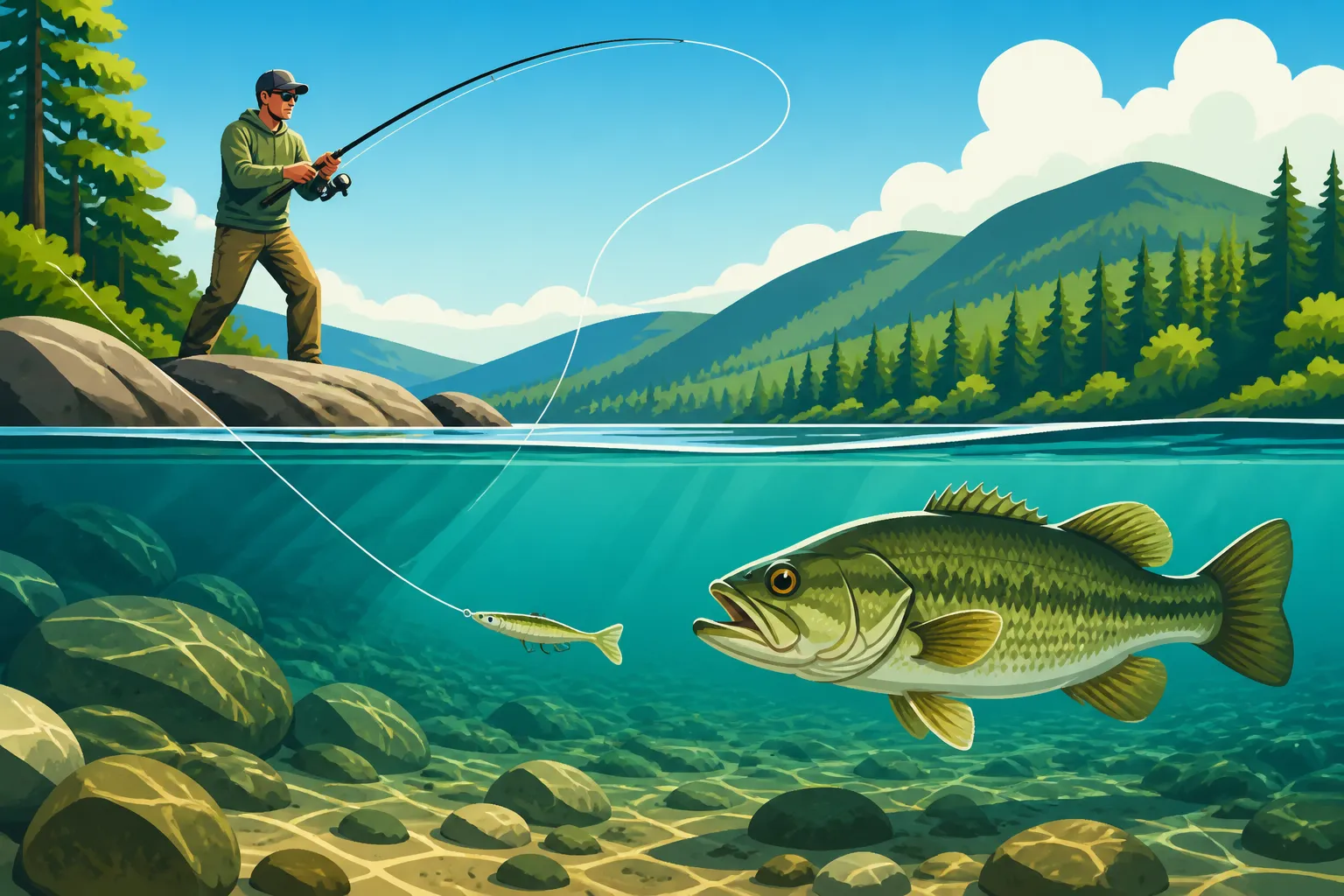
Once you've spotted a bass, the real challenge begins. Your cast needs to be a masterpiece of precision and subtlety.
- Long Casts: Make a long cast well beyond the fish, allowing your lure to enter the water quietly and away from the bass's immediate field of vision. A soft entry prevents spooking.
- Gentle Approach: Retrieve the lure slowly, gently guiding it towards the bass. You want it to appear as a natural, unhurried meal.
- Read the Bass's Body Language: This is critical.
- Turning towards the bait: Good sign, you have its attention.
- Flaring gills or fanning fins: The bass is investigating, perhaps smelling the bait. Keep it in the strike zone.
- Tilting on its side: The bass is getting ready to inhale the bait. Brace yourself!
- Turning away or swimming off: You either spooked it, or it's not interested. If it swims off slowly, try to intercept it again. If it darts away, move on.
- Mimic Natural Movement: If you're using a worm, let it slowly sink near the bass. Give it a tiny twitch if the bass approaches, making it look like it's trying to escape. If it's a bedded fish, present the lure right on the bed, let it sit for a moment, then give a very subtle twitch. The goal is to irritate or tempt it into biting.
On some of the larger, clear lakes, like Winnipesaukee, understanding Smallmouth Bass Habits on Winnipesaukee can give you an edge, as their behavior in these big, deep environments is unique. They may be found on deep rock piles but will move shallow during spawn.
Reading Bass Reactions and Adjusting Your Strategy
Bass are not always aggressive, especially in clear water where they have more time to scrutinize a lure. Learning to interpret their reactions is a skill that comes with practice.
- Curiosity: A bass might swim over to your lure, stare at it, or even nip at it playfully. If this happens, don't jerk the bait away. Instead, try letting it sit perfectly still, or give it the tiniest, almost imperceptible twitch. Sometimes the fish needs that moment of pause to commit.
- Indifference: If a bass ignores your lure completely, swims past it, or simply doesn't acknowledge its presence, it's time to change something. This could mean a different lure color, a different size, or a different retrieve. Try a smaller, more subtle bait, or switch from a worm to a small jig.
- Aggression: This is what we're looking for! A bass that turns, flares its gills, or rushes the bait is usually committed. Set the hook! For bedded bass, a subtle presentation might annoy them into striking, even if they aren't hungry.
- Spooked Fish: If the bass darts off quickly, you've likely spooked it. This can happen from a shadow, a splashy cast, or even too much movement in your boat. Give that area a break and move on. You might come back later and find the fish has settled down.
Remember, every fish is a learning experience. Pay attention to what works and what doesn't, and be willing to experiment.
Common Pitfalls and Advanced Tips for New Hampshire Anglers
Even seasoned anglers can make mistakes when sight fishing. Being aware of common pitfalls and employing some advanced tactics can significantly boost your success rate.
Avoiding Common Sight Fishing Mistakes
- Spooking the Fish: This is the most common mistake. Too much movement, too much noise, casting shadows over the fish, or making a loud splash with your lure. Always assume the fish can see and hear you, and act accordingly.
- Poor Casts: Landing your lure directly on top of the fish or too far away so it doesn't enter the strike zone is a sure way to fail. Practice your accuracy. Think about angles – sometimes casting past the fish and retrieving away from it, or casting from the side, is more effective than casting directly at it.
- Impatience: Sight fishing requires a lot of patience. Sometimes a bass will just stare at a lure for what feels like an eternity. Resist the urge to twitch it excessively or reel it in too quickly. Let the fish make the first move, or offer only the slightest encouragement.
- Wrong Lure/Color: If the fish isn't reacting, don't be stubborn. Change your bait. Have several options tied on different rods or readily accessible in your tackle box. Sometimes a slight variation in size or color is all it takes. For example, some days a green pumpkin worm is ignored, but a watermelon red flake will get bit.
Leveraging Natural Conditions and Technology
Sometimes, nature can be your ally in the clear-water challenge.
- Sun Position: While a high sun helps you see, direct sun on the water can make fish wary. Overcast days or days with a light ripple on the water's surface can break up your silhouette and make fish less spooky. Also, the sun's angle changes throughout the day, altering visibility. Always try to approach with the sun at your back for the best visibility.
- Wind Ripple: A light chop on the water surface can be a sight fisherman's best friend. It breaks up the light, reducing glare, and making it harder for bass to get a clear view of you or your boat. This is often an ideal time to target those wary shallow-water bass.
- Technology: While sight fishing is primarily visual, modern electronics can still assist. A good fish finder, especially one with side-imaging or down-imaging, can help you locate subtle changes in bottom composition or submerged structure that might hold bass before you even lay eyes on them. They can also help you understand the depth contours of the area you're fishing. Even a simple portable fish finder can offer valuable insights when scoping out new areas. You can find excellent models on Amazon to suit your specific needs. Shallow water anchors, like those from Power-Pole or Minn Kota, allow you to silently hold your position without drifting or using a noisy traditional anchor, which is crucial for not spooking fish.
| Lens Color | Best Conditions | Benefits | Considerations |
|---|---|---|---|
| Grey | Bright, sunny days | True color perception, reduces eye strain | Less contrast in low light |
| Amber/Copper | Variable, partly cloudy | Enhances contrast, good for general fishing | Can alter true colors slightly |
| Yellow | Overcast, low light, dawn/dusk | Maximizes brightness, excellent contrast | Not suitable for bright sun, can be fatiguing |
| Green Mirror | Medium to bright light | Excellent contrast, good for varying conditions | Often a darker base tint |
Ethical Considerations and Catch & Release
Sight fishing often targets bass when they are most vulnerable: during the spawning season when they are guarding their beds. While it's a legal and exciting way to fish, it's crucial to practice responsible catch and release to ensure the health of the fishery.
- Minimize Stress: Land the fish quickly, handle it gently, and release it as soon as possible. Avoid prolonged fights, especially with bedded fish.
- Avoid Excessive Pressure: If you catch a bass off its bed, try to move on to other areas after a successful catch or two. Repeatedly catching the same fish can stress it and disrupt its spawning duties, leaving its eggs vulnerable to predators. The goal is enjoyment and challenge, not to exhaust the fish or compromise future generations.
- Proper Hook Removal: Use appropriate tools like de-hookers or pliers to remove hooks cleanly and quickly, minimizing damage to the fish.
By being mindful of these ethical considerations, New Hampshire anglers can continue to enjoy the thrill of sight fishing while also contributing to the sustainability of our beautiful bass populations. After all, protecting these resources ensures that future generations can also experience the magic of seeing and catching a trophy bass in our clear waters.
Disclaimer
This article is for general informational purposes only and does not constitute professional advice. Laws, prices and regulations vary by location and change over time. Consult a qualified professional for guidance on your specific situation.