How to Catch Largemouth Bass in New Hampshire
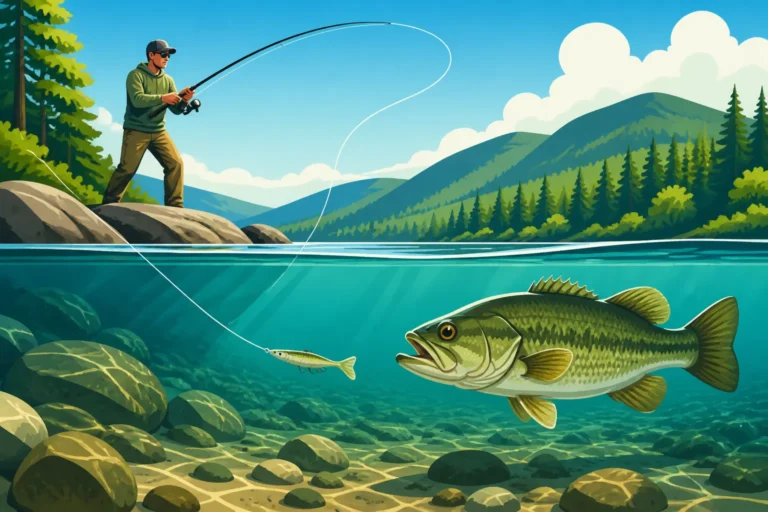
Oh, the elusive largemouth bass! If you've spent any time on New Hampshire's lakes and ponds, you know the frustration of seeing those big, bucket-mouthed beauties jump, only to have them ignore every lure you throw. It's a common struggle – these fish are notoriously smart, adaptable, and sometimes downright stubborn. This comprehensive guide is here to cut through the mystery, offering practical, down-to-earth strategies for locating, attracting, and ultimately, landing those brag-worthy largemouth bass across the Granite State.
Understanding New Hampshire Largemouth Bass Habits
Before you can even think about casting, you've got to get inside the head of a largemouth bass. They're creatures of habit, driven by water temperature, food availability, and the need for cover. Understanding these fundamental behaviors is the bedrock of consistent success on New Hampshire waters.
Habitat Preferences by Season
Largemouth bass are masters of adaptation, constantly adjusting their location based on the season. What works in April won't necessarily work in August, and knowing where they're likely to be is half the battle.
In the spring, right after ice-out and as the water begins to warm, largemouth bass will start moving into shallower areas. They're looking for warmer water to kickstart their metabolism and prepare for spawning. Think about the sun-drenched northern coves, protected bays, and shallow flats with dark bottom compositions that absorb heat. These areas, often only a few feet deep, become their pre-spawn staging grounds. You'll find them around emerging vegetation, submerged logs, and even hard bottom areas like gravel points.
As summer fully sets in and water temperatures climb into the 70s, largemouth bass will adjust again. While you might still find some cruising shallow early in the morning or late in the evening, the heat of the day drives many to deeper, cooler water. Look for them along the edges of deep weed lines, in the shade of docks, under heavy lily pads, or nestled deep within submerged brush piles and fallen trees. They're seeking refuge from direct sunlight and higher oxygen levels found in slightly deeper water or around active vegetation. Understanding the thermocline – that invisible layer where water temperature changes rapidly – can be key here, as bass will often suspend just above or within it, especially in deeper lakes.
When fall arrives and the days shorten and water temperatures begin to drop, largemouth bass go into a full-on feeding frenzy. This is their time to bulk up for the lean winter months ahead. They become incredibly aggressive and will often follow schools of baitfish into shallower flats and coves. Look for them around baitfish schools near drop-offs, along transitions from shallow to deep water, and around any remaining healthy vegetation. This period can offer some of the most action-packed fishing of the year, as bass become less selective and more willing to chase down a meal.
Winter fishing for largemouth bass in New Hampshire is a whole different ballgame, primarily done through the ice. During this time, bass are much more lethargic and often hold in deeper holes, near major structural elements like humps, rock piles, or deep-water weed beds that offer thermal refuge. Their metabolism slows significantly, and they won't expend much energy chasing food. Presenting baits slowly and subtly is key, often requiring patience and good electronics to pinpoint their exact location. While not impossible, catching largemouth through the ice is generally more challenging than during other seasons.
Forage and Diet of Largemouth Bass
What a largemouth bass eats profoundly influences what lures will work best. These opportunistic predators have a varied diet, and mimicking their natural prey is often the fastest route to a strike.
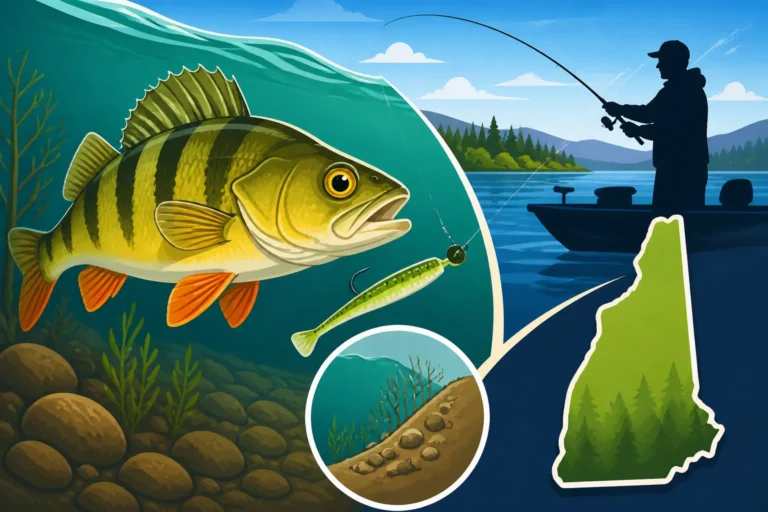
In New Hampshire, largemouth bass primarily feed on smaller fish, crustaceans, and amphibians. Common prey items include yellow perch, various shiners, sunfish, small trout in some areas, and especially crawfish. Frogs, snakes, and even small rodents or birds that accidentally fall into the water can also become a meal for a truly ambitious bass. This diverse diet means you have a wide array of options when it comes to lure selection, from baitfish imitations to crawfish patterns and frog lures.
During the warmer months, especially in weedy lakes and ponds, crawfish are a major food source. Bass will actively root through rocky bottoms and dense vegetation to find them. This makes jigs, creature baits, and even some crankbaits that mimic crawfish incredibly effective. Similarly, in areas with abundant panfish, bass will key in on those smaller fish, making swimbaits and jerkbaits that resemble perch or sunfish excellent choices. The key is to observe your fishing environment: are there frogs hopping along the shore? Are schools of baitfish flickering on the surface? Adjust your presentation accordingly.
Largemouth vs. Smallmouth Bass in New Hampshire
While both largemouth and smallmouth bass are incredibly popular game fish in New Hampshire, they have distinct characteristics and preferred habitats. Understanding these differences, as highlighted in "Largemouth Bass vs Smallmouth Bass Identification," is crucial for targeting one over the other.
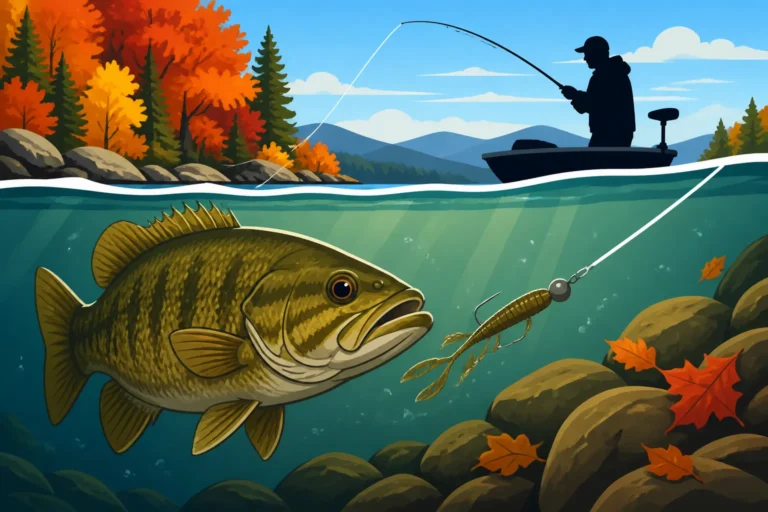
Visually, the most obvious difference is the mouth. A largemouth bass has a jawline that extends beyond its eye, giving it that characteristic "bucket mouth." A smallmouth's jaw typically doesn't extend past the middle of its eye. Largemouth also tend to have a distinct dark, horizontal band running along their side, whereas smallmouth usually have vertical bars or a mottled pattern. Their body shapes also differ slightly, with largemouth being a bit more elongated and smallmouth having a more compact, muscular build.
Habitat-wise, largemouth bass are generally associated with warmer, shallower, and often more vegetated waters. They thrive in ponds, smaller lakes, and the weedy coves and backwaters of larger lakes and rivers. They love dense cover like lily pads, submerged timber, and thick weed beds. Smallmouth bass, on the other hand, prefer cooler, clearer, and rockier environments. You'll often find them on rocky points, deep humps, gravel flats, and along current breaks in rivers. While there can be overlap, especially in transition areas, knowing which species you're likely to encounter in a given spot will help you choose the right presentation and tackle. For instance, if you're fishing a weedy pond, you're almost certainly after largemouth. If you're on a deep, rocky lake like Winnipesaukee, you might be dealing with both, but specific spots will favor one over the other.
Essential Gear for New Hampshire Largemouth Fishing
Having the right tools for the job can make a world of difference when targeting largemouth bass. You don't need a boatload of expensive equipment, but understanding what each piece of gear is designed for will significantly boost your success rate.
Rod and Reel Setups
The choice between spinning and baitcasting gear, and the specific power and action of your rod, depends heavily on the lures you're throwing and the type of cover you're fishing.
Baitcasting setups are the workhorses for serious largemouth anglers, especially when dealing with heavier baits or fishing in dense cover. A medium-heavy to heavy power rod, typically 6'6" to 7'6" in length, paired with a reliable baitcasting reel, is ideal for throwing jigs, spinnerbaits, crankbaits, and flipping heavy cover. The heavier power allows you to drive hooks through thick cover and muscle big bass out of their hiding spots. Fast action rods are great for single-hook lures as they provide sensitivity and quick hooksets, while moderate-fast action can be better for treble hook baits like crankbaits, allowing the fish to engulf the lure before the hookset. When searching for a quality baitcasting combo, you can find a wide range of highly-rated options on Amazon, suitable for various budgets.
For finesse presentations, lighter lures, or when casting accuracy isn't as critical, a spinning setup shines. A medium-light to medium power spinning rod, around 6'6" to 7' in length, with a fast or extra-fast action, is perfect for throwing weightless worms, Ned rigs, dropshots, and small jerkbaits. Spinning reels are generally easier for beginners to master, especially with lighter lines and baits. They excel in clear water situations or when the bite is tough, and you need to present a bait subtly. Many anglers will carry both a baitcasting and a spinning setup to cover all their bases on a typical fishing day, adapting to the conditions they encounter.
Regarding line choices, braided line is incredibly strong, has no stretch, and is excellent for fishing heavy cover, making it a favorite for flipping and pitching jigs. Its sensitivity helps detect subtle bites. For baits with treble hooks, or when fishing in clear water where bass can be line-shy, a fluorocarbon leader is often tied to braided mainline, or full fluorocarbon line is used on a baitcaster. Fluorocarbon is nearly invisible underwater and has less stretch than monofilament, offering a good balance of sensitivity and stealth. Monofilament line is still a viable option for topwater baits due to its buoyancy and for crankbaits where its stretch can be an advantage.
Lure Selection for Different Conditions
The world of bass lures is vast and can be overwhelming, but focusing on a few key categories will cover most New Hampshire scenarios.
Topwater lures are pure adrenaline. Poppers, walking baits (like a Heddon Super Spook or a Zara Spook clone), and frog imitations are killer during low light conditions (dawn, dusk, cloudy days) or when bass are actively feeding on the surface, especially over weed mats or around lily pads. There's nothing quite like seeing a largemouth blow up on a topwater bait. They work best in warmer water, usually from late spring through early fall. Fishing these requires patience, letting the bass commit, and often resisting the urge to set the hook too early.
Crankbaits are fantastic for covering water and triggering reaction strikes. You'll want a selection that covers different depths: shallow divers for flats and weed edges, medium divers for slightly deeper breaks, and deep divers for open water humps or offshore structure. Lipless crankbaits are also excellent for covering large areas, especially in spring and fall, vibrating to attract fish. Pay attention to retrieve speed; sometimes a slow, steady pull works, other times a stop-and-go or a deflection off structure is what triggers a bite. Popular brands like Rapala, Strike King, and Norman offer a wide variety that anglers find effective.
Jigs are arguably the most versatile bass lure. Flipping and pitching jigs (with a skirt and a trailer) are perfect for targeting heavy cover like docks, brush piles, and dense vegetation. Swim jigs, designed to be reeled steadily through cover, imitate baitfish or crawfish. Football jigs are excellent for dragging along rocky bottoms. The key with jigs is finding the right weight to penetrate cover or maintain bottom contact, and choosing a trailer that adds the right action and profile. A good assortment of jigs is indispensable for any serious largemouth angler, and many anglers enjoy assembling their own custom color combinations using components readily available.
Soft plastics offer endless possibilities. Stick worms (like Gary Yamamoto Senkos), creature baits, crawfish imitations, and traditional worms can be rigged in countless ways: Texas-rigged for weedless presentation, wacky-rigged for a tantalizing fall, or on a dropshot for suspended fish. These baits are incredibly effective because they mimic natural prey with subtle, lifelike action. They're particularly useful when the bite is tough, or for finesse applications. Having a variety of shapes, sizes, and colors of soft plastics on hand ensures you can match the hatch no matter what the bass are feeding on.
Terminal Tackle and Accessories
Beyond rods, reels, and lures, a few essential items of terminal tackle and accessories will complete your largemouth bass arsenal.
Hooks and Weights: You'll need a variety of hooks, including wide gap hooks for Texas-rigging soft plastics, straight shank hooks for flipping, and various treble hook replacements for crankbaits if you want to upgrade. Don't skimp on hook quality; sharp hooks are paramount for good hooksets. Weights come in various forms too: bullet weights for Texas-rigging, drop shot weights, and jig heads. Tungsten weights have become popular as an alternative to lead. They're denser, allowing for a smaller profile weight for the same ounce, which improves sensitivity and weed penetration. While a bit pricier, many anglers find the performance gain worth the investment.
Line Selection: As mentioned, a combination of braided, fluorocarbon, and monofilament lines will cover most situations. Ensure you have fresh line, especially before a big trip. Even the best anglers can be foiled by old, weak line. A high-quality line is often overlooked but plays a direct role in casting distance, sensitivity, and landing fish.
Pliers and Nets: A good pair of fishing pliers is essential for unhooking fish, cutting line, and bending hooks. Make sure they're sturdy and can handle trebles. A landing net is also highly recommended, especially for larger bass. It not only helps you land fish safely but also reduces the stress on the fish, which is crucial for successful catch and release. Look for a net with rubberized or knotless mesh to protect the fish's slime coat and fins.
Other useful accessories include polarized sunglasses to cut glare and help you spot structure or even cruising bass, a good pair of clippers or a line cutter, a fish gripper (to safely handle fish without putting your hands in their mouths, especially with treble hook baits), and a reliable tackle box or bag to keep everything organized. For those hitting the water by boat, a fish finder can be a game-changer for locating structure and fish.
Top Largemouth Bass Fishing Techniques in New Hampshire
Now that you've got your gear sorted, let's talk about putting it to good use. Largemouth bass fishing is as much an art as it is a science, and mastering various techniques will allow you to adapt to any situation New Hampshire's diverse waters throw at you.
Targeting Structure and Cover
Largemouth bass are ambush predators. They love to hide in or near structure and cover, waiting to dart out and grab an unsuspecting meal. This makes precise casting and presentation around these features absolutely critical.
Flipping and pitching are two incredibly effective techniques for targeting heavy cover like boat docks, fallen trees (laydowns), dense brush piles, and thick lily pad fields. These aren't long-distance casts; instead, you're making short, accurate presentations with minimal splash. Flipping involves holding the line and swinging the bait in an underhand pendulum motion, letting it fall vertically into a tiny opening in the cover. Pitching is a similar, short underhand cast that allows you to quietly present a bait into tight spots from a short distance away. Both techniques require precision and stealth. Use a heavy power baitcasting rod, braided line, and a jig or creature bait with a tungsten weight to punch through vegetation. The goal is to get your lure into the bass's living room without spooking it, then entice a reaction strike.
Casting parallel to weed lines and drop-offs is another bread-and-butter technique. Instead of casting directly at the cover, try to cast your lure along its edge, mimicking a baitfish swimming past. Bass often patrol these edges, especially where weeds meet open water or where a shallow flat drops into deeper water. This allows your lure to stay in the strike zone longer. Use crankbaits, spinnerbaits, or swim jigs for this, varying your retrieve speed to see what the bass prefer. Sometimes, a slow roll is best; other times, a quick retrieve with a pause will trigger a reaction.
The importance of stealth cannot be overstated when targeting pressured largemouth, particularly in clearer New Hampshire lakes. Avoid making loud noises in your boat, try to cast from a distance, and approach cover quietly. If you're wading or kayak fishing, your natural stealth is a huge advantage. Polarized sunglasses are invaluable here, allowing you to peek into the water and spot potential cover or even the bass themselves, giving you an edge to make that perfect, unannounced cast.
Finesse Fishing for Stubborn Bass
There are days when the bass just won't cooperate, ignoring your power baits and aggressive presentations. This is when finesse fishing techniques truly shine. These methods focus on subtle presentations, lighter line, and smaller baits to tempt wary or inactive fish.
The dropshot rig is a prime example of finesse fishing. It involves tying a hook directly to your main line (or a leader), with a weight attached to the very end of the line below the hook. This allows your soft plastic bait (often a small worm or minnow imitation) to suspend horizontally at a specific depth, just above the bottom, in the bass's face. It's incredibly effective when bass are suspended, relating to deep structure, or when they're simply not willing to chase. You can gently shake the rod tip to impart action to the bait without moving the weight, making it irresistible to finicky fish. This rig excels in clear water and on highly pressured lakes, making it a go-to for many anglers on bodies of water that see a lot of fishing pressure.
The Ned rig is another fantastic finesse option, especially for colder water or when fish are lethargic. It consists of a small, mushroom-shaped jig head paired with a short, buoyant stickbait. The buoyancy of the plastic causes it to stand straight up off the bottom, mimicking a small foraging baitfish or crawfish. It's designed to be fished very slowly, often just dragging or hopping it along the bottom. The Ned rig might look tiny, but it's notorious for catching surprisingly large bass, and it's particularly effective in tough conditions. Many anglers find the "Ned" a great choice when they can't get bites on anything else.
The wacky rig is a simple yet incredibly effective way to present a stick worm. The worm is hooked directly through its middle, allowing both ends to wiggle seductively as it falls through the water column. The slow, tantalizing fall is often what triggers a strike. It's a great choice for fishing around docks, lily pads, or any shallow cover where bass might be suspended or cruising slowly. There are also weighted wacky hooks that allow for a faster sink rate or to get the bait deeper. These subtle, natural presentations often work wonders when bass are hesitant to hit anything else.
Covering Water with Reaction Baits
While finesse techniques are great for slow, deliberate fishing, sometimes you need to cover a lot of water quickly to find active fish. That's where reaction baits come in. These lures are designed to provoke an instinctive strike, often when a bass isn't even actively feeding.
Crankbaits are your best friend for covering water, especially parallel to contours or across flats. They come in various diving depths, as discussed, and their erratic swimming action and vibration are excellent for calling fish from a distance. Experiment with different retrieve speeds and pauses. A common tactic is to "deflect" the crankbait off submerged logs, rocks, or other structure. This sudden change in direction often triggers an immediate, aggressive strike from a bass that thinks its prey is trying to escape. Squarebill crankbaits, in particular, are excellent for crashing through shallow cover like stumps and rocks without snagging.
Spinnerbaits are another classic reaction bait, particularly effective around submerged vegetation, standing timber, and in stained or murky water. Their flashing blades and vibrating skirt create a lot of commotion, drawing bass in. You can "slow roll" them along the bottom, "burn" them quickly to create a wake, or "yo-yo" them through the water column. Tandem blades (like Colorado/Willowleaf combinations) offer different flash and vibration profiles, allowing you to adapt to the water clarity and fish mood. They're incredibly weedless and can be fished through areas where other lures would snag instantly.
Chatterbaits, or bladed jigs, combine the flash of a spinnerbait with the vibration and profile of a jig. The unique bladed head creates an intense shimmy and vibration that bass find irresistible. They're excellent for fishing through grass, around docks, and even in open water. Like crankbaits and spinnerbaits, they excel at covering water and triggering aggressive strikes. You can fish them with a steady retrieve, or impart subtle pauses and jerks to mimic a struggling baitfish. Often, adding a soft plastic swimbait or grub as a trailer enhances the action and profile, making it even more tempting. When you feel a strike on a chatterbait, it's usually an absolute smash!
Seasonal Strategies for New Hampshire Largemouth
New Hampshire's distinct four seasons mean that a successful largemouth strategy needs to change throughout the year. What works wonders in the heat of summer will likely be a bust in early spring.
Spring: Pre-Spawn and Spawning Patterns
Spring is a time of transition and excitement for largemouth anglers in New Hampshire. As the ice recedes and water temperatures begin their gradual climb, bass start to stir.
The pre-spawn phase, typically from ice-out through late April or early May depending on the specific lake and spring temperatures, sees bass moving from their deeper wintering grounds to shallower staging areas. They're hungry and looking to replenish energy stores before the rigors of spawning. Focus on protected northern coves, shallow main lake points, and areas with dark bottoms that warm up first. Search for transitional areas where shallow water meets deeper drop-offs. Jerkbaits, spinnerbaits, and lipless crankbaits are excellent for covering water and locating these active, pre-spawn fish. Slowly working a jig or Texas-rigged creature bait can also be very effective as fish begin to feed more intently. This is a great time to target bigger bass before they spread out for spawning.
As water temperatures reach the mid-50s to low 60s Fahrenheit, largemouth will move onto their spawning beds. New Hampshire's Bass Catch-and-Release Season, Explained provides details on these critical times. They build circular nests in shallow, hard-bottomed areas, often near submerged logs, rocks, or weed clumps. During this time, they become very protective of their beds. Sight fishing for bedding bass can be effective, using soft plastics like lizards or creature baits presented right into the nest. Be aware that targeting bedding bass can be controversial due to potential stress on the fish. If you do target them, it's paramount to practice responsible catch and release, getting the fish back into the water as quickly as possible. Many anglers choose to avoid directly targeting bedding fish, preferring to catch them in pre- or post-spawn phases.
After spawning, bass enter a post-spawn recovery phase. They're often exhausted and might be less aggressive, but they'll remain in shallow to medium depths, often around cover, as they recuperate. Topwater lures can work well in the mornings and evenings, and finesse techniques like wacky rigs or dropshots can tempt these less active fish. They'll start to feed more actively as they regain strength, gradually moving deeper as summer approaches.
Summer: Deep Water and Shade Tactics
New Hampshire summers are beautiful, but the heat can push largemouth bass into different patterns. Consistent success in summer often means thinking about depth and shade.
During the hot daylight hours, largemouth will often retreat to deeper, cooler water. Look for them along deep weed lines, especially those that drop into 10-20 feet of water. These areas offer both cover and access to cooler temperatures. Fishing jigs, deep-diving crankbaits, or heavy Carolina rigs along these edges can be very productive. They'll also seek out the shade of docks, boat lifts, and overhanging trees. Flipping or pitching jigs and Texas-rigged creature baits into these shaded pockets can yield big bass that are hiding from the sun. The cooler water under deep docks can hold surprisingly large fish.
Early morning and late evening are prime times for summer largemouth, as the water cools and bass become more active. This is when topwater baits truly shine. Walking baits, poppers, and frog imitations fished over weed mats or around shallow cover can result in explosive strikes. Spinnerbaits and buzzbaits are also excellent choices for covering water quickly during these low-light periods, as their vibration and flash can attract bass in lower visibility.
Understanding the thermocline in deeper lakes can be a game-changer. This is the depth at which the water temperature changes drastically, and it often concentrates oxygen and baitfish. Bass will often suspend just above or within this zone. Your fish finder can help you locate the thermocline. Presenting a dropshot rig or a jig in this specific depth band can be incredibly effective. In general, largemouth prefer water temperatures in the 65-75°F range, so finding those pockets of cooler, oxygenated water during the summer heat is key.
Fall: Feeding Frenzy and Winter Prep
Fall in New Hampshire brings crisp air, stunning foliage, and often, some of the best largemouth bass fishing of the year. This is the time when bass are in full feeding frenzy mode, aggressively packing on weight for the upcoming winter.
As water temperatures begin to drop from the summer highs, bass become incredibly active and less selective. They'll actively chase down baitfish, often schooling up to herd them. Focus on areas where baitfish are concentrated, which can be shallow flats, points, and coves, especially those with access to deeper water nearby. Crankbaits, particularly lipless crankbaits, are exceptional for covering these areas quickly and triggering reaction strikes from aggressive fish. Spinnerbaits, chatterbaits, and swimbaits are also highly effective as bass chase down dying or vulnerable baitfish.
As the fall progresses and water temperatures continue to fall into the 50s and even 40s, bass will transition to slower, larger baits. They're still feeding heavily, but their metabolism is starting to slow, and they prefer a substantial meal that doesn't require too much energy to catch. Large jigs with bulky trailers, slow-rolled spinnerbaits, and big swimbaits can entice trophy-sized fish. Look for bass to move deeper as the season progresses, relating to main lake points, humps, and channel swings. This late fall period can be challenging due to cold weather, but the rewards can be incredible for dedicated anglers. It’s definitely one of the best times of year to fish in New Hampshire for big bass.
Locating Productive Largemouth Waters in New Hampshire
New Hampshire boasts countless lakes, ponds, and rivers, but not all of them are created equal for largemouth bass. Knowing where to start your search is paramount.
Identifying Prime Lakes and Ponds
New Hampshire has a fantastic array of waters for largemouth bass, particularly in the central and southern regions. When looking for a good largemouth spot, you'll generally want to find shallower, weedy, and more fertile waters compared to the clearer, rockier lakes favored by smallmouth.
Pawtuckaway Lake in Nottingham is a well-known largemouth hotspot, famous for its abundant cover, including lily pads, submerged timber, and extensive weed beds. It consistently produces healthy bass. Similarly, the smaller, shallower bays and coves of Lake Winnipesaukee, especially areas like Alton Bay, Meredith Bay, and parts of the Broads with more vegetation and docks, can hold excellent largemouth. While Winnipesaukee is famous for smallmouth and lake trout, the largemouth fishery is strong in the right areas.
Many of New Hampshire's smaller, lesser-known ponds and reservoirs, particularly in the southern tier, are also largemouth havens. These often have ample vegetation, fallen trees, and shallow areas that provide ideal habitat. Think about places like Lake Massabesic (though with public access restrictions on some parts), Lake Baboosic, Contoocook Lake, and numerous smaller unnamed ponds throughout the state. Rivers like the Merrimack River also offer excellent largemouth fishing, particularly in its quieter backwaters, oxbows, and slower sections with plenty of shoreline cover. Checking out a guide to Best Bass Fishing Lakes in New Hampshire can give you a more extensive list of proven spots.
Using Technology and Local Knowledge
In today's fishing world, technology can be a powerful ally, but it should always be complemented by old-fashioned local knowledge.
Fish finders and mapping apps are invaluable tools for locating largemouth bass structure. Modern units with side imaging and down imaging can reveal submerged brush piles, deep weed lines, rock piles, and even individual fish that you'd never see with traditional sonar. Apps like Navionics or Lowrance/Humminbird mapping on your phone or tablet can show you detailed contour lines, depth changes, and even highlight potential cover. Spend time studying these maps before you even launch your boat to identify promising areas like points, humps, and channel swings. Mark potential spots, then go investigate them on the water with your electronics.
However, technology only gets you so far. Local knowledge from bait and tackle shops is gold. The folks behind the counter at your local Kittery Trading Post or small town bait shop often have their finger on the pulse of what's working, where fish are being caught, and what baits they're hitting. Don't be shy; strike up a conversation! They can offer invaluable real-time insights into water conditions, recent stocking reports, and even point you to less-pressured spots. Online fishing forums and local social media groups can also connect you with experienced anglers who are willing to share tips (within reason!).
Shore, Kayak, and Boat Fishing Considerations
How you access the water will also dictate your strategy and equipment needs.
Shore fishing for largemouth in New Hampshire is very accessible, especially on smaller ponds and public access points on larger lakes. Look for areas with ample shoreline cover – overhanging trees, docks, weed lines within casting distance. A medium power spinning rod is ideal for casting a variety of lures from shore. You'll want to focus on covering accessible structure efficiently. Keep your tackle light and mobile. While you might not reach the deep offshore humps, many large bass are caught year-round within easy casting distance of the bank.
Kayak fishing has exploded in popularity, and for good reason. Kayaks offer unparalleled stealth and access to tight, often unpressured areas that larger boats can't reach. They allow you to slip into shallow coves, paddle through lily pad fields, and silently approach docks and laydowns. For a comprehensive guide to good locations, check out Best Kayak Fishing Spots in New Hampshire. A quality fishing kayak, often equipped with a trolling motor and a portable fish finder, can be an incredibly effective tool for largemouth. You'll want a stable kayak, a good paddle, and a life jacket that allows for comfortable casting. Consider a crate system for organizing tackle and a dry bag for electronics.
For those with larger vessels, boat fishing provides the ultimate flexibility. You can cover vast amounts of water, quickly move between spots, and deploy advanced electronics. Bass boats are designed for speed and stability, offering ample storage for multiple rods and tackle. Pontoon boats can also be rigged for fishing, providing a comfortable platform for a day on the water. With a boat, you can target offshore structure, fish the deepest weed lines, and chase schooling bass across open water. Remember to always adhere to New Hampshire Boating Laws for Anglers, including speed limits, navigation rules, and life jacket requirements.
Conservation and Responsible Largemouth Fishing
As passionate anglers, we have a responsibility to protect New Hampshire's incredible largemouth bass fishery for future generations. Practicing conservation and understanding regulations ensures these opportunities remain.
Catch and Release Best Practices
Many anglers choose to practice catch and release for largemouth bass, especially larger, trophy-sized fish. If you do, proper handling is critical to maximize the fish's survival rate.
Firstly, try to minimize the fight time and land the fish as quickly as possible. Prolonged fights can exhaust a bass, making it more vulnerable after release. Use tackle that is appropriate for the size of fish you're targeting. When handling the fish, wet your hands before touching it. Dry hands can remove the protective slime coat, leaving the fish susceptible to disease. Avoid holding the fish vertically by its jaw if it's a larger bass; the weight can damage its jaw and internal organs. Instead, support its body horizontally with both hands. For more detailed insights on how to handle fish you want to release, check out "New Hampshire Bass Catch-and-Release Season, Explained".
Consider using barbless hooks or crimping down the barbs on your hooks. This makes hook removal much easier and less damaging to the fish's mouth. A good pair of long-nosed pliers or hemostats is invaluable for quickly and safely removing hooks, especially deep-set ones. Avoid unnecessarily exposing the fish to air; if you need a photo, get it quickly and get the fish back into the water. Gently place the fish back in the water and support it until it swims off strongly. If it's slow to respond, move it gently back and forth to force water over its gills, aiding its recovery.
Understanding Regulations and Limits
Ignorance of the law is no excuse, especially when it comes to fishing regulations. New Hampshire has specific rules for bass, and they can vary by water body.
Always consult the most current New Hampshire Freshwater Fishing Digest, published annually by the New Hampshire Fish and Game Department. This is your bible for all things regulation-related, including specific season dates, bag limits, and length limits. For example, New Hampshire Bass Limits and Slot Rules detail the daily bag and possession limits, which typically mean you can only keep a certain number of bass per day and they must fall within a specific size range (a "slot limit" means fish below and above certain lengths must be released). These regulations are designed to protect the bass population and ensure sustainable fishing for years to come.
Remember that fishing licenses are required for most anglers over a certain age. Make sure you have a current license and understand whether you need a resident or nonresident one. You can typically find information on how to obtain one in "Printing or Carrying a Digital Fishing License in New Hampshire". Additionally, some waters might have special regulations for specific species or seasons, so always check the specific rules for the body of water you intend to fish. Fishing without a license or violating bag/length limits can result in significant fines and penalties.
Protecting Habitats and Water Quality
A healthy fishery depends on healthy habitats and clean water. Anglers have a vital role to play in protecting these resources.
Always practice "Leave No Trace" principles. Pack out everything you pack in, and that includes all your trash, discarded fishing line, and old soft plastic baits. Monofilament line, in particular, can be a deadly hazard for wildlife if left in the environment. Many boat launches and public access points have recycling bins for fishing line.
Be vigilant about aquatic invasive species (AIS). These non-native plants and animals can decimate local ecosystems and fisheries. Always clean, drain, and dry your boat, kayak, and fishing gear thoroughly before moving between different bodies of water. Inspect your boat hull, trailer, and gear for any plant fragments or hitchhiking organisms. Some common invasive species in New Hampshire include milfoil, zebra mussels, and Asian clams, all of which can have devastating impacts. Preventing their spread is a community effort.
Finally, be respectful of private property and other users of the waterways. Obtain permission before accessing private land, and keep noise levels down, especially in residential areas. Mind your boat wake near shorelines and other vessels. By being a responsible steward of New Hampshire's waters, you're not just ensuring your own future fishing trips but helping to preserve this precious resource for everyone.
Disclaimer
The information provided in this guide is for general informational purposes only and is subject to change. Fishing regulations in New Hampshire are set by the New Hampshire Fish and Game Department and can be updated annually. It is the angler's responsibility to consult the most current New Hampshire Freshwater Fishing Digest and abide by all state and local laws and regulations before engaging in any fishing activities. Always prioritize safety on the water.