New Hampshire fishing license reciprocity on Maine boundary waters
Trying to figure out which fishing license you need when you're casting lines near the New Hampshire-Maine border can feel like navigating a maze, full of conflicting information and the constant worry of accidentally breaking a rule. It's a common frustration for many anglers who just want to enjoy their day on the water without getting tangled in red tape. This guide is here to untangle those complexities, providing a clear, comprehensive breakdown of fishing license reciprocity between New Hampshire and Maine's boundary waters, so you can fish with confidence and peace of mind.
Understanding Boundary Waters and Their Unique Rules
The concept of "boundary waters" is crucial for any angler who finds themselves casting a line on a lake or river that physically separates two states. These aren't just any shared waterways; they are specific bodies of water where New Hampshire and Maine have established special agreements regarding fishing licenses. Getting this wrong can lead to serious headaches, so understanding what these waters are and why their rules are unique is your first step to a stress-free fishing trip.
What Exactly Are Boundary Waters?
When we talk about boundary waters between New Hampshire and Maine, we're referring to specific lakes and rivers that literally form the geographic border between the two states. Imagine looking at a map, and you see the state line running right through the middle of a lake or along a river's course – that's often a boundary water. For New Hampshire and Maine, the most prominent example is Umbagog Lake, a truly stunning body of water that's split between the two states. Portions of the Saco River and the Salmon Falls River also act as boundary waters along different stretches.
The complication arises because while one physical body of water exists, two different state jurisdictions overlap. Historically, this meant needing two separate licenses to fish the entire body of water, which was cumbersome and expensive. Think about standing in a boat on Umbagog, casting a line, and not being entirely sure if your lure is in New Hampshire or Maine. It’s a real brain-teaser for anglers. Because of this, formal agreements, known as reciprocity agreements, were established to simplify things and encourage recreational fishing across these shared resources. These agreements are a testament to cooperation, ensuring that a simple state line doesn't completely dictate your fishing range.
Why Reciprocity Matters for Anglers
For the average angler, reciprocity isn't just a bureaucratic term; it's about freedom and access. Without it, imagine planning a fishing trip to a stunning lake like Umbagog, only to realize you need to buy two separate annual licenses – one for New Hampshire and one for Maine – just to legally fish the entire lake. That's not only a significant financial burden but also an administrative hassle that can really dampen the excitement of your outing. It would mean constantly checking a GPS or worrying about drifting across an invisible line.
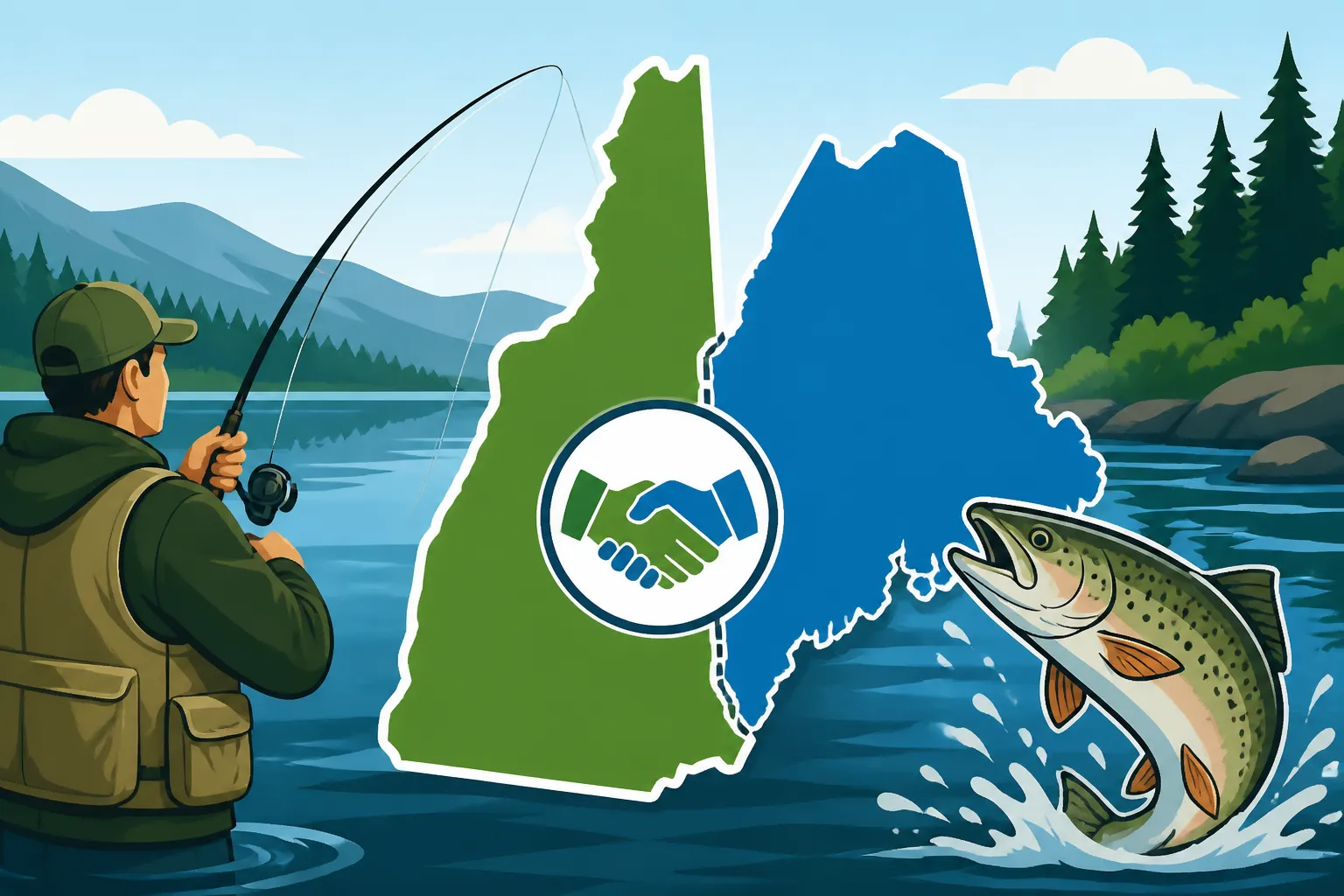
Reciprocity agreements are designed to eliminate this frustration. They allow an angler holding a valid fishing license from either state to legally fish the designated boundary waters. This simplifies trip planning, saves money, and most importantly, lets you focus on catching fish rather than stressing about imaginary lines on the water. It’s about recognizing that fish don't observe state boundaries, and neither should your ability to pursue them. These agreements acknowledge the shared natural resource and foster a more seamless experience for everyone who loves to fish these unique waters. Many people even pick up a good map of the specific area, available on sites like Amazon, to better visualize these boundaries.
New Hampshire and Maine Reciprocity Explained in Detail
Now let's get down to the nitty-gritty of which waters are covered by these reciprocity agreements and what specific rules you need to be aware of. While the general idea is "one license is enough," the devil, as always, is in the details, particularly when it comes to the nuanced regulations that might still differ between the two states.
Which Waters Have Reciprocity?
The primary and most significant body of water where New Hampshire and Maine have a clear fishing license reciprocity agreement is Umbagog Lake. This large, beautiful lake, situated in the far northern reaches of New Hampshire and western Maine, is a prime example of successful interstate cooperation for anglers. If you hold a valid New Hampshire fishing license, you are legally permitted to fish all parts of Umbagog Lake, including the portions that lie within Maine. The same holds true in reverse: a valid Maine fishing license allows you to fish the New Hampshire sections of Umbagog.
Beyond Umbagog, parts of the Saco River and the Salmon Falls River also have limited reciprocity agreements where they form the boundary. These river agreements are often more localized and might only cover specific stretches. It’s absolutely critical to understand that this reciprocity is not universal for every single stream or pond that happens to be near the border. Just because a river crosses the state line doesn't automatically mean you can fish both sides with one license. Always double-check, especially if you're venturing into lesser-known areas. For example, knowing How Much Does a New Hampshire Fishing License Cost is essential, but equally important is understanding where that license is actually valid.
Specific Rules for Different Water Bodies
Even with license reciprocity, it's crucial to understand that while your license validity might extend across the border, the specific fishing regulations (like daily bag limits, length limits, and season dates) for particular species can still differ depending on which side of the invisible line you're physically fishing on. This is where most anglers get confused.
- Umbagog Lake: For Umbagog Lake, the general rule is: your New Hampshire license (or Maine license) is valid throughout the entire lake. However, you must adhere to the regulations of the state whose side you are currently fishing on. This means if you're casting on the Maine side of Umbagog with your New Hampshire license, you must follow Maine's bag limits, length limits, and any other specific rules for the species you're targeting. The inverse is true if you're a Maine license holder fishing the New Hampshire side. This is particularly important for species like lake trout, salmon, or bass, where regulations can vary. Consulting the Umbagog Lake Fishing Guide can provide more specific details on the various species and their typical regulations for this unique lake. For example, if you're targeting brook trout, Maine's regulations might be stricter than New Hampshire's for that specific section of the lake.
- Saco River: Similar principles apply to the Saco River where it forms the boundary. A valid license from either state allows you to fish the reciprocal stretches. However, you must still be mindful of the individual state's regulations for catch limits and seasons. The Saco River Fishing Guide offers additional insights into the fishing opportunities and regulations along this scenic river. It’s always best to carry a copy of both states' digests, even if just digitally, or refer to them on your phone, to ensure you're compliant.
- Tributaries and Other Sections: It's also worth noting that reciprocity agreements often apply only to the main body of water itself, and not necessarily to every tributary or small cove that might flow into it. Always confirm if the reciprocity extends to tributaries, as state lines can become even more ambiguous in smaller waterways. The bottom line here is that while your license grants you access, you still need to be a responsible and informed angler by knowing the local rules.
Key Differences from Other Border States
Understanding the nuances of New Hampshire's reciprocity with Maine becomes even clearer when you compare it to agreements with other neighboring states. New Hampshire also shares borders with Vermont, Massachusetts, and to a very small extent, Quebec. The rules aren't uniform across all borders, which can be a source of confusion.
For instance, the reciprocity agreement for the Connecticut River between New Hampshire and Vermont is often more expansive. On the Connecticut River, a valid fishing license from either New Hampshire or Vermont generally allows an angler to fish the entire river within the boundary waters, and often, the regulations of either state are considered acceptable, as long as you have one valid license. This is a much broader form of reciprocity compared to the more specific "follow the rules of the side you're on" approach with Maine. If you're planning a trip there, be sure to check out the New Hampshire fishing license reciprocity on Connecticut River boundary waters for more details.
This difference highlights why it's never safe to assume that a reciprocity agreement with one state is identical to another. Each border, and sometimes even each specific water body, has its own unique arrangement that has been painstakingly negotiated between state agencies. Therefore, familiarizing yourself with New Hampshire Fishing Regulations Explained is a good habit for any border water angler, regardless of the specific state you're fishing against. Always verify the current rules; they can change, and what applies to Umbagog might not apply to a tiny stream you find further south on the Maine border.
| Water Body | Reciprocity Status | NH License Holder Rules | Maine License Holder Rules | Important Notes |
|---|---|---|---|---|
| Umbagog Lake | Yes, Full | Valid for entire lake. Must follow Maine fishing regulations when fishing in Maine waters. | Valid for entire lake. Must follow New Hampshire fishing regulations when fishing in New Hampshire waters. | License valid in both states' portions. Critical: Adhere to the specific fishing regulations (e.g., bag limits, length limits, season dates) of the state where your line and lure are physically located. |
| Saco River (boundary sections) | Yes, Partial | Valid for specified boundary sections. Must follow Maine fishing regulations when fishing in Maine waters. | Valid for specified boundary sections. Must follow New Hampshire fishing regulations when fishing in New Hampshire waters. | Confirm exact reciprocal stretches with current digests. Same rule applies: license from either state is fine, but regulations of the state you are fishing in apply. |
| Salmon Falls River (boundary sections) | Yes, Partial | Valid for specified boundary sections. Must follow Maine fishing regulations when fishing in Maine waters. | Valid for specified boundary sections. Must follow New Hampshire fishing regulations when fishing in New Hampshire waters. | Check the latest state fishing digests for precise reciprocal areas and rules. |
| All Other Border Waters | No | Only valid in NH waters. | Only valid in ME waters. | Unless explicitly stated as reciprocal, assume separate licenses are required for each state's portion. |
Practical Advice for Anglers on Boundary Waters
Fishing boundary waters successfully means not just understanding the rules, but implementing practical habits to ensure you're always compliant. There's nothing worse than having a great day on the water turn sour because of a simple oversight.
Carrying Your License and Identification
It might sound obvious, but you'd be surprised how many anglers get caught without their license, or without proper identification to back it up. When fishing in boundary waters, it's absolutely paramount to carry your valid fishing license with you at all times. This means either a physical copy that you've printed out, or a digital version accessible on your smartphone, assuming New Hampshire Fish and Game (or Maine Inland Fisheries and Wildlife) officially accepts digital licenses for that year. It's always a good idea to check the most current guidelines, such as those outlined in Printing or Carrying a Digital Fishing License in New Hampshire.
Along with your license, you need a valid photo ID, like a driver's license. This is crucial for proving your residency, which directly impacts the type and cost of your license – for instance, a New Hampshire nonresident fishing license cost 2026 will be different from a resident one. Game wardens need to verify that the person holding the license is indeed the person it was issued to, and that they qualify for the residency status indicated. Cell service can be spotty in remote parts of Umbagog or along river stretches, so relying solely on a digital copy can be risky. Having a physical printout, perhaps tucked into a waterproof pouch (you can find great options on Amazon), is often the safest bet. It means no worries about dead phone batteries or lost signals.
Checking Regulations Annually
This cannot be stressed enough: regulations change. What was true last year, or even last season, might not be true today. Relying on outdated information is one of the quickest ways to find yourself in violation, even if you had the best intentions. Both New Hampshire Fish and Game and Maine Inland Fisheries and Wildlife update their fishing regulations annually. These changes can include everything from season dates and bag limits to length restrictions and even specific gear restrictions for certain waters or species.
Before every fishing season, and ideally before every trip to boundary waters, you should consult the most current official fishing digests from both states. You can usually find these as PDF documents on their respective department websites. The Reading the New Hampshire Freshwater Fishing Digest is an invaluable resource for this, and Maine has a similar publication. Pay close attention to sections specifically addressing boundary waters or the particular lake or river you plan to fish. While your New Hampshire license might allow you to fish the Maine side of Umbagog, Maine’s daily limit for brook trout might be different than New Hampshire’s, and you must abide by Maine’s rules when fishing there. Many savvy anglers will purchase small, durable regulation books or printouts to keep in their tackle boxes, a practice easily supported by finding relevant gear on Amazon to help organize your important documents.
What Happens if You're Caught Without Proper Licensing?
Getting caught fishing without the correct license, or failing to adhere to the regulations of the state you're fishing in while on reciprocal waters, is a serious matter. Ignorance of the law is generally not considered a valid defense. The consequences can range from significant monetary fines to the confiscation of your fishing gear, and even the suspension of your fishing privileges for a period.
For example, Fishing Without a License in New Hampshire: Penalties can involve fines upwards of several hundred dollars, and repeated offenses can lead to much more severe repercussions. Imagine having a great day on the Saco River, only to have it ruined by a hefty fine because you assumed the regulations were the same on both sides of the river, when in fact, they weren't for the specific species you kept. It’s not just about the cost of a new license, which you can often quickly purchase online or from a local vendor, and sometimes even have shipped to you via services like Amazon if you're buying related gear. The real headache is the fine, potential court appearance, and the black mark on your record that could affect future license purchases.
The enforcement agencies in both states take their roles seriously. Their goal is to protect the shared fisheries and ensure fair play for everyone. So, before you cast your line, take a few extra minutes to confirm your licensing and review the latest rules. It's a small investment of time that can save you a world of trouble and ensure your fishing memories are good ones. For any questions about New Hampshire Boating Laws for Anglers, especially on shared waters, it's always best to contact Fish and Game directly for the most accurate and up-to-date information. If you're unsure Where and How to Buy a New Hampshire Fishing License, the state's Fish and Game website is the best starting point. Just remember that your New Hampshire Annual Fishing License Expiration Date is usually December 31st, regardless of when you purchase it, so plan accordingly for the next calendar year.
Disclaimer
Please remember that fishing regulations and reciprocity agreements can change. While this guide provides comprehensive information, it is always your responsibility as an angler to consult the latest official New Hampshire Fish and Game Department and Maine Inland Fisheries and Wildlife rules and regulations before heading out. This content is for informational purposes only and does not constitute legal advice.